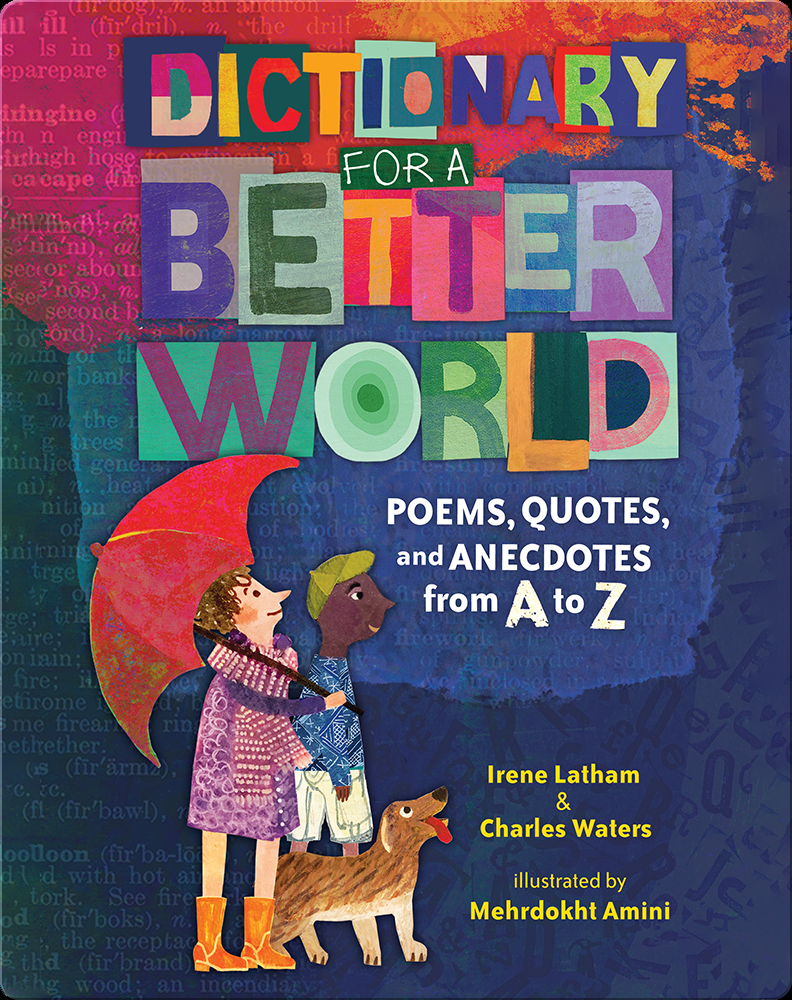
If it’s the first Saturday of any month, it’s National Play Outside Day! Dictionary for a Better World reminds us to spend time in nature . Today’s form of poetry is a Haiku, one of my favorite, which traditionally has seventeen syllables in a 5-7-5 line pattern, but Modern Haiku throws out the rules and urges a short poem in three to four lines and no rules.
Rain
quenching Earth’s dry thirst
steady rains saturate plains
trickle, tickle dirt
*During the months of August and September on days when I’m not participating in the Open Write at www.ethicalela.com, I will be writing in response to the pages of Dictionary for a Better World: Poems, Quotes, and Anecdotes from A to Z by Irene Latham and Charles Waters, illustrated by Mehrdokht Amini. The poems, poetic forms, narratives, quotes, and calls to action to make one small difference might be just the medicine my world – or the whole world – needs. I’ll be inviting insights in the form of an immersion into a 10-minute-a-day book study (just long enough to read the page, reflect, and connect). If you don’t have a copy of the book, you can order one here on Amazon. I invite you to join me in making August and September a time of deep personal book friendship. A few teachers will be following the blog and engaging in classroom readings and responses to the text. So come along! Let’s turn the pages into intentionally crafting beautiful change together.
It’s National Work Like a Dog Day, and I’m considering the similarities and differences between work and service, my word of the day. Dogs seem to have a strong work ethic, naturally – – and they don’t clock in and out. They do what they see needs to be done, and they do it all with a servant’s heart. How many times have I turned over at night to see our Schnoodle, Boo Radley, wide awake, sitting between my husband and me, guarding over us? He loves his people (and besides – he has all day to sleep). He is the nightwatchman, working hard for those he loves and serving us with what he has to give – his dog strengths. He works like a dog, and it’s an act of service, too.
Irene Latham’s story about serving food at a convent as a way to feel satisfaction and unity brings to mind a story that Dr. Kyle Reese, interim pastor of St. Simon’s Island First Baptist Church in coastal Georgia, shared in his sermon last week. He told about a Florida pastor and his wife who’d had a tremendous impact on those in his community. Dr. Reese shared that in one conversation he’d had with his pastor friend, this man explained that God had placed in his heart a strong calling to help those in poverty. After many years of working together with his wife in their ministry, Dr. Reese’s pastor friend died. At the funeral, people spoke about the difference this man had made in their lives.
“He would drive the church van to our neighborhood……,” he said.
One young man said, “He gave us a story. He would drive the church van to our neighborhood and pick up all the kids and take us somewhere during the summer. It didn’t matter where we went, whether to McDonald’s to share a meal, bowling, to a movie, or to a park. The important thing is that we went somewhere and had fun. We all knew that he did this because for those of us who never had a way to go anywhere, we needed a story to write when the teacher asked us the first week of school what we’d done that summer. Because of him, we always had a story to write. He always made sure we had a fun experience like the other kids.”
The quote by Lao-tzu today, “The heart that gives, gathers,” rings truth. While we bless others with our gifts of service, we are the ones who are blessed tenfold when we seize the opportunity to make a difference and act as good stewards of our gifts!
*During the months of August and September on days when I’m not participating in the Open Write at www.ethicalela.com, I will be writing in response to the pages of Dictionary for a Better World: Poems, Quotes, and Anecdotes from A to Z by Irene Latham and Charles Waters, illustrated by Mehrdokht Amini. The poems, poetic forms, narratives, quotes, and calls to action to make one small difference might be just the medicine my world – or the whole world – needs. I’ll be inviting insights in the form of an immersion into a 10-minute-a-day book study (just long enough to read the page, reflect, and connect). If you don’t have a copy of the book, you can order one here on Amazon. I invite you to join me in making August and September a time of deep personal book friendship. A few teachers will be following the blog and engaging in classroom readings and responses to the text. So come along! Let’s turn the pages into intentionally crafting beautiful change together.
In honor of National Chocolate Chip Cookie Day, consider this: Ruth Wakefield was experimenting when she baked this classic cookie for the first time. She was going to make chocolate cookies, but instead experimented by adding some chocolate chunks, which resulted in a delicious accident that led to the formation of the Toll House company and became a timeless treat.
I love Irene Latham’s story today in Dictionary for a Better World as I reflect on the word experiment. She tells about her desire to become an acolyte in her church, and because the church was willing to experiment, she became the first female acolyte in the history of her church.
As I reflect on my early days of student teaching, I remember visiting a Pre-K classroom to observe. Ms. Laurie was the teacher in that class, and I remember her well because each evening, she read a picture book on local TV. Storytime with Ms. Laurie. As I observed, I noticed a group of three young boys gathered by a record player on the far wall. They were taking the wooden cars from the block center and putting them atop the turntable as it spun, watching to see how long it would take before the car flew off the edge.
I started to walk over and remind the boys that the cars didn’t belong on the record player. But as I moved in that direction, I heard Ms. Laurie whisper to me.
“Wait,” she said. “Let’s watch. They’re experimenting!”
Those words truly changed my perspective on teaching young children. Allowing them to experiment before being bound by rules that they don’t yet know exist is a rare golden opportunity for them to explore how the world works.
I left that day with a different outlook on teaching. I wanted to be that teacher who saw around the “rules” being followed and considered the child’s point of view that figuring out how motion affects an object at rest is an adventure in discovery – – a course in advanced physics on the preschool level. I was inspired that day to become a teacher who cared about children’s discovery learning enough to say, “Wait. Let’s watch! They’re experimenting.”
*During the months of August and September, I am writing poetry forms and responding to quotes and narratives fromDictionary for a Better World: Poems, Quotes, and Anecdotes from A to Zby Irene Latham and Charles Waters, illustrated by Mehrdokht Amini. Join me at the start of a new school year by turning over a new leaf – writing more, reading more, reflecting on quotes, connecting to text, and performing a simple daily act of kindness. Together, we can make the world a better place!
It’s National Georgia Day! On this day, we celebrate all things Georgia! Today’s poetry form presented in Dictionary for a Better World by Charles Waters and Irene Latham, illustrated by Mehrdokht Amini is a Rondine – a 12-line poem with seven lines in the first stanza, five lines in the second stanza, and all lines having either 8 or 10 syllables except the seventh and twelfth lines, which repeat a single word – such as Diversity or Georgia, which is the first word of the first line of the poem. I love the diversity of my home state, from the mountains to the coast! The authors inspired me to try my hand at a Rondine today.
Georgia’s Diversity
Georgia mountains to pristine beaches
Loblolly pines to Freestone peaches
Coastal marsh to Appalachian Trail
Bottlenosed dolphin to northern right whale
Margaret Mitchell to Alice Walker
Livestock auctioneer to slow-drawl talker
Georgia
Urban city to rural countryside
Six Flags Over Georgia: Cheers for the ride!
People of all nations stand unified
Embracing each other from far and wide
Georgia
Sunrise through Loblolly Pines in Williamson, Georgia
I had an interesting email exchange with my dad earlier this week about the top ten books in each state. If you had to choose ONE book as the literature to represent your state, what would it be? Most would choose Gone with the Wind by Margaret Mitchell for Georgia.
*During the months of August and September on days when I’m not participating in the Open Write at www.ethicalela.com, I will be writing in response to the pages of Dictionary for a Better World: Poems, Quotes, and Anecdotes from A to Z by Irene Latham and Charles Waters, illustrated by Mehrdokht Amini. The poems, poetic forms, narratives, quotes, and calls to action to make one small difference might be just the medicine my world – or the whole world – needs. I’ll be inviting insights in the form of an immersion into a 10-minute-a-day book study (just long enough to read the page, reflect, and connect). If you don’t have a copy of the book, you can order one here on Amazon. I invite you to join me in making August and September a time of deep personal book friendship. A few teachers will be following the blog and engaging in classroom readings and responses to the text. So come along! Let’s turn the pages into intentionally crafting beautiful change together.
I selected the wordIntention for today’s focus when I saw that it was National Ice Cream Sandwich Day. I’ll explain the connection in a moment, but in looking at pages 50-51, the poem on these pages of Dictionary for a Better World is a didactic poem, which offers a moral message with an instructional purpose. Oprah Winfrey’s featured quote is, “I believe the choice to be excellent begins with aligning your thoughts and words with the intention to require more from yourself.” Her quote expresses much of the purpose I felt in taking this book and stretching it over two months, allowing the words to seep in and saturate my thinking as I meditate on engaging in acts of service that make a difference. One of the authors shares his intentions to become a published author, despite the rejection letters and frustrations along the way. The authors issue the call to action in writing down something we’ve felt compelled to do, and then pursuing it.
National Ice Cream Sandwich Day takes me back to my childhood on a day when I was visiting my grandparents in Blackshear, Georgia. We lived on St. Simon’s Island, about an hour and a half away, so we visited them frequently on weekends. Meema Jones, as we lovingly called our mother’s mother, always had a box of ice cream sandwiches waiting for my brother and me in the freezer. Like most grandmothers, she knew how to coax hugs and spoil us with sweets. It worked.
Until the day that we pulled into the driveway and I fled the backseat and made a beeline straight for the freezer without a greeting hug. My mother, right on my heels, took the ice cream sandwich away from me and refused to let me have it. She made me go back and greet my grandmother since I had clearly gotten my priorities out of order. I still didn’t get an ice cream sandwich on that particular visit, because I had to learn my lesson.
My intention was not to hurt my grandmother’s feelings, but by losing sight of the giver and going straight for the gift, that’s exactly what I had done. I had to set things straight, and that one life lesson five decades ago has stayed with me, reminding me to give forethought to intentions and unintended consequences of situations before I go bumbling in and making a mess of things.
I love the blurbs of history and evolution of the national days on the calendar as linked above. Today, I’ll enjoy an ice cream sandwich, and I might even hashtag a photo with #IceCreamSandwichDay. But what I certainly won’t forget to do is to be intentional about smiling and saying thank you to the person who serves me, as I bite into the creamy sweetness, remembering the grandmother who introduced me to these delightful dairy desserts – and a mother who showed me what was most important.
Today’s word in Dictionary for a Better World is Respect, and the poetry form introduced is an epistle, a letter poem addressed to someone, using poetic devices. There is a quote from Joseph M. Marshall III: “Respect is a close relative of tolerance, and both go a long way to prevent and alleviate the negative interactions between and among people.” One of the authors shares a connection about his love of Aretha Franklin’s music (R-E-S-P-E-C-T), and in the call to action, the authors encourage readers to try an act of respect by making a list of people we respect, explaining why, and then to reach out to them or their families to share our thoughts.
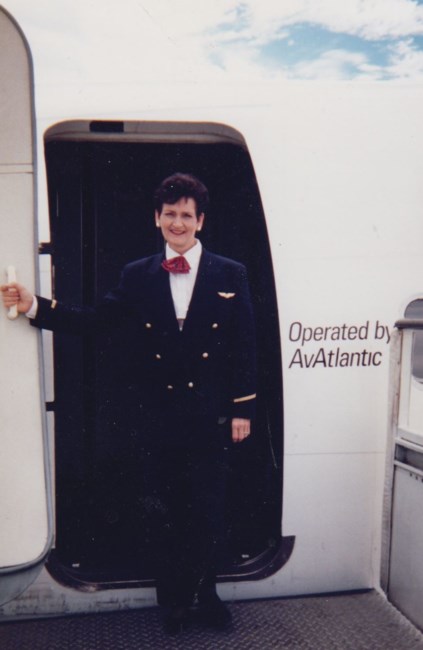
As I consider the opportunities to respond to this text as we celebrate National Respect for Parents Day, I’m choosing to write an epistle to my mother, who died in December 2015, using a short Haiku chain as poetic device. Later today, when I talk with my brother, I’ll share with him how proud I am that he and I get along and make decisions that honor both our father and the legacy of our mother. Because even though Mom’s not physically here with us, there is no doubt that she is still here. She lives on in us, and the way we live reflects her. We always want to make her proud when others look at us and see her spirit.
Bringing Heaven to Earth
you slipped away, Mom
leaving a rich legacy
and yet you’re still here
that hawk on the wire?
checking to see if we have
our seatbelts fastened
that redbird feeding?
reminding us to behave,
keeping us in line
those black swallowtails?
urging us to plant fennel ~
long live butterflies!
the eyes of our dogs?
“You take care of these dogs, now.”
you’re there in that love.
you’re not ever gone
you’re everywhere we look, you
bring heaven to earth
Miriam Jones Haynes FEBRUARY 19, 1943 – DECEMBER 29, 2015
What comes to mind when you meditate on the word respect? Please share the places that the word respect takes you in the Padlet or in the comments below!
*During the months of August and September, I am writing poetry forms and responding to quotes and narratives fromDictionary for a Better World: Poems, Quotes, and Anecdotes from A to Zby Irene Latham and Charles Waters, illustrated by Mehrdokht Amini. Join me at the start of a new school year by turning over a new leaf – writing more, reading more, reflecting on quotes, connecting to text, and performing a simple daily act of kindness. Together, we can make the world a better place!
As I prepare to begin a word journey through Dictionary for a Better World: Poems, Quotes, and Anecdotes from A to Z by Irene Latham and Charles Waters, illustrated by Mehrdokht Amini tomorrow, I’m packing my suitcase of all the things I’ll need along the way, including a list of the things for which I am grateful. The Gratitude List on p. 117 of the book inspires me to remember to have a thankful heart always, but particularly as I journey through these months ahead. A common saying is “a lot of what you see depends on what you’re looking for,” and I agree – – it’s all about the readiness for change and commitment (as I wrote this last line, a redbird appeared on my feeder – a colorful, eye-catching nod from my mother in the Heavenly realm – for whom I’m always on the lookout).
My Gratitude Suitcase
A kaleidoscope, to remind me that every twist of perspective is beautiful. As Rainer Maria Rilke said in Letters to a Young Poet, “There is not more beauty here than elsewhere…..but there is much beauty here, because there is much beauty everywhere.”
A library card, for tapping into all the books that have shaped me, and that allow me to connect to new writing like an elaborate social network of thoughts and ideas.
Traveling shoes – (okay, okay – – 3 pairs: well-broken-in Birkenstocks, hiking boots, and dress flats) to remind me that some days there’ll be a climb, some days I’ll have to burn the candle at both ends and work really hard, and some days there’ll be peace and relaxation, but that the journey is best when there’s a great blend of them all.
A camera, a Pilot Varsity fountain pen, a journal, and a laptop – to keep me writing and using the photographs and narratives to preserve the memories of the moments that matter so I don’t forget.
A snapshot of my writing community – there are so many writers with whom I’ve connected over the past several years in various writing communities – the Open Write at http://www.ethicalela.com, Slice of Life and Two Writing Teachers, This Photo Wants to Be a Poem, and the Magic blog at http://www.sharingourstoriesmagic.com. We encourage and inspire each other, and we give each other wings (special thanks to Margaret Simon for reaching out to encourage me to provide a Padlet so that readers who participate can interact and share their own blogs, responses and resources). I love everyone in my village, and if you’re reading this, you’re one of my inspirational friends, now one of my travel buddies if you’re on this reading journey with me.
Earbuds – to create the spaces of silence or white noise where I need to collect my thoughts and write.
Glasses – to see the good in everyone, everything, everywhere in the world.
An extra pair of underwear for the laughter and Kleenex for the tears – to remind me to feel emotion with all my heart, even if my bladder budges a bit with belly laughs. To feel joy and sorrow, to feel awe and wonder, to be moved to new places takes some heavy lifting of the heart and soul.
A tiny mirror – not only to check for any chia seeds from my breakfast shake stuck between my teeth, but also to remind myself that although I am only one small part of humankind, my actions can make a powerful difference in the lives of others and in the world. And to be ever mindful that when others look at me, I want them to see someone who cares.
Hands to reach out – because that’s the whole point.
What are you packing in your Gratitude Suitcase?
Please feel free to use the Padlet to share your own blog posts, resources, and responses related to Dictionary for a Better World so that others can comment on your posts, connect, bloom, and grow together!
*During the months of August and September on days when I’m not participating in the Open Write at www.ethicalela.com, I will be writing in response to the pages of Dictionary for a Better World: Poems, Quotes, and Anecdotes from A to Z by Irene Latham and Charles Waters, illustrated by Mehrdokht Amini. The poems, poetic forms, narratives, quotes, and calls to action to make one small difference might be just the medicine my world – or the whole world – needs. I’ll be inviting insights in the form of an immersion into a 10-minute-a-day book study (just long enough to read the page, reflect, and connect). If you don’t have a copy of the book, you can order one here on Amazon. I invite you to join me in making August and September a time of deep personal book friendship. A few teachers will be following the blog and engaging in classroom readings and responses to the text. So come along! Let’s turn the pages into intentionally crafting beautiful change together.
If you and I were to meet for lunch or coffee and go venturing out into a city to explore its history, cultural events, music, art, food, landscape, landmarks, architecture, and all the rest of the flavors that make a place worth tasting, like fresh-squeezed lemonade from a sugar-rimmed glass, we would probably agree that one of the first shops we’d want to visit along the way would be a book store. I can guess, my friend, that you’re a reader – with an insatiable appetite for taking in the world through your heightened senses when you’re in a new, exciting place.
Like me, you probably find your sensory awareness is at its peak when you travel. At home, you get around on autopilot, knowing your way but barely able to recall the finer details of the familiar paths you drive to work or to school. But when you travel, you probably find, as I do, that you notice everything, right down to the sizes and shapes of the sugar packets on the restaurant tables. You smell the diesel fumes of city buses when you’re from the rural countryside, and you hear sirens and horns when you’re used to hearing only windchimes and birds and crickets and the rustling of the tree leaves in the wind. You smell the food trucks wafting their mouth-watering aromas to tantalize the taste buds – and you study the landscapes like paintings, appreciating every horizon, every shade of blue sky, every mountain, every valley, every harbor or lake, taking it all in. You photograph what must seem like the most mundane things to the locals, but to you are your cherished timestamped travels, memory fingerprints that you don’t want to forget. Sights that made you pause and appreciate the world.
And perhaps most of all, you watch and wonder about the lives of the people who live in this place that is not where you live. You imagine their schedules, their jobs, their favorite places to eat, and whether they even need to own a car to get to work. Do they buy their groceries in a once-a-week trip to the store, or do they shop the fresh markets on the way home and purchase each day what they will cook that evening, carrying it all home in one single paper sack, hugging it like a teddy bear the last block home? And do they buy fresh flowers for their tables? What music plays in their living rooms? What books line their shelves?
In that bookstore we decided to visit, you already know, even without thinking about it, which sections you’ll visit in 1-2-3-4 order. We may separate to browse the store and meet back in 30 minutes, or you might go to the same spots in the same order I go: travel, pets and nature, science, and poetry. If we were really shopping together, I’d tell you about the book I just purchased for my grandchildren: The Atlas Obscura Explorer’s Guide for the World’s Most Adventurous Kid by Dylan Thuras and Rosemary Mosco (You can download a free teacher’s guide here). I’d grab my phone and show you how I subscribe to their website because I find the world so fascinating that I want to see every corner of it, and the daily emails help satisfy my constant craving for travel. So I bought the children’s version of the book for my grandchildren, hoping to stir in them a rich curiosity about the world, to develop a love for it and to appreciate the need we all have to get outside of our own bubbles and experience moments and slivers of living for brief times in different places. To inspire wonder. To see the world. To want to embrace the favorites of everywhere.
And then I would show you a few pictures of my grandchildren that bring joy to my heart.
River holding a little bit of the world
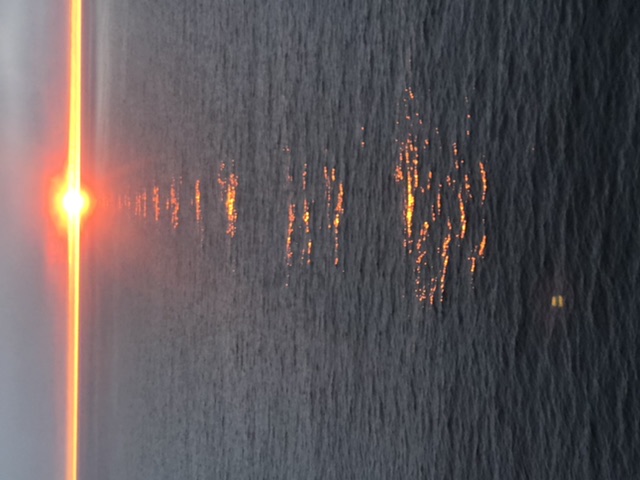
My husband and I often see a beautiful sunset or some other lovely thing and text a random picture of our view to the other. The response is, most often, “thank you for not being selfish with the sunset,” or “thank you for sharing the Batman Building (in Nashville).” I think it’s a lot like the reasons we send our grandchildren postcards every time we go anywhere and sometimes even from right here at home~ to say I wish you were right here with me seeing this place, sharing this moment.
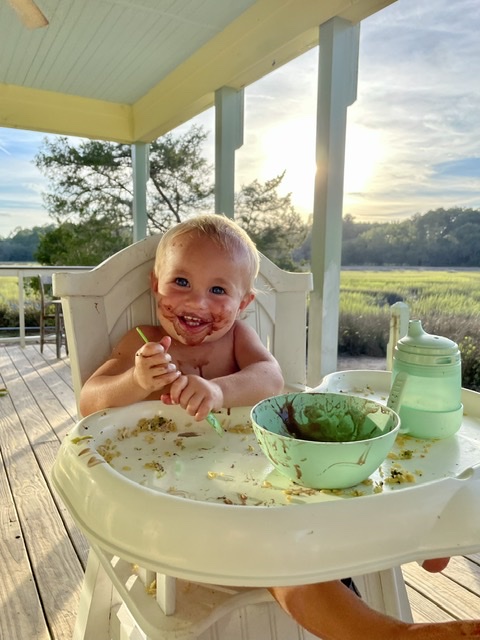
Sawyer holding a little bit of the worldSaylor holding a little bit of the world
I want to give my grandchildren my same loves of reading and traveling, and writing it all down to remember all the whens. But how do you give someone the world? How do you create the awe-inspiring concept of a world that is enormously, majestically huge when you’re little and your world is mostly your house and your yard with those black swallowtail caterpillars eating all the fennel along the fence, but then suddenly becomes a small world, after all, right about the time your feet stop growing?
I think you give someone the world the same way I’m told you eat an elephant.
One bite at a time.
*During the months of August and September on days when I’m not participating in the Open Write at www.ethicalela.com, I will be writing in response to the pages of Dictionary for a Better World: Poems, Quotes, and Anecdotes from A to Z by Irene Latham and Charles Waters, illustrated by Mehrdokht Amini. The poems, poetic forms, narratives, quotes, and calls to action to make one small difference might be just the medicine my world – or the whole world – needs. I’ll be inviting insights in the form of an immersion into a 10-minute-a-day book study (just long enough to read the page, reflect, and connect). If you don’t have a copy of the book, you can order one here on Amazon. I invite you to join me in making August and September a time of deep personal book friendship. A few teachers will be following the blog and engaging in classroom readings and responses to the text. So come along! Let’s turn the pages into intentionally crafting beautiful change together.
Beckham sharing the sunset – but not his ice cream. Aidan: ”Look what I caught!”
As I hoist the sails on a book and word study that will take me through personal meditations through the end of September, I can’t help thinking about all the walks of faith that make our hearts, lives, and world a better place. As a P.K. (preacher’s kid), I was raised to respect and value people of all walks of life, including those whose choices and beliefs are different from my own. My father still models what it looks like to embrace diversity as he stands at altars, sharing moments beside ministers of other denominations and religions in joining couples of different faiths in matrimony. Most pastors don’t do this, making me extra-proud of my dad.
It would be impossible for me to ponder a better world without first acknowledging that I am firmly rooted in the belief of a higher power. As I write about what the words in Dictionary for a Better World mean to me and how they inspire me to want to engage in acts of kindness and compassion, I also want to celebrate my brothers and sisters of other faiths in their beliefs and efforts to do the same. I join hands with friends of all faiths as we all work together to create a better world and to leave a legacy of hope for future generations.
If it all truly boils down to faith, hope, and love being the Big 3, and the greatest being love, then I’m choosing love as my guiding lens. As I set my focus on each word in this book and share how I (as one single person) can use the words to make a difference in the world around me, a diopter lens, like the ones on those high-powered binoculars that bring an object into focus at various distances, will help me add another dimension to my own reading of the book. I’ll be thinking about respect and acceptance and zest and compassion and all the words for a better world through the lens of love – a love of all people, a love of our earth, a love of our world. And when my heart is a fallow field sodden and softened with love, the seeds of these words and their ideas have room to take root, to bloom and grow. To make a difference.
*During the months of August and September on days when I’m not participating in the Open Write at www.ethicalela.com, I will be writing in response to the pages of Dictionary for a Better World: Poems, Quotes, and Anecdotes from A to Z by Irene Latham and Charles Waters, illustrated by Mehrdokht Amini. The poems, poetic forms, narratives, quotes, and calls to action to make one small difference might be just the medicine my world – or the whole world – needs. I’ll be inviting insights in the form of an immersion into a 10-minute-a-day book study (just long enough to read the page, reflect, and connect). If you don’t have a copy of the book, you can order one here on Amazon. I invite you to join me in making August and September a time of deep personal book friendship. A few teachers will be following the blog and engaging in classroom readings and responses to the text. So come along! Let’s turn the pages into intentionally crafting beautiful change together.
As I prepare to dive into the poetic forms of Dictionary for a Better World: Poems, Quotes, and Anecdotes from A to Z* by Irene Latham and Charles Waters, illustrated by Mehrdokht Amini, I think back on the anxiety I have felt at times across years of writing poetry and hosting poetry prompts on Open Write days at http://www.ethicalela.com. The writers in our group have been guided into offering positive and encouraging feedback so that we nurture writing spirits throughout our times of writing together. We share what resonated with us, the lines that spoke to us, how we connected, and the observations we made about the way the poems were written. Even though we know that others will offer positive remarks, there are times that we all feel a sense of reluctance as we begin writing, even though writing is a passion for many of us.
As a former runner, I often dreaded the running itself – – it took a lot of self-discipline to make myself run some days. But each time I finished, the endorphins prompted my next run. Crossing the finish line of a 5K or 10K brought about such a feeling of success and personal accomplishment that I’d often have my next race scheduled by the end of that day’s race. A recurring knee injury keeps me from running these days, and I miss the celebration and festivities I felt at those running events.
I think writing is a lot like that. Once writing fever takes hold, there’s no turning back – even though it takes self-discipline and effort to feel a sense of accomplishment and success when I write a poem, essay, or other writing task. Writing in a group with other writers and being part of a reading audience, I grow by allowing the texts of others to become mentor texts. I’m inspired to try certain techniques or styles in my own writing, always acknowledging those who share their original ideas.
But the important thing is to write. As I prepare to respond to the words and pages of Dictionary for a Better World, I remind myself : not all of my responses have to be perfectly polished like a shiny apple. Good writers have taught me that sometimes I need to give myself ten or fifteen minutes and see what I can accomplish in that amount of time as a quick write. The daily habits of reading and writing build reflective writers. Reflective readers and writers build a better world!
*During the months of August and September on days when I’m not participating in the Open Write at www.ethicalela.com, I will be writing in response to the pages of Dictionary for a Better World: Poems, Quotes, and Anecdotes from A to Z by Irene Latham and Charles Waters, illustrated by Mehrdokht Amini. The poems, poetic forms, narratives, quotes, and calls to action to make one small difference might be just the medicine my world or the whole world needs. I’ll be inviting insights in the form of an immersion into a 10-minute-a-day book study (just long enough to read the page, reflect, and connect). If you don’t have a copy of the book, you can order one here on Amazon. I invite you to join me in making August and September a time of deep personal book friendship. A few teachers will be following the blog and engaging in classroom readings and responses to the text. So come along! Let’s turn the pages into intentionally crafting beautiful change together.









 Common Threads