I visited a garden yesterday for the second time in a week, and my soul is thanking me.
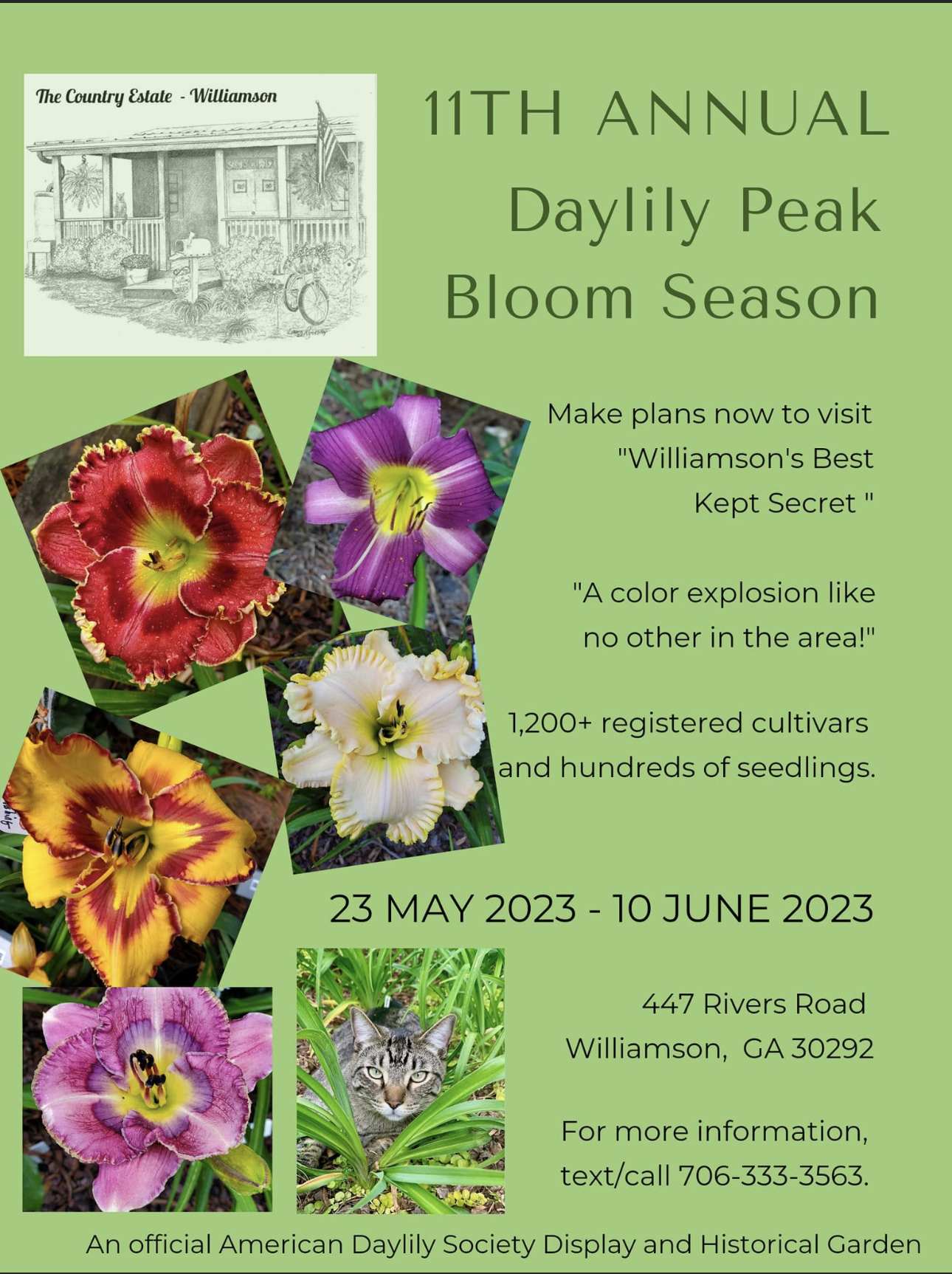
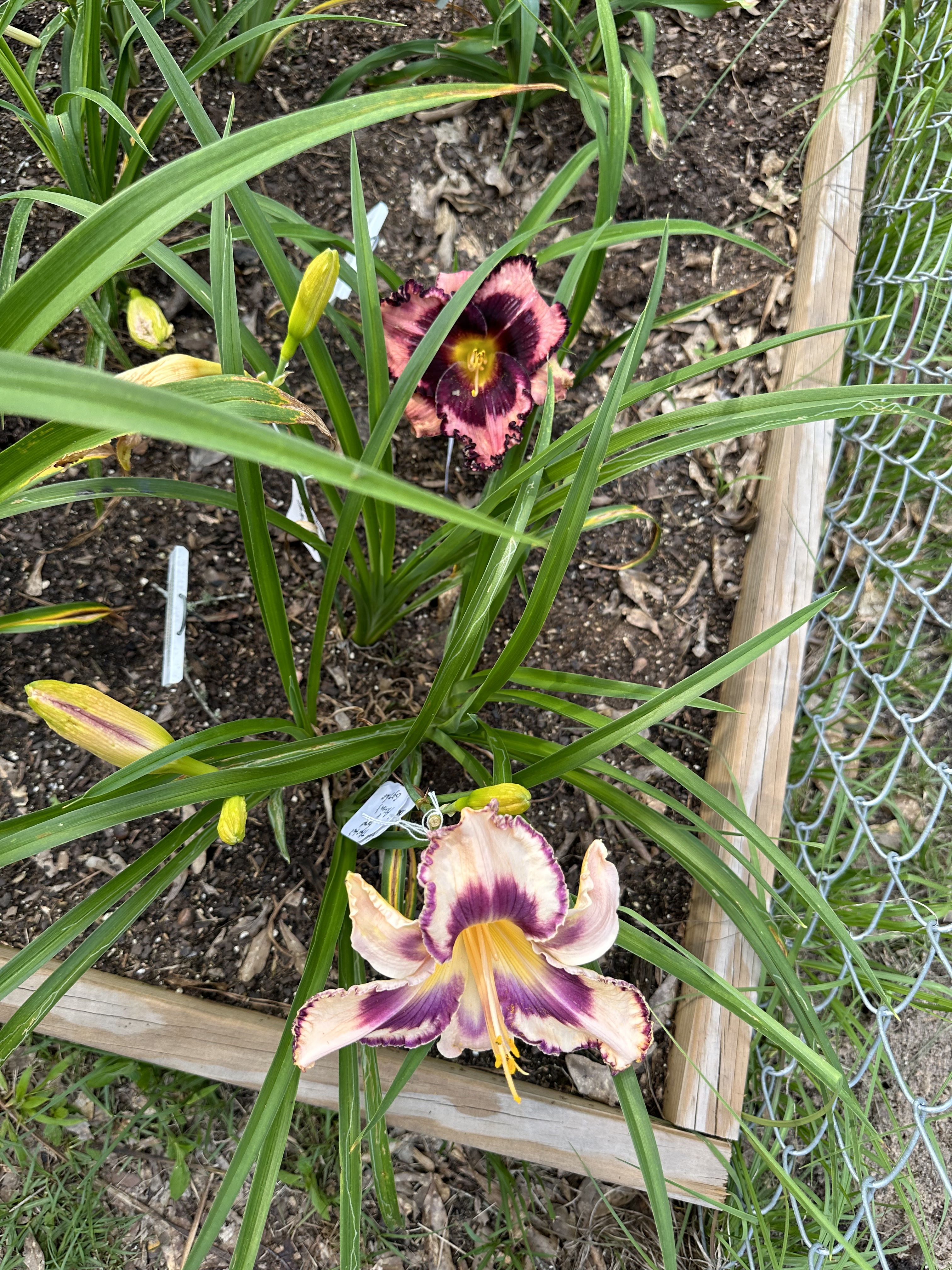
I made the decision as I was leaving work and saw a Facebook post from a friend who’d visited earlier in the day and encouraged everyone to go see the gorgeous daylilies in bloom at The Country Estate in Williamson, Georgia, just a few miles from my home. I had no idea that this garden even existed, yet it is a historical garden and an official American Daylily Society Display.
I darted home, let the boys out for a few minutes, and grabbed a pair of sneakers in case of mud. When I arrived, I met the owner and his partner, who showed me around and told me about all of the different daylilies that they grow and hybridize. One of them had officially registered two new hybrid daylily varieties last week, and the other had officially registered a new hybrid variety the previous evening.
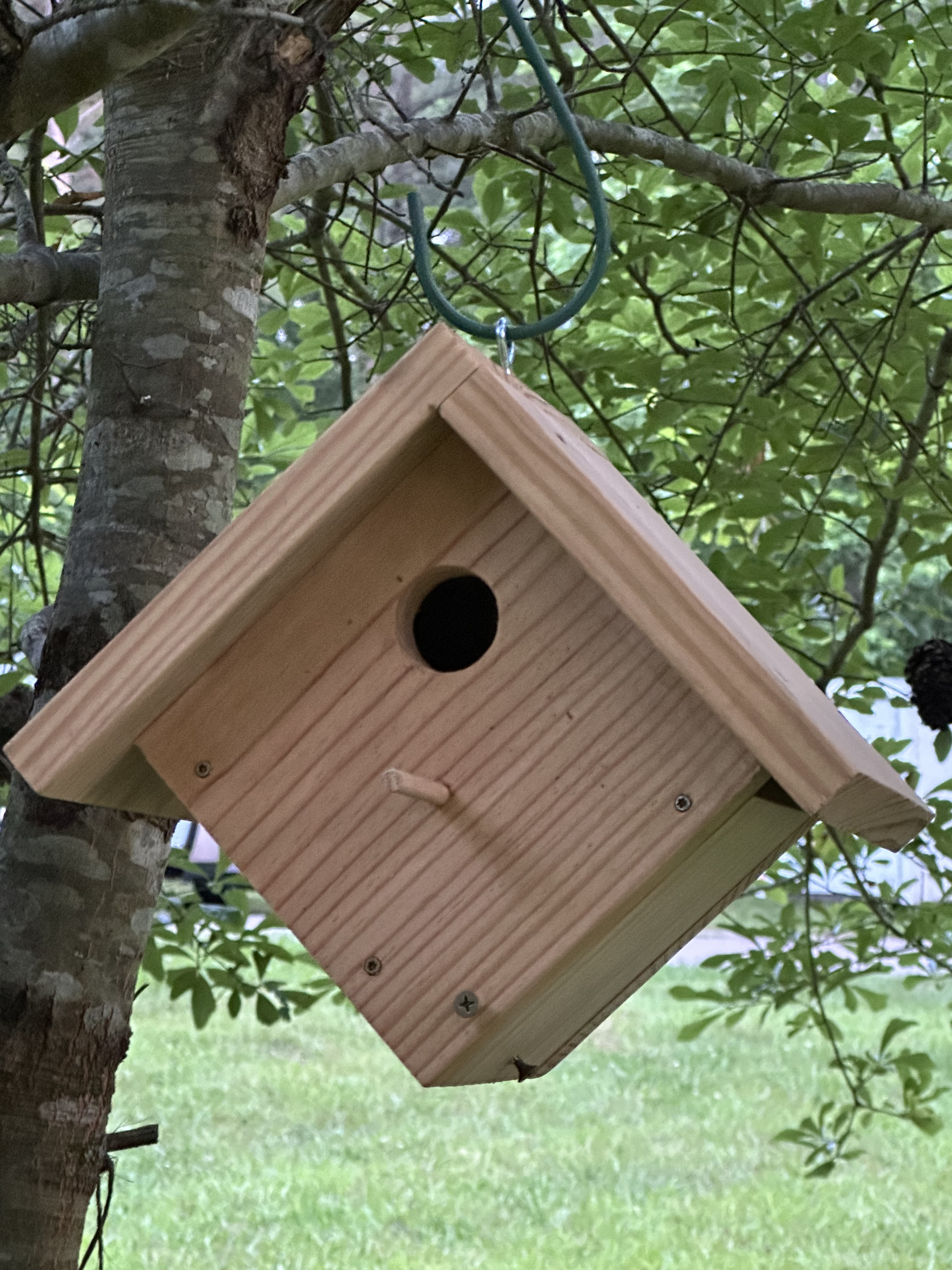
As tempted as I was to give in and buy some foolproof flowering nectar plants for the butterfly garden and the many hummingbirds that come to feast at the Johnson Funny Farm all-you-can-eat buffet, my eyes landed on the birdhouses – specifically, the wren houses.
I didn’t have any wren houses, and these were the kind made of sturdy wood with the extended screw to clean out the house each season. Plus the cute little perching peg that sits beneath the front door hole like a welcome mat, which I later learned should be removed to deter predators from gaining easier access to the box. I made a note to clip these off.
“These are hard to find,” the owner told me. I nodded in agreement. Other than ordering from Amazon, I couldn’t think of a time I’d seen any wren houses in the places I buy my birdseed. The owner also told me that between Halloween and Thanksgiving, The Country Estate turned into the Hallmark Christmas Movie atmosphere, with different tours and events during that month, encouraging me to add that to my calendar and return. And, he added, they were offering a fairy garden building workshop on Friday and I should come to that also. I looked over and saw a little assortment of gnomes, fairies, mushrooms and fairy signs ready to enchant the creative energies of those who’d have time on a Friday to participate. Unfortunately, I would not be able to be among them with my work schedule.
We settled on three, and I brought them home and found just the right trees to hang them facing east and south, away from the northerly and westerly winds. Since wrens apparently like their homes to rest beneath the branches of shade trees or at least be close to shrubs, we picked three different trees so that each family could have its privacy and avoid confusion over whose house was whose, since they’re all the same model home.
The fate of a recent wren who’d built a nest in our garage had ended tragically when we’d arrived home and one of our dogs discovered her dead body by the window. The babies had already flown, but I still can’t bear to look in the nest resting on the garage door apparatus to see if she had laid more eggs. I’d like to think that a few wren houses will turn their attention away from the garage, over to the trees with the free housing units that are turn-key ready.
Many moons ago, I taught with a colleague who drank coffee from the most unique mug I’d ever seen. Aside from her coffee mug in the shape of a Zoom lens that proclaimed her love of photography and led to conversations about her sideline photography business, she had one even more intriguing, but she only drank from it during the winter time.
The mug had no handle. Instead, it had a nestled crook, much like a ceramic mitten. It was made of pottery, and she called it her handwarmer mug. My English classroom at the high school had erratic heating and cooling. I’d sweat and shiver in the same class period all year long, so I made a mental note to pick up a handwarmer mug the next time I saw one.
Trouble is, I never saw one.
I forgot to share it as a gift idea for all those Christmases that have come and gone.
Imagine my surprise when we stopped in to have a glass of wine in Ball Ground, Georgia at the Feather’s Edge Winery, where there is an art gallery connected to the tasting room. There on a display shelf was a sign proclaiming The Original Hand-Warmer Mug, and several variations of pottery mugs to choose from – and there were mugs for right hand mug holders and left-hand mug holders. You slip your hand into the crook of the mug on the side of your handedness and nestle your other hand around the mug on the opposite side. These are made by Clay in Motion Pottery Studio.
Instant warmth! Rustic beauty! Inviting aromas, inspiring the desire to put on a sweatshirt and sit by the fire in a pair of woolen socks, watching snowflakes pile up on the windowsill of a woodland cabin.
Oh, yes. Winter has just finally finished all its antics, but already there is the promise of the next one waiting in these spectacular mugs, where visions of campfires outside the Little Guy Max are also taking center stage in my daydreams.
Sunday was nothing short of fabulous! I’d visited Gibbs Gardens in Ball Ground, Georgia with my sister-in-law in April 2022 on our way to Asheville, North Carolina for a girls’ trip over Spring Break. The daffodil hills and the flowering cherry trees, at that time, were in full bloom. The thing about Gibbs Gardens is that no matter when you go, there’s something different on the blooming menu. Even their website tells you what is currently in bloom and lets you scroll pictures taken the previous week or so.
So I texted my driver early Sunday morning from my side of the bed: Want to go to Gibbs Gardens and stroll through the wildflowers and poppies?
Sure, he texted back across the dogs snoozing between us.
I can be ready in 15 minutes, I replied, prompting a mad dash race to be the first one dressed.
We tied for the win. Jeans, shoes to climb the hills, sunglasses. We set out on the one hour and 45 minute drive north as I bought tickets en route online just in case they were nearing garden capacity. During peak season, I didn’t want to take any chances.
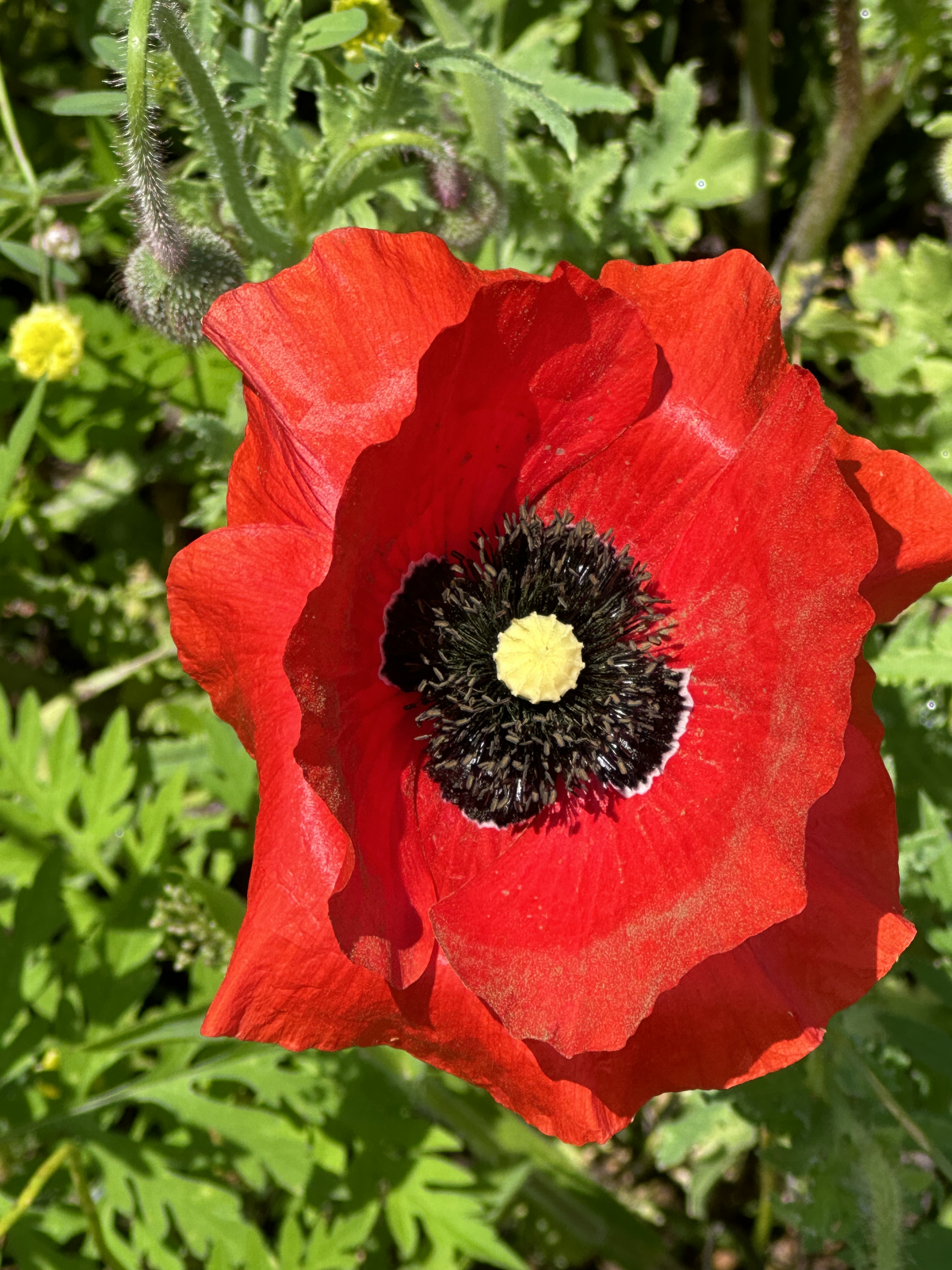
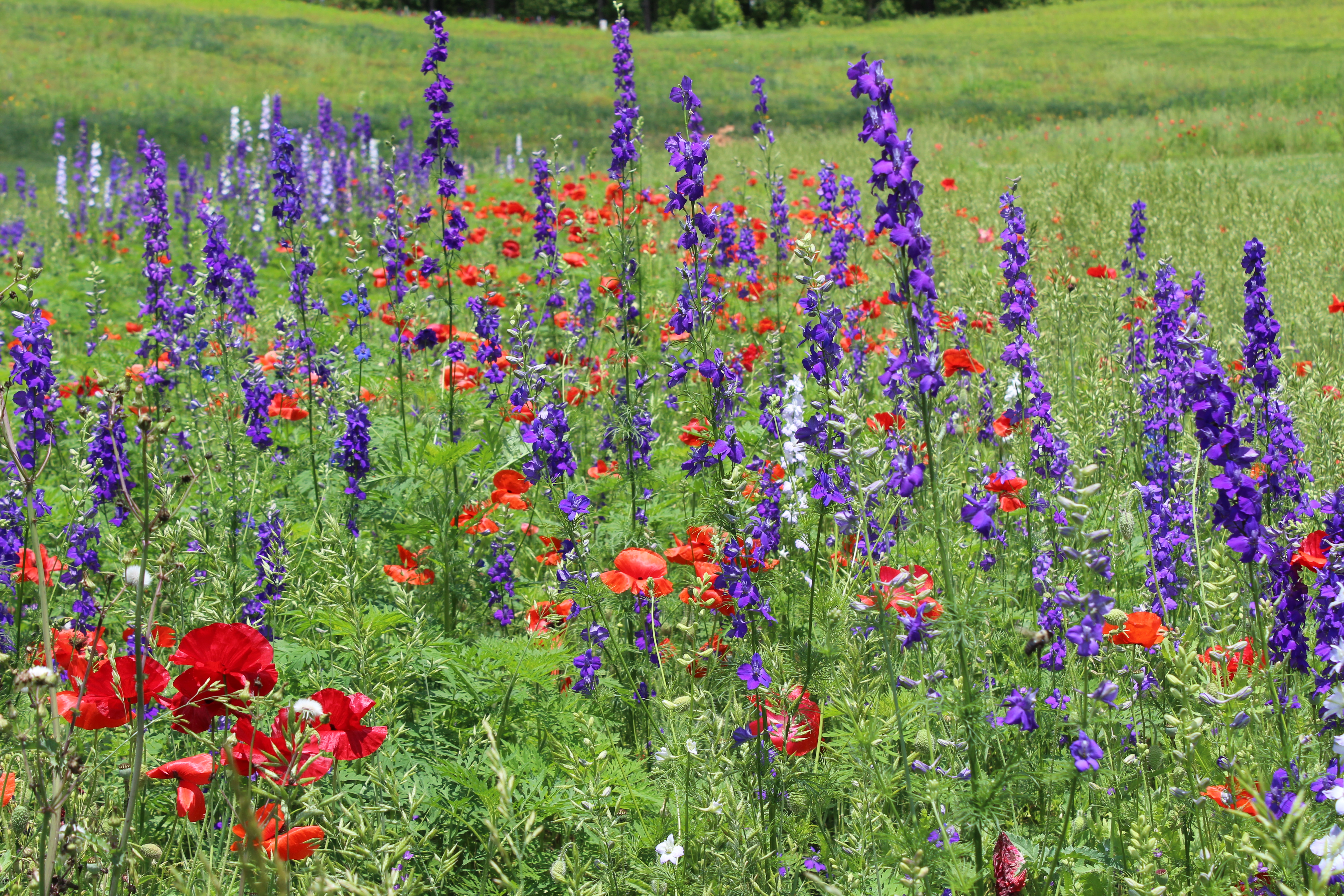
We took in the sights – the Manor House, the Japanese Gardens, the poppies and wildflowers, and the rose garden. The highlight of the day was a hummingbird’s appearance in the wildflower garden, where I was able to capture a few seconds of video before it flew off to another section. The butterflies were flitting about in rich abundance as we strolled the gardens, and the dragonflies darted around shimmering their wings faster than twinkle fairies.
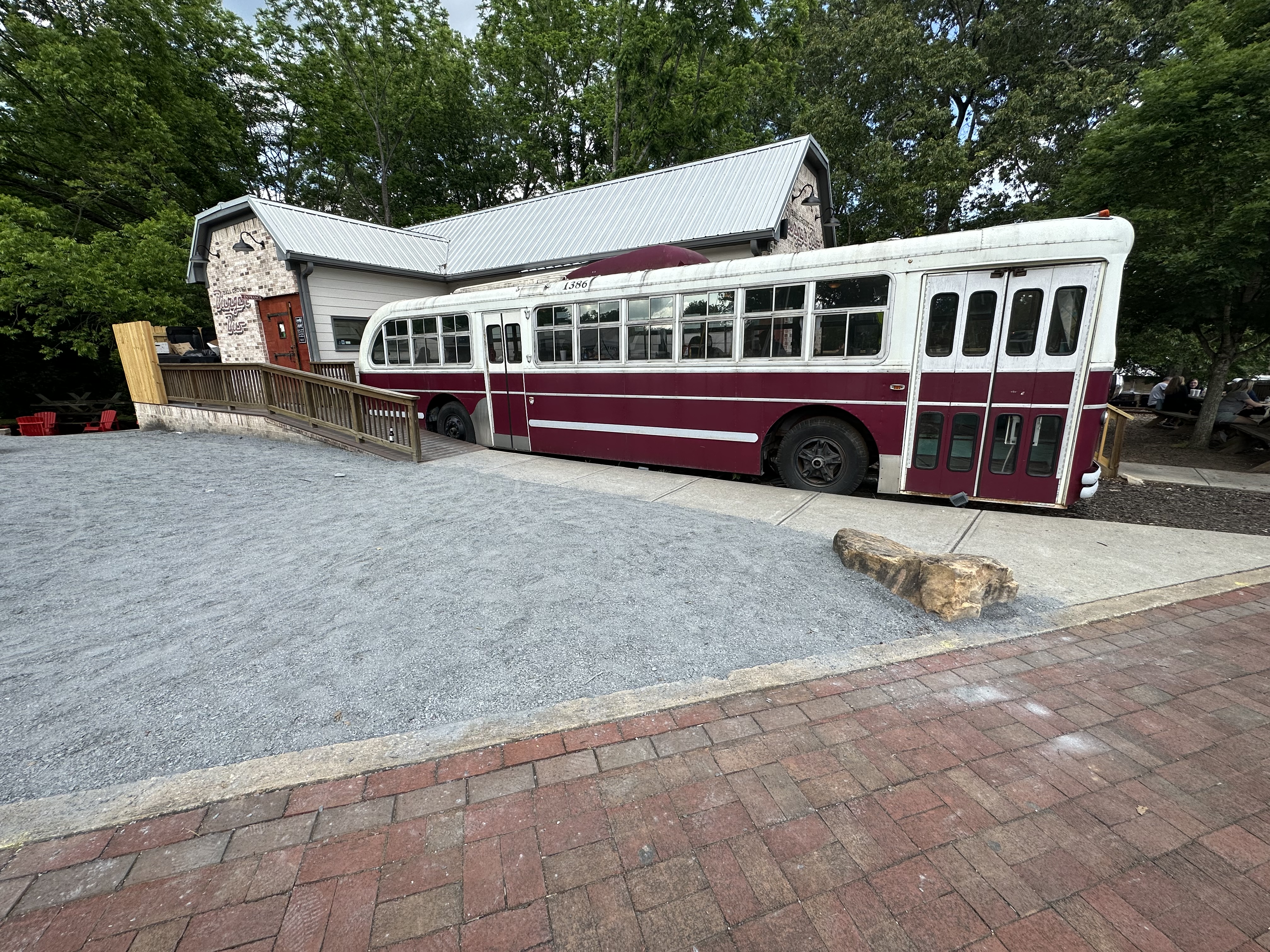
After our visit to the gardens, we drove into Historic Ball Ground for a visit to Feather’s Edge Vineyard where they were having live music as we rested and cooled off with fresh mint mojito wine slushies, and then on to The Ball Ground Burger Bus, a hamburger joint made from an actual bus that ran its last route in Atlanta, Georgia in 1965. We saved room for ice cream after dinner, since our indulgences had already left no room for any more guilt.
Come stroll along with us as we show you the sights on a photo tour.
I’ll be re-living these moments jam-packed with memories for a long, long time! We’ll return in the fall when the bloom list offers a whole new lineup of sights to enjoy.
I thought I’d share a few photos of wildlife on the Funny Farm I’ve seen throughout the week. This week has been stressful, finishing testing and analyzing data, along with the other general parts of wrapping up a school year. It’s nice to come home and walk the dogs and breathe fresh air and forget about the demands and deadlines, if only for a few minutes.
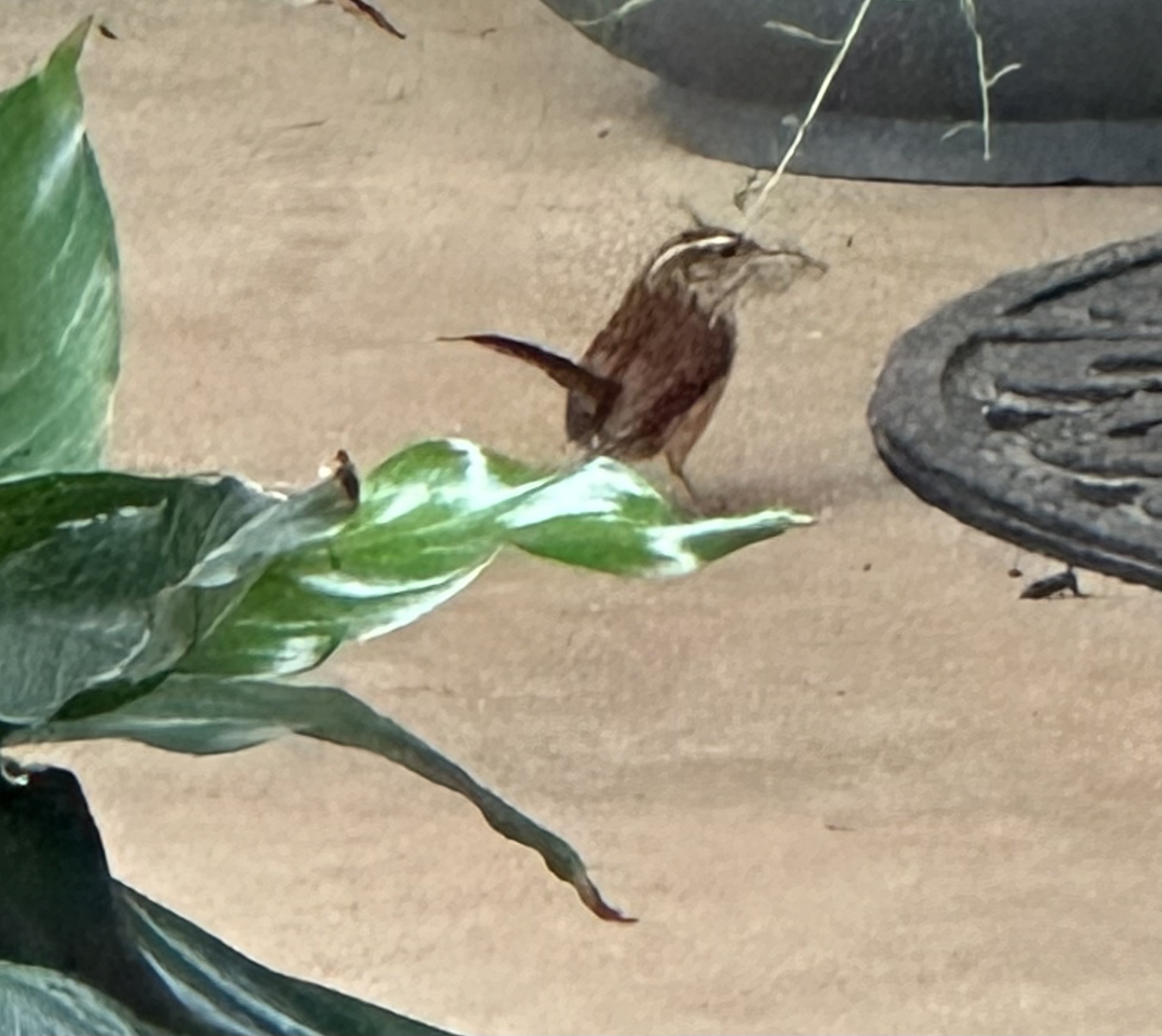
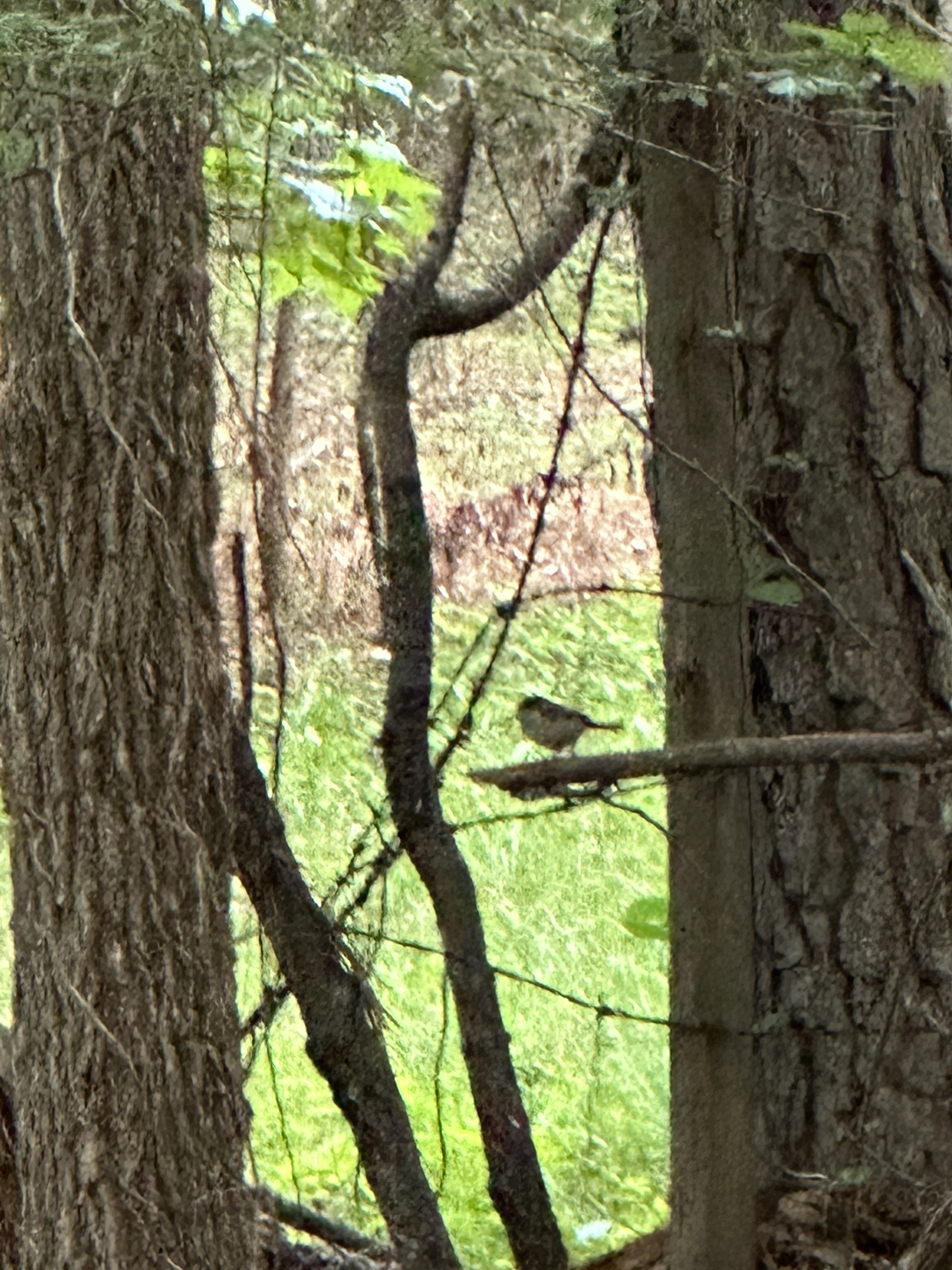
Carolina Wren on the front porch, gathering nesting materials
Carolina Wren, singing, singing, singing
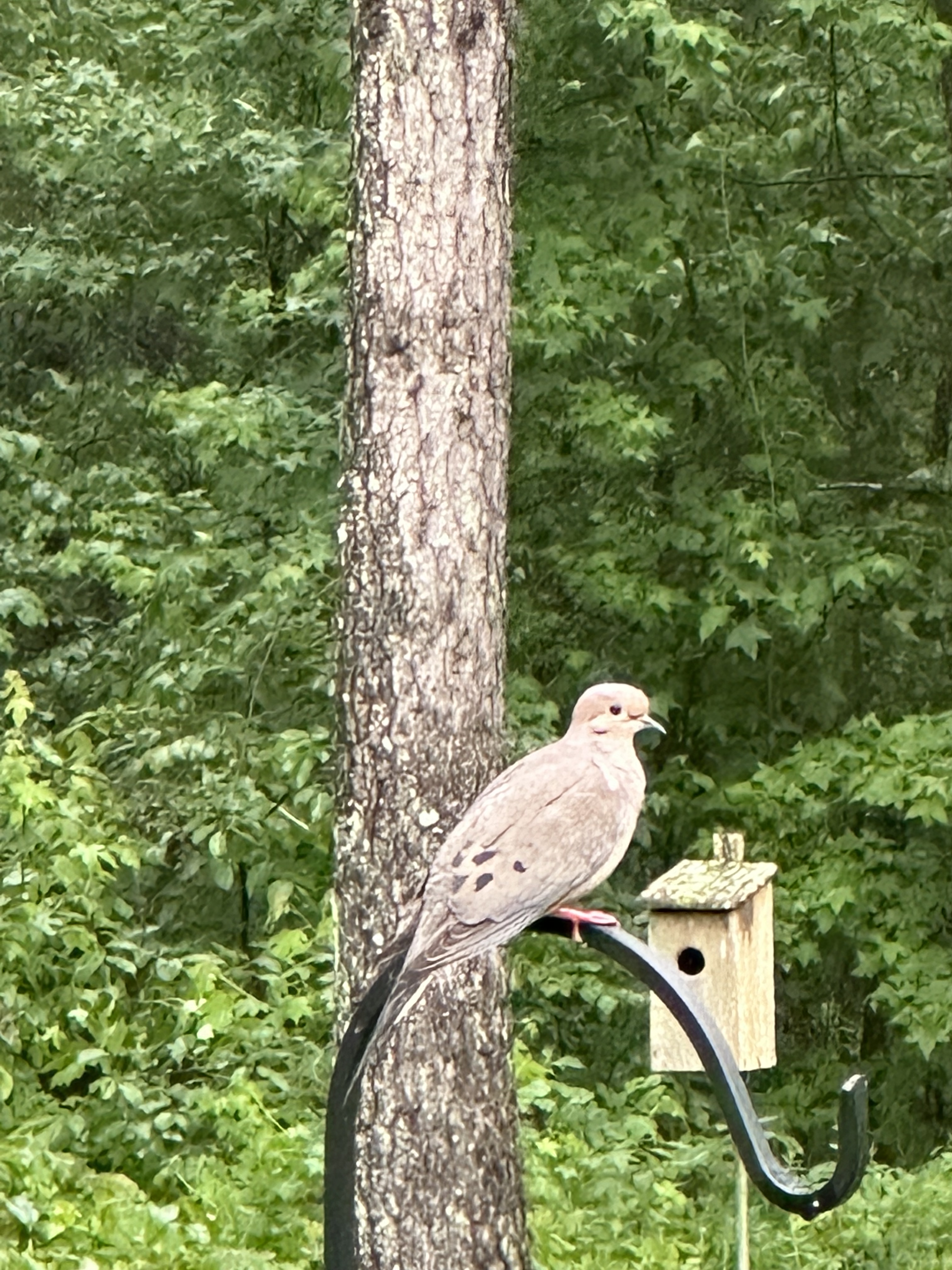
Mourning Dove
Funny Farm Bunny – there is a colony of them that lives down at the end of the driveway.
Funny Farm Finch
Carolina Wren singing a morning song
Deer (picture taken through a screen)
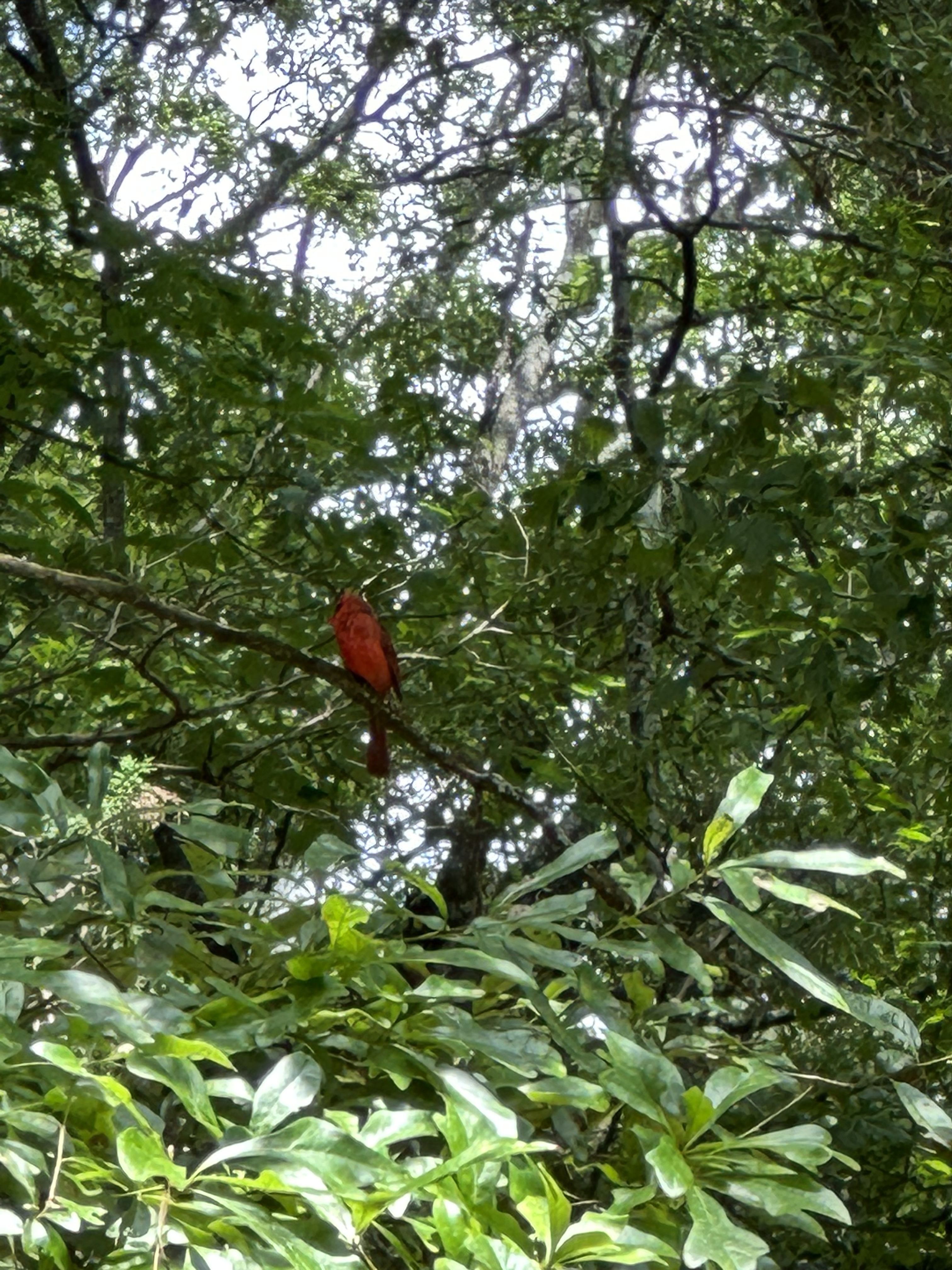
Northern Cardinal
May 18 – Hawk in a tree, Johnson Funny Farm
Hawk in a tree (just left of center) – funniest thing: I said a quick prayer, “Lord, I would love to see a hawk today.” I always feel my mother’s presence when I see one. I did what I always do: I pulled into the driveway, turned off the air, put the windows down so I could drive slowly, hearing the gritty crunch of gravel under my tires, and began inching up the driveway. I first saw a tufted titmouse, then a robin. As I approached the top of the hill, I caught a glimpse of a large upward wingspan swooping up off to the left. I grabbed my camera, and for one moment the hawk took it all in and the next swooped off back into the deeper woods. I caught one photo, here, and one of just his tail as he flew away. What a beautiful moment – a prayer for a hawk sighting, a hawk, and the feeling of the presence of my mother. No prayer is ever too big – or ever too small!
Pop-Up Rainstorm, May 16, 2023, 6:45 p.m., Johnson Funny Farm Eastside
In reflecting on Janisse Ray’s Ecology of a Cracker Childhood after rereading the chapter on Bachman’s Sparrow this week on the heels of hearing one of these rare birds on Global Big Day, I find that I’m perpetually drawn to her words, her style, her sentiments. In Wild Card Quilt, Ray writes
     A farm's is a meditative kind of existence.  One could live many places happily, but some situate you closer to nature and the intricacies of survival; closer to the seasons and the cycles of moon and sun and stars; closer to the ground, which chambers water and is host to essential ingredients of life.
     To pay attention to the world, where forests bend according to the wind's direction, rivers bring baskets of granite down from the mountains, and cranes perform their long, evolutionary dances, is a kind of religious practice. To acknowledge the workings of the world is to fasten ourselves in it.  To attend to creation - our wild and dear universe - is to gain admission into life. One can live at the bone.  This I wished to do.
     Details define the farm: the arrival and departure of birds, wildflower blooms, habits of animals, ripening of fruit, passing of cold fronts.  The more attention we pay to a certain place, the more details we see, and the more attached we become to it.  ("A Natural Almanac," Wild Card Quilt)
I’ve often thought we might retire on the island where I grew up. Until I was 40 years old, I lived life at the coasts of Georgia and South Carolina. When I married my husband, I moved to middle Georgia and fell in love with the rural setting so charming it’ll give you the tickle-shivers. He considers going to the beach a vacation. I consider the beach home. We’ve had to focus our lens and have some deep discussions about what constitutes a vacation, and all the differences between vacations and traveling and trips.
Beaches these days are too people-y. When you have to plan your grocery shopping at 10 p.m. to get a parking place and be able to move through the aisles and not wait in line six carts deep, it gets old fast. When you work all the time and are too tired to go to the beach and have your first basal cell removed from your nose and are warned to stay slathered with sunscreen just to go check the mailbox, being outdoors below the gnat line means you alternate between insect repellent and sunscreen. And when you have to wait in line to eat in a restaurant for over an hour because there is no “resident pass” to the front of the line, the charm fades because unlike everyone waiting, you’ve worked all day and have to get out of bed early and go do it all again the next day.
Plus, no one knows how to drive. There’s a perpetual crowdedness like being on a packed out elevator, just waiting for it to stop on your floor so you can squeeze between everyone to get out the door before it closes and breathe.
That’s why I think the beach will remain a place for us to visit, but not to live. I’ve gotten too attached to the wildlife here on the farm – the birds, the cows in nearby pastures, the goats and occasional donkeys, the roosters crowing at all hours, and the hens that give us fresh farm eggs – the kind that many people would find surprising to see and smell and taste for the first time after eating those that come in cartons.
I’m not sure how I would feel about moving to a place where I didn’t get the occasional opportunity to see my husband, tractor running, standing off to the side in his wide-brimmed hat and t-shirt, with his jeans unzipped, peeing on a tree as he has done all his life here, as all little boys in the country grow up doing, never outgrow, and find that even into their later years there is no sheer pleasure like drawing a urine face on Loblolly Pine tree bark. Country boys pee like our ancestors did, au naturel and wholly Biblical, before all of this indoor plumbing.
I would miss driving down the long driveway, my camera always on and ready because I never know what will pop out of the next shrub around the corner before I get to the road. Could be a cute bunny, as it was yesterday with its paper-thin membraned ears up – or a mob of deer with their little ones, or a coyote, or a fox, or a fox squirrel, or a raccoon or possum or our resident hawk. You just never know what you’ll see next out here, because every trip to the road holds a story or two, a real adventure, some actually wrinkled with risk.
And the fig tree, the little clearance turkey fig I bought for $3.00 from the scratch-and-dent rack at Home Depot that now towers above the roof line and yields more fresh figs than I could ever use, so I end up calling my fig friends to bring their containers and use the garage ladder to pick all they can take.
Then there’s the bird and butterfly garden that we planted when we first moved in, where our beloved dachchund Roxie is buried and where the Black Swallowtails hang heavy on the fennel each summer before spinning themselves into chrysalises, emerging, and flying off to lay eggs and keep the cycle going. I don’t want any neighbors messing with my baby birds or my caterpillars; they’ve come to enjoy a quiet life of solitude with plenty of wayward fennel to transform them into creatures of flight.
And right now, it’s raining. I knew it before it started because we aren’t covered up in asphalt roads and concrete sidewalks. The earthy scent rises like coffee steam from the ground right before a good rain, announcing that showers or storms are imminent. You don’t even have to be outside; it’ll barge in right through your car vents if you’re on the road. The thunder is absolutely magnificent, too – – it sounds like the end of the world, it’s so loud sometimes. And just as suddenly as it pops up, the trees will stop dancing in the wind and it’ll go away and the sun’ll come out, making you wonder if you actually dreamed up a storm.
I could close my eyes in the summertime and tell you exactly where I am on the driveway – from the wild roses at the entrance to the wild honeysuckle along the edge along the middle, to the jasmine at the garage, and the gardenia at the porch. There are certain smells in the country that naturally take to the breeze and GPS-footprint us exactly where we are standing.
And the Saturday Market. I don’t know where I would get my fresh vegetables if not for the farms here and Gregg’s Peach Orchard, where we not only buy our peaches and watermelons, but where we also go to sit under the silo in the rocking chairs and eat their fresh peach and strawberry swirl ice cream. Sometimes we pick blueberries while we’re there, and we rarely come home without a loaf of peach bread to butter and toast for weekend breakfast in the summertime.
I’m not sure where we’ll retire, but the beach and all the people packed onto islands like sardines in a little peelback-lidded tin can can’t hold a candle to the space and solitude of a farm. Indeed, this is a meditative kind of existence. Once it begins to grow on you, it takes off like Kudzu vines, hugging you tight in a forever kind of way, never turning you loose to think life could be better anywhere else.
Because it doesn’t get any better than farm life in the country.
7:33 p.m, after the storm May 16, 2023, Johnson Funny Farm Westside – I came home from camping this past weekend to find this glorious flower blooming on my back porch. I have no idea how in the world it grew there – I didn’t plant it, so the only guess: a sunflower seed from the bird feeder fell into a planter pot and received Heaven’s touch from my mother.
I’m missing my hairdresser and friend of 18 years, who died in May 2021. In our small town, everyone knows everyone, and my former hairdresser’s son is a school teacher in my district. I see her young grandson in one of our buildings, and I see so much of her in him. It reminds me to treasure every single moment. Tomorrow holds no guarantees for any of us. April 30 was National Hairstylist Appreciation Day, and I’m sending up a belated appreciation to Heaven for my friend and miracle-worker Penny.
Be Like Leo

how could I have known
sitting in front of the mirror
in your swivel chair
as you snipped split ends
that by the next haircut
you’d be walking
down your hall, laughing,
talking one moment
and fall over and die the next

leaving your husband
your children
your grandchildren
your dog
smiling through their
knotty tears
scattering your ashes
a mile off shore from
your favorite spot in Florida
then all getting
GPS tattoos of your
final destination points

how could I have known
that one month shy
of two years later
your husband would suffer
a heart attack and die, too,
leaving two young married sons
their wives
your grandchildren
anchorless
and your banana-loving
goldendoodle
masterless
searching for her people
ferrying out to sea once again
to scatter more ashes

how could I have known
that unexpected tears
out of nowhere would well up
in my eyes when
your little grandson Leo arrived
for his first day of preschool
hair tousled
half-crooked smile
an image of you
(only not the hair, not the hair)
backpacked-out like a rocket man
his tiny hands clinging tight
to his lunch
something he could hold onto

and that I let the tears fall for a moment
then took his picture on his first day
of big school
sent it to his daddy
in his science classroom
at the middle school
greeting those who’d
surely lost grandparents, too
only not this young

Your mama would be so proud
I texted him

I still have that picture
and more like it that I take
whenever I see sweet Leo

like yesterday
when the teacher was
giving the hero compliment
to the line leader, who stood
with one hand on a hip,
the other pressing a pointer finger
over his lips
still and quiet
(he knows a lot about that)
telling the others,
I like how Leo is leading.
He’s quiet.
He’s not touching anybody.
Let's see if we
can be like Leo.

how could I have known
that would be
the last time I
sat in your
chair?
Today, the baby of the family, our grandson Beckham, turns 2. It’s the last birthday he’ll celebrate as “the baby of the family” before his newest sibling arrives in July. We celebrate our Beckham today, and all the joy he brings to us!
Beckham sharing his ice cream with his dad
Beckham Cash Meyer

Baby Beckham,
Everyone's joy!
Carefree days
Kayaking with Dad
Huddling up with Poppy
Appreciating these fleeting
Moments, savoring all the love

Careening on bare feet
Always listening for a blender:
Smoothies!  (His favorite)
Here he comes to claim his own (or yours)!

Making his footprint on the world
Ever the sweet little boy, another
Year older and still,
Every day,
Reminding us how blessed we are to be family.
In a tender moment at Christmas, Beckham chose Poppy as his person to snuggle up to in peace and warmth. The magic of his eyes and twinkle-cheeked smiles before he settles in to get sleepy were moments etched in time!
I watched a baby bluebird hatch the night of a poetry reading two weeks ago, and the trio has flown, except for one egg that never hatched. Joy and grief in the same nest. Life is like that. Laughter and tears, joy and despair.
empty nest

that tiny bluebird
I watched hatch two weeks ago
has taken to skies

one little sibling
requiem in eggshell blue
heavenly flight of its own
My father, Reverend Dr. Felix Haynes, Jr., shares his sermon from a few weeks ago, as he reminisces about Holy Ground and his Holy Land travels with my late mother, Miriam, where they walked the streets of Capernaum. They traveled with members of their church to the Holy Land several times, most recently when they lived on Hilton Head Island, SC in the late 1980s and 1990s.
Capurnaum
ON CAPERNAUM

The setting of today's sermon is Capernaum, a very strategic location for travelers in Jesus’ day, always bustling and busy. It was a well-constructed city built 200 years before Jesus’ birth. The structures were made of unique materials, stone and plaster. Capernaum is situated on the picturesque Sea of Galilee. Just to the north, an easy walk begins the grassy slopes of the Mount of Beatitudes where Jesus said, “Consider the lilies of the field…”

I remember well our visit on tour. As you enter, you see tall trellises with Bougainvillea growing in splendid floral beauty. Miriam walked over for a close look at the deep red and purple blooms, her eyes sparkling in complete wonder. Laurie Atkins, a member of our church traveling with us, joined her and pondered the amazing beauty.

As your walk the cobblestone streets, you observe the archaeological structures and artifacts that tell a story of rich biblical history. Capernaum is an education in the ministry of Jesus.

The two most striking sites are the synagogue and the ruins of the home of Peter’s mother-in-law, where Jesus healed the palsied man. There is a bench on which Jesus probably sat when he taught at the synagogue on that memorable day. The flat roof was made of a sturdy mud-cement compound. This would be a “patio” where on warm evenings one could catch the sea breeze.

Holy ground!

Jesus considered Capernaum a “home base.” The house is a three-room structure, one for sleeping, one for cooking and eating, and one for animals. There was also a courtyard. Today, a church has been constructed over the ruins of this house with a centered glass floor area where you can look down and see the interior where Jesus healed the palsied man. When my colleague, Woodrow Hudson, and I entered that church, we had forgotten to take off our Atlanta Braves caps. The monitoring priest smiled and tactfully reminded us to take off our hats.

Holy ground!

I did a short message on the four friends who brought their friends to Jesus to our tour group.
We moved about reflecting, remembering, and privately worshipping. I joined my dear wife who said, “This is one of the most beautiful and sacred places I have ever been.”

Holy ground.

And I stand there again every time I remember Capernaum.

We got on the bus to travel north toward Mt. Hermon. This scene remains vivid in my mind: Laurie Atkins looked out the window at the flowers in the field on the mount of the beatitudes, still struck by the Bougainvillea of Capernaum and musing.  Mr. Laurie Atkins was the town engineer of Hilton Head, responsible for irrigation and all the lovely landscapes in the main streets of Hilton Head Island in those days. He said to me, “I wish I could get truck loads of dirt from this place to take home with me.”

Holy ground!

I have truck loads of memory from Capernaum, …the most beautiful and sacred memories…”
Bougainvillea at the entrance to Capernaum, the Town of Jesus
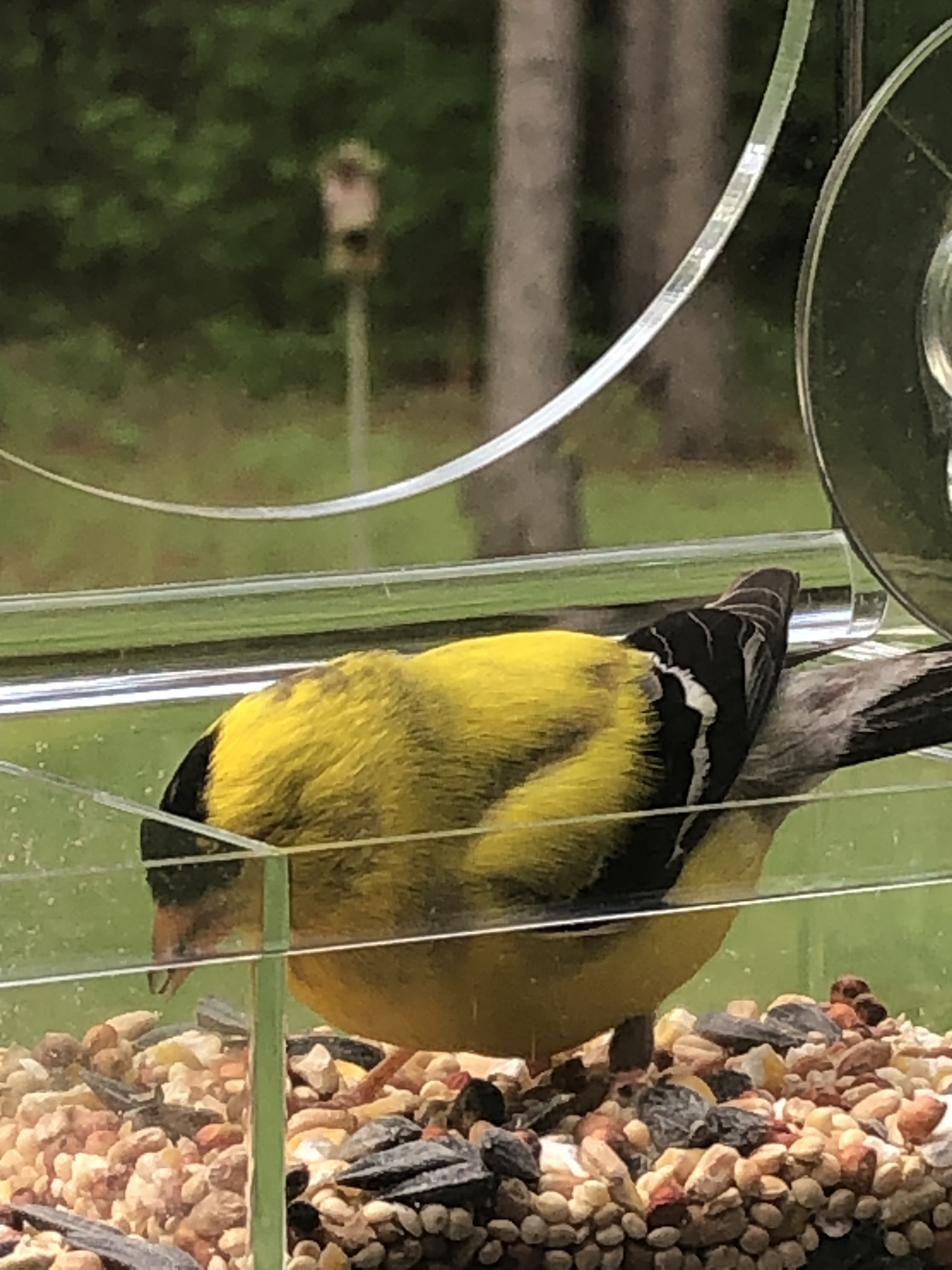
Male American Goldfinch at my window feeder on the Johnson Funny Farm – so close you can see his knobby knees!
One of the greatest pleasures in my life here on the Johnson Funny Farm in rural middle Georgia is birdwatching from the comfy chair by the window in my reading room. Each spring, we deep clean our feeders and add a new type to the all-you-can-eat bird garden buffet. Two years ago, I added four clear acrylic window feeders – and now we each have a coveted seat right by the window, with a front-row view.
The American Goldfinch is one of my favorite visitors. We also have Cardinals, House Finches, Pine Warblers, Indigo Buntings, Black-Capped Chickadees. and different varieties of nuthatches. sparrows, and wrens who love these smaller covered feeders. When it rains, they like to sit “inside” like the kids in The Cat in the Hat and look out their “window.”
We can get so close to our birds that we can see if they are missing any feathers or tell if they might have been in a fight. If we had ever wondered whether birds have tiny teeth, we could tell that, too. We ease up to the window and take a mannequin stance, careful not to throw our breath fog on the glass. The reflection from the outside makes it easy to remain undetected for long periods of time, watching our little frequenters blissfully fill their bellies with seeds, nuts, and berries.
A wide variety of birdseed mixes brings the fanciest charms and flocks and hosts and herds (I’m including a fuller list of specific bird group names at the bottom of this post). I found a chart at Pike Nurseries that has been helpful in matching seed, feeder: and bird type to maximize our traffic. For example, I look at the foot perch size, the encased wire openings for smaller birds, and the opening sizes where the seeds come out. All of those, along with location of the feeders, make a difference in all the species we have been able to attract. When Ace Hardware has a Buy One, Get One Free sale on brand-name birdseed in my small town, they know I’ll be there to get a cart full.
And these winged angels sing the most glorious songs of food blessings to their creator that I want to name them all Little Tommy Tucker!
If your mother doesn’t have a window feeder for the birds, it would make a lovely gift next weekend, along with a variety of seeds! I’ll be filling my feeders and remembering my mother, who shared with me the sheer joy of bird watching.
This chart makes attracting birds easy by telling which types of foods they like.
List of bird group names retrieved from: http://birding-world.com/names-bird-groups/

Aerie of hawks

Band of jays

Bazaar of guillemots

Bevy of larks

Bevy of quail

Bevy of swans (when in flight)

Boil of hawks (when in flight)

Bouquet of pheasants

Brace of grouse

Brace of pheasants (when dead)

Brood of chicks

Building of Rooks

Bunch of ducks (when on water)

Bunch of waterfowl

Cast of falcons

Cast of hawks

Chain of Bobolinks

Charm of finches

Charm of hummingbirds

Cluster of Knots

Colony of gulls

Colony of vultures

Company of parrots
Squadron of pelicans

Company of widgeon

Concentration of kingfishers

Congregation of plovers

Constable of Ravens

Convocation of eagles

Covert of coots

Covey of grouse

Covey of partridge

Covey of ptarmigan

Deceit of Lapwings

Descent of woodpeckers

Desert of Lapwings

Dissimulation of birds

Dole of doves

Drift of quail

Dropping of ducks (when on water)

Exhaltation of larks

Fall of Woodcock

Flamboyance of Flamingos

Flight of cormorants

Flight of doves

Flight of Goshawks

Flight of swallows

Fling of Dunlins

Flock of birds

Flock of birdwatchers

Flush of Mallards

Gaggle of geese (when on ground)

Gathering of birdwatchers

Gulp of Cormorants

Herd of cranes

Herd of Curlews

Herd of wrens

Horde of crows

Host of sparrows

Huddle of penguins

Jubilee of eagles

Kettle of hawks

Kit of pigeons (when in flight)

Knob of waterfowl

Murder of crows

Murmuration of Starlings

Muster of Peacocks

Muster of turkeys

Mustering of storks

Mutation of thrushes

Nye of pheasants

Ostentation of Peacocks

Pack of grouse

Paddling of ducks (when on water)

Parliament of owls

Parliament of Rooks

Peep of chickens
Chattering of Choughs

Pitiousness of doves

Pitying of turtledoves

Plump of waterfowl

Plump of wildfowl

Quarrel of sparrows

Raft of coots

Raft of ducks (when on water)

Raft of loons

Rafter of turkeys

Richness of Purple Martins

Rookery of penguins

Scold of jays

Sedge of Bitterns

Siege of Bitterns

Siege of cranes

Siege of herons

Skein of geese (when in flight)

Sord of Mallards

Spring of teals

Stand of flamingos

Strand of Silky Flycatchers

Sute of Mallards

Team of ducks (when in flight)

Team of geese (when in flight)

Tiding of magpies

Tittering of magpies

Trembling of finches

Trip of Widgeon

Trip of wildfowl

Trouble of hummingbirds

Unkindness of Ravens

Volery of birds

Walk of snipe

Watch of nightingales

Wdge of swans (when in flight)

Wedge of geese (when in flight)

Whisper of snipe

Whiteness of swans (when in flight)

Wing of plovers

Wisdom of owls