Mid-air dragonflies
Upsidedownrightsideup love
Hanging in the breeze


Patchwork Prose and Verse
Nature has a way of showing up and showing out.
For weeks, I’ve been watching and waiting for the figs to ripen, and almost overnight the first wave is ready for the picking. I saw the purple-brown fruits last evening and ran inside to fetch a plastic bowl and summoned my husband to bring his long arms and reach the branches down for me so that I could pick them. Together, we got what we could reach. It was too late to fire up the tractor, though. Usually, he raises me up in the bucket so that I can pick from the tip-top of the tree. That’ll happen after work today.
For now, we have our first bowl full, and they are plump and heavy.
But that’s not all that happened yesterday.
I finally caught a glimpse a bird I’ve been hoping to see for the past few years. Up until yesterday, I had only heard them. They live here on this farm, and I hear them in the wee hours of the morning, when it’s still dark. Ironically, I’d conceded our long game of hide and seek in yesterday morning’s post and declared them the winners. It’s as if one of these birds actually read my blog and decided to show a little mercy.
I was in the reading room that overlooks the butterfly garden. From the window that faces southward, I saw a stirring in the trees. A large stirring – – really an extra-large stirring.
Surely not, I thought.
It wasn’t dark. Just a couple of minutes before 8 p.m. on the nose.
It couldn’t be, I told myself.
I ran for my binoculars and searched the dense tree line for the bird, hoping it was still there when I returned.
I turned the knobs to focus and zoomed in as close as I could get.
Sure enough, just as I’d thought.
There it was, sitting on a pine branch, facing the house.
I could barely contain my excitement, yelling for my husband to come quickly, but not yelling loudly enough to scare off my buddy. I handed off my binoculars to him, and counted back the trees, pointed to the limb and actually used fractions to direct him 2/3 of the way up the Loblolly Pine to the Great Horned Owl grasping the branch with both feet.
We stood in awe, watching this great nocturnal bird of prey turn his head all around, watching the ground below for movement, like the embodiment of a Mary Oliver poem with wings.
It was fantastic to see. I still have shivers just thinking about the magnificent stature of this amazing creature and its commanding but camouflaged and silent presence.
After a few moments, he dove to the ground in pursuit of something he’d spotted, and just like that he vanished into the woods to feast on his catch.
And I’m burning with owl fever now, wishing desperately that he had a little camera attached to him like a policeman wears a bodycam, so I could have his night vision and see where all he goes and what he does. I’d have to hide my eyes when it came time for him to kill the bunnies and field mice and other critters, but I’d lose sleep for weeks just watching how he lives his days and nights.
Today was a treasure – ripe figs and Great Horned Owls. Life doesn’t get much more exciting.


We were driving through Palo Duro Canyon State Park in Canyon, Texas when I spotted him. We’d taken a last-minute cruise through one of the campground loops to see how big the campsites were and whether they had water and electricity hook-ups. I’d just remarked that the awnings over the picnic tables were a blessing of shade out in the brutal heat when I saw something out of the corner of my eye; it looked like a legless bird with a hooked bill, a crested head, and a long tail.
“Stop! Back up a foot or two!” I urged my husband.
There, resting under the picnic table of an occupied campsite, was a Lesser North American Road Runner. At first, I thought it was a Greater North American Road Runner, but now that I’ve compared the notes on the differences, I am convinced that it was the Lesser North American Road Runner. With names like these, I’m wondering whether these birds inspired Dr. Seuss to write The Sneetches.

A Road Runner. Not the kind from the cartoon. This one didn’t say Meep! Meep! and take off running from a coyote that left its outline where it crashed into a rock wall. I asked Google what the Road Runner says, and a Big-Bird-sounding Meep! is not part of its call. It sounds more like an impatient robot strumming its metal fingers on the counter at a Dollar General waiting on a cashier.
Apparently, this bird eats almost anything – rodents, snakes, lizards, other birds’ eggs, berries, cactus fruit, rabbits, spiders, and crickets. It can run at speeds up to 20 miles per hour and has an 18- inch wingspan.
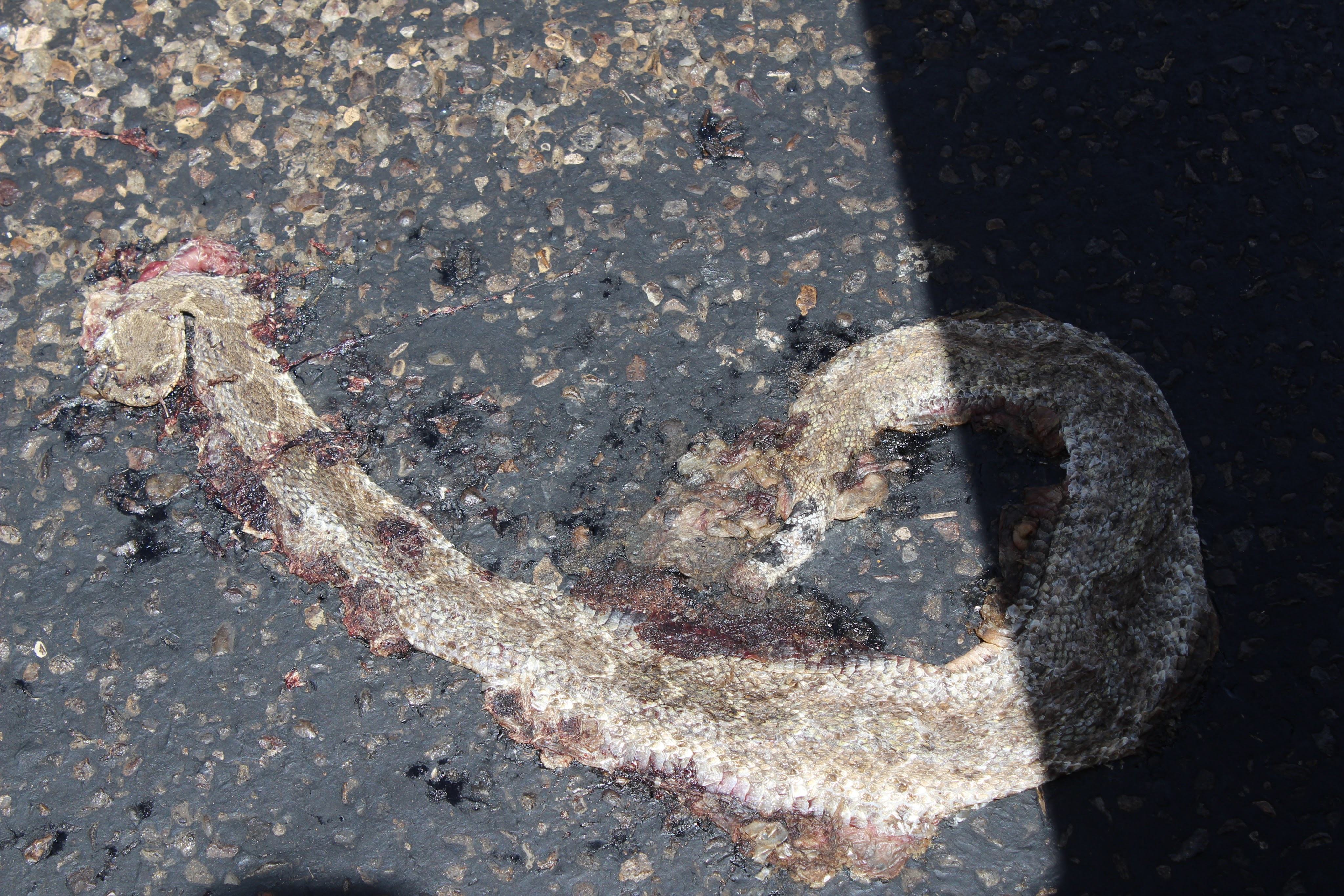
I was conducting a bird observation in eBird when I saw this species I’d never seen in real time. I snapped a few photos to add to eBird’s media documentation and we carried on with our drive, but my heart stayed right there under the picnic table with that roadrunner – – until we saw the remains of a Mohave Rattlesnake in the road. My husband spotted it, and sure enough, it had the black and white tail bands, the greenish hue, and the eye stripe and body patterning that I could still make out to get a positive ID on the snake. I’ll leave its photo at the very end so that if you are squeamish of dead snakes, you’ll have had a heads-up.

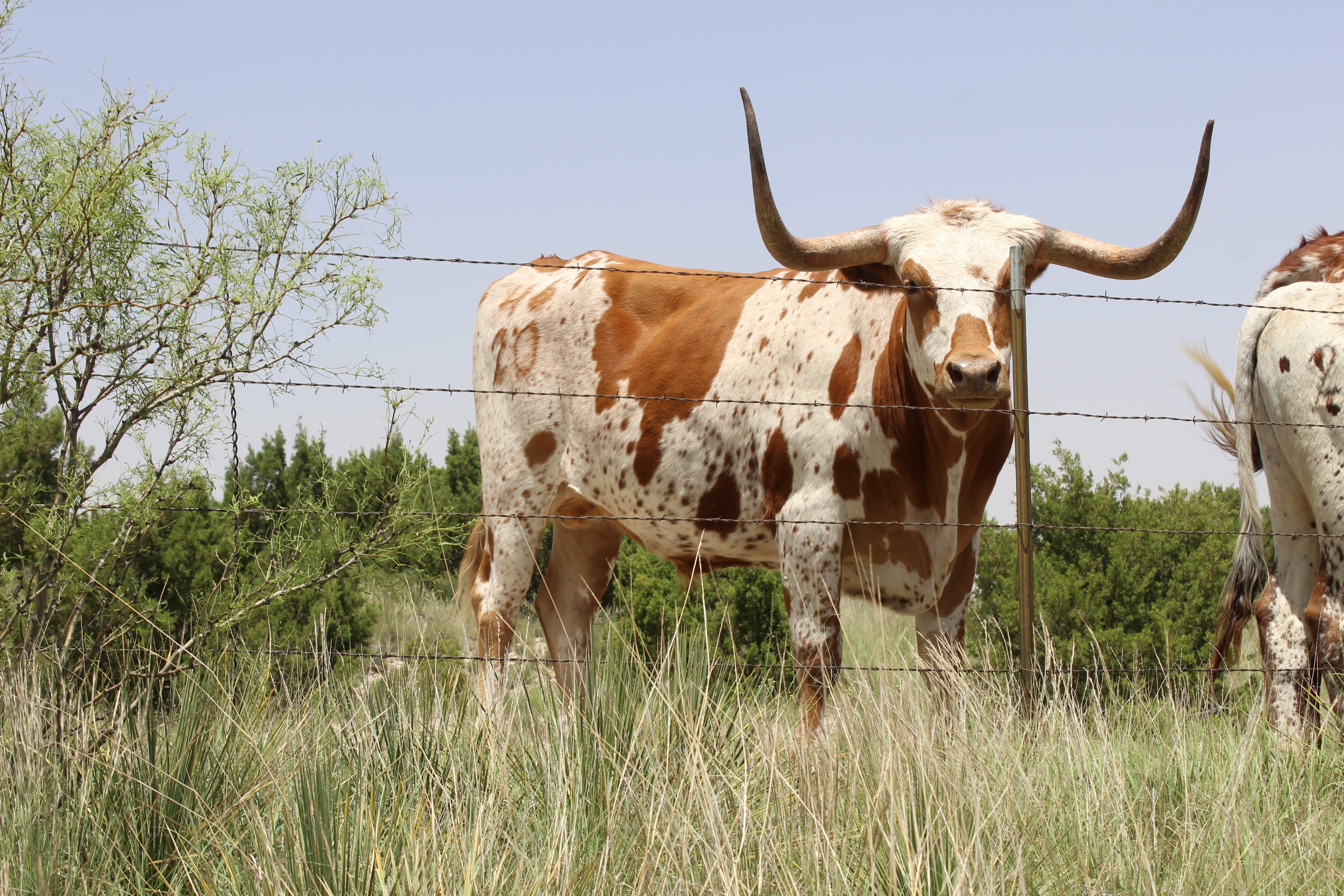
We also saw Texas Longhorns, a water snake (observed by my sister-in-law, who despises snakes), a porch full of barn swallows, and several other species of birds, including a pair of Northern Cardinals.

Palo Duro Canyon State Park is well worth the drive for its beauty and its wildlife viewing opportunities. Looking back through the bird observation logs, I noted that a day or so before we were there, someone had observed a wild male hog!

If you love wildlife and enjoy the beauty of nature, don’t miss Palo Duro Canyon State Park! You really don’t know what you might see out there in the big Texas wilderness!


Jennifer Jowett of Michigan hosts today’s Open Write at http://www.ethicalela.com and offers us a compelling prompt about the future of our world today. Her prompt is one we dance along the periphery of in so many of our countryside drive discussions, wondering about the future of our county, heartsick over each new development, each new killing of droves of trees that were once home to birds, deer, foxes, squirrels, bees, chipmunks, raccoons, opossums…..it breaks my heart for the wildlife and for the future of our grandchildren.
Fairy Firefly Future
I ride these ribbony roads
rolling hills of rural Georgia
where roosters herald
morning
proclaiming
LIKE BREAKING NEWS
the miracle
of sunrise
meander these mid-day meadows
and forests, treetop-tiered trills
of triumphant birdsong
tapping my fingers on the wheel to the
backbeat bleat of sheep
throaty goaty notes
descant of donkeys
breathe the melodies of
fresh-mown fields and
hallelujah wildflowers
in their symphonious seasons
pay homage to these sunset hillsides
alive with life’s simple abundance
harmonizing frogs and crickets
……my mind drifts,
~I turn a corner: houses under construction! ~
wondering…..what will become of this place?
will my great grandchildren
ever see green fairy fireflies
twinkling tiny stars
dipping beneath the
deep ocean of sky?
I thought I’d share a few photos of wildlife on the Funny Farm I’ve seen throughout the week. This week has been stressful, finishing testing and analyzing data, along with the other general parts of wrapping up a school year. It’s nice to come home and walk the dogs and breathe fresh air and forget about the demands and deadlines, if only for a few minutes.

Carolina Wren on the front porch, gathering nesting materials

Carolina Wren, singing, singing, singing

Mourning Dove

Funny Farm Bunny – there is a colony of them that lives down at the end of the driveway.

Funny Farm Finch

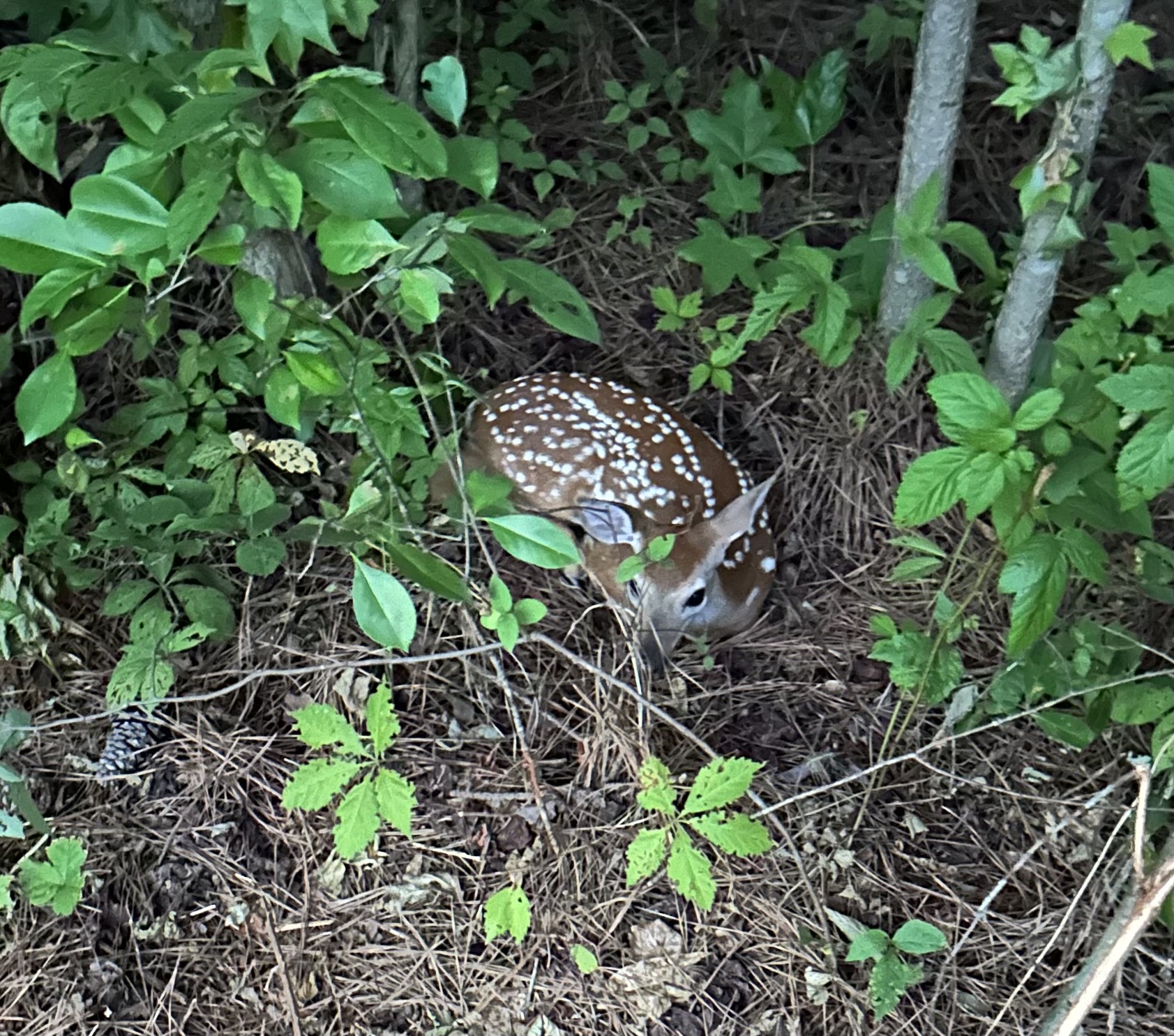
Deer (picture taken through a screen)

Northern Cardinal

Hawk in a tree (just left of center) – funniest thing: I said a quick prayer, “Lord, I would love to see a hawk today.” I always feel my mother’s presence when I see one. I did what I always do: I pulled into the driveway, turned off the air, put the windows down so I could drive slowly, hearing the gritty crunch of gravel under my tires, and began inching up the driveway. I first saw a tufted titmouse, then a robin. As I approached the top of the hill, I caught a glimpse of a large upward wingspan swooping up off to the left. I grabbed my camera, and for one moment the hawk took it all in and the next swooped off back into the deeper woods. I caught one photo, here, and one of just his tail as he flew away. What a beautiful moment – a prayer for a hawk sighting, a hawk, and the feeling of the presence of my mother. No prayer is ever too big – or ever too small!
TGIF! Cheers to weekend fun and relaxation!

One of my 2023 goals is spending more time outdoors, taking more notes in nature observations, and learning more about the ecosystem and the creatures that do jobs I never fully appreciated until I became a little more educated on their roles in this great universe. A couple of days ago, I shared the plans for our bat hollow. Our first bat box has been installed, with more to follow. Today, though, is about another mosquito controller. Purple Martins, like bats, are environmentally-friendly critters who help control mosquito populations.
We weren’t sure how “involved” it would be to assemble a purple martin house. These houses are generally either a string of gourds hanging high, or a house reminiscent of a high-dollar condo situated on one of those tropical islands where the drinks all come with those little umbrellas and everyone wears floppy sun hats and sunglasses with cat-eye bling that sparkles as they sit back and sip in the breeze. Gourdless, we bought the high-dollar condo for them and discovered the pole was the same price as the house (12-20 feet in the air these places must be), AND has to be cemented into the ground.
So we took the unopened box camping with us one weekend, grabbing a multi-tool as an afterthought in case we needed a Phillips Head screwdriver or something. We found it remarkably easy to put the house together, and while we needed more than two hands, much of the structure was tabbed and punched so that it didn’t require a tool except on the roof. We put it together and brought it home. My husband fought mosquitoes with his bare hands while using post-hole diggers to set it deep in the ground, and then dumped a bag of Quikrete in to let it set overnight. We raised it to the heavens the next day, and now we await the migration that has, probably, mostly already happened. The late stragglers will find a vacancy in the inn…..we hope.

Today’s host for Day 10 of #VerseLove at http://www.ethicalela.com is Brittany Saulnier, who inspires us to write whimsical science poems. I chose to focus on outdoor science – nature and all its discovery and wonder about the world! I have just gotten my flower presses out of the old barn over the weekend and can’t wait to gather flowers and greenery to press on a long walk one afternoon this week. So much of science is soothing, just pure medicine for the soul. Brittany’s gift of a prompt that invites peace is particularly appreciated on this Monday back to work after spring break. Today, my poem is a first-word-Golden Shovel Tanka (5-7-5-7-7) string. I took my striking line as a quote from a birding journal by Vanessa Sorensen: “Adopt the pace of nature: her secret is patience.” – Ralph Waldo Emerson
Bloom! adopt a mindset~ the practice of noticing pace your amazement of observing more fully nature: less is so much more her covert moments secret discoveries ~ what is our big hurry? its blessings beckoning us patience blooms on every stem
Today at http://www.ethicalela.com, Emily Yamasaki is our host for Day 8 of #VerseLove. She invites us to write Something You Should Know poems in the style of the great Clint Smith. You can read her full prompt and poem here.

Note to readers: try this one! I just rambled. Sometimes I use a Sarah Donovan strategy I learned several years ago: just write for 10 or 15 minutes and see what you get. Don't worry about editing or word choice or anything - just draft. That’s what I did today. Please come write with us!
Something You Should Know
is that I only moved my lips when Mrs. Flexer
played Living For Jesus all those Sundays
in the big group before small group
because I can’t sing except with
my heart
and that I just acquired the old oak secretariat that
has been in my parents’ home since I was
a baby in Kentucky along with the old red
milk can for my porch, but back to the
secretariat: I love that it shares
the name with the greatest horse
who had to win in Kentucky first
to win the Triple Crown
and that as a child I was mesmerized by Harold Monro’s
poem Overheard on a Salt Marsh
from Childcraft Volume 1 Poems and Rhymes
with the nymph in the green dress
and it’s framed by my bed today because
I’m still mesmerized by it
and that I savor Saturdays with morning coffee
and good conversation
and that I love plants but can’t grow them
because they all die except Leafy Jean and
Leon Russell, who are thriving on the front porch
and that I have four bluebird eggs in one birdhouse
and baby Carolina Wrens in my garage
up over the garage door apparatus
and Brown-Headed Nuthatch hatchlings in another birdhouse
and fledgling cardinals in my Yellow Jasmine vines
and a nest under the porch eave
and I saw an eagle a week ago
and that all three of my Schnoodles have literary names
Boo Radley for obvious reasons
Fitz because of, you know, the party animal F. Scott
and Ollie for my favorite poet Mary Oliver
and that I blog daily and call all my writing group
people my friends
including you.


Throughout February, I worked on a plan to involve others in my blogging experiences this month. Today, my sister-in-law, Dr. Bethany Johnson, is my guest blogger on the benefits of Ecotherapy.
Dr. Bethany Johnson is a professor of Sociology and Cultural Anthropology. She is a writing contributor for several online magazines, including Prime Women and Honey Good. Last summer , when working with @beginningisnow with actress Brooke Shields, she was selected as one of the 40 Most Influential Women Over 40. Currently, she is in the beginning stages of writing a book about losing unnecessary social expectations and rediscovering oneself. Please welcome Bethany today!
Mother Nature’s Healing Ability – The Benefits of Ecotherapy
Have you ever been feeling down, stressed, or just overall not feeling good and then gone outside for a bit only to begin to feel better? It isn’t a coincidence that being outside made you feel better. The answer to many of our physical, emotional, and mental lows can be found right beyond your door.

Ecotherapy is known as the practice of therapy that focuses on being outdoors and in nature. It is also known as nature therapy or green therapy. The term ecotherapy arose in 1992 when Professor Theodor Roszark used it in his book The Voice of the Earth. Many doctors (mostly functional physicians) are now using the connection with nature as part of protocol for getting healthier. Multiple studies have shown the benefits of being in nature. Many may say there is not enough research to validate this theory, however, there are enough examples of it working to make a reasonable connection.
A Dose of Nature a Day:
Helps lower blood pressure
Helps control diabetes
Lowers stress and anxiety
Rises energy levels, fights fatigue, and increases the quality of sleep
Reduces depression
Reduces the levels of ADD and ADHD
Increases mental focus
Since I began studying the practice of ecotherapy, my experiences outside are so different. Each trip outside brings something different – even when I am in the same place. I now am very purposeful in slowing down and connecting with what is around me. Today, for example, on my walk I saw the bright white dogwood trees, I felt the sun warm my skin, especially my toes (which must have been cold from being inside and I hadn’t noticed until my walk), and off in the distance I heard a woodpecker. While walking, I first smelled something burning … wood. However, the wind shifted and then I smelled fresh cut grass. This is one of my favorite smells in the world and immediately took me back to my childhood living on the farm in Illinois! My walk tomorrow will be a whole new experience, and I can’t wait!
Gaining the benefits from ecotherapy is not difficult. You simply need to make time to get outside! The important aspect of ecotherapy is simply being outdoors and connecting to the natural elements. No matter what you are doing outside, be conscious of the fresh air you are breathing in, the wind or breeze blowing across your skin, the sounds that surround you (this is better if it is sounds of nature and not of human life). Make certain to acknowledge the colors that surround you. Look at the greens of the trees and grass, the vibrant colors of the flowers, the different textures such as the roughness of tree bark but the smoothness of a flower petal. Make certain to engage all four senses: touch, taste, smell and hearing. So, get up and get out!! Enjoy nature and heal your tired body, mind, and soul. Love to all of you!


The Great Backyard Bird Count kicks off this weekend (February 17-20), and I’ll be counting the birds that come to visit the Johnson Funny Farm in Williamson, Georgia – partly because I love birds, but partly too in memory of my mother, Miriam Haynes, who adored them and worked hard to establish a nature-loving legacy that she would be proud to know lives on in ways that continue to make a difference.
Here is everything you need to know to prepare and to participate this weekend. I’d love to invite you to participate and to share your findings and photos on your blog post next week. It takes as little as 15 minutes to observe and only a few minutes to report.

The Great Backyard Bird Count (GBBC) started in 1998 when the Cornell Lab of Ornithology and the National Audubon Society collaborated to create the first online citizen-science project. In 2009, Birds Canada joined forces to expand the geographic data collection points. Its goal is to encourage people from all over the world to spend time watching and counting as many birds as they can, and then reporting their observations – which helps scientists better understand global bird populations and their migratory patterns.
To take part in the Great Backyard Bird Count, you can visit this link to learn more – but to make it quicker and easier, I’ve pasted this information from the link:
Step 1: Decide where you will watch birds.
Step 2: Watch birds for 15 minutes or more, at least once over the four days, February 17-20, 2023.
Step 3: Identify all the birds you see or hear within your planned time/location and use the best tool for sharing your bird sightings.
How to Share Your Observations:
Here’s a link about the Great Backyard Bird Count from a former edition of Georgia Magazine.