My Slice of Life Plan

Photo by Andrea Piacquadio on Pexels.com


A little over a decade ago, my adult daughters and I went to the Bodies exhibit at Atlantic Station in Atlanta, Georgia. We drove the short distance from our rural farmland into the city and spent the day examining every part of a human body, all preserved behind clear plexiglass cases to show how bones, muscles and organs function as parts of systems, all packed into the skin-covered suitcase of a lifetime. 

We entered one room where an entire body had been cross-sectioned, sliced in horizontal sections from head to toe the way one might casually slice a carrot coin-style while preparing dinner. Knowing the bodies had all been donated to Science and were real people at one point in time, I was in the rabbit hole of endless wondering: when was this person born? What was her name? what did she do for work? did she have children? did she ever, for one second of her life, have any inkling that millions of people would study every inch of her dead body, parts she herself had never seen, all preserved and on display in such an arrangement as this? I wanted to scan a QR code and see a video of what she’d looked like on the playground when she was 5 years old, her mother pushing a swing from behind as her dress sash rippled in the wind, little Mary Jane shoes and lacy socks pumping to keep momentum. And after wondering all these things about how she’d lived, I wondered how she’d died, ruling out the obvious impossibilities: she wasn’t eaten by a shark or crushed by a falling rock. 

The dark, shadowy fascination of that day has stayed with me for all these years, and I often find my mind transferring the concept of cross-sectioning things that I never would have considered cross-sectionable: a bird, a plane, a castle, a car, or even time itself, like some Stephen Biesty book that my son used to enjoy when he was young. I have even wondered what the waking hours of my day would look like cross-sectioned here in my little corner of rural Georgia.  Perhaps, even what those same exact cross-sections of time would look like cross-sectioned across our country by fellow bloggers from points across the map – or even the world. Throughout March, that’s my plan as I participate in the Slice of Life Writing Challenge at www.twowritingteachers.com. I’ve created 31 equal increments of time from 5:00 a.m. to 9:30 p.m., and I’ll write a poem for a blip of living during each sliced segment of a part of my day throughout the month- emotions, senses, mundane or fascinating work or home tasks, and maybe even a daydream or two. 

who knows what the days

will bring? Let’s all live

and find out – – ready, set, write!

Blue Ridge Writer’s Conference Day 1 : Things I Love

The original courthouse is now the home of the Blue Ridge Arts Council

there’s nothing I don’t love

about the Blue Ridge Arts Center

from its towering columns

of stately presence

to its history and artful womb

this birthing center for

pottery, dance, painting,

sketching, mosaic, sculpture,

stained glass, yoga, tea blends, origami,

jewelry making, drama, weaving,

poetry, plant pressing,

paper mache, woodcarving, and

exhibits of inspiration but what

I love best is that there is something

for everyone ~

including writers

In the first session, I wrote an I’m From poem, which I’ve written several times through the years – but it changes every time.
We also learned about a Color Study. I’ll be featuring this one on Ethicalela.com sometime this year as a prompt.
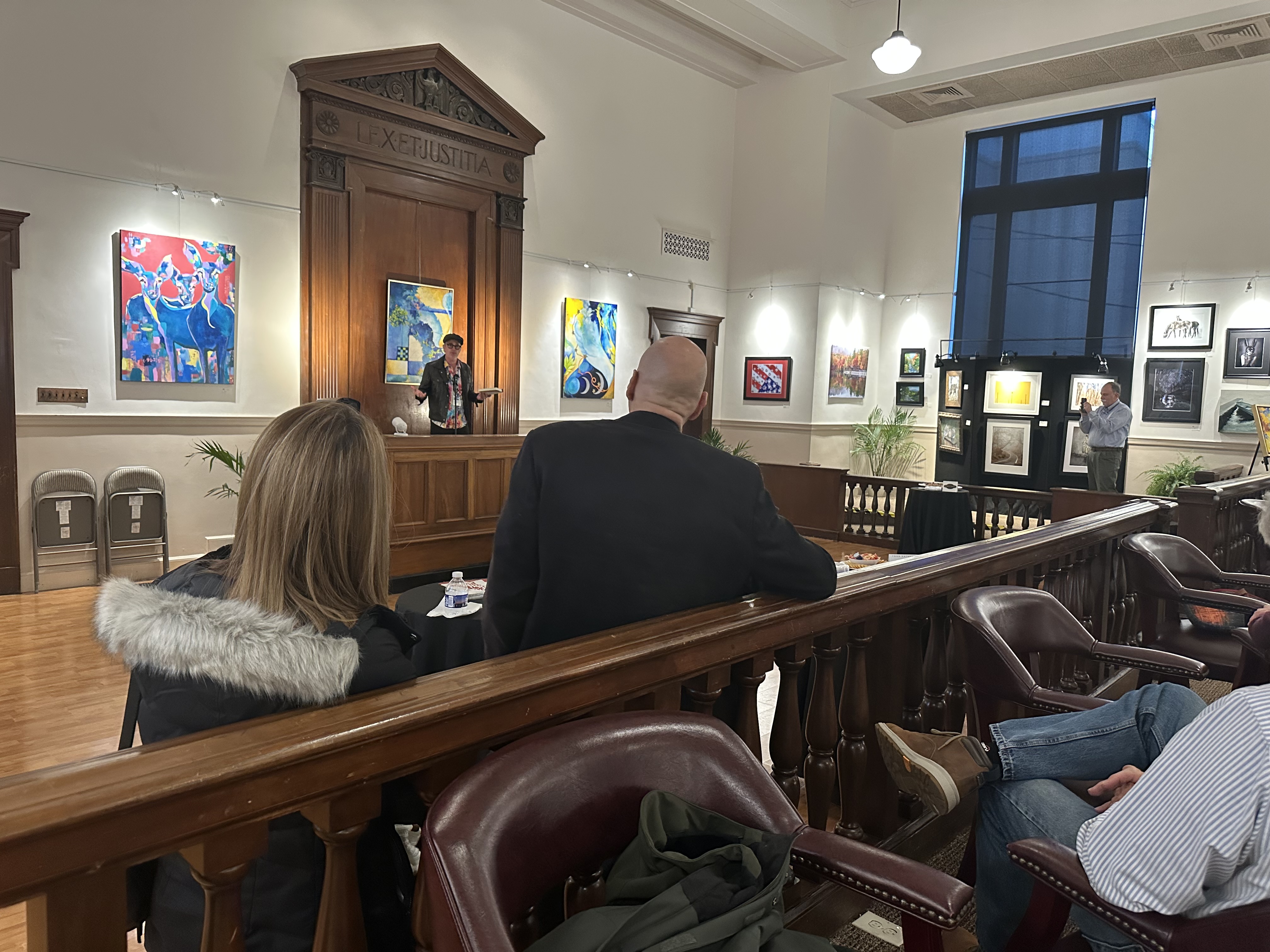
A Poetry Reading during the Opening Reception in the old courtroom
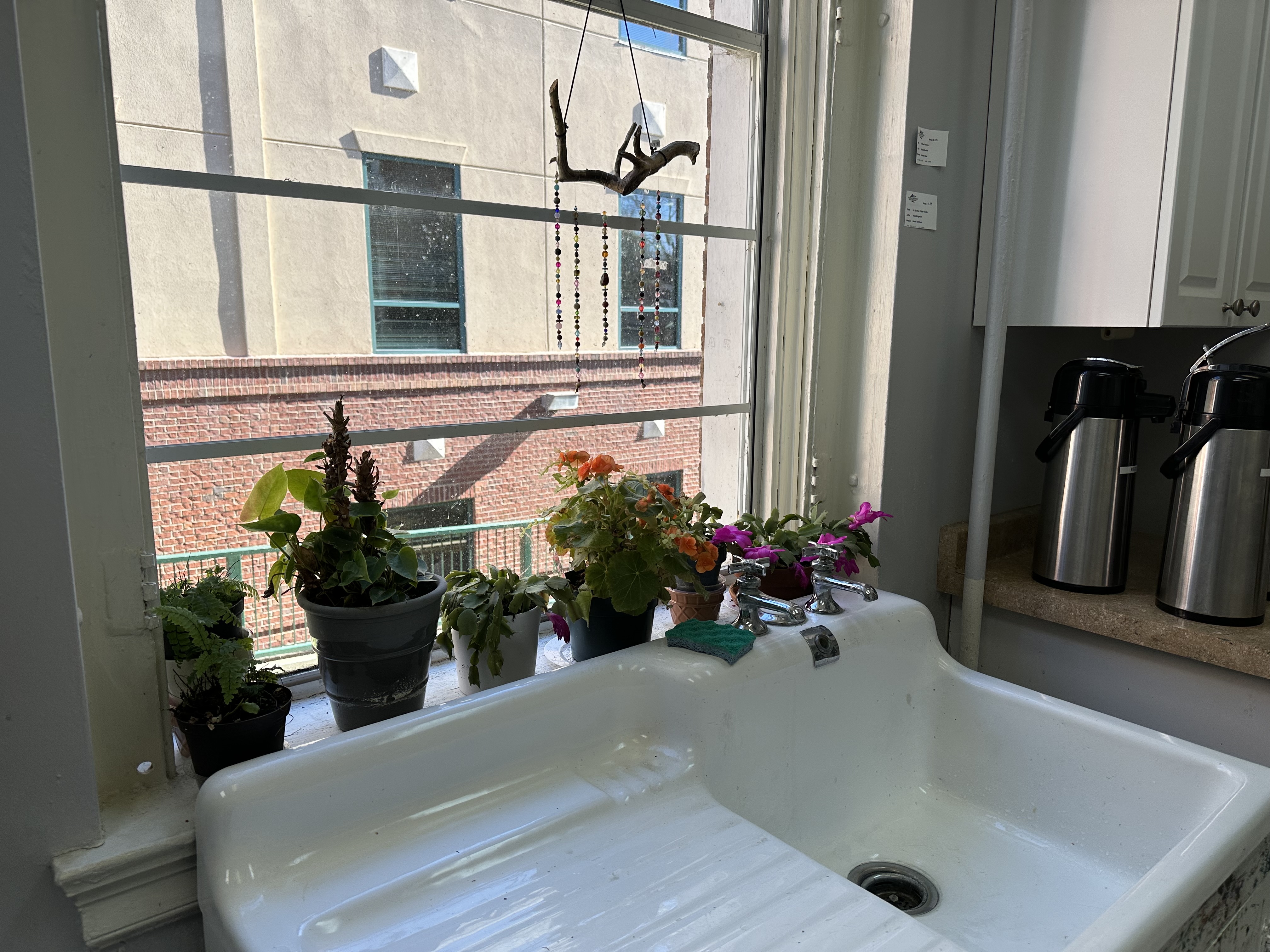
I love the old sink and the windowsill deep enough to grow friendly flowers.
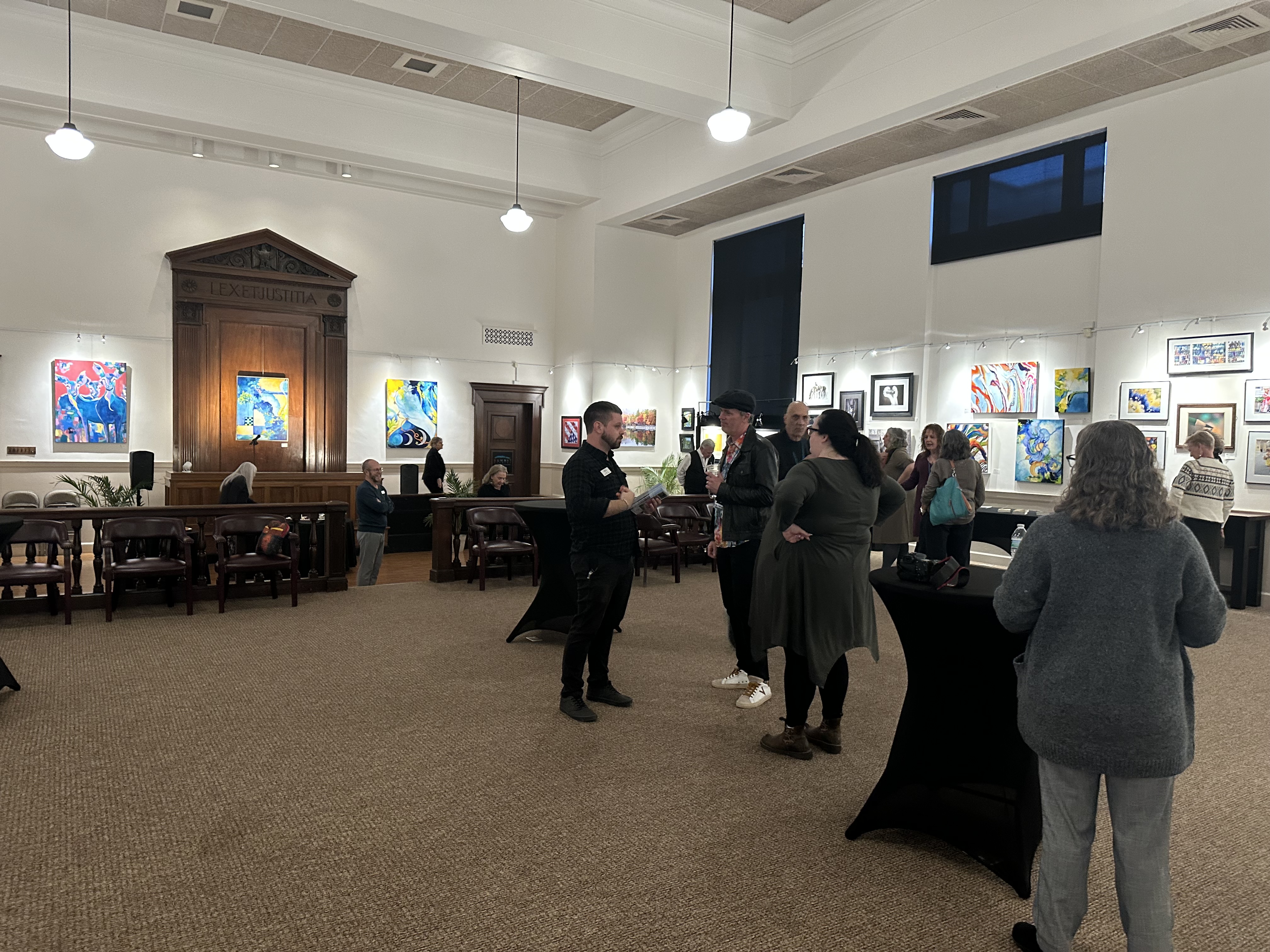
The Opening Reception was held in the main part of the old courthouse.

Oh, how I wish our county held a writer’s conference. Maybe that’s my next venture, starting in fall of 2026: to conjure up a place for art to happen here in one of the most beautiful places in rural Georgia. If that ever happens, The Art Center at Blue Ridge will be my model. I need an old farmhouse or barn with an exhibit space and smaller spaces for workshops and rooms upstairs for visiting artists and an old sink with a deep window ledge for plants and a fresh pot of coffee……..and I’ll keep dreaming.

Check out this amazing place and all it has to offer here.

Read more about this year’s writing conference here.

February Open Write Day 2: Hope Lies Within

Photo by Viktoria Slowikowska on Pexels.com

Stacey L. Joy of Los Angeles, California is our host today for the second day of the Open Write at http://www.ethicalela.com. She writes, “Back in April 2021 for Verselove, our Ethical ELA friend, Dr. Kim Johnson, prompted us to write a mirror poem by finding words from another poet to use in our original poems. I fell in love with You, too, Can Fly by Zetta Elliot. And I fell deeper in love with the Etheree as my form. It’s Black History Month, and my heart longs for hope during such difficult times. I know our ancestors left us with hope. It’s up to us to find it and spread it.”

You can read Stacey’s full prompt and the poems of others, along with the process for writing an etheree here.

I used two of my favorite black poets’ works today, and one favorite of Mexican-American descent, to blend an etheree in celebration of all strong women of this nation: Lucille Clifton (won’t you celebrate with me) and Maya Angelou (The Human Family), two strong women whose poetry modeled what our reigning US Poet Laureate Ada Limon meant when she wrote How To Triumph Like A Girl. And here we are, standing on this bridge together.

Lifting Our Shirts

take

my hand

celebrate

togetherness

strength in unity

we are more alike, my

friend(s), than we are unalike

the human family survives

on this bridge of lady heart triumph

just lift our shirts and see to believe it

When She Comes Calling

I worry about this one

this sweet little fawn who

used to have a twin

when they

still

had

spots

we’d watched them

from the window

for weeks

clumsily playing

beside mama

just yards

from our front door

near the edge

of the woods

before spotting one

crumpled on the road

near the driveway

near their

dense thicket

and now this one

with her rumpled rump fur

comes calling

alone

so close

to the house

as if she’s trying

to

say

something

Tea and Writing With Friends

Unexpected kindnesses can happen anytime, in the most needed ways. A couple of weeks ago, fellow slicer and friend Barb Edler of Iowa reached out to see if I wanted to be part of a small group she was putting together for The Stafford Challenge of daily writers in our second year of writing a poem a day for one full year. Each of us writes in three common writing groups and have met in person to make presentations at NCTE. We keep in touch, and I’ve often thought that my friends in the midwest and west coast and I share deeper connections than friends sitting next to me each day at work – – because we share the bond of kinship through writing. And I’m so thankful for this, because along with Denise Krebs and Glenda Funk, we found we were kindred spirits all seeming to need a lift right about now. Each of us shared a poem via Zoom that we’ve written recently and found a common thread – a numbness, disbelief, sadness about what is happening in our world with its shocking politics, heartbreaking plane crashes, and other woeful wreckage.

There are no words to capture the deep feeling of comfort that comes when you sit with friends, near or far, with a cup of tea and spend time sharing writing. I’m thanking each of you today, because that’s what slicing does, too. It brings us together to share what is foremost on our minds and hearts and keeps us in touch with what is going on in our lives across the globe. I love having my gardening friends, my RV bloggers, my travel buddies, my fellow grandmothers who share amazing ideas, fellow readers and birdwatchers and more. Thank you for being a writer in my life.

I’m sharing my tricube (three stanzas, three lines per stanza, three syllables per line) that I shared last night (below). I’m also making plans for March slicing – – I’ve sectioned out the waking hours of a typical day, and I plan to write a poem for every 31-minute time slot about something happening during that time, just to feel the real-lifeness of each moment, just because there can be deep comfort in things as simple as stirring honey into a cup of hot green tea and accepting that it’s okay not to want to read the tea leaves.

Photo by Leeloo The First on Pexels.com

I don’t know

I don’t know

what to say

words fail me

I don’t know

what to do

verbs fail me

I don’t know

what to think

thoughts fail me

The Serviceberry and the Question: Did I Bees Good?

Photo by Felix Mittermeier on Pexels.com

As I continue along the journey of my One Little Word for 2025, enough, I’ve been thinking lately about the stewardship of how I over-own things – do I selfishly trap them and call it collecting, or have I done my part by passing them along when they have lived their best life with me?

I think we all have a tendency to hoard things – to save a penny for a rainy day. But what happens when the collections have taken over our lives and the proverbial pennies are now quarters and dollars, anchoring us instead of freeing us? In 2023, I looked at all the boxes in the loft of our barn and in our attic and stepped back, taking it all in. I hung my head in shame at what I saw. It was like a graveyard of opportunity for still-useful items never seeing the light of day anymore, and I was the undertaker. I was the bad guy in the parable of the talents, burying the promise and potential of what had been entrusted to me. No, I have not been a good steward when it comes to things.

Once upon a time, I heard a saying shared by my father in a sermon. He reminded us all not to be those people who get all we can, can all we get, and sit on our can. At the end of 2023, I realized I’d been sitting on my can. And I needed to take action.

My grandparents grew up during The Great Depression, and learned about their stories when we would go visit them as my brother and I were growing up. My paternal grandparents lived in Waycross, Georgia, and they were the absolute King and Queen of double coupons. I learned a lot about frugality from them – about saving, about the concept of “enough,” and also about the disadvantages of too much. My grandmother clipped those coupons and looked for whatever was free – whether she had a plan to use it or not. At the heart of this was the need for protecting – for providing and provisioning the essential needs of a family, and I began in those days to understand the way that money could be stretched.

I used to hear the water come on, go off, come on, go off – – and years later, I realized that she showered that way. She got wet, turned off the water and lathered, turned it on and rinsed, and repeated. She double-couponed so much that they had an entire storage room of cereals and other dry goods. I was having a bowl of cereal on one visit when I noticed something moving in the milk. On close inspection, I was horrified to discover that I was eating bug swimmers. From that experience, I learned the importance of checking expiration dates.

But I also learned something else: the extreme effort on not wasting water did not transfer to the waste happening when the dry goods spoiled before they could be used. Sufficiency seemed at odds between having too little and having too much – and there are problems on both ends of that spectrum when we forget the importance of fine-tuning our needs to the middle ground of enough.

All this examining things and re-calibrating my mindset about the things I’d accumulated made me think of a childhood story that my mother used to tell me. At one time in my life, I was an aim-to-please rule following preacher’s kid who, in my young child voice, would ask my mother, “Did I bees good?” whenever the stringent need for good behavior in church or at some event, visit, or outing was over and done and I was needing my recognition and report card on my efforts. Likely, I was ready to get back to business as usual with a little badness kicked into gear and let go of the need for my best behavior.

But as I looked at all the things I was holding hostage in my barn and attic, I wanted to re-ask that question through a different lens: Did I bees a good steward of things?

Nearing 60 with retirement dreams of lightening the load to ease the way for RV travel and a significantly downsized house in the near future, I began a quest last year to clean out our home and attic and purge the anchoring cargo of a lifetime of teaching and boxes of mementos and sentiments that have outlived their purpose in my life. It’s time to prepare for the next chapter – whatever that may be. No one can move forward who is so heavily anchored in the past.

I have a question:

Did I bees a good steward of things?

Or did I hoard them?

I read a game-changing book in 2024 by Robin Wall Kimmerer, entitled Braiding Sweetgrass. At several times throughout the book, I found myself silently weeping tears for all of the boxing of things I have done in my life. As I turned the pages of that book, I imagined the life involved in all these items – the trees that once stood tall in the forest sheltering nests of woodland critters – trees that gave their lives to become books and furniture and toys; the plants that yielded cotton and other fibers to become linens and towels and clothes; the hands of craftsmen and seamstresses who shaped the creation of each thing. I was gobsmacked.

In the first month of 2025, I finished Kimmerer’s most recent book, The Serviceberry, in which she discusses the ethics of reciprocity in a gift economy. Abundance and gratitude are at their purest when we understand the concepts of the gift economy as opposed to the market economy. There is life-changing magic in the mindset and understanding that the notions of self-sufficiency and hoarding are at odds with our values and people we hold dear – and may actually be harming them. Her essay that summarizes the main concepts in her book is available here, but I offer this warning: be ready for a seismic shift in your thinking once you read it. It tops any sermon I’ve ever heard on Matthew 6:26, and ironically, birds are at the heart of the Bible verse and at the heart of The Serviceberry.

It begs the cyclical question at the end of each day, each week, each month of striving to live in a more simplistic and abundant way: did I bees good? And at the end of 2024, I could finally say that I’ve moved from being a failing steward of accumulated things to passing with a C. I still have a way to go, but I’m doing the work of managing the mountain by keeping my One Little Word front and center. I don’t buy the extra tube of toothpaste just because it’s on sale – – because I have enough. I leave some for others, and I leave room for honoring the uncluttered spaces and the sense of order. And I can feel it.

Snowbound Nonet

Photo by Mike Yak on Pexels.com

I feel contained, bound to stay home in

this winter storm with ice and snow

to wrap up in flannel and

fleece, to read by the fire

in the white silence

of frozen world ~

snowbound brings

freedom,

peace

The Stillness of Snow

We had far more ice than snow last weekend, but there is something transformative about the stillness of snow. As a year turns, the tranquility of snow brings a feeling of a clean slate. All the old crap of last year is frozen solid, then melts away faster than a million snow cones on a hot summer day at the softball field, leaving only the fresh breath of newness, ripe for the rightness of a new start.

Which, I’ll speak for myself while knowing it isn’t just me, we all need. Therapists often tell patients to write down all their woes and then ball up the paper and throw it into the fire to watch the negativity burn away. But there is also renewal in the power of cold. Take this pine tree farm, for example. It suffered the least amount of loss of any other pine tree farm planted in this area the year it was sown. I remember my husband telling me that he, his father, and his brother were so cold that day that his father’s eyes and nose were stinging and running so heavily that the frigid temperatures made ice crystals all along his eyelashes and mustache and beard. They worked in rotating positions that day. One of them drove the tractor, while the two on the back end were the planters. One would unbundle the frozen saplings, and the other (lying down on the back end facing the ground) pushed them into the earth in spaced out rows. When the foresters asked them what they had done to prevent such loss of trees, they didn’t really know – until they all looked at the calendar and made some comparisons of data. They’d planted the Johnson Funny Farm pines on the coldest day of the year.

If pine trees thrive when they’re planted on the coldest day of the year, I like to imagine that this cold and snow and ice have repotted people, too. I’ve needed a hard reset for well over a year now, and my sapling spirits-at-heart have needed a re-rooting.

That is what the stillness of snow does. It brings a magical reset, filled with a Narnia-like magic to all the possibilities for the year ahead. And there are snowflake pictures for Tuesday and Wednesday of next week, too.

As I stood on the porch so many times taking in all the beauty last weekend, I couldn’t dismiss the feelings of sadness and fear that I felt for my California friends evacuating from the wildfires at the opposite end of the cold spectrum, on the opposite side of the country. I reached out and checked on them, and they replied that they are fine but are keeping heightened awareness of the fires. I continue praying for their safety.

it speaks for itself

the snow, silently falling

blanketing the hush

By the Fire Nonet

not for one second did I take this

ice day for granted ~ nope, I read,

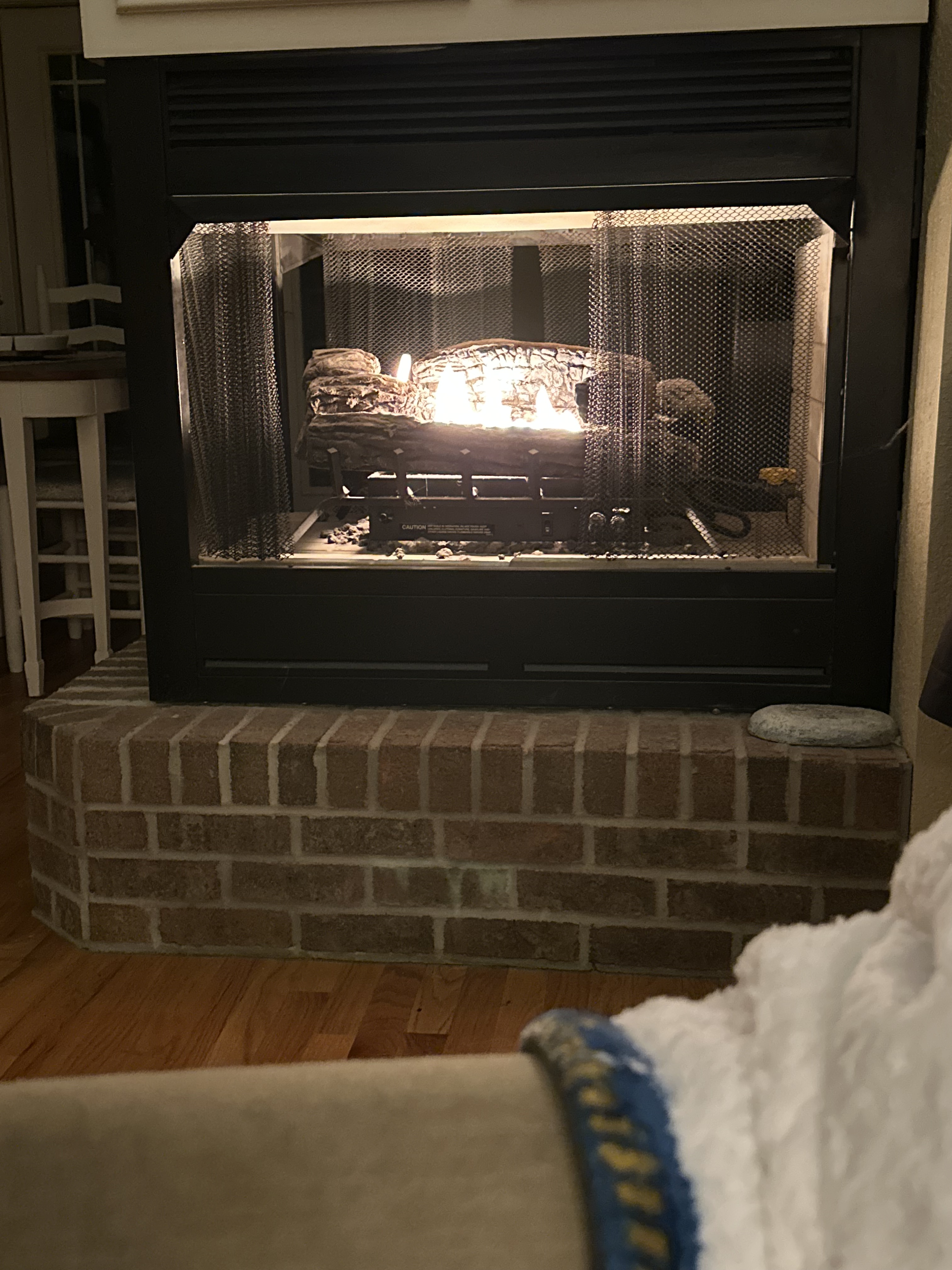
sat by the fire, sipped green tea,

snuggled our spoiled schnoodles,

threw on the throw,

observed the birds,

worked crosswords,

prayed prayers,

napped

Childhood Church Communion

Even as the new pastor served communion for the first time in my childhood church where my father has served during two different times of his life, he invited two former pastors to join him in this significant event. We watched over 50 years of servanthood history offer communion together, and it was meaningful to see family and faith in such a beautiful image.


Photo by Viktoriia Nechytailo on Pexels.com

on Sunday we watched

First Baptist Church of YouTube

(my home childhood church)

as three pastors served

communion together in

decade history

past, present, future

threading connections through time

serving Heaven’s love