Tea and Writing With Friends

Unexpected kindnesses can happen anytime, in the most needed ways. A couple of weeks ago, fellow slicer and friend Barb Edler of Iowa reached out to see if I wanted to be part of a small group she was putting together for The Stafford Challenge of daily writers in our second year of writing a poem a day for one full year. Each of us writes in three common writing groups and have met in person to make presentations at NCTE. We keep in touch, and I’ve often thought that my friends in the midwest and west coast and I share deeper connections than friends sitting next to me each day at work – – because we share the bond of kinship through writing. And I’m so thankful for this, because along with Denise Krebs and Glenda Funk, we found we were kindred spirits all seeming to need a lift right about now. Each of us shared a poem via Zoom that we’ve written recently and found a common thread – a numbness, disbelief, sadness about what is happening in our world with its shocking politics, heartbreaking plane crashes, and other woeful wreckage.

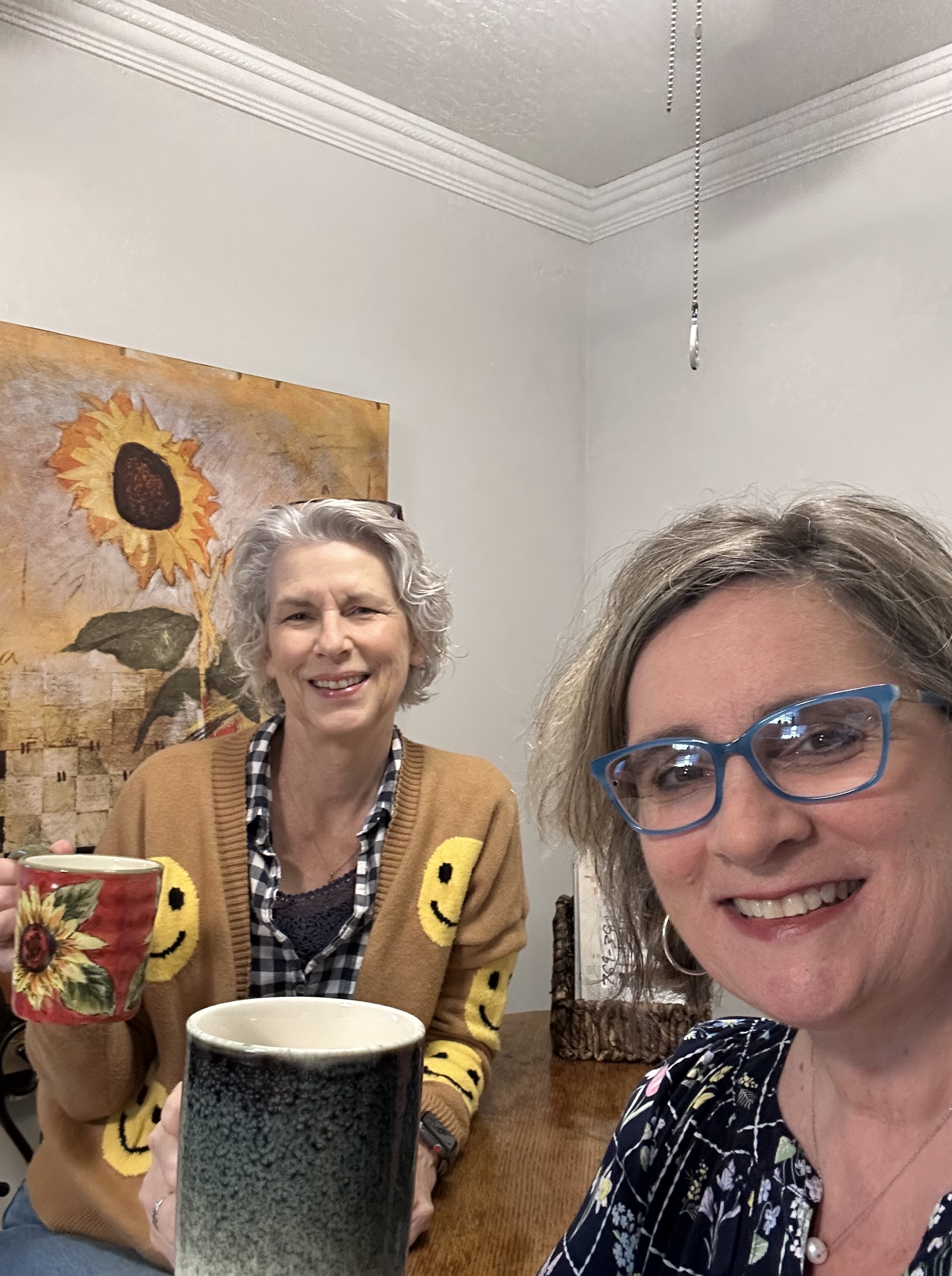
There are no words to capture the deep feeling of comfort that comes when you sit with friends, near or far, with a cup of tea and spend time sharing writing. I’m thanking each of you today, because that’s what slicing does, too. It brings us together to share what is foremost on our minds and hearts and keeps us in touch with what is going on in our lives across the globe. I love having my gardening friends, my RV bloggers, my travel buddies, my fellow grandmothers who share amazing ideas, fellow readers and birdwatchers and more. Thank you for being a writer in my life.

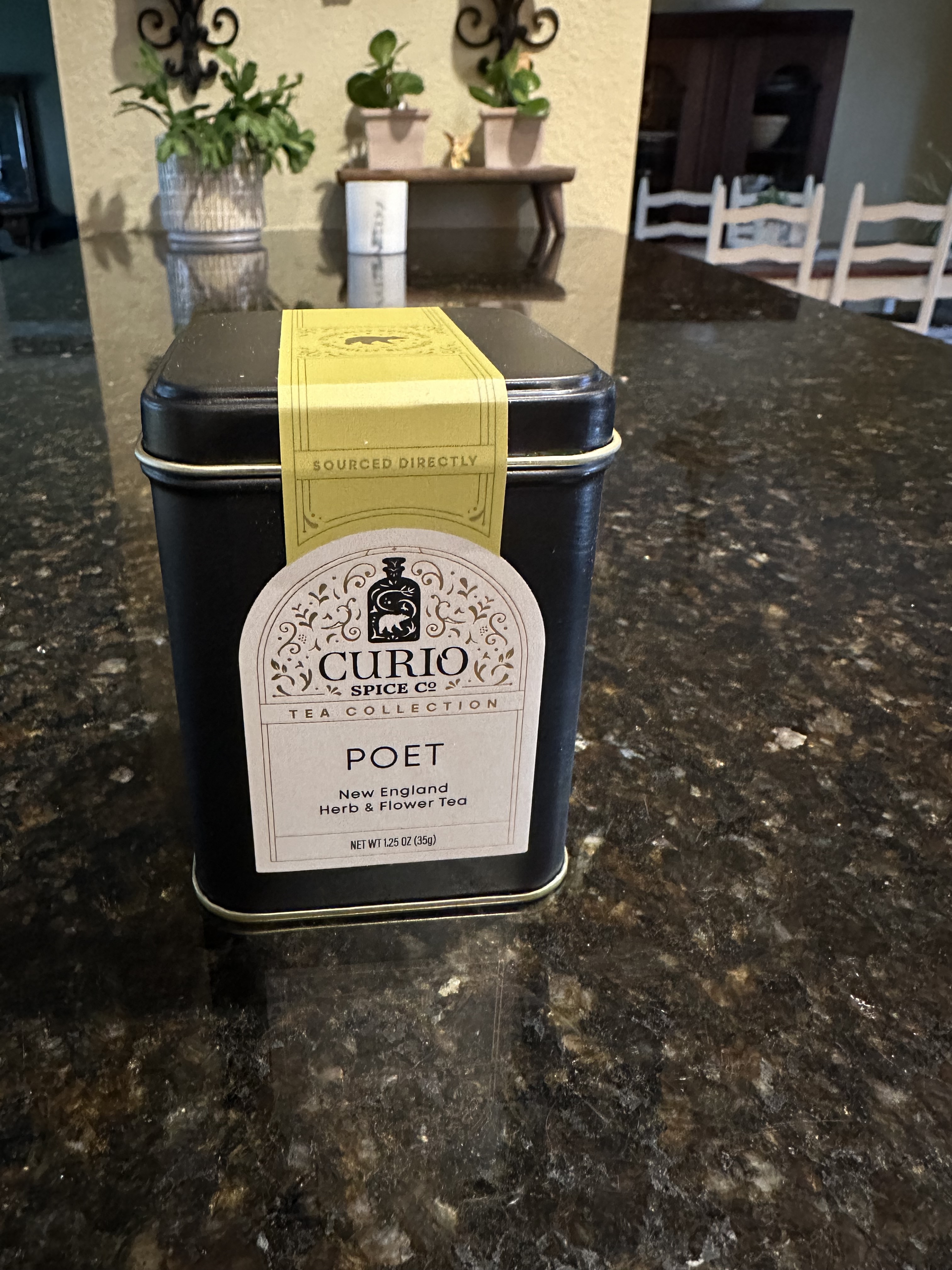
I’m sharing my tricube (three stanzas, three lines per stanza, three syllables per line) that I shared last night (below). I’m also making plans for March slicing – – I’ve sectioned out the waking hours of a typical day, and I plan to write a poem for every 31-minute time slot about something happening during that time, just to feel the real-lifeness of each moment, just because there can be deep comfort in things as simple as stirring honey into a cup of hot green tea and accepting that it’s okay not to want to read the tea leaves.

Photo by Leeloo The First on Pexels.com

I don’t know

I don’t know

what to say

words fail me

I don’t know

what to do

verbs fail me

I don’t know

what to think

thoughts fail me

The Serviceberry and the Question: Did I Bees Good?

Photo by Felix Mittermeier on Pexels.com

As I continue along the journey of my One Little Word for 2025, enough, I’ve been thinking lately about the stewardship of how I over-own things – do I selfishly trap them and call it collecting, or have I done my part by passing them along when they have lived their best life with me?

I think we all have a tendency to hoard things – to save a penny for a rainy day. But what happens when the collections have taken over our lives and the proverbial pennies are now quarters and dollars, anchoring us instead of freeing us? In 2023, I looked at all the boxes in the loft of our barn and in our attic and stepped back, taking it all in. I hung my head in shame at what I saw. It was like a graveyard of opportunity for still-useful items never seeing the light of day anymore, and I was the undertaker. I was the bad guy in the parable of the talents, burying the promise and potential of what had been entrusted to me. No, I have not been a good steward when it comes to things.

Once upon a time, I heard a saying shared by my father in a sermon. He reminded us all not to be those people who get all we can, can all we get, and sit on our can. At the end of 2023, I realized I’d been sitting on my can. And I needed to take action.

My grandparents grew up during The Great Depression, and learned about their stories when we would go visit them as my brother and I were growing up. My paternal grandparents lived in Waycross, Georgia, and they were the absolute King and Queen of double coupons. I learned a lot about frugality from them – about saving, about the concept of “enough,” and also about the disadvantages of too much. My grandmother clipped those coupons and looked for whatever was free – whether she had a plan to use it or not. At the heart of this was the need for protecting – for providing and provisioning the essential needs of a family, and I began in those days to understand the way that money could be stretched.

I used to hear the water come on, go off, come on, go off – – and years later, I realized that she showered that way. She got wet, turned off the water and lathered, turned it on and rinsed, and repeated. She double-couponed so much that they had an entire storage room of cereals and other dry goods. I was having a bowl of cereal on one visit when I noticed something moving in the milk. On close inspection, I was horrified to discover that I was eating bug swimmers. From that experience, I learned the importance of checking expiration dates.

But I also learned something else: the extreme effort on not wasting water did not transfer to the waste happening when the dry goods spoiled before they could be used. Sufficiency seemed at odds between having too little and having too much – and there are problems on both ends of that spectrum when we forget the importance of fine-tuning our needs to the middle ground of enough.

All this examining things and re-calibrating my mindset about the things I’d accumulated made me think of a childhood story that my mother used to tell me. At one time in my life, I was an aim-to-please rule following preacher’s kid who, in my young child voice, would ask my mother, “Did I bees good?” whenever the stringent need for good behavior in church or at some event, visit, or outing was over and done and I was needing my recognition and report card on my efforts. Likely, I was ready to get back to business as usual with a little badness kicked into gear and let go of the need for my best behavior.

But as I looked at all the things I was holding hostage in my barn and attic, I wanted to re-ask that question through a different lens: Did I bees a good steward of things?

Nearing 60 with retirement dreams of lightening the load to ease the way for RV travel and a significantly downsized house in the near future, I began a quest last year to clean out our home and attic and purge the anchoring cargo of a lifetime of teaching and boxes of mementos and sentiments that have outlived their purpose in my life. It’s time to prepare for the next chapter – whatever that may be. No one can move forward who is so heavily anchored in the past.

I have a question:

Did I bees a good steward of things?

Or did I hoard them?

I read a game-changing book in 2024 by Robin Wall Kimmerer, entitled Braiding Sweetgrass. At several times throughout the book, I found myself silently weeping tears for all of the boxing of things I have done in my life. As I turned the pages of that book, I imagined the life involved in all these items – the trees that once stood tall in the forest sheltering nests of woodland critters – trees that gave their lives to become books and furniture and toys; the plants that yielded cotton and other fibers to become linens and towels and clothes; the hands of craftsmen and seamstresses who shaped the creation of each thing. I was gobsmacked.

In the first month of 2025, I finished Kimmerer’s most recent book, The Serviceberry, in which she discusses the ethics of reciprocity in a gift economy. Abundance and gratitude are at their purest when we understand the concepts of the gift economy as opposed to the market economy. There is life-changing magic in the mindset and understanding that the notions of self-sufficiency and hoarding are at odds with our values and people we hold dear – and may actually be harming them. Her essay that summarizes the main concepts in her book is available here, but I offer this warning: be ready for a seismic shift in your thinking once you read it. It tops any sermon I’ve ever heard on Matthew 6:26, and ironically, birds are at the heart of the Bible verse and at the heart of The Serviceberry.

It begs the cyclical question at the end of each day, each week, each month of striving to live in a more simplistic and abundant way: did I bees good? And at the end of 2024, I could finally say that I’ve moved from being a failing steward of accumulated things to passing with a C. I still have a way to go, but I’m doing the work of managing the mountain by keeping my One Little Word front and center. I don’t buy the extra tube of toothpaste just because it’s on sale – – because I have enough. I leave some for others, and I leave room for honoring the uncluttered spaces and the sense of order. And I can feel it.

Snowbound Nonet

Photo by Mike Yak on Pexels.com

I feel contained, bound to stay home in

this winter storm with ice and snow

to wrap up in flannel and

fleece, to read by the fire

in the white silence

of frozen world ~

snowbound brings

freedom,

peace

The Stillness of Snow

We had far more ice than snow last weekend, but there is something transformative about the stillness of snow. As a year turns, the tranquility of snow brings a feeling of a clean slate. All the old crap of last year is frozen solid, then melts away faster than a million snow cones on a hot summer day at the softball field, leaving only the fresh breath of newness, ripe for the rightness of a new start.

Which, I’ll speak for myself while knowing it isn’t just me, we all need. Therapists often tell patients to write down all their woes and then ball up the paper and throw it into the fire to watch the negativity burn away. But there is also renewal in the power of cold. Take this pine tree farm, for example. It suffered the least amount of loss of any other pine tree farm planted in this area the year it was sown. I remember my husband telling me that he, his father, and his brother were so cold that day that his father’s eyes and nose were stinging and running so heavily that the frigid temperatures made ice crystals all along his eyelashes and mustache and beard. They worked in rotating positions that day. One of them drove the tractor, while the two on the back end were the planters. One would unbundle the frozen saplings, and the other (lying down on the back end facing the ground) pushed them into the earth in spaced out rows. When the foresters asked them what they had done to prevent such loss of trees, they didn’t really know – until they all looked at the calendar and made some comparisons of data. They’d planted the Johnson Funny Farm pines on the coldest day of the year.

If pine trees thrive when they’re planted on the coldest day of the year, I like to imagine that this cold and snow and ice have repotted people, too. I’ve needed a hard reset for well over a year now, and my sapling spirits-at-heart have needed a re-rooting.

That is what the stillness of snow does. It brings a magical reset, filled with a Narnia-like magic to all the possibilities for the year ahead. And there are snowflake pictures for Tuesday and Wednesday of next week, too.

As I stood on the porch so many times taking in all the beauty last weekend, I couldn’t dismiss the feelings of sadness and fear that I felt for my California friends evacuating from the wildfires at the opposite end of the cold spectrum, on the opposite side of the country. I reached out and checked on them, and they replied that they are fine but are keeping heightened awareness of the fires. I continue praying for their safety.

it speaks for itself

the snow, silently falling

blanketing the hush

By the Fire Nonet

not for one second did I take this

ice day for granted ~ nope, I read,

sat by the fire, sipped green tea,

snuggled our spoiled schnoodles,

threw on the throw,

observed the birds,

worked crosswords,

prayed prayers,

napped

Childhood Church Communion

Even as the new pastor served communion for the first time in my childhood church where my father has served during two different times of his life, he invited two former pastors to join him in this significant event. We watched over 50 years of servanthood history offer communion together, and it was meaningful to see family and faith in such a beautiful image.


Photo by Viktoriia Nechytailo on Pexels.com

on Sunday we watched

First Baptist Church of YouTube

(my home childhood church)

as three pastors served

communion together in

decade history

past, present, future

threading connections through time

serving Heaven’s love

My One Little Word for 2025

Photo by Magda Ehlers on Pexels.com

It’s that time of year: time to choose a word as a beacon to guide me through 2025.

I chose the word listen as my One Little Word three years ago, and for the past two years I have chosen the word pray to guide me through the years. My former words won’t leave me – I still keep them as my own – especially pray. Once a new word has been chosen, former words don’t vanish, turning down some dark alley lurking between the minutes of the midnight hour of New Year’s Eve. They stick like blood kin that want more words to come to the table in the family of chosen words, much like siblings wanting more brothers and sisters.

I’m not abandoning listen or pray. But a strange word took hold of me a few weeks ago, and I don’t fully know why. It’s an adjective and adverb and, according to the dictionary, can also be used as a pronoun and is sometimes used interjectionally, too. This is not an actionable verb as my former words have been.

My One Little Word for 2025 shall be enough.

It seems an unusual choice to me right now, but I know it will become clear once the year gets going. If I’ve learned anything, it’s that once we pray for the right word, we must listen hard enough when it comes alongside us with the pick me! pick me! promptings.

I felt tears welling a couple of years ago when I discovered I was a one on the Enneagram – an overachieving perfectionist whose own worst enemy is…..well, …… ME. I can’t ever seem to live up to my own bar – it’s been set far too high for far too long. I often feel I fall short, even when I succeed. I need to be able to say that I am enough – – and to believe me when I do.

If I do a thing, I overdo it.
I cook for an army rather than for the two of us at the table. I own too many books and too many shoes. I need to learn to appreciate the blessings of having enough– without having too much. I need to find my library card more often than the Amazon cart. I need to learn what is enough and to be a good steward of the management of it.

My sense of adventure is insatiable. I want to explore every GPS location on the globe and don’t quite know what to do with myself when I get there, while under-appreciating that the exquisite beauty of my own town is a unique world all its own – enough to keep me fascinated right here where I am if I only see it with the wonder-filled eyes it deserves.

And my world gets out of whack. I work long hours, and I’m feeling my bones and my soul tell me that doing too much in one place leaves too little in another. More balance would bring enough to both the professional realm and the personal one. I’m often rushing my husband through the extra glass of iced tea he likes to have at the end of a meal if we are in a restaurant, even at times when we have no hurry or particular place to be. I envy his ability to amble where I can’t seem to slow down and fill my lungs with enough air to take the time to relax and breathe a little.

There are gestures where I fall short: phone calls, birthday cards, random text messages to say I love you to those who mean the world to me. I fail to do enough to let my family and friends know how frequently I think of them.

The first word that appealed to me for 2025 was less. I almost chose it – then, I realized that less may not always hit the marks I need to hit. I could eat less, I could weigh less, I could spend less. I could check a few boxes and say I did less. But the real challenge will be sorting what needs more and what needs less to find the just-right balance of enough.

If you have chosen a OLW, please share it in the comments. I love the stories of how words manifest themselves to the people they choose. This is the first word that has me scratching my head about its reasons for knocking at my door. But here we are.

Happy New Year, and happy word finding!

Merry Christmas!

Few things give me greater pleasure than walking into the woods to gather Christmas greenery to create our own holiday decorations. On Christmas Eve, my husband and I took a bag and some pruning shears to snip some of nature’s finest fragrant (and free) gifts. As we light the candles to remember our mothers at Christmas dinner today, we celebrate the simple beauty of family, of friends, and of love that transcends this life.

May you find, in all the merriment of the day, true peace in the real reason for the season – the eternal life we have because of Jesus Christ. And the assurance that we will again be joined with those no longer here around our tables in person. That’s the most precious gift of all.

A Calm Christmas: After Christmas

An easier 7 foot pencil tree

This December, I’m slowly making my way through Calm Christmas and a Happy New Year by Beth Kempton (2019), and in Part 3 starting in Chapter 7, she presents ways to preserve the quiet times by savoring the “hush.” She encourages time to reflect on Christmas and suggests ways to avoid stress during the week between Christmas and New Year’s Day.

I’m particularly excited for the moments of hush this year. My youngest daughter is scheduled to be induced two days after Christmas. She’s pregnant with her first child, a son, who will be named Silas. This gift of a new family member is the most precious gift of all, and while the moments of hush will be few and far between with the constant needs of an infant, the moments of watching a baby sleep will bring deep peace and joy. I plan to be there to celebrate the birth and get to know this new little one.

Indeed, a baby changes everything – especially at Christmas!

The relaxed pace of the week after Christmas affords down time for many, where the world takes a deep pause from work to play and spend time with family. Many businesses in our area are closed from Christmas until New Year’s Day. It’s the perfect time, Kempton writes, to take stock of your house, take mini-breaks, reflect on the past year and plan for the new, to write, and to engage in other creative projects. She encourages us to take a digital detox day by turning off all electronics and not checking email. In fact, she suggests that a day in nature is a great way to hit the reset button for deep thinking that is free of distraction. The chapter is loaded with specific ideas such as hibernating with hot chocolate, flipping mattresses, taking blankets outside to watch the moon and stars, taking mini-trips to local places such as museums or movies, and flying kites on the beach.

The week between Christmas is the best time to reflect on the past year, and to begin thinking about the One Little Word to guide the next year. I’ve loved the power of the word for the past several years, and while I’ve kept the word PRAY for the past two because I can find no better word, I will take a second word for next year because one is calling to me. I’ll keep PRAY as my guiding word, but there will be another that will travel with me through the year as well. I’ll think of them as the focal and diopter lenses on a camera. One big word, and then a refining word. More on this later.

Here are some questions Kempton urges us to consider for reflection between the week of Christmas and New Year’s Day:

When did you experience joy?

What was especially tiring?

What was magical?

What was calm?

Whose presence was challenging? a delight?

Which of your efforts were appreciated, and which felt like a waste of time or energy or money?

What was your single most favorite memory this Christmas?

Which preparations did you enjoy the most?

What would you like to do differently next Christmas?

I already know that putting up the smaller tree was a good move for us, given that I got sick before Christmas and battled an upper respiratory infection that left me fatigued. We were late putting up the tree and figured that since we would have minimal activity in our own home to celebrate, we didn’t want a lot of decorations. Still, we love the lights of a tree for ushering in Christmas Spirit first thing in the morning and in the evenings while we are home, so we pulled down the 7′ pre-lit pencil tree requiring no assembly rather than the 12′ pre-lit tree that goes up in three tiers and requires ladders and three full boxes of ornaments. And we are enjoying it just as much. It may be the new standard for us. Already, I’m not dreading having to “take down Christmas.” It’s simpler this year, and it feels more manageable, allowing me to look forward to less work in the aftermath of the holidays.

And there will be fresh. pumpkin bread, a treat I reserve for Thanksgiving and Christmas and that has been the trademark bread in my home since the mid-1980s when I got the recipe from a cookbook at a bridal shower. Everyone loves this recipe, and I’ll link the recipe here.

Try a loaf for your family. Have a cup of coffee by the tree in the early morning with dogs piled in your lap next to the fireplace, and feel the comfort and warmth of fresh bread before the rest of the household rises. It’s a magical treat.

A Calm Christmas: Honoring the Melancholy

Photo by Julia Ustinova on Pexels.com

This December, I’m slowly making my way through Calm Christmas and a Happy New Year by Beth Kempton (2020), and in Chapter 6, she presents ways to honor the melancholy – reaching out with invitations, volunteering, and setting a place at an empty chair can be forms of honoring those we have lost or sadnesses we acknowledge. She urges us to reach out to others, whether we feel up or whether we feel down. Either way, we combat the loneliness and sadness when we feel this sense of purpose and connection.

I saw a meme last week. It said, “I agree with keeping Christ in Christmas, but I’d prefer it if we could keep Christ in Christians.” And I nodded in wholehearted agreement. All too often, I hear people grumble about helping the needy, reasoning that they will only spend the money on drugs or alcohol.

There are ways of meeting specific needs without unknowingly contributing to another’s addiction, though. I have made a practice of keeping some spare change and dollar bills handy in my pocket for the seasonal charity bell ringers, but I also enjoy keeping gift cards to local fast food restaurants as well – for those who are hungry. I feel a sense of responsibility to give, and assurance knowing that the need that will be met is hunger – – not a way to drown problems in alcohol or running the risk of making a situation worse for any children who may be dependent on the person receiving the assistance.

There are ways to make a difference in small increments, and even if the goal is to help one or two people a week, that is a step in the right direction – at least for me.

That is why I couldn’t get peace while drinking my seasonal peppermint milkshake in Chick-Fil-A last night. We’d gone to have a bowl of chicken soup for supper, and I’d noticed an older lady wheeling a full-size suitcase up to a table before getting in line to buy food. She’d spoken to an older gentleman and gestured to her suitcase, so I assumed she was an acquaintance. Since we are a short distance from the Atlanta airport, the suitcase didn’t seem at all unusual.

Until it did.

When she returned to sit down, she sat at the table behind the gentleman to whom she’d spoken. I started putting the pieces together when I I saw her mumbling to herself, carrying on a full-blown conversation on her own at her table. I surmised that she’d asked the man to keep an eye on her suitcase while she stood in line for food. When she moved her jacket hood up over her head, I had the opportunity to take a longer look, unbeknownst to her.

That’s when the suitcase became no ordinary suitcase but a way to set up house for the home she didn’t have. To endure the frigid night ahead, somewhere on the streets of the city.

She’d tugged at my Christmas spirit in such a way that I had to take some kind of action to help this human soul. I could see the struggle – it was visible to me since homelessness has affected someone near and dear to my heart, and all the telltale signs were evident – right down to the mental instability. This was someone’s daughter, and perhaps someone’s mother, sister, aunt, friend. There was no denying the truth that any help would be appreciated.

As we finished our meal, the line that had been forever long the whole time we’d been eating had miraculously disappeared. I was able to slip over to the register while my husband cleared our table. I purchased a gift card enough for a few meals and asked the Chick-Fil-A employee to deliver it to the woman for me to lessen the attention and avoid any embarrassment. Sure enough, the high school-aged boy took the gift card to the lady in the blue jacket with the hood up over her head with the suitcase propped at the end of her table.

And in this way, witnessing someone without a home at Christmas, I thought of the deep need to become a better steward of blessings. Certainly, one small act cannot meet the depth of need that is evident if we only look around, but a collection of small acts by those who are attuned to others around them can add up to make a notable difference.

I don’t share this story to bring attention to my act of giving, but to share the bittersweet joy that one small act of care can bring for both giver and recipient, even as we wish we could do so much more. Indeed, more is needed – we witnessed two more clear situations on the way home where needs were evident. I share this story to bring appreciation for the shelter and food that we do have and how so often the basic needs we may take for granted are brought into focus when we bear witness to those for whom the provisions of shelter, warmth, and food are only the dream.

After all, this is one small way to honor the melancholy and to make a difference in the season when our blessing deserves to be spread around for others to realize moments of comfort – and above all, to know that someone cares. Honoring the melancholy is not a comparative act, or one of positional self-worth or more-fortunate-than-thouness-so-let-me-toss-you-a-scrap. Honoring the melancholy is staying attuned to the rhythms of life with the understanding that these situations and emotions do not discriminate. Melancholy and adversity come alongside all of us throughout our lives in different ways – and if we are to be blessed in our own times of need, we must bless others in theirs.

Photo by omid mostafavi on Pexels.com