
Spiritual Journey: Doubt

This month’s Spiritual Journey is hosted by Patricia Franz, who has selected doubt as the theme. You can read her post here. It’s quite inspiring, and I particularly love her insight as she shares her thinking on doubt: I’m convinced that doubt lives in the imperfect space between who we are and who we think we want to be.

Since Patricia’s post last Thursday, I’ve returned again and again to this idea, toying with doubt and how it plays out in my own life in risks not taken and opportunities not seized. Fear and doubt are close friends with deeply intertwining roots. And what is doubt’s opposite? Certainty? Trust? Belief? In Hebrews, the Bible says that faith is the assurance of things hoped for, the evidence of things not seen. So by that definition, faith is the opposite of doubt.

I don’t mean to be a doubting Thomas, but I will be the first to confess that I may score a perfect 10 in Olympic skepticism. My mother’s keen eye for scrutiny and her innate sense of intuition, passed on to her from her mother – and hers before her – ended up in me and my own children. It’s a form of doubt, yes, and on the Myers-Briggs Personality test it’s that gnawing J for judging in the analytics that gets me, where I’d much prefer be a perceiver.

I do some doubting.

But I also do some praying. Nearly a decade ago, I made the decision to turn off the radio and the audiobooks on the way to work and use the drive as my dedicated prayer time each morning. My drive to the office is roughly 8 to 10 minutes, and I pray for each of our children, their mates, and their children. I pray for each side of our extended family and always add “even the ones we don’t like,” because, you know, God already knows about that whole mess.

At the end of Patricia’s post, she shares that she tries to cultivate doubt as a spiritual practice– deepening my capacity to sit with questions; allowing space for the sacred pause; learning to be comfortable living in the mystery. This, too, resonates deeply with me this morning as I write in my favorite green chair in the living room, my Schnoodle Boo Radley draped over the back of my chair near my neck, and his rescued brothers Fitz and Ollie snoozing on the floor at complete peace with the world around them, doubting nothing more than the intentions of every deer and squirrel in the yard.

Like Patricia, I need to embrace my doubts and celebrate them as gutterball rails to be used to discern correct steps where I ask the Lord to illuminate the paths I should take. Just like that concept of Danish hygge that I love so much in the winter – – we can’t have the concept of hygge, or the warmth and comfort within the cozy cabin, without the raging blizzard outside. The feeling of warmth and comfort has to have its opposite somewhere to be appreciated.

Such is doubt. In the tiny cabin of the heart and soul, where the storms of doubt rage outside, faith is the strong assurance that despite the weatherman or his alarmist reports, all will be well as we trust the good Lord and His plan. Faith shines most brightly in the threat of doubt.

in a world of doubt

we can choose the light of faith

to guide us through storms

November 5

On the first Monday evening of each month at 7 p.m., I meet with a small group of Stafford Challenge poets via Zoom. We’re also members of EthicalEla, and we’ve presented together at NCTE. Periodically, we’ll text each other a poem or prompt. Our evening meetings include time for writing and sharing.

Our group consists of Glenda of Idaho, Denise of California, Barb of Iowa, and me. We weren’t sure whether or not Denise was going to make it this week, but she texted us a prompt in case we wanted to try the writing prior to the meeting and have something to share.

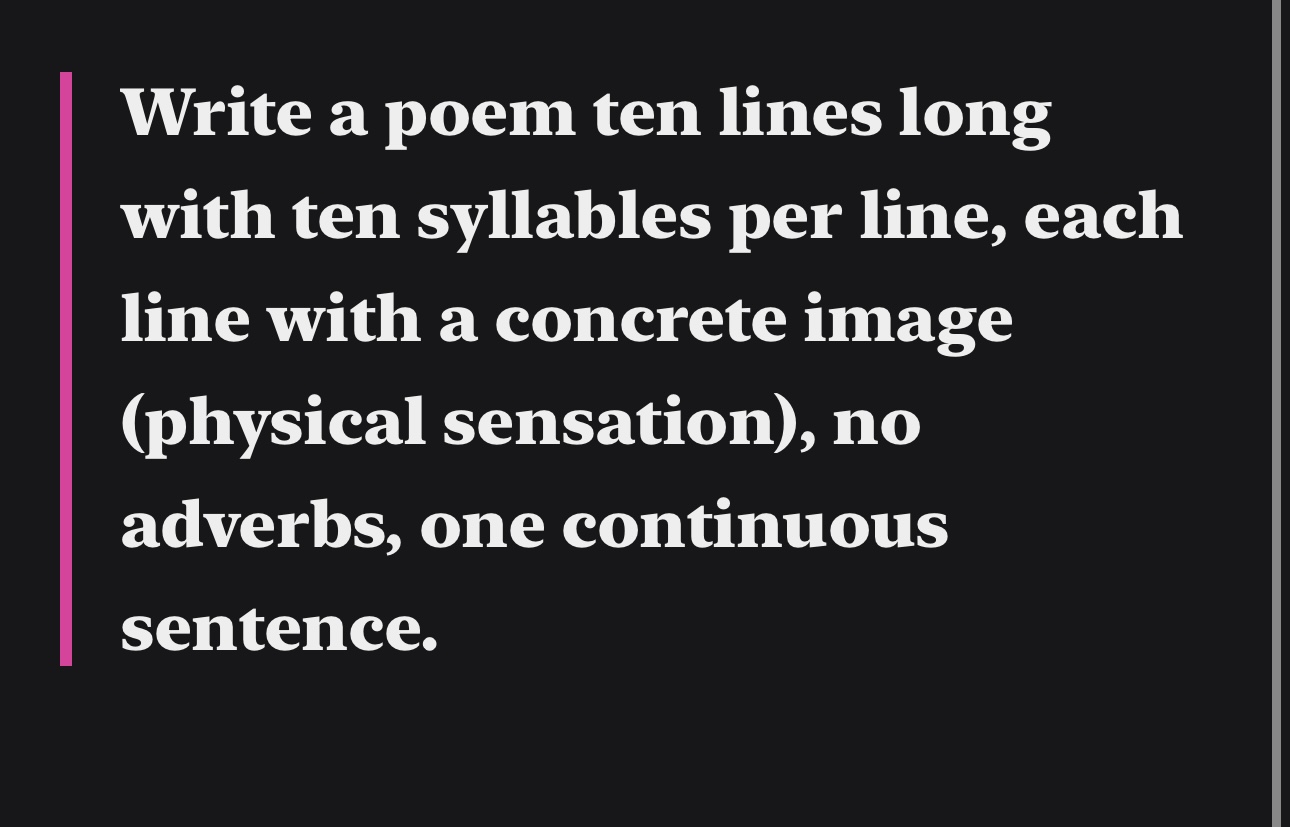
This was her prompt:

Screenshot

Steering clear of adverbs was challenging (I think of Stephen King’s words: the road to hell is paved in adverbs). Writing without them is not easy. I noticed the need for doubling down on adjectives to meet the sensory part of the prompt and also accepting that this would be a major run-on sentence. Here is the poem I shared with my small group on Monday night:

we’re listening to Christmas music, joy

filling our hearts and souls ~ chicken pot pie

piping hot and broiler-top crisped and browned

our three schnozzles snoozing by the fireplace

Sam’s Club Members Mark Old Vine Zinfandel

spilling from a ruby red wine chalice

catching each sparkle of shimmering light

Vermont Flannel blankets warming our toes

in forest green and rich brown earth-tone plaid

on this crisp night here in rural Georgia


I’m so thankful for my writing friends who always inspire me to try new forms and challenges. And Denise showed up – – after a long day of travel, in a Chipotle, still not yet having arrived at her destination for the evening. The four of us each shared a poem and caught up on life, and for that time of fellowship, I am grateful.

November Shadorma

November Shadorma

go ahead

eat the pumpkin pie

before the

turkey comes

out of the oven all browned

is there a main course?

……and just like that, after Halloween candy and football player costumes and all the fun of fall festivals including a hayride around the campus at work, we are thrust unmercifully into the Christmas season. The candy at Dollar General is half price, and the one seasonal row they’d already dedicated to Christmas has expanded to three. It’s the season of eating, and no one is waiting on anything.

Today’s poem is a shadorma, a form similar to Haiku in syllable pattern. This form has six lines, and the syllable count on each line, in order, is 3,5,3,3,7,5. I’m a fan of eating dessert first, so I’m urging all pie lovers to take full advantage of throwing out the rules and questioning whether there is really a main course.

For me, it’s the pie.

Book Club Pick: Regretting You

first we read the book~

then, our club met for dinner

before the movie

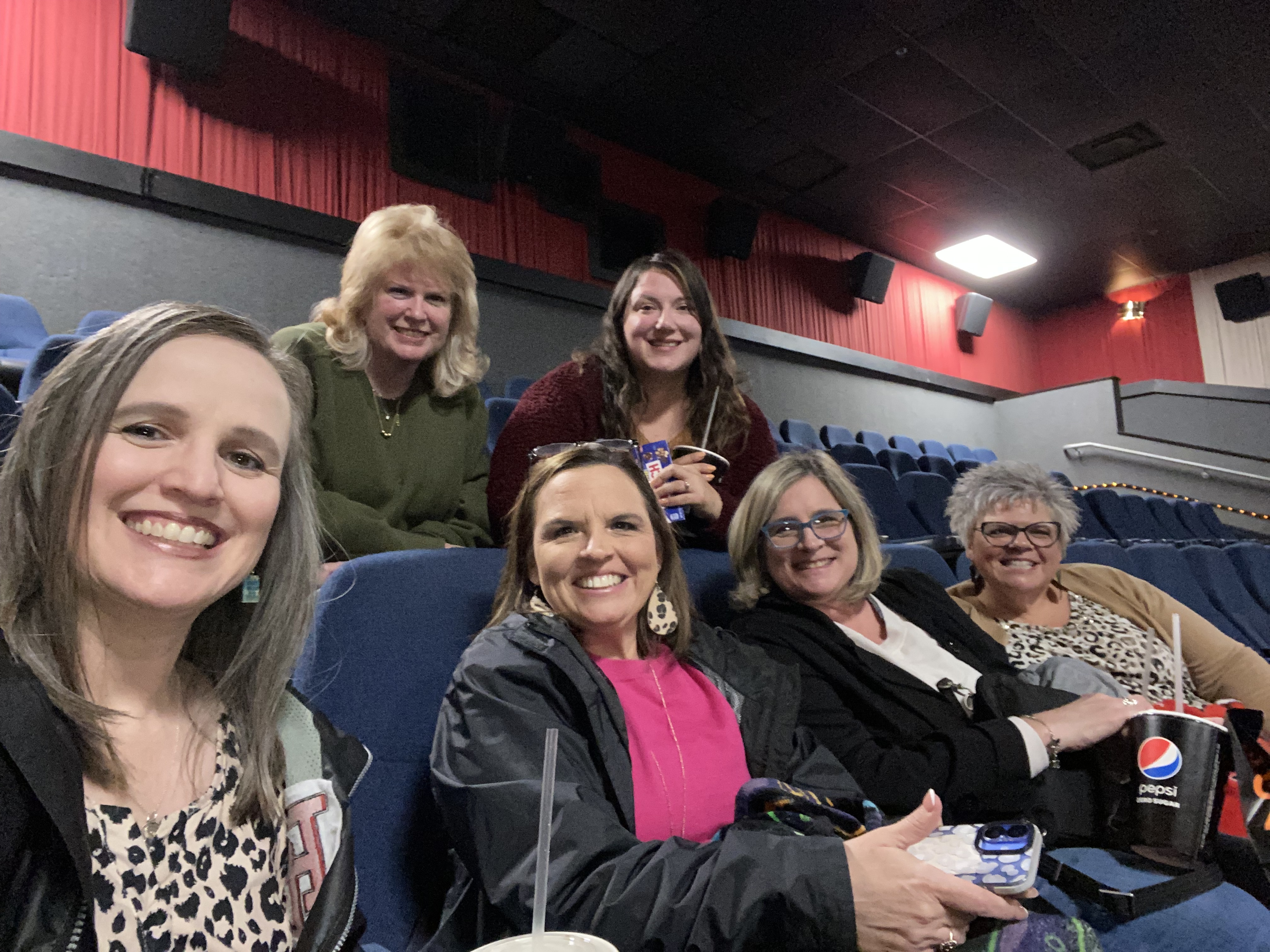
I never laugh as much as when our book club gets together! The books we read and the times we spend talking about them are a balm for my soul.

People have asked me how we “do” our club, because there are so many ways to structure a book club. First, we decide on a book based on someone’s recommendation. We’ve already picked dates through the end of summer and have marked them on our calendars so we guard our time. We sent out digital invitations so we don’t plan any other meetings by accident. Priorities.

Once we know our book and our next meeting time, we read and try not to talk about it with anyone reading it so we don’t give spoilers. Our regularly scheduled gathering spot is our local coffee shop, where they have all the best coffees, a few food items, and the best downstairs couch circle anywhere in town – the kind of leather couches you slide down deep into and wonder if you’re ever going to be able to get out once you get in. The kind with a big coffee table in the middle so there’s room for mugs and plates and stacks of books. We go there and pull out our general book questions as a discussion guide. Sometimes we use questions designed specifically for a book – – like at our most recent gathering, when I’d forgotten to bring the list of universal book questions. Another group member pulled up a set online that we discussed.

The part so many book clubs don’t “do” that sets our club apart is the action part. Every member of our club has a streak of adventure dwelling in our hearts, so we like to think of something the book inspires us to want to do, and then go do that thing. For example, in The Beautiful and the Wild, one of the characters was always drinking tea. One of our members found a local tea room and went for brunch to try different teas, even trying on all the hats and a pair of gloves, too. In The God of the Woods, the characters ate s’mores, so we met for appetizers at the home of one of our members and made s’mores. Having the adventure part adds to the experience of any book, because we do things we wouldn’t ordinarily do on any normal day of our lives. We stay young.

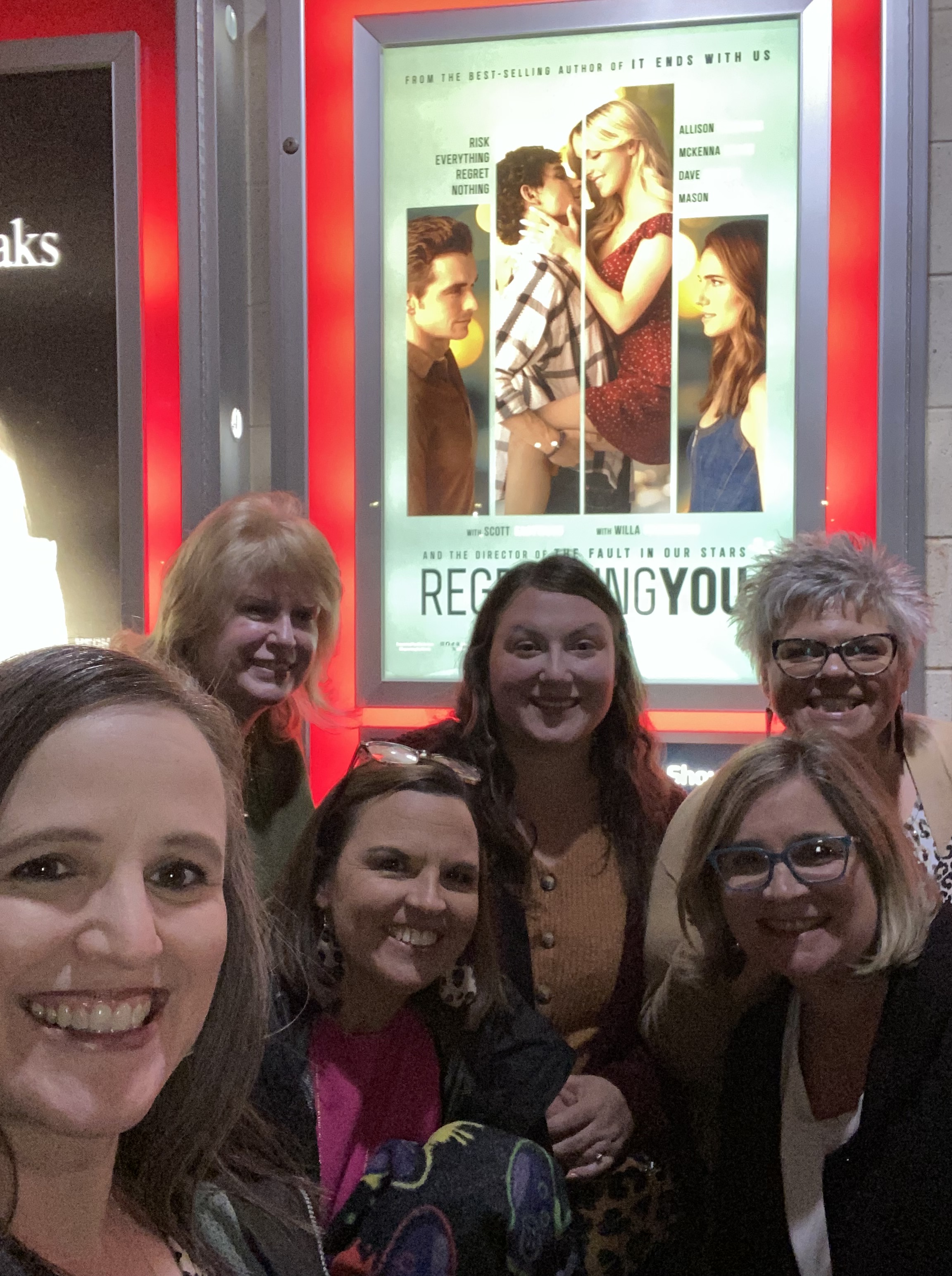
Our latest book, Colleen Hoover’s Regretting You, was released as a movie this month, so we made it our October selection and met for dinner and a movie. We spent as much time discussing the movie and the differences between the book and screenplay, and we were still talking in the dark theater when the manager came in, turned on the lights, and said he was “surprised” to see us there. He was shutting the place down. We were just glad we didn’t get locked in the movie theater overnight. We imagined the headline with humor and horror: Local School District Employees Earlier Reported Missing Found Locked in Local Theater Overnight.

Our next book is The Housemaid by Freida McFadden. The movie comes out December 19, and of course we all have our Regal apps for movie tickets up and running and have booked the date. We’ve decided to leave after the credits finish rolling – – just in case.

October Candy Sweetsaholic Shadorma

October, the perennial month of Candy, is the kiss of death for a sweetsaholic like me. Things can spiral out of control in a skinny minute in a month like this, and the closer it gets to a day like today, Halloween, the stash set aside for any trick or treaters has dwindled considerably. Today seems a great day for a Shadorma – a poem with six lines in syllables of 3,5,3,3,7,5.

Sweetsaholic Shadorma

confession:

sweets are my struggle

today I

ate three rolls

of Smarties (the giant kind)

and have no regrets

October 28 – X Marks the Spot Poems

X Marks the Spot Poem

I worked with two Humanities teachers last week on writing poetry from prose, using a blog post I’d written last week. I remembered that Mo Daley, a friend from one of my writing groups, shared this technique after attending a conference where she learned more about how to engage students with writing.

To pull poetry from prose, students took their own stream of consciousness writing from the previous week and marked an X on it. They listed the words under the X marks and used those words to create a poem.  To write X Marks the Spot poems, you can add other words and you don’t have to use them all – the idea is to create a word bank from the words you X.  You can use any form of poetry for this – this is merely an idea technique.             

  My words:

                  abide      daily        we            Jesus      car           granddaughter     unison    play         they         Silas        of           patient   tempted                  packaged               gathered                 can          to              died         children                                                       how         did           story       because                  for            when       boxes                        the           Tennessee              toys         kitchen  remind   and          of              daughter                 challenging           game      was          since                  Jesus      and          together

       Belonging

we gathered in the kitchen

with the children

laughed in unison

at the stories

as we ate together

at a table that seated

everyone – past, present, and future

October 25: Zip Odes

I created a writing workshop with two of our Humanities teachers to acquaint students in our 9th Grade Academy with way that they can create poetry from prose. Here is one form of writing we used to mark the geography of a place from our writing. I was using my blog post from Tuesday to model how to let prose inspire poetry. Today’s poem is a Zip Ode.

Zip Ode Poetry

A Zip Ode takes a Zip Code of a place, written vertically, and uses that many words on each line.  

Example:  Sevierville, Tennessee’s Zip Code is 37764

Zip Ode to Sevierville, Tennessee

3 Jesus came along

7 with us on our family vacation in

7 October, keeping children and adults in check

6 Hiding Him, Finding Him, Remembering Him

4 in thoughts and actions

October 24 – Writing with Students

New Poetry Forms Nonet

today I get to write with students

showing them new poetry forms

#hashtag acrostics await

poems taken from prose

hidden in the lines

existing text

there for the

prompt of

words

When the high school teacher called asking if I would be willing to come write poetry alongside students, I jumped at the offer. As a District Literacy Specialist mostly wrapped up in the operational world of data and school improvement, I miss the opportunities of the classroom. That’s where we make the biggest difference.

She read to me the AP Standard on taking poetry from prose and wanted to feature blackout poetry. As we chatted, I shared with her my blog post that day and gave her a copy of 90 Ways of Community, a book on poetry written by one of my writing groups. Together, we considered the various poetry forms that we could use if we modeled the process ~ blackout and found poetry were already on the list, but we added Haiku, X Marks the Spot, Acrostic, Golden Shovel, and Zip Odes as a geographic timestamp bonus of sorts. The students have already created their own personal writing, and we’ll show them how I used a blog post to extract poetry and urge them to do the same.

We’ll model the process.

We’ll feature an overview of possibilities – – a menu of choices – – and then watch their creativity flow onto their paper like they’re mining for gems that they pull out to polish and sparkle.

I’ll remind them that poetry is a process – – not a product. In fact, I’ll probably open the class with something like, “poets and artists have a mindset of creating a lot of bad poems and a lot of bad art.” They’ll wonder who the crazy lady is, but I’ll explain what I mean: perfection is not the goal. Writing is the goal. Thinking is the goal. Not every race is a marathon, not every photo wins awards, and not every book gets 5 stars – – it’s finding the pieces of what we do well and building on those parts so that the process becomes somewhat of a habit. I’ll explain to them that I think in metaphors and syllables, and I take a lot of random pictures to come back to little things I see that will work their way into poems.

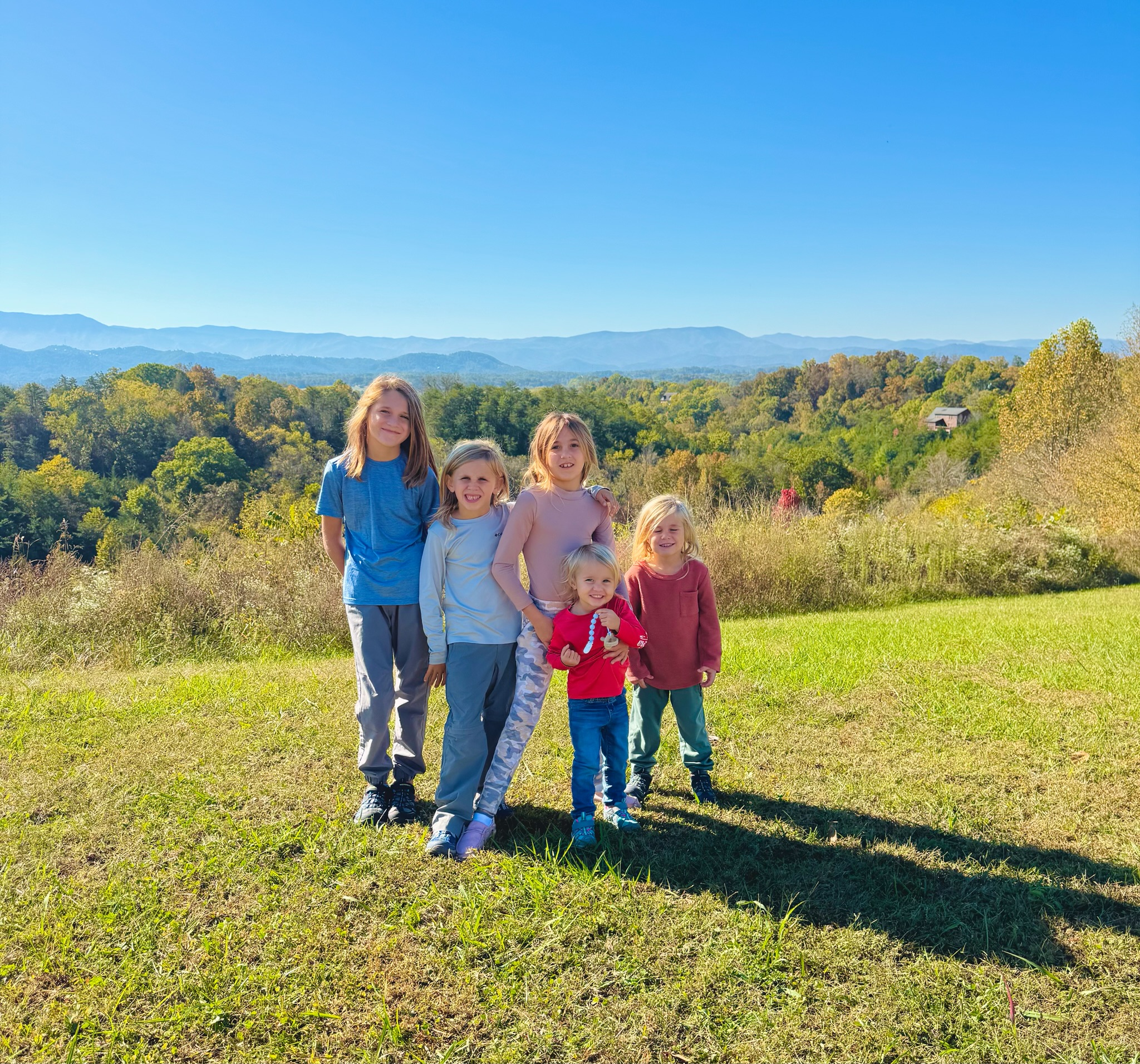
Take this, for example:

These kids are a big part of my life. Here stand five of my seven grandchildren in the very spot at the top of a mountain in Sevierville where their parents were married in May 2012. Their other grandparents own that land, and at the bottom, there is a fishing pond. Let’s take a deeper look.

Blazing a trail, tackle box and all

I see two boys (yes, they’re boys – they just have lots of hair) exploring the trail that leads to the pond, tacklebox in hand, ready to to cast a line and spend time fishing. I’ll explain to them that already, my thoughts are swirling in metaphors of adventure, seeking, a quest, a tackle box of what it takes to find, a hook for the found thing to be caught, and the patience and grit to stick with it – and the treks through the mud and the weeds to get there.

Because fishing isn’t about the fish. You can go to the grocery store and get fish. You can order fish from a restaurant – or better yet, you can Door Dash fish.

No, fishing is no more about the fish than poetry and art are about perfection. It’s about the adventure and the process, and the wait for just the right inspiration.

Beckham, who never stands still and quiet, is standing still and quiet – fishing!

It’s about engaging in what it takes to do a thing, whether writing a poem or creating art or catching fish. It’s having the stick-to-it-ness to stand still and be quiet for two hours of a morning and be determined when you’d almost always otherwise be doing something else, but you learn to love a thing and know that there is something, something, something that will bite and that you’ll reel it in and be proud of it, whether it’s big or small.

River with his fish

You’ve caught something you’re proud of, and you can’t wait to share it with the world. So you pose for the photo, holding a fish mouth open the way you’ve been taught, holding the fish a little closer to the camera to make it look bigger than it actually is, and you see the great things about your fish.

And then you release it back into the world, knowing that next time you come back, you may catch that same one again – – or something different, like that turtle your sister caught.

Noli’s shoes tell the story: she’s seizing the day!

Either way, the one thing you cannot buy, like that Door Dashed fish, is the mud on your own shoes from the lived experience.

And that is what poetry is – life, experience, thinking, waiting, casting a line and seeing what comes up on the end of the hook.

So while I may say I’m going to school today, what I’m really doing is going fishing

And I can’t wait to see what all we catch!