Gayle Sands of Maryland is our host for the first day of the December Open Write at http://www.ethicalela.com. She inspires us to use photographs to inspire poems today. You can read her full prompt, along with the poems of others and their responses, here.
Gayle inspires us to walk into a photo and to be present in the photograph in some way—as a bystander, as one of the individuals in the photo, or as someone coming upon the scene. She says, “Use the photo as your starting point and open your senses. What do you see and/or hear? Is there something you can taste or smell? What sensations do you feel? Is there any movement? What thoughts come to your mind as you engage with the photo? Vintage photographs are a good source of inspiration.”
Come sit right here by me if you’re a reader. Settle in, pour a cup of coffee, and let’s have a book chat. I want to hear what stories have kept you reading this year, and how your reading has inspired new adventures.
I’ll go first. Right now, I’m reading Not Quite Dead Yet by Holly Jackson, which will be the January 2026 pick for our Kindred Spirits book club. It has me on the edge of my seat at every new twist and turn. I especially like that the setting is taking me back to our trip to Woodstock, Vermont in November of 2024, where we had one of the best breakfasts I’ve ever had in my life, complete with Vermont maple syrup that was made from the trees on the property where we were staying. A friend and member of the Kindred Spirits book club recommended Woodstock as a stop on our trip after NCTE last year, and we used her exact trip itinerary from a trip she’d taken with her daughter in planning our own. While my husband and I were in Woodstock, we took some time to go exploring a few back roads while we were there, and I have some of the setting assigned to places we saw, such as the famous bridge. It’s hard to imagine that a crime like the one in this book could happen there, but where there are humans, there will be crime. This book inspired me to wrap up in a blanket I bought from the Vermont Flannel Company while I was there and to pull up the photos from that amazing trip and add them to the new digital photo frame my daughter sent us for Christmas. Oh, to go back there!
The Kindred Spirits dive into exciting fiction, and this group tends to gravitate toward thrillers. Once we’ve finished reading a book, we plan some sort of adventure to go along with what we have read so that we allow our reading to inspire new discoveries. You can see our reading choices and adventures from 2025 here. We’ll be meeting December 19 to put the first six months of our 2026 list together. I’d like to ask for your favorite book recommendations. Please help us out ~ which books have you read recently that you savored, and what made you fall in love with them? Also, have you ever been part of a reading retreat where everyone reads a few books and then drives an hour or two to a mountain lodge for a weekend to talk about those books, read more books, sit by the fire, eat delicious food, visit a spa, and shop in the stores on the town square? We’ve heard of those retreats and are thinking of trying one sometime this year, so we’re all ears for your most exciting book experiences as we plan a few slices of life.
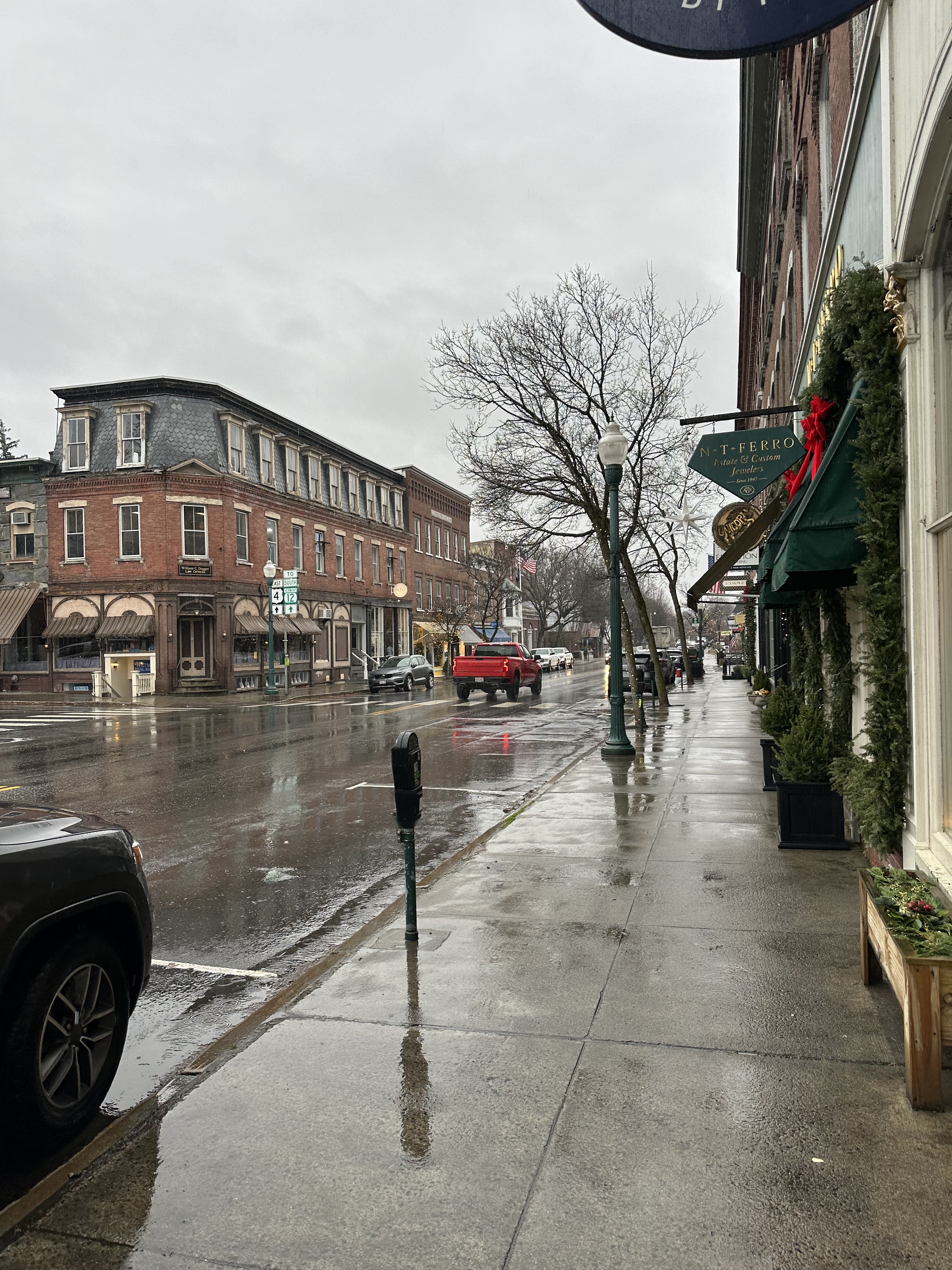
A street scene of Woodstock, Vermont
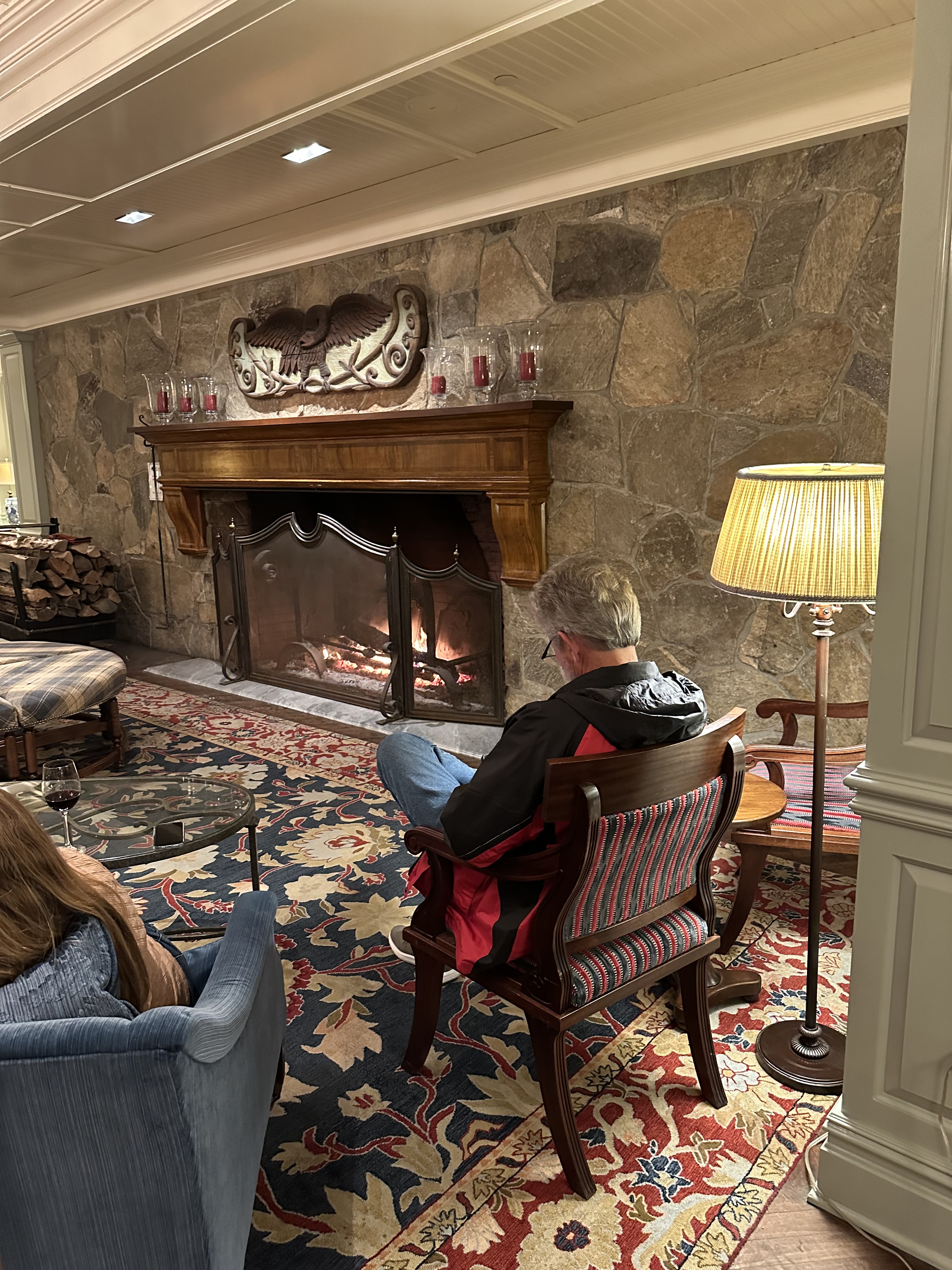
My husband sits by the fire of the Woodstock Inn as we wait to eat dinner
My second favorite shop in Woodstock, where I bought our favorite blanket (the bookstore was my favorite)
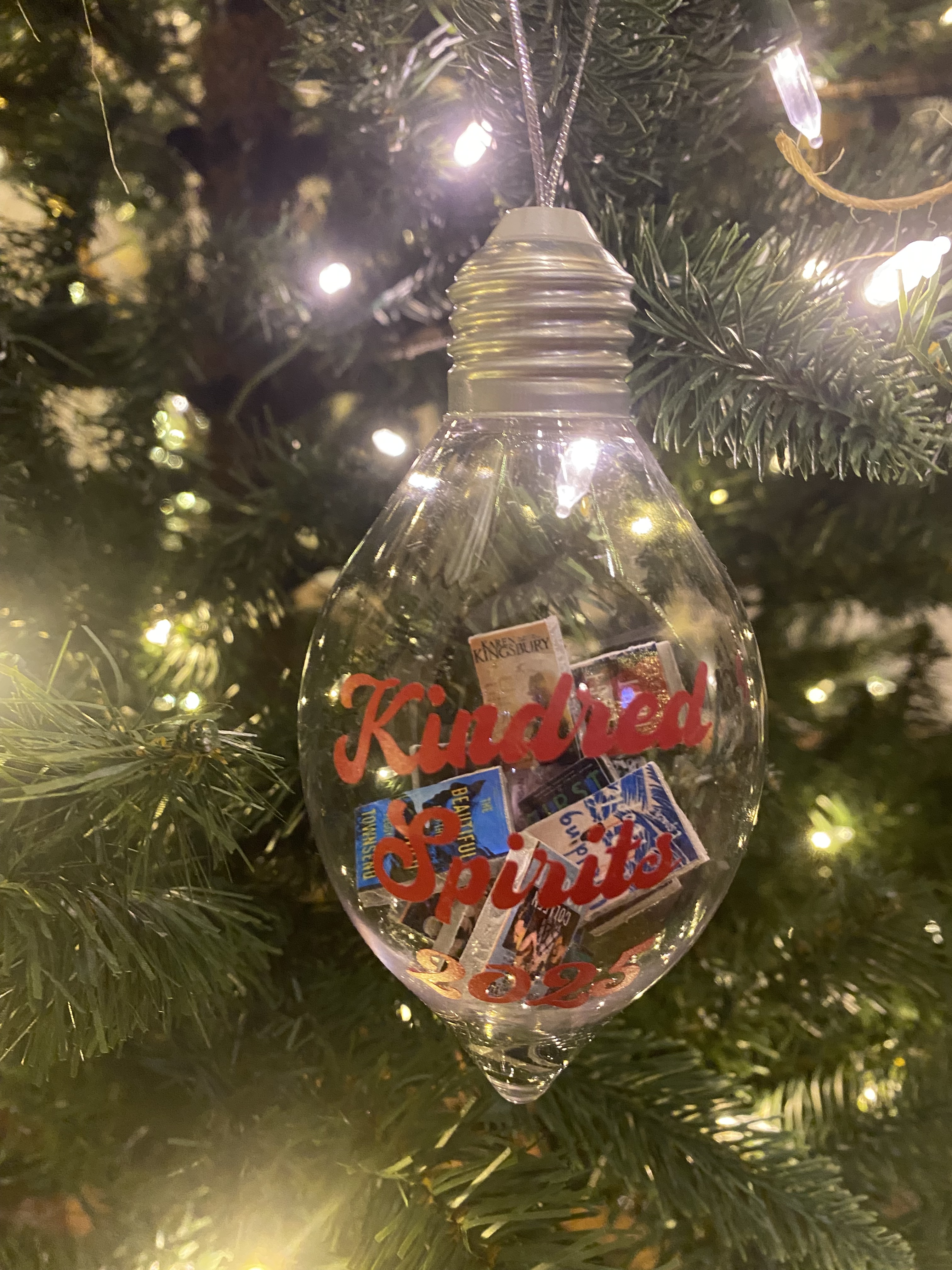
Ornaments made by Joy, bearing our group name and holding a miniature version of each of the books we’ve read this year
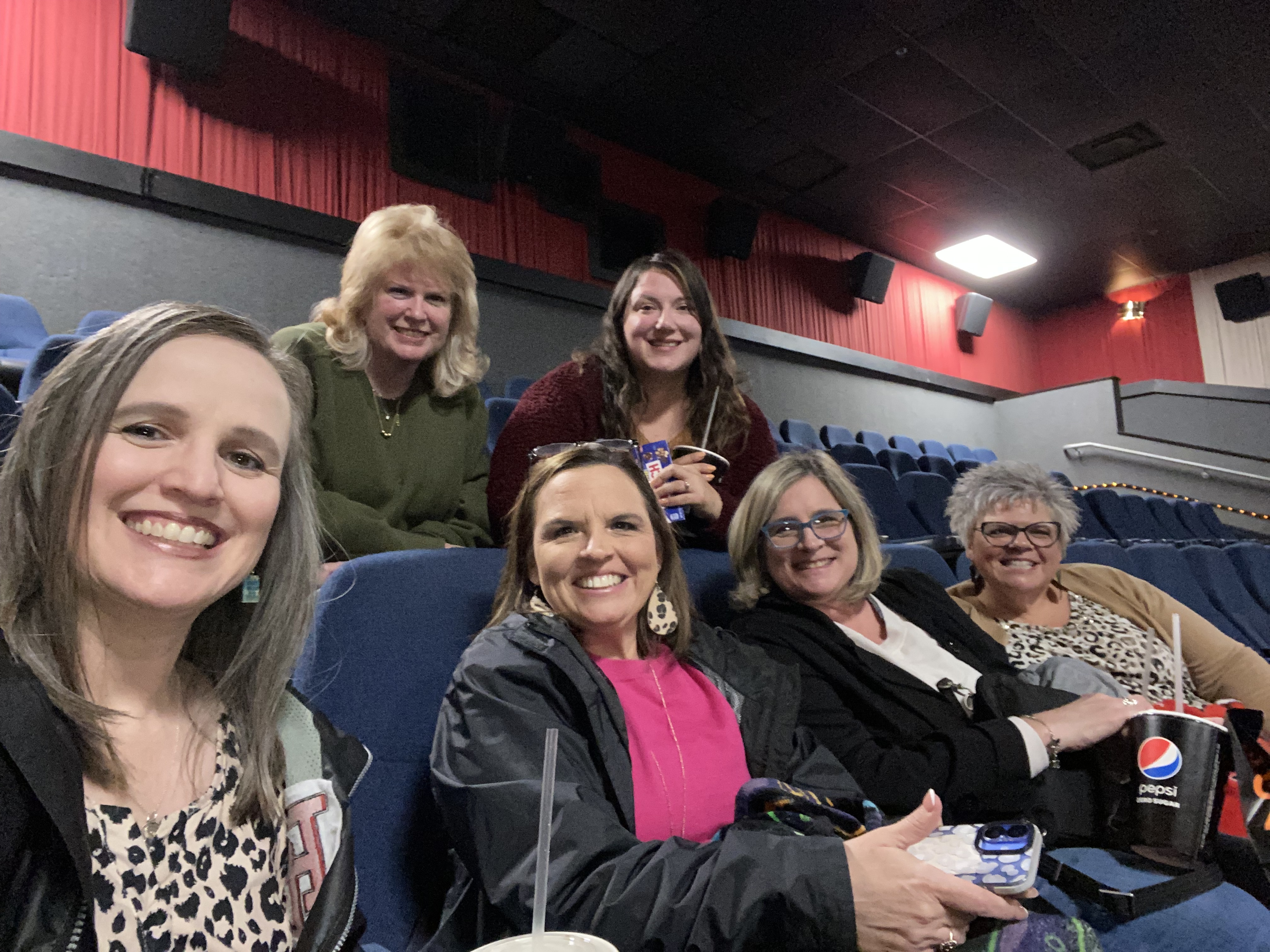
Last night was our first annual Kindred Spirits Book Club Christmas Party, and six ladies celebrated a year of reading 11 novels and one month of daily poetry with dinner and dessert, games, gifts, and laughter. We even chose our first book of 2026 (Not Quite Dead Yet by Holly Jackson) as we picked our seats for the movie The Housemaid, which we will see together later this month as a book-related adventure.
Our book club came as a granted wish of one of our reading sisters who had been attending a book club sponsored by one of our community partners when we were grant recipients of an initiative to build literacy in schools and communities. This community partner experienced a change in its leadership when its organizer took a different job, so our book club sister Janette came up with a brilliant idea. She suggested that we pick up the pieces and read the books that were purchased, and then, to preserve the integrity of the grant, to fill the Little Free Libraries with these books once we finished reading them and having our meetings.
At first, we weren’t sure whether a book club would take root, but we took Janette’s idea and extended an invitation in January 2025 to read a book and meet at our local coffee shop a few weeks later to discuss it. We found some universal book club questions and were thrilled when six of us came to talk about it. By the time we finished the first couple of books, we had enough momentum to choose books not provided through the grant to continue the club all year. Fast forward to December, and we’re still going strong.
We were not all diehard readers when we embarked on the journey. A couple of us knew we needed books – – and adventures that are sparked by things we’ve read – – but what we didn’t know is how much we needed each other. We’re a classic example of an eclectic group of women with different reading tastes, in different stages of life, with a range of life experiences. But we’re drawn together by books that unify us and common themes that allow us to share our own perspectives. And when human hearts find the right books and the right space, they bond as readers with a sweet kinship. Like us, they are Kindred Spirits.
This morning, I celebrate a year of reading with Janette, Joy, Jill, Jennifer, and Martina. Here are the books we’ve read in our club this year, in order, along with the adventure we shared (a few of us belong to other reading clubs, but here is our list):
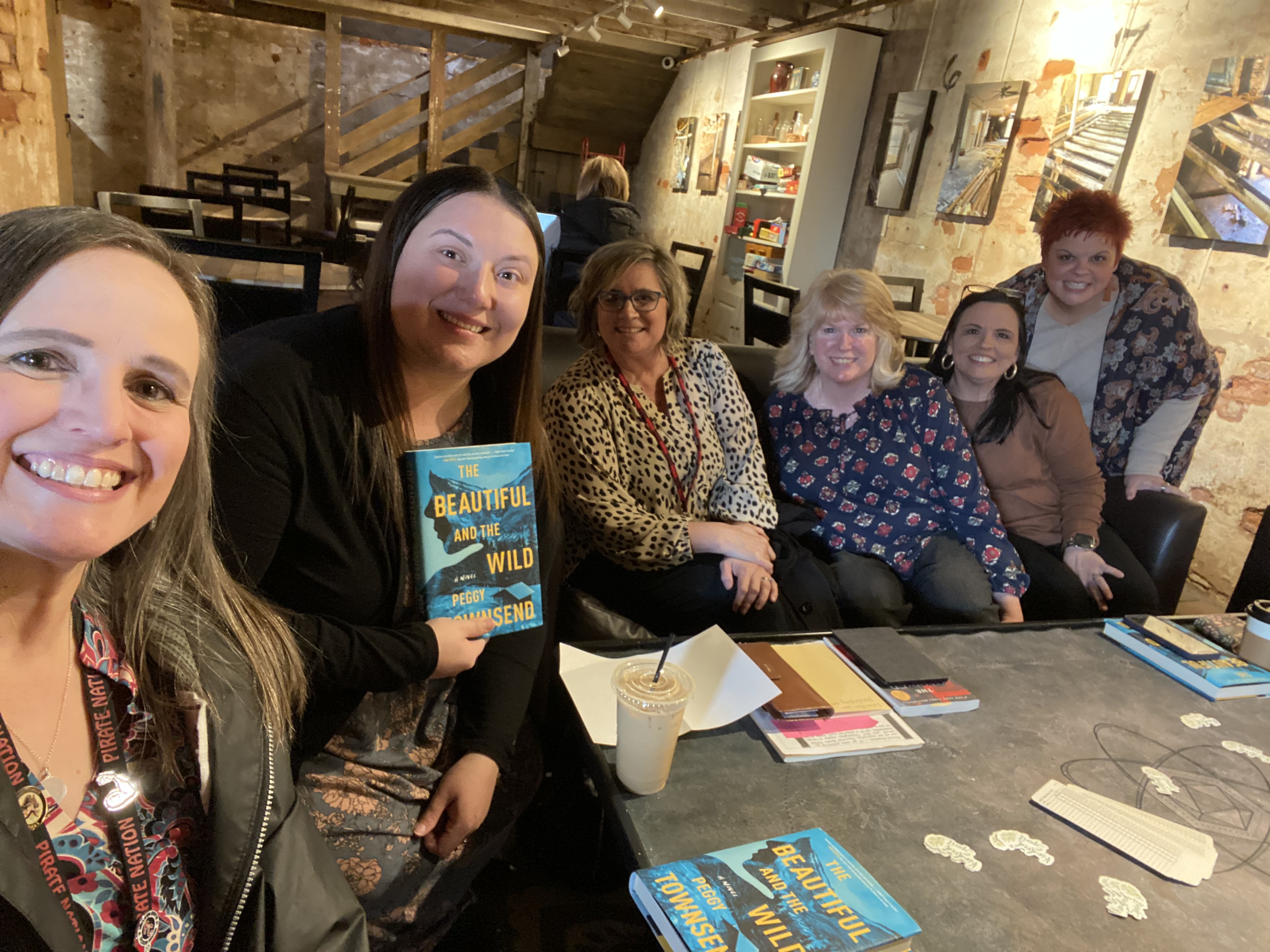
January – The Beautiful and the Wild by Peggy Townsend
Emerald Chandelier Tea Room Brunch
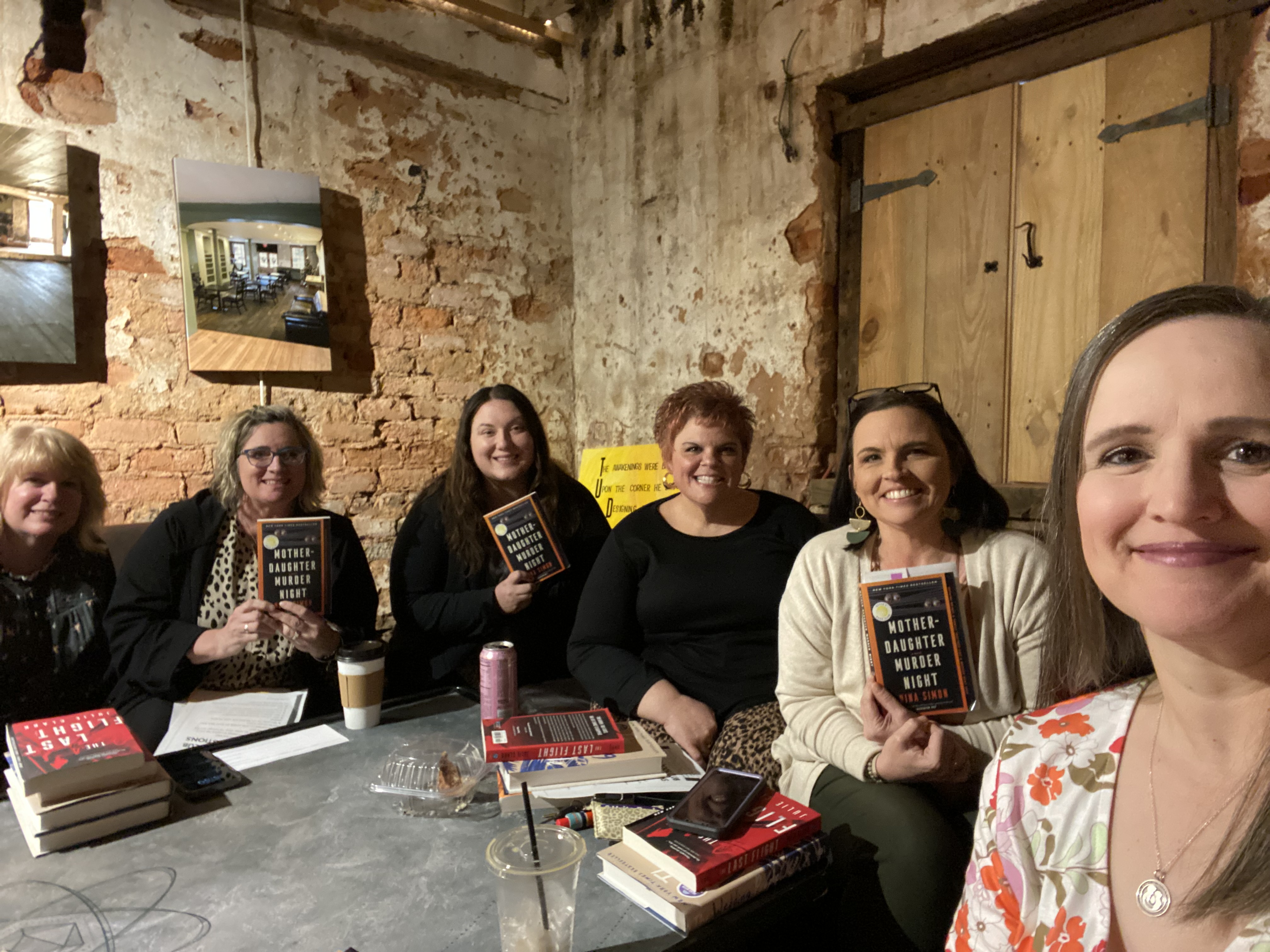
February – Mother-Daughter Murder Night by Nina Simon
Mexican Restaurant Night
March – The Wedding People by Alison Escape
Cake Tasting
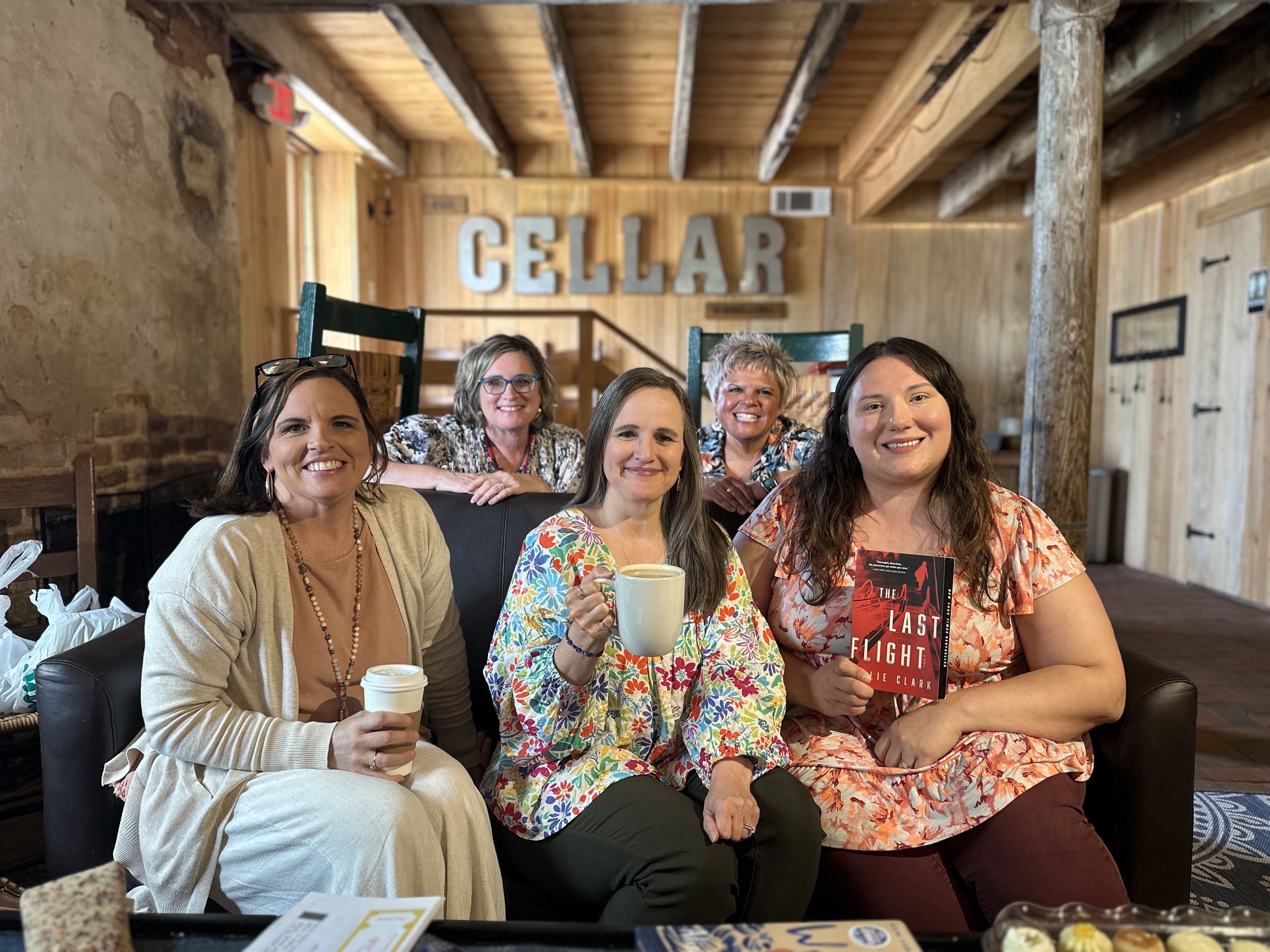
April – The Last Flight by Julie Clark
Airport Dinner with a bag of 3 things we’d bring if we changed identities
May – First Lie Wins by Ashley Elston
Played Two Truths and a Lie
June/July – The God of the Woods by Liz Moore
Made Indoor S’mores
August – The Seven Husbands of Evelyn Hugo by Taylor Jenkins Reid
All wore green on an outing
September – One Tuesday Morning by Karen Kingsbury
Shared 9/11 Stories of Survivors and Victims
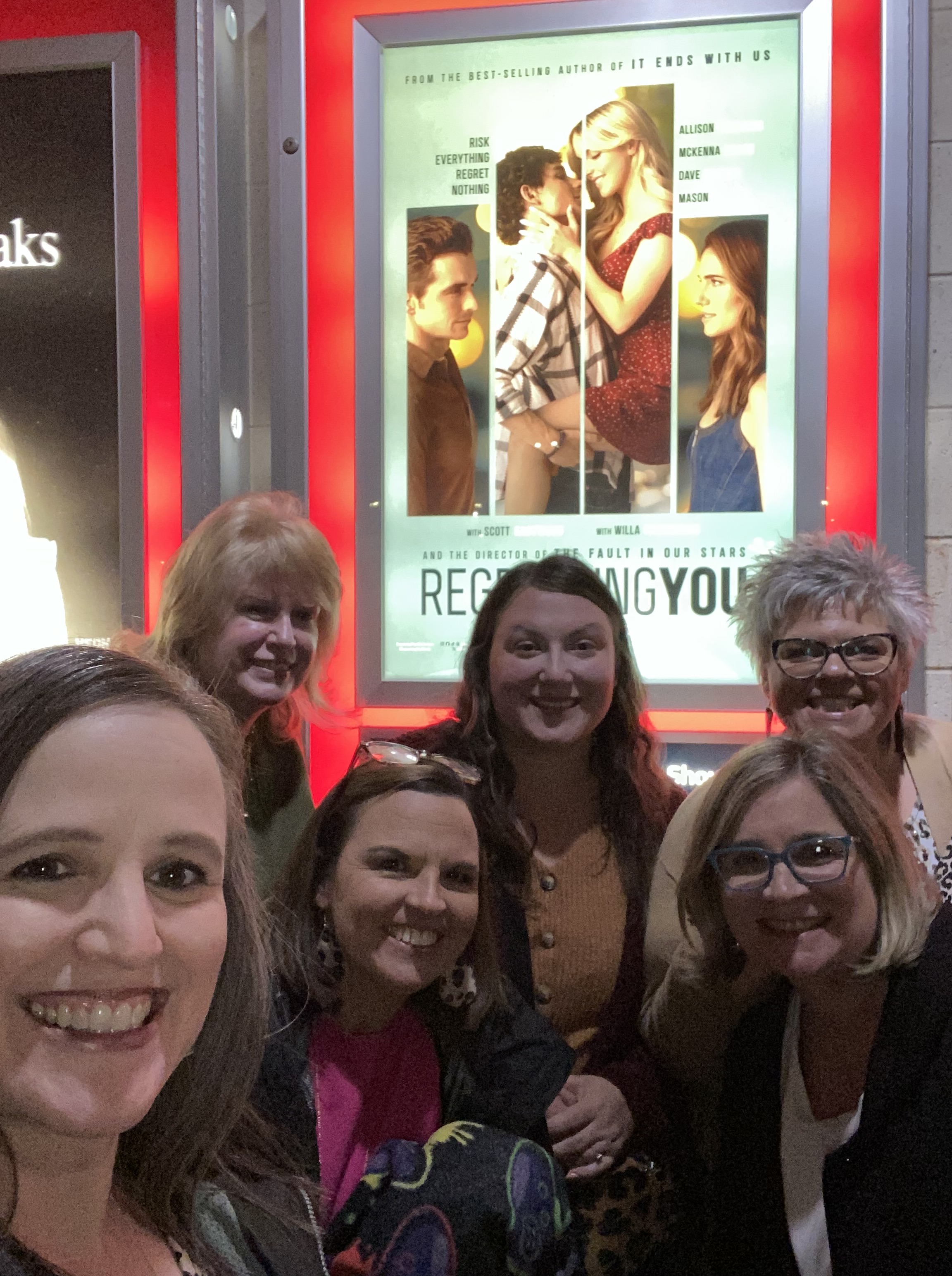
October – Regretting You by Colleen Hoover
Dinner and Movie Night
November – The Housemaid by Freida McFadden
Dinner and Movie Night
December – The Book Club Hotel by Sarah Morgan
Christmas Party
Selected Poems for National Poetry Month
Wrote poetry
(Full Disclosure: Not all of us liked or would recommend all of these books to others – but in true book club spirit, we stayed the course and kept turning the pages).
In our first book of the year, a character was always making tea, so we visited a tea room for a Saturday morning brunch. At our party, we played the Left, Right, Across game with the story below (feel free to modify and use it for your own book club), and each of us took home a mismatched teacup and saucer in the bag that ended up in front of us. We played Mad Libs, had a wrapped book swap, and had a gift exchange as well, and we can’t wait to see what 2026 brings!
Don’t miss the photos of our book club through the year under the story.
A Book Club Christmas Party
It was the evening of the annual Christmas Dinner party as members of the book club arrived and settled in right on time for what was left of the day. Last spring, with books left over from a grant, they stacked their hands right together in a huddled pledge to read across the year. They’d started right away with The Beautiful and the Wild, Mother-Daughter Murder Night, and The Wedding People, which left them all wanting more adventures like tea parties and movie outings and even driving slap across the county to the airport with packed bags. They shared what they’d take with them as they sat across the table after reading The Last Flight. They even read across genres that included poetry. They had some books left, so they dove right straight into First Lie Wins, The God of the Woods – which they read across the summer months – and The Seven Husbands of Evelyn Hugo, each reader thinking secretly of one or two of the books, “well, geez, that’s one I might have left out of the lineup” right before starting the next books ~ One Tuesday Morning, Regretting You, The Housemaid, and The Book Club Hotel. Eleven books across the span of the year, and here they were right at the table, celebrating all their different tastes in reading while gathering each month to read books they may have left out of their own lives except that they yearned to be right there discussing books together with their reading sisters, appreciating how their reading tastes, though often a mixed and mismatched bag, revealed all those moments of having just the right book at the right time because that’s what books do – they unify. Each realized, across the span of the year, that reading together is just the right medicine for the soul. In the perfect spirit of solidarity, they clinked their cups before heading right back home already dreaming of the next gathering, and as each guest left, they felt right at home in their book club family, where they fit snugly and belonged, as precious and interesting as fine mismatched china.
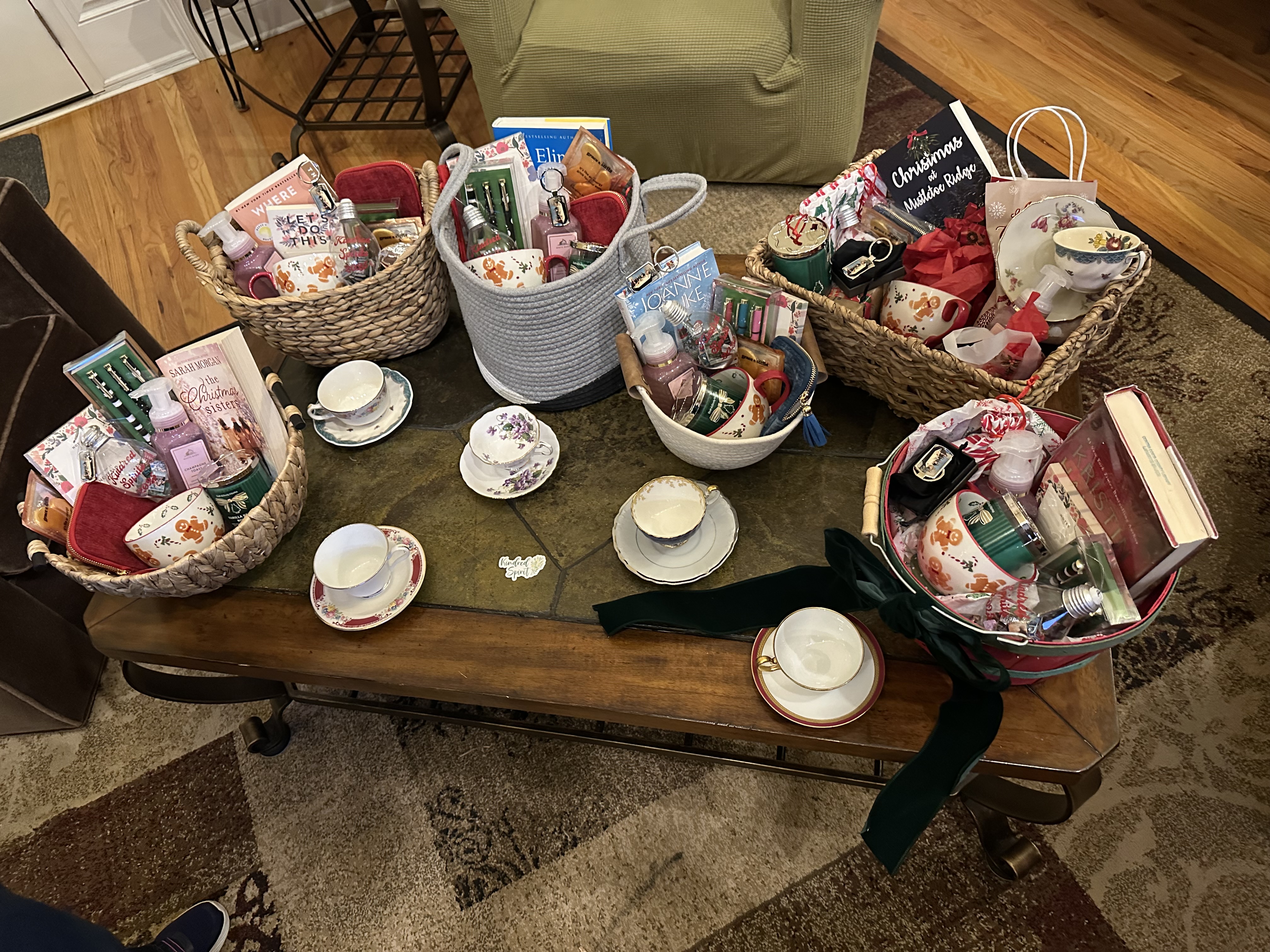
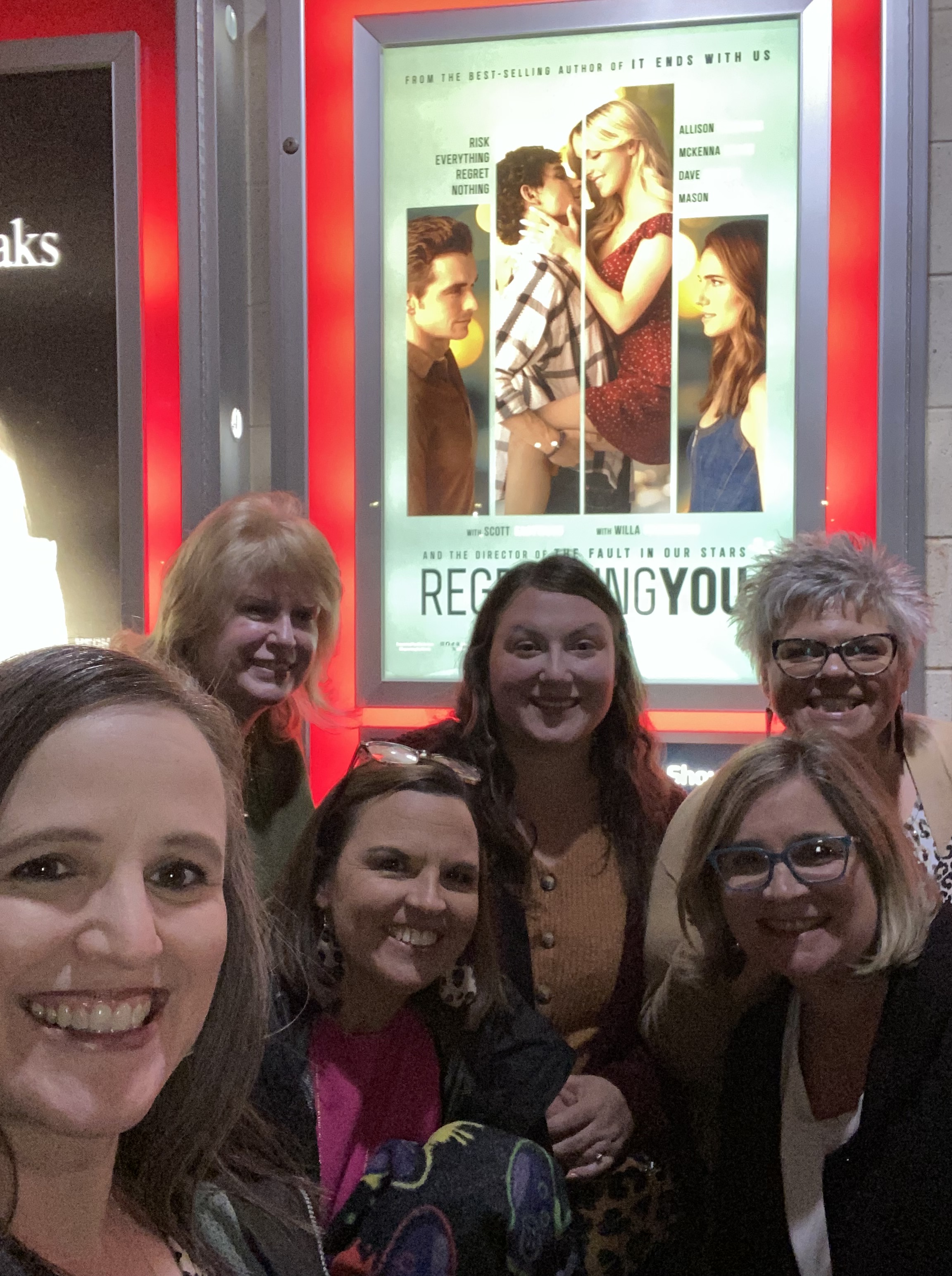
In the cellar of 1828 Coffee Company, where we hold most of our monthly discussionsKindred Spirits Book Club From L-R: Jennifer, me, Martina, Joy, Jill, and JanetteAt the movie Regretting You after reading the book by Colleen HooverChristmas Gifts and mismatched teacups and saucersAt the Emerald Chandelier Tea RoomAt The Emerald Chandelier Tea Room after reading our first book of 2025At our Kindred Spirits Christmas Party, 12/5/2025
Last weekend, we wrote kennings with Mo Daley of Illinois as part of the November Open Write through http://www.ethicalela.com. A Slice of Life blog inspired 6-7 poems in last week’s post. I combined two forms today: a kenning in 6-7 format (six words, seven words) as I think ahead to our Thanksgiving plan next week. Since we spent time with all of our children in for a week in October, they will be spending time with other family members during Thanksgiving this year. We’ll be in a camper in a state park in a back corner campsite with a fire going, the dogs in their portable pen, and books in our laps in our camp chairs. Hopefully, there will be warm blankets involved to guard against the chill of the air.
What will we be reading? My husband will be finishing Killing the Legends by Bill O’Reilly, and starting Killing the Mob by the same author. I’ll be finishing The Salt Stones: Seasons of a Shepherd’s Life by Helen Whybrow, and starting the next book my book club will be reading. We drew a slip at our monthly meeting last night from everyone’s suggestions to determine the next club choice: The Book Club Hotel by Sarah Morgan.
We’ll duck quietly into a favorite local restaurant in the area where we will be staying, and we’ll prepare to-go plates of turkey, dressing, cranberry sauce, and all the fixings on Thanksgiving Day, then return to our hideaway to eat by the fire. We will be feeling grateful, blessed, and relaxed. Since we were all together with all the kids and grandkids in October for a glorious week in the mountains, we won’t have the feeling that we should be anywhere else. Finally, after Dad’s death in June and all the long weekends of travel to his home on the coast to clean out storage rooms and have sales, we will be able to enjoy some much needed down time for the better part of a week.
Last week, a post by fellow blogger Anita Ferreri gave me an idea: could we possibly use the viral “word of the year” 6-7 to inspire poetry? This random response from students was driving teachers and parents all over the country a little batty at Halloween, when some schools began banning it. Others embraced it and adopted it as a way to dress up, inviting folks to come to school dressed as 6, 7, or 6-7. Our ninth grade academy was one of those schools, and the fun was never more math-y.
All week, I’ve been writing 6-7 poems. Some have six or seven lines, others have six or seven syllables on each line. I haven’t written a concrete poem in the shape of 6-7, but perhaps that will be a challenge for an upcoming snow day.
As I sat in Denver, Colorado last week during an AI Summit, we decided to take a quick walking lap around the building to stretch our legs. One of our colleagues noticed something rolling in the dirt in the empty lot beside our hotel. He stopped in his tracks.
Is that a prairie dog? (I felt a Slice of Life happening…)
Our heads snapped left to get a better look.
Indeed, it was. And once I knew they were there, I couldn’t keep my mind off of them. We keep taking random laps just to bask in their cuteness. My window, not facing the view of the Rockies but facing north toward the Aurora Borealis at night and now these just-discovered prairie dogs, was just the reminder I’d needed to be thankful I hadn’t given in to my first instinct to ask for a room with a better view. The good Lord was working the reasons for this odd room choice far away from the rest of my group. These prairie dogs WERE the view, and, like the Northern Lights, so entertaining to watch. Who needs the Colorado Rockies when there are prairie dogs? It took me back to Amarillo, Texas the morning we were leaving for Cadillac Ranch and I’d have preferred to have stayed and watched the prairie dogs in the vacant lot next to our hotel in that city, much like this deja vu situation.
So today, here is a 6-7 poem about these cute critters.
Colorado Prairie Dogs
took me out of my summit
more playful than AI
popping up here and there
tunnel infrastructure
underground labyrinths
far more captivating
than AI’s mindlessness
Tune in next Tuesday to see where our thinking about the prairie dogs took us during one part of the summit when our minds began drifting……(hint: we rethought the mascot for our new voluntary professional development club that starts in December)!
Just call him Petey…..the squeaky professional development prairie dog
Special thanks to Two Writing Teachers for providing space and inspiration for teachers to write in community
Mo Daley is our host for today’s Open Write at http://www.ethicalela.com. She inspires us to write tanka poems to share our traditions. This may be one you’d like to try today, so I’m including her directions below.
Mo writes, “This time of year always gets me thinking about traditions. There are many my family and I look forward to celebrating with each other. I really love hearing about other peoples’ traditions, too. Hayrides, Oktoberfest, pumpkin patches, bonfires, corn mazes, pumpkin carving, and cooking might be some of the traditions that come to mind when you think of fall. Today’s poem is a way for you to flex your poetic muscles while letting all of us learn a little bit more about you and the traditions you observe.”
Mo inspires us with these words: “Write a tanka or series of tankas telling us all about a favorite, or maybe least favorite, fall tradition. A tanka is a traditional Japanese poetic form of 31 syllables over 5 lines. The syllable count is 5/7/5/7/7. Usually there is a turn in the third line. Consider focusing on sensory images to help us feel like we are right there with you. “
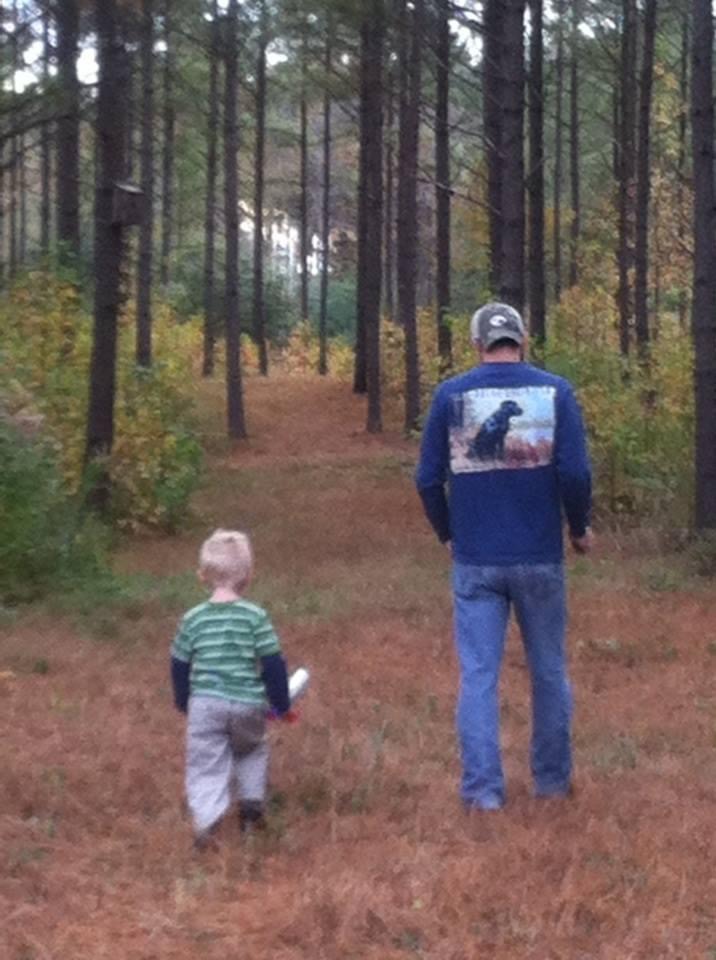
You can read Mo’s poem at the Open Write today by clicking here. In my poem below, I feel the need to clarify the spelling of the yellow bear. My first grandson could not say yellow, so when my son suggested they go on a bear hunt on our farm in rural Georgia to find the highly-elusive-never-before-seen yellow bear, my grandson couldn’t stop talking about the lellow bear, and none of us have called it anything different ever since. I still have the picture of them setting out to find it, and it warms my heart to think that one simple moment, one slight of the tongue, became a family tradition that remains to this day.
Traditions Tanka
first, the pumpkin bread
that started when they were kids
I tie the apron
sift the flour, mix in the eggs
add sugar, spices, pumpkin
dominoes thunder
onto great granny’s table
the one I redid
while the bread bakes, we play games
we pair with grandkids
we all walk the farm
looking for the “lellow bear”
every eye stays peeled
lellow bear is elusive
someday, we might catch a glimpse
the coffee pot stays
full of fresh brew to help us
keep up with these kids
Scrabble (turntable version)
for adults, post-kids’-bedtime
togetherness fills my soul
I take a deep breath
they were born last week
now here they are, with their own
tears of gratitude well up
Several years ago ~ from the time of his first bear hunt to early teens The walk that started it all: the first hunt for the elusive lellow bearToday, the hunts continue
Our host today for the first day of the Monthly Open Write for December is Monday Daley of Illinois, who inspires us to write cleaning poems since it is National Clean Up Day. You can read her full post here, along with her mentor poem and the response poems of the writers who participate.
Earlier this year, those in the school district office where I work were saddened to learn that our favorite custodian had taken a job in a neighboring county because of lower wages in our own. We understood. But we grieved that daily absence of one who was more than a custodian to us. She was a friend who shared about her children and the concerns of her country. She was family. She’d given us her number in case we ever wanted to call to have our own personal homes cleaned, which she offers as a service on weekends.
The older I get, the more difficult cleaning is, and if I’ve learned one thing from my father’s aging process, it’s this: stay on top of the cleaning. As I near 60 years of age, I hear my own words of advice to him echoing through the veil of time: “Hire someone. Don’t try to do all this by yourself. There are professionals out there who know what to do and how to do it better than you can.”
So two weeks ago, I called my friend Dianelys to come and meet with me about cleaning. She brought her mother along, the one who loves plants but doesn’t speak any English. I saw her mother giving approving nods to the plants as we walked through the house so I could show her what I would like to have done. I’ve been establishing some Night Blooming Cereus stalks, so I plan to leave one out today with a note for her and her sister in law to take to her mother, on this first day that Dianelys will clean our house with her cleaning partner.
And so today, on this National Day of Cleaning, it seems fitting to write my 6,7 poem to celebrate Dianelys and cleaning.
On the first Monday evening of each month at 7 p.m., I meet with a small group of Stafford Challenge poets via Zoom. We’re also members of EthicalEla, and we’ve presented together at NCTE. Periodically, we’ll text each other a poem or prompt. Our evening meetings include time for writing and sharing.
Our group consists of Glenda of Idaho, Denise of California, Barb of Iowa, and me. We weren’t sure whether or not Denise was going to make it this week, but she texted us a prompt in case we wanted to try the writing prior to the meeting and have something to share.
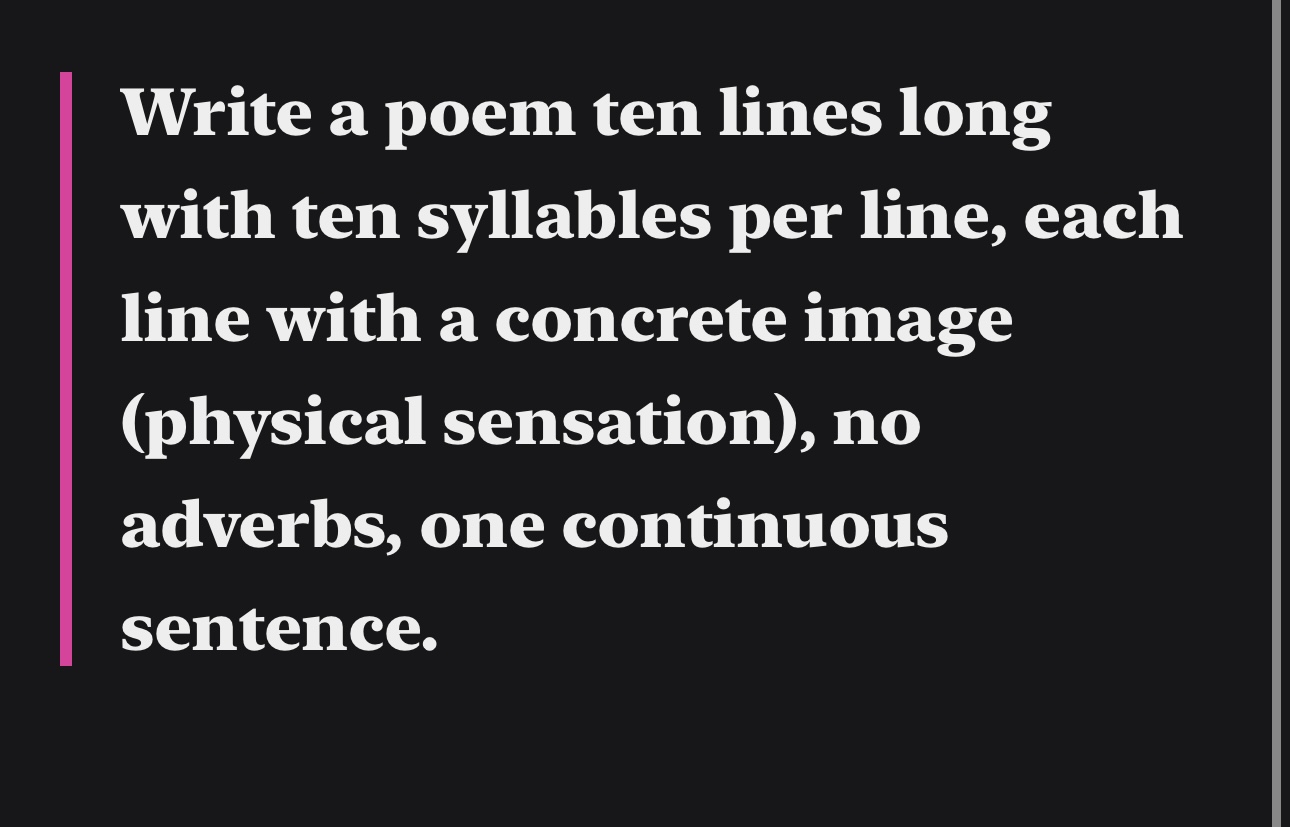
This was her prompt:
Screenshot
Steering clear of adverbs was challenging (I think of Stephen King’s words: the road to hell is paved in adverbs). Writing without them is not easy. I noticed the need for doubling down on adjectives to meet the sensory part of the prompt and also accepting that this would be a major run-on sentence. Here is the poem I shared with my small group on Monday night:
we’re listening to Christmas music, joy
filling our hearts and souls ~ chicken pot pie
piping hot and broiler-top crisped and browned
our three schnozzles snoozing by the fireplace
Sam’s Club Members Mark Old Vine Zinfandel
spilling from a ruby red wine chalice
catching each sparkle of shimmering light
Vermont Flannel blankets warming our toes
in forest green and rich brown earth-tone plaid
on this crisp night here in rural Georgia
I’m so thankful for my writing friends who always inspire me to try new forms and challenges. And Denise showed up – – after a long day of travel, in a Chipotle, still not yet having arrived at her destination for the evening. The four of us each shared a poem and caught up on life, and for that time of fellowship, I am grateful.
I never laugh as much as when our book club gets together! The books we read and the times we spend talking about them are a balm for my soul.
People have asked me how we “do” our club, because there are so many ways to structure a book club. First, we decide on a book based on someone’s recommendation. We’ve already picked dates through the end of summer and have marked them on our calendars so we guard our time. We sent out digital invitations so we don’t plan any other meetings by accident. Priorities.
Once we know our book and our next meeting time, we read and try not to talk about it with anyone reading it so we don’t give spoilers. Our regularly scheduled gathering spot is our local coffee shop, where they have all the best coffees, a few food items, and the best downstairs couch circle anywhere in town – the kind of leather couches you slide down deep into and wonder if you’re ever going to be able to get out once you get in. The kind with a big coffee table in the middle so there’s room for mugs and plates and stacks of books. We go there and pull out our general book questions as a discussion guide. Sometimes we use questions designed specifically for a book – – like at our most recent gathering, when I’d forgotten to bring the list of universal book questions. Another group member pulled up a set online that we discussed.
The part so many book clubs don’t “do” that sets our club apart is the action part. Every member of our club has a streak of adventure dwelling in our hearts, so we like to think of something the book inspires us to want to do, and then go do that thing. For example, in The Beautiful and the Wild, one of the characters was always drinking tea. One of our members found a local tea room and went for brunch to try different teas, even trying on all the hats and a pair of gloves, too. In The God of the Woods, the characters ate s’mores, so we met for appetizers at the home of one of our members and made s’mores. Having the adventure part adds to the experience of any book, because we do things we wouldn’t ordinarily do on any normal day of our lives. We stay young.
Our latest book, Colleen Hoover’s Regretting You, was released as a movie this month, so we made it our October selection and met for dinner and a movie. We spent as much time discussing the movie and the differences between the book and screenplay, and we were still talking in the dark theater when the manager came in, turned on the lights, and said he was “surprised” to see us there. He was shutting the place down. We were just glad we didn’t get locked in the movie theater overnight. We imagined the headline with humor and horror: Local School District Employees Earlier Reported Missing Found Locked in Local Theater Overnight.
Our next book is The Housemaid by Freida McFadden. The movie comes out December 19, and of course we all have our Regal apps for movie tickets up and running and have booked the date. We’ve decided to leave after the credits finish rolling – – just in case.
When the high school teacher called asking if I would be willing to come write poetry alongside students, I jumped at the offer. As a District Literacy Specialist mostly wrapped up in the operational world of data and school improvement, I miss the opportunities of the classroom. That’s where we make the biggest difference.
She read to me the AP Standard on taking poetry from prose and wanted to feature blackout poetry. As we chatted, I shared with her my blog post that day and gave her a copy of 90 Ways of Community, a book on poetry written by one of my writing groups. Together, we considered the various poetry forms that we could use if we modeled the process ~ blackout and found poetry were already on the list, but we added Haiku, X Marks the Spot, Acrostic, Golden Shovel, and Zip Odes as a geographic timestamp bonus of sorts. The students have already created their own personal writing, and we’ll show them how I used a blog post to extract poetry and urge them to do the same.
We’ll model the process.
We’ll feature an overview of possibilities – – a menu of choices – – and then watch their creativity flow onto their paper like they’re mining for gems that they pull out to polish and sparkle.
I’ll remind them that poetry is a process – – not a product. In fact, I’ll probably open the class with something like, “poets and artists have a mindset of creating a lot of bad poems and a lot of bad art.” They’ll wonder who the crazy lady is, but I’ll explain what I mean: perfection is not the goal. Writing is the goal. Thinking is the goal. Not every race is a marathon, not every photo wins awards, and not every book gets 5 stars – – it’s finding the pieces of what we do well and building on those parts so that the process becomes somewhat of a habit. I’ll explain to them that I think in metaphors and syllables, and I take a lot of random pictures to come back to little things I see that will work their way into poems.
Take this, for example:
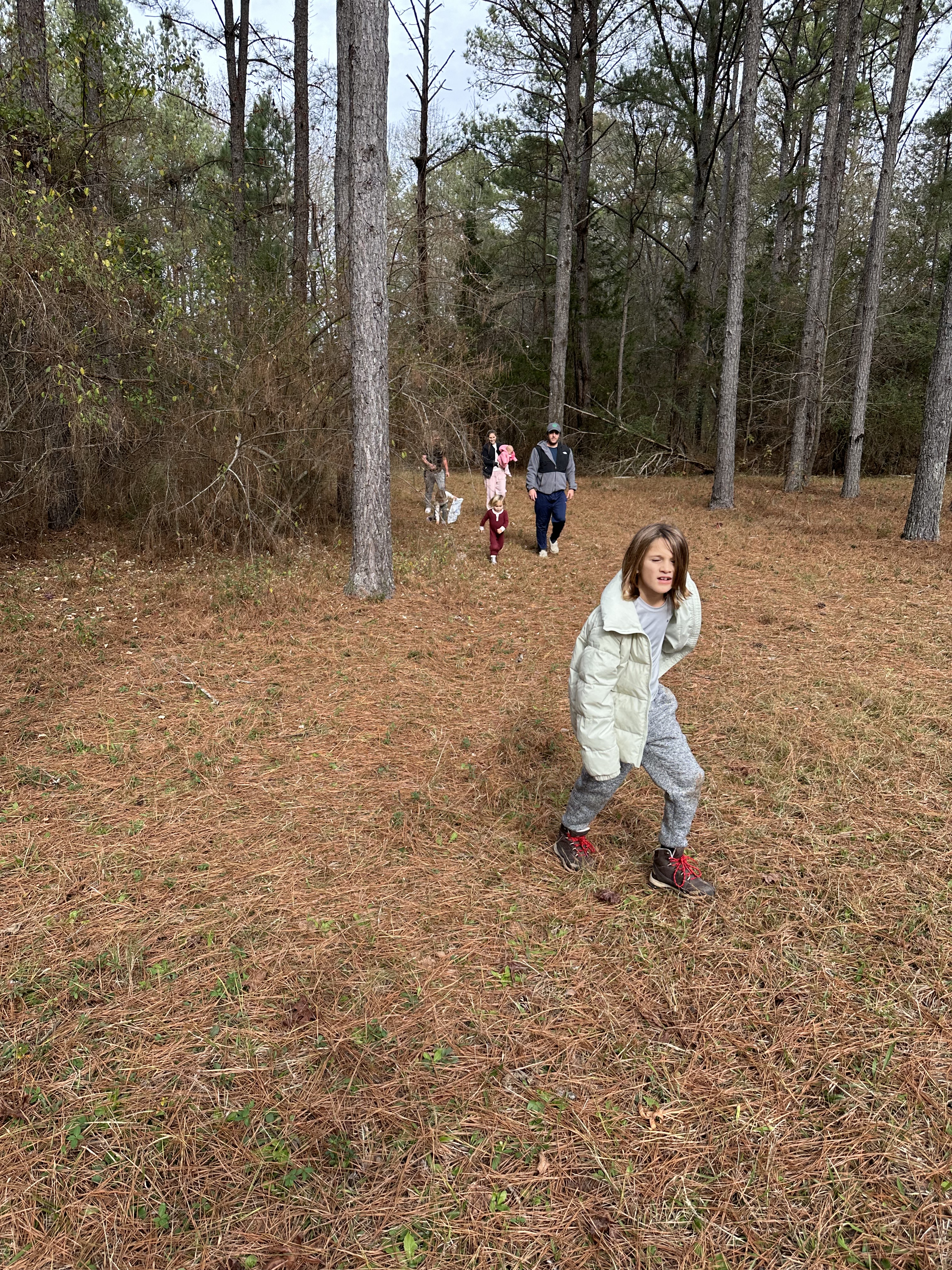
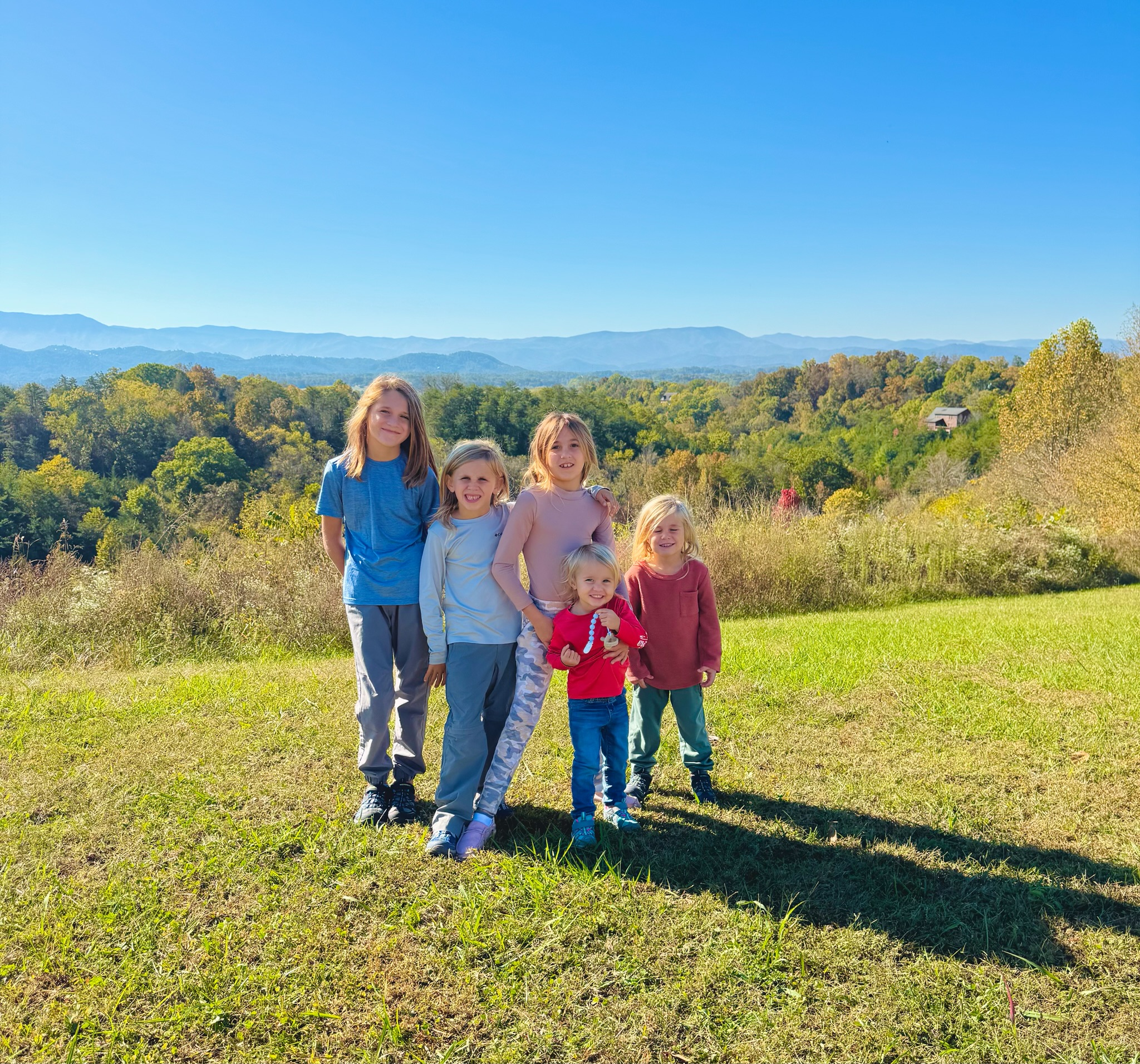
These kids are a big part of my life. Here stand five of my seven grandchildren in the very spot at the top of a mountain in Sevierville where their parents were married in May 2012. Their other grandparents own that land, and at the bottom, there is a fishing pond. Let’s take a deeper look.
Blazing a trail, tackle box and all
I see two boys (yes, they’re boys – they just have lots of hair) exploring the trail that leads to the pond, tacklebox in hand, ready to to cast a line and spend time fishing. I’ll explain to them that already, my thoughts are swirling in metaphors of adventure, seeking, a quest, a tackle box of what it takes to find, a hook for the found thing to be caught, and the patience and grit to stick with it – and the treks through the mud and the weeds to get there.
Because fishing isn’t about the fish. You can go to the grocery store and get fish. You can order fish from a restaurant – or better yet, you can Door Dash fish.
No, fishing is no more about the fish than poetry and art are about perfection. It’s about the adventure and the process, and the wait for just the right inspiration.
Beckham, who never stands still and quiet, is standing still and quiet – fishing!
It’s about engaging in what it takes to do a thing, whether writing a poem or creating art or catching fish. It’s having the stick-to-it-ness to stand still and be quiet for two hours of a morning and be determined when you’d almost always otherwise be doing something else, but you learn to love a thing and know that there is something, something, something that will bite and that you’ll reel it in and be proud of it, whether it’s big or small.
River with his fish
You’ve caught something you’re proud of, and you can’t wait to share it with the world. So you pose for the photo, holding a fish mouth open the way you’ve been taught, holding the fish a little closer to the camera to make it look bigger than it actually is, and you see the great things about your fish.
And then you release it back into the world, knowing that next time you come back, you may catch that same one again – – or something different, like that turtle your sister caught.
Noli’s shoes tell the story: she’s seizing the day!
Either way, the one thing you cannot buy, like that Door Dashed fish, is the mud on your own shoes from the lived experience.
And that is what poetry is – life, experience, thinking, waiting, casting a line and seeing what comes up on the end of the hook.
So while I may say I’m going to school today, what I’m really doing is going fishing