Joel shares, “My studies taught me that many poetic forms winnow down in length as they ramp up in meaning. A sonnet’s couplet, a sestina’s envoi, a haiku’s closing pivot, a villanelle’s quatrain – you get the idea & the impact: As the form gets smaller, the idea feels more potent, more provocative. There are exceptions. Exceptions like the cherita.”
I love narrative poems, and Garza reminds us that these are, essentially, stories in poetic form. He explains the process:
Remember that the cherita is a story. Aim for a tale that you need to tell (or maybe a tale that you’ve never told). Be as direct as possible in welcoming your reader – one line only.
As you develop the story, be deliberate and succinct. Two lines only for this middle stanza.
Finally, resolve with a comparatively expansive meditation on the meaning or mystery of this story. Knock yourself out — A whole three lines!
One line. Two lines. Then, three lines.
Jay
I looked to the directions, but I only needed the final stanza to tell my story. So I followed my gut and wrote what was inside.
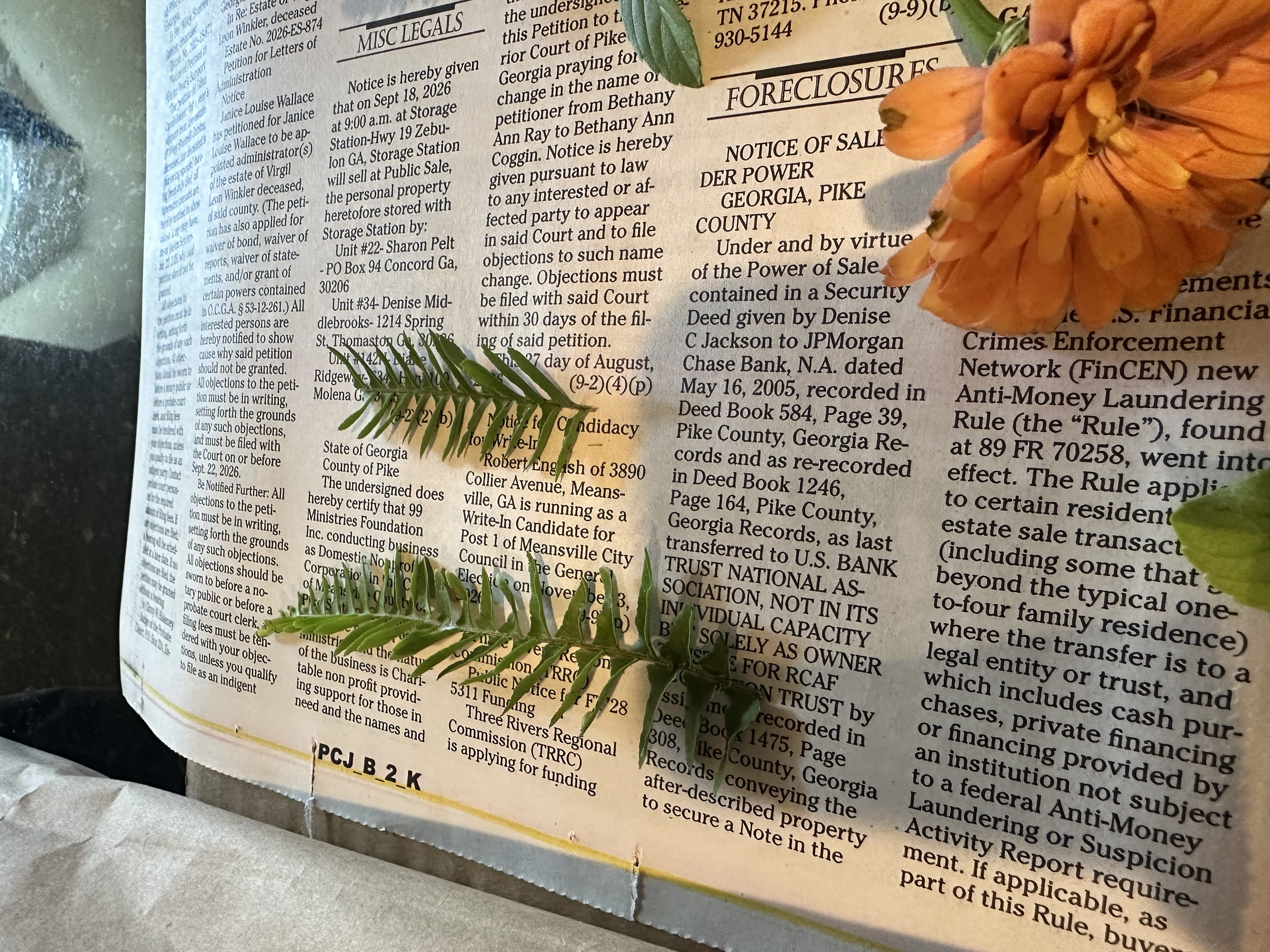
I used to love making pressed flowers for bookmarks and decoupaging plain white candles and decorative soaps when I was younger. My mother taught me how to take newspaper and fold it to match the pages of a heavy book and use that as a press. About six weeks later, we’d use tweezers to take the petals and stems and arrange them over a flat surface using Mod Podge. I think our hobby started back in the day when women carried hexagon-shaped wooden purses decoupaged in collage, with tortoise-shelled handles. Macrame purses were all the rage at that time too. As I was looking for some photos of the ones I’d possibly blogged about before, I did a quick search and discovered I had created a list of 50 things I planned to do in retirement from November 2024, and pressing wildflowers was one of them. How did I forget that list? Check it out here. The dream hasn’t changed much!
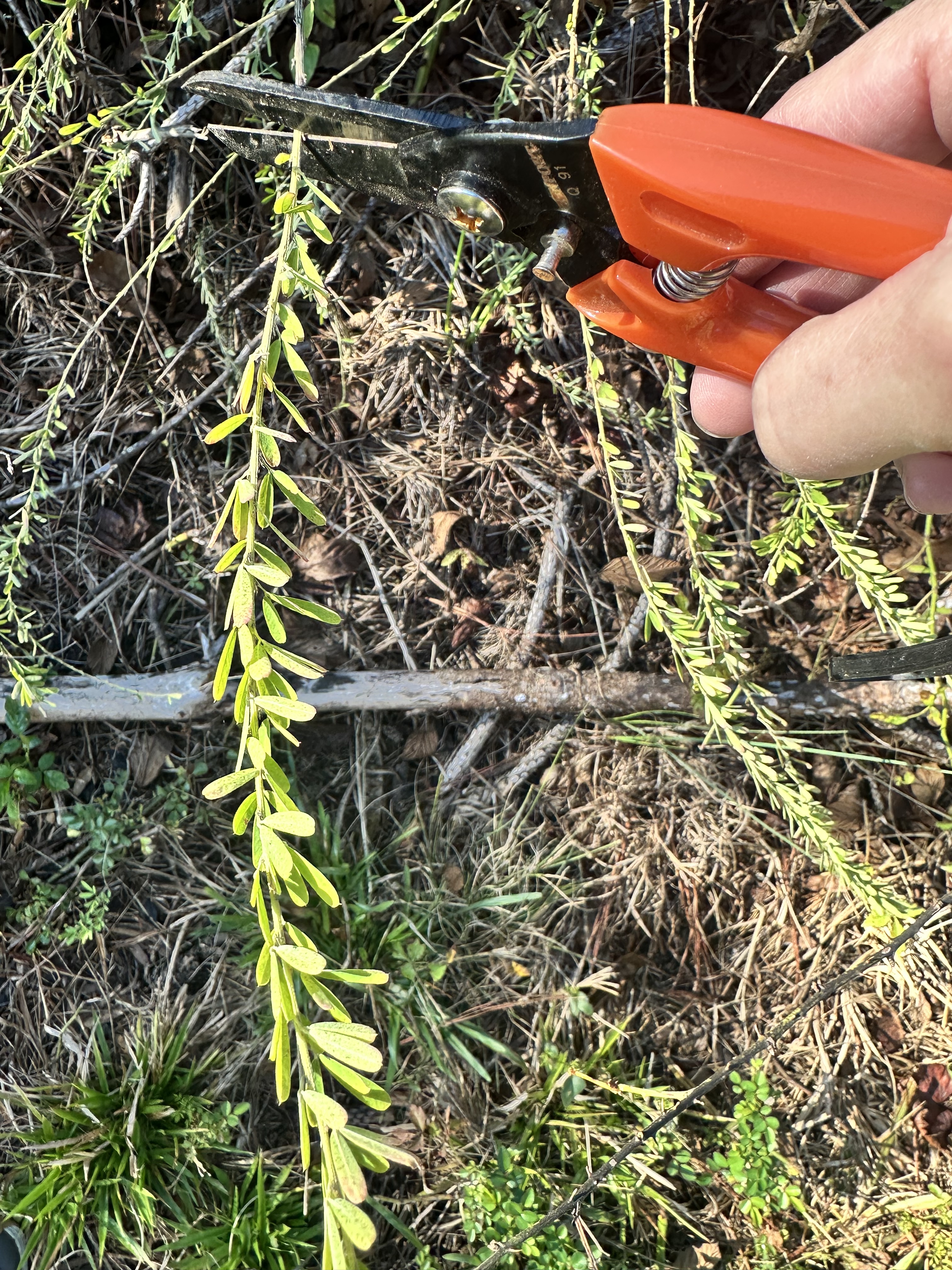
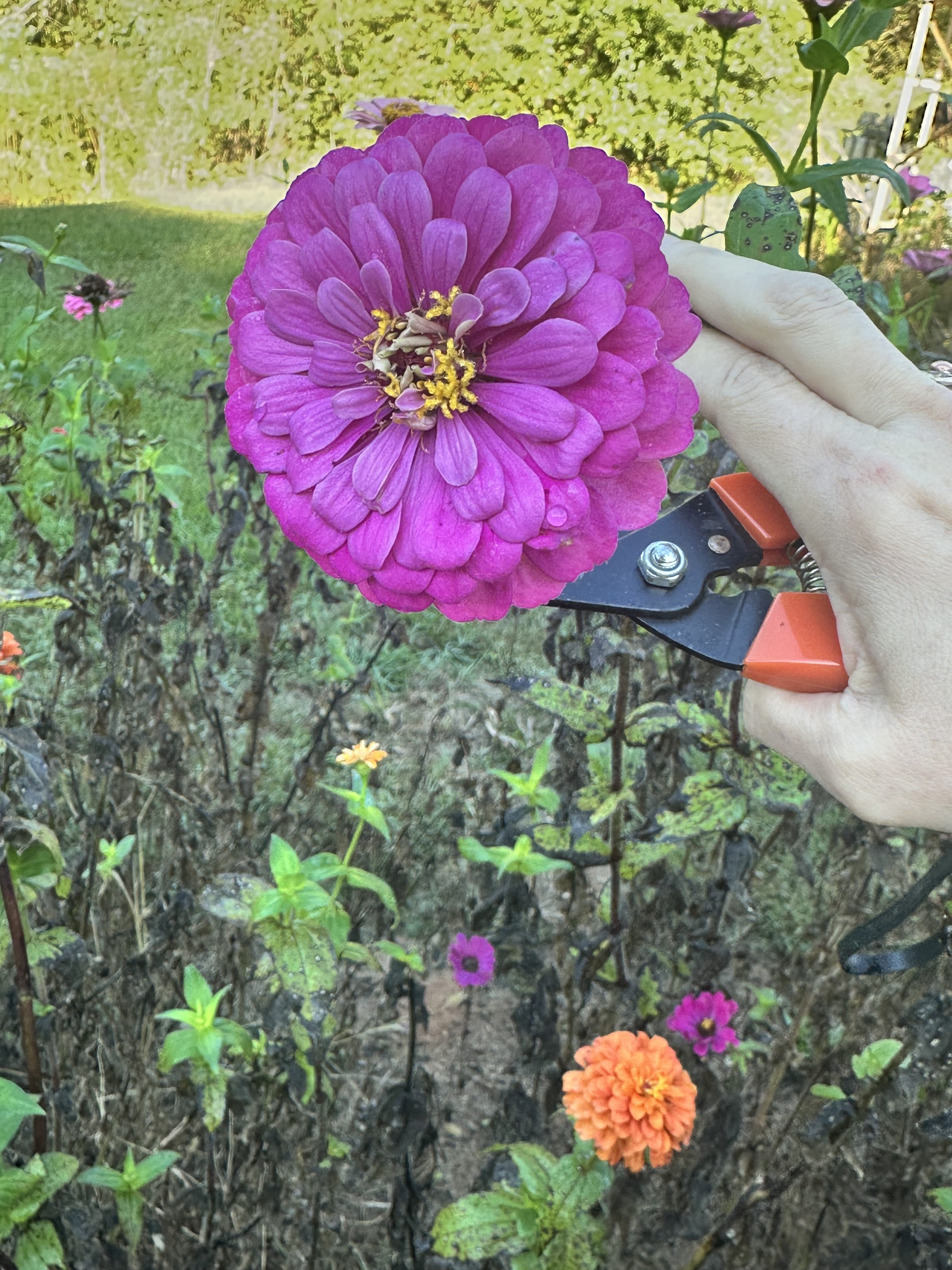
During the middle of last week, I called my sister in law to see about coming to get some zinnia clippings from her wildflower beds to press between old newspapers. Off I went, clippers in hand, and came home and pressed a paper sack full of greenery and flower petals I’d collected. In 2008, I participated in a teachers’ study along scientists doing research in the field in South Georgia, and I became the owner of my own plant press and field guide for the plant studies of native species. Still, I use newspaper and not the fancy acid-free white poster-thickness paper that we used throughout that summer in Americus, Georgia at the Jones Ecological Research Center.
For the first time, I’m pressing fresh basil, since a recent bouquet gift had an abundance of this fragrant herb. One thing that never changes: native Georgia ferns are my go-to greenery in any arrangement.
I’m marking my calendar for mid-November to check the plant press and create some decoupaged pillar candles for a Thanksgiving centerpiece. As we have lost mothers over the years, we light candles to remember them on Thanksgiving, and this year I have something other than the plain white tea lights in glass jars in mind. 🙂
I’ve never met a bookstore I didn’t like, so in this chapter of life where there is more time to read, I added Independent Bookstore Shopping to the list of things of delights that retirement would bring time to enjoy. I knew this would go in my green notebook list of things to do after visiting Powell’s City of Books in Portland, Oregon in June. They call themselves “fiercely independent,” and if you read a little about the history of this amazing store and the philosophy about reading that guides its management, you know both the the power and the risk of the break from big box corporate bookstores. Take, for example, the poetry section. Those sections are usually what I would consider the weakest link in a bookstore. But not in Powell’s. They have several sections of floor-to-ceiling titles of poetry books, and the best curated collection I have ever seen. In the eastern United States, Malaprops in Asheville, North Carolina gets the highest mark for a poetry curation. I’m on a quest to find those that stack up to the gold standard of Powell’s.
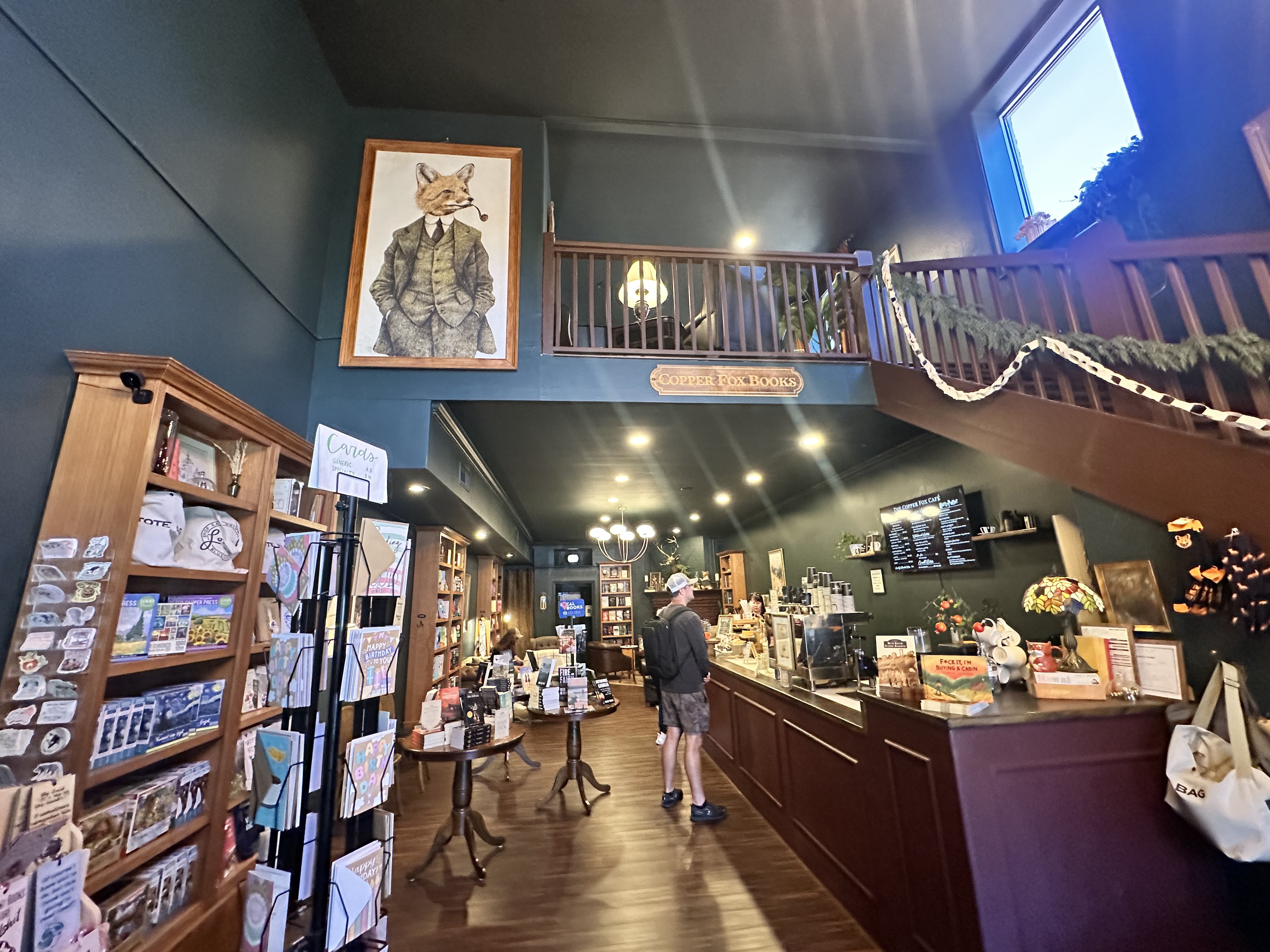
Since I would live and breathe reading if it were possible to do, I like to get as close to it as I can and inhale deeply, taking in the feel of the books, the smell of the shop, the vibe of the readers considering what they want to read next. On a recent North Georgia Mountain trip, my sister in law and I visited indie bookstores in Ellijay and Blue Ridge and also in Copper Basin, Tennessee. My favorite moments are when someone asks complete strangers if anyone has read a particular book. That happened in Copper Fox Books in Blue Ridge, Georgia recently, and we helped steer a reader to Mad Mabel by Sally Hepworth as her next book after chatting preferred genres. It’s a lovely feeling to be a book matchmaker.
I’m always eager to hear about favorite bookstores. If you have any, please share them. My dream trip would be adding bookstores to a wine tour. I’d get on a bus and go wine tasting but in between all the wine tastings, the bus would stop at bookstores. I wonder what books I would add to my library if there were such a tour – – and whether it would be poetry and novels or whether I’d branch out and surprise myself with some new genres when I arrived home and checked the boxes to see what all I’d bought!
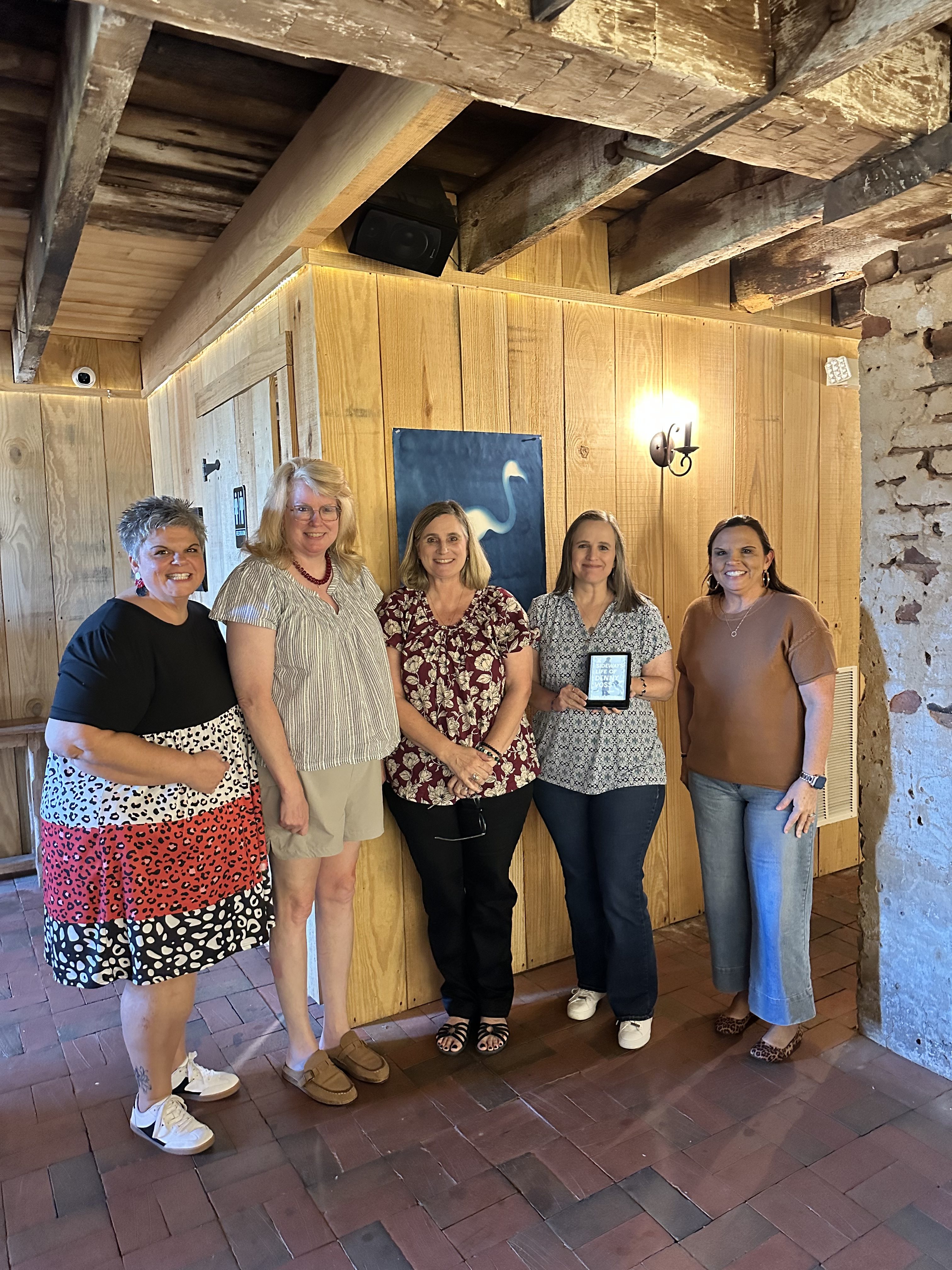
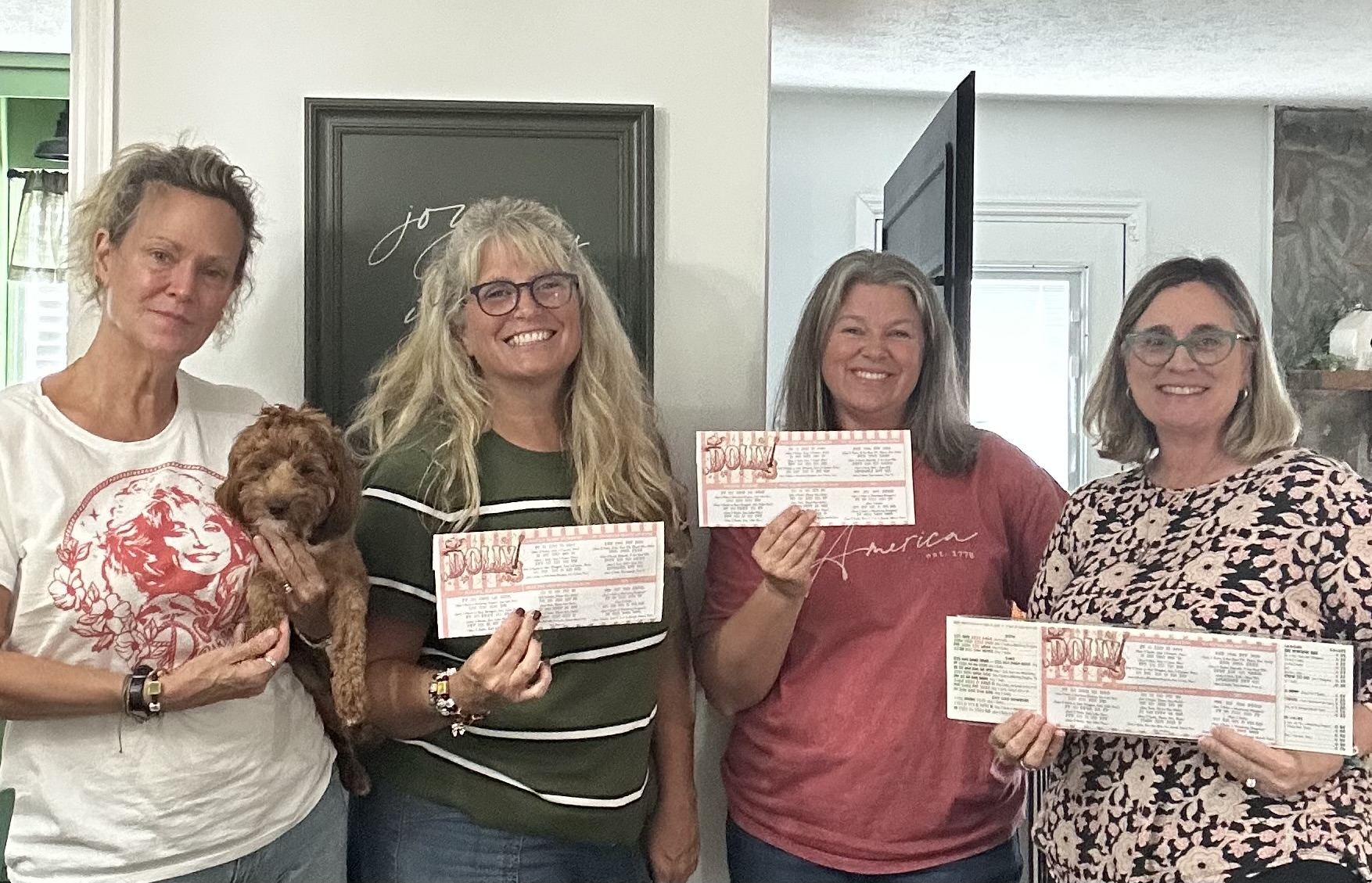
Five of our six Kindred Spirits Book Club members, September 2026
Our Kindred Spirits
more than just a small book club
we share heart and mind
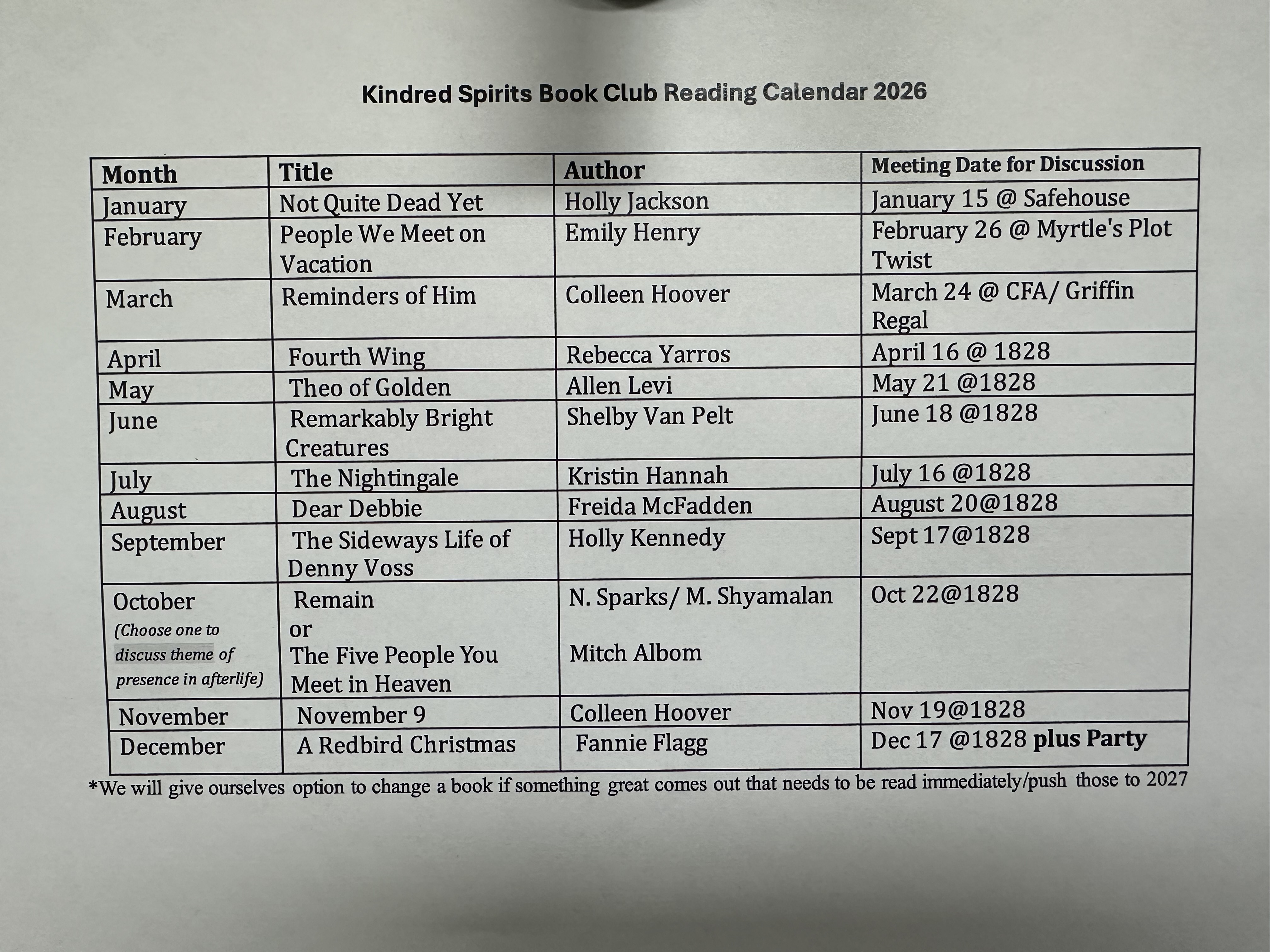
Each month, the Kindred Spirits Book Club with a six-strong membership meets to discuss our monthly pick. We’re nearing the end of our second full year of reading together, and there’s a deep soul-knit sisterhood that we share. Back in January, our Kindred Spirits readers each chose two books that would take us through 2026, then we mapped out our choices on a calendar and set our meeting dates and locations for each month so that we could guard those calendar days and set ourselves up for attendance success.
It wasn’t until our actual book club meeting day (the last day of our trip to Vogel State Park last week) that I finished this month’s book, The Sideways Life of Denny Voss by Holly Kennedy, on the drive home (I like to go back and forth between Kindle and Audible). What I think I loved most about waiting until the last minute before the meeting to read the book is that so many of the details were still fresh in my mind for discussion. Generally, I read our selections far ahead of time, and by the time we meet, I’ve read a mix of other books and get the details mixed up. I’ll be more strategic with the timing of my book club selections in the future.
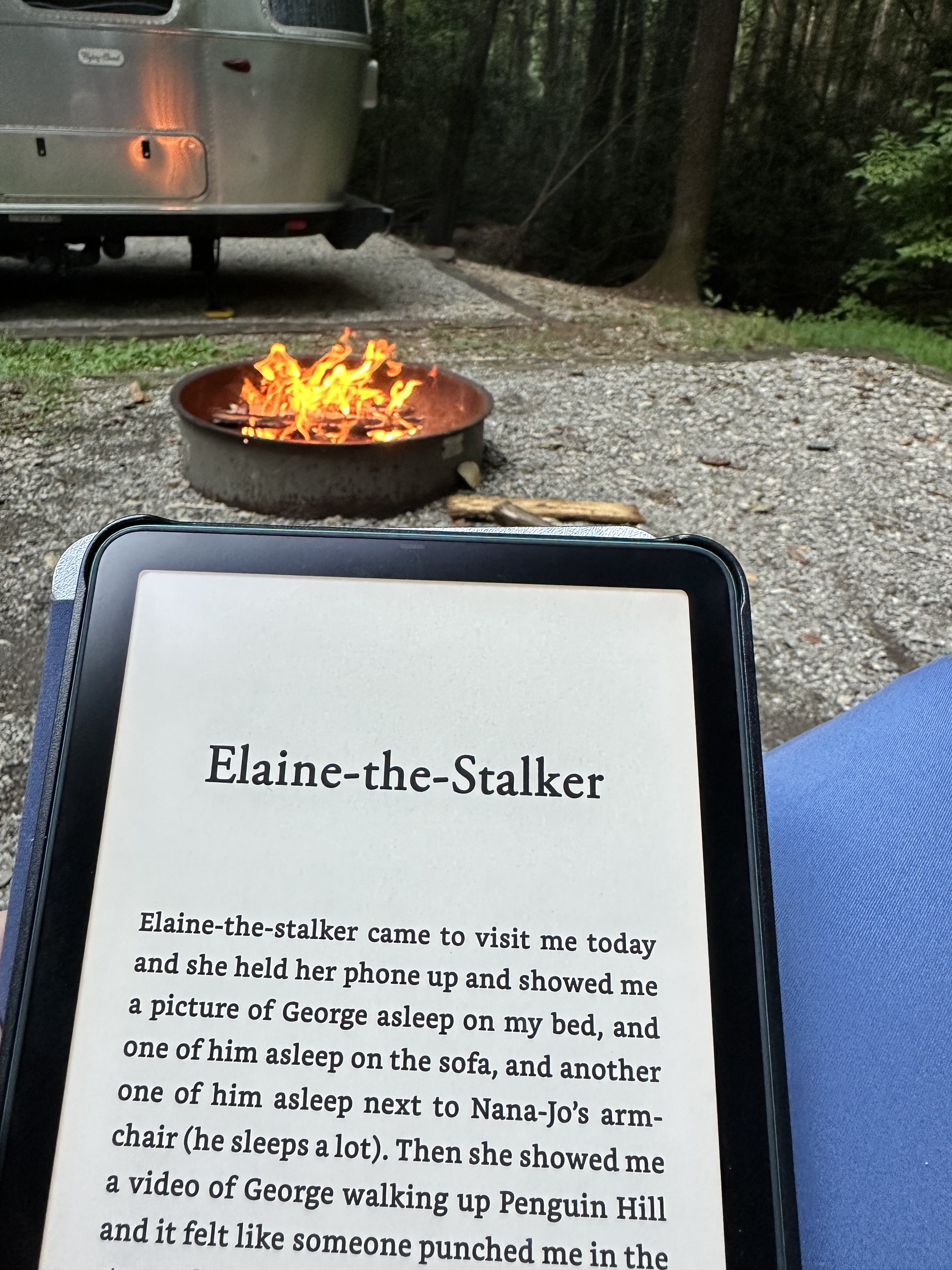
This book is an absolute treasure, by the way. Holly Kennedy is a Canadian author, and she had me in stitches with the kidnapping of a Canadian Goose named Tom Hanks. If you’ve never had the experience of sitting by a campfire reading a book that has you in a full-blown belly laugh while total strangers walk by chuckling from your contagious laughter, please find your way to a bookstore (or get a copy free on Kindle Unlimited) and meet Holly Kennedy in the pages of this novel as you sit by the fire this fall. I’d classify it as a comedic whodunit and go as far as classifying it as a modern Bildungsroman because the main character functions in so many ways as a child but grows in his understanding of the world. As a writer, I appreciate the way the author uses one character’s elaborate t-shirt collection to build character development throughout the novel. This book will change your perspective on those who face life with the deck stacked against them. Visit this link for more information about Holly Kennedy and read the Substack interview. Even in her author photo, you can tell she’s quite a character herself.
Reading by campfire
October’s selection (changed slightly from our calendar) is a choice of this trio: Mad Mabel by Sally Hepworth, Remain by Nicholas Sparks and M. Night Shyamalan, or Songteller by Dolly Parton, just to give a fourth-quarter choice of an ironic author collaboration on a romantic ghost story, a timely biography, and a book flying off the shelves and so compelling it pulls you in and won’t turn loose, and then leaves you wanting to read it all over again. Here are our other selections we’ve read this year. We’re always interested to hear what others are reading and how it has broadened minds, opened worlds, and led to new adventures!
Today’s host of the final day of the September 2026 Open Write at www.ethicalela.com is Leilya Pitre, who writes: In Louisiana, we often use the word lagniappe, meaning “a little something extra.” It is an unexpected gift offered in generosity. Today, I welcome you to a little lagniappe: one more space for conversation, reflection, encouragement, or an unexpected poem.
Leilya invites writers to look back or look forward and suggests considering a Gogyohka. She explains: Developed by Japanese poet Enta Kusakabe, a Gogyohka consists of five lines. Each line holds one phrase or breath, but there are no syllable counts, required themes, or preferred topics. You may write about anything that calls to you. That’s it: five concise but free lines.
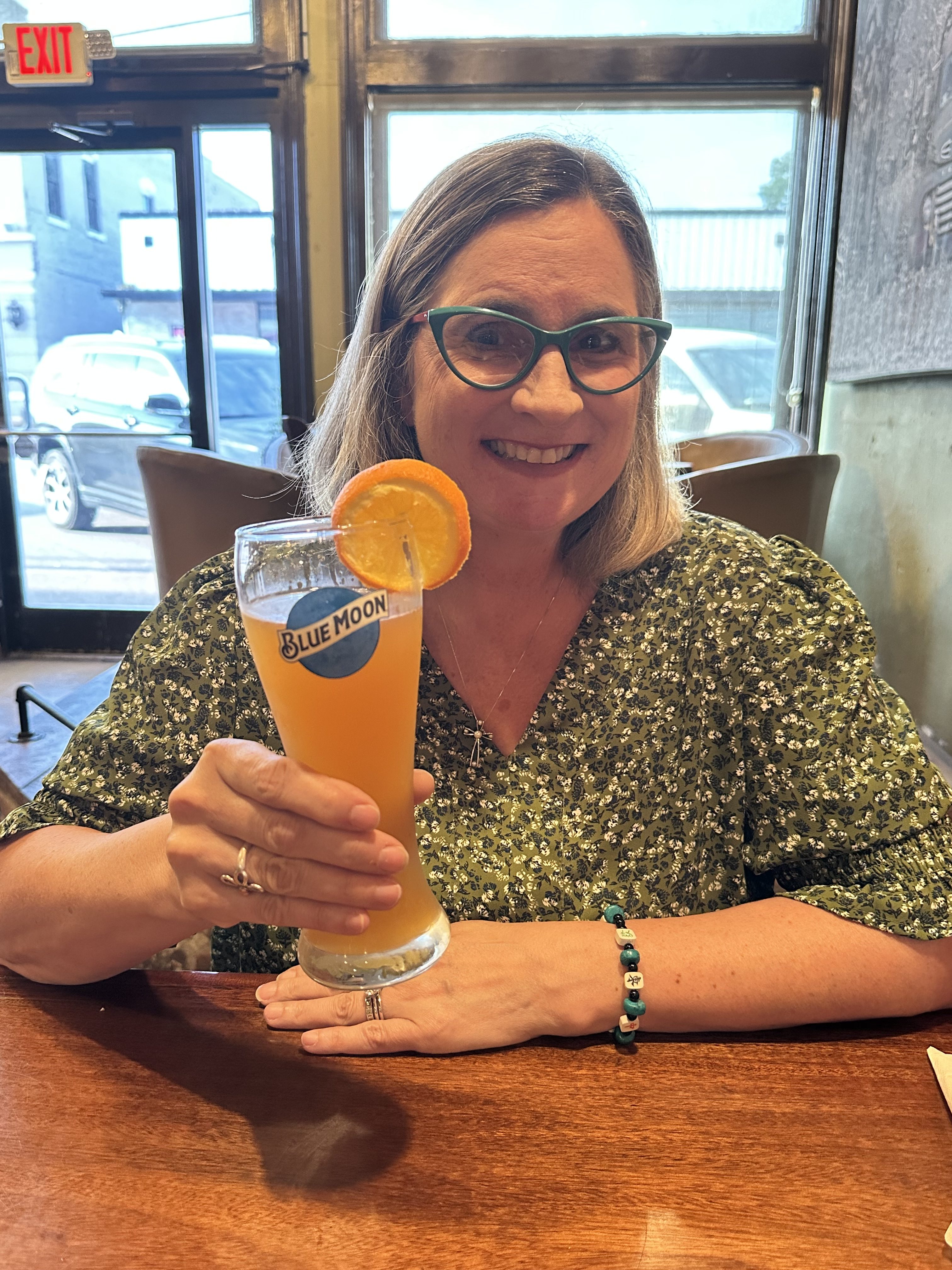
Today’s Open Write at http://www.ethicalela.com is hosted by Dr. Sarah Donovan using a prompt by Alora Young, who is the Poet Laureate of the Southeastern United States. She inspires us to write an I Have Many poem. You can hear hers at this link and see the structure for the poem, beginning with the line I Have Many X. They….They…..They…..They… begin the last for lines for repeating beginnings. My mind went to a book my Kindred Spirits book club read earlier this year by Emily Henry, entitled People We Meet on Vacation. One of the main characters has “too many wine,” and it made me think of a picture I received from a fellow teacher retiree just last night on the way to dinner. We’d been playing Mahjong the day before, and we realized that we can have drinks in public now without fear of getting fired. At dinner, she snapped a photo of herself smiling big with wine, and sent a text that said Cheers! So I snapped a picture of me with a beer and replied Cheers! (Disclaimer: I was with my husband, who was driving. I did not tell stories or get up and dance or, heaven forbid, sing anything. I did ask Siri who was singing the songs a couple of times because the first one did NOT sound like Keith Whitley, which my husband insisted it was….and it was, God rest his soul – Keith’s soul, to be clear – and the second one sounded more like Hank Williams Junior than Travis Tritt and my husband insisted it wasn’t Junior, and it wasn’t, but there were too many kids one table over and it made it hard to hear….but not because of the beer).
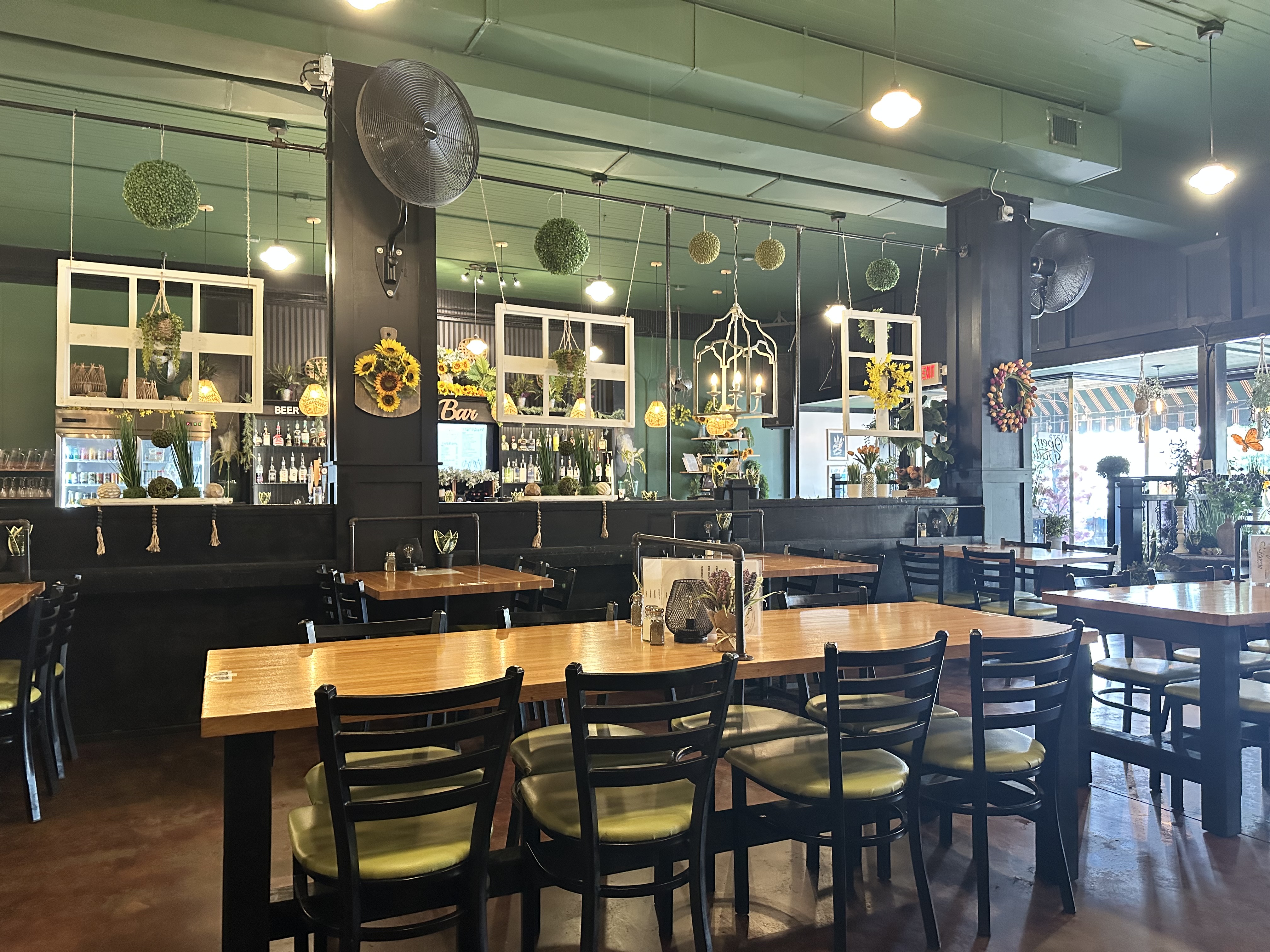
Cheers! from The Blackbird Cafe in Woodbury, Georgia
Too Many
I have many Blue Moon they sing country song they tell loose-lip story they line dance wrong they don’t drive
Today, I’m hosting the second day of the September Open Write at http://www.ethicalela.com. You can read my full prompt here and then, later in the day once all the poets have had a chance to write to the prompt, visit the site to read the poems others have written.
My writing communities have a huge impact on my life as a consumer and creator of poetry. Each month, writers of Ethicalela and other groups encourage me with prompts and ideas. I am blessed that other writing friends freely share ekphrastic prompts (Barb), prompts from Substacker Audrey Gidman (Denise), prompts from Georgia Heard (Margaret) and prompts from Writer’s Digest (Glenda) and so many others. This month, I’m using Robert Lee Brewer’s Wednesday Poetry prompt idea shared by Glenda to get us started on what we want to get back to. While many are going back to school, I’m getting back to knowing myself at the pace of retirement. What are you getting back to?
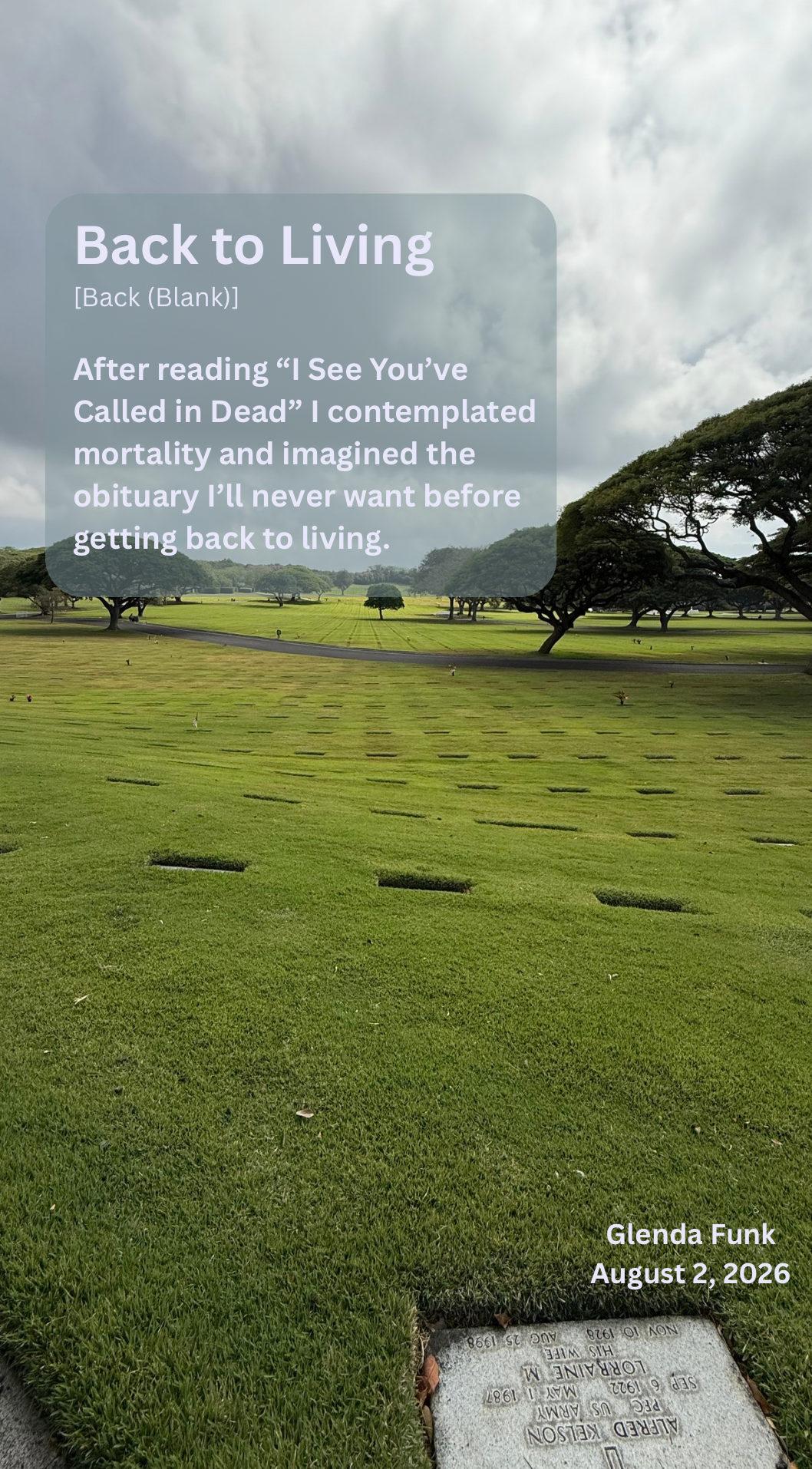
Make a list of all the possibilities of things we can get back to. Back to the Future. Back to Back. Back to School. Back to School Shopping. Back to the topic at hand. Back to What We Were Talking About. Back to Sleep. Then, create a poem along that line of thinking. Glenda Funk and I offer two short forms below.
Glenda’s Poem
My Poem
Getting Back to Me: A List Poem
I’m getting back to
pressing wildflowers
sipping coffee later
writing poetry
reading books
watching sunsets
feeding hummingbirds
wearing jeans and Birkenstocks
napping with dogs
learning mahjong
mailing postcards
building campfires
painting with watercolors
stretching yoga poses
peeing on my own schedule
lingering over lunch
taking walks
driving the back roads
sewing rag quilts
getting to know myself
….all over again
Campfire reading at Vogel State Park in the North Georgia Mountains, September 2026. Book: The Sideways Life of Denny Voss by Holly Kennedy
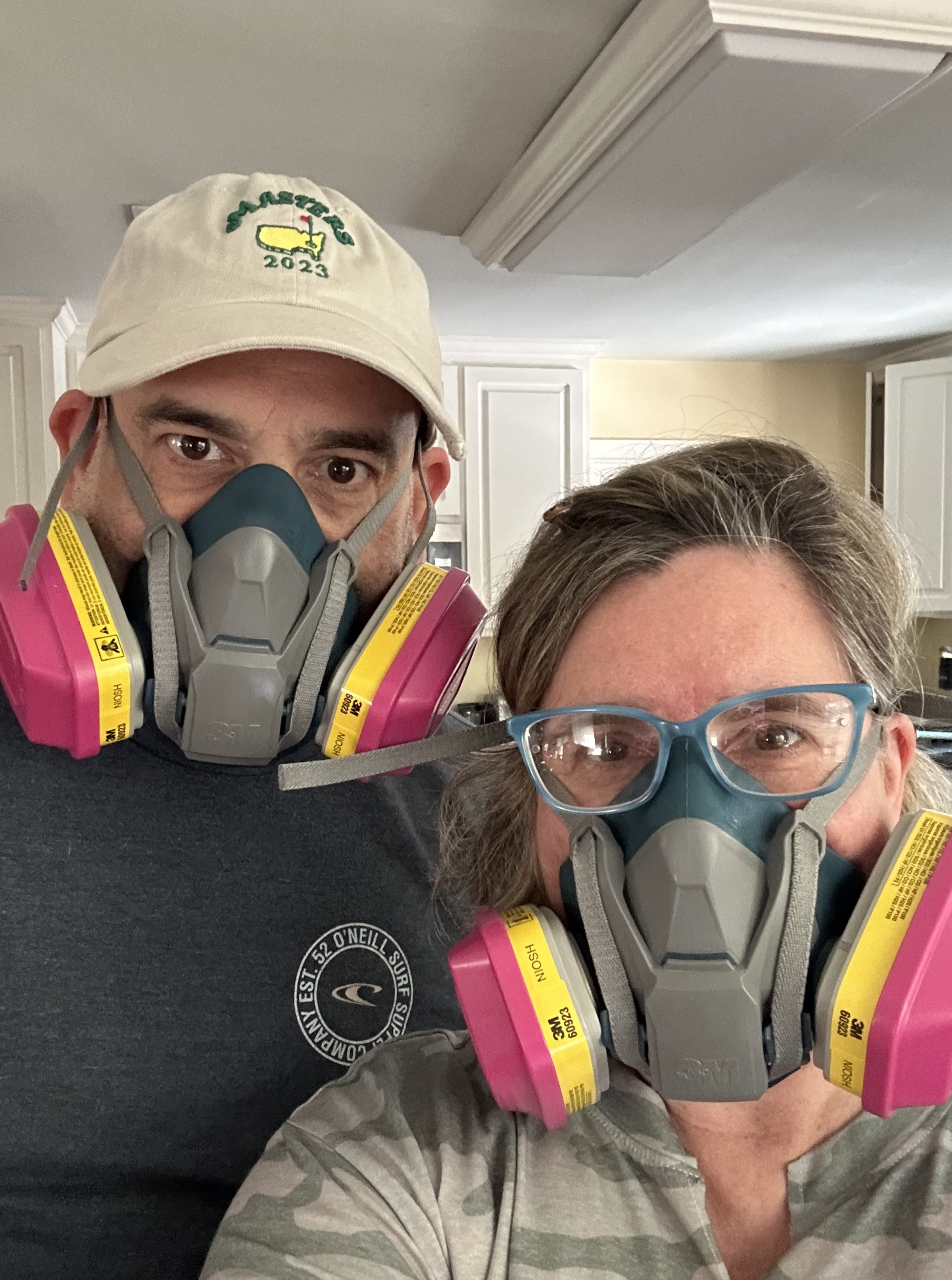
My brother Ken and I on July 8, 2025 (my birthday) cleaning Dad’s house
Mo Daley of Illinois is our host today for the September Open Write Day 1. You can read her full prompt here. She writes:
As fall approaches, I can’t stop thinking about changes and shifts. Of course, the changing colors of Midwestern trees are always inspirational, but something else has been on my mind lately.
I look around and see the land and how I have worked with it and changed it, which leads me to wonder about those who came here before me.
Mo inspires us to consider our surroundings with these questions: How would you describe them? Have they always looked this way? Who was there before you? Perhaps 20, 50, or 100 years ago? How about long before then? Do you know what indigenous tribes were living there hundreds of years ago? You can enter your address in this online tool to inform you.
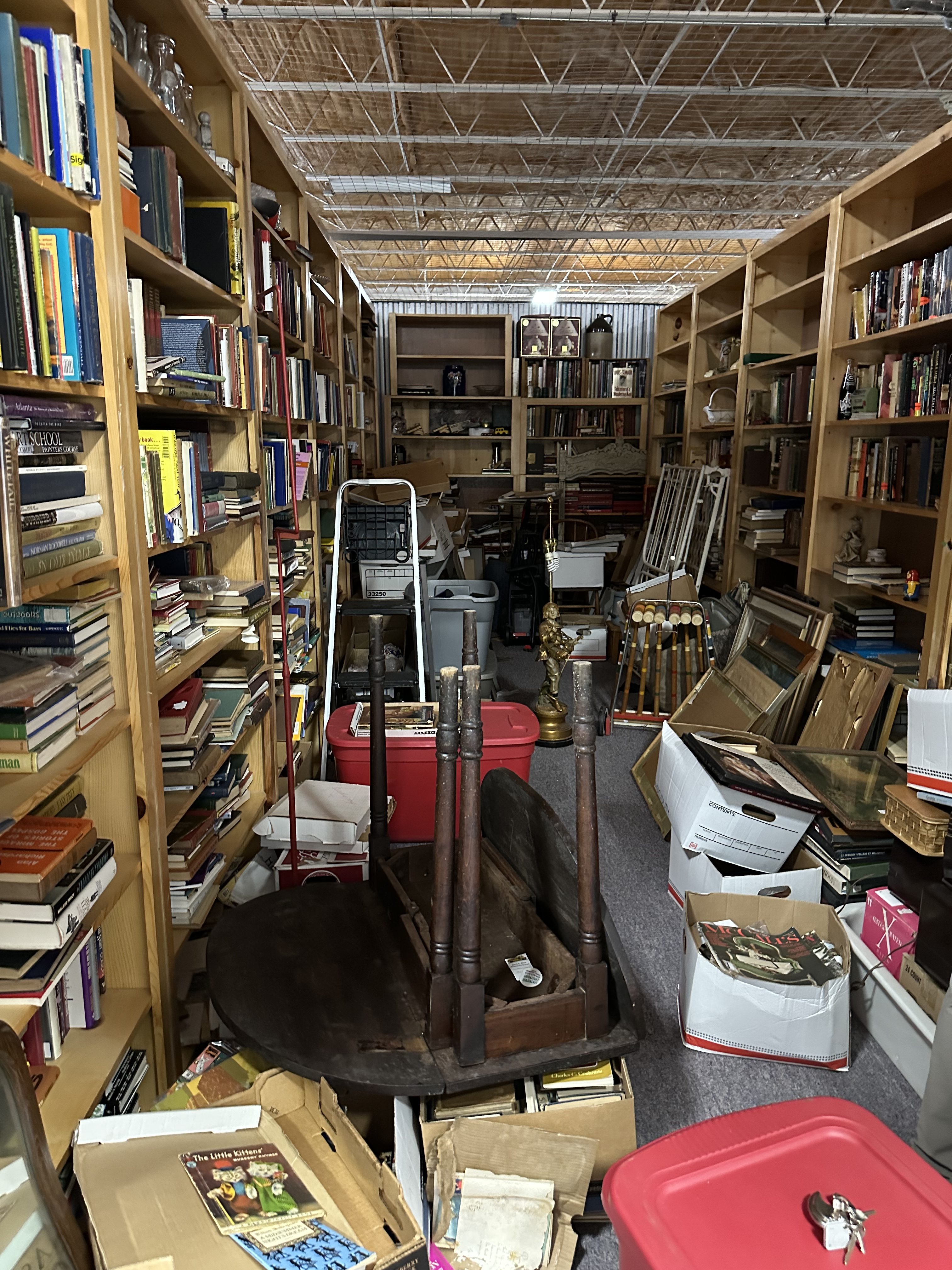
She inspires us to take a few moments to think about those who came before us, and then as a tribute to those who came before us, to write a poem about the land around us. Of course, my mind flashes back to this time last year, when my brother and I were in the midst of cleaning out a lifetime of a collector’s full collection of so many things we never even knew existed. He and Mom had been going to estate sales for years, collecting everything under the sun for the store they would one day own but never did because the one who knew how to make it happen departed this life before he did. And that’s when we discovered just how much they had accumulated……
Ritual Cleansing of 322 Magnolia and 7 Associated Storage Rooms
Each month, as part of The Stafford Challenge writing group led by Brian Rohr of Portland, Oregon, I look forward to the virtual writing workshops and visits with poets. Earlier this month, Melissa Helton, Director of Literary Arts at the Hindman Settlement School in rural Appalachia, offered a bonus writing workshop in which she shared several of her favorite poets, their poems, and prompts to inspire us to write our own poems. For the next few days, I’ll share the way she presented the information and the way she led attendees to write poetry using mentor poems.
When we arrived in the session, Brian introduced Melissa, who took us on an exploration of four poets by briefly sharing a little about each. Then, she shared a poem that had stuck with her. She read a single poem by each writer and then gave a prompt, inviting us to write our own poems.
One poet was Annie Woodford, who wrote the poem Soon the Red Wolf. You can read the poem here. The after-reading prompt was to write a poem about some kind of extinct or invasive species in our own areas. My mind immediately went to Cogongrass, a leading invasive species in the rural southeastern United States. It’s one of the reasons we are not supposed to bring firewood into any of the campsites we visit. Because Cogongrass is so hard to eradicate (like kudzu), even the seeds that might be left on a saw blade cutting trees used as firewood could be transported into areas through the firewood and take root in state parks. I suppose that really, these seeds could do the same thing on tires of cars, e-bikes, or even yard toys kids may take camping, but we respect the rules and their reasons.
Retirement officially began for me August 1st, and each second and fourth Friday of every month, I’m reflecting on the first year of retirement and what it’s like in this new chapter of life. These have become some of my favorite blog posts of the month because they become a lot like what I believe Sarah Ban Breathnach was driving at in her bookSimple Abundance: A Daybook of Comfort and Joy. Focusing on the gratitude and appreciation for a new phase of life by looking at all the joy it brings is a balm for the soul. At the beginning of my first week off, I used a green spiral notebook to make a list of all the things I wanted to do — something enjoyable each week, blending in some new hobbies and routines as well. Friends and family who are still working seemed genuinely curious about what I would do with each day, and that’s what gave me the idea to plan and reflect on the course of my days and adventures. I remember my late father’s words, on retirement: You don’t retire FROM something, you retire TO something, and you’ll be busier than you’ve ever been. He was right, but the busy part is optional, like changing out of loungewear and wearing real clothes on most days.
Here are some things I’ve enjoyed in my first official six weeks of retirement. I’m keeping a running list, adding to the previous post each time I pause to reflect.
And picking up where I left off at the end of August, here is how September has begun as I make my way down my list of 100 Things:
19. Re-vamping the Reading Room – I have breathed life back into my reading room and updated it by replacing some shelving and adding a few other personal touches to make it what my husband calls my own unique version of a she-shed. No matter what all is on the list of things I’m doing in retirement, the reading chair is a place I sit each day to adjust my sails. I have a Goodreads personal goal of 60 books this year – – (it’s fitting….it’s the year of 60)…..and I’m trying to get on track to accomplish the goal. By the end of this day, I will have read 31 books, leaving me 10 books behind. I’ve got some reading to do, and Mad Mabel by Sally Hepworth wins the prize for September! My older daughter gave me a personalized book count tracker for Mother’s Day to go in my reading room, and it keeps me ever-aware of having the next book ready.
My Book Count Update in the reading room
20. Office Cleanout – Some of the furniture I brought back from Dad’s house on St. Simons had been occupying space without real purpose or function until I could think it all through, and one is an antique desk that my brother convinced me I need – – and he was right. I’m so glad I let him persuade me to bring it home. As I find the places for each treasure, I am rethinking the best location. And in rethinking the best location, I discover that other things need to shift. And as other things need to shift, I’m cleaning up and cleaning out. I’m reminded of the children’s book If You Give a Mouse A Cookie by Laura Numeroff…..the cycles of how things take on a circular pattern. The office was one of those spaces this month, and already it feels like the air is lighter in that room.
21. Monthly Small Postcard Group – I loved the Cascadia Postcard Poetry Fest so much that I’ve already registered for 2027. Meanwhile, I’ve joined a small-scale monthly postcard group with some of my writing friends after I was invited by Denise Krebs of Yucca Valley, California. Here is the link to more information if you are interested – you can email Barbara Robinette and jump into the October round. Some of the postcards I’ve received with poems have literally taken my breath away with their beauty and depth. The artwork of these artists has inspired me to try other forms of art on my own postcards, using theirs as inspiration. I have a lonnnnng way to go, but what joy creativity brings, no matter the lack of artistic talent inside.
22. Watercolor Postcards – I created fabric postcards for Postcard Poetry Fest in August, and I have also picked up the paintbrush for watercolor postcards. My friend Glenda Funk of Chubbuck, Iowa recently shared Alex Kincaid’s Flower of the Month watercolor link, and while I will never be as talented as Glenda, I’m inspired to try the flowers. I also use the postcards that arrive to try painting similar ones, in the same way I used the fabric postcards to try that medium as well.
I’ll have to work to be abstract, and my sun has too many rays….I’ll keep trying
23. Labor Day Camping at F. D. Roosevelt State Park in Pine Mountain, Georgia – It was just too hot to be outside much, so we did some reading and movie watching (Secondhand Lions and Arthur the King). We caught up on the recent episodes of our favorite YouTubers, Mark and Tricia Leach of Keep Your Daydream. Before leaving, we packed up the dogs, threw in our loungewear and a couple of outfits into our new “suitcases” and shopped for groceries on the way, grateful we don’t overthink the camping like we used to do when we strung up lights and used an outdoor rug. And those “suitcases?” They’re the 99 cent TJ Maxx bags that hold as much as a standard airplane carryon and are flexible enough to slide right into a wardrobe cabinet in the camper, without the bulk of a big bag. My friend Christian Jackson shared this trick. So now I have a new set of four seasonal suitcases. Who knew???
Under $1 Seasonal Suitcases from TJ Maxx
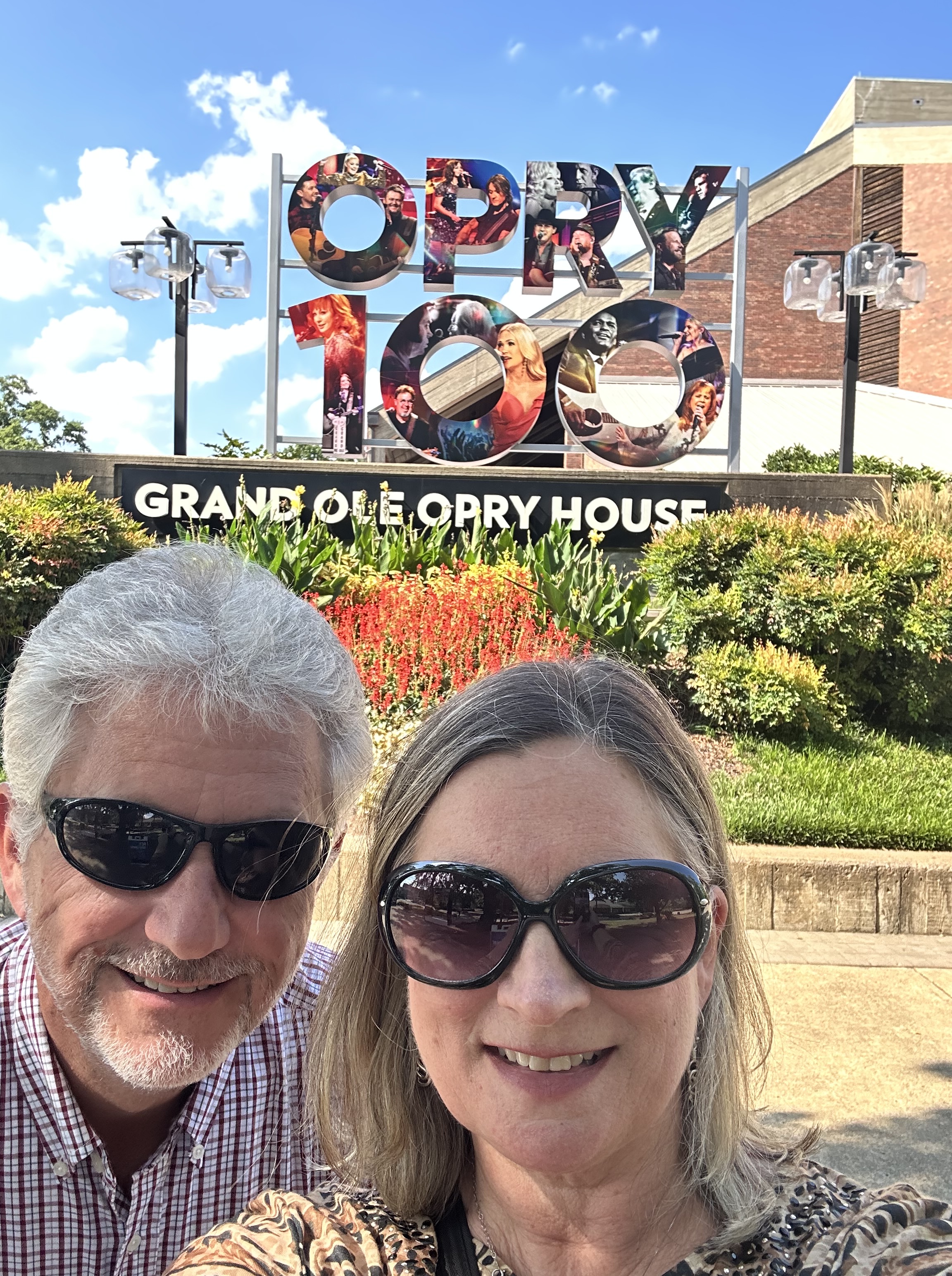
24. Dolly Parton Tribute at the Grand Ole Opry in Nashville, Tennessee – We love to go to the Grand Ole Opry from time to time, but we’d never been for a tribute or celebration to see the way all the singers come out onstage at the end. I’d seen recordings, but we finally got to be there for a momentous tribute in person. We somehow managed to score two tickets in the nosebleed section, deciding that just being there would still be a treat, even though we’d be watching on a screen with a far-off view of the stage from our high-altitude seats. There’s not a bad seat in the Opry, we’ve found, even though we were nowhere near our favorite Section 17. We took small, high-powered binoculars and sang along, breathing the air of that amazing sold-out evening and sharing stories with people all around us. I got to sit next to an 84 year old from Mississippi who had come to Opryland as a child each year and continued bringing her son throughout his childhood. She’d lost her husband five years ago, and when her son heard about the tribute, he snapped up three tickets and jumped in his plane with his new pilot’s license and flew his wife and mother to see the show. I got to see two shows that night: the tribute to Dolly, and the joy spilling out in tears on the face of that lady next to me. We heard the story that evening from one of the performers that a yellow butterfly had been flitting about the Opry, and I found a video of it here. I like to think Dolly was right there on the stage, too, all evening, soaking in the love everyone had for her.
In Opry Mills Mall, my racecar driving husband found that Cobra he’s been wanting…..
Outside the Grand Ole Opry on the afternoon of the Dolly Parton Tribute
25. September Stafford Challenge Small Group – The first Monday of each month, my small group of Stafford Challenge writers meets to talk about what we’re writing and to catch up. We share what we’re working on, we share prompts for writing, and we enjoy time together from our homes in California, Iowa, Idaho, and Georgia for one glorious hour. This month, we each read a poem we’d written and shared some of our favorite resources, including the Art of Flash Institute, Audrey Gidman’s prompts, Joy Sullivan’s Necessary SaltSubstack, and Ten Poetry Notebooks of Robin Farr. Barb Edler also shared a favorite publication, Moss Piglet.
26. Stafford Challenge Writing Workshop – I attended a workshop led by Melissa Helton of the Hindman Settlement School, and it was fabulous. She shared poems of Appalachia and gave us writing prompts to lead us in the writing of four poems during this time. My favorite was Requiem for a Dollar Store Christmas Bear by Willie Carver, which we read prior to writing our own poems about precious lost childhood toys. Milk (scroll down to page 4 or so) by Diane Fisher led us to write about a time we broke a rule to do the right thing. Soon the Red Wolf by Annie Woodford inspired us to write poems about wildlife or extinct species in our own areas, and Affrilachia by Frank Walker had us writing about the intersection of two unexpected events or circumstances. Melissa Helton is one who is able to reach into a writer and awaken the muse.
27. Mahjongg Group Formation – Now that my former colleague and dear friend Christian Jackson and I have taken lessons in Mahjong, we have branched out into the world of group play. We’re finding our best fit, and we’ve learned that even the best players who are in leagues and tournaments are no more likely to win or lose at the table, because Mahjong is one of those games that requires luck AND skill, and good decision making. We’re fending off cognitive decline, too, according to recent scientific research that shows the cognitive exertion needed for the game keeps the brain cells sharp.
We like to take pictures of our winning Mahjongg racks so we can track our wins and know our favorite neighborhoods and streets on our 2026 National Mahjong League cards
28. Birthday Pedicure with my Sister-In Law – It’s fun going for birthday pedicures during the day and being able to walk right up to a chair without the wait. My sister-in-law Bethany usually schedules our appointments at our favorite nail salon, and we enjoy using the time in neighboring chairs to catch up and get our legs massaged and toes painted. Unfortunately, her best friend’s father died and she was headed out of town to the funeral on her birthday, but not before we sat and chose Plum Wine (her) and Iceland (me) paint colors as colors for our feet to welcome autumn. We missed our bookstore outing to buy each other a birthday book, so I found a couple of gifts from Natural Life and got us matching mugs and socks.
Coffee mugs and socks if not books……all the cozy things
29. Lunch with Friends – From Angelo’s Italian corner restaurant and Bank Street Cafe in downtown Griffin to Mangia on Main in Barnesville, lunch with friends is one of my favorite retirement indulgences. I recently caught up with former colleague Jayne Midura, who gave me a fabulous retirement t-shirt. We talked dog rescue and enjoyed catching up. She is, sadly, in the same place I was during May when I was facing the grief of letting go of an aging dog too tired and sick to carry on. Prayers for Jayne in these coming days. It’s heart wrenching to say goodbye to our fur babies.
Mangia! on Main in Barnesville, Georgia
Over the next two weeks, we’ve planned to take a birthday weekend getaway with Briar’s brother and his wife to North Georgia to stay in a cabin on a creek and have cake, and also camp in Vogel State Park in Blairsville, Georgia. I’ll share a virtual poetry reading of my poem Timestamp Tanka for the Art on the Trail celebration on Sunday as part of the Time in the Landscape series this year in Southborough, Massachusetts. My poem was selected to accompany the work Phases of the Moon for this year’s chapbook, and I couldn’t be more excited!