This art is not mine, but I saw it on social media and it has stayed with me, bringing peace and hope.
My blog theme this month is Changing Perspectives. I’m writing from different spaces and viewpoints. When my friend Glenda Funk shared that she would be traveling through Uvalde, Texas on an upcoming trip and offered to post a written tribute at the monument, I wrote this poem and sent it by email for her to print and take with her. Tears well in my heart for those grieving families who have lost their loved ones. Hope fills my heart as I imagine what really happened that day.
A New School
I’ve often wondered
When horrific things happen
Why God allows it
But we’ll never know
Why they were taken so young
This side of Heaven
I’ve never believed
We die in fear, suffering
But that Jesus comes
In those moments to
Gather us into His arms
Before we die here
I see His presence
Imagine His bright aura
Stepping into class
“Children, come with me,”
He’d said, before the gunman
Ever opened fire
Souls were already
Safely climbing Heaven’s steps ~
Joy, not fear, was theirs
Twenty one sweet souls
Left their bodies, took His hand
Climbed to pearly gates
Leaving holes in hearts
Of all of those who loved them
But feeling no pain
I believe Jesus
Died for us, suffered our death
Comes back to take us
Beautiful angels
Whose learning began anew:
How to Soar with Wings
-Kim Haynes Johnson
Acts 2: 26 Therefore my heart is glad and my tongue rejoices; my body also will rest in hope, 27 because you will not abandon me to the realm of the dead, you will not let your holy one see decay. 28 You have made known to me the paths of life; you will fill me with joy in your presence.’
*With gratefulness to Glenda Funk, a fellow writer at www.ethicalela.com, who will this poem at the monument on her way through Uvalde. May God’s peace comfort the grieving families who have lost their loved ones in this tragedy.
Special thanks to Slice of Life for giving writers space and voice.
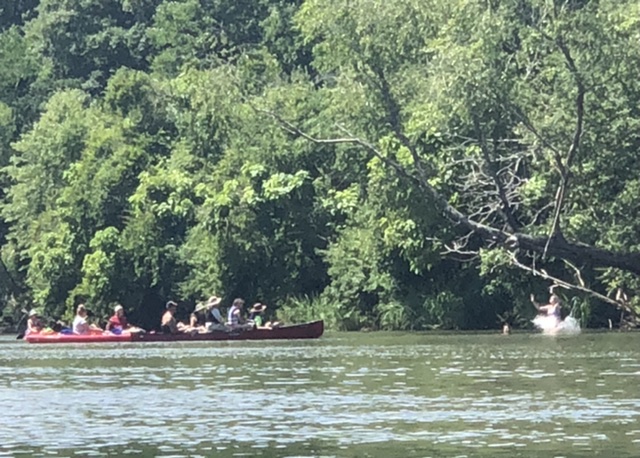
A group of kayakers jumps from a rope swing i to the Flint River
In the 1970s, I lived on St. Simons Island, Georgia. In the cul-de-sac adjacent to Martin Street, back on King’s Way, we had a tree that we climbed to swing. Someone had nailed long boards in as a ladder, and we’d climb up to the first big branch holding the rope swing attached to a neighboring branch and slide out far enough to clear the trunk, hold on tight, close our eyes, and let go. The rush of pure childhood bliss that comes from a rope swing on an oak tree is second to none.
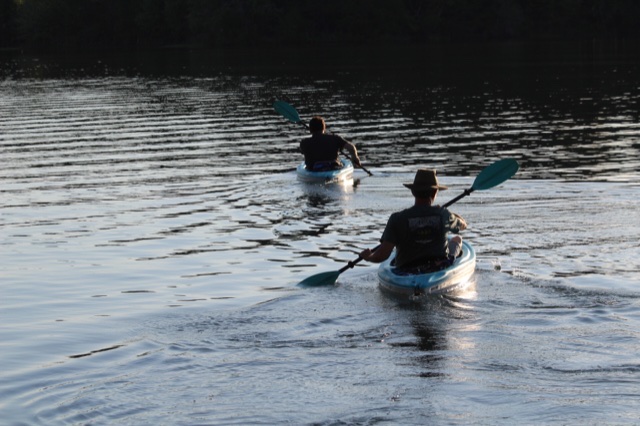
I had that flashback of childhood today as we kayaked the Flint River from Sprewell Bluff Park to Highway 18 in Upson County. The river was low, and the ride was rocky with only one high-anxiety experience when I ended up sideways on a rock with rushing currents and my boat took on water. Thank goodness my husband came to my aid or the Gypsy Soul would have been a goner for sure. But before the trouble happened, we noticed a group who had stopped to climb a tree hanging over the river and jump from a rope swing.
And that’s when I was reminded of my favorite line from E.B. White’s Charlotte’s Web, when Fern and Avery are out swinging in the barn: “Children almost alwayshangontothingstighterthantheirparentsthinktheywill.”
For Christmas one year when we were riding through Epworth By the Sea to see all the luminaries lining the roads and driveways, we stopped at a church member’s house, and they gave me a red copy of A Child’s Garden of Verses with gold lettering. It was one of my favorites – that and Childcraft Volume 1, Poems and Rhymes. I think of Robert Louis Stevenson’s The Swing still today when I see someone swinging and having such fun ~
How do you like to go up in a swing,
Up in the air so blue?
Oh, I do think it the pleasantest thing
Ever a child can do!
Up in the air and over the wall,
Till I can see so wide,
Rivers and trees and cattle and all
Over the countryside—
Till I look down on the garden green,
Down on the roof so brown—
Up in the air I go flying again,
Up in the air and down!
The memories and literature of my childhood came flooding back as swiftly and as powerfully as the river rapids as I watched the group swinging from the rope swing. And while I’m still all about the adrenaline rush of adventure and thrillseeking, I confessed to my husband that I’m turning in my river kayaking card after today. No more rivers for me; I’m sticking to the lakes from here on out. These hands that used to hold onto things tighter than my parents thought they would? They’re ready to let go of some of the riskier endeavors and watch from the shady edge, remembering what it was like to touch the sky.
When you pass through the waters, I will be with you; and through the rivers, they shall not overwhelm you; when you walk through fire you shall not be burned, and the flame shall not consume you.
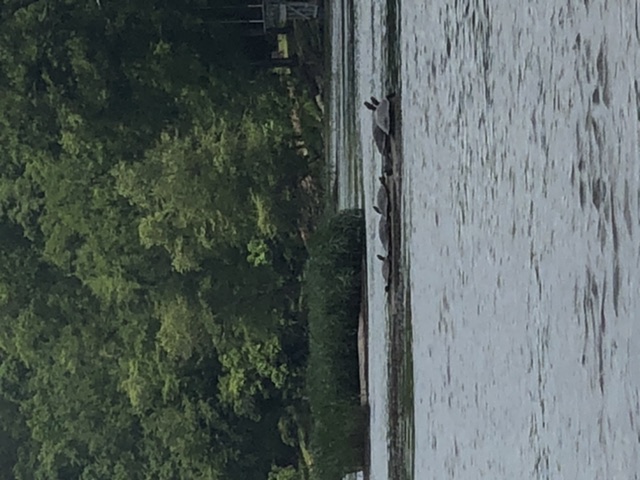
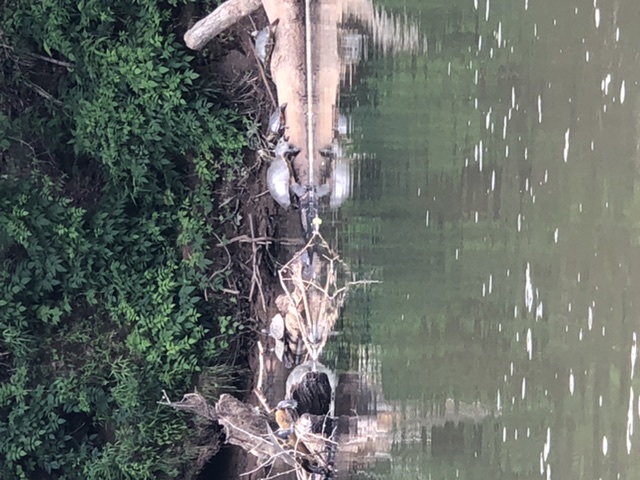
The Gypsy Soul on the Flint RiverTurtles along the river
I wish I could credit the artist; I saved this picture from Facebook but no artist was named.
*Changing Perspectives – this post was written in bed beginning at 3:41 a.m. I couldn’t sleep for thinking about all the logical fallacies in our world.
I notice whenever I travel that my sense of awareness and my attentiveness to detail are heightened in ways that they never seem to be when I’m at home. I’m kind of a creature of habit, putting the RAV4 on autopilot and getting caught up in my prayer time without fully taking in all that I pass on the road. I don’t have to think about each turn or notice landmarks to find my way back on the familiar roads.
But it’s not like that at all when I travel. I notice in new places things I’d never think to notice in my own town – the way the sugar packets are arranged at the tables where I dine, the light fixtures outdoors at night, the signs (not just what they say, but whether they’re metal or painted wood, and the colors, and whether they match anything around them). I don’t know why my sensory dial gets turned up on full blast in other places, but it happens.
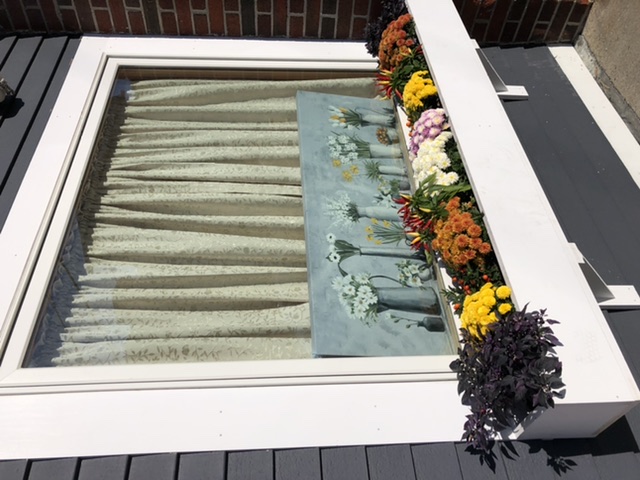
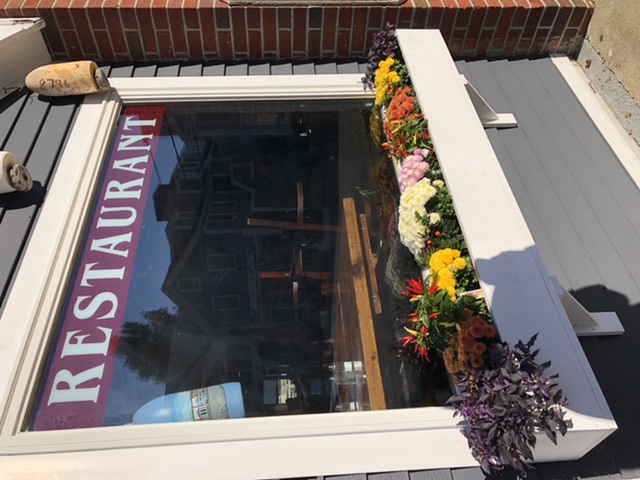
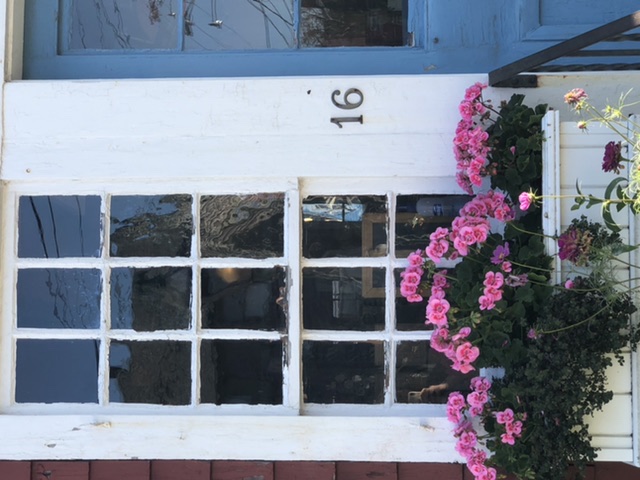
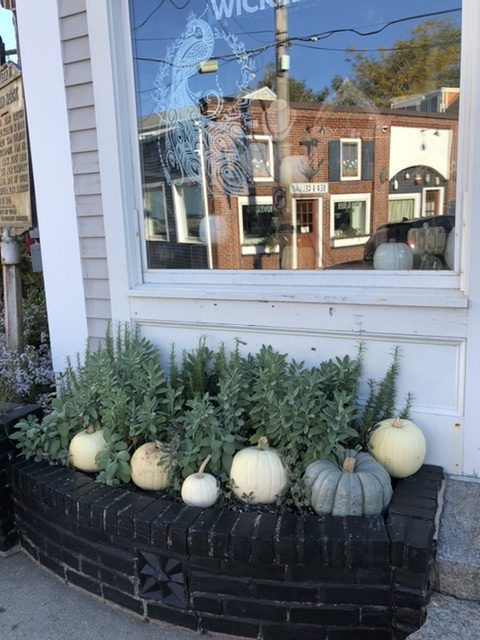
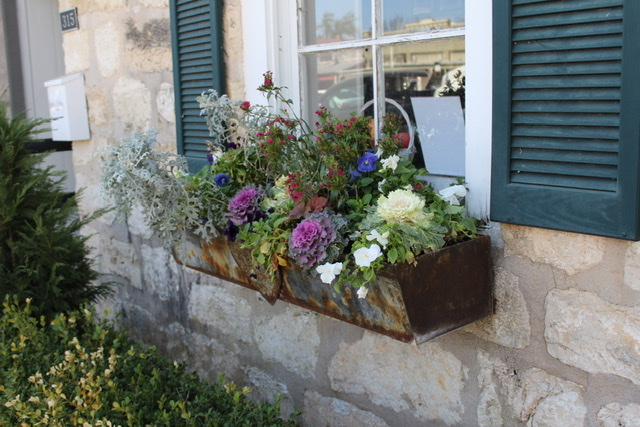
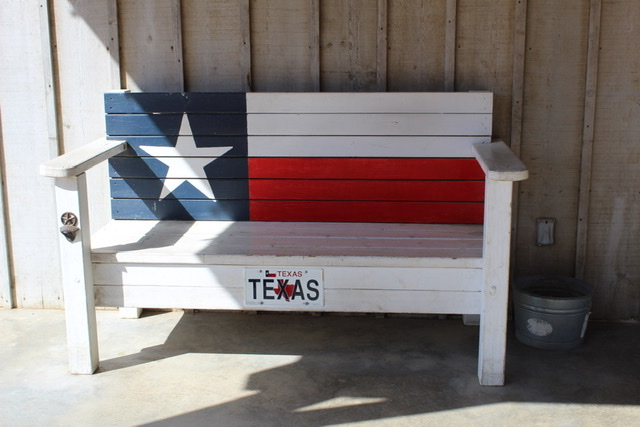
On the last three school break trips I’ve taken – to San Antonio, Texas; to Rockport, Massachussetts; and to Asheville, North Carolina – I was drawn to the window boxes and the outdoor seating arrangements that seemed so artistic and welcoming. I’m sharing some of these today. I’m wondering how many others find the same fascinations when traveling. What are the things that draw you in about other places that you don’t often notice at home?
Hebrews 13:2 – Do not neglect to show hospitality to strangers, for thereby some have entertained angels unawares.
When I visited San Antonio, Texas in February, the kitchen in the VRBO I’d rented had a counter with some mid-century modern stools that were heavenly for writing. They had a bottom-cradling seat, a buttery leatherish look and feel, and sturdy feet. I sat in that space and wrote in those early morning hours, savoring coffee and quiet solitude – just me and my thoughts.
I wish I had a writing space like this at home, I thought.
When I visited the Grove Park Inn in Asheville, North Carolina in April, I stayed directly across the hall from the rooms where F. Scott Fitzgerald stayed (his room overlooked the front doors, reportedly so he could see the fashionable women arriving and decide whether to go downstairs and meet them). His writing desk, which has been moved downstairs for display, was of solid oak and of perfect size.
I wish I had a writing desk like that at home, I thought.
Actual writing desk of F. Scott Fitzgerald at the Grove Park Inn in Asheville, North Carolina
What I have is a sage green living room chair and an undersized lap desk – the space where I generally write, which is driven more strongly by the hours I keep; most days, I’m up long before daybreak trying to avoid disturbing my still-sleeping husband and our dogs.
All of these writing spaces have inspired my thinking. I once wrote about famous authors and their affinity for certain fountain pens, which prompted my thinking about writers and their spaces. I did some research and have linked some articles in the sections below.
In his book On Writing, Stephen King says to put the desk in the corner of the room and turn so you’re facing the wall to avoid all distractions (he once wrote on a makeshift desk in a laundry room). That wasn’t the case with Mark Twain; he wrote in his own study, an octagon shape with windows, built for him by his sister-in-law because she didn’t like the pipe smoke in her parents’ house when he summered with them.
Lauretta Hannon, author of The Cracker Queen, has her own writing she-shed in Rome, Georgia. She also hosts writing sessions in The Labyrinth, an outdoor amphitheater in Rome, inviting guests to sit on the tiered seating levels to write.
Other writers, too, had small spaces designed specifically for writing. Roald Dahl had his own writing hut and sat in a comfortable chair with a board propped across the armpieces.
Like F. Scott Fitzgerald at the Grove Park Inn, J. K. Rowling also stayed in a hotel as she completed one of her books.
Ben Franklin reportedly wrote in the bathtub, and so did Agatha Christie, as she ate apples.
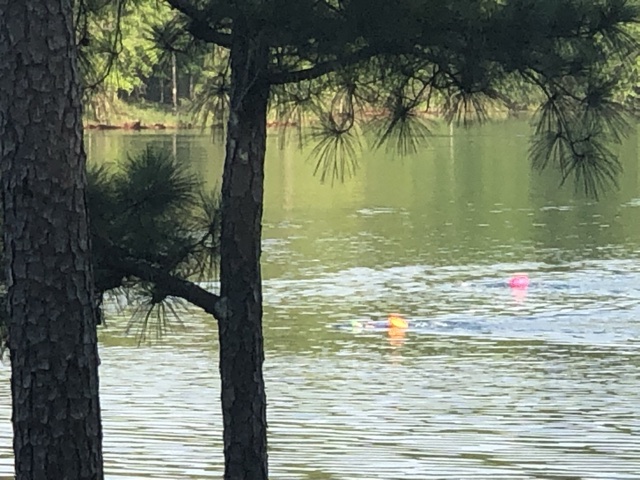
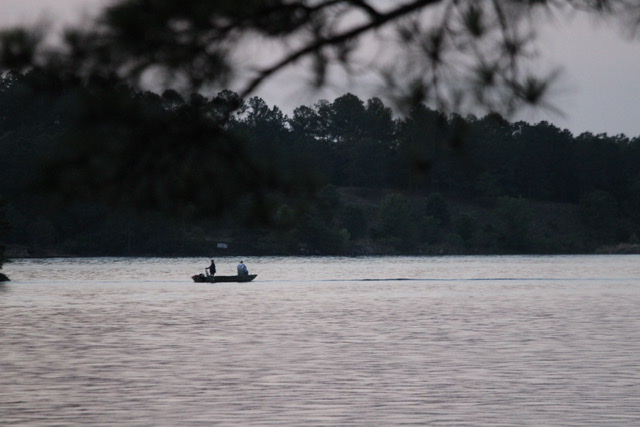
These varied perspectives of writing in different places fascinate me. The visual noise of other places is appealing; I find my sensory awareness elevated in places with which I’m unfamiliar. As I write this post, I’m sitting at the table inside our camper on Site 8 at Dames Ferry Campground in Juliette, Georgia – the lake is out the rear living window, and I see pedal boats, kayaks, swimmers with neon colored flotation devices so they don’t get hit by boats, and fishing boats all making waves on the lake. Out my table window, there’s a boy on a motorized scooter driving past a neighboring camper where a family is seated around the campfire at 4:30 p.m. Eastern time on this Sunday afternoon on Memorial Day weekend. It looks like three generations of women are walking past in their shorts and swimsuits, towels hanging from their arms, hair wet as they head in from the lake. The couple camping two sites down from us is driving by on an afternoon golf cart ride with their two little white Westies taking it all in from the back of the cart. And there are two boys with remote controlled cars jumping the speed humps at high speed right down the way.
Swimmers on Lake Juliette
My sage green chair offers none of these sights, but instead the comfort of writing at home – it’s predictable, it’s comfortable, it’s stationary and unchanging. Of all the places in this world that are growing increasingly unsafe, my green sage chair feels safe. But getting out into different places and writing from different locations breaks the monontony and keeps daily writing exciting.
My theme for June is changing perspectives, and I will challenge myself to get out of my chair and write from at least 15 different locations throughout the month. What’s the most unexpected or unique place where you have written, and what are your favorite writing spots? I’m all ears!
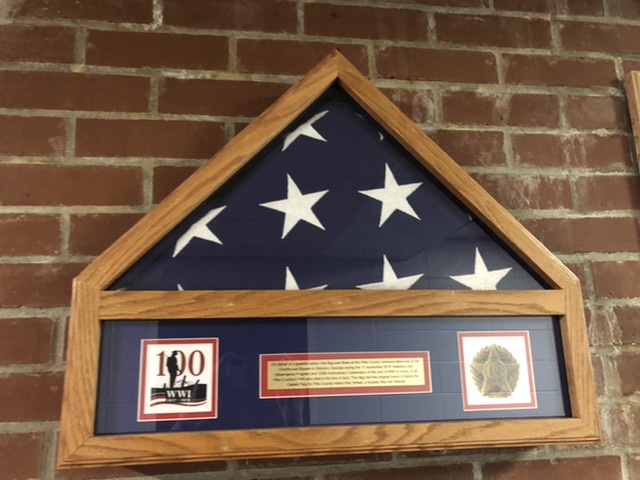
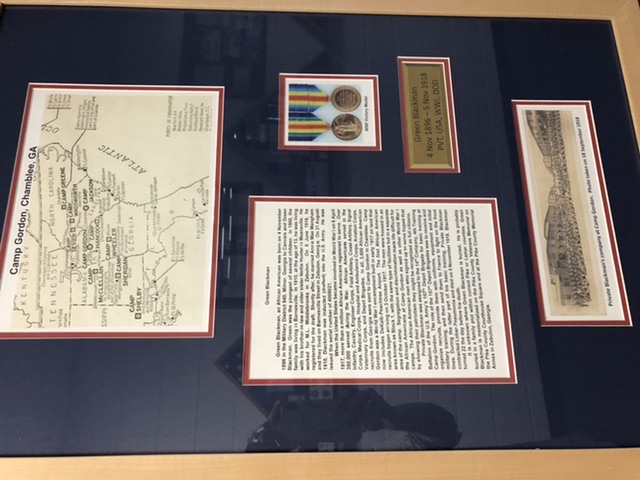
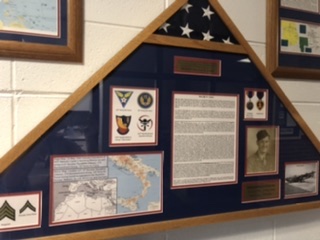
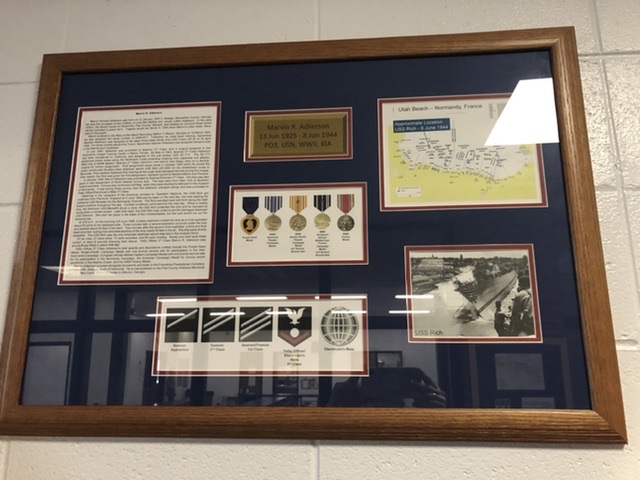
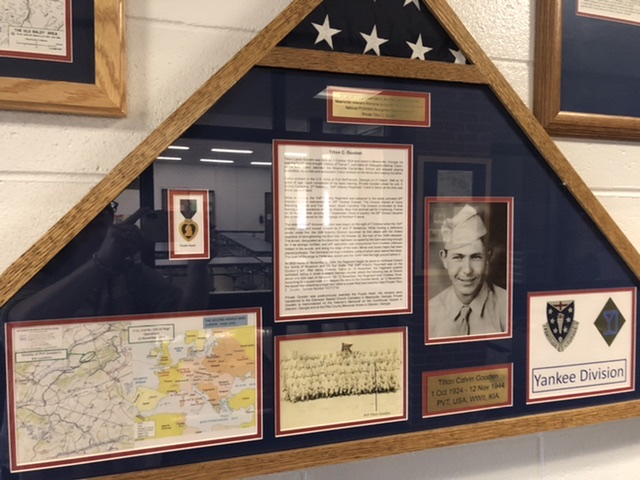
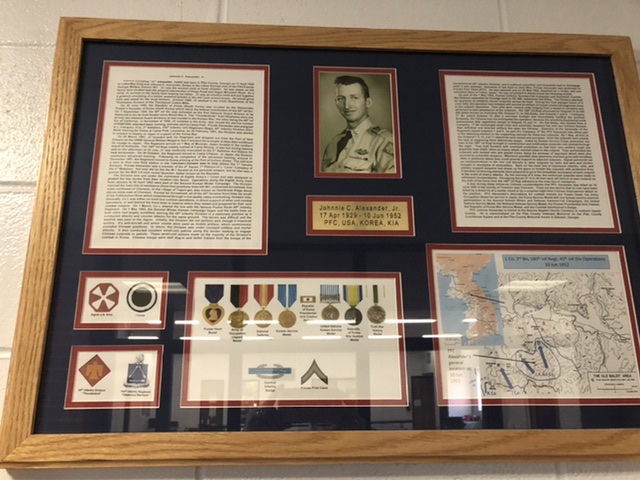
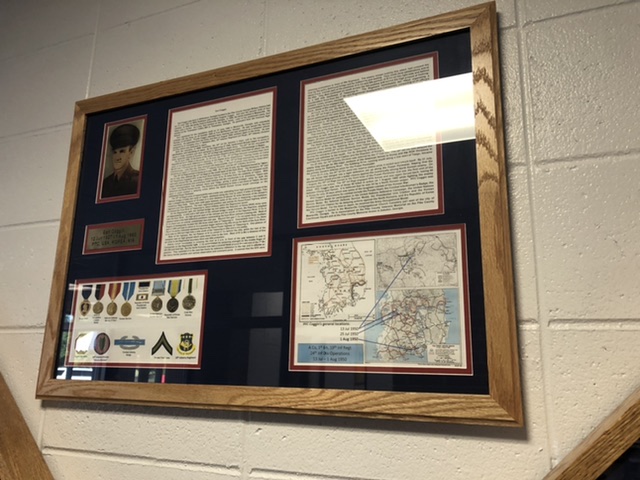
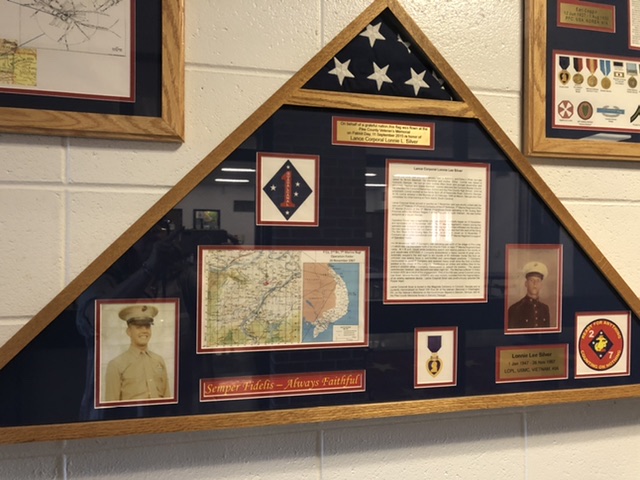
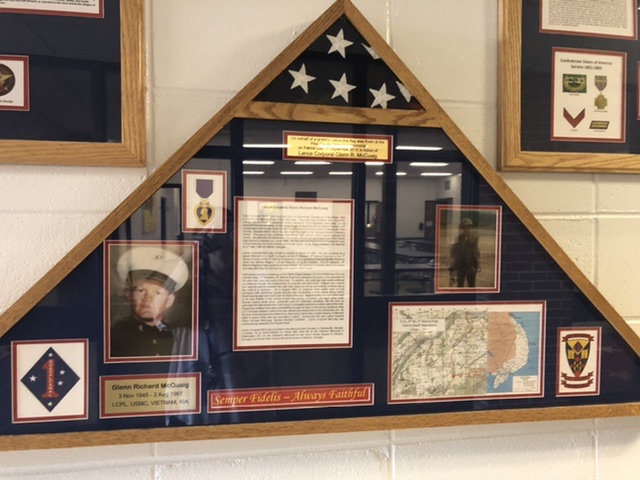
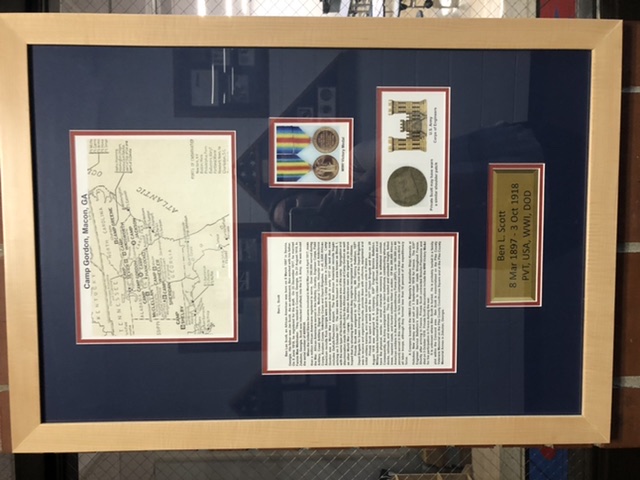
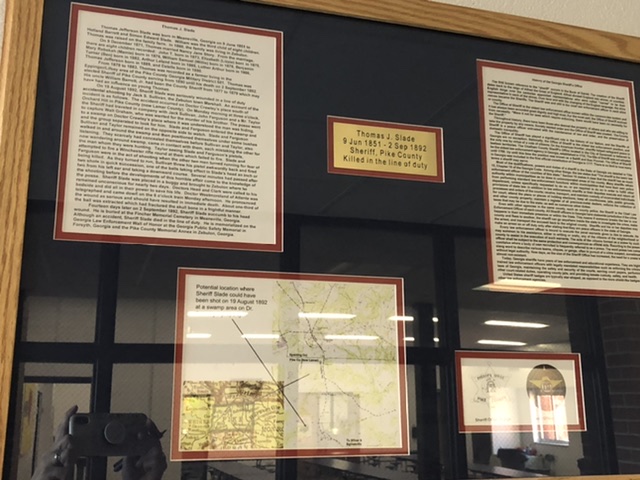
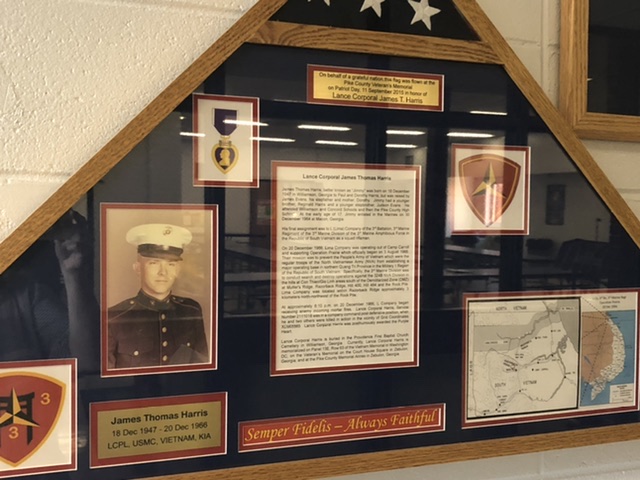
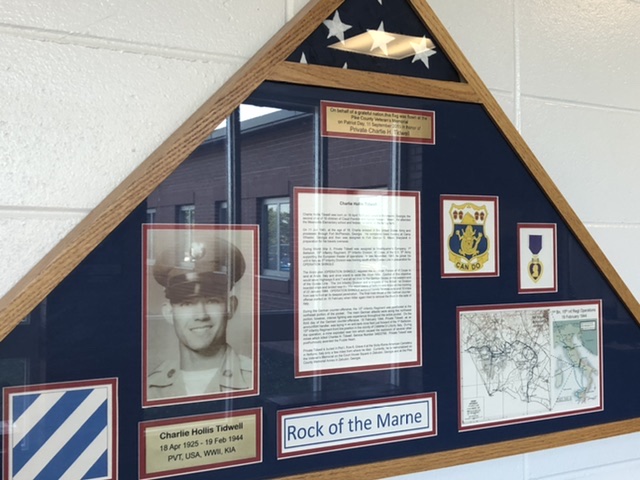
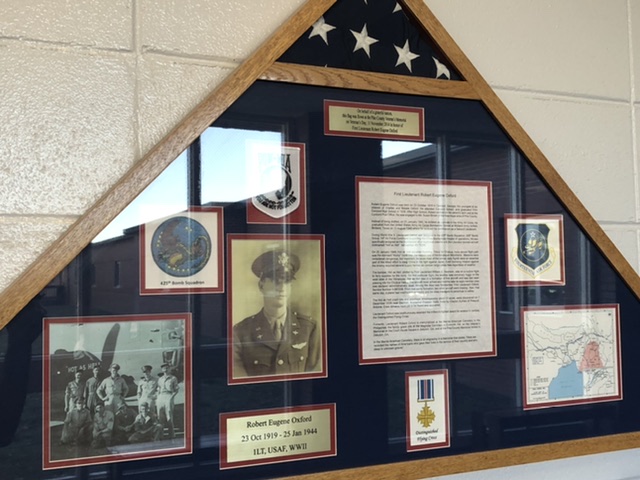
In recent weeks, I’ve been in schools testing students. In our Pre-K building, there is a wall of shadowboxes dedicated to those from Pike County, Georgia who died serving our country. I wasn’t sure why at the time, but I felt the familiar nudge to take photos of each of these boxes – perhaps to dig deeper into the lives of these fallen soldiers at a later time. Today, I realize that I needed these reminders now more than ever before – that there is a life and a story beneath each headstone in our nation’s military cemeteries. One of those, the story of Robert Eugene Oxford, is shared in a 2017 post. You can read it here.
These heroes all have stories. They were each somebody’s precious baby who lost their first tooth and skinned their knee – maybe all in the same week. They decided to serve their country, got a buzz cut, and polished their shoes. They sacrificed their own lives so that we could enjoy freedom.
I can only imagine what they would think if we offered a hand into their graves to bring them back for a week to see how we have managed their sacrifice. Have we been good stewards of their investment in our country?
Something to think about as we watch the news and wonder.
On this Memorial Day, I reflect on the sacrifices and selfless love of these men from Pike County, Georgia who served the United States of America and gave their lives. I’ll listen to Lee Greenwood’s Proud to Be An American this afternoon as we cook out at a state park campground in Juliette, Georgia. And I’ll remember that while we have much to talk about as a nation on a battlefield all its own, I’m still one very proud American, because these brave men and others like them were part of making it happen.
I must also give a special thanks to Todd Child, a former Teacher of the Year in Pike County who is retiring this year. His tireless efforts in honoring those who have served, along with his research, have helped make this memorial wall possible through the American Legion.
John G. McClendon, 1893-1918Roswell Hooten, 1899-1918 Leon Davis, 1895-1918Vernon Slade, 1893-1918Lawrence Sullivan (?-1918) and Pierre Sullivan (1892-1917)Flag to commemorate the 100th Anniversary of WW1, flown on the courthouse squareHerman Davis, 1893-1918Solon Self, 1889-1918Arthur Ballard, 1897-1918Henry O’Neal, 1890-1918William Bankston, 1895-1918Green Blackmon, 1896-1918Willie King, 1937-1969Perry Story, 1913-1945Virgil Middlebrooks, 1924-1947Marion Smoot, 1921-1942Malcolm Carter, 1919-1942David Ledford, 1918-1942Joel Matthews, 1915-1944Marvin Adkerson, 1925-1944Tilton Gooden, 1924-1944Johnnie Alexander, 1929-1952Ralph Bishop, 1926-1945Earl Coggin, 1927-1950Lonnie Silver, 1947-1967William Gwyn, 1843-1896Glenn McCuaig, 1945-1967Ben Scott, 1897-1918Thomas Slade, 1851-1892James Harris, 1947-1966Charlie Tidwell, 1925-Robert Oxford, 1919-1944I had the privilege of being at the ceremony when Robert Oxford’s remains were returned to Pike County and laid to rest in Concord, Georgia. What a day this was! More of the story is in a previous post, linked above.
For we do not wrestle against flesh and blood, but against the rulers, against the authorities, against the cosmic powers over this present darkness, against the spiritual forces of evil in the heavenly places.
In the 1970s in my Georgia town, slam books were all the rage. Everyone, and I mean everyone, had at least one slam book making the rounds at school.
To make a slam book, you took a stack of lined paper and put it between two pages of construction paper. Then you’d take a Magic Marker and title it (Your Name)’s Slam Book in your fanciest handwriting on the front cover, and you’d number the first page from 1-25 down the left margin as if you were getting ready to take a 25-word spelling test. At the top, you’d write Sign In.
Then, you’d ask for information in the top space on each page. Things like Phone Number and Address. You’d ask Do you have a girlfried/boyfriend? If so, who? And then you’d ask things like Favorite Movie and Favorite Song. Sometimes you’d ask pressing questions, and sometimes you knew what they meant or sometimes you didn’t. Like when you wrote Have you ever been “on the pill?” thinking you were asking if someone had ever taken dangerous drugs.
People would sign their name by a number on the first page and then answer every question throughout the book by their sign-in number.
Slam book Sample page
These were the social media precursors of our day. The goal was to have multiple slam books of your own for others to sign and give back to you floating around out there, and to have several slam books stuck in your bookbag to sign during class, pass around, and give back to others. The fun was in reading all the answers and trying to come up with fresh, new questions that others had not thought to ask.
Like being “on the pill.” That was a fresh and new question. And your friends laughed about that and everyone came up with all these clever responses:
14. I’ll never tell and 2. Wouldn’t you like to know? and 6. Who would ask this?
And then that one girl who’d had a baby in 7th grade wrote
10. Yes, I am
And then all the slam books in the school were confiscated and banned, and no one was allowed to have them at school anymore.
They interfered with instruction and in the days before caller ID and emergency services number identification, led to fire trucks being called to several students’ home addresses as pranks when families were home watching The Brady Bunch and Match Game with no smoke in sight except for the parents’ fashionable cigarettes swirling up from their heavy glass ashtrays.
So the days of the deep, dark secrets of 1970s Slam Books lasted for a season and then suddenly vanished, never to be missed. Like those angel wings we all sported in the 1970s and the bottlecap buttons that we all wore covering our denim jackets in the 1980s and the Bo Derek cornrow braids we hoped would make us a perfect “10”….
Therefore whatever you have said in the dark shall be heard in the light, and what you have whispered in private rooms shall be proclaimed on the housetops.






















 Common Threads