Boo Radley, Ollie, and Fitz hiking the red and white trails of FDR State Park in Georgia. I do not own the rights to this music.
Our time on this Thanksgiving getaway is coming to a close for now, but instead of starting the campsite breakdown as we normally do on the last afternoon of our camping adventures, we took an impromptu hike with the boys on the trails of F. D. Roosevelt State Park in Pine Mountain, Georgia. I’m sharing a video of their tail-wagging joy as Boo Radley, Ollie, and Fitz traversed the terrain.
We met another couple hiking, and the wife observed, “Looks like you have your own sled dog team!” I chuckled because I am always referring to them as our sled dogs. When my sister in law walked them with me this week, she was surprised by how hard they pull. I told her that if there were snow on the ground, we could put on skis and they’d pull us all around the campground. Truth.
Our Georgia State Parks offer different types of clubs for kayakers, canyon climbers, dog walkers, and cyclists. Tails on Trails seems like it would be a healthy challenge for the two humans belonging to these three canine trail enthusiasts for 2024, so already I’m thinking of working it into a yearly goal.
As we sat around the campfire last night, I turned on the green sparkle lights and watched them dancing like tiny fairies in the trees as I reflected on what I loved most about the week- being able to get away and enjoy time in nature with family, spending time with each other and with our dogs, and truly taking time to give thanks for our blessings. Time. Togetherness. Thanksgiving.
These are the parts of the week that meant the most to me.
I’m a fan of author Tom Ryan. My strongest reading personality is that of a non-fiction reader, where the reading takes me into the lives of people and places I may never meet or see in person. I also like fiction, but I believe that my life has been changed far more from the non-fiction reading I’ve ever done than from the fiction. Tom Ryan’s love of his rescue dog Atticus (a Schnauzer) in his book Following Atticus and his rich descriptions of hiking the White Mountains for a friend who was dying of cancer is just the type of book that grabs my heart.
The first question anyone asks me when I recommend the book is, “Does the dog die?” No, not in the first book. But the friend with cancer does, and Tom hikes and eats a vegetarian diet because he nearly did. Will’s Red Coatwas the second book by Tom Ryan, and of course this one holds a few more tears when he adopts an aging rescue dog and brings it to the summit – not just the mountain, but the summit of life itself. And if there were ever a beautiful dog death, Will experienced it.
I shared the books with my friend Jayne, but she’d had to wait a while to read them, since she was on the heels of a dog loss herself and couldn’t face the emotions. After a time of grief, she read them and loved his books so much that she subscribed to his Substack and also gifted me a subscription as well. Now we both follow Tom Ryan on his coddiwomples around the nation when he sets out on adventures with Emily and Samwise. I’m giving the gift subscriptions to the two of us this year – – we both find that his writing soothes us and gives us a sense of joy and peace – especially when he shares his videos.
I was reading a post a couple of days ago that he invited subscribing readers to make public after three days. You can read it here. As I was reading about the support for his Jewish readers by Christian readers who were requesting Hanukkah cards from him this year (he sends them out for certain levels of membership), I came to this sentence: “I’m right there with you, folks, and this non-practicing Irish Catholic will have my electric menorah in my window each night of Hanukkah.” He closed by stating he wasn’t sure whether this would help during such troubling times, but wanted to assure them that they were not alone.
That lit a spark in me, just like those Christmas eve candles that people light from flame to flame down an entire row until the whole church is glowing.
I made a decision right there to join Tom Ryan by doing the same thing. I ordered a menorah with candles that will sit on a table next to our Christmas tree. Let me make it clear that I’m not converting religions. Let me make it equally clear that I’m strong enough in my own religious beliefs that I don’t feel threatened by inviting another religious symbol into my home. That’s not who we are. Our roots of Christianity are firmly attached to Judaism with Abraham at the helm, and my belief system includes Father Abraham and his tribe as a part of the lineage so important to my own Christian roots. My arms and heart are big enough to reach out. We will embrace our Jewish friends, honor their beliefs, and pause to think of them and the injustices that they are suffering.
To set up a menorah with its candles that we will light beginning on December 7 is to embrace an entire culture of people under attack who cannot light their own this year. To light the candle each evening will be to hold sacred moments for innocent people who are under attack by those who are evil, who will never know the peace of a silent night.
I want to thank Tom Ryan for inspiring me to join hands with him and to be reminded that we are, all of us, able to make choices about how we respond to situations. In a world where we can be anything, we should at the very least be kind souls who stand by others, whether we practice their same beliefs or not. After all, I have to believe that Jesus, the King of the Jews, whom we serve, will be tearfully embracing us all as we share in the sorrows of mankind.
Fran Haley and I are hosting this week’s Open Write at http://www.ethicalela.com as we prepare for April’s discussions on Ada Limon’s The Hurting Kind. You can read Fran’s prompt today here or below. Be inspired and come write with us!
Title: Birdspiration
Our Host
Fran Haley is a literacy educator with a lifelong passion for reading, writing, and dogs. She lives in the countryside near Raleigh, North Carolina, where she savors the rustic scenery and timeless spirit of place. She’s a pastor’s wife, mom of two grown sons, and the proud Franna of two granddaughters: Scout, age seven, and Micah, age two. Fran never tires of watching birds and secretly longs to converse with them (what ancient wisdom these creatures possess!). When she’s not working, serving beside her husband, being hands-on Franna, birding, or coddling one utterly spoiled dachshund, she enjoys blogging at Lit Bits and Pieces: Snippets of Learning and Life.
Inspiration
As previously mentioned in this series of Open Writes: Come April, Kim Johnson and I will be honoring National Poetry Month by facilitating discussion of The Hurting Kind, the most recent book by U.S. Poet Laureate Ada Limón(you can join us via Sarah Donovan’s new Healing Kind book club).
In preparation for this event, I came across a May 2022 interview with Angela María Spring of Electric Lit in which Limón speaks of inspiration for her book and the way humans search for community: “It’s the Earth and it’s the animals and it’s the plants and that is our community.”
What a glorious opening for birds today.
Over several summers past, I facilitated a writing institute for teachers. We spent a portion of one session crafting poems about birds, for, truth is, everyone has a bird story of some kind. Just as we went out for lunch, two doves flew into the building to land on the windowsill of our room. How’s that for symbolism?—and awe.
Process
Listen to or read the brief transcript of Episode 674 of The Slowdown, Limón’s podcast. Here she shares a poem by Hai-Dang Phan entitled “My Ornithology (Orange-crowned Warbler)”. Note Limón’s reflection: In observing birds and their world, we learn something true about ourselves. Experience Phan’s warbler up close and personal through every rich detail in the poem.
Now, consider what you’ve learned from birds in some way. Find a kinship. You don’t have to love or even like birds; you could contemplate the Thanksgiving turkeys sacrificed for your holiday table.You might go on a birdwalk or watch awhile through your window for birdspiration.
Explore birds and their lessons for your life in a short form like haiku, senryu, tanka, or a series of stanzas with the same number of lines. Invent a form! Phan uses three lines over and over. Consider how enjambment and varying sentence lengths can create bursts and phrases like birdsong. After all, poetry is about sound.
Play with form today. Let your lines sing.
What truths have birds taught you?.
Fran’s Poem
Harbingers
That Morning You Drove Me Home From the Medical Procedure
back country byway, winter-brown grass trees, old gray outbuildings, zipping, zipping past small pond clearing, wood-strewn ground bald eagle sitting roadside—too profound—
I thought it was the anesthesia until you saw it, too, before it flew.
And I knew.
On the Morning I Returned to the Hospital After Your Surgery
lanes of heavy traffic, day dawning bright our son says you had a painful, painful night dew on the windshield, fog in my brain all hope of moving past this gridlock, in vain but for the glory of autumn leaves, a-fire against cloudless blue where a solitary flier glides by, white head and tail gleaming in the sun…
This week, Fran Haley and I are hosting the November Open Write at http://www.ethicalela.com. Come join us as we write poetry together. You can read Fran’s full prompt on the website along with the poems of others or the prompt only, here below.
Title: Belonging
Our Host
Fran Haley is a literacy educator with a lifelong passion for reading, writing, and dogs. She lives in the countryside near Raleigh, North Carolina, where she savors the rustic scenery and timeless spirit of place. She’s a pastor’s wife, mom of two grown sons, and the proud Franna of two granddaughters: Scout, age seven, and Micah, age two. Fran never tires of watching birds and secretly longs to converse with them (what ancient wisdom these creatures possess!). When she’s not working, serving beside her husband, being hands-on Franna, birding, or coddling one utterly spoiled dachshund, she enjoys blogging at Lit Bits and Pieces: Snippets of Learning and Life.
Inspiration
As Kim Johnson mentioned in yesterday’s Open Write: Come April, she and I will be honoring National Poetry Month by facilitating discussion of The Hurting Kind, the most recent book by current U.S. Poet Laureate Ada Limón (you can join us via Sarah Donovan’s new Healing Kind book club).
Let me linger a moment on the word healing. How often, how long, have we cried out for healing as individuals, families, communities, nations, humankind? When a group of students asked me what superpower I’d want most, that’s what I said. Healing. Oh, to lessen suffering, restore wholeness, impart peace…
In contemplating the despair and destruction of our times—of our human history, honestly—I cannot help picking up the inextricable thread of belonging. Think on this: How much pain stems from the need to belong? To know, to have, a safe place of being?
In a May 2022 interview with Angela María Spring of Electric Lit, Limón speaks of inspiration for The Hurting Kind: “We are all part of a community, we’re all connected. And sometimes we work so hard at trying to fit in somewhere to find our community, to figure out what it is that makes us connected…you’re already connected. You already have all that you need. And it’s in everything that’s come before you and it’s in everything that’s going to come after.”
That is the spirit of today’s poetry writing.
Process
Read Limón’s poem, “Ancestors”. Note that her images and metaphors are drawn from nature. She writes, exquisitely, of being from rocks, trees, and the “lacing patterns of leaves,” concluding with “I do not know where else I belong.” There are telling lines about roots and survival.
Considering the whole of your life: Which places impart the greatest sense of belonging to you? Why? Concentrate on details and possible symbolism of these settings. What’s the story? Which people are connected to these places? They’re often, but not always, family.
Try writing free verse or a prose poem incorporating these meaningful images, perhaps borrowing the phrases I’ve come here from and/or I do not know where else I belong.
Fran’s Poem
Origins
(after Ada Limón’s “Ancestors”)
I come here by way of the king’s river a moody expanse, as vast as the sea gray-green depths with bell-topped red buoys bobbing, bobbing Right, red, returning —a rite of passage
I’ve come here from bridges yes, most of all from bridges
traversed by my predecessors seeking livelihood
—did they ever encounter bridges in their dreams
the way I have? Distorted structures of dizzying heights
spanning waters at dead of night absurd angles
impossible to navigate
I never think I can
but I always find my way.
Like a pigeon, released
driven by some coding deep in my DNA
I’ve forsaken the riverside the mammoth steel cranes
the sound of buzz saws, rivet-guns,
metal striking metal —over time, making a man lose his hearing
to return, to roost here in the dawn lands where abandoned gray houses and weathered-wood barns sink decade by decade into the earth
—for it always takes back its own
where white-spotted fawns
guarded by their mothers
step like totems from sun-dappled woods
swelling with cicada chorus
—little living buzz saws echoing, echoing in my blood the generational song
—I don’t know where else I belong.
Your Turn
Kim’s Poem
Ancestors Speak (inspired by Ada Limon’s Ancestors)
Fran Haley and I are this week’s hosts of the November Open Write at http://www.ethicalela.com. Each month, this writing group gathers to write for five days. We rotate as hosts and participants, and we provide encouraging feedback to other writers. Come read and write some poetry with us! You can find the direct link here. You’ll meet fellow writers who become the kinds of friends who know you better than those you see in person.
Instructions on Being a Dragonfly – an Ada Limon-inspired Poem
Our Host
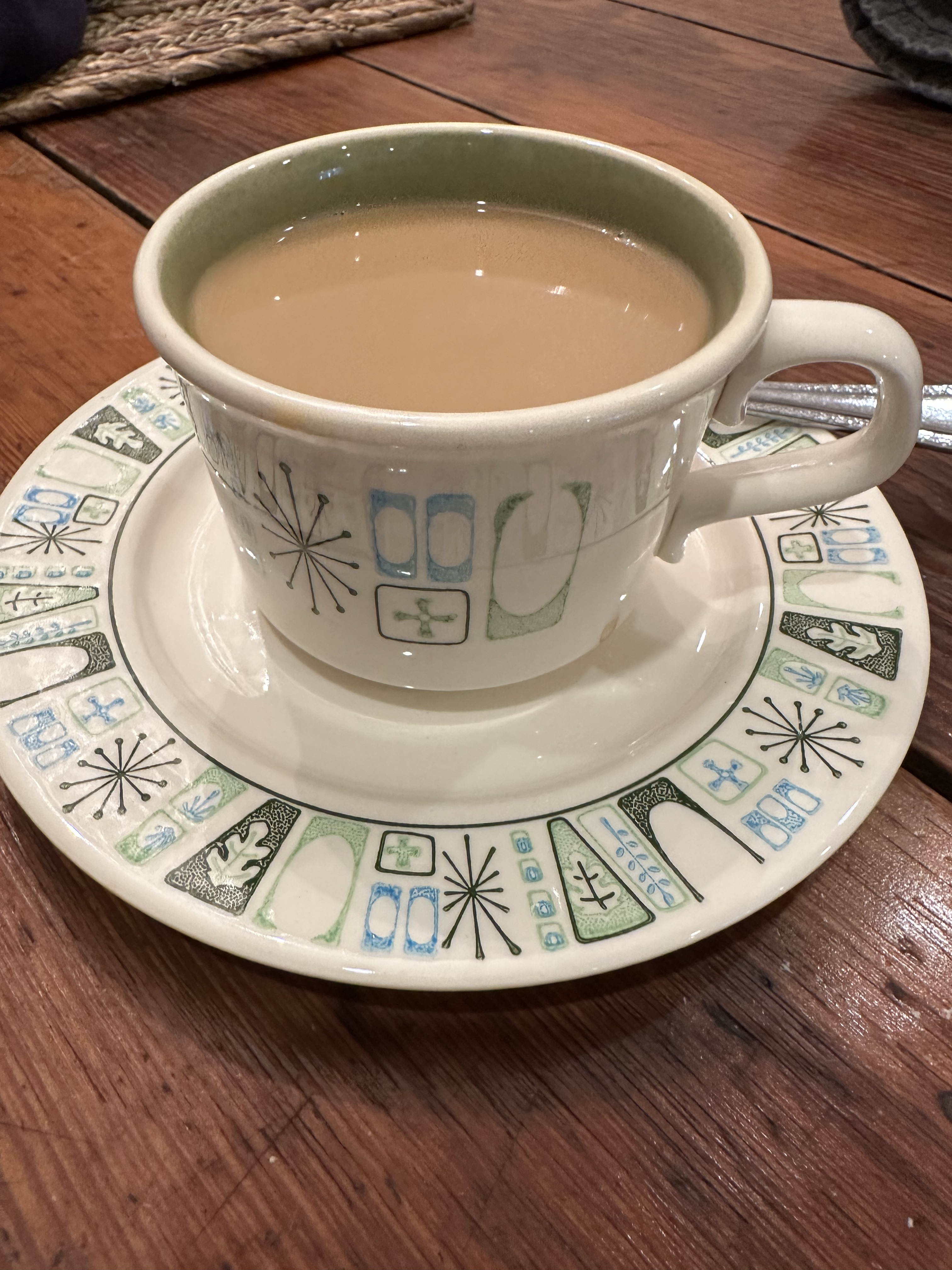
Kim Johnson, Ed.D., lives on a farm in Williamson, Georgia, where she serves as District Literacy Specialist for Pike County Schools. She enjoys writing, reading, traveling, camping, sipping coffee from souvenir mugs, and spending time with her husband and three rescue schnoodles with literary names – Boo Radley (TKAM), Fitz (F. Scott Fitzgerald), and Ollie (Mary Oliver). You can follow her blog, Common Threads: Patchwork Prose and Verse, at www.kimhaynesjohnson.com.
Inspiration
As part of Sarah Donovan’s Healing Kind book club, Fran Haley and I will be facilitating a discussion of The Hurting Kind by Ada Limon in April to celebrate National Poetry Month. Preparing for these conversations led us to choose several of Limon’s poems this week as inspirations of topic, form, or title. In Instructions on Not Giving Up, Limon illustrates the glory of spring through an unfurling leaf as a tree takes on new greening after a harsh winter.
Process
Use Limon’s poem as a theme or topic, form, or title (or combination of these) to inspire your own Instructions poem.
Kim’s Poem
I’m reflecting on a moment I spent beside a lake watching dragonflies dart around chasing each other as my inspiration for today’s poem, borrowing a couple of starter lines from our U.S. Poet Laureate to drive my thinking about form. The greening of Limon’s tree leaves and new growth reminded me of the color changing moltings that dragonflies undergo throughout their lives as they continuously evolve.
One decade ago – that’s how long ago we built this Christmas tree. We raided the reading room, where I used to have six bookcases crammed full of books (I still have the six bookcases, but I have done the anguishing work of paring down my collection over these years, letting go of some keepers).
I think of the work that we did. Find all the tall ones, and place them flat in a circle. Then, we discussed how to proceed. Find the next size down, a little thicker, and place them about a half inch inside the ring of the floor books. And so on, and so forth. String the lights, and light it up! At the top, as I recall, we’d placed a wooden chest with a Bible in it.
Every Christmas holds its magic, and over time, ideas and traditions come and go. I’m grateful today for the memories of the years, right back to the 1960s tinsel trees that I remember in my grandparents’ homes, the real trees that smelled like Frasier forests, and the Charlie Brown trees of the years that didn’t turn out like we’d planned. There was a tree that had little teeny spiders all in it the year I’d made a new sequined tree skirt, and they all climbed down and decided as a group to die right there in it, leaving little black spots everywhere. And, of course, the tree that leaned, that we fixed, then leaned, then we fixed, then fell with a hefty burglar size thud in the middle of the night, breaking precious ornaments and sloshing water everywhere.
To the magic of Christmas ~ and all it holds for us, past, present, and future – I raise my morning coffee. I’ll see A Christmas Carol on the stage of the Alliance Theater tonight in Atlanta, Georgia, and I’ll be thanking Charles Dickens for all of the versions of this classic Christmas tale as we know them today, as well as the traditions that had not yet arrived in England from Germany until he published this book – including the Christmas tree.
All the breathtaking charm of the autumn season stops me in my tracks sometimes and fills my heart with the feel of cozy togetherness and reprioritizes my focus on the simple things. The cool breeze, the warmth of a fire, the flicker of candles flavoring the air, the cinnamon and nutmeg spiciness I add to my morning coffee, the softness of the quilts piled one, then two, then three thick on our bed to bring all the hygge comforts, and even my favorite sherpa-lined slippers for scuffing about the house and for porch sitting.
I began taking pictures of a tree on our farm in September here in rural Georgia so I could see the changes over the time span of a month or so. It’s one of my favorite views from my seat on the front porch, a place of birdwatching and reading, of talking and sipping a cup of hot tea at the end of the day, of phone conversations and FaceTimes with children and grandchildren across the miles, of prayer and meditation, of writing.
I’ve always wondered what they would say “if these trees could talk,” and perhaps in this modern age of AI, even the trees will start communicating with us and each other. If they do, this is the tree that would someday tell my story better than any other tree of my middle-age years.
Please meet my faithful friend in these photographs. She reminds me that cleaning out, renewing, and regenerating in a new and different season is a blessing and a lovely way to grow. And that every season is one to celebrate.
Thanks for reading today! I’m raising a mug of hot apple cider to you and waving my scarf in knitted kinship!
Warning: Photos of dead bobcat in photos at end of post. Do not read further if this makes you uncomfortable. It saddens me, but country living is full of both delights and horrors, and I take the bad with the good.
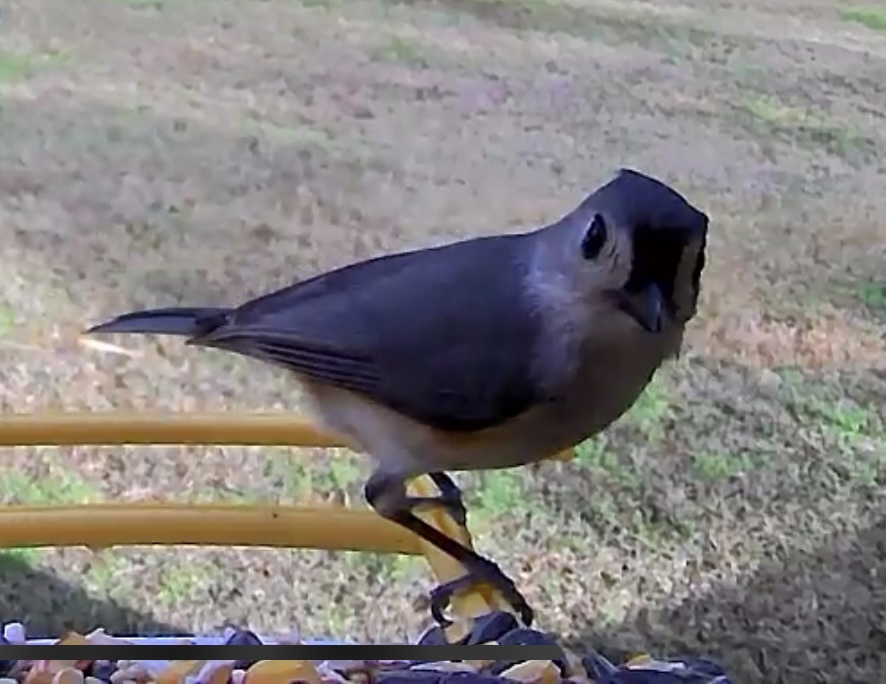
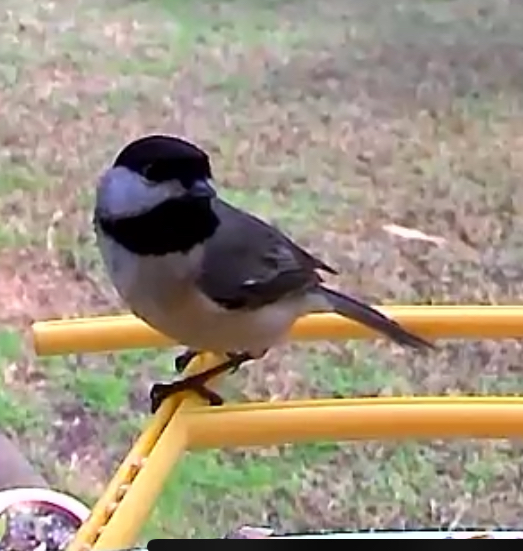
At 7:52 a.m. yesterday when I pulled into the parking lot at work, I reflected on my morning. Already, I’d seen a dead bobcat, two rabbits (one alive that ran in front of my car, and one dead that didn’t make it when it ran out in front of someone else’s), a squirrel, a large buck and small spotted deer. I’d heard the calls of the Downy Woodpecker, Eastern Phoebe, Blue Jay, Carolina Chickadee, Ruby and Golden-Crowned Kinglets, Carolina Wren, Eastern Bluebird, American Robin, Pine Siskin, Chipping Sparrow, Eastern Towhee, Northern Cardinal, and Orange-Crowned Warbler. I’d walked our three schnoodles and discovered a new scratched-up area in the ground cover along the woods of the driveway, showered, dressed, and had my mushroom coffee and protein shake.
Ollie checks out a new ground scratching
I’d been in the shower when I heard the phone’s text ding. I saw it was my husband, so as soon as I was reasonably dry, I read the text: Please call me before you leave for work.
He told me he thought he’d seen a dead wildcat on the side of the road where the neighbors with the black Suburban live. “Take a look when you drive by, and let me know what you think it is. It might be a bobcat.”
He knew I wouldn’t be able to wait on fixing my hair, clothes, and makeup. So off I went in my robe to see this creature whose fate had been determined somewhere between 10:30 Thursday night and 6:00 Friday morning.
I stopped the car in the road and turned on the flashers, got out with the flashlight, and made pictures. Sure enough, it was a wildcat. Its gut organs had been eaten, but the rest of it was still in fairly good condition for something that was hit by a car going the speed limit on Beeks Road. I didn’t think a car had done this, or at least not the blood and gut part.
I made some pictures to help me in my research and theories about what happened. Imagine: a half-clad, robed wildlife crime investigator out on a rural road before daybreak, wet hair, no makeup, snapping photos of a dead animal carcass. That was me.
I mourned the life of this cat for a moment, despite the fear its kind evokes in me each time I take my dogs for a walk. Moments like these are powerful reminders of why I believe strongly in keeping my dogs on a leash at all times. People think it strange that I live on a family farm in the country on the backside of nowhere and leash my dogs. This is why: bobcats, foxes, coyotes, owls, red-shouldered hawks as large as the Great Horned Owls, rogue dogs, wild boar, cars, venomous snakes, and hunters. Not to mention those who believe that every dog they see off a leash needs rescuing, posting on social media for three days, and then rehoming (a/k/a dognappers who believe they are fully justified). Ours are chipped, but walking unleashed in our neck of the wilderness simply isn’t worth the risk.
I raced back home to pull my Audubon book out and make a 100 percent positive identification on the bobcat. Check.
Then I began the investigation. “Hey, Google. What are a bobcat’s natural enemies?”
Google rarely lets me down. “The most common enemy of bobcats is man, but they also have other predators, including owls, eagles, coyotes, and foxes, mountain lions, and wolves.”
I looked closely at the photos and observed that this bobcat appeared to be in good shape except for the gaping gut hole that had been devoured by something. I also noted an odor that suggested the bobcat had been dead for longer than a couple of hours, even though it wasn’t there the night before. It seemed odd it was in the road smelling of decay already, and not fresh-since-last-night meat. It was also on the edge of the road where it would have likely been hit a number of times by texting drivers who failed to see it in time and move over a little.
A pack of coyotes would have picked this bobcat clean and torn its limbs apart, so I ruled them out. I have never seen a wolf here, and it’s been years since anyone has seen a wild boar on this property. A fox lingered for a passing thought, but one predator emerged as the prime suspect. We have three active culprits, and they’re nocturnal. The Great Horned Owl.
Most people would shake their heads and dismiss this possibility. No way an owl would kill a bobcat.
Here’s a way: a bobcat is struck by a car and crippled but not killed. It languishes for several days in the brush, and finally succumbs to its pain and lack of food or water, probably realizing that whatever animal stumbles across it will consider it a gourmet meal.
I believe it was the Great Horned Owl who watched to see that the bobcat was alive for a time, and then when it knew this creature was too weak to fight back, but probably still alive, it swooped in for the feast. I believe it dragged it to the road for a better angle and strategically placed the stomach organs on the line in the road where the elevation dips back down so it could get to all the good meat in much the same way we invert the yogurt lid to lick the top, and I believe it ate the stomach organs and the eyes.
I believe all of this because I have seen over the years how the Great Horned Owls prefer organs. They eat the heads of rabbits, taking out the brains and leaving the rest. This carcass destruction made sense to me.
I can’t imagine the sheer shame of the bobcat spirit in bobcat heaven, reading the Georgia Rural Wildlife newpaper obituaries about his tragic end:
Robert W. Cat died Friday, November 10, 2023, killed by a Great Horned Owl with a five-foot wingspan. His friends all believed that he was the fiercest of his kind there in rural Georgia but report they had noticed a slip in his swagger in the days preceding his death. His wife reported she had heard rumors he was out running around on her with his sly catlike ways, and moved on just hours following her husband’s death, noting simply, “I hope he was in life number nine. He was a real animal.”
After our National Day on Writing event on October 20 on the Courthouse square, I wrote an article for our local newspaper and submitted it. The editor also wrote an article and merged the two pieces together. It appeared yesterday in the Pike County Journal-Reporter, and already we have growing interest in the newest writing group to form in our community – Writing Wild!
I’m so proud to live in a community where local writing groups and literary events thrive. There is now a new Facebook page to help publicize the events. Please follow and like the page – Writing Wild – and say hello! Better yet, come to the Open Mic Writing Out Loud event on December 5 at 1828 Coffee Company in Zebulon, Georgia!
My three Schnoodles and I have been missing our early morning walks without a flashlight. While the vast majority of folks seem to dread returning to standard time, those of us who are of the Benjamin Franklin persuasion – early to bed, early to rise – are grateful for the benefits of better sleep. We fall asleep faster, sleep more deeply with fewer overnight wake-ups in the colder months once we get warm and snug (we leave a window cracked and it’s sheer heaven), and admire the daylight before work.
I took several photos of the boys walking toward the sunrise yesterday. They love getting out and taking in the world through their noses. The scent of leaf and shrub smoke wafted through the air, and it added all those layers of autumn life in the country to our experience to start the day. I learned later yesterday that a 100-acre controlled burn was happening about 25 miles to our south. I wrote a nonet about our walk for this morning’s blog.