Mid-air dragonflies
Upsidedownrightsideup love
Hanging in the breeze


Patchwork Prose and Verse
Mid-air dragonflies
Upsidedownrightsideup love
Hanging in the breeze

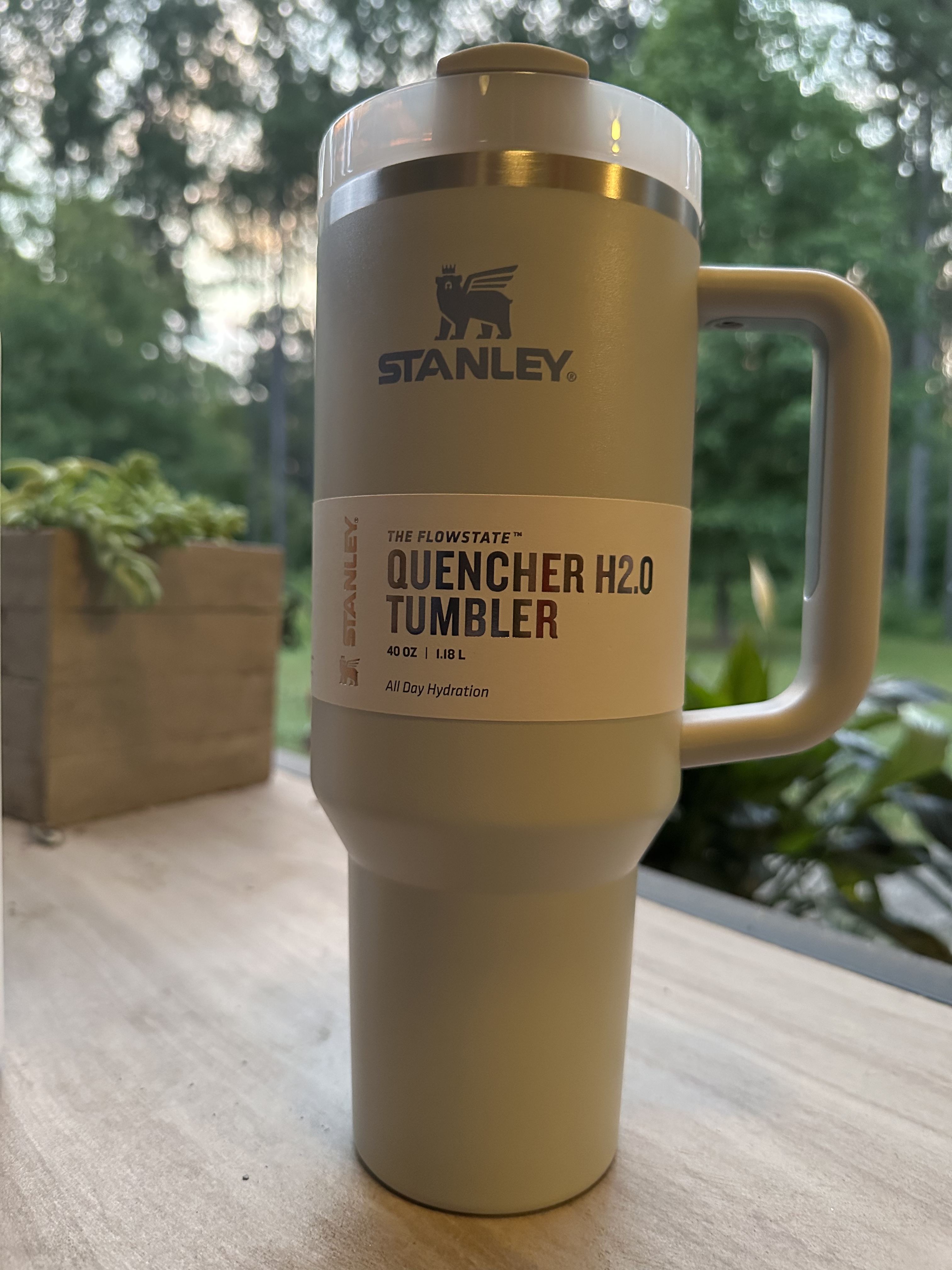
For the past few days, I’ve been reviewing tumblers for staying hydrated while traveling in the heat. Later this month, we’ll drive a little over half of Route 66, beginning in Chicago and ending in Albuquerque – and it’s blazing hot out west in June. As one who experiences heat sensitivity and is especially prone to dehydration, I need a tumbler that can keep ice frozen overnight and hold enough water to last me for several hours until the next refill. I’ve completed my reviews of the 40 ounce Hydro Flask and the 30 ounce Stanley Ice Flow. Today, I’m reviewing the Stanley Quencher H2.0 tumblers in the 40 ounce and 30 ounce sizes.
Each of these tumblers comes with a 3-position lid that allows the user to twist the middle bar so that it 1) seals itself shut, 2) opens to a small slot for drinking hot beverages, or 3) twists to the straw insert slot for drinking cold beverages. Each tumbler has a side handle that, when held in the user’s right hand, has the logo facing the user and straw emerging from the tumbler just above the Stanley logo if twisting begins at the 9:00 position. They’re ultra-versatile, and the lid twists on like a silicone-lined dream, sliding softly into a seemingly watertight fit on the rim of the mug. (This is where the Stanley Iceflow lid could use improvements to become more like its Quencher siblings in terms of the ease of the lid twisting).
And as if you didn’t already know, these tumblers can be accessorized. Go to any little league sports games where the mommies are gathered and you’ll see all the options – there are hand covers, pouch packs, and straps for shoulder carrying. If I could wear the same clothes every day for a week, I could go to Europe for a week with just a Stanley pouch pack as my luggage. These tumblers are practically more dressable than a new baby girl.
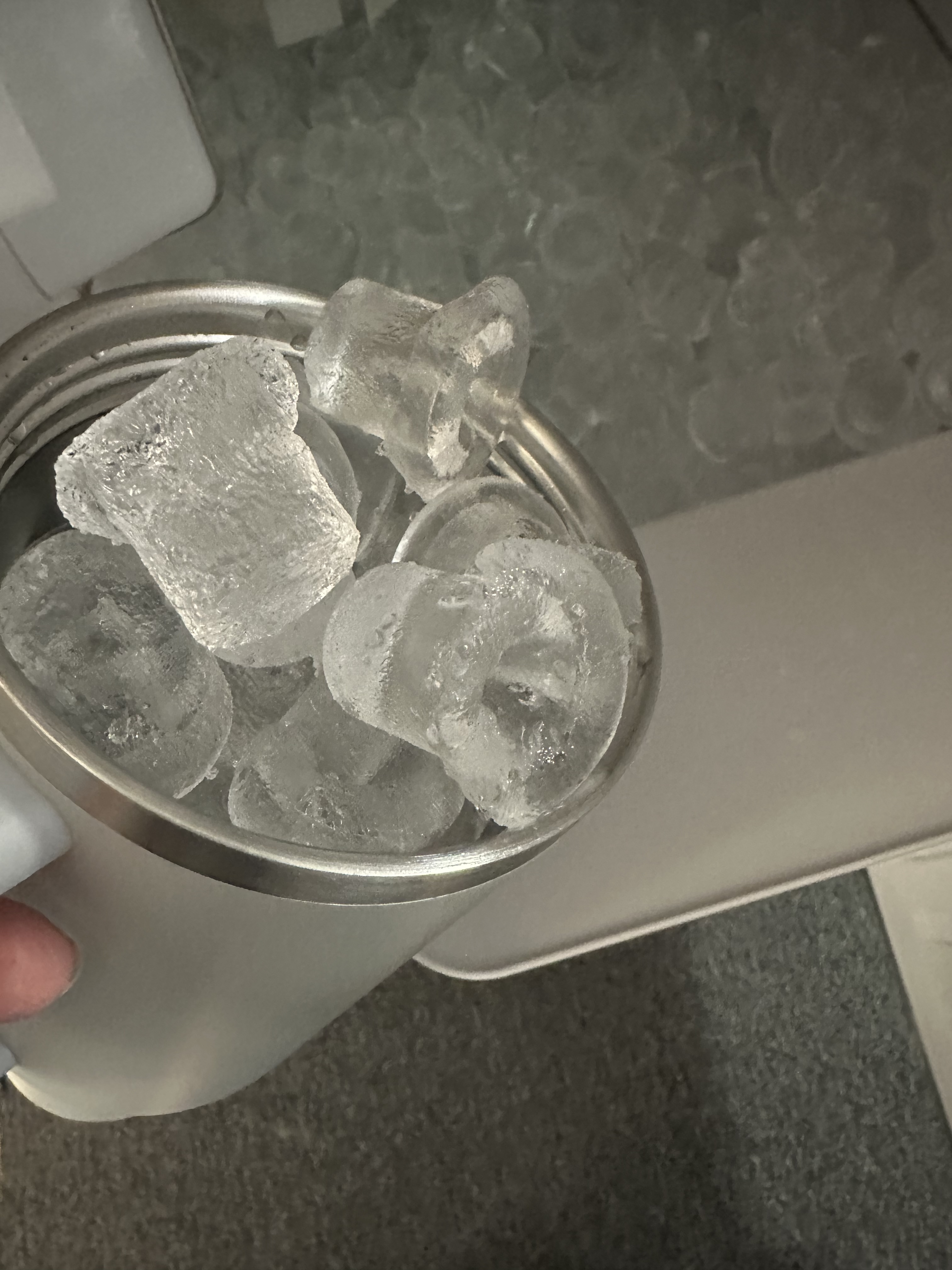
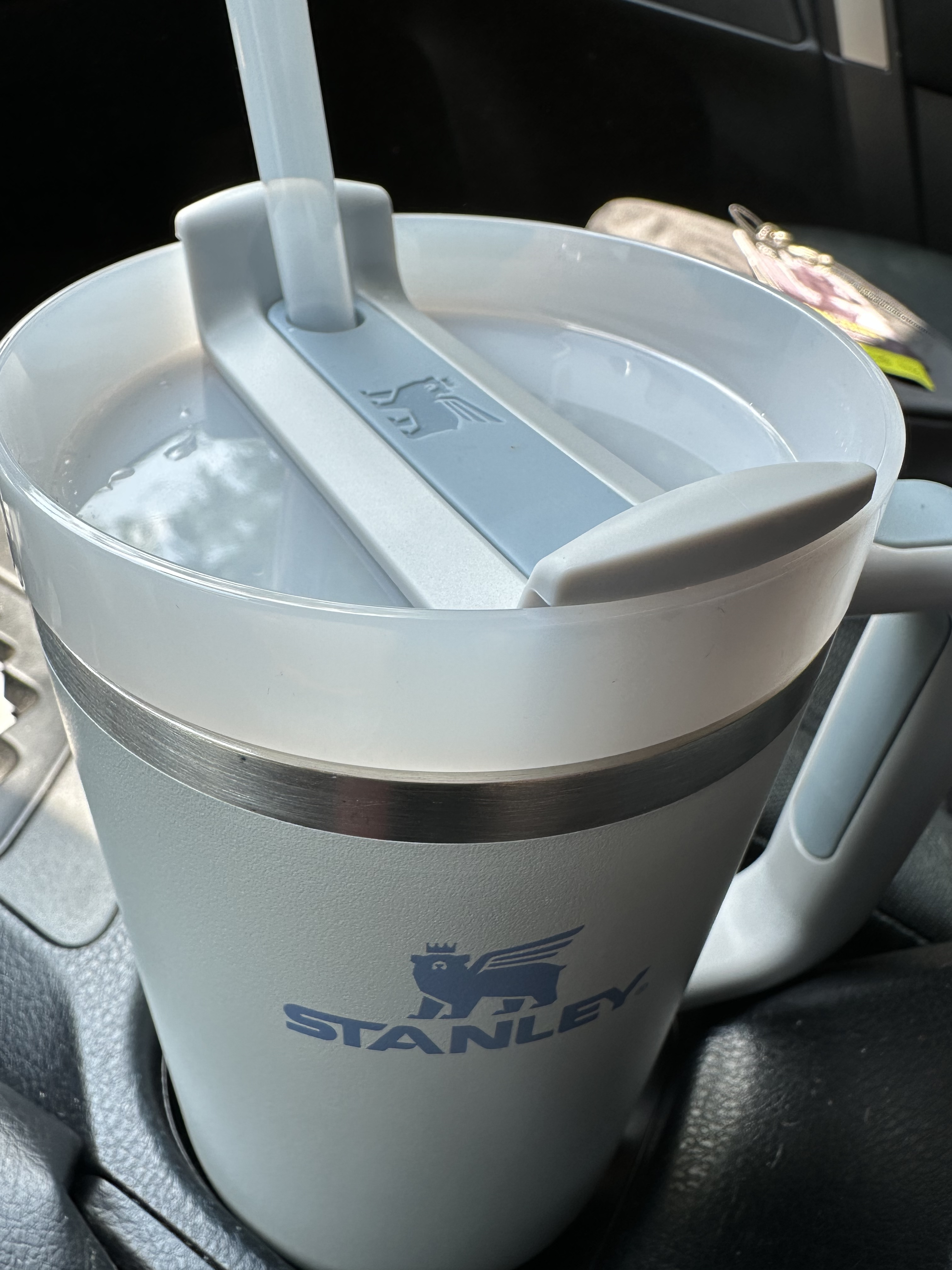

So here are the pros and cons of these tumblers.
Pros
Cons
Tomorrow, I’ll share my overall winner decision and the reasons why I am choosing it as my preferred Route 66 Traveling cup.

Yesterday I started my reviews of water tumblers to determine the best one to take along Route 66 as we travel later this month. Not only do I need a tumbler that keeps ice frozen overnight, but I also need it to be free from leaks, fit in a cup holder well, and be comfortably portable between the car and the places we stop. I need it to hold a lot of water, too.
That’s what concerns my husband as he chuckles to himself every time I take a new tumbler out to test.
Great, he quipped. We’ll be having to make a lot of pit stops, I see.
Call them what you want, but we’ve already mapped out frequent stops, I reminded him.
My sister in law and I have scheduled stops along the way in the Roadtrippers Plus app. We’re driving only a few hours each day, stopping to see the attractions and landmarks at the waypoints we have chosen. There won’t have to be many stops for the sole purpose of using the restroom ~ I’ll be taking advantage of the facilities where we’ve already marked the map.
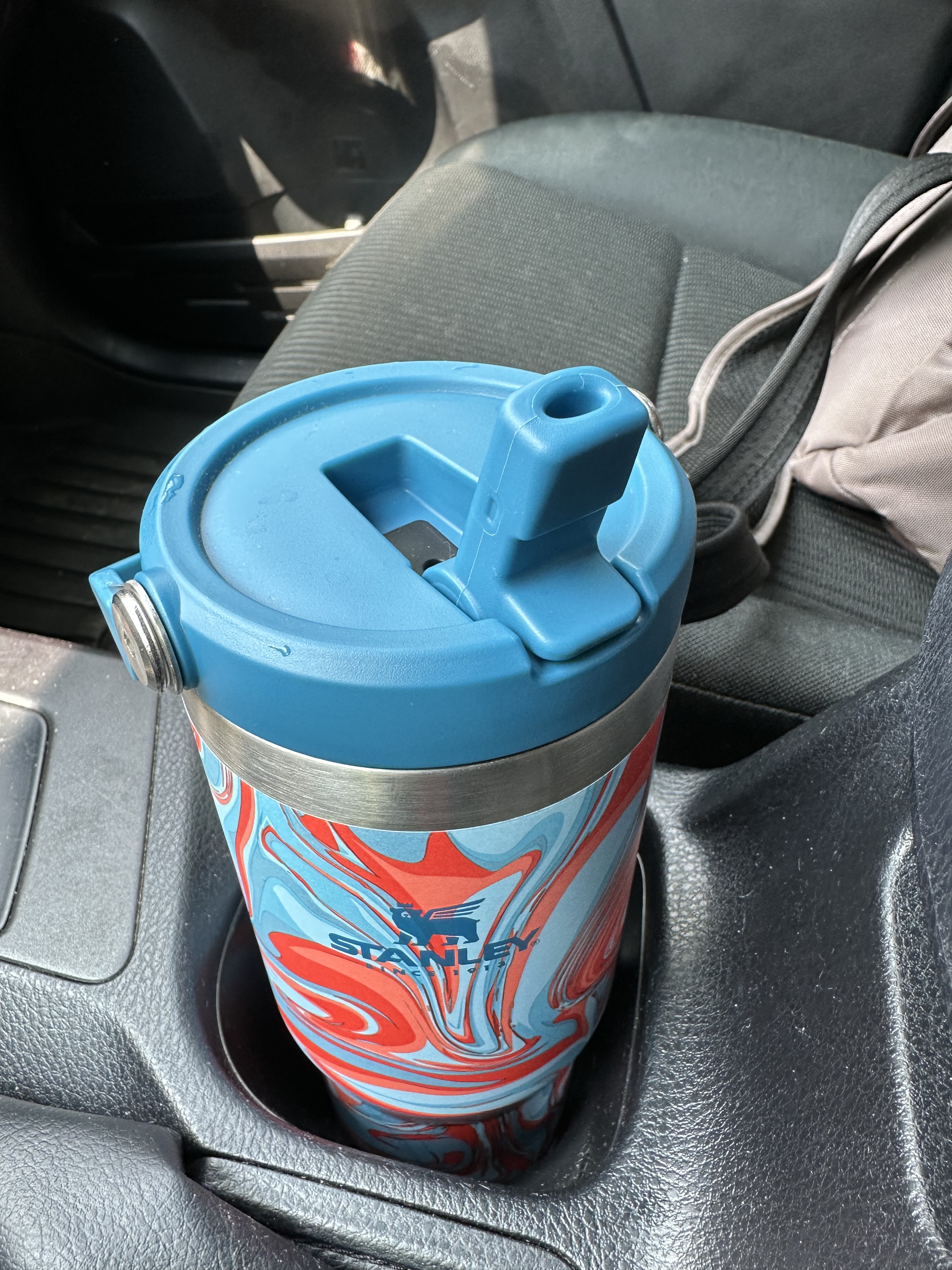
Today’s review is for the Stanley Ice Flow 30 oz. Flip Straw Tumbler. When I first filled this tumbler with water and ice and held it upside down, it leaked.
I removed the top, cleaned up the water, and tried again. It turns out that the lid does not screw on as easily as the Quencher series cups. When I took the time to be sure that it was fastened tightly and held it upside down again, it did not leak. So here are the pros and cons of the Stanley Ice Flow.
Pros
It does not leak when the lid is fastened correctly.
I like the variety of colors. Pool Swirl appeals to my love of the ’70s.
The straw has smooth suction flow.
The straw is comfortable with its rounded edges (doesn’t hurt lips).
It fits in both of my RAV-4 cup holders in the console.
The mouth makes putting ice in easy (no bottleneck).
It’s comfortably held in the hand (body and handle, both).
The straw pops up and down – no need to remove it completely on the go.
Ice stayed frozen overnight.
It fits beautifully in the side pocket of my Travelon backpack.
Starting position for twisting the lid for the straw location doesn’t matter (on the Quencher, if you want the straw in a certain position, you have to experiment starting twist positions).
Cons
It takes some checking to be sure the lid is fastened correctly and tightened.
The twisting of the lid to get it off is not as smooth as the Quencher series.
It does not have a 3-stop lid position, so this is mostly for cold drinks.
It’s less bulky than the Quencher with the handle.
I ran out of water more quickly with the 30 ounce size, which is less than my normal size.


Tomorrow, I’ll review both Quencher models – the 30 ounce and the 40 ounce.
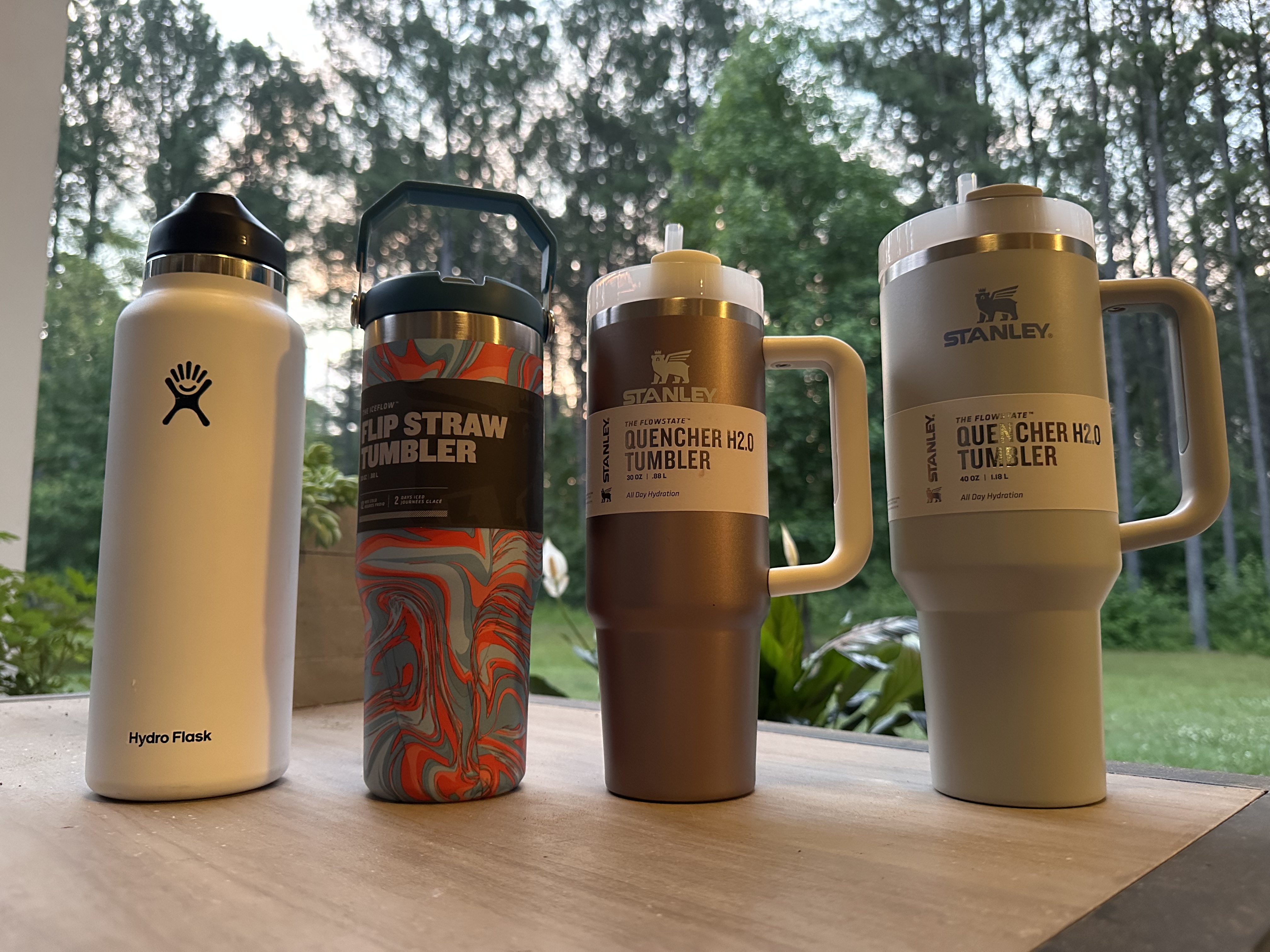
My husband thinks I’m over the top to be planning which cup to take for the best hydration on our trip. He chuckled one of his I’m going to keep my mouth shut, but my wife is crazy laughs when he saw a row of cups lined up on the kitchen counter.
“Look, I know you think I’ve lost my mind, but if I get dehydrated, I’ll make you lose yours,” I told him.
That got his attention, bringing back memories of the day I was at Six Flags Over Georgia with my daughter, her boyfriend, and my stepson. I got so dehydrated and overheated riding roller coasters that I went to the public bathroom and flung myself down on the floor in the stall to be able to put my cheek to the cool concrete. I was delirious and could not think straight, knowing only that I was fading fast and had to get my cheek temperature down pronto – and I needed a Coca Cola with ice. While my daughter got in line and waited for the Coke, I waited in the stall, rotating my cheeks, not caring one iota about all the germs. I was trying to survive the brutal Georgia heat – – face down on a public bathroom floor, doing what I had to do to prevent a red-light ride to the hospital.
I called my husband to come get me, since we only had one car at the park. We’d paid full ticket prices that summer, and since we’d planned to stay until the park closed, I didn’t want to take the kids away from the fun when they could drive home later.
When we’d first married, my husband drove a race car many weekends. Along with his brother and father, they competed in racing events as a team ~ Johnson Motorsports, or JMS Racing as they were known. We’d hang out at the race track all weekend, and by the time we were loading up to leave, someone would often warn me that my cheeks were red. Each of them knew to watch for that tell-tale sign, knowing that I’m heat-sensitive and dehydrate faster than a dog in the desert. On more than one occasion, I’ve had to get in the truck and keep my face in the air conditioning while the rest of the crew finished loading up.
So hydration is serious business for me. My skin tightens and I feel my heartbeat as if it were split in two, furiously waving checkered flags under each eye socket.
Over the next week, I’ll be reviewing an assortment of cups to determine the best one to take along Route 66. Mine needs to not only hold a lot of water, but also to be able to keep ice frozen overnight. Since 2022, I’ve been taking my 40-ounce Hydro Flask with the pop-up straw to work every day. I fill it with ice in the morning, add filtered water, and drink from it until lunchtime. After lunch, I fill it again and drink that before replenishing the ice and filling it a third time when I leave. This way, I have the pure, filtered water to last me through the evening until the following morning.
Tomorrow, I’ll begin my reviews with the Hydro Flask 40-ounce cup.

When my phone rings in the early morning hours, I don’t panic and wonder what in the world has happened. A feeling of calm prevails. Things are as they have always been. There’s Dad.
I have a story I need to tell while it’s fresh on my mind, before I forget, he tells me. I grab my pen, the closest piece of paper, and listen, feverishly writing all that he shares.
It was back in the old days in rural Georgia when I was preaching at Ohoopee, he began. This was down around Highway 19, where you’d go through Wrightsville, meander over to Tennille, and then on out to Sandersville, where there were cotton fields everywhere and all the roads were red clay. And Ohoopee was a church of miracles. A cured drunk who loved the Lord led the singing, and the first time I stepped in there, they were singing “On Jordan’s Stormy Banks,” only he pronounced it Jurdan’s. And, as they say, “he weren’t wrong.”
There was a fellow by the name of Noah in the church, married to a lady named Nora, and Noah was having trouble finding where to dig his well. He needed help finding water. And back in those days, people were people and folks’ existence was all about helping their neighbors out.
Another couple in the church, Elvis and Helen, heard about it. “I’m coming over to hope you out,” Elvis told Noah, and when I heard that, I went over there too.
It wasn’t uncommon in those days to hear regional idioms and think of them as words misspoken, but these weren’t misspoken words – this was intentional language packed with meaning. Elvis was coming to hope his neighbor out.
Elvis said he had a divining rod – a hickory branch – that he could use to help him find water. Now Kim, believe what you will, but Elvis walked the grounds with that stick, and suddenly it tremored. I saw it with my own eyes. Right there, he said, was water. They marked the spot for the well and dug right there.
“Where exactly was this spot?” I was curious and had to know.
They called this area Possum Scuffle, he explained. It was back over in Harrison by Raines Store where they called it Deep Step and Goat Town, where a lady named Margaret Holmes had a cannery for black eyed peas and collards. They were the best you could get then and still are today.
“I believe you, Dad,” I assured him. “I’ve read about this. It’s a real thing.”
I had flashbacks to visiting the Foxfire Museum in Clayton, Georgia at the foot of Black Rock Mountain last April, where I saw in the holler the ways of a simpler way of life with a harder work ethic and more relying on God to bless the land – and people depending on each other – and wished that part of the world still existed.
Who am I to doubt a divining rod?
Now, I’m telling you all this because I’ve had one of those mornings where I’ve been playing with words, and I know you do the same thing, he continued. I’m still dwelling on the shipwreck passage in Acts 27, and there’s a Biblical connection I’ve discovered. Luke is the most likely author of the book, and he describes the ship being in a storm out in the Adriatic Sea near Malta. They used stabilizing ropes. In mariner’s terms, these are called hawsers. Today, we also call them helps, or help ropes.

I began to see where he was going with all of this. “Ah, I see. So hoping someone out is like using a help rope. Help is a hope rope.”
Exactly, he confirmed. Hope ropes tie it all together and make things possible. In Acts 27, the imperiled ship could have been dashed, save for the hope ropes.
That’s exactly what we need today in our communities – – to hope our neighbors out. We need to adopt the mindset of rural Georgia thinking back in the good days when folks extended not just a hand, but their whole selves – – divining rods and all.


 Common Threads