A Calm Christmas: Heritage

Photo by Luna Lovegood on Pexels.com

This December, I’m slowly making my way through Calm Christmas and a Happy New Year by Beth Kempton (2019), and in Chapter 1, Kempton presents The Five Stories of Christmas that focus on faith, magic, connection, abundance, and heritage. Today’s focal thoughts center on heritage.

Kempton invites readers to reflect on these aspects of heritage:

What is your view of traditions related to midwinter, such as decorating your home with evergreens and celebrating the winter solstice? What sort of weather do you associate with Christmas, and what impact does it have on how you expect to feel and what you expect to do this time of year? What particular traditions have been handed down through your family and become part of your personal Christmas story, and how do you feel about them? Do you plan to maintain them?

We’ve never specifically celebrated Winter Solstice, but we have traditionally celebrated winter with a Christmas tree in our home, whether real or artificial, along with a wreath on the door as well. Having grown up on an island, I always wanted snow but never had a true “White Christmas” until 1989, when the snow set in the evening before Christmas Eve and amounted to about 6 inches in the coastal area of South Carolina where we lived at the time. Weather never had an impact on our holiday season, since most of the time it was warm and sunny. In fact, there were Christmases that we could have sunbathed on the beach.

Traditions that have been handed down include gift giving and celebrating Christmas morning around the tree with a breakfast casserole in the oven, warm cinnamon rolls, and coffee and juice. There were many years that my mother hosted a formal Christmas dinner at high noon with extended family around the table, and while I loved it, a formal meal on Christmas Day is not a tradition that I would be successful in continuing, as families are growing and beginning their own traditions. At this point, my husband and I are happy to travel or to be home – whichever works out best for those family members with young children. Also, we often spread the celebration times around so that we are not locked into the one day of Christmas being our dedicated day to gather.
In writing our Christmas narratives, Kempton reminds us that “much of the stress of Christmas comes from either not giving ourselves permission to evolve our inherited narrative, or from the pressure to evolve it into something that is out of alignment with what, deep down, we believe about Christmas….What we need is a way to marry what matters to us with what matters to those we love, and then let go of the rest.”

I couldn’t agree more. Having traditions and memories creates rootedness and belonging, but it’s a double-edged sword in creating a rigidness that prevents us from embracing new ways of doing things and being flexible in our thinking. Things don’t always have to be done the way they’ve always been done. It’s my turn to celebrate with my children – and their children – in the way that they choose to honor, celebrate, and keep Christmas!

On a scale of 1 to 10, I’d rate heritage as it relates to family traditions as a 4 or 5 in importance. These ratings will become part of a Christmas constellation in tomorrow’s post.

A Calm Christmas: Abundance

This December, I’m slowly making my way through Calm Christmas and a Happy New Year by Beth Kempton (2019), and in Chapter 1, Kempton presents The Five Stories of Christmas that focus on faith, magic, connection, abundance, and heritage. Today, my thoughts center on abundance.

Kempson inspires readers to reflect on this:

What elements of the more commercial side of Christmas do you recall from your childhood? Which aspects did you find exciting (such as a television ad, the idea of stockings bursting with gifts, writing a letter to Santa, etc?) How do you feel about Christmas shopping?

The first element of the commercial side of Christmas that I remember from childhood is the Sears Christmas Catalog Wish Book. I spent hours turning the pages of the toy section of the catalog as if those were the only toys in the world, all waiting on shelves at the North Pole to be delivered by a magical reindeer-pulled sleigh.

That wish book should not have been any different for me, really. My grandmother worked in downtown Waycross, Georgia in the Sears Catalog Department, so my entire childhood was filled with items from Sears – from housewares to clothing and everything in between. I had Winnie the Pooh on every shirt I owned, along with the matching shorts and pants, and I’m pretty sure that Sears short sets were the precursor to Garanimals. Whatever we may have needed, we mostly got it from Sears with the secret inherited family discount that all came down through Grandma Eunice.

Those catalogs weren’t just toy finders, either. They were the small-town Georgia equivalent of the New York City phonebooks used as booster seats for kids at Christmas dinner. It was the one time of the year we actually ate at the formal dining room table, and the catalog boost did the trick.

Shopping was an altogether different matter. My mother loved shopping at Lenox Square in Rich’s in Atlanta, Georgia the day afterThanksgiving. We spent all day there with my aunt, and it started at 6:00 a.m. to get the bargains, starting in Rich’s – before it became Macy’s. In fact, the men would drop off the ladies and the children and go back home to watch football and relax, but they would make a swoop back to the basement door of Rich’s by the candy counter so that the ladies could pack all the treasures in the car without having to lug so many bags. By the time the men returned, the women had fulfilled their part of the day with us cousins. We’d been through the Secret Santa gift shop with our own personal elf to help us shop with the money and list our mothers had made, and we’d also seen the pink pig. We got to go home and play board games when the men came back. It was the dads’ turn to be on kid duty. The women? They kept shopping – without kids in tow.

I’m pretty sure that’s where I developed my lingering distaste for shopping. I don’t like traffic, I abhor frenzied crowds, and I don’t like the “thrill” of the hunt. As an adult, I never have been one to have much more than what I need (except in food and shoes), so the excess of clearance and sale items in the name of saving money never made much sense to me about things we hadn’t needed in the first place. Were we really saving money if the need wasn’t there?

These experiences had a place, though, in shaping the shopper I am today. These days, I ask family members for the digital equivalent of the Sears Christmas Catalog Wish Book in the form of links. My daughter in law is amazing about it, too. She has the lists ready, one per grandchild, and it allows me to shop Black Friday and Cyber Monday sales as we purchase gifts for our grandchildren. We use this principle: Something you want, Something you need, Something to Wear, and Something to read. That’s how we buy for each grandchild (number 7 will be here 2 days after Christmas, if not before).

It’s what we call simple abundance: having the things we need, but leaving plenty enough wishing room.

On a scale of 1-10, I’d rate celebration of abundance by way of Christmas shopping and gifting as a 5 in importance. The ratings of each section will be used to create my Christmas constellation on Friday.

A Calm Christmas: Magic

This December, I’m slowly making my way through Calm Christmas and a Happy New Year by Beth Kempton (2019). In Chapter 1, she presents The Five Stories of Christmas that focus on faith, magic, connection, abundance, and heritage. Today, I’m remembering the magic of Christmas I felt as a child.

Kempton asks us to reflect: Where did your ideas about Saint Nicholas/Father Christmas/Santa Claus come from? Did you enjoy other magical stories as a child?

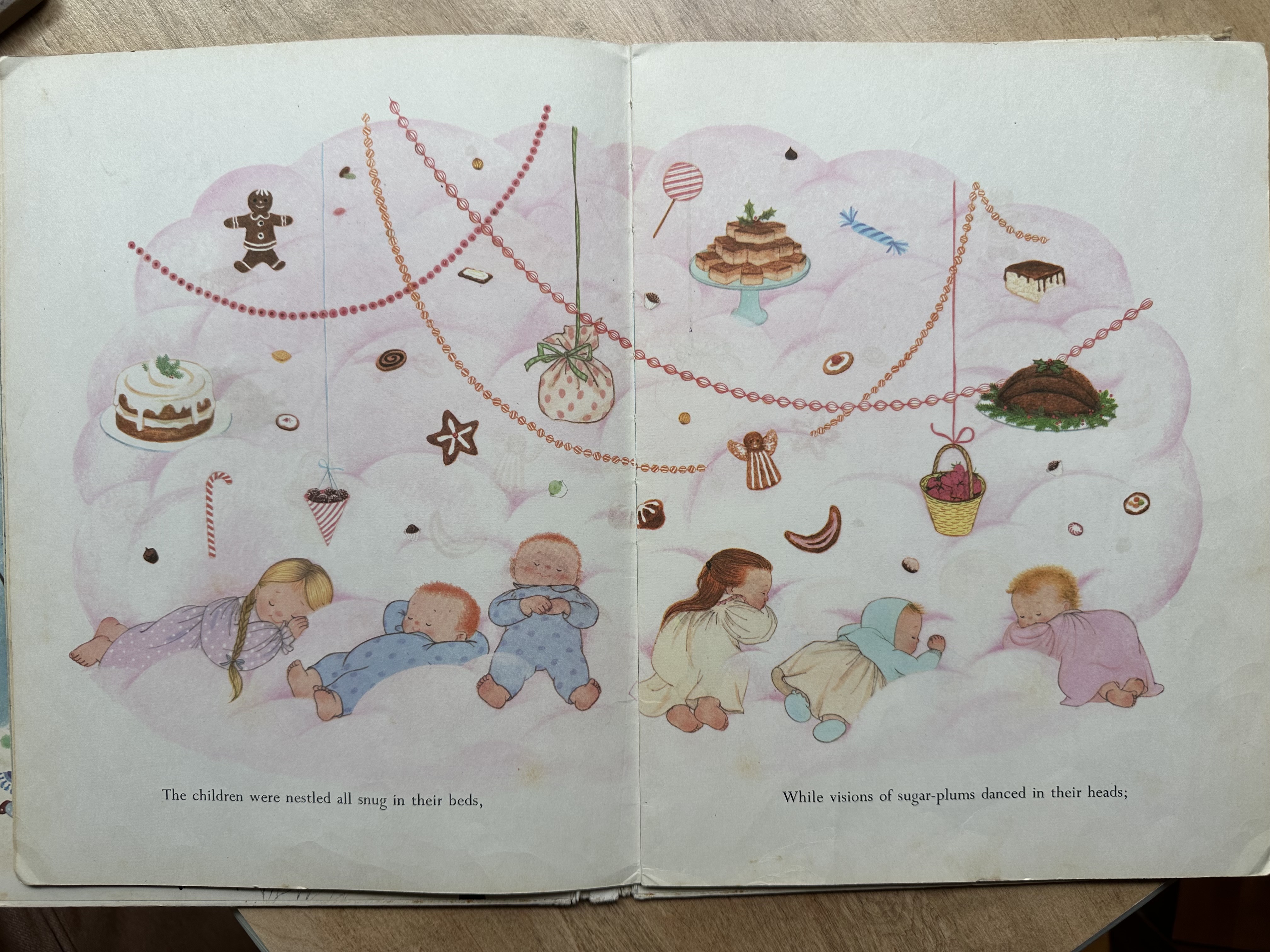
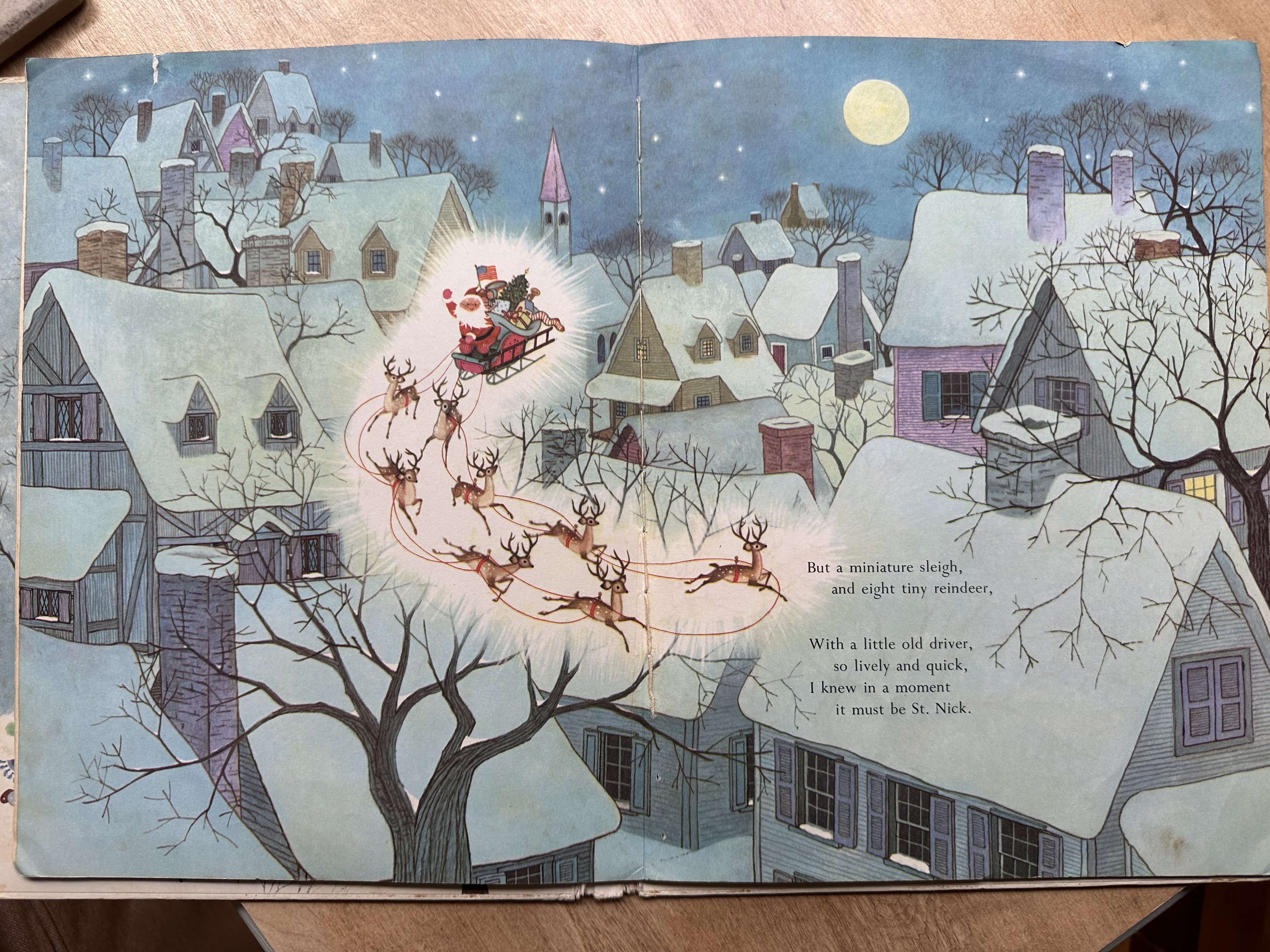
There is no question about where my idea of Santa was rooted. I still have my favorite version of The Night Before Christmas, illustrated by Gyo Fujikawa. Though it is in poor condition from being loved on so much, it was the one my mother read to me over and over and over again, and the one that still comes to mind on every mention of Clement C. Moore’s Letter to Saint Nicholas. The sugarplum illustration is my favorite one in the entire book. The art of the bygone era appeals to me.

Of course, there was other magic. Rudolph’s red nose and a team of flying reindeer were captivating images filled with magic. Frosty’s magical topcoat that brought him to life – and then couldn’t keep him cold enough to survive – still brings winter wonderland feelings even through the tears of a melted snowman.

Magic Acrostic

Merry Christmas

And Happy New Year

Going on 59 times now ~ and

I still love the magic of

Childhood at Christmas

On a scale of 1-10, rating how much magic and wonder are important to me at Christmas, I’d rate them a 6.

Spiritual Journey – December 2024


Scrolling in search of the next book to read on an upcoming flight, my right thumb becoming numb, I came to a screeching halt on Wintering: The Power of Rest and Retreat in Difficult Times by Katherine May.  

This, I nodded approvingly to myself, thinking of all the exhausting change that 2024 has brought.  This may be just the medicine my soul needs right now.

Many of the changes life has brought throughout the year are positive ones, but even good change requires a period of adjustment.  The not-so-good changes, even more so.  

I clicked the Kindle sample download and examined the Table of Contents, organized in chapters by the seven cold months of the year starting in October and ending in Late March.  I read the reviews on Goodreads and delved into the sample text, asking at each decision point whether this would be the best investment of my time and cognitive energy – since both are forever fleeting.

After finishing the sample, I knew this was the book for me.  I downloaded the full book.

I realize I’ve struck book gold when I find a book that has me hanging on each sentence, savoring its power and meaning as I apply it to my life and feel the peace it brings.  Each thought, it seems, fits like a glove when I’ve found the right book for the right time.  It’s like a medicinal salve, like Candy Cane chapstick on parched lips whipped sick by the wind.  

All at once, my breathing deepens and my heart slows from its racing pace.  I feel my tongue stop pressing against the roof of my mouth in its usual stress-pressure position.  My shoulders drop and my neck muscles loosen.  I read May’s soothing words as I consider the approaching winter break: 

“Winter is when I reorganize my bookshelves and read all the books I acquired in the previous year and failed to actually read. It is also the time when I reread beloved novels, for the pleasure of reacquainting myself with old friends….In winter, I want concepts to chew over in a pool of lamplight—slow, spiritual reading, a reinforcement of the soul. Winter is a time for libraries, the muffled quiet of book stacks and the scent of old pages and dust. In winter, I can spend hours in silent pursuit of a half-understood concept or a detail of history. There is nowhere else to be, after all.”
And in this, I can rest with full hope and anticipation that the gas logs and my heated throw will bring needed warmth.  My dogs will bring peace and deep comfort as they vie for snoozing position next to me, and my books will bring the golden silence and space my heart needs as I sip a cup of honeyed hot tea and reread: …. there is nowhere else to be, after all.  

My next book will be Calm Christmas by Beth Kempton. What will you be reading, dear friend, in the sweet, snug nook of home, in the nestled bliss of nowhere else to be?

********************************

Please link your blog posts in the comments below, and thank you for reading today!

The Peace of Home

On Saturday, we picked up the dogs from the kennel. They’d been there for over a week, and we don’t think they sleep very well there with all the barking and the stress of the other dogs who are strangers to them. We believe this because every time we pick them up, they sleep the rest of the day and straight through the night once we bring them back to the comfort of their home.

It’s a lot like how we feel when we come home from a trip. We can let down and truly relax. All our stuff is back where it goes, and we are no longer living out of a carry-on suitcase.

Our dogs are spoiled, and used to a quiet space where they lounge in our bed all day and eat kibble soaked in bone broth. They pile up in our laps or on the back of our chairs, stretching their front legs around one side of our neck and their back legs around the other, functioning essentially as a living fur scarf and warming us from the inside out.
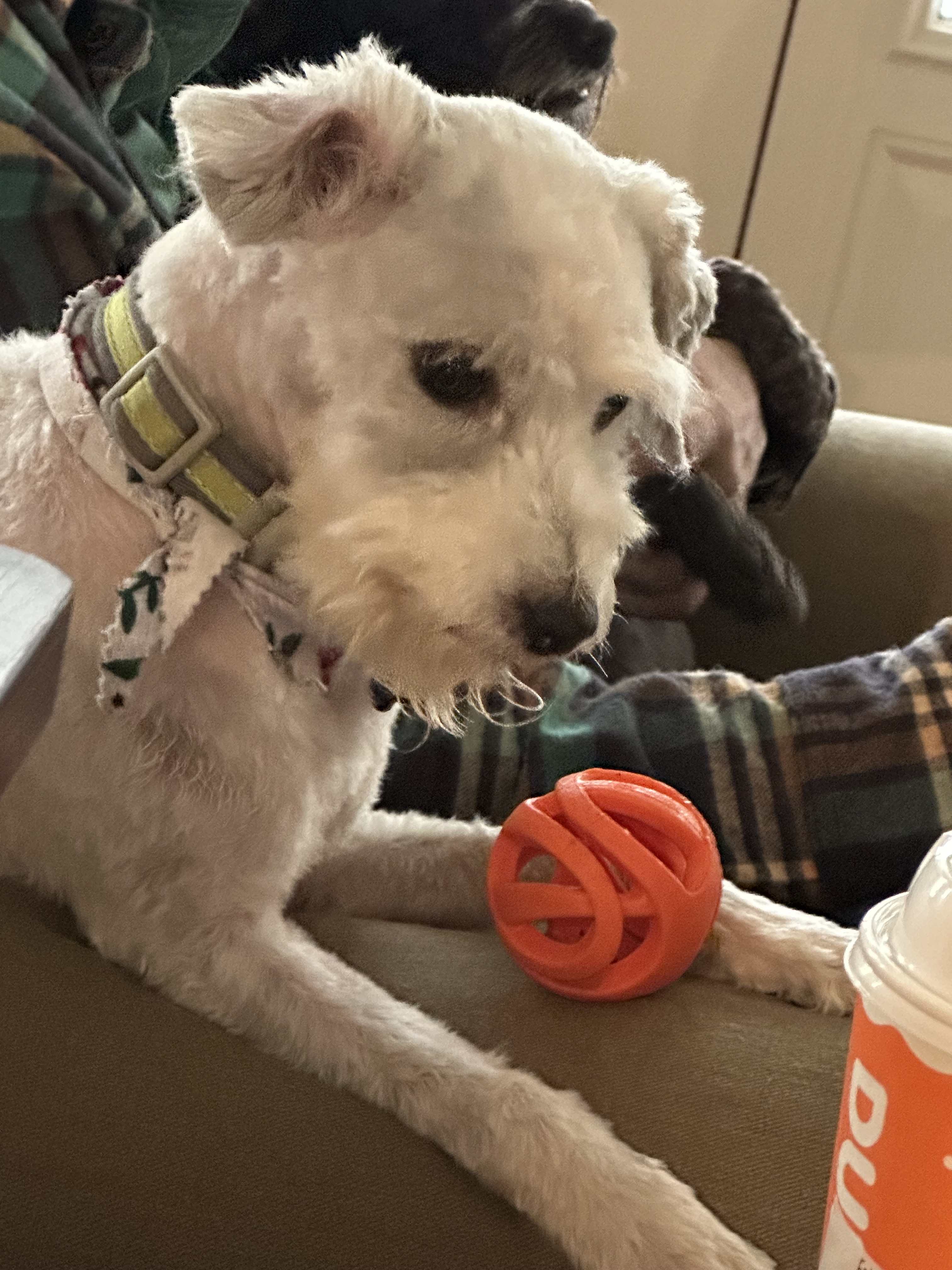
One of them, Ollie, has no upbringing whatsoever – – he will walk right across the end table to get from one of us to the other as we sit in our family room chairs. He is often seeking his place, because he arrived in our family as a “guest dog” after my grandson visited and wanted to know which of our two dogs was going to sleep with him in his bed. Fitz is invisibly tethered to me, and Boo Radley does not stray far from my husband. Ollie, a young stray schnoodle offered to us by the rescue when two other families walked away, joined our family after being found as a young stray on the streets of Gainesville, Georgia. He is the perfect “guest dog,” simply wandering between us, happiest when someone is throwing his ball to him.

The quiet comfort and peace of home is the best part of the Johnson Funny Farm, but it would not be this blissful without the dogs here with us. They add such character, such love, such personality, such humor – and such predictability – to our lives. They know their routine.

When I rise, earlier most days than my husband, they wait in bed for me to use the restroom and wash my hands. Once I come out, they are on their way down the bed steps, heading to the door for their turn.

Out we go for the first quick outing, into the dark of the morning no matter what time of year it is, and they handle their business quickly before coming back inside – back to bed on work days, to wait for me to finish my shower. Once I head to the kitchen to make a cup of coffee and begin writing, though, two will saunter in and reposition themselves – Boo and Ollie – while Fitz finds his toy turtle and burrows under the bed covers until time for the second outing of the morning.

I think what I love best is the weekends, where they know we are going nowhere and that the day will be spent at home with them, belonging to each other in the way that dogs and their people do when they’ve bonded.

There is no other peace felt as deeply, at least for me, as the complete and total togetherness of being home with our boys.

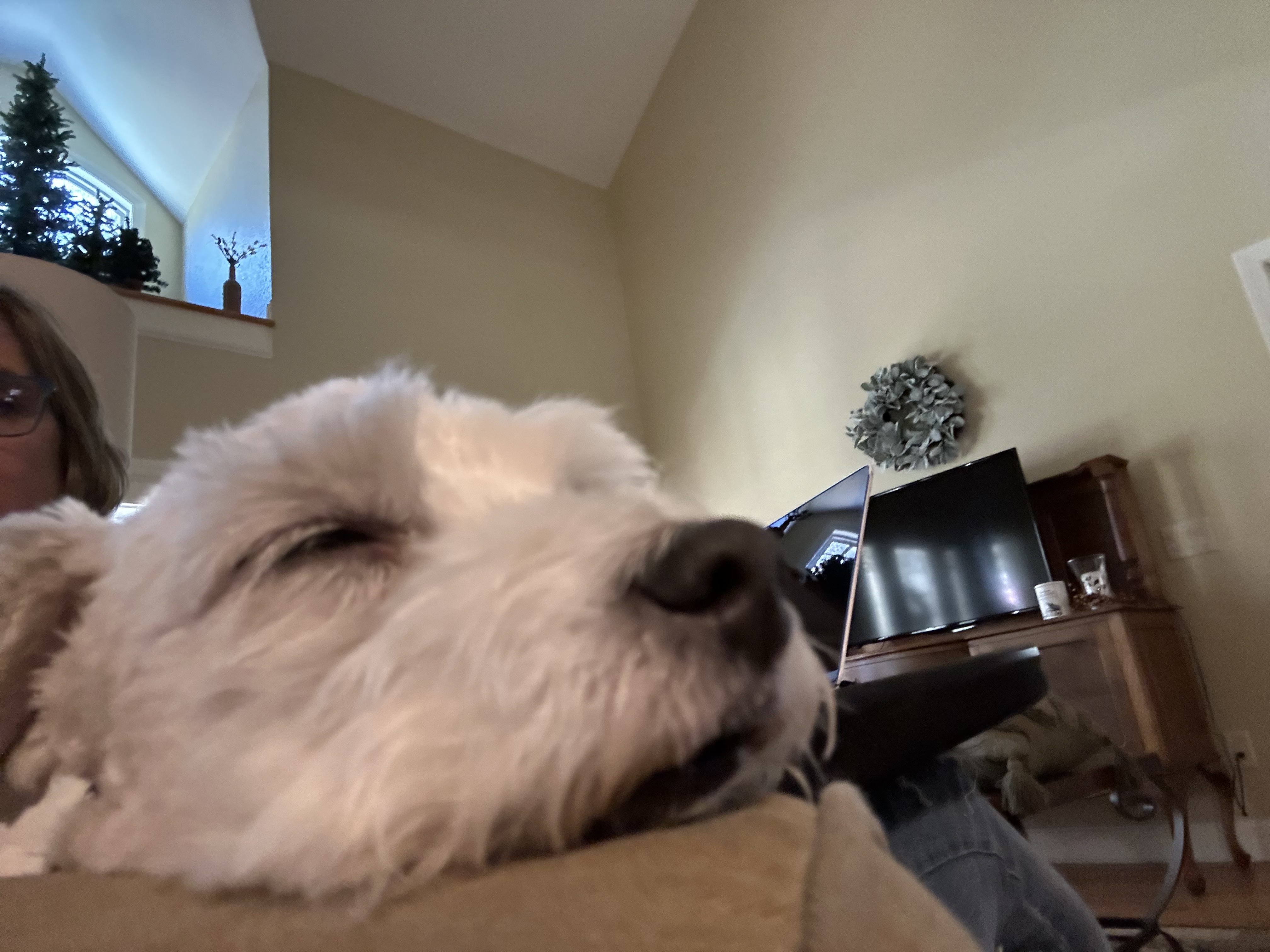
Oh, to sleep this spontaneously!

Poet-Trees: Heart Poems and Gratitude Leaves

Special thanks to Two Writing Teachers at Slice of Life

Opportunities for writing are waiting for us if we only look for them!

I stopped by the Boston Writing Project’s Drop-in Writing Station at the NCTE Convention, and I was immediately captivated by a large tree with colorful poetry hearts filled with verse proclaiming the convention theme: Heart, Hope, and Humanity. As with most conferences, I was between sessions, hoping to get a seat in the next place while still wanting to sit and write – so I did the next best thing. I’d composed a pile poem in an earlier session led by Sarah Donovan and Stefani Boutelier, so I wrote the poem on the heart and placed it there on the tree. It is a pile of blessings, and this one is read from bottom to top. Here is my pile poem from a Saturday morning NCTE session:

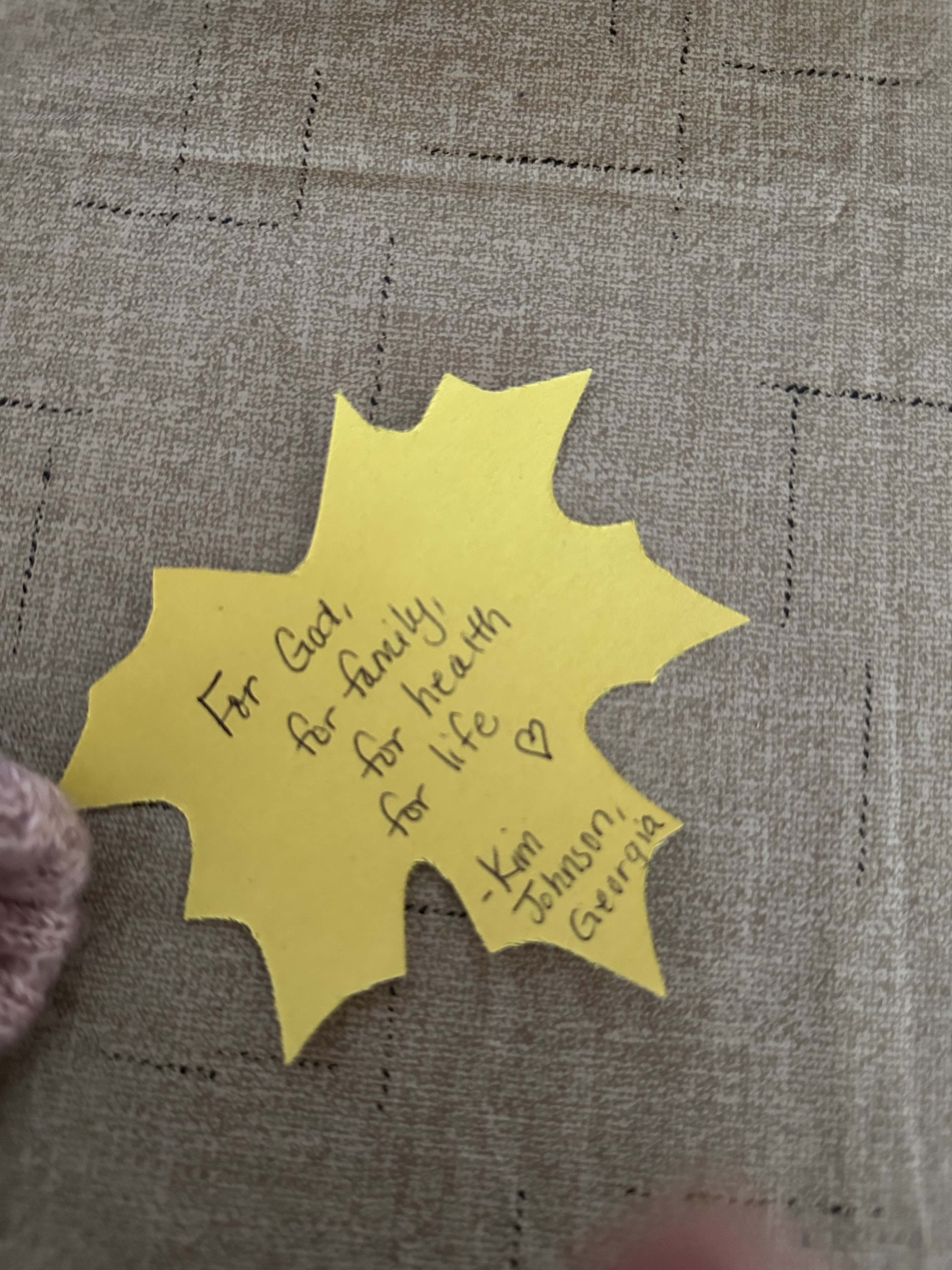
On Thanksgiving Day, I saw another tree just waiting to be filled with words of gratitude. This one was at the Plimoth-Patuxet Museum as we shared a Thanksgiving meal with those visiting the museum to take part in their traditional meal narrated by the chief historian, who shares the history of the holiday. Here is my leaf and the tree.

The leaves filled out throughout the day. I wish I had taken a picture when we stopped by later to read all the leaves that had been added.

I love these kinds of invitations to share responses and writing. It reminds me that everyone is eager to write and to share if the opportunities are presented in fun and engaging ways.

Memories of Boston: A Picture Tour

On the final full day of the NCTE Convention in Boston, I gave myself permission to attend a half day and take a half day to explore Boston with my husband on his first visit to this iconic city. In 2005, I’d summered just 20 minutes from Boston in Milton, Massachusetts, where I’d stayed on the campus of Curry College doing research as part of a graduate degree program. I’ve visited a few times since, most recently in 2022.

So

much

has

changed!

Since the weather was cold and rainy and we were woefully wardrobe-unprepared, we decided to catch the Old Town Trolley tour and sit back and relax, listening to the history as we rode in the heated bus. I purchased tickets online and added them to my Apple Wallet, jumping on at Stop 15: The Boston Convention Center.

The sign doesn’t fully tell the story. You have to add the wind.
Thank goodness for a heated tour bus.
Faneuil Hall, one of my favorite places in Boston – I purposely didn’t edit the photograph, because I love the spaciousness of Boston and all the old bricks.
My husband had walked the Freedom Trail the day before, but the Old Town Trolley gave us a narrated history of many more landmarks.
We went in for a late lunch without a wait. We ate enough that we were too full for supper, and we shared our meal.
The Union Oyster House is directly across from the Holocaust Memorial.
Someone at our table enjoyed a Samuel Adams lager, sheerly for the nostalgia.
New England Clam Chowdah
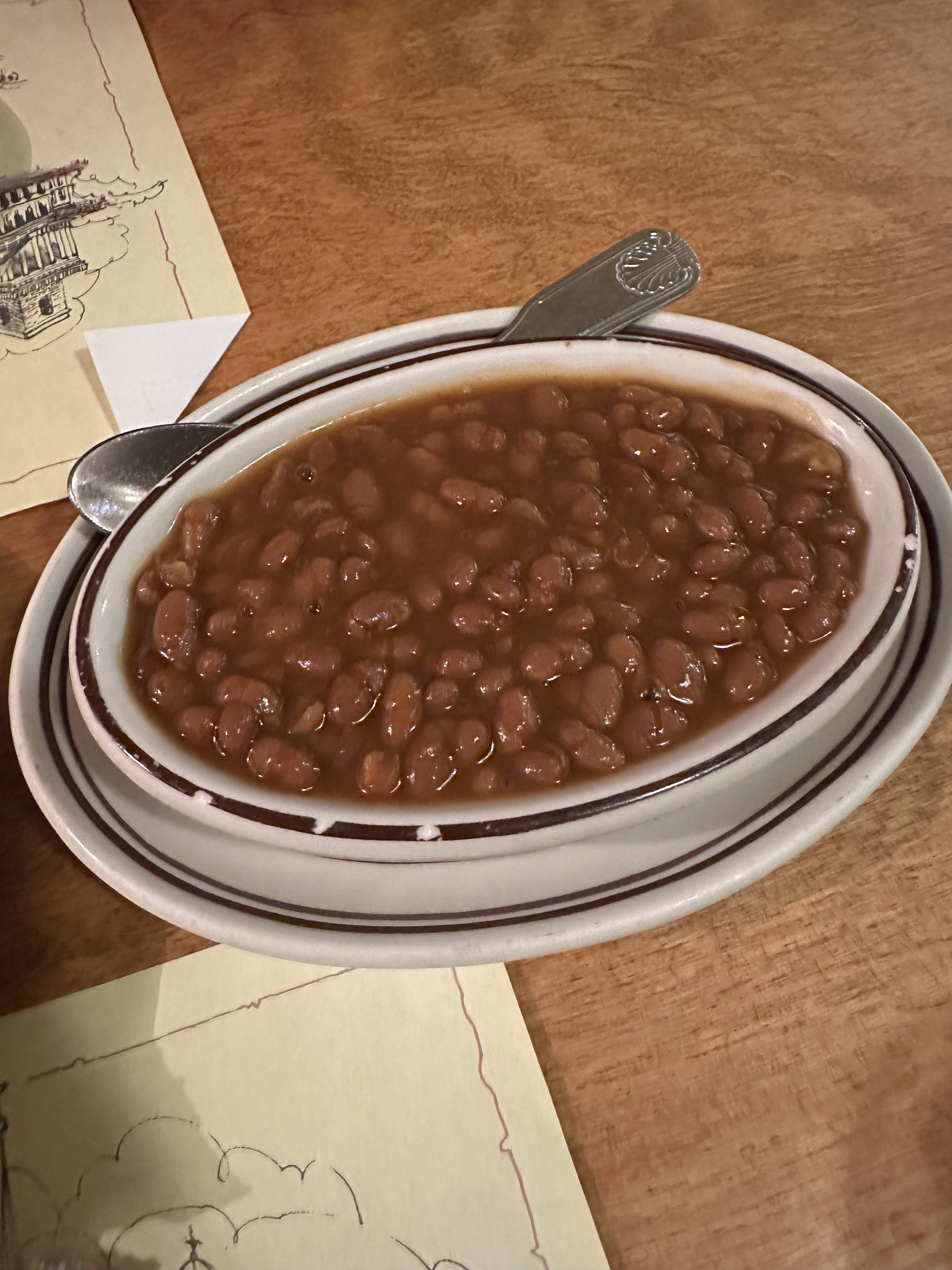
When in Boston, one should sample the Boston Baked Beans.
We shared an Oyster Roll.
The Union Oyster House has its window decorations up, and I snapped a quick photo of this miniature replica of the UOH decorated for Christmas, with the Holocaust Memorial in the reflection of the window. This may be my favorite photograph I took on the tour.
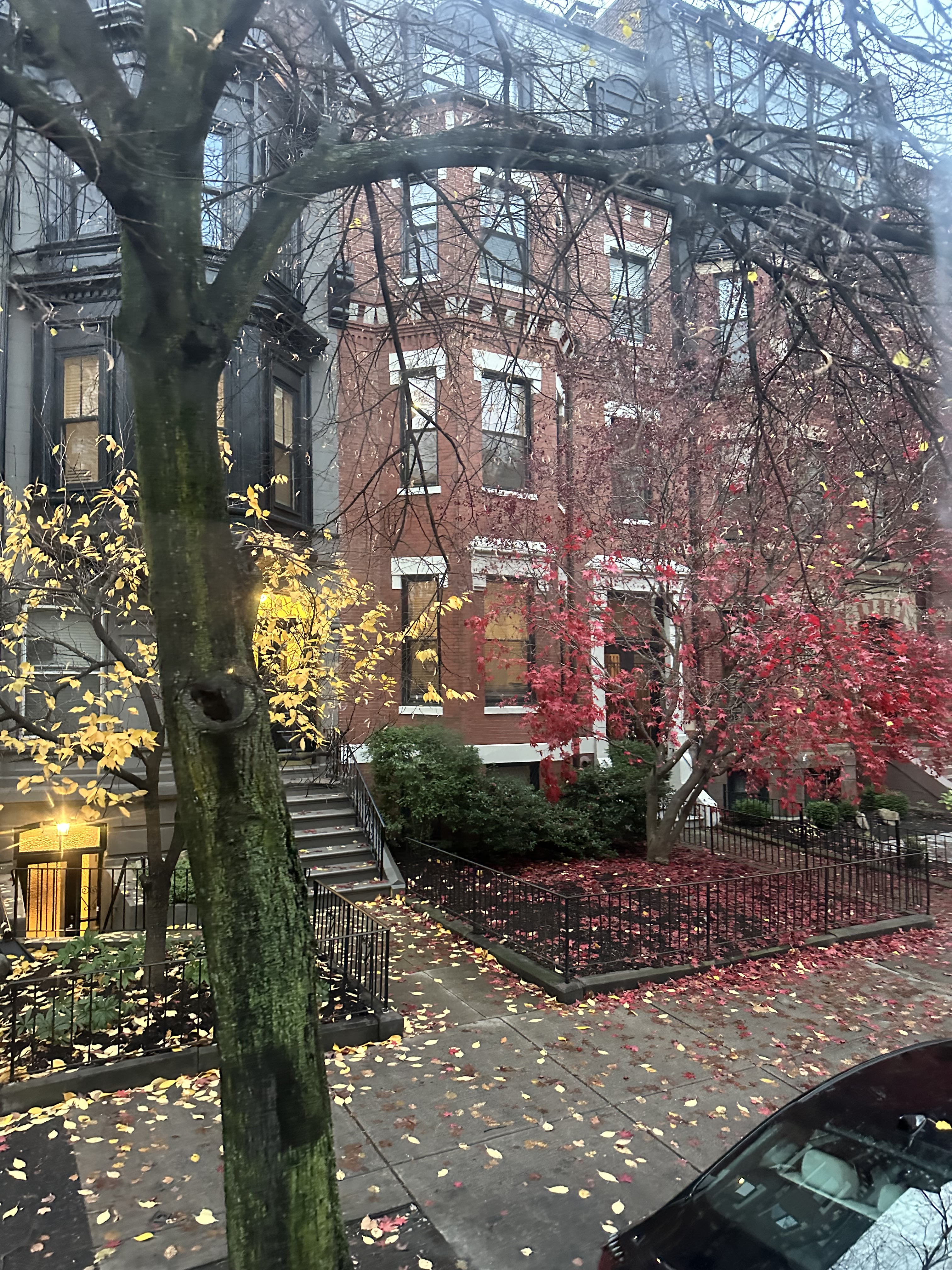
Changing leaves

I believe my favorite part of the tour was the changing leaves. There’s nothing like New England in the fall, with all its vibrant colors and crisp air.

Boston’s Seaport District at night
When you leave town without enough warm clothes, you find a new sweatshirt to help you remember that time you ate in the nation’s oldest continuously operating restaurant……

Our Three Christmas Dogs

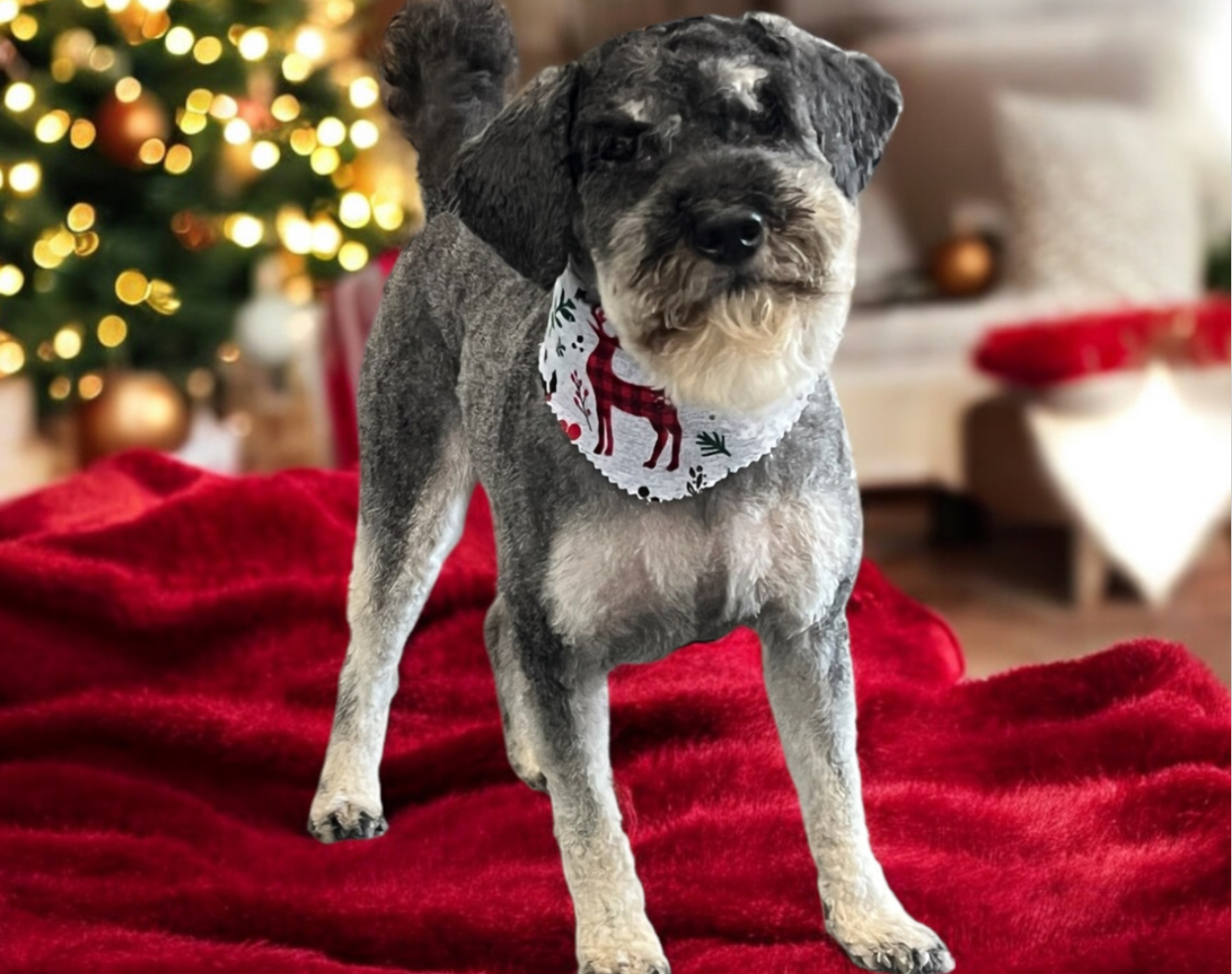
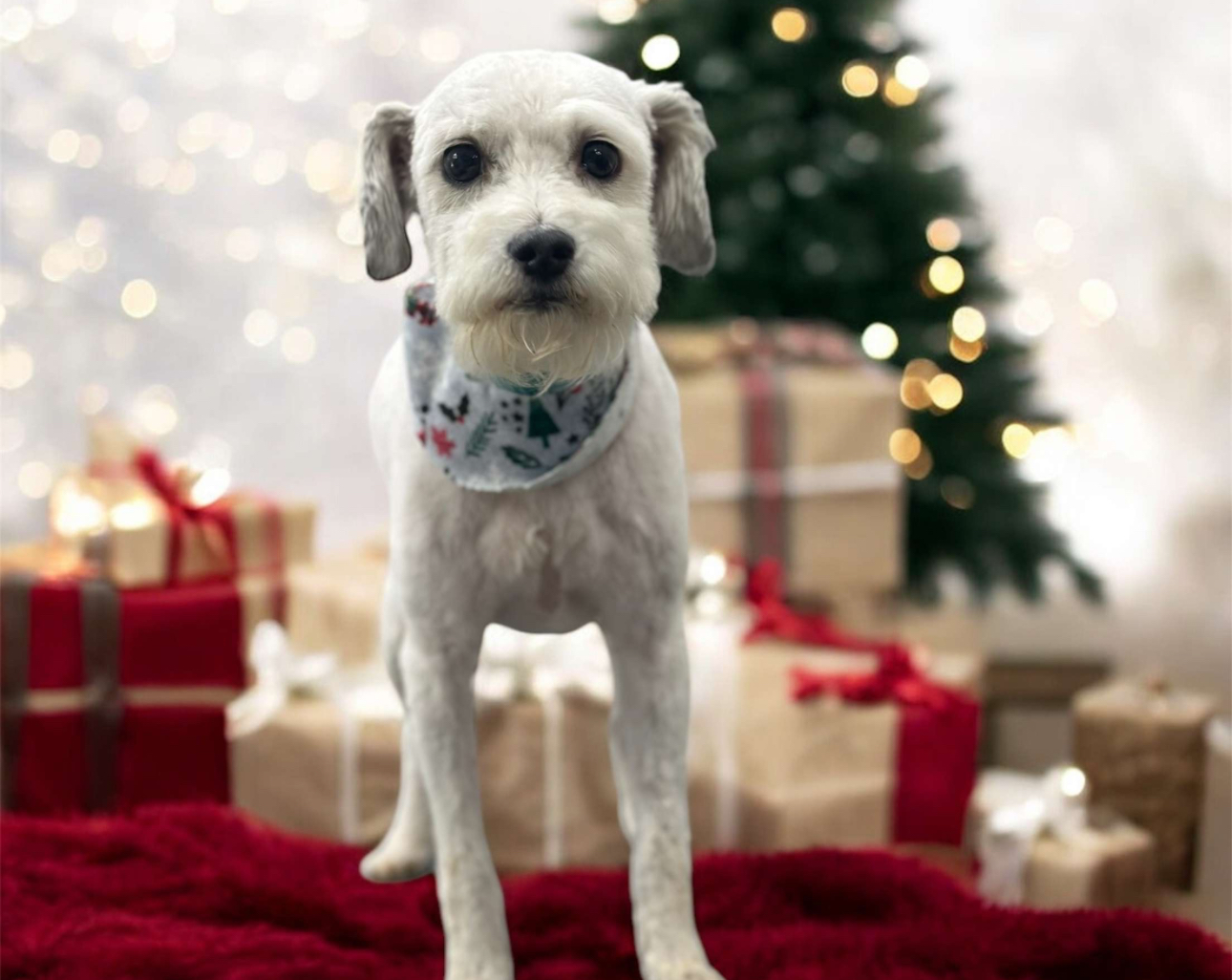
We asked Zoomies, where we board our dogs, to please share a report card and a couple of photos of the boys with us while we were gone, since we knew we would be missing our four-legged sons terribly. While boarding, they were to have groomings as well.

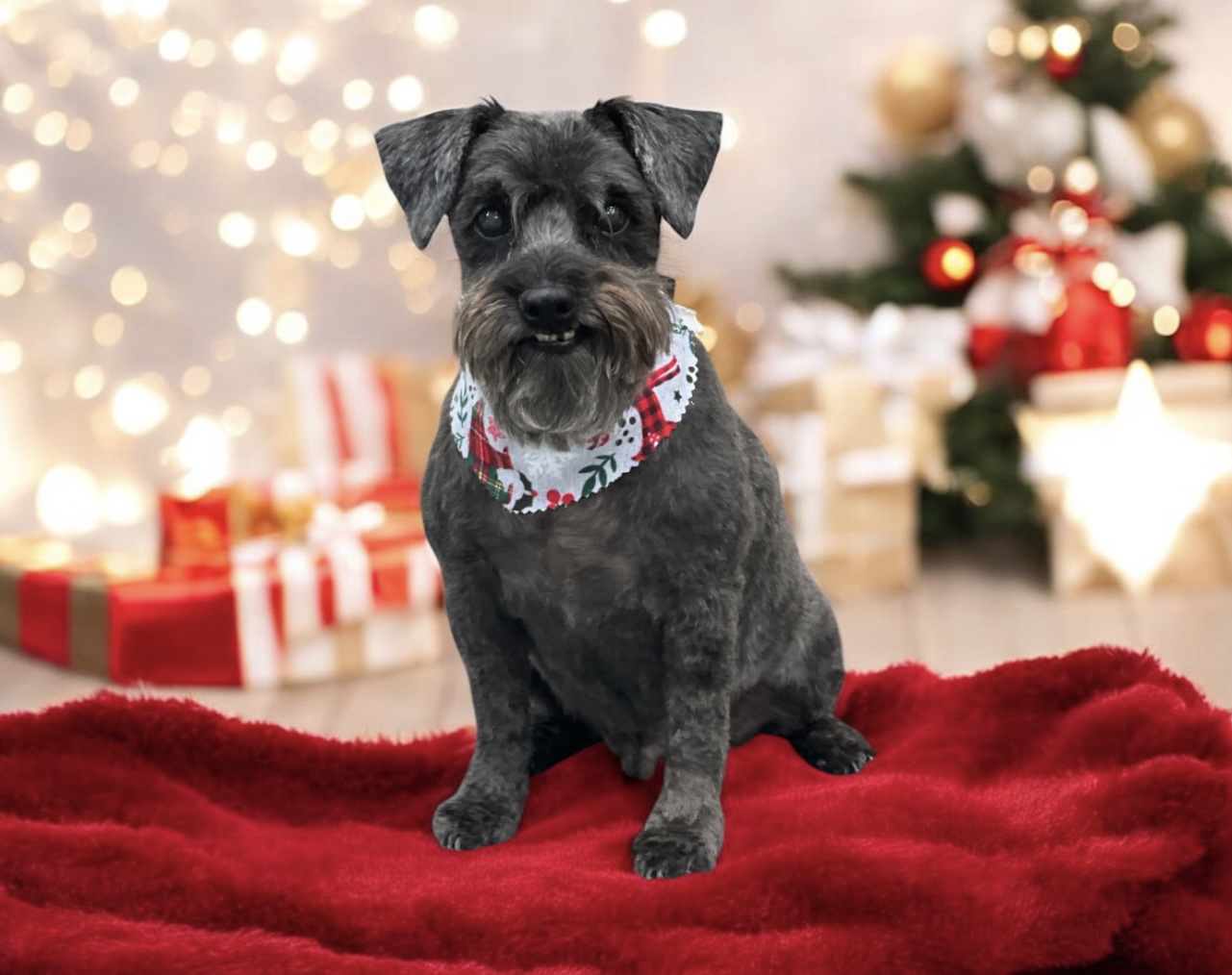
We had no idea they would be taking Christmas pictures while we were gone, so imagine our delight when we got these precious pictures of our three rescue schnoodles the day before Thanksgiving! We wanted to share them with you, too, so that you could see their expressions. (We’ll translate for you what each is thinking):

This is how it’s going for our boys at the kennel:

Fitz: “ I can’t wait for Santa! I’m a good boy, and he will have a treat for me. Let me smile big for my Christmas picture and show off these old teeth I keep losing before they’re all gone.”

Fitz, named for F. Scott Fitzgerald

Ollie: “Let me pose like the spoiled, dignified dog that I am, the kind that might have a jar of Grey Poupon handy in case anyone ever asks. I’ll behave just right for this festive Christmas photo, since I have just been groomed to perfection. Maybe someone will see the look in my eyes and want to throw my ball for me to chase. I’ll just go ahead and put my front legs in the ready position to run after it.”’

Ollie, named for the late, great poet Mary Oliver

Boo Radley: “This is b#ll$h!t!”

Boo Radley, named for a character in To Kill a Mockingbird by Harper Lee

Cheers for the holiday spirit, and for all the Christmas pictures that will be made over the coming weeks, and a full license to embrace the truth of whatever the camera captures. We are still laughing at their personalities. Our Christmas Dogs. Oh, the joy they bring.

Plimoth-Patuxet Thanksgiving Dinner

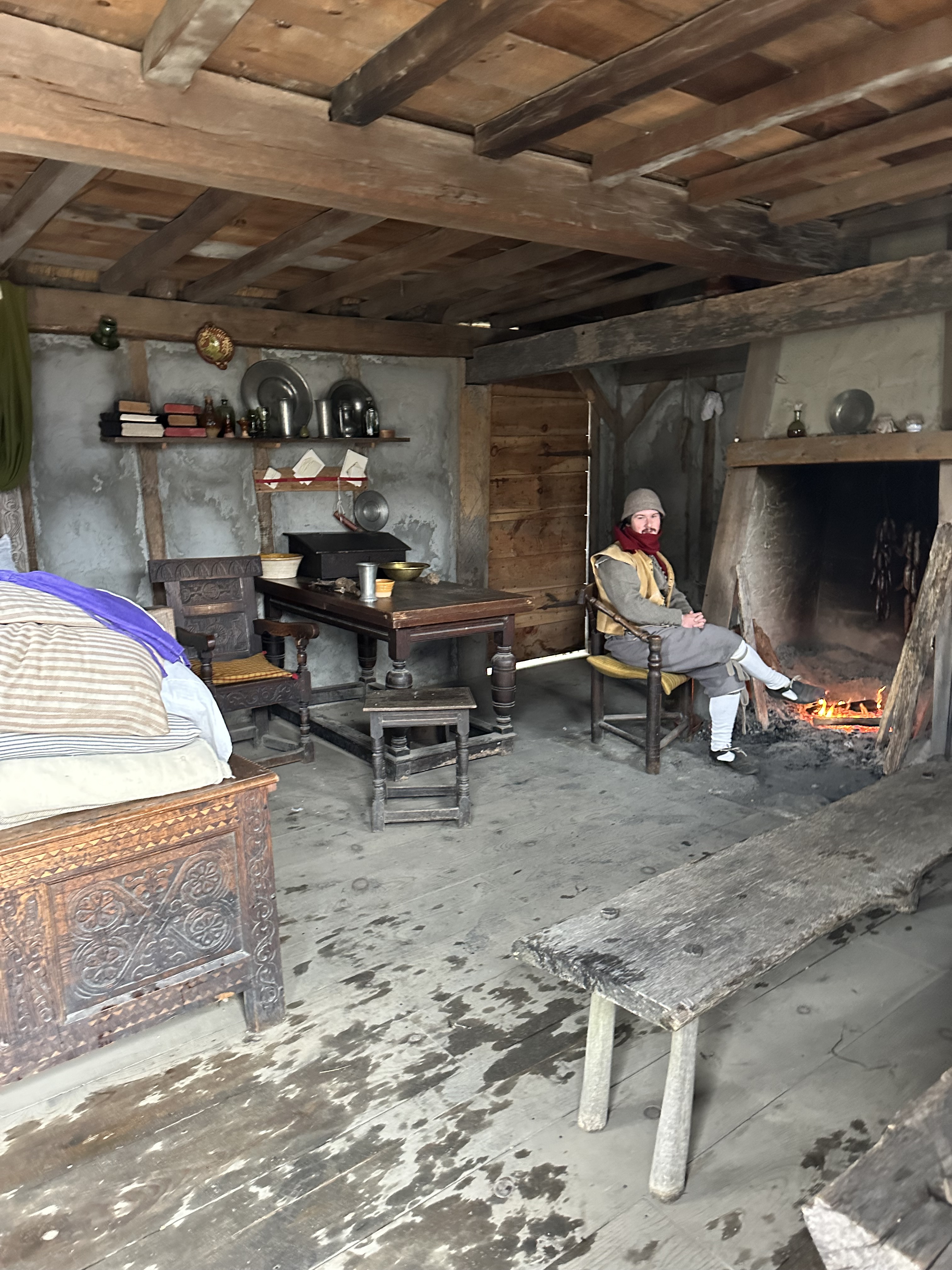
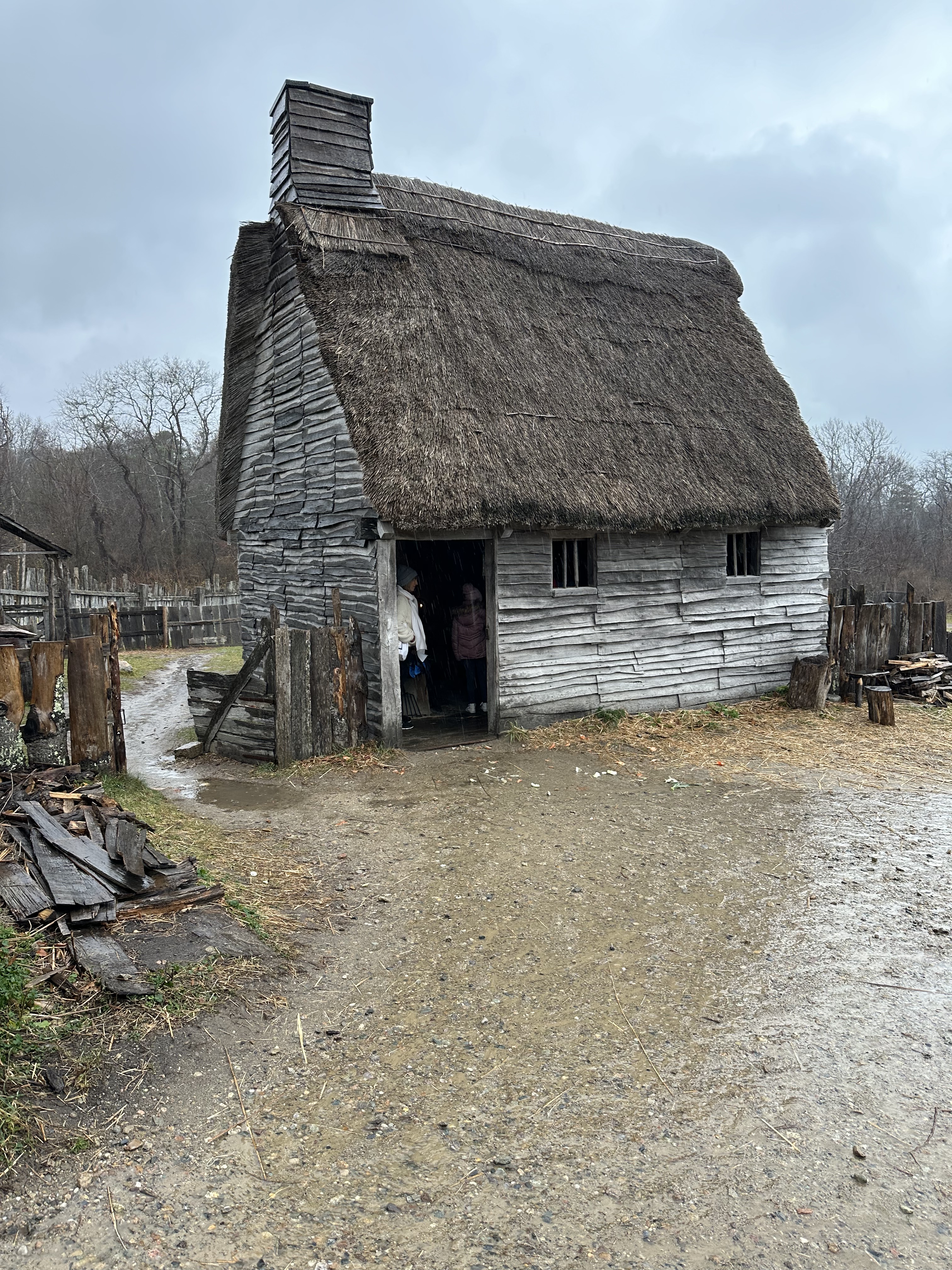
House in the Pilgrim Colony

After traveling the final leg of our loop around New England on Wednesday afternoon from West Chesterfield, New Hampshire to Plymouth, Massachusetts, we visited the Plimoth-Patuxet Museum sites on Wednesday and Thursday. Our first stop was to Plymouth Rock, and our second was to the Mayflower II. At these exhibits, we learned a little more about the history of the voyage the Pilgrims made – the risks they took and the price they paid.

Realistic role-playing Pilgrim

On Thursday, we visited the Pilgrim colony and shared in the Thanksgiving Dinner right in the area where the first Thanksgiving dinner was held. We were pleased that a historian was sharing the history with us so that we could hear accurate accounts from primary sources. We were also impressed that the Pilgrim village was created with historical accuracy, with role-playing realistic Pilgrims who go about their village and house chores while inviting questions and observations from visitors. We even saw a real goose being cooked on a spit and a mother Pilgrim teaching her son some culinary skills.

A mother teaches her son culinary skills ~ note the goose fat dripping from the spit.

The Pilgrims spoke with the accents and language of their time, and answered any questions from those witnessing their chores and conversations.

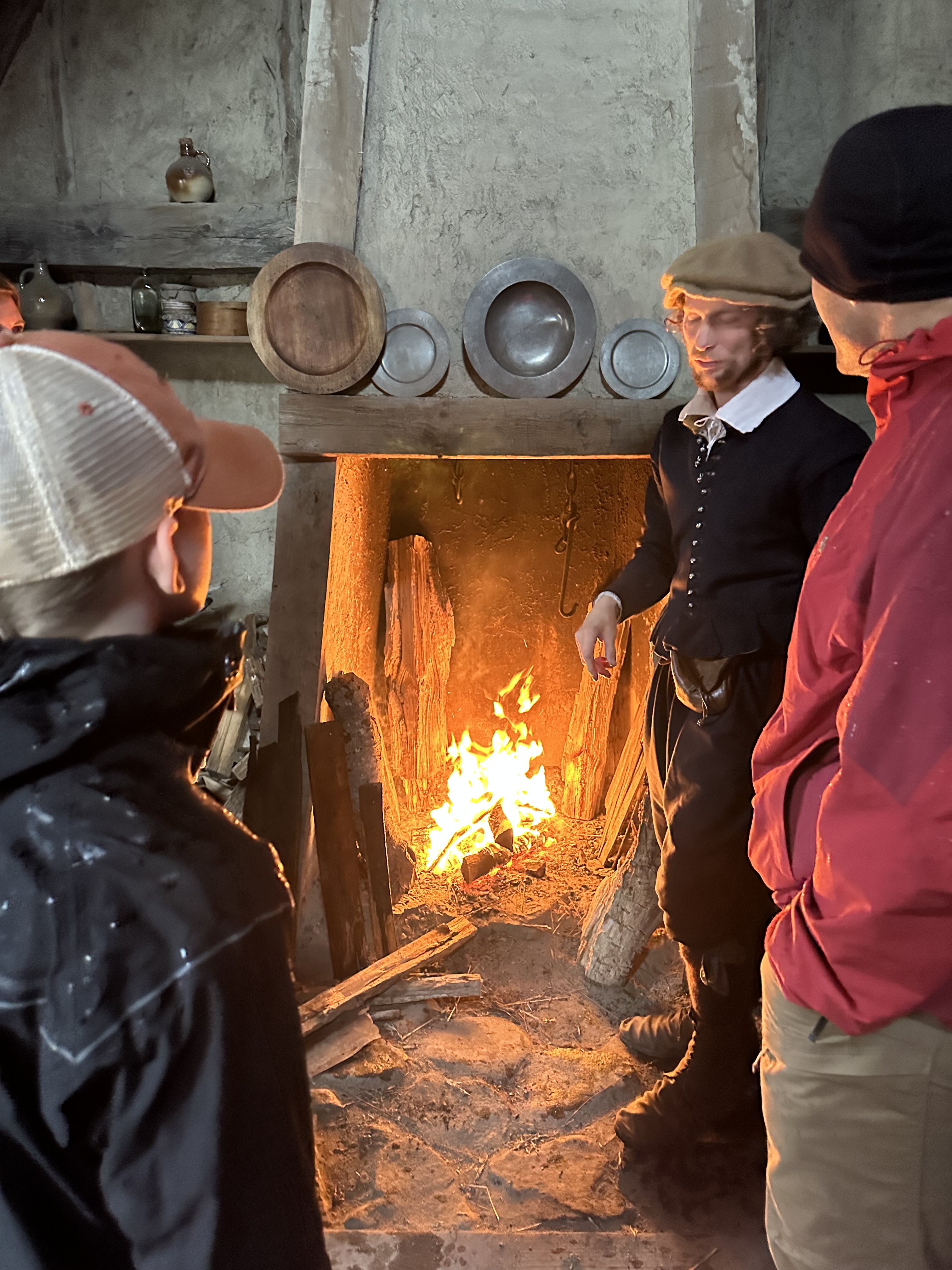
This pilgrim is describing how they kept the fire burning.

I entered one of the homes to find a young man seated by the fire wearing a tan vest and keeping warm. It was miserably cold and raining on this Thanksgiving holiday as we walked outdoors bundled up with umbrellas, thankful we both had waterproof shoes. I told him I thought he had the best seat in the house. He asked if I had any questions.

“Just one,” I replied. “Did anyone ever feel safe?”

He rubbed his chin for a moment, considering this before responding, “What a question!”

After a pause, he replied that they did feel safe, because their strong faith in the Lord depended on their ultimate faith in him, and whatever consequence brought about was by His provisioning.

Satisfied, I thought about the 2-month voyage that they had taken across the Atlantic Ocean – risking it all in the name of religious freedom – and concluded that he was probably right. He seemed to be answering from the perspective of safety of belief, whereas my question was more from a physical context in terms of Native tribes and wild animals, having seen the guns and cannons in the meeting house that afforded lookout-level views outside the gated village.

“Did anyone ever feel safe?” is the question I asked of this colonist.

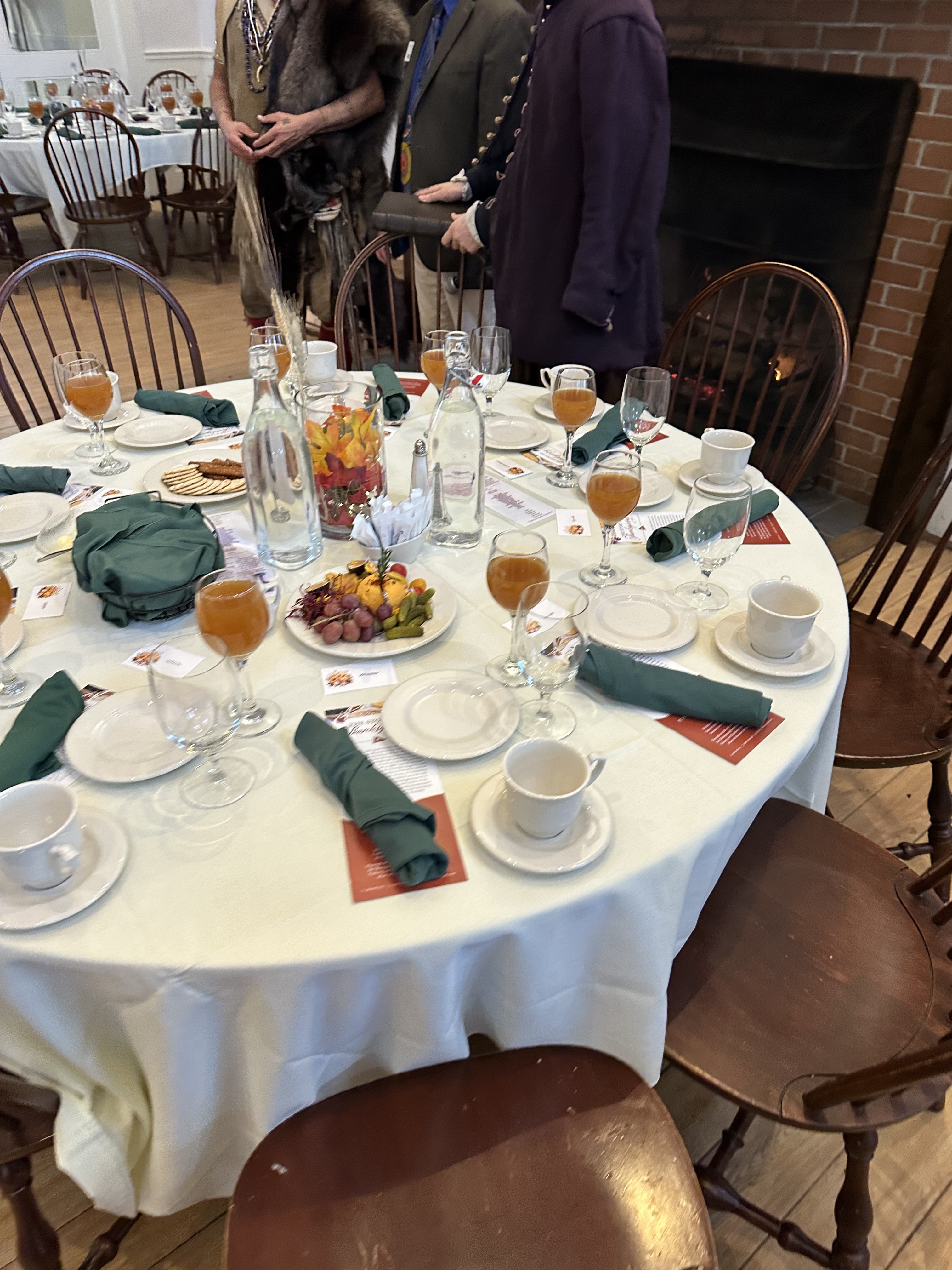
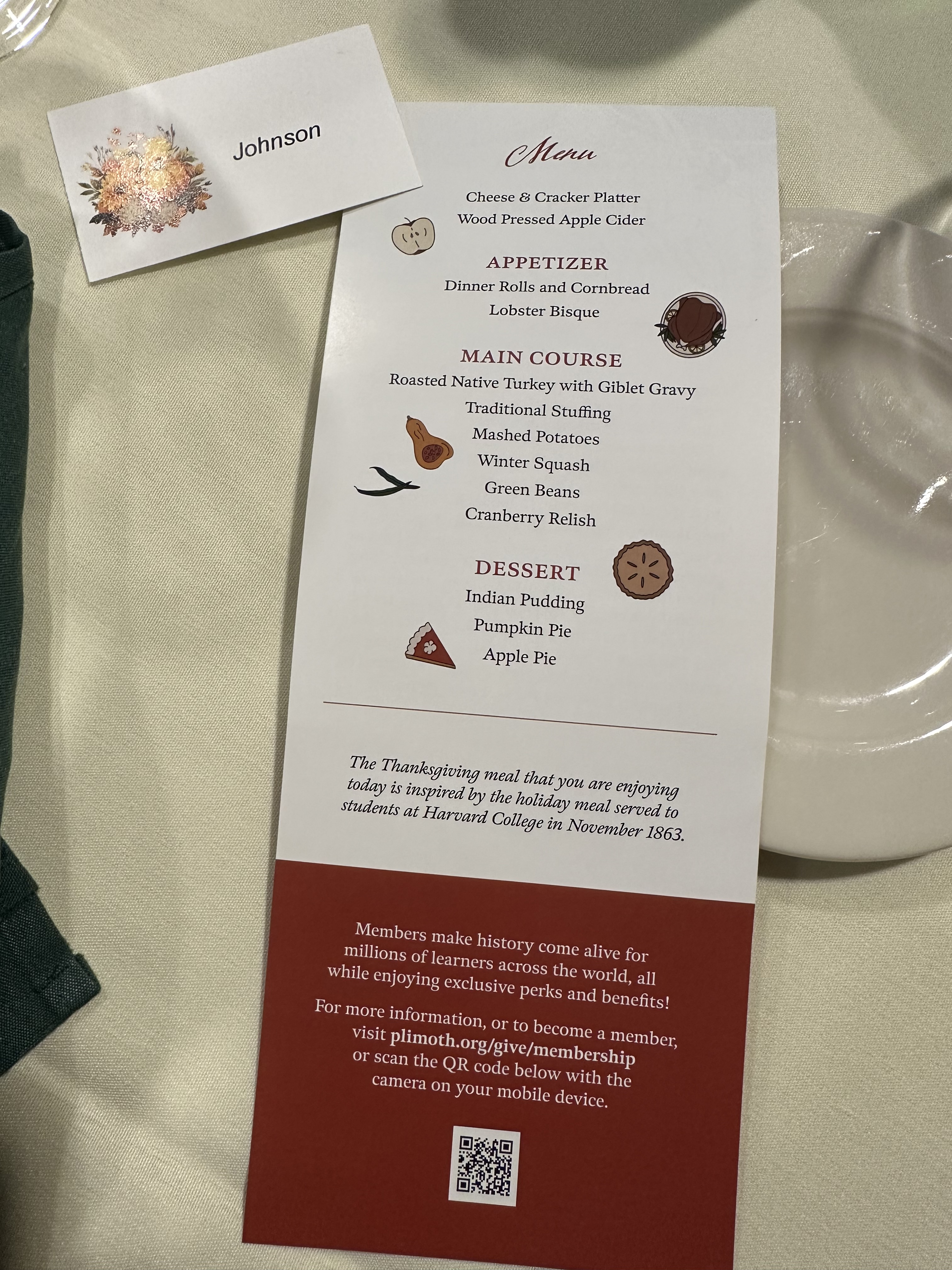
At 2:30, we found our table with our place cards and met the others who would be seated at our table. There were three other couples and two children eating with us. After some introductions, we began sipping our cider and passing the plate of cheese, crackers, and grapes as appetizers. Our meal menu was inspired by the 1863 Thanksgiving meal served to students at Harvard University. In the museum, there is a timeline and display that sequences the progression of the Thanksgiving meal from the 17th century to today, along with the types of dishes and utensils that would have been used at each meal.

Visitors have two options for the Thanksgiving meals served at Plymouth-Patuxet Museum. The choices include a buffet meal served at The Craft House or a plated meal with formal dining served in the Visitor Center. The formal dinner includes The Story of Thanksgiving, told by the chief historian as a narrative along with a member of the Wampanoag tribe and a Pilgrim descendant. This is the meal we chose, simply because with so much controversy often surrounding this holiday, we wanted to seek understanding of the facts from a historian’s explanation of what really happened. The reading of the land honorarium was a meaningful part of the meal, along with the customary toast given.

My plated meal before I added cranberry sauce to go with the dressing hiding under the turkey
The customary toast, given by the chief historian at Plimoth-Patuxet Museums


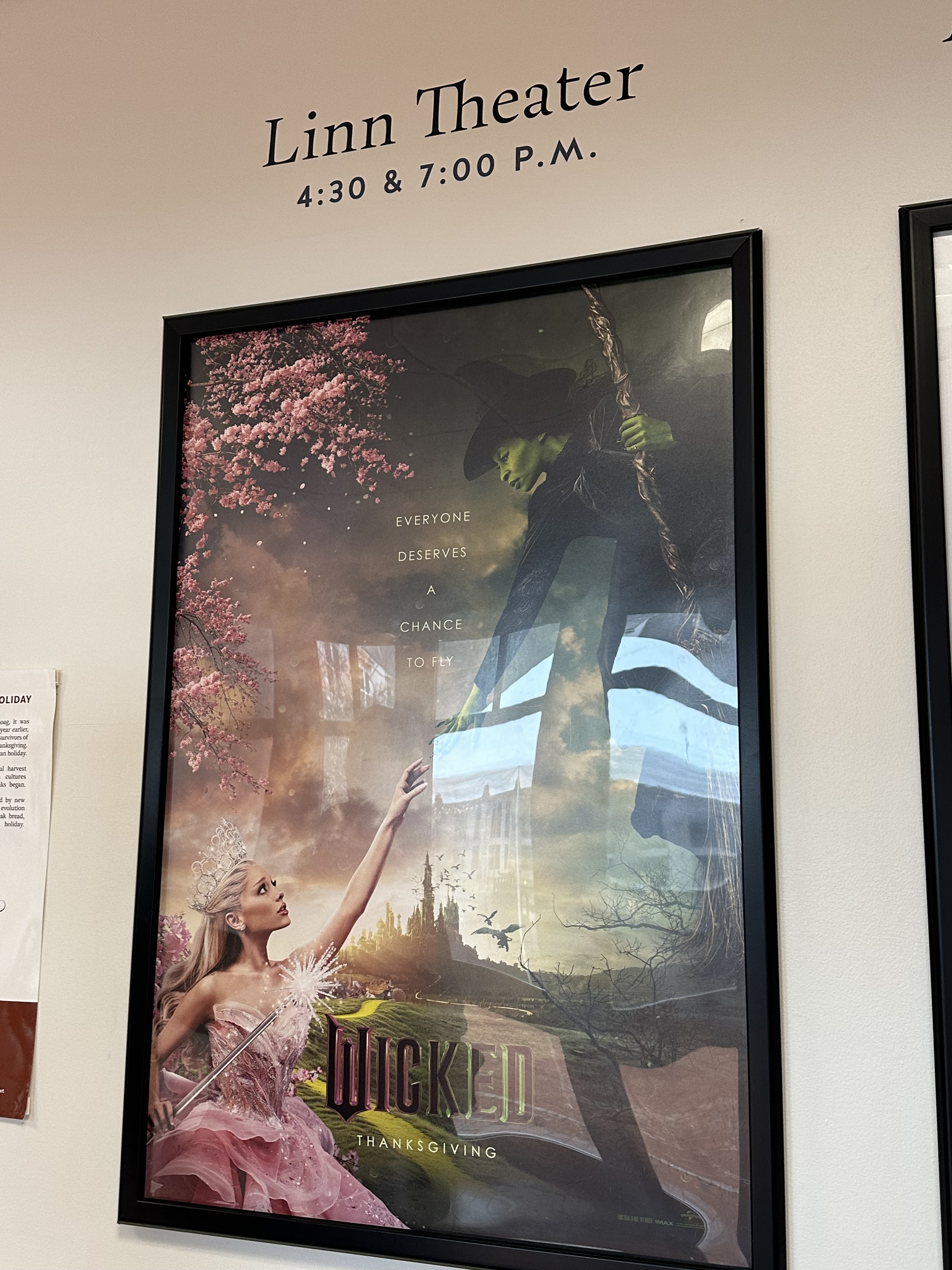
After a traditional toast before dessert, the museum had one more offering in store for Thanksgiving guests. Even though we had planned to get on the road back to Boston at the conclusion of our meal, we took advantage of the opportunity to see Wicked at the Linn Theater at 4:30 before making the drive to Boston to turn in our rental car and check into our room for the night.

The later arrival into Boston was more than worth making the time to see the movie! Already, we are talking about the next time we can go back and enjoy more of New England.

But nothing……nothing……not one thing……compares to arriving back home. A great vacation, for us, is one that we don’t want to end – while at the same time looking forward to being back in our own space, back in our own bed. It’s one that cultivates a deep appreciation for other places and people while at the same time making us more grateful for our own little corner of the world and our strong sense of belonging we feel in it.

So from my writing chair this morning, by my own fire with its modern gas logs that simply require me to push a button to feel the warmth and see the light of its flames, I wish you all the adventures of travel and the comforts of home.

We’re blessed to experience the ride!

My writing chair this morning, 11/30/2024