Hoping Folks Out

When my phone rings in the early morning hours, I don’t panic and wonder what in the world has happened. A feeling of calm prevails. Things are as they have always been. There’s Dad.

I have a story I need to tell while it’s fresh on my mind, before I forget, he tells me. I grab my pen, the closest piece of paper, and listen, feverishly writing all that he shares.

It was back in the old days in rural Georgia when I was preaching at Ohoopee, he began. This was down around Highway 19, where you’d go through Wrightsville, meander over to Tennille, and then on out to Sandersville, where there were cotton fields everywhere and all the roads were red clay. And Ohoopee was a church of miracles. A cured drunk who loved the Lord led the singing, and the first time I stepped in there, they were singing “On Jordan’s Stormy Banks,” only he pronounced it Jurdan’s. And, as they say, “he weren’t wrong.”

There was a fellow by the name of Noah in the church, married to a lady named Nora, and Noah was having trouble finding where to dig his well. He needed help finding water. And back in those days, people were people and folks’ existence was all about helping their neighbors out.

Another couple in the church, Elvis and Helen, heard about it. “I’m coming over to hope you out,” Elvis told Noah, and when I heard that, I went over there too.

It wasn’t uncommon in those days to hear regional idioms and think of them as words misspoken, but these weren’t misspoken words – this was intentional language packed with meaning. Elvis was coming to hope his neighbor out.

Elvis said he had a divining rod – a hickory branch – that he could use to help him find water. Now Kim, believe what you will, but Elvis walked the grounds with that stick, and suddenly it tremored. I saw it with my own eyes. Right there, he said, was water. They marked the spot for the well and dug right there.

“Where exactly was this spot?” I was curious and had to know.

They called this area Possum Scuffle, he explained. It was back over in Harrison by Raines Store where they called it Deep Step and Goat Town, where a lady named Margaret Holmes had a cannery for black eyed peas and collards. They were the best you could get then and still are today.

“I believe you, Dad,” I assured him. “I’ve read about this. It’s a real thing.”

I had flashbacks to visiting the Foxfire Museum in Clayton, Georgia at the foot of Black Rock Mountain last April, where I saw in the holler the ways of a simpler way of life with a harder work ethic and more relying on God to bless the land – and people depending on each other – and wished that part of the world still existed.

Who am I to doubt a divining rod?

Now, I’m telling you all this because I’ve had one of those mornings where I’ve been playing with words, and I know you do the same thing, he continued. I’m still dwelling on the shipwreck passage in Acts 27, and there’s a Biblical connection I’ve discovered. Luke is the most likely author of the book, and he describes the ship being in a storm out in the Adriatic Sea near Malta. They used stabilizing ropes. In mariner’s terms, these are called hawsers. Today, we also call them helps, or help ropes.

I began to see where he was going with all of this. “Ah, I see. So hoping someone out is like using a help rope. Help is a hope rope.”

Exactly, he confirmed. Hope ropes tie it all together and make things possible. In Acts 27, the imperiled ship could have been dashed, save for the hope ropes.

That’s exactly what we need today in our communities – – to hope our neighbors out. We need to adopt the mindset of rural Georgia thinking back in the good days when folks extended not just a hand, but their whole selves – – divining rods and all.
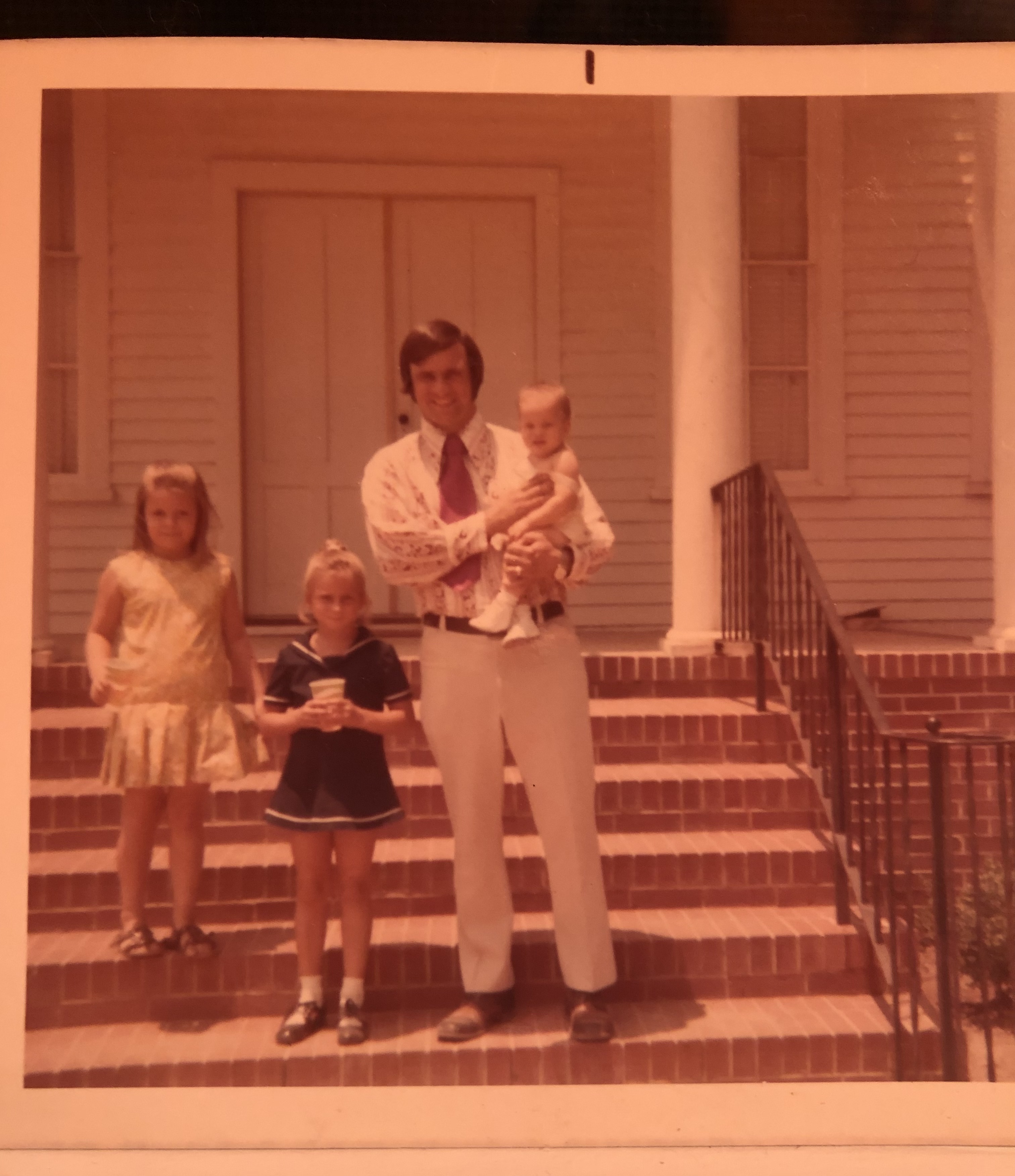
Dad holding my brother Ken, with me (blue dress) and a friend (yellow dress) on the steps of Ohoopee Baptist Church, 1972

Four Books On Prayer, by Rev. Dr. Felix Haynes, Jr.

Today’s guest blogger is my father, Rev. Dr. Wilson Felix Haynes, Jr. Pray is my One Little Word for 2023, so I asked him to share several of his favorite volumes on prayer.


The oldest biblical book in our canon contains key questions about life. From Job, we hear this question: “What profit shall we have if we pray unto him?” (Job 21:15). The topic of prayer has been explored by almost every great saint, theologian, and author of the great Christian books. I have procured many of these books, read, and reflected on them. They have left a deep imprint upon my life and thinking. Four of these volumes are particularly noteworthy.


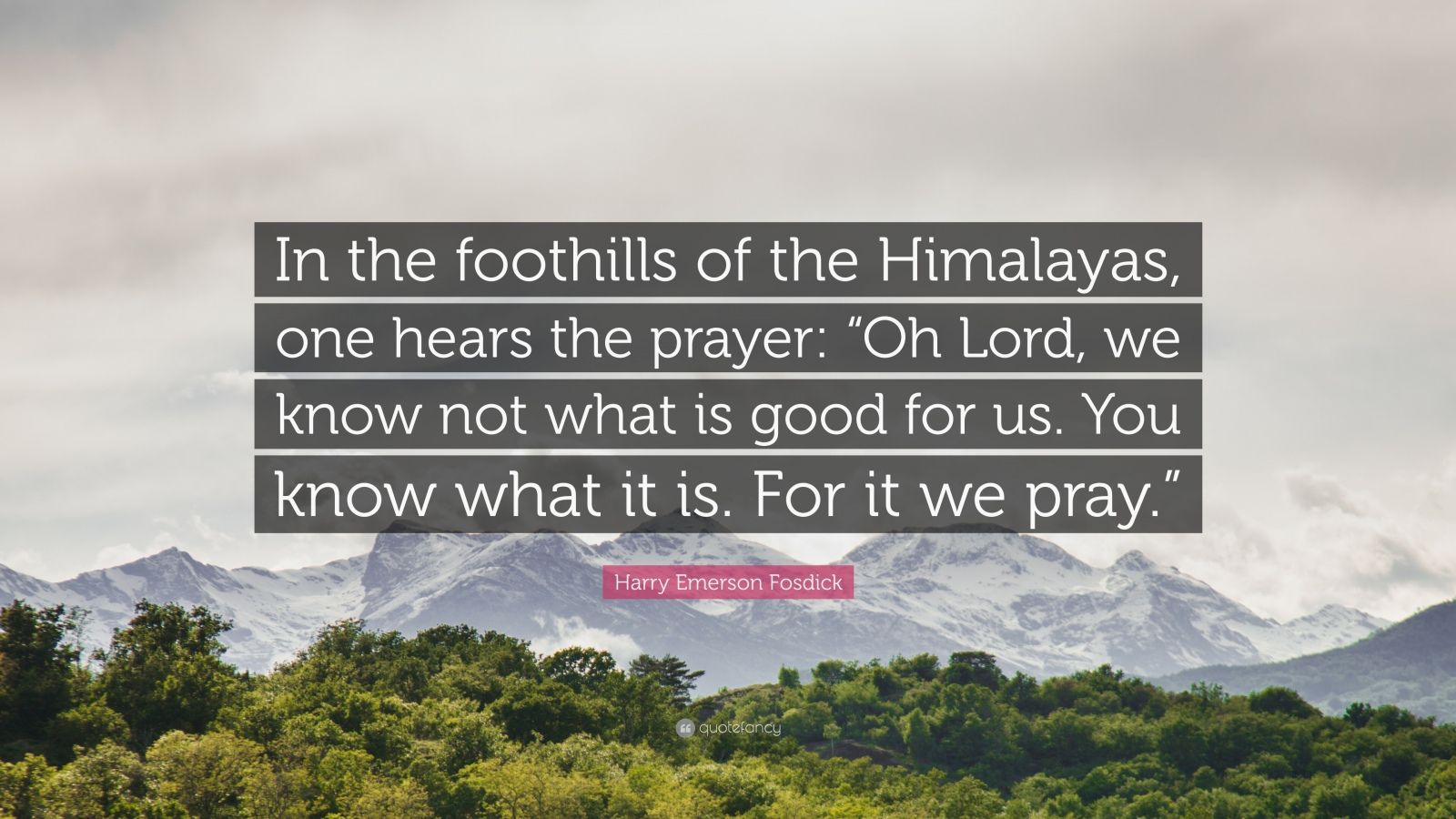
First, I think the single best is The Meaning of Prayer (Association Press, 1916) by Harry Emerson Fosdick, the well-known “liberal” preacher whose pulpit was the Riverside Church of New York City (built by John D. Rockefeller). I read this volume during my Seminary years after the reading of his autobiography The Living of These Days. The book followed a period of depression in Fosdick’s life. Beyond those days, the impact of his life was incredible. This well-arranged book is the best purchase anyone can make to enhance biblical knowledge and provide the very best instruction about prayer. Harry Emerson Fosdick, I am proud am proud to say, has been a vital mentor in my life of continuing education.


The second is The Prayers and Meditations of Samuel Johnson. The first edition was in 1785, and it has been published subsequently in many other editions. The striking thing about this volume is that this testy old doctor was so honest and self-revealing in his “diary” parts of the book. These written prayers may become guiding forces for us in our own journeys. Incidentally, Fosdick quotes Samuel Johnson in the first sentence of his book on the meaning of prayer.


The third volume is The Practice of the Presence of God by Brother Lawrence (Nicholas Hermon). Brother Lawrence was born in poverty, served as a soldier, and thereafter joined a community of Carmelites in Paris in 1666. He died at age 80, and his letters were published in 1692. The primary essence of Lawrence’s thinking was continued awareness of God. I offer a couple of quotes to whet the appetite to read his letters:

“The most Holy and impactful practice in the spiritual life is the presence of God-that is, every moment to take pleasure that God is with you.” 

And this: 

“I have abandoned all particular forms of devotion, all prayer techniques. My only prayer practice is attention. I carry on a habitual, silent and secret conversation with God that fills me with overwhelming joy."


Lawrence’s main job in the monastery was in the kitchen, where the lyrical sounds of pots and pans only elevated his communion with God. He said. “I turn my omelet in the pan for the love of God.” Whenever I’m in the kitchen, I try to model what Brother Lawrence did.


A forth book is Thomas a Kempis’ The Imitation of Christ. Matthew Arnold said, “Next to
the Bible, this is the most eloquent expression of the Christian life ever written.” A classic. Mark Twain once said, “A classic is a book everybody talks about, but nobody reads.” Change your mind on this thought. You can find an audio version of The Imitation of Christ, which greatly enhances the reading process. This is not a book to read from cover to cover, but more of a daily vitamin. Read a portion, percolate on the thoughts, and perhaps journal your impressions. The Imitation of Christ is a compelling meditations journey which prompts prayer – a searching call to imitate the way of Christ, to learn to embrace His virtues, and to stir reflection.


Slathered in the Spirit: My 2023 Spirituality and Inspiration Goals

When I took listen as my OLW of 2022, I ordered a bracelet with my word on it to remind me to listen when I was tempted to forget. I also ordered a wooden word cutout to go in my kitchen windowsill to keep listen at the forefront of my mind.

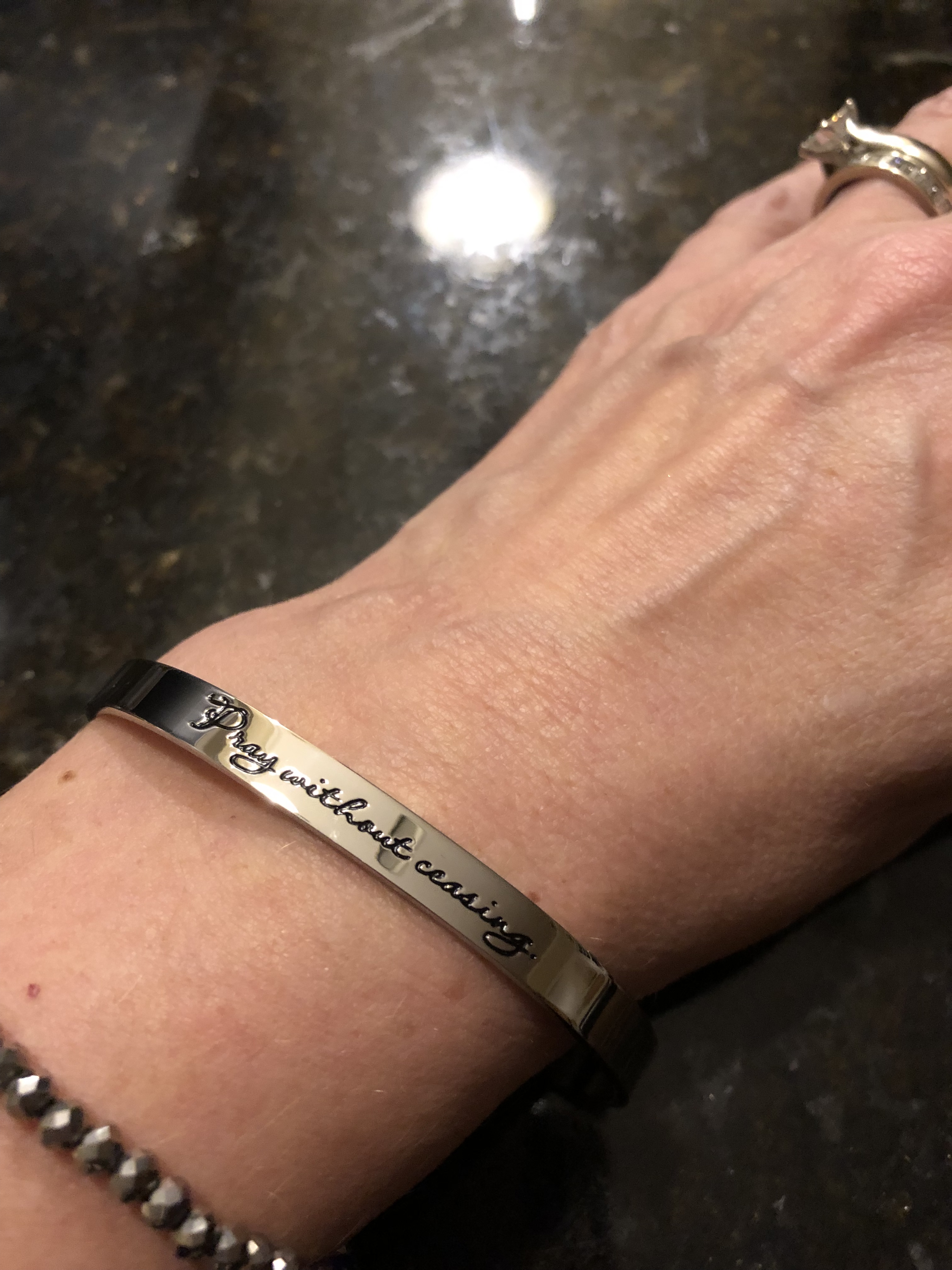
I ordered a bracelet for 2023 also, but I got one with a whole verse instead of a lone word. Pray without ceasing it says on the outside, and on the inside it has the scripture: 1 Thessalonians 5:17. It’s one of those verses that could stand in line with the shortest verse in the Bible: Jesus wept (John 11:35). Pray ceaselessly, it might have been written, if Paul and John had been in a two-word verse challenge like on Name That Tune….”Lord, I can write that verse in two words….”. As it stands, John won the shortest verse challenge. Even though it’s not ONE little word on the bracelet, those two extra words make all the difference.

My One Little Word holds within it divine power to achieve (or not) every goal I set for myself this year, especially in the area of spirituality and inspiration. My spirituality goals for 2023 include continuing to tune in to my childhood church service on Sunday mornings (First Baptist Church, St. Simons Island, Georgia) and any churches where Dad may be preaching. I also like to “attend” where my children go to church sometimes so that I can hear the same messages that they are hearing. No matter where I “attend” in the wide world, I continue to grow spiritually from Sunday services – – the only way I am able to start each week ready to face the world.

My guidebook for this area of prayer and spirituality will be The Meaning of Prayer by Harry Emerson Fosdick. I’ll read this book from cover to cover this year and reference the quotes as I apply them to my own prayer life. I’m a fan of the Women of Faith, so I’ll also be rereading their daily devotional book as well. It’s a well-worn favorite! Today’s devotional, in fact, is by Patsy Clairmont, titled “Slathered in the Spirit,” and based on Proverbs 31:30. That’s how I want to be: Slathered in the Spirit. The devotional for January 7 ends with this prayer:

Lord, I want to be beautiful in your sight.
Slather me in your Spirit, soften my heart, and firm up my faith.
May I be taut in my resolve to please you alone. 
Amen.
-Patsy Clairmont
One Big Word with two little instructional words.