Fitz’s Fit Nonet

Fitz spots a Deer – January 12, 2025, 8:22 a.m., 24 degrees

Sunday morning: hell hath unleashed its

fury at the Johnson Funny

Farm, where all silence shattered

with ear-piercing echoes

when a hungry doe

sought breakfast on

the frozen

ground out

front

Countryside Charms – Slice of Life Challenge Day 14, The Stafford Challenge Day 58

Special thanks to Two Writing Teachers for inspiring writers.
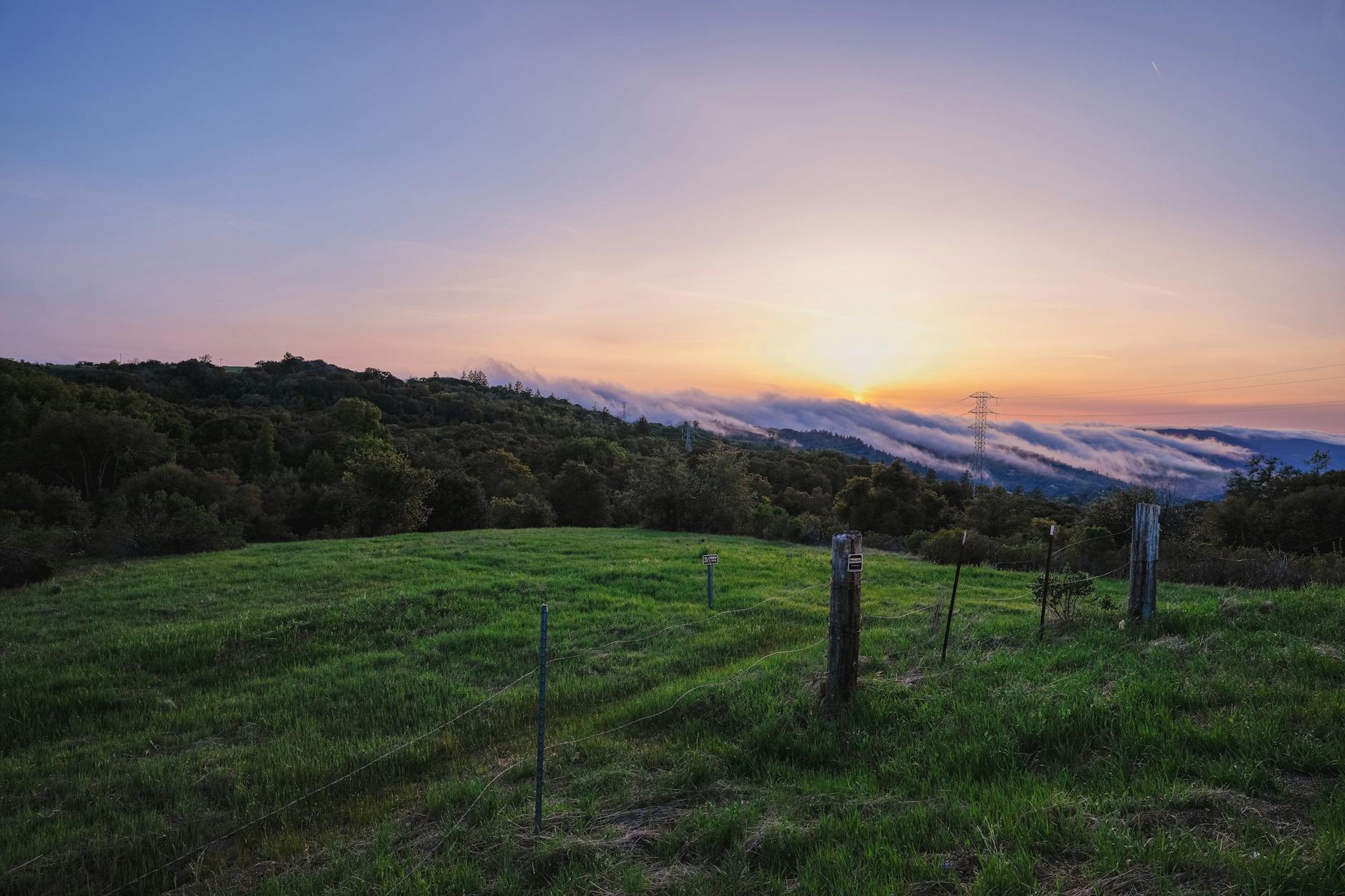
Photo by frank minjarez on Pexels.com

Countryside Charms

daffodil daybreaks rouse meadow-mist eyes
bluebird sings blessings with praise-reverent cries

daylily sunbursts coax seedlings to rise
paint carpets of clover in emerald surprise

marigold sunsets kiss rolling hill skies
lift sweet bedtime prayers on wings of fireflies

They Came Three to a Mule

I was in the local grocery store yesterday to buy four cans of pumpkin puree to make our holiday pumpkin bread. A purchase in this particular store is rare, since prices are tremendously inflated in our small rural town. We often go to the next city over to buy a full week’s worth of groceries, but if I only need an item or two, I’ll justify the cost of the items using the cost of gas and time. 

The gas is a sure’nuff savings, but the time is questionable when you don’t know the layout of the store. With an item like pumpkin, it might be on the holiday baking display, the canned fruit, or the baking aisle. In this tiny store where two carts barely fit side by side on any aisle, I’d scoured the shelves, finally stopping for a breath on the pasta aisle, where I remembered we needed macaroni and cheese for Christmas Eve to go with our ham. 

As I reached for the dark blue Kraft Deluxe box I usually buy, I saw the price and it might as well have been a snake striking. There was no way I was paying $5.89 for a box of macaroni and cheese. No way my mama’s memory would let me even think about it. I studied every other brand, including the store brand, and it was the same. Too much. We’d do without. 

About that time, a man wearing denim overalls, work boots, and a flannel shirt ambled up with his hand basket up to his elbow, about to purchase the same box I’d wanted. He retracted his hand like that box was a hot potato when he saw the price. He did a double-take.

“It’s a sad day when a man can’t afford no macaroni and cheese, ain’t it?” 

“Yes, sir,” I confirmed. ”I’m going to be mac-and-cheeseless, too,” I assured him, nodding toward my empty cart that I didn’t really need – – a hand basket like his would have sufficed.  

He sucked his teeth and pursed his lips. ”Well, I ain’t buyin’ none,” he muttered, walking on.

I finally had to ask directions to the pumpkin aisle. The first worker, a young teenager stocking bread, had no idea what I needed. ”Wait, it’s pumpkin in a can??”

“Yes, that’s right. It’s pureed pumpkin. Any brand will do. I usually buy Libby’s.” I could tell he was hung on both the word pureed and the idea of pumpkin in a can. It seemed to be blowing his mind, this pureed pumpkin in a can. My mind trailed back to my deep discussions with our Curriculum Coordinator about the need for more emphasis on vocabulary instruction in our schools earlier in the week. 

He said he’d have to ask, and off he went – never to return.

I ventured back to the main aisle, looking for a different worker down each aisle the same way wives look for lost husbands, finally finding an older teenage female sitting on the floor stocking cans. She paused. ”Aisle 2,” she said. ”I had to think about that one for a minute,” she confessed. “Look right past the fruit cups on the left at the top.”

Sure enough, on a top shelf, there was the Libby’s I’d missed the first time I’d looked, sitting back at an angle. I reached up, pulled 4 cans forward, and headed to the register to check out.

Two checkers were slammed, so a third opened Register 5. An older gentleman wearing jeans with a huge belt buckle, a pair of shiny cowboy boots, a button down shirt, and a thin jacket stepped over to place my bag in the cart. I wasn’t sure whether he even worked there or not, but as I was wondering, he read my pumpkin label and removed all doubt.

“Ah, Libby’s,” he read, prompting a knowing smile. ”Back in the early days, we had the best price on Libby’s vegetables. 59 cents for a 16-ounce can. Folks came three to a mule for Libby’s vegetables.” His eyes had that reflective sparkle that the older generation gets whenever the memories of simpler times come rushing back. 

And then I made a mistake I regretted when I got to the car. I nodded, smiled, took my bag, and said, “Thank you, sir,” and exited the store. I should have asked about those days. I should have asked about those vegetables. I should have asked for a story that now I’ll never hear.

I learned some things yesterday, because I missed at least two opportunities with the macaroni and cheese man and the Libby’s man to learn some history. 1) Next time, I’ll find the oldest person to ask about where to find things. 2) I’ll take time to talk a little more to those who initiate conversation. 3) I’ll initiate more conversations myself – – because there are so many stories that folks need to tell, and that I need to write.

And I feel their empty space.

A Tree’s Season

All the breathtaking charm of the autumn season stops me in my tracks sometimes and fills my heart with the feel of cozy togetherness and reprioritizes my focus on the simple things. The cool breeze, the warmth of a fire, the flicker of candles flavoring the air, the cinnamon and nutmeg spiciness I add to my morning coffee, the softness of the quilts piled one, then two, then three thick on our bed to bring all the hygge comforts, and even my favorite sherpa-lined slippers for scuffing about the house and for porch sitting.

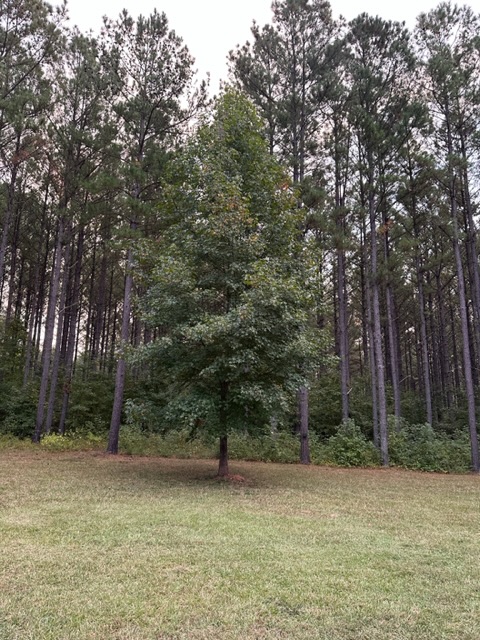
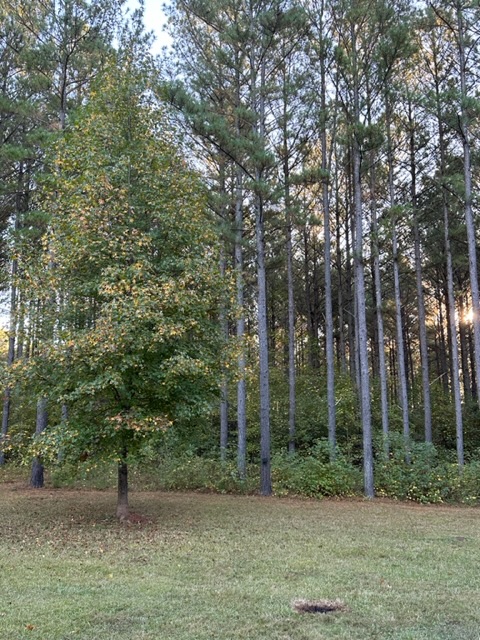
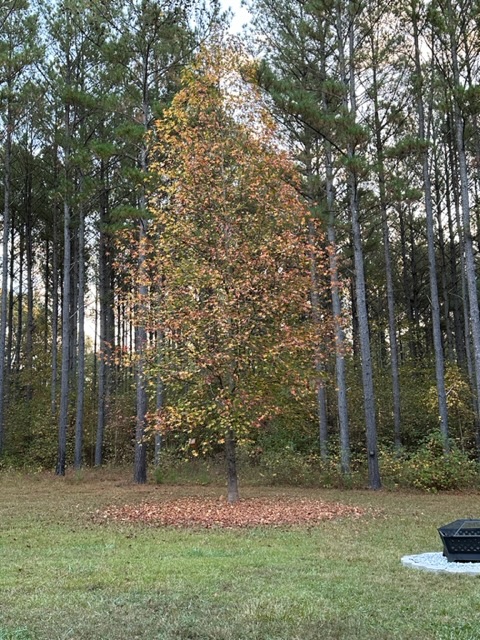
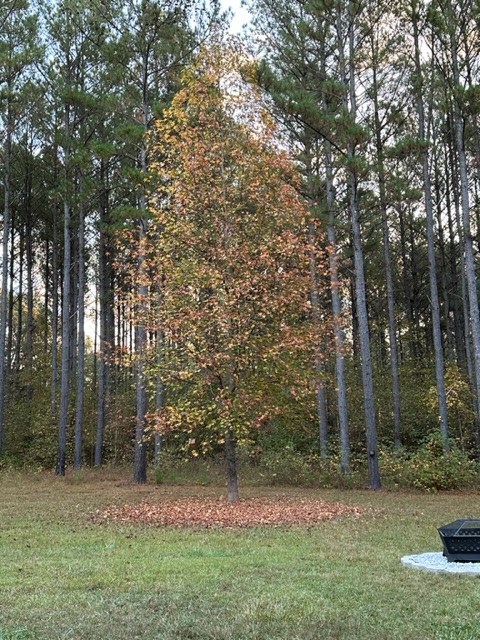
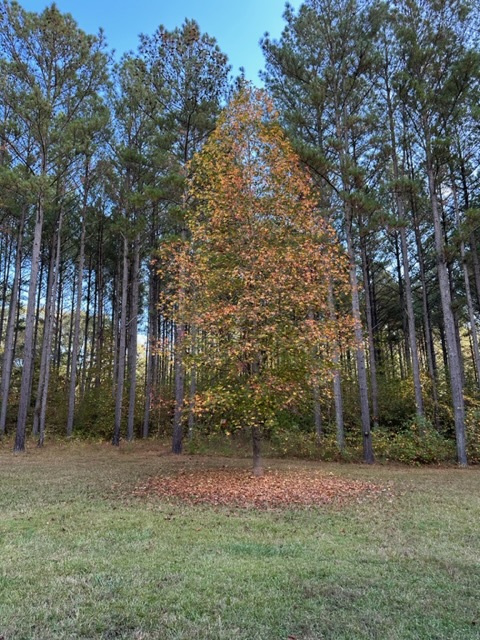
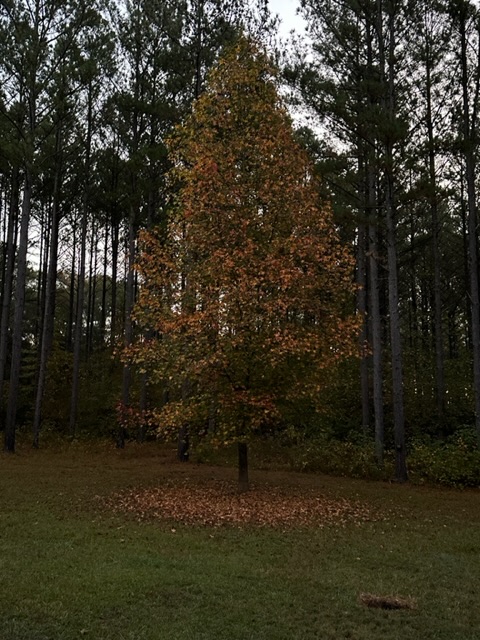
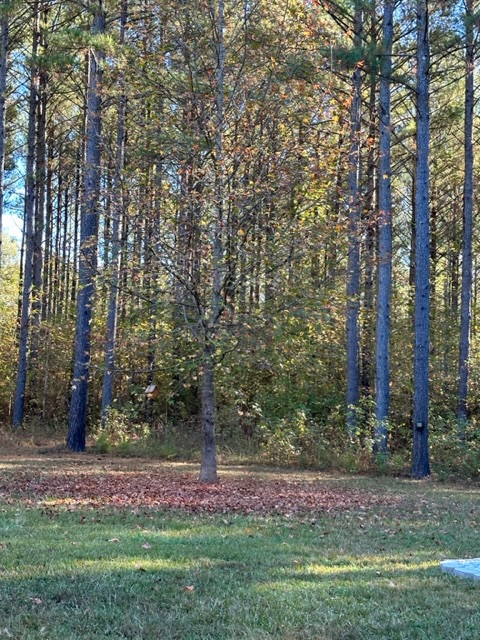
I began taking pictures of a tree on our farm in September here in rural Georgia so I could see the changes over the time span of a month or so. It’s one of my favorite views from my seat on the front porch, a place of birdwatching and reading, of talking and sipping a cup of hot tea at the end of the day, of phone conversations and FaceTimes with children and grandchildren across the miles, of prayer and meditation, of writing.

I’ve always wondered what they would say “if these trees could talk,” and perhaps in this modern age of AI, even the trees will start communicating with us and each other. If they do, this is the tree that would someday tell my story better than any other tree of my middle-age years.

Please meet my faithful friend in these photographs. She reminds me that cleaning out, renewing, and regenerating in a new and different season is a blessing and a lovely way to grow. And that every season is one to celebrate.

Thanks for reading today! I’m raising a mug of hot apple cider to you and waving my scarf in knitted kinship!

#VerseLove April 27

Today our host for #VerseLove is Chea of Texas, who inspires us to write poetry with regional dialect ~ to tell something as it really happened, in our home language. You can read her prompt and the poetry of others here. I’m sharing a phone conversation with my dad one early morning not too long ago and wrote it in prose during the Slice of Life Story Challenge.

Hopin' Folks Out

my phone rings early 
Dad

I have a story I need to tell 
while it’s fresh on my mind
before I forget

I grab my pen

It was back in the old days in rural Georgia 
when I was preaching at Ohoopee
This was down around Highway 19
where you’d go through Wrightsville
meander over to Tennille
and then head on out to Sandersville
a sea of cotton fields  
roads all red clay

Ohoopee was a church of miracles
a cured drunk who loved the Lord led the singin'
“On Jordan’s Stormy Banks,” 
only he pronounced it Jurdan’s.
and he weren’t wrong.

a fellow named Noah in the church 
needed help finding 
where to dig his well
even with a name like Noah

back in those days
people were people 
folks’ existence was all about 
helpin' their neighbors out

now 
old Elvis heard about it
“I’m coming over to hope you out” 

I went over there too
to see Elvis hope his neighbor out

Elvis said he had a divinin'  rod – 
a hickory branch –  to find water 
Elvis walked  
it tremored
I saw it with my own eyes
they dug that well right there

they called this place Possum Scuffle
back over in Harrison by Raines Store 
over yonder by Deep Step and Goat Town
by Margaret Holmes's cannery ~
black eyed peas and collards. 

 in Acts 27
Luke is in a ship in a storm 
using stabilizing ropes 
~ also hawsers or helps
a help is a hope rope
on land or at sea
it's Biblical, Kim

now
you remember that

write it down


Savoring Saturdays: 1828 Coffee Company on the Zebulon Square

Think of the world which you carry within yourself…pay attention to what arises within you.  – Rainer Maria Rilke, Letters to a Young Poet

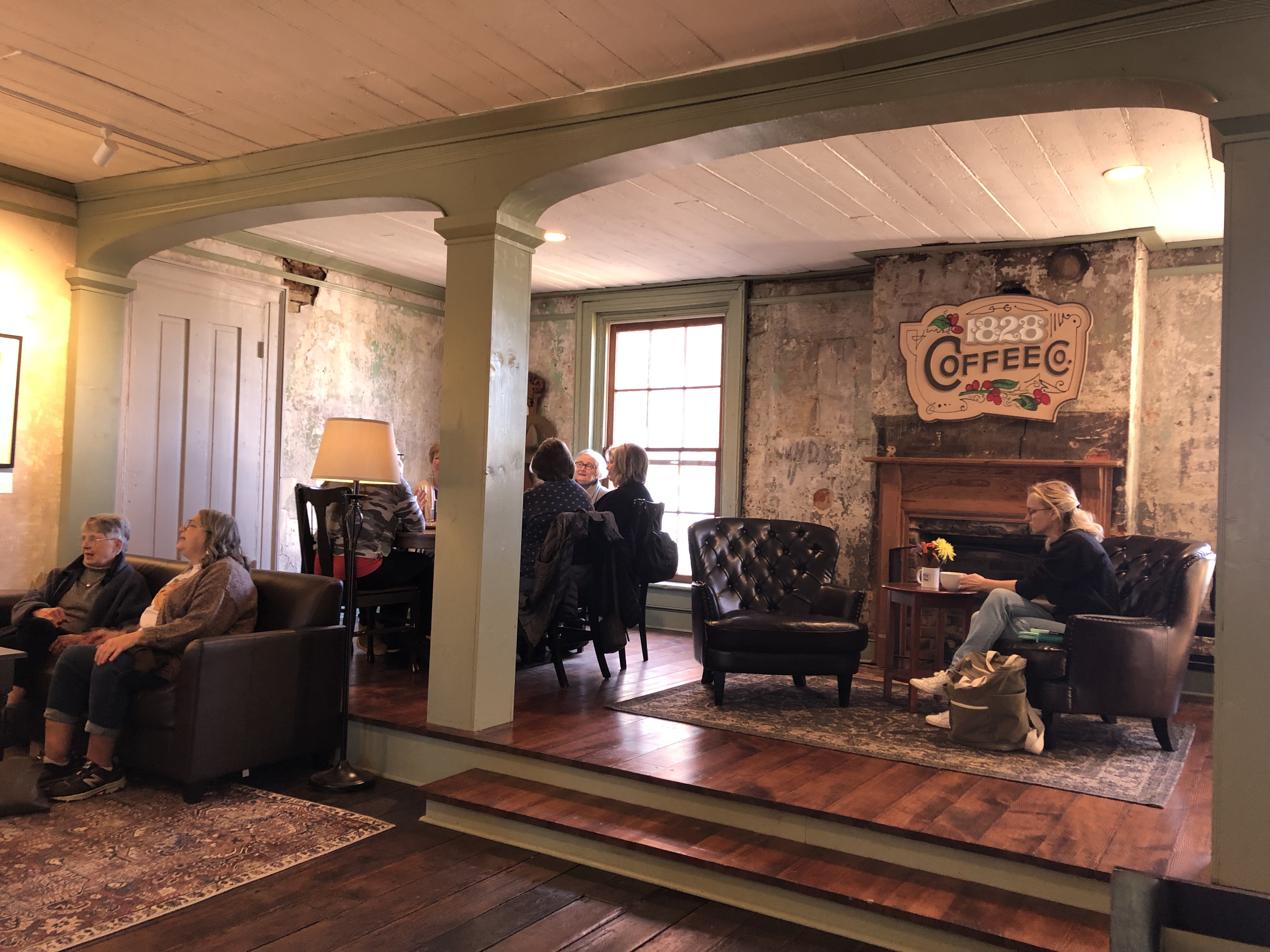
We recently spent another Saturday savoring the morning hours with coffee and conversation in Zebulon, Georgia on our town square. We love the atmosphere of our small town coffee shop, restored from a historic building to the place we love and enjoy today by Dr. Dan Dunnahoo. You can read his story here. Dunnahoo, a retired Pike County art teacher known affectionately as “Dr. Dan” by locals, named the coffee shop 1828 Coffee Company because it was built in 1828 by Samuel Mitchell and still has the same wood floors that creaked under folks’ boots all those years ago, every plank restored and returned to its original position in the floor.

You can step back in time and order a cup of Zebulon Pike or any of their unique blends of coffee or tea and a cinnamon roll, then sit back and wonder about the history of this place and your own indelible time stamp on it, the dust of your own shoes settling somewhere beneath your feet between a crevice in the wood on the very dust brought in by those who used it as a trading post when it was first built. You can also wonder about those who later became proud first-ever owners of automobiles within its walls when it was a car dealership, and all the romance that bloomed here when it was an ice cream shop and young men brought their sweethearts here to share a date night treat – many of whom no doubt brought their own children back years later when it was a restaurant or an office.

Today, you can find a book in one of three Little Free Libraries here in this coffee house, hear live entertainment, or listen to students reciting poetry or performing a dramatic reading. Dr. Dan and his son-in-law Bryan open their doors to welcome a variety of events that shape the culture of this small town.

Next time you’re traveling through Zebulon, Georgia, be sure to stop in and say hello. Order coffee upstairs, admire the art, and then stroll downstairs where you can play a board game or sit outdoors on the brick patio and enjoy the sights of the town. If you happen to see a middle-aged woman huddled in a corner savoring coffee, reading, or writing, come introduce yourself – – it may be me!

Hoping Folks Out

When my phone rings in the early morning hours, I don’t panic and wonder what in the world has happened. A feeling of calm prevails. Things are as they have always been. There’s Dad.

I have a story I need to tell while it’s fresh on my mind, before I forget, he tells me. I grab my pen, the closest piece of paper, and listen, feverishly writing all that he shares.

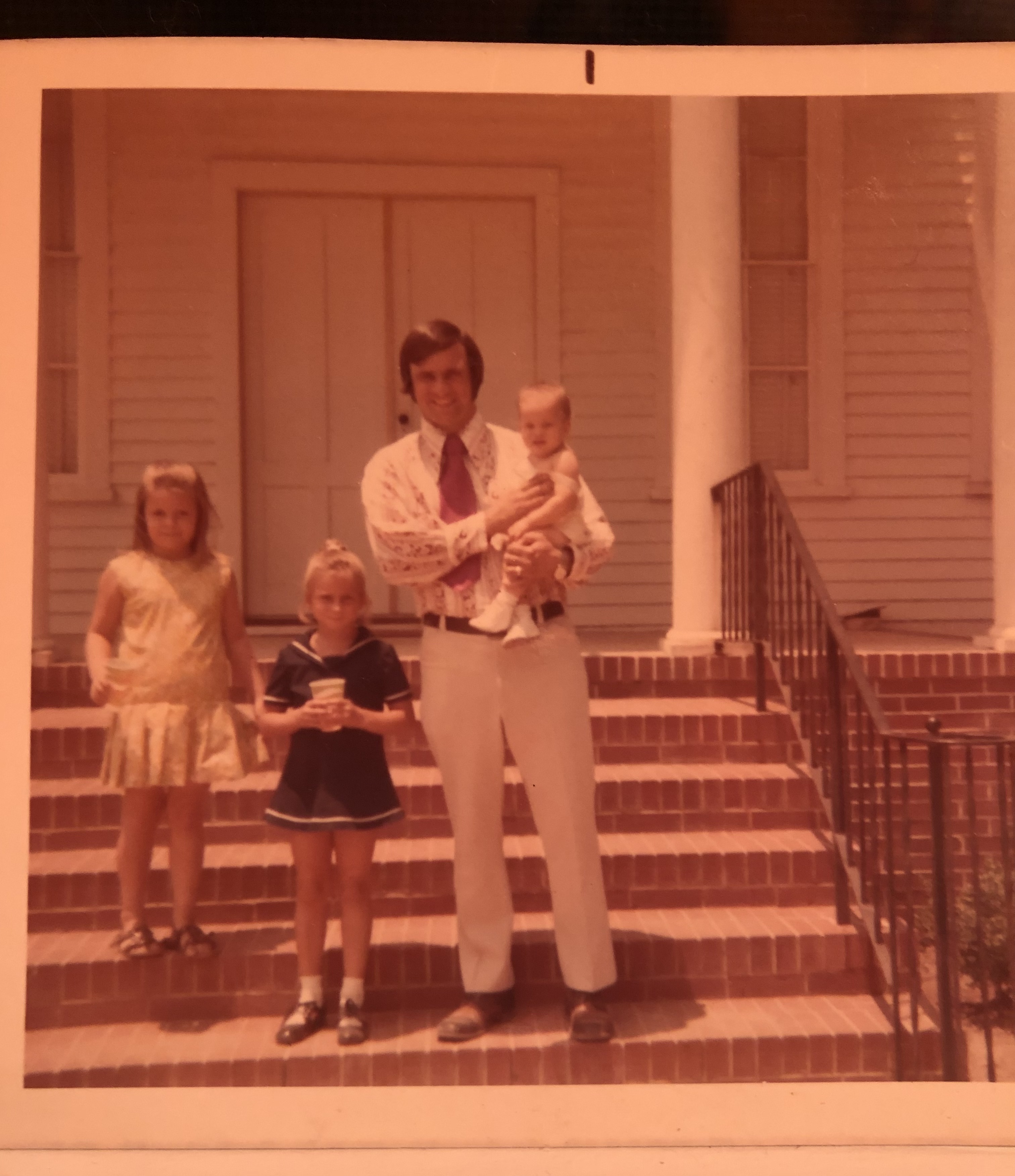
It was back in the old days in rural Georgia when I was preaching at Ohoopee, he began. This was down around Highway 19, where you’d go through Wrightsville, meander over to Tennille, and then on out to Sandersville, where there were cotton fields everywhere and all the roads were red clay. And Ohoopee was a church of miracles. A cured drunk who loved the Lord led the singing, and the first time I stepped in there, they were singing “On Jordan’s Stormy Banks,” only he pronounced it Jurdan’s. And, as they say, “he weren’t wrong.”

There was a fellow by the name of Noah in the church, married to a lady named Nora, and Noah was having trouble finding where to dig his well. He needed help finding water. And back in those days, people were people and folks’ existence was all about helping their neighbors out.

Another couple in the church, Elvis and Helen, heard about it. “I’m coming over to hope you out,” Elvis told Noah, and when I heard that, I went over there too.

It wasn’t uncommon in those days to hear regional idioms and think of them as words misspoken, but these weren’t misspoken words – this was intentional language packed with meaning. Elvis was coming to hope his neighbor out.

Elvis said he had a divining rod – a hickory branch – that he could use to help him find water. Now Kim, believe what you will, but Elvis walked the grounds with that stick, and suddenly it tremored. I saw it with my own eyes. Right there, he said, was water. They marked the spot for the well and dug right there.

“Where exactly was this spot?” I was curious and had to know.

They called this area Possum Scuffle, he explained. It was back over in Harrison by Raines Store where they called it Deep Step and Goat Town, where a lady named Margaret Holmes had a cannery for black eyed peas and collards. They were the best you could get then and still are today.

“I believe you, Dad,” I assured him. “I’ve read about this. It’s a real thing.”

I had flashbacks to visiting the Foxfire Museum in Clayton, Georgia at the foot of Black Rock Mountain last April, where I saw in the holler the ways of a simpler way of life with a harder work ethic and more relying on God to bless the land – and people depending on each other – and wished that part of the world still existed.

Who am I to doubt a divining rod?

Now, I’m telling you all this because I’ve had one of those mornings where I’ve been playing with words, and I know you do the same thing, he continued. I’m still dwelling on the shipwreck passage in Acts 27, and there’s a Biblical connection I’ve discovered. Luke is the most likely author of the book, and he describes the ship being in a storm out in the Adriatic Sea near Malta. They used stabilizing ropes. In mariner’s terms, these are called hawsers. Today, we also call them helps, or help ropes.

I began to see where he was going with all of this. “Ah, I see. So hoping someone out is like using a help rope. Help is a hope rope.”

Exactly, he confirmed. Hope ropes tie it all together and make things possible. In Acts 27, the imperiled ship could have been dashed, save for the hope ropes.

That’s exactly what we need today in our communities – – to hope our neighbors out. We need to adopt the mindset of rural Georgia thinking back in the good days when folks extended not just a hand, but their whole selves – – divining rods and all.

Dad holding my brother Ken, with me (blue dress) and a friend (yellow dress) on the steps of Ohoopee Baptist Church, 1972