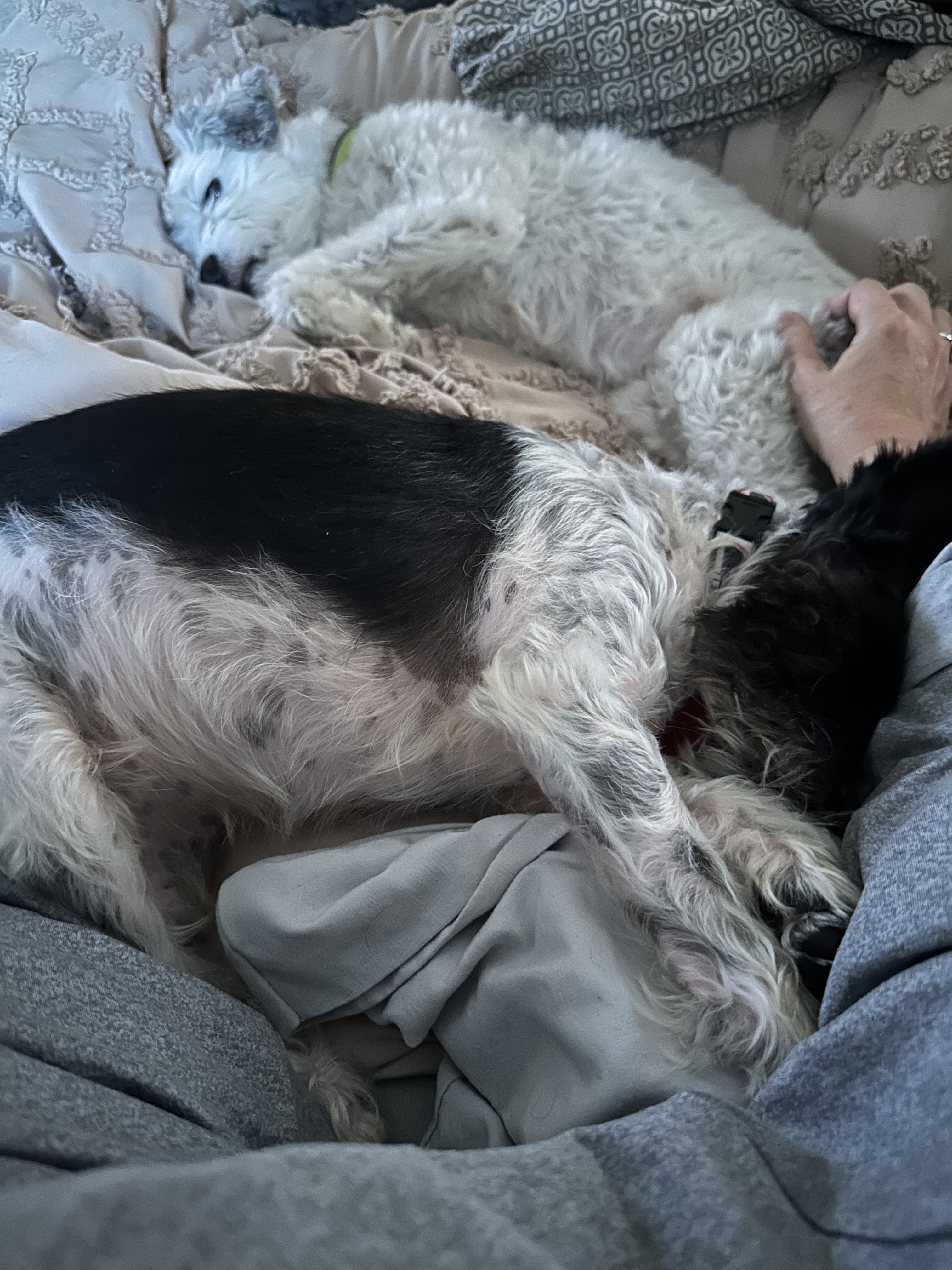
The cold front rolled into middle Georgia on Friday night, inviting us to watch movies and be lazy with our three dogs for the weekend. It isn’t often that we’re quite this relaxed and lazy all weekend, but we gave in and did not resist the urge to pile up the blankets and fire up Netflix.
Matt Forrest Esenwine is a New Hampshire-based author of a dozen children’s books and our host today for the third day of the October 2026 Open Write at http://www.ethicalela.com. You can visit the website and click on Open Write to read his full prompt.
Matt shares his process here:
Here’s all you do: pick an object, any object (most boring object ever – or not!), and begin thinking of ways to describe it. Once you have your list, scan through it and see what words/images/feelings you are drawn to. That’s your basis for your poem.
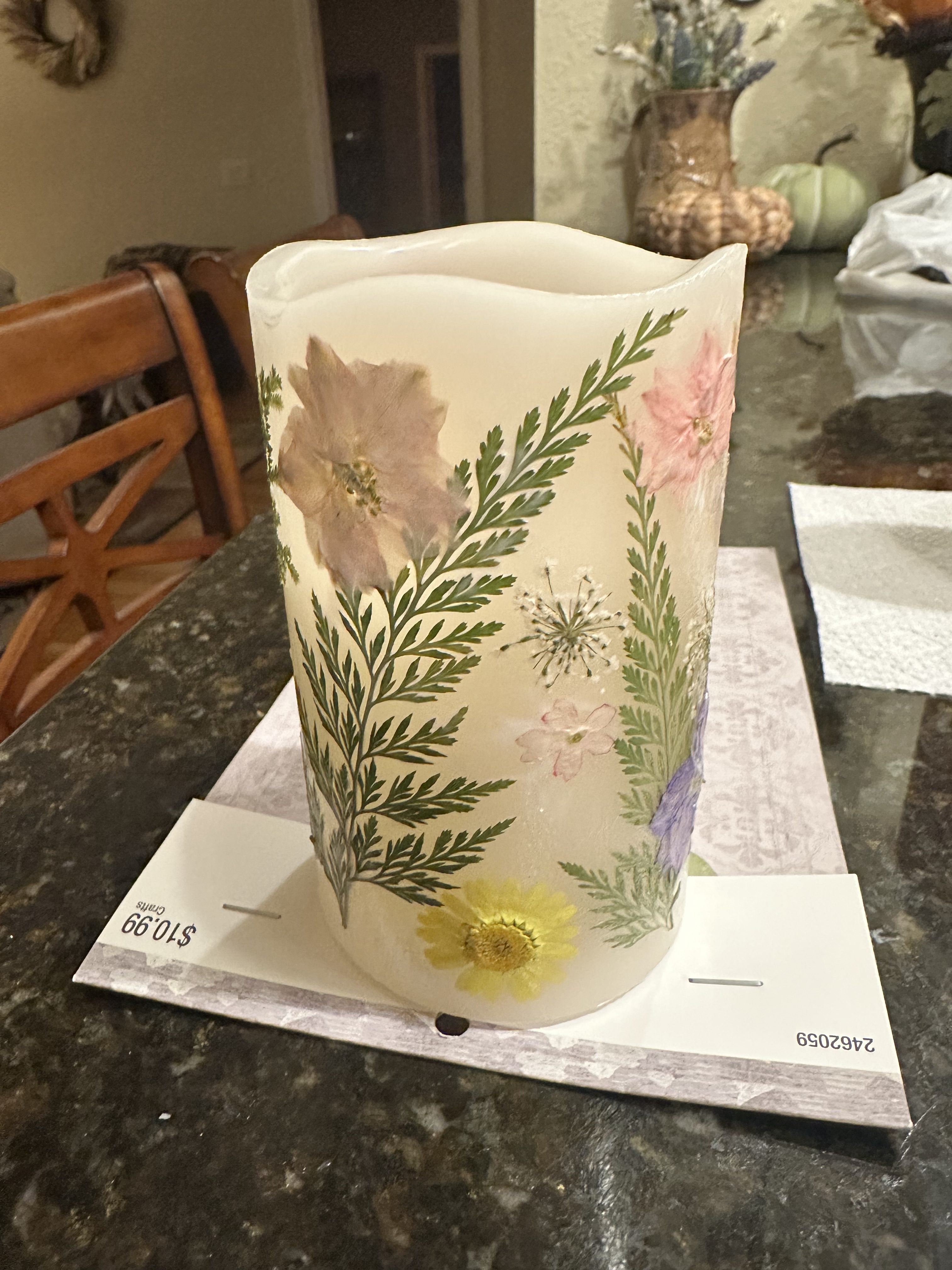
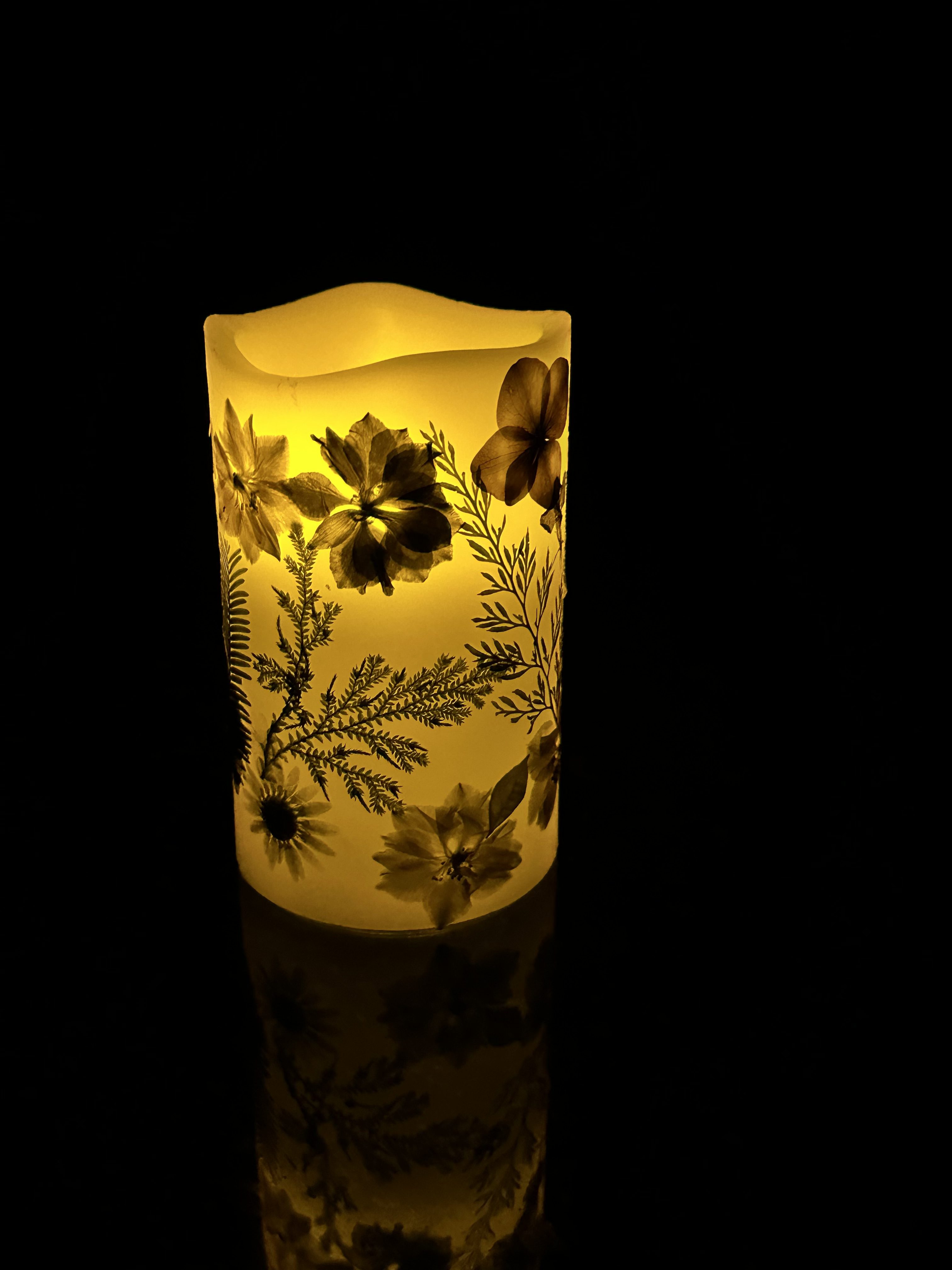
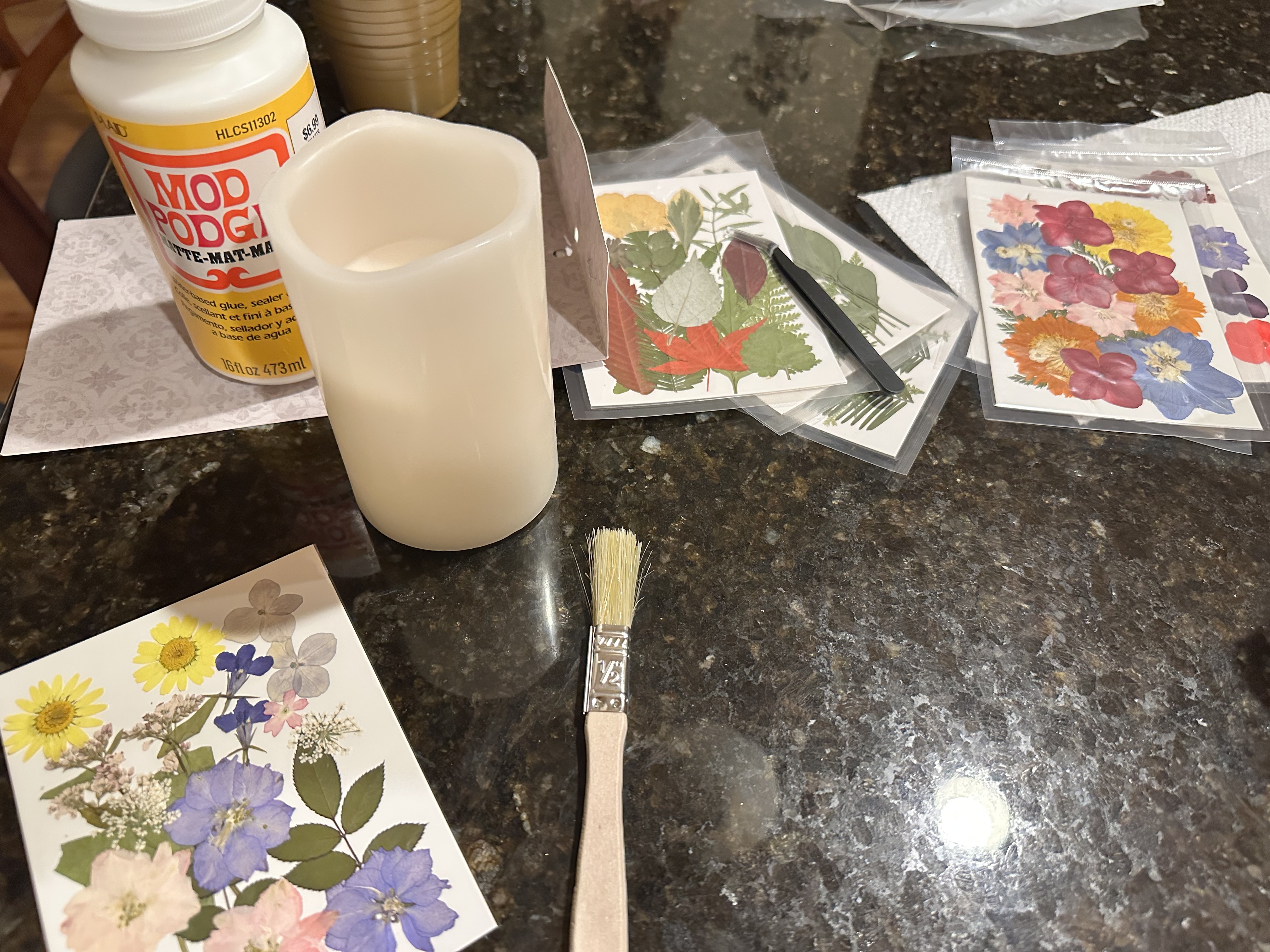
I’ve been decoupaging candles with pressed wildflowers lately – something my mother taught me how to do, and it keeps her memory close. I decided to write a haiku about the ones I have created. While I’ve been creating some flameless ones for my grandchildren from their birth month flowers to use as nightlights, I think smaller ones placed as seating card holders at a wedding reception would be a lovely wedding favor for guests to take home after gracing the tables with light during the gathering. They look wildly romantic, and the ones with faint pink take my breath away.
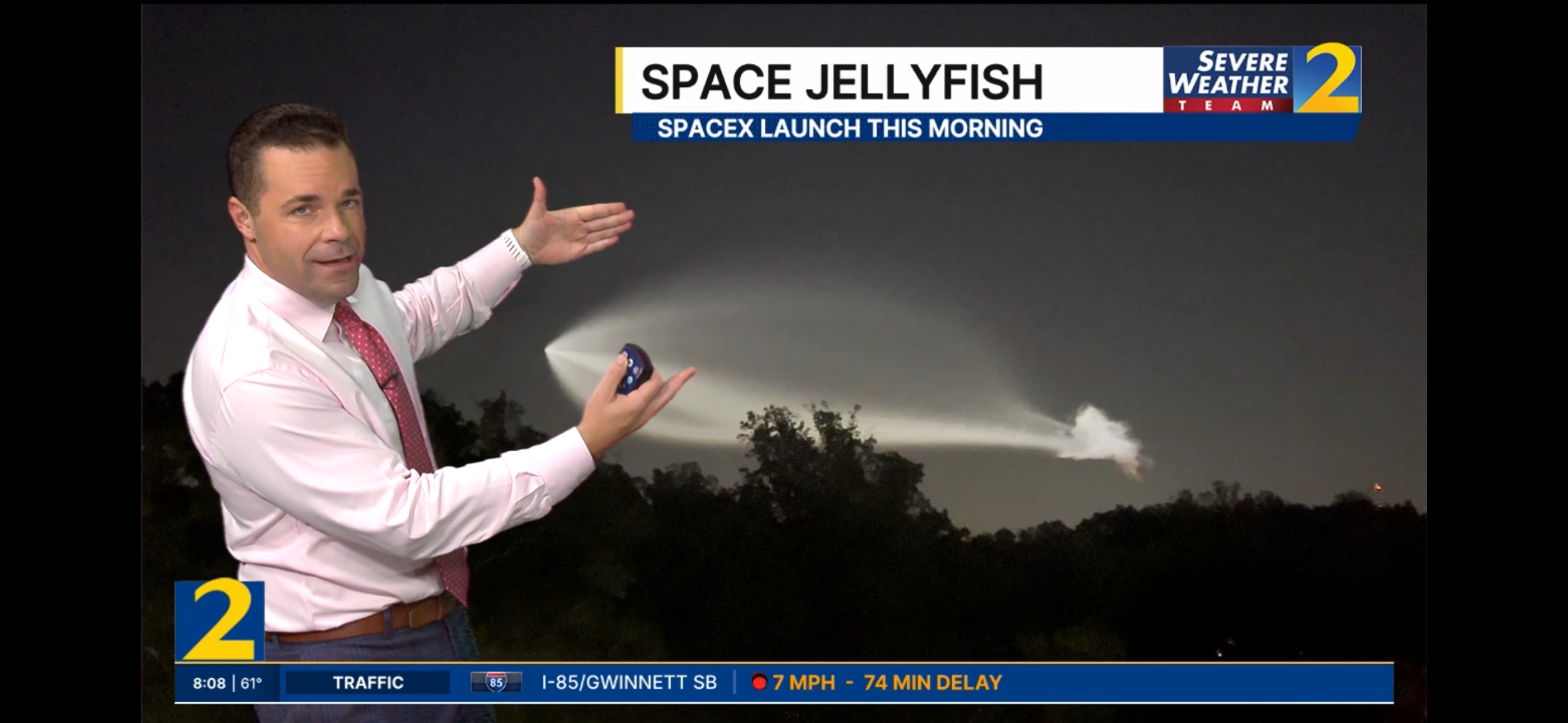
This strange shape in the sky yesterday morning had us wondering shortly before 7 a.m. what was happening ~ whether we’d had an alien invasion or were under chemical warfare or something. Turns out, it was the launch of Space X that occurred at 6:33 a.m., and our view at 6:50 looked a lot like a Japanese Koi fish just above the tree line in the southeastern sky. My husband had taken the dogs out and came to get me to come quickly and see the phenomenon. I grabbed my phone so I could take pictures and headed out into the balmy temperatures to check it out.
A quick search online told us we were safe, and we carried on with our day.
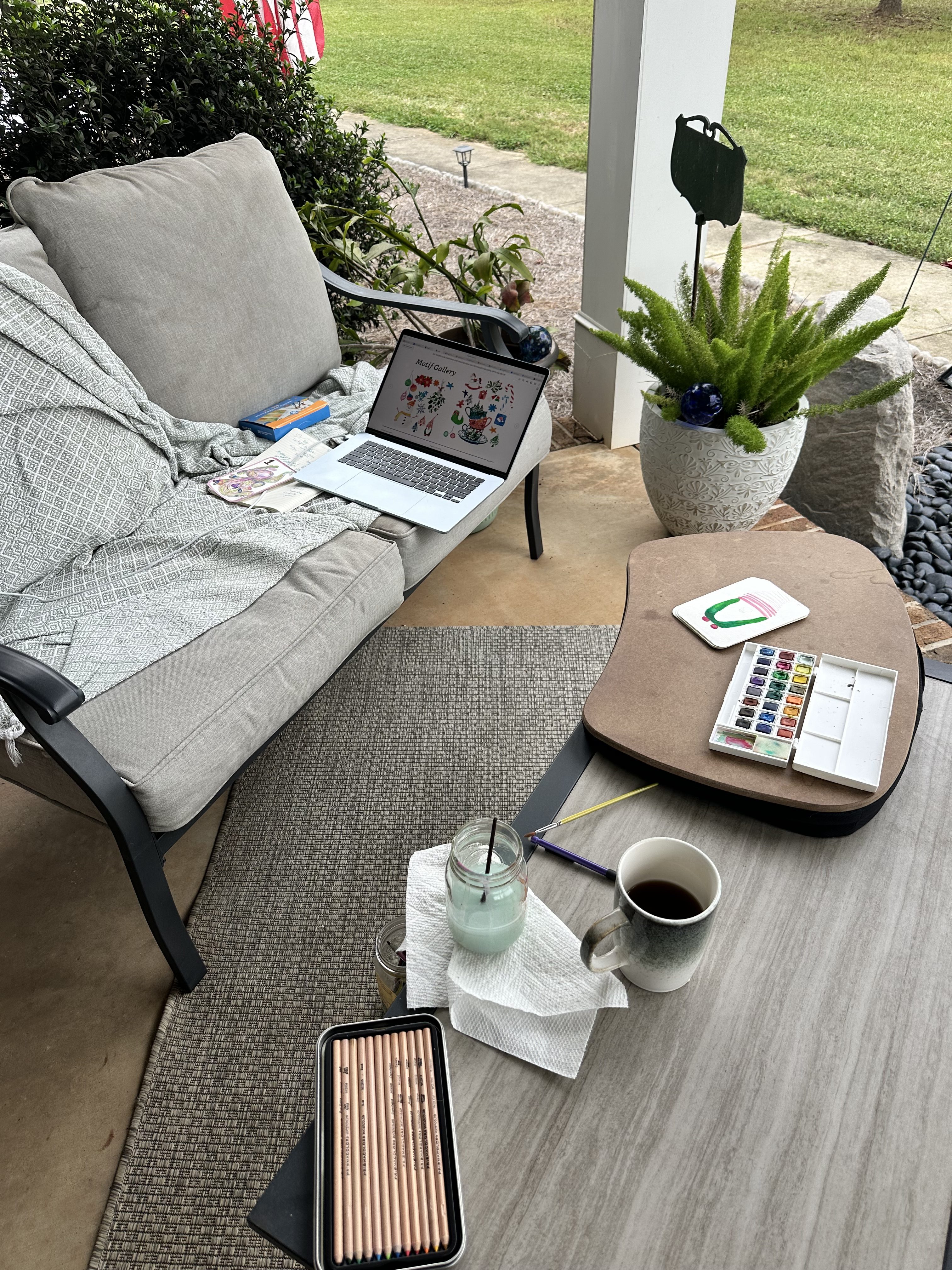
The weekend wasn’t without rain (4 inches, according to our rain gauge) from the hurricane here in middle Georgia, but by Sunday afternoon, the temperatures were too pleasant to stay indoors. I brought my paints outside and enjoyed some time sitting on the porch. It was a wonderful time to get a jump start on painting some postcards for next month’s poetry exchange. Some weekends are largely unproductive in terms of getting things done that need to be done. This was one of those.
I used to love making pressed flowers for bookmarks and decoupaging plain white candles and decorative soaps when I was younger. My mother taught me how to take newspaper and fold it to match the pages of a heavy book and use that as a press. About six weeks later, we’d use tweezers to take the petals and stems and arrange them over a flat surface using Mod Podge. I think our hobby started back in the day when women carried hexagon-shaped wooden purses decoupaged in collage, with tortoise-shelled handles. Macrame purses were all the rage at that time too. As I was looking for some photos of the ones I’d possibly blogged about before, I did a quick search and discovered I had created a list of 50 things I planned to do in retirement from November 2024, and pressing wildflowers was one of them. How did I forget that list? Check it out here. The dream hasn’t changed much!
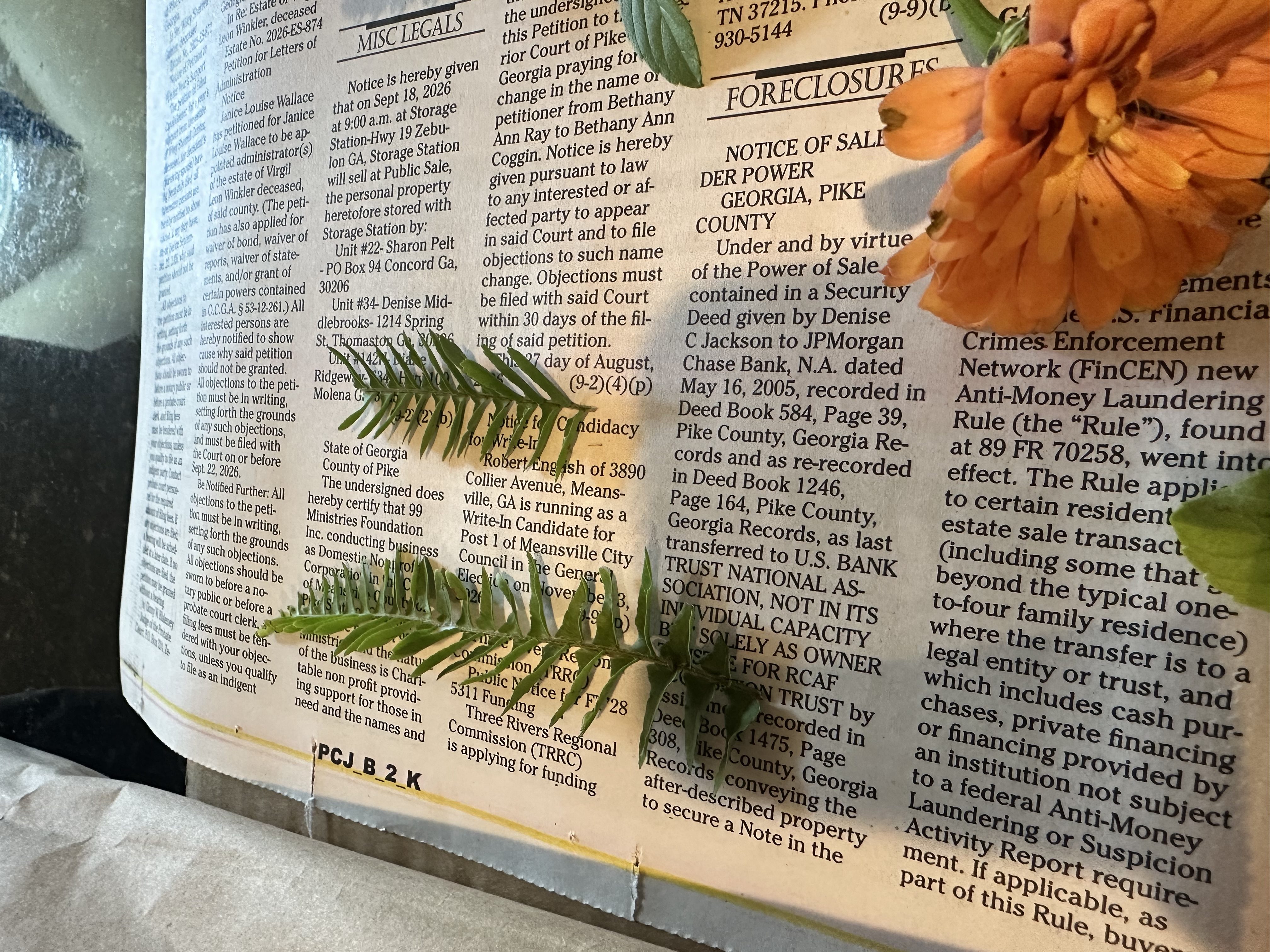
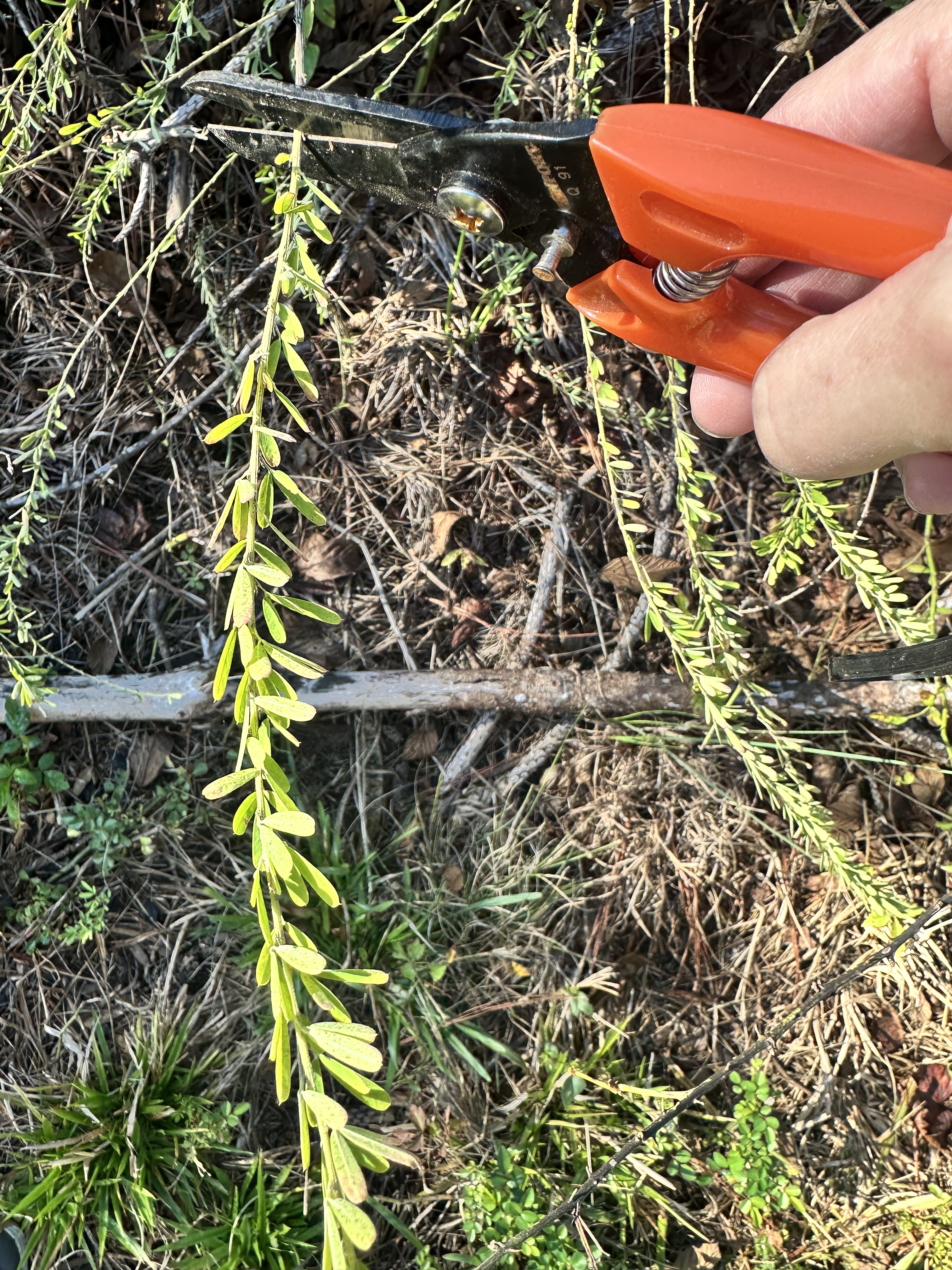
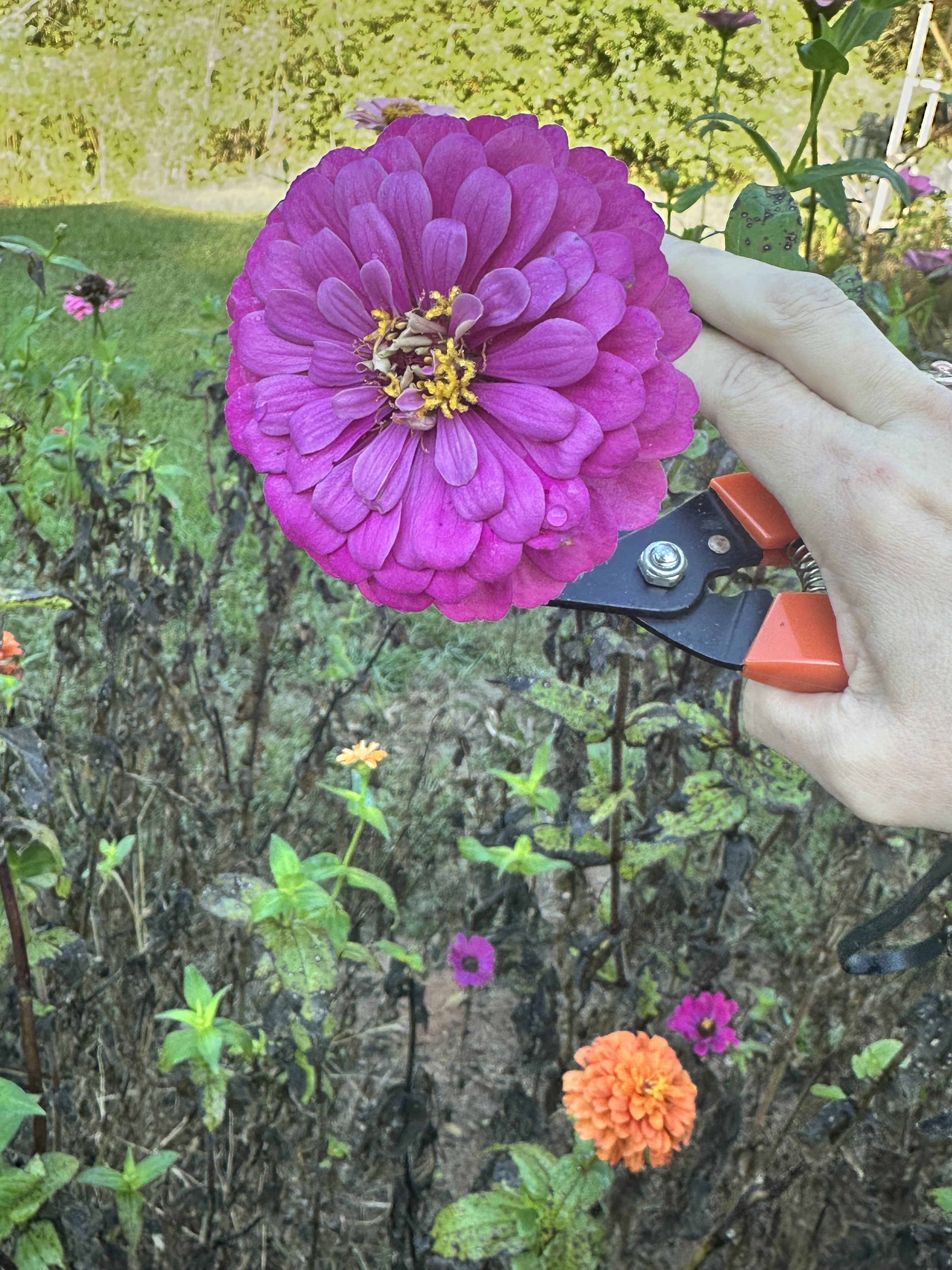
During the middle of last week, I called my sister in law to see about coming to get some zinnia clippings from her wildflower beds to press between old newspapers. Off I went, clippers in hand, and came home and pressed a paper sack full of greenery and flower petals I’d collected. In 2008, I participated in a teachers’ study along scientists doing research in the field in South Georgia, and I became the owner of my own plant press and field guide for the plant studies of native species. Still, I use newspaper and not the fancy acid-free white poster-thickness paper that we used throughout that summer in Americus, Georgia at the Jones Ecological Research Center.
For the first time, I’m pressing fresh basil, since a recent bouquet gift had an abundance of this fragrant herb. One thing that never changes: native Georgia ferns are my go-to greenery in any arrangement.
I’m marking my calendar for mid-November to check the plant press and create some decoupaged pillar candles for a Thanksgiving centerpiece. As we have lost mothers over the years, we light candles to remember them on Thanksgiving, and this year I have something other than the plain white tea lights in glass jars in mind. 🙂
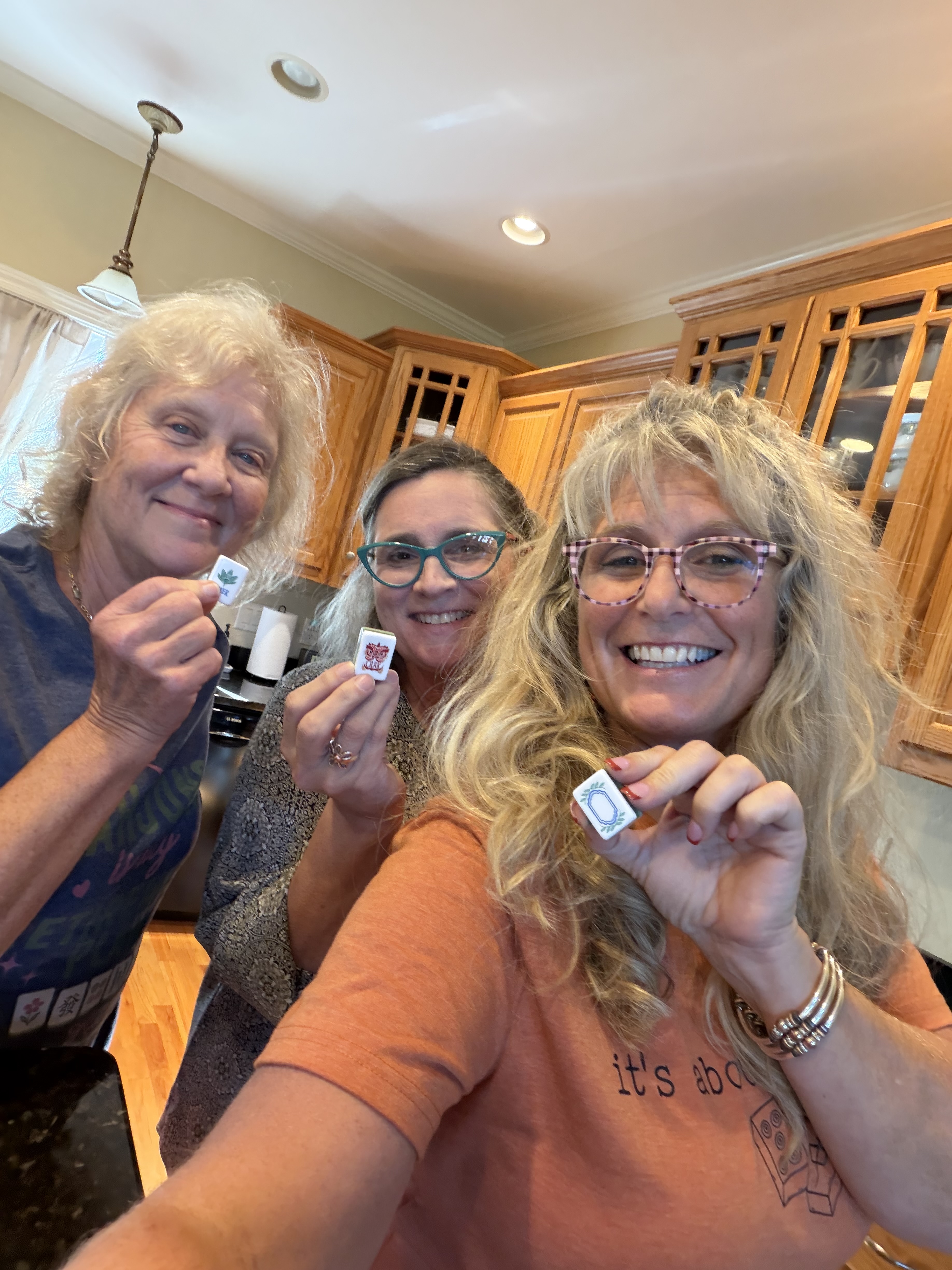
Sensei Susan, me, and friend and fellow Mahj enthusiast Christian
I’ve never played pickleball, but I’ve heard that the craze is so fast and furious that new players kidnap all their friends and drive them to the courts, taking extra clothes and gear and even letting complete strangers use whatever equipment they need to join in the game with zero awareness of any rules as they walk onto the court all bewildered. There, they hand them a paddle and explain all about the kitchen and who can go into the kitchen and who should stay out of the kitchen and a hodgepodge of rules that sound like the Charlie Brown teacher to a bunch of head-scratching people who suddenly find themselves in a surreal moment they didn’t choose, pinching their forearms and wondering how they actually got there. And then, these same clueless people now caught up in the madness are the next wave of new players grabbing all their unsuspecting non-pickleball-playing friends the next week and bringing them back for an initiation into the cult sport.
That’s a lot like Mahjong, only with far fewer physical risks of injury for the older folks who do not need additional help finding the ground and suffering injuries. My husband’s father experienced this when he played pickleball and ended up with knee surgery and months of physical therapy. But where crossword puzzles and Sudoku have been the traditional seniors’ choice for cognitive exercise to stave off the inevitable decline of functional brain cells and memory, Mahjong emerged onto the American scene like an Asian tsunami across the globe and up through the cracked-earth dust of history straight outta ancient China and settled in the homes of women who are now going broke buying tablescapes and four-layered theme tiles they store in Michael’s clear lidded candy jars in the china cabinets where their great grandmother’s heirloom dishes used to be displayed. Husbands everywhere are begging: Please, someone, make it make sense! It’s like a CrackDragon tile walked up to the New York Times puzzle page and said, “Hold my beer.”
It’s true. The latest trend in real estate in Texas is the Mahjong room, and if a home doesn’t have one, the wife tells the husband she wants to “look further” for one that does. Because, well, ….the whole group of friends must have a place to play on proper precisely-measured square tables that doesn’t involve a flashmob-style takeover of a Chicken Salad Chick on a random Tuesday at 10 a.m. There are entire YouTube video series sessions that feature how to store mats by rolling or hanging, how to read the official NMJL card, and how to choose tiles based on size to fit your racks and pushers (which are, by the way, sometimes deliberately selected not to be all “matchy-matchy” with the tiles and mat and tablecloth and lamp and dice dish).
And let’s talk about trinkets. Most often they’re tiny ducks or other little pinkytip-sized animals that are collected as trophies upon a Mahjong win that is declared valid with no opposition from the players at the table who have checked the exposed tiles against the card. These ducks are sometimes kept in a little pouch, so when your sensei who taught you to play Mahjong and lives two and a half hours away is preparing to come for an afternoon of games and will “bring her bag of ducks,” you don’t have to read that twice. You understand there is no typo there.
Even more, you understand that what seemed illogical the summer before you learned to play the game now makes perfect sense. It’s gospel, yet it can seem like learning a whole new language in two humorous Mahjong 101 and 102 lessons. It can be deep and carry life lessons, like that scene in Crazy Rich Asians. Even Julia Roberts plays, and insists that the craze is about making order out of chaos because it’s not a gambling game, and it’s not a drinking game. Folks who were complete strangers in the grocery store and bookstore and at church a few months ago suddenly become best friends. These same folks will drive hours to play away an afternoon, and they’ll bring Mahj gear and give it to you as a gift, along with their bag of ducks. They will talk strategy and explain reasons for pivots, and everyone will eat snacks and laugh all afternoon and send each other YouTube videos on game strategies, tips, and obscure rules and, of course, all the things they are putting in their Amazon cart. You’ll understand that while winning is fun, it’s just as much fun to lose because there is no losing where there is so much fun that you don’t even realize your brain is exercising and that you might not be the extreme introvert you once thought you were.
You’ll thank the good Lord you didn’t wait another day to retire, because you look forward to each day you can play with new friends, old friends, and your sister in law across the farm. And you’ll feel sorry for all those pickleball players who think they’re all that and a bag of chips. Because you know the real truth about what a kitchen is for.
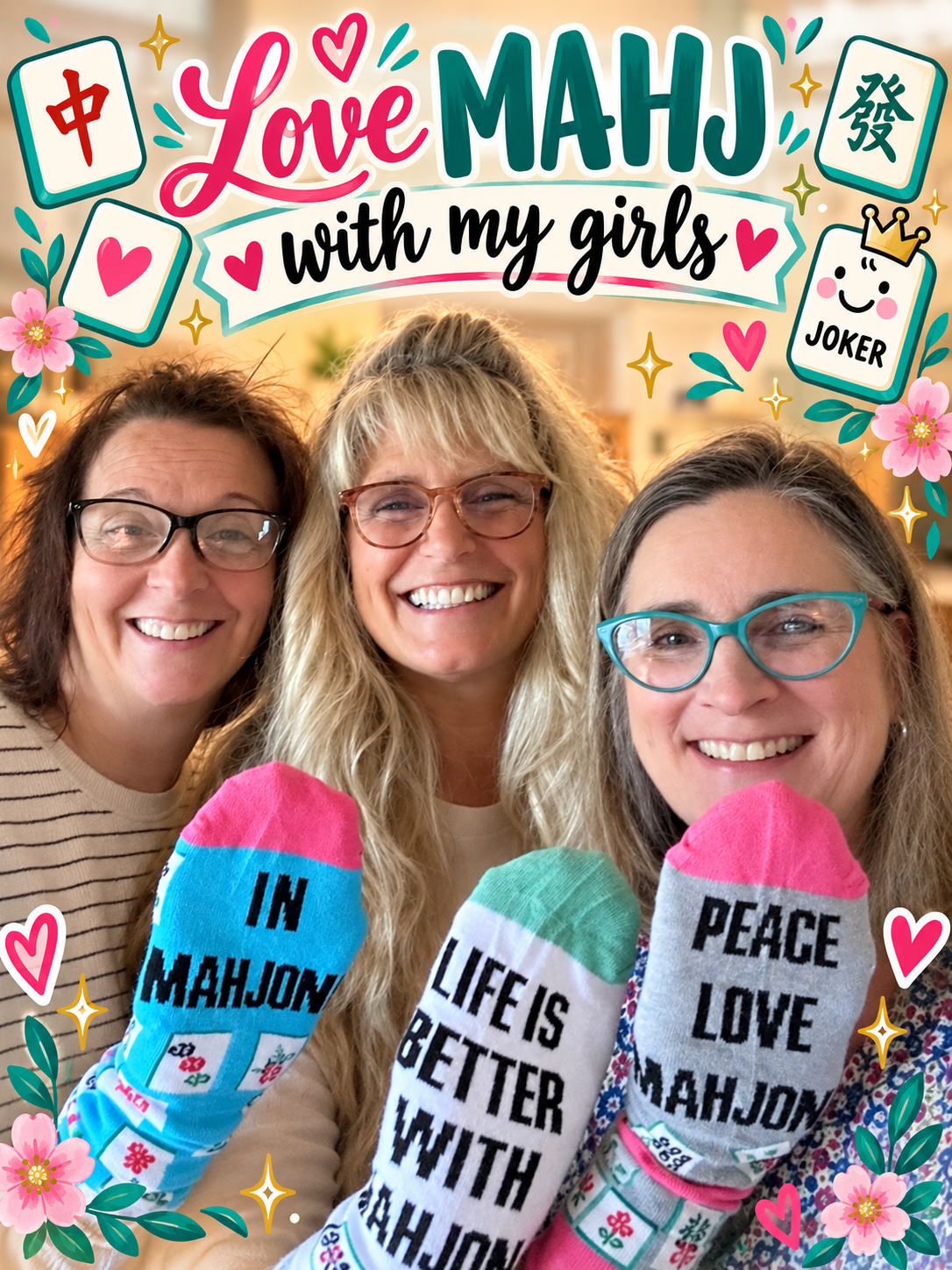
Bethany, Christian, and me – photo created by Christian
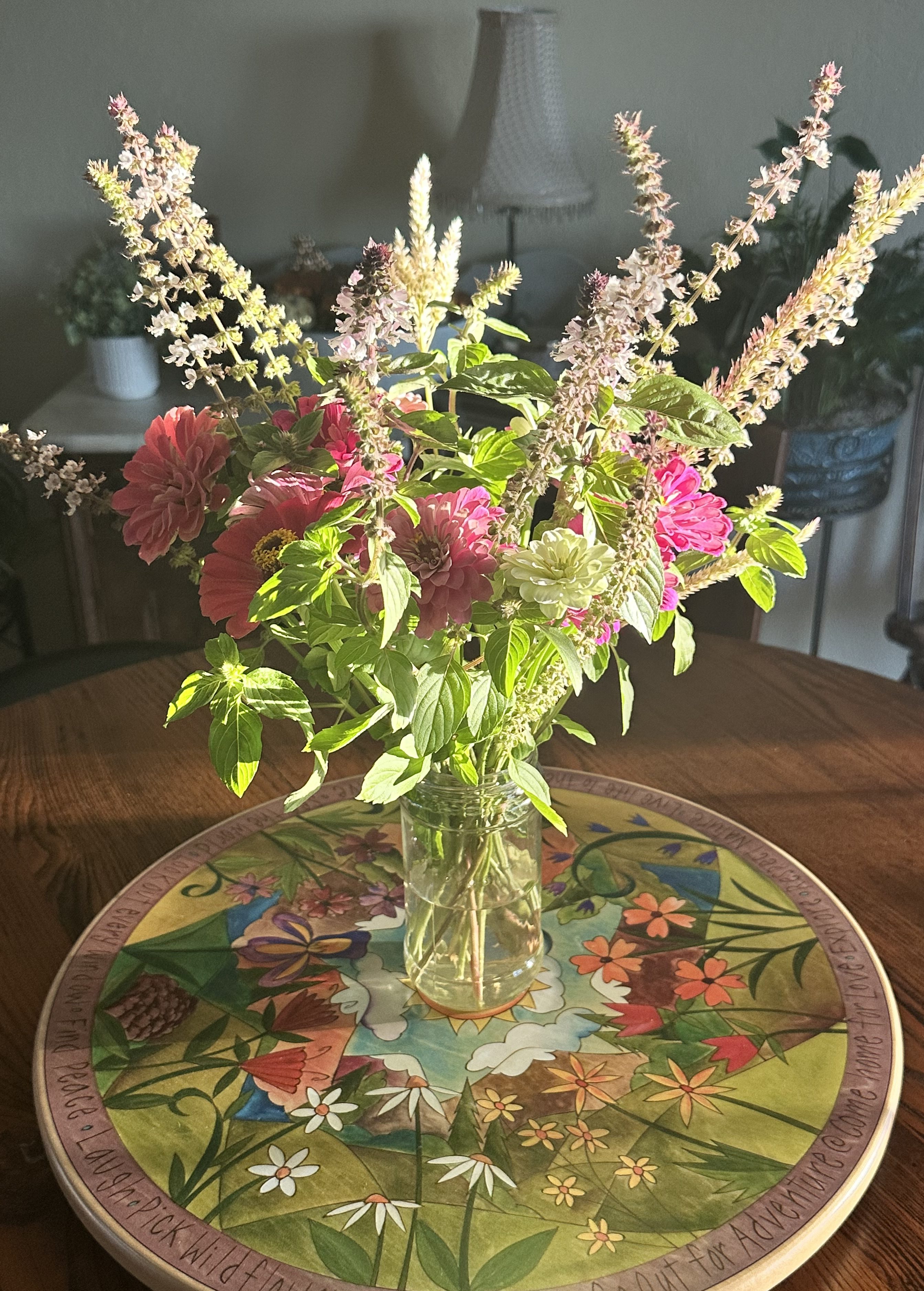
Our sensei brought these flowers and basil she grew in her own garden when she isn’t mowing grass in straight lines or playing tennis or teaching Mahjong
I’ve never met a bookstore I didn’t like, so in this chapter of life where there is more time to read, I added Independent Bookstore Shopping to the list of things of delights that retirement would bring time to enjoy. I knew this would go in my green notebook list of things to do after visiting Powell’s City of Books in Portland, Oregon in June. They call themselves “fiercely independent,” and if you read a little about the history of this amazing store and the philosophy about reading that guides its management, you know both the the power and the risk of the break from big box corporate bookstores. Take, for example, the poetry section. Those sections are usually what I would consider the weakest link in a bookstore. But not in Powell’s. They have several sections of floor-to-ceiling titles of poetry books, and the best curated collection I have ever seen. In the eastern United States, Malaprops in Asheville, North Carolina gets the highest mark for a poetry curation. I’m on a quest to find those that stack up to the gold standard of Powell’s.
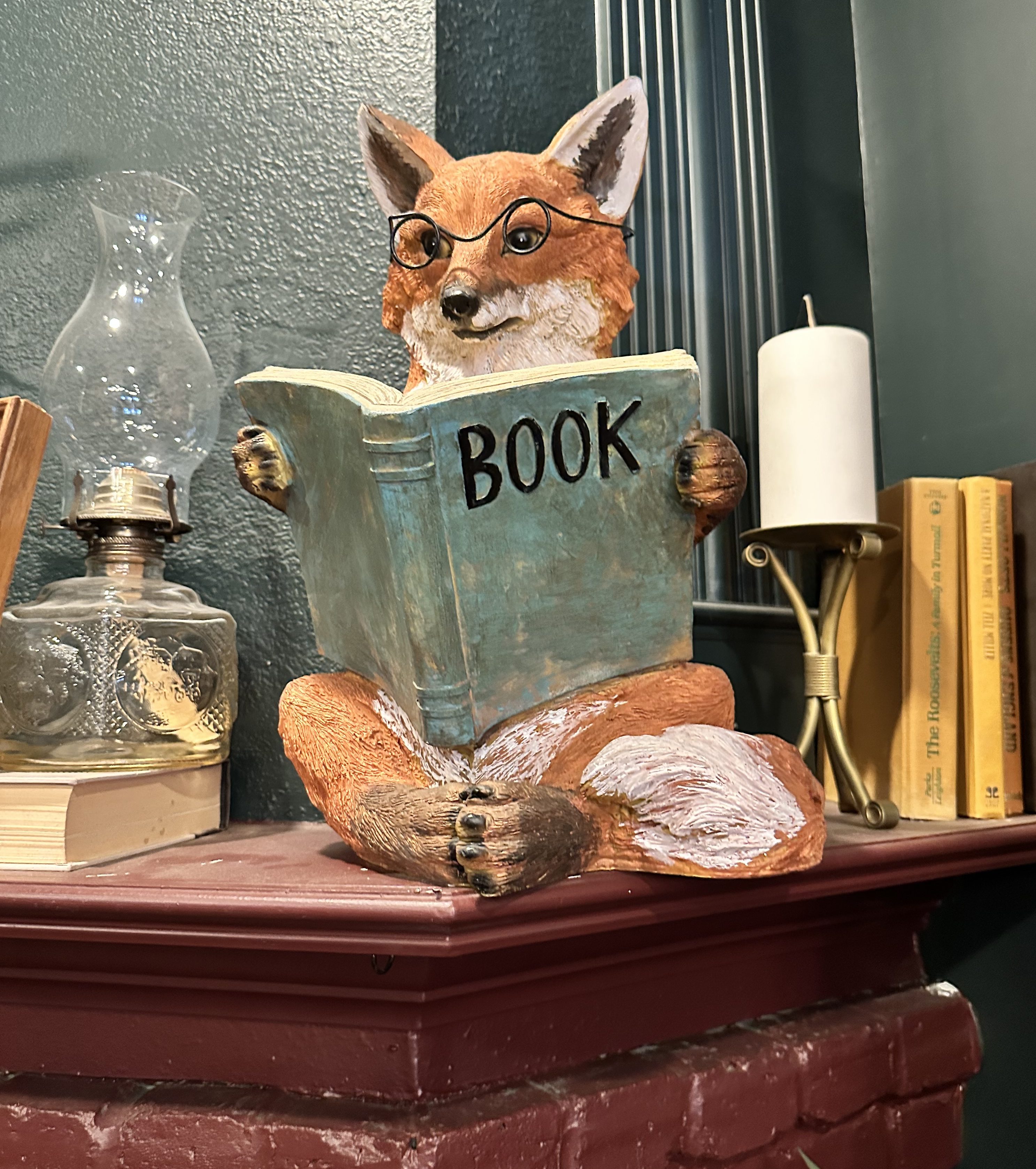
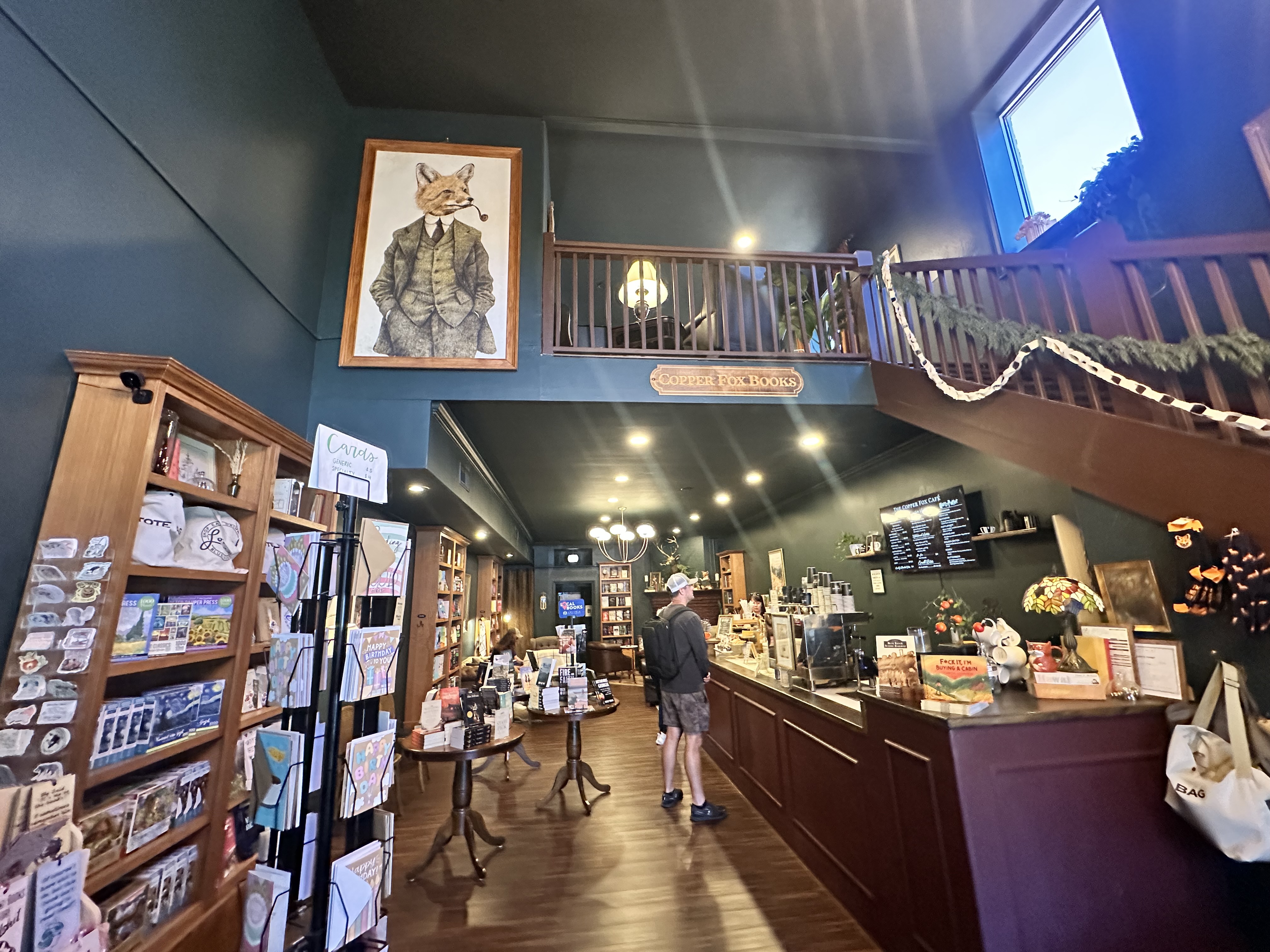
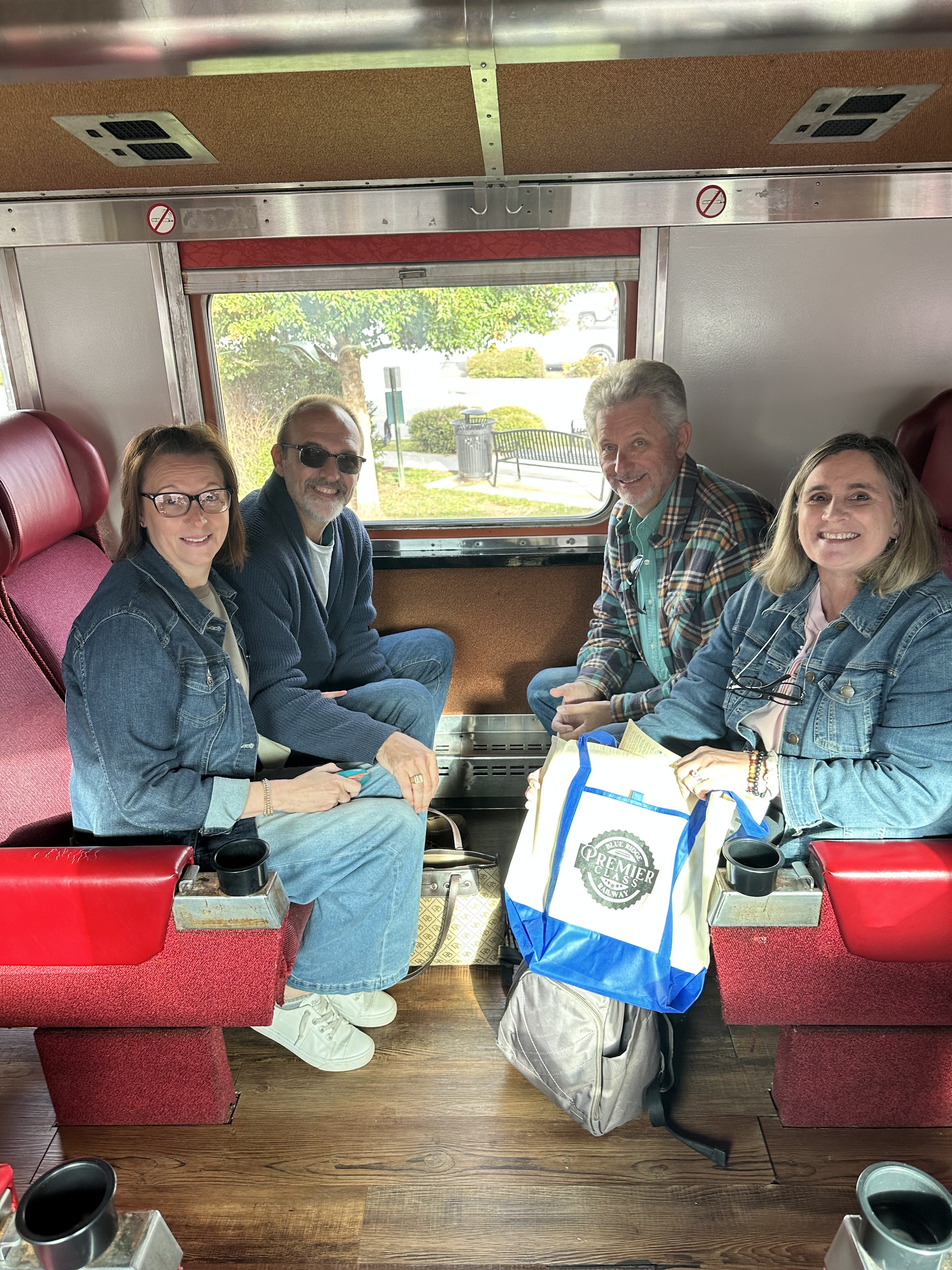
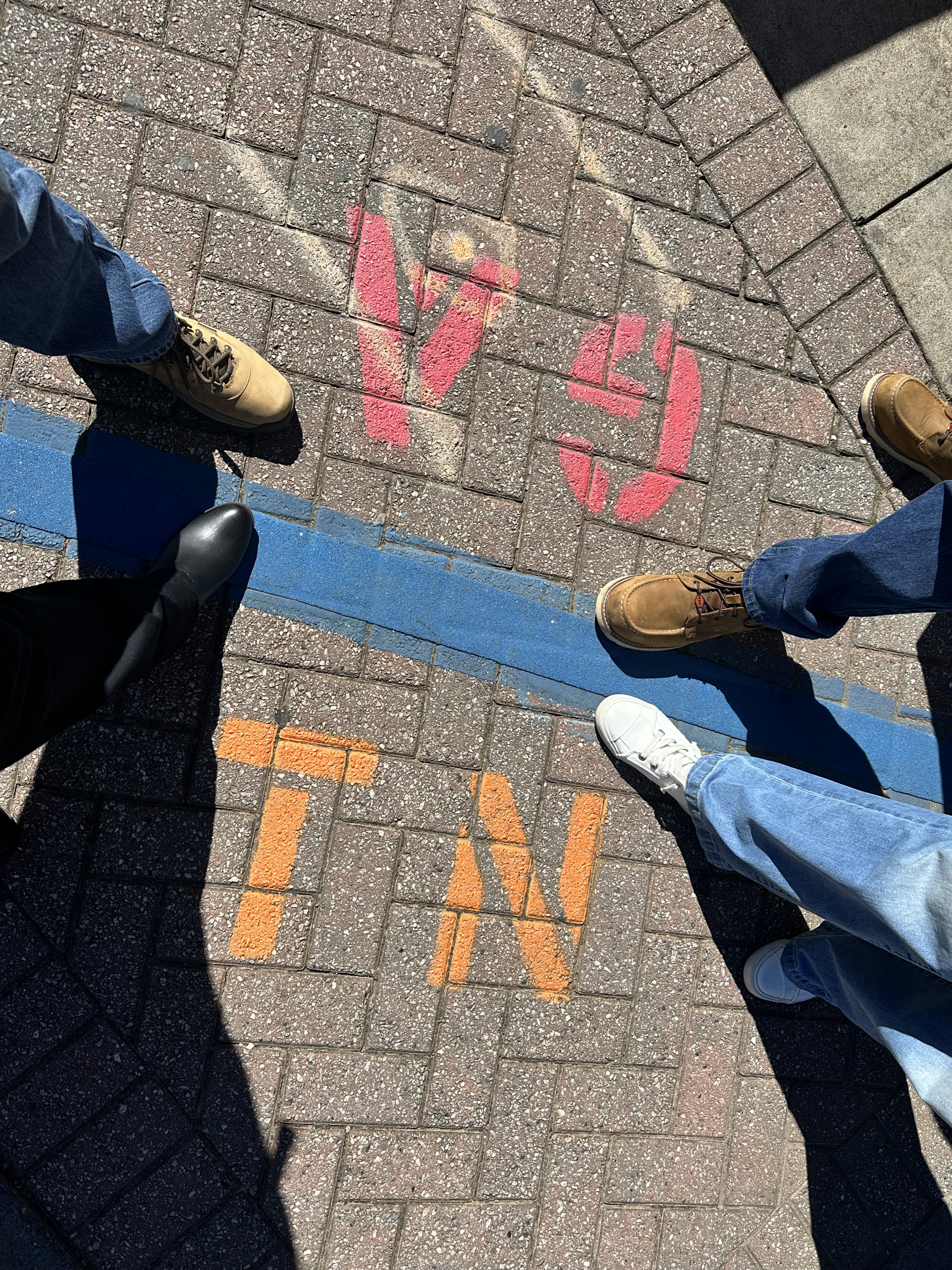
Since I would live and breathe reading if it were possible to do, I like to get as close to it as I can and inhale deeply, taking in the feel of the books, the smell of the shop, the vibe of the readers considering what they want to read next. On a recent North Georgia Mountain trip, my sister in law and I visited indie bookstores in Ellijay and Blue Ridge and also in Copper Basin, Tennessee. My favorite moments are when someone asks complete strangers if anyone has read a particular book. That happened in Copper Fox Books in Blue Ridge, Georgia recently, and we helped steer a reader to Mad Mabel by Sally Hepworth as her next book after chatting preferred genres. It’s a lovely feeling to be a book matchmaker.
I’m always eager to hear about favorite bookstores. If you have any, please share them. My dream trip would be adding bookstores to a wine tour. I’d get on a bus and go wine tasting but in between all the wine tastings, the bus would stop at bookstores. I wonder what books I would add to my library if there were such a tour – – and whether it would be poetry and novels or whether I’d branch out and surprise myself with some new genres when I arrived home and checked the boxes to see what all I’d bought!
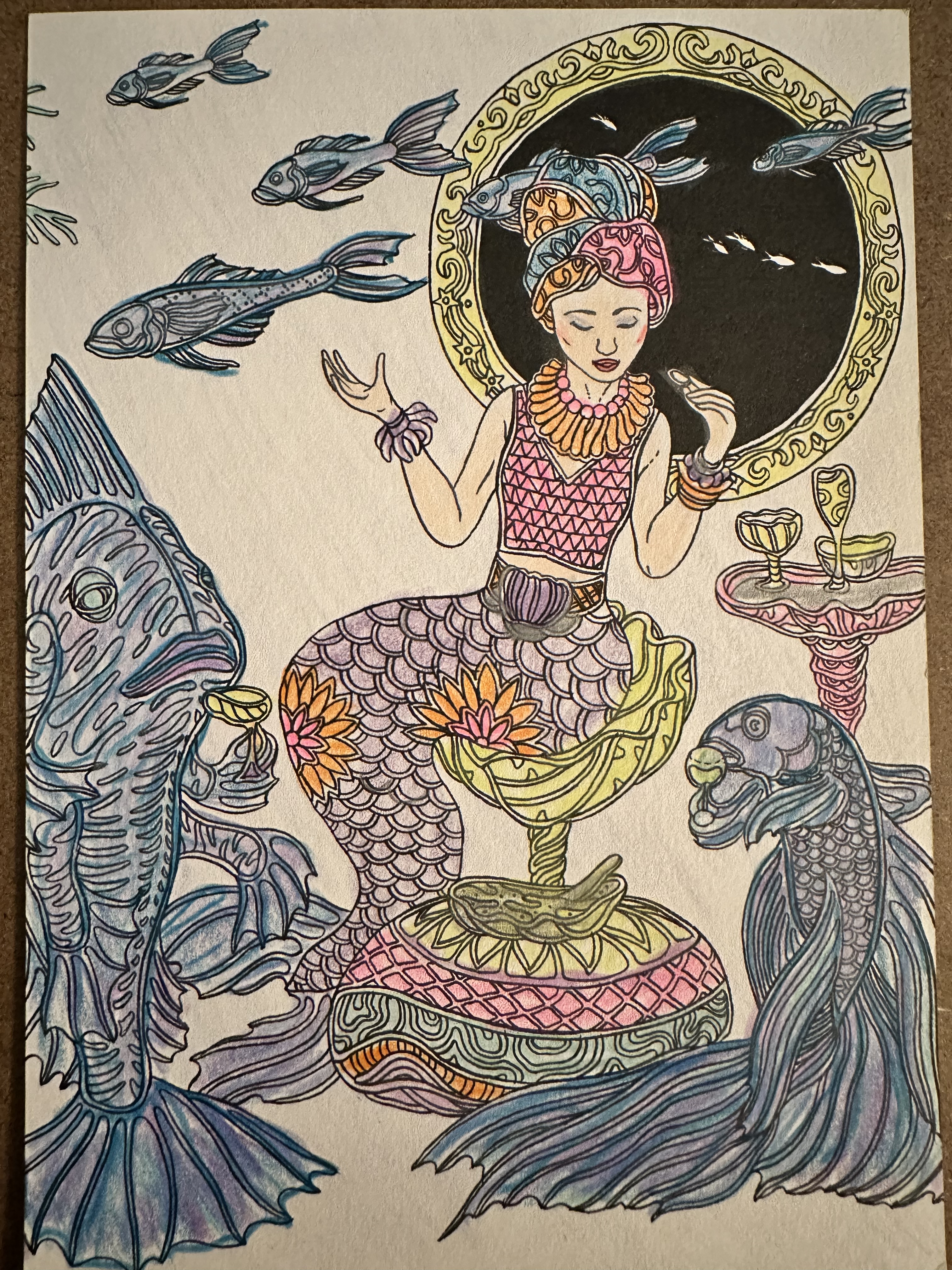
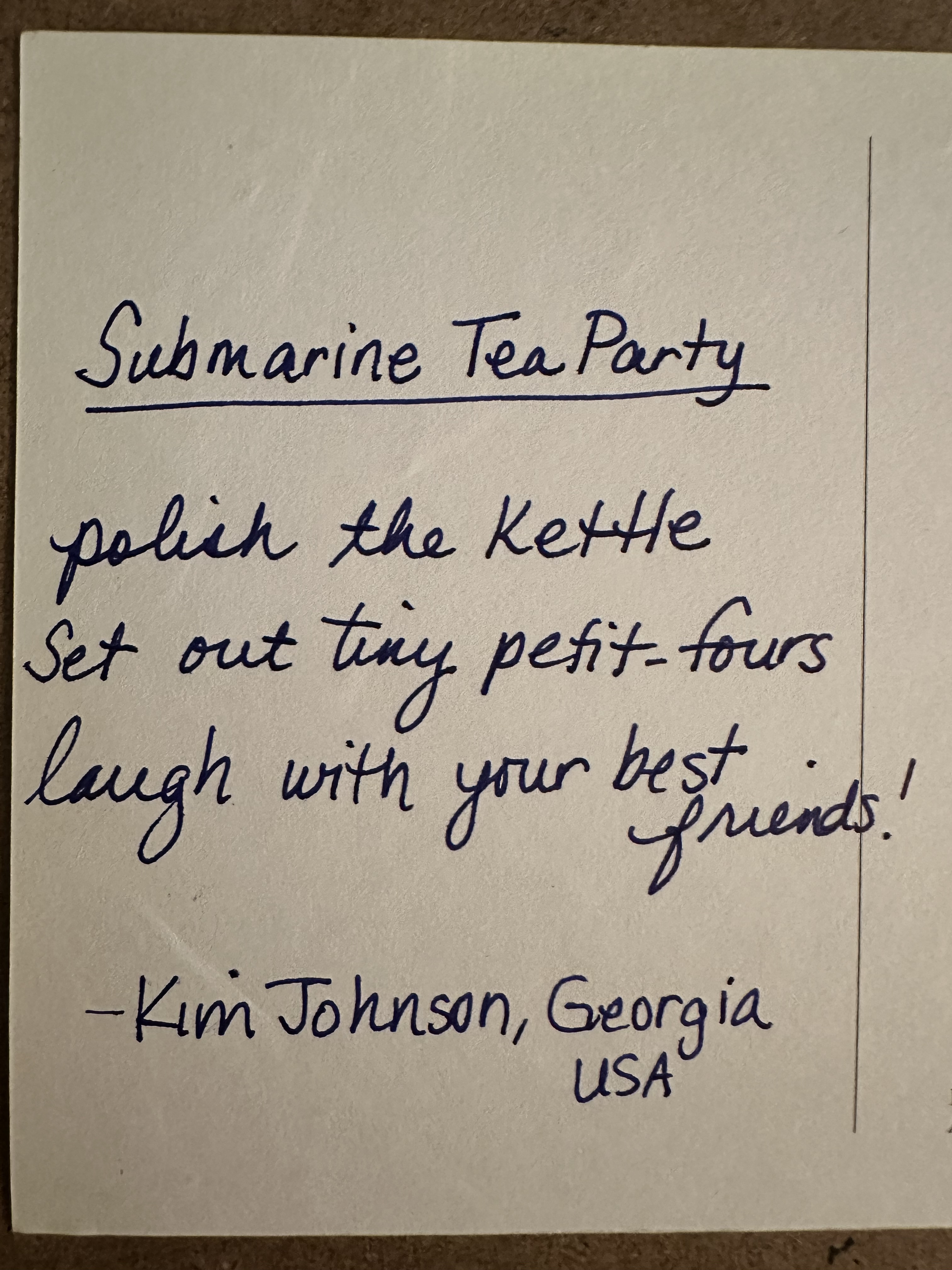
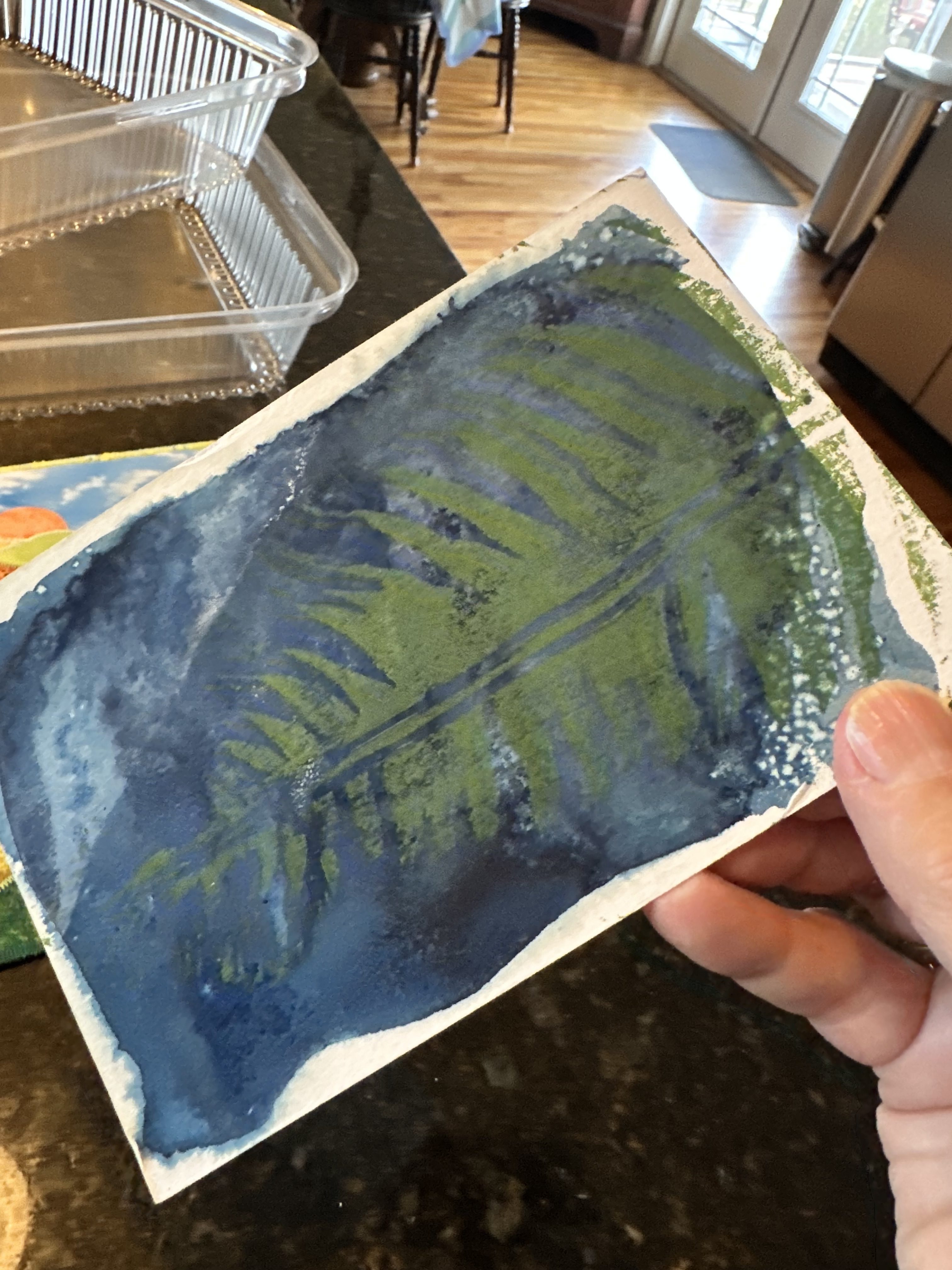
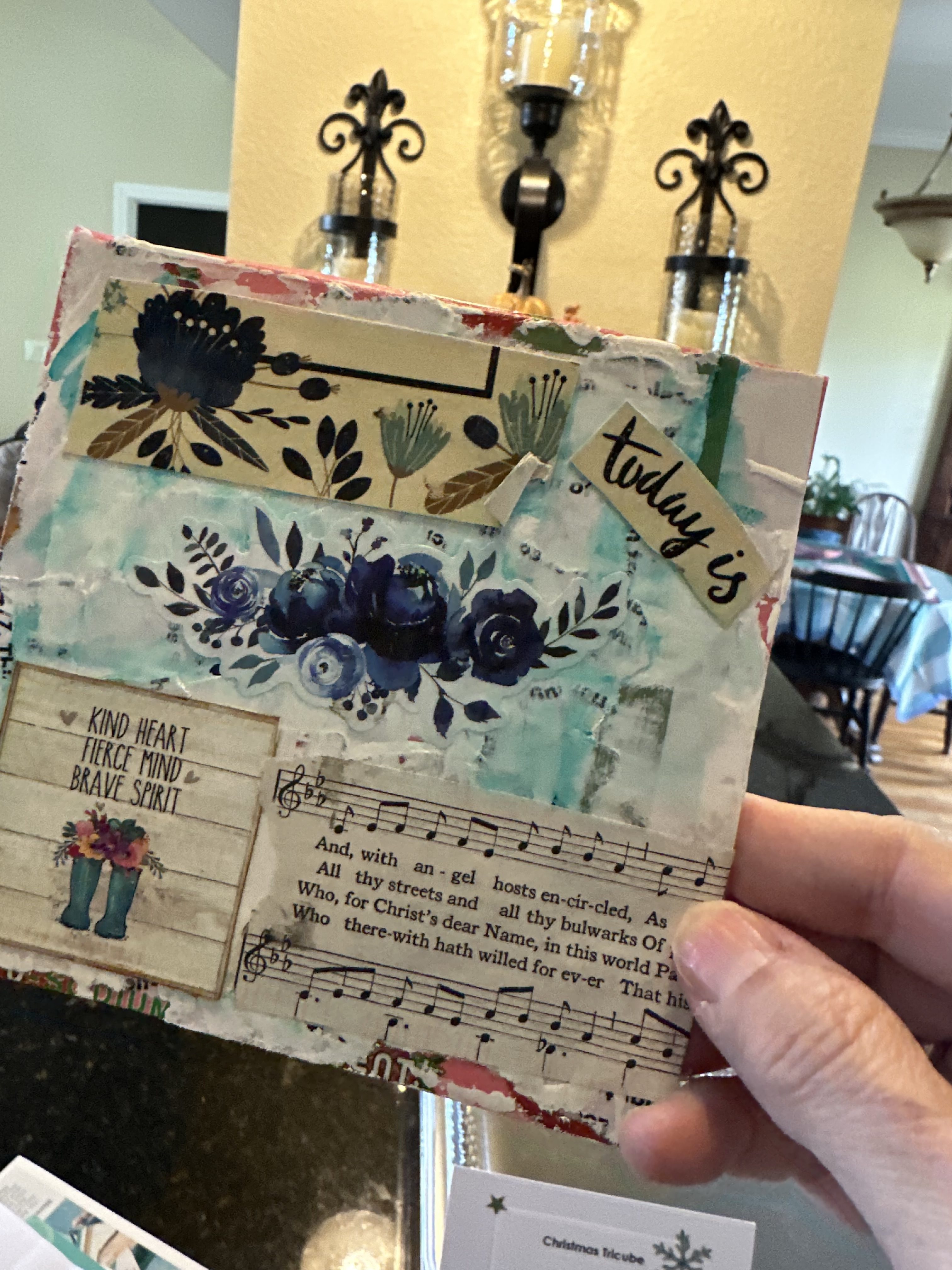
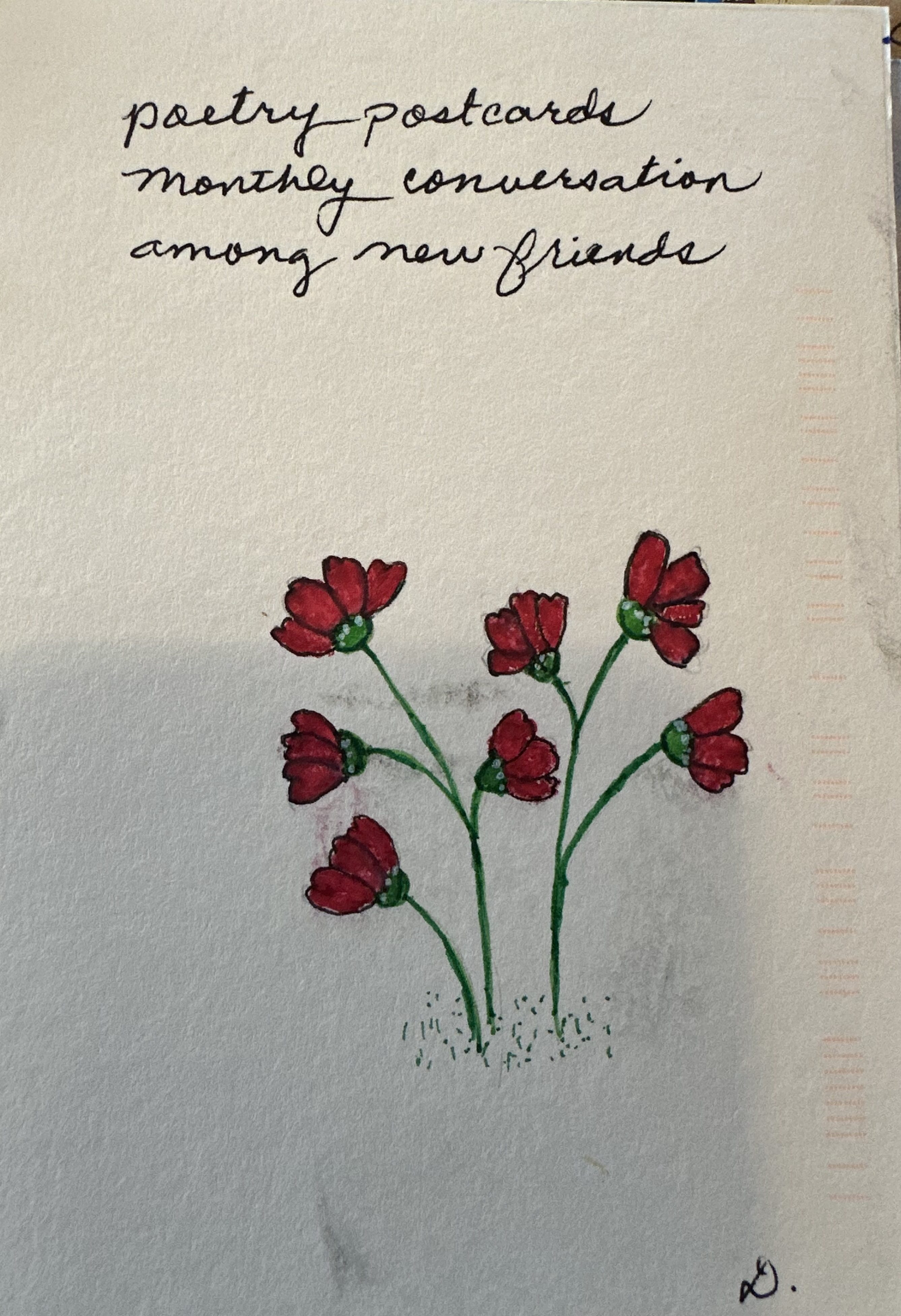
After participating in Postcard Poetry Fest during July, I signed up for a smaller group of poetry postcard exchanges for each month of the year. It’s been thrilling seeing all of the ways that members of the group share art and poems. So far, I’ve colored postcards with color pencil, created fabric design postcards and made fall scrapbook sticker poems. I’ve also bought flower fairy postcards and written Have You Ever poems to go with them. I have a local friend who is diving in feet first, and she’d asked me to share some of the poetry ideas of others, so today I’ll do that! Postcard poetry ranges from plain white 3×5 index cards with nothing but black ink and a handwritten poem to elaborate collage work to vintage postcards to the traditional Wish You Were Here cards from various points across the globe. Each brings its own special smile and gets its own spotlight mailbox moment.
Here are some photos of postcards I’ve both sent and received. Proof positive that the smallest gestures, even the size of a postage stamp, can brighten someone’s day in unexpected ways.
If you are interested in becoming part of this group, Barbara Robinette has shared the following information for group members to pass along to others. I hope you will consider joining!
From Barbara:
The Purpose of the Postcard Poetry Group: To form and maintain a poetry community among poets by sharing our poems on postcards on a monthly basis sent through USPS mail. We need to continue to get the word out that we exist. Please invite other poets you know to join PPG by emailing
By the 30th of each month, I will email everyone the next month’s Name and Address Listing. Rules: Send 1 postcard to 3 (or more) poets of your choosing in either group. If you receive a card from someone you did not send to, please reply with a card. Hopefully, this makes sure everyone receives a postcard poem.