Gladys Taber and November

Indian Pudding

a new recipe to try

for Thanksgiving Day

My father, an avid book collector, introduced me to Gladys Taber’s writing years ago, and I fell in love with her instantly. He has always had the uncanny knack of matchmaking book lovers with books that become favorites.

Sometimes I like to go to my collection on the shelf of my reading room and pull a Taber book and read random passages. Many of her books are organized by month or season, so I find that no matter where I land in her seasonal offerings that mirror mine on our farm in Georgia, I am there – right there with her – in Southbury, Connecticut.

From Still Cove Journal: November

“November is a month when the chill blustery days and long cold nights are hard on dieters. Green salads are fine on hot summer days. but the very sound of the wind from the Atlantic against the big window makes me think of a real breakfast of sausage and buttermilk pancakes with first-run golden maple syrup. By suppertime I forget I am a non-dessert eater, and when I go out to eat, I often order Indian Pudding. I have had many very fine puddings, but almost never an authentic Indian Pudding. So I like to share the recipe my mother and grandmother used:

Bring 4 cups of milk to a boil in the top of a double boiler. Gently stir in 1/3 c. yellow cornmeal and cook 15 minutes. Add 1 cup dark molasses and remove from heat. Add 1/4 c. butter, a teaspoon each of salt, cinnamon, and ginger and 1/2 c. seedless raisins. Place the batter in a greased baking dish. Then pour 1 cup cold milk over it. Bake in a slow oven for 1 1/2 to 2 hours. Serve with hard sauce or cream or even vanilla ice cream.

The main thing about the real Indian pudding is the cup of cold milk poured over…..”

I’ve never made Indian pudding, but it sounds divine. I’m making a shopping list now to try it, perhaps for our Thanksgiving lunch at the office a week from Tuesday. There’s something magical about an old recipe that seems to conjure up the spirits of those long dead and welcome them back to the present. If we ever do discover time travel, I’m fully convinced that the portal will be through an old recipe box, long forgotten, hidden in the corner of an attic, and one that comes alive like Frosty the Snowman’s magical hat.

Gratitude on Thanksgiving Day

Lately, I’ve been rereading Gladys Taber’s books, just for the sheer comfort they bring. I can slip through the veil of now and step back in time, to a day when things seemed simpler and more appreciated. My wish for you today is that you find a deep inner peace, full of gratitude for the simple joys on this Thanksgiving Day. Whether you share it with a multitude of people or alone, take time to reflect on the blessings!

This is from Stillmeadow Sampler.

Thanksgiving should be a time of prayer, of feeling humble, and of reaffirming our faith in God. When the grandchildren are propped up on the dictionary and encyclopedia and reach for a turkey wing, I look at them, and pray quietly that they may live in a world at peace.

***

But when I was growing up, the feast itself was more important. We never tasted turkey except at Thanksgiving, that was what turkey was meant for. We dreamed of it, rich, brown, savory with chestnut stuffing. The quivering cranberry sauce was only for Thanksgiving, too, and oh, the giblet gravy and the glazed onions and fluffy mashed turnips! Turkey for Thanksgiving was as special as the orange in the toe of the stocking at Christmas.

After grace is said, there is always a moment of silence at our table. What grave thoughts go through the minds of the younger folk I shall never know, but they have a quiet look. I think of all the Thanksgivings past, and of all the hopes for the future. Then the carving knife makes the first slice, and yes, the turkey is exactly done, tender, moist, rich. And pass the giblet gravy at once.

Later on, the table cleared and the dishwasher blessedly running, we can add an apple log to the fire and sit toasting our toes against the November chill, while the bowl of apples and nuts goes around and one of the family brings out the old corn popper. And I am always amazed at the fact that no matter how big the dinner is, around dark the younger members of the family get that hungry look again.

When the house quiets down, I have a glass of hot milk. Then I say my prayers and give my thanks to God who still makes Thanksgiving possible. On Thanksgiving night, I pray a long while for everyone all over the world who may not have a Thanksgiving.

***

These are words written on Taber’s farm in Connecticut 7 decades ago. I think of my own days of growing up, when grandparents came to our house and we ate at high noon, making memories with cousins and other family all afternoon. Board games, movies, desserts, and making Christmas wish lists (we did not wish for oranges).

Today, we are in a state park in Georgia and will later be joined by a few family members. We’ll eat our Thanksgiving feast in the early afternoon, hike a bit, and sit around the campfire sharing stories and sipping coffee and hot chocolate. And absolutely – we will roast marshmallows.

Be sure to check in tomorrow when I’ll share how to cook a Thanskgiving feast while camping, right down to a perfectly browned turkey. (And I don’t have an oven here).

A Hygge November

A few years ago, I began reading more about the Danish concept of hygge and learning about the ways to create comfort – at home and in life. Ambient candlelight, toasty socks, hearty meals of soups and stews, warmth of fireplaces, soothing sounds of music, and coziness of blankets and sweaters. The enjoyment sitting by the fire with the dogs as I write and sip hot tea. These small measures of comfort go a long way in self-care.

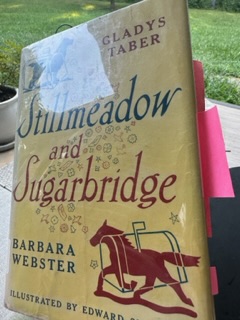
One author who brings all the feels of hygge is Gladys Taber. This morning, I read about November long ago from her book Stillmeadow Sampler, published in 1950. This book was a gift from my father last Christmas, and is signed by Eugenia Price in 1977 as a gift to Lady Jane.

Below, I share an excerpt:

Now, toward the end of November, rain falls steadily and it is a chilling rain. The bare branches look black and the browns in the meadows are deepened. The pond’s level rises and we can hear the water pouring over the dam and on into George’s brook. The small-paned windows of the house are a wash of silver. The lamps go on early in the day.

When we go out to do the chores, the air smells of wet fallen leaves. It is a curious musty smell, but pleasant. Jill brings in an apple log from the woodpile and the fire burns brightly. The Cockers and the Irish doze on the warm hearth. It’s a good time to have Brunswick Stew, that delectable combination of chicken, tomatoes, lima beans and corn simmered with seasonings in the old iron soup kettle.

When the rain finally ends, usually at dusk, the whole world looks polished. The horizon has a rosy glow. The air is like vintage wine, properly cooled. When we open the door, the dogs rush out and dash around the house. Rain’s over, rain’s over, they say, barking happily. Inside, with the rose-colored light coming in the windows, the house takes on new life. The milk glass gleams, the brass and copper shine. And the soup kettle is ready to be lifted from the crane, the popovers are hot.

“Next thing we know,” says Jill, dishing up the stew, “it will be snowing.”

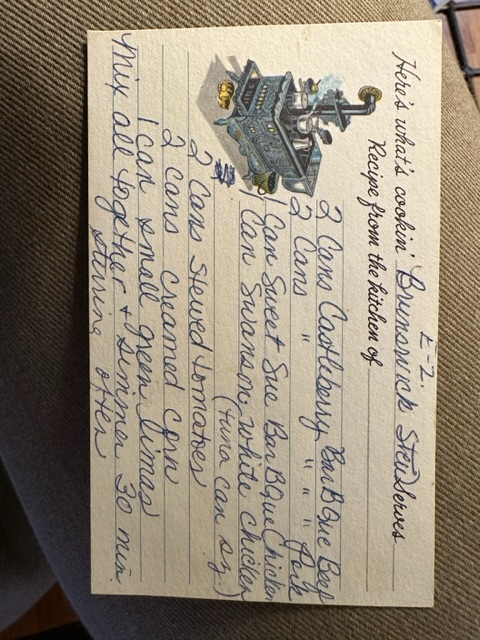
I glance over at my dogs, deep in a morning snooze, and glimpse my mother’s rippled swiss dot milk glass on the kitchen counter. I think of her recipe for E-Z Brunswick Stew, and I take it from the recipe box to share with you today. Though Mom is no longer here with us, her legacy lives on through her recipes and memories.

This is hygge in its finest form.

Stillmeadow Sampler

Photo by Kristina Paukshtite on Pexels.com

In Stillmeadow Sampler, Gladys Taber writes through the year in chapters named for seasons. I think what I love best is the way she captures the feelings of each season with such sensory descriptions.

I’m reading the end of the summer chapter, which focuses on August. Here is where Taber gives me the hope to get through the dog days of summer:

“As August draws to a close, evenings are cool. Autumn is already in the air. The signs are small, but a country eye sees them.”

Earlier this week, I found a reddened maple leaf. Today, I squeezed a fig, and it isn’t as firm as it was a week ago. And as I listen and watch the patterns of birds, I sense change in the numbers that are here.

The stores are beginning to put their summer clothes on clearance as the fall fashions arrive, and of course the craft stores are already decked out for Halloween, Thanksgiving and Christmas. I’ve resisted all temptation to break out the pumpkin candles and strike a match.

I’m on the countdown, though.

Just after Labor Day weekend, I’ll bring out the pumpkins and burlap and light a maple bourbon candle. I’ll bring out the socks, sweaters, and scarves, and change out the front door wreath. I’ll book a pedicure and choose one of those shimmery autumn colors that’ll match all the shades of leaves on the deciduous trees. And I’ll make the orange spiced tea that my mother used to make when I was young and raise my cup to the changing season!

29 more………..

Strawberry Pigs

Lately I’ve been grounding myself in my rural Georgia blessings by rereading Gladys Taber‘s books about her life on her farm, Stillmeadow, in the hills of Connecticut. Every sentence she writes, it seems, takes me to comforting places that fill me with the joy of memories and the inspiration to carry on the traditions and legacy that my mother left.

In the August chapter of Stillmeadow Calendar A Countrywoman’s Journal, Gladys shares, “Corn stands silken in the field, chicory stars the roadside, and goldenrod mints her coin. The kitchen smells of spices and syrups, ming and sweet pepper. It is the time of “putting up,” a rewarding time for country-folk. I believe it is an instinct in man to store things against the winter, even when there is a supermarket a few blocks or miles away. It is part of the rhythm of life.”

When my children were young, I’d meet my mother at the halfway point so that the kids could visit a week every summer with their grandparents. Just a few weeks ago, as I was visiting one of my girls, we passed a Dairy Queen.

“That makes me think of all those times Mimi would take us to get a Cotton Candy Blizzard,” she shared. “Those were the best days of my life. I loved making strawberry pigs with Mimi.”

My mother had a fig tree, and they’d all go out and pick figs in the back yard and strawberries from a neighbor’s patch. Mom would get out the pressure cooker and a box of clean Mason jars and lids. Everyone had a job to do well beyond the picking – – washing figs, hulling strawberries, slicing fruits, measuring sugar, stirring. It was a day-long event with everyone fully-aproned, and they stocked our pantry and theirs with all the toast topping they needed for the coming winter months.

My grown children still call strawberry figs “strawberry pigs,” from their days of childhood mispronunciations.

When we moved onto the Johnson Funny Farm in 2008, I found a little twig of a scratch-and-dent turkey fig on the clearance rack at Home Depot and bought it for $3.00. My husband put up the orange plastic netting around it to keep from running the tractor over it, and today it stands taller than a clown on stilts and is more solid than any prize bull.

My scratch-and-dent clearance fig

I walk out to the fig tree this morning, inspecting the forthcoming fruits, anticipating their ripening. A fig harvest heralds the end of summer and beginning of fall – my favorite time of year! And I feel my mother’s arm around my shoulders, erasing all distance between heaven and earth, assuring me that the time spent doing simple things with those we love is the best gift of all. The simple act of making memories transcends years, space, and distance and preserves the togetherness and belonging – – the “putting up” of love scooped and slathered freely like a medicinal balm at the twist of a jar lid when it’s needed in the winters of our lives.

My Dear Friend Gladys

Several years ago, my father sent me a stack of books from his collection by Gladys Taber.

“Read these,” he urged. “You’ll see yourself in these pages.”

So I did. And he was right.

Gladys Taber lived on a farm named Stillmeadow in the Connecticut hills, where she wrote for Family Circle, Redbook, Ladies’ Home Journal, McCall’s, Good Housekeeping, and other popular magazines. She published over 50 books.

I live on the Johnson Funny Farm in middle Georgia, where I make a feeble attempt to add to my blog every day.

Gladys was a lover of animals. She raised her precious, spoiled rotten Cocker Spaniels and treated them like her children. She even made friends with 2 skunks.

I’m smitten with our three Schnoodles. We call them our four-legged sons and share our meals with them at every sitting. I watch birds and serve them specialty seed.

Gladys and her friend Barbara Webster exchanged letters for years, even publishing one full year of correspondence between their farms in Stillmeadow and Sugarbridge, sharing details of farm life in the 1950s.

I’m fond of mailing postcards to family and friends.

Gladys’s love of the countryside is evident in every carefully crafted sentence, rich in her descriptions of the simple pleasures of farm life.

We, too, are so fond of our corner of this planet that we audibly say, “Ah, back in God’s Country,” when we come back home from anywhere else. We’re “those folks” who take Sunday evening drives just to admire the landscape and praise the Creator for the rolling hills and the cows in the meadows. We catch our breath with every rustic charm – split-rail fences, old barns, rocking chairs on porches, sweet tea in mason jars, sheets blowing in the wind on a clothesline, clumps of wildflowers at the base of a mailbox.

I turn to the July pages of Stillmeadow Calendar and begin.

“July comes to Stillmeadow clad in silk-blue dawns, blazing gold noons, and violet dusks. Heat glazes the air, leaves droop, and the pond level begins to drop. But night is lovely as a dream, and we can go outdoors without a sweater. Sitting in the garden is inadvisable because the mosquitoes and gnats are busy, but a brief walk is possible.”

I connect with Gladys. These could be my own words now, 80 years later.

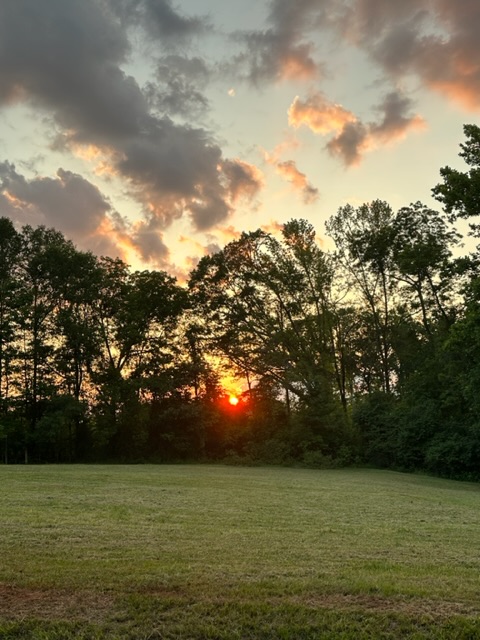
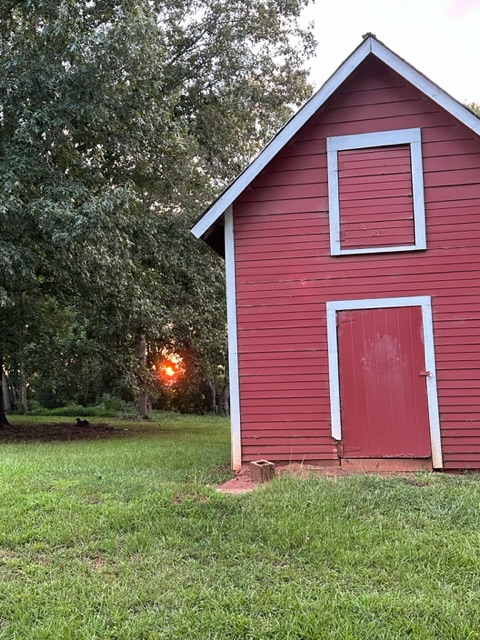
I glance out at the drooping leaves, heavy with the heat of the day here in middle Georgia and look to the western horizon, the copper tangerine sun hanging low in the branches and think, “What did I ever do to deserve this slice of heaven on earth?”

And for a moment, I feel the knowing spirit of Gladys here with me, nodding enthusiastically, urging me to love it while I can. She’s smiling from a better place, assuring me that for now, this’ll do.