Matt Forrest Esenwine is a New Hampshire-based author of a dozen children’s books and our host today for the third day of the October 2026 Open Write at http://www.ethicalela.com. You can visit the website and click on Open Write to read his full prompt.
Matt shares his process here:
Here’s all you do: pick an object, any object (most boring object ever – or not!), and begin thinking of ways to describe it. Once you have your list, scan through it and see what words/images/feelings you are drawn to. That’s your basis for your poem.
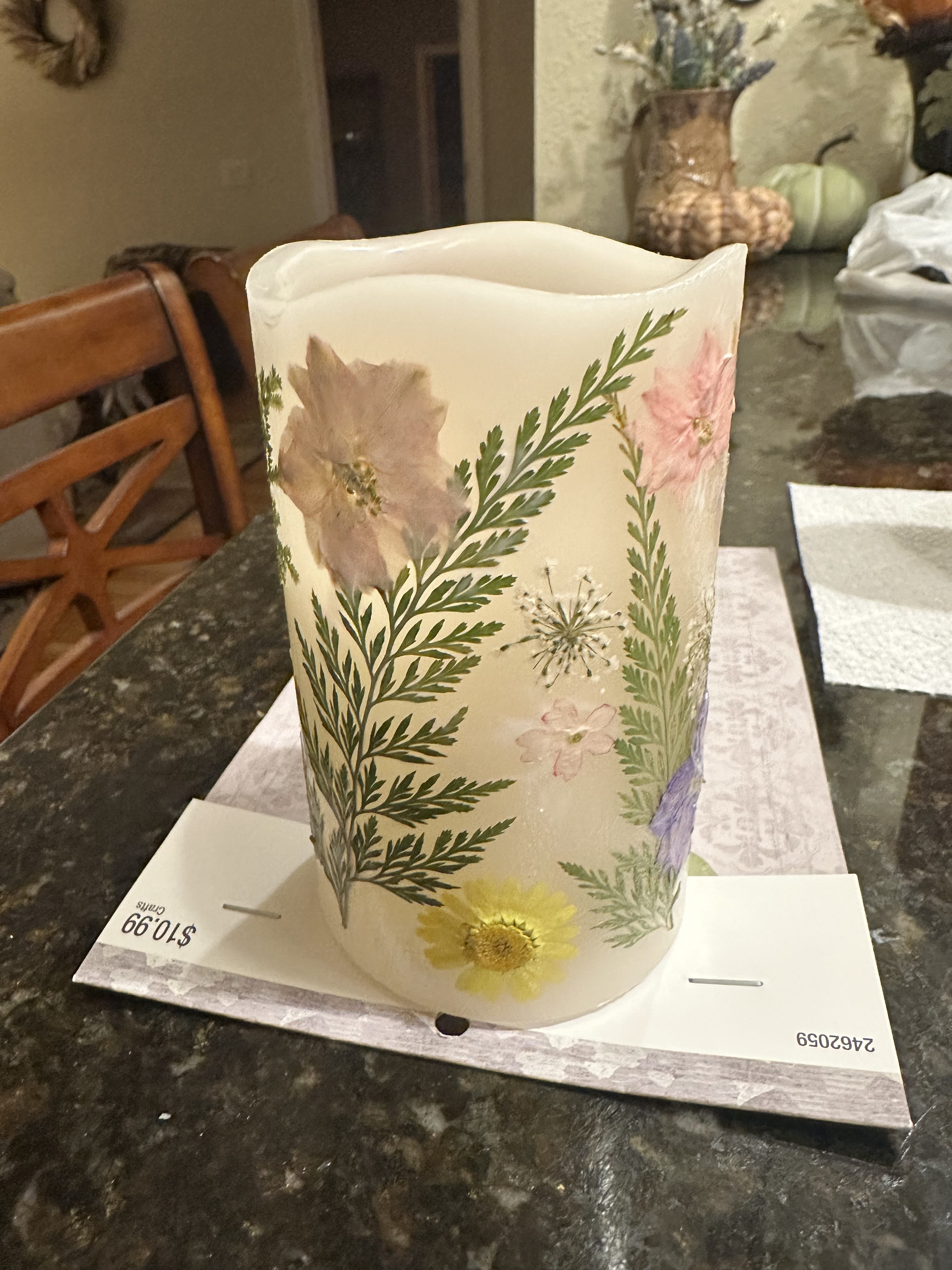
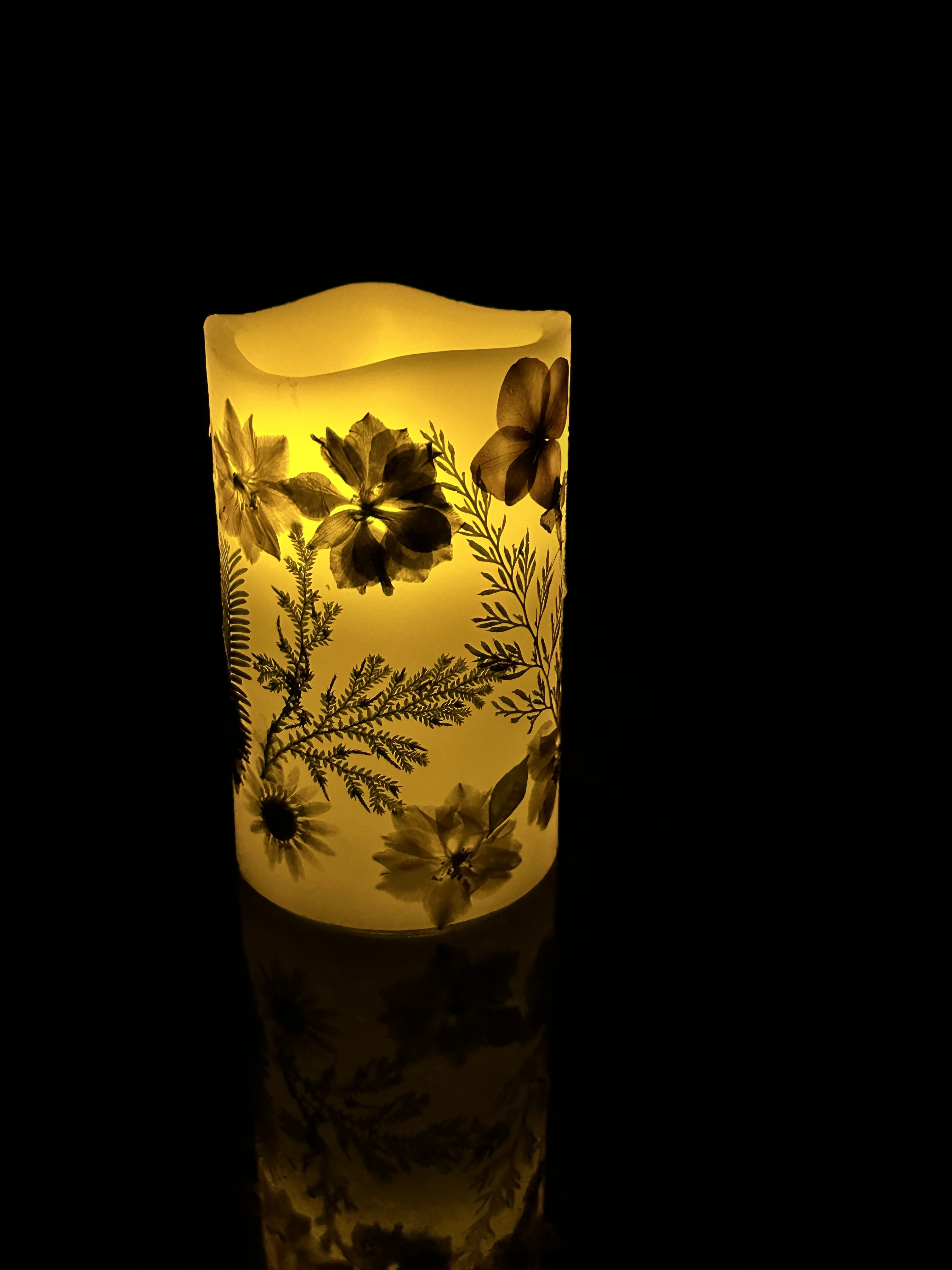
I’ve been decoupaging candles with pressed wildflowers lately – something my mother taught me how to do, and it keeps her memory close. I decided to write a haiku about the ones I have created. While I’ve been creating some flameless ones for my grandchildren from their birth month flowers to use as nightlights, I think smaller ones placed as seating card holders at a wedding reception would be a lovely wedding favor for guests to take home after gracing the tables with light during the gathering. They look wildly romantic, and the ones with faint pink take my breath away.
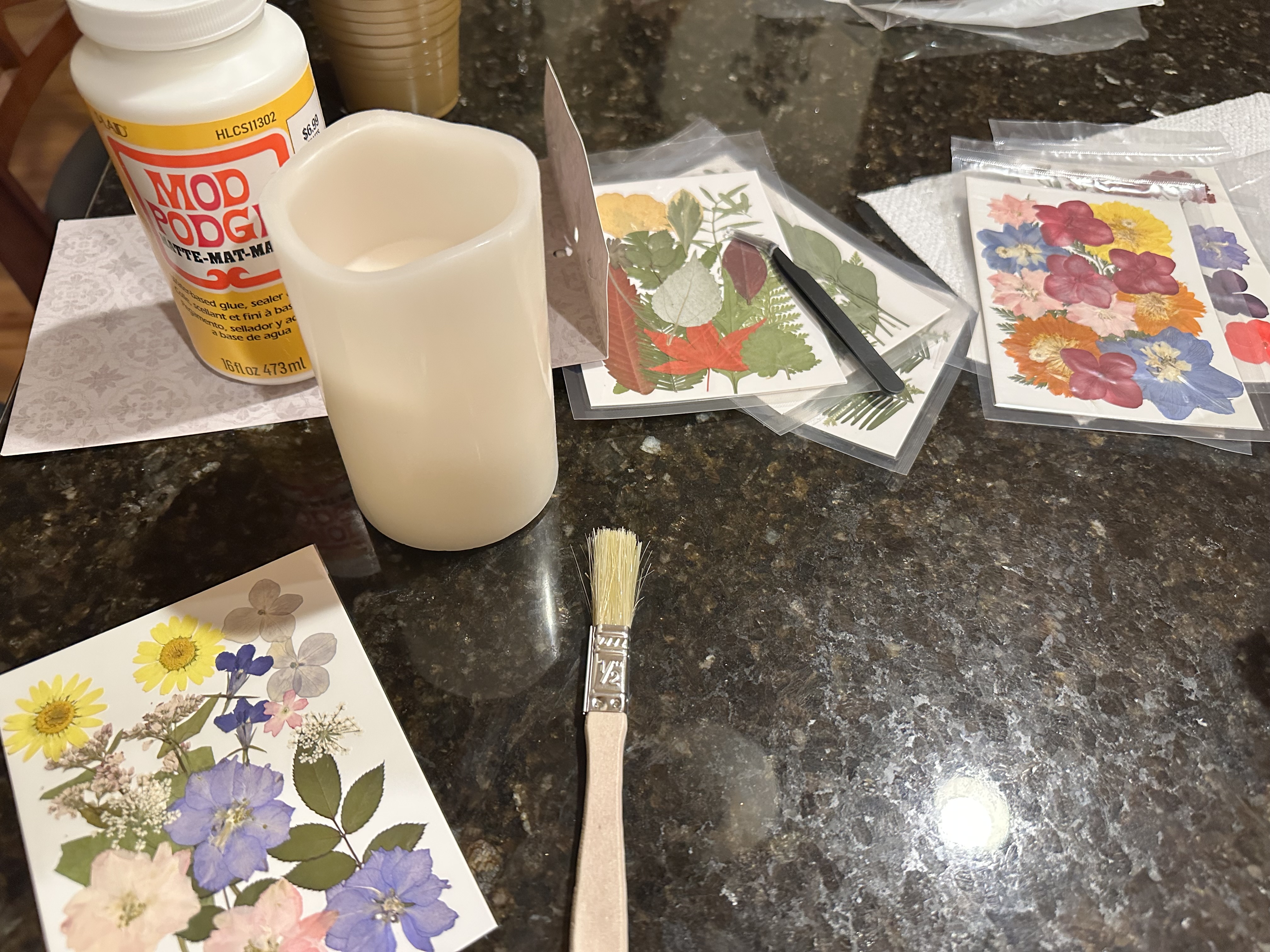
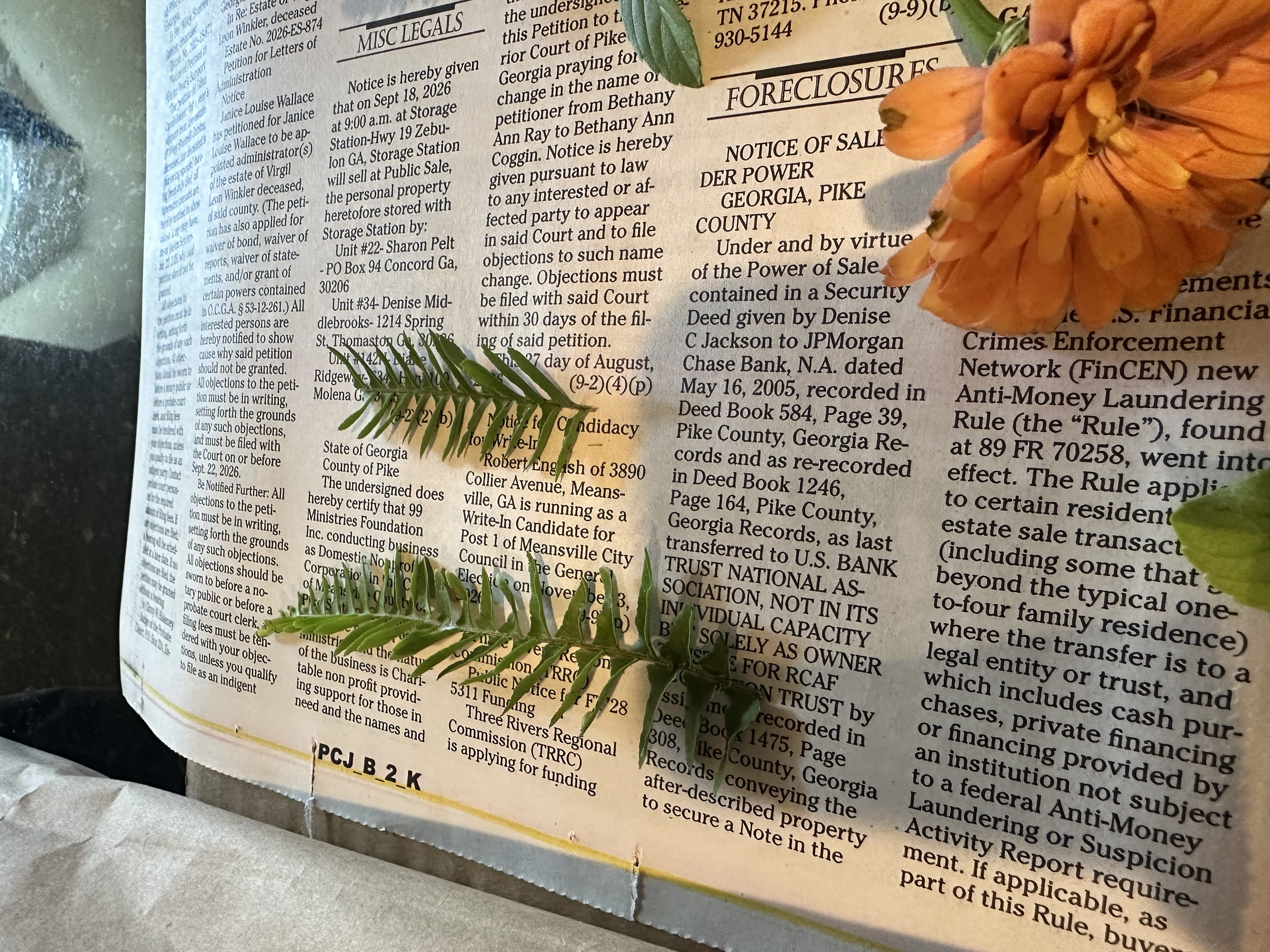
I used to love making pressed flowers for bookmarks and decoupaging plain white candles and decorative soaps when I was younger. My mother taught me how to take newspaper and fold it to match the pages of a heavy book and use that as a press. About six weeks later, we’d use tweezers to take the petals and stems and arrange them over a flat surface using Mod Podge. I think our hobby started back in the day when women carried hexagon-shaped wooden purses decoupaged in collage, with tortoise-shelled handles. Macrame purses were all the rage at that time too. As I was looking for some photos of the ones I’d possibly blogged about before, I did a quick search and discovered I had created a list of 50 things I planned to do in retirement from November 2024, and pressing wildflowers was one of them. How did I forget that list? Check it out here. The dream hasn’t changed much!
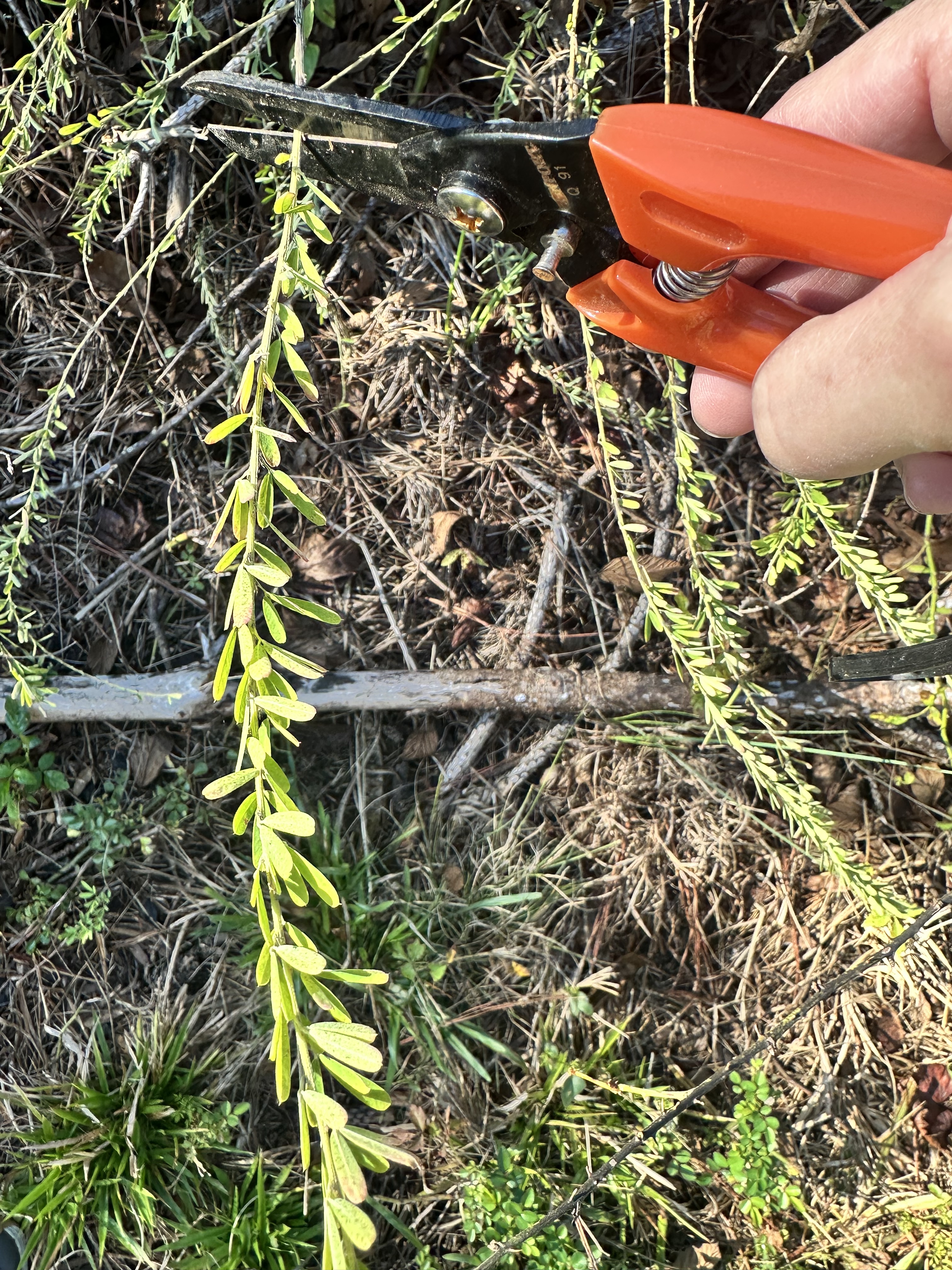
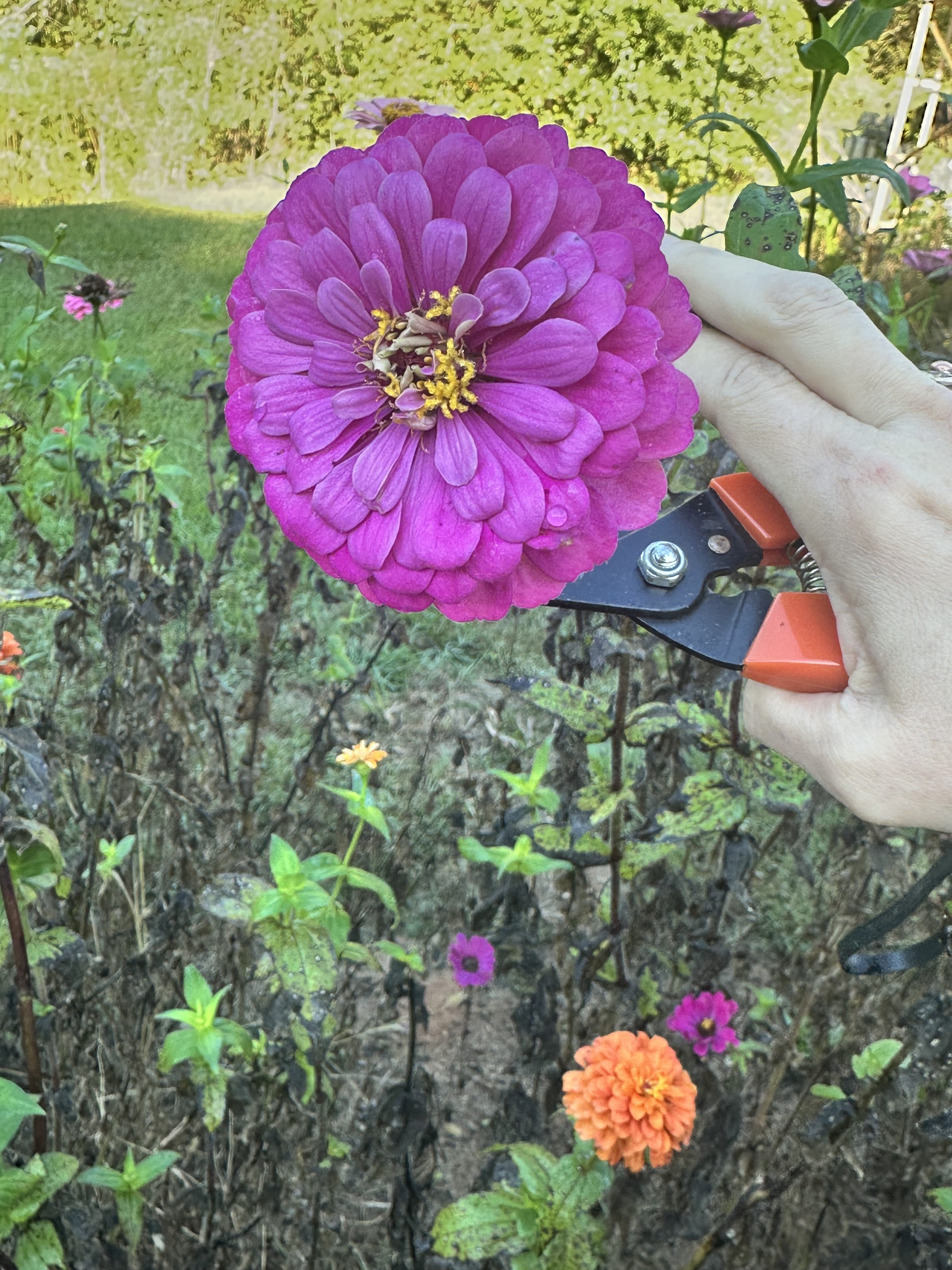
During the middle of last week, I called my sister in law to see about coming to get some zinnia clippings from her wildflower beds to press between old newspapers. Off I went, clippers in hand, and came home and pressed a paper sack full of greenery and flower petals I’d collected. In 2008, I participated in a teachers’ study along scientists doing research in the field in South Georgia, and I became the owner of my own plant press and field guide for the plant studies of native species. Still, I use newspaper and not the fancy acid-free white poster-thickness paper that we used throughout that summer in Americus, Georgia at the Jones Ecological Research Center.
For the first time, I’m pressing fresh basil, since a recent bouquet gift had an abundance of this fragrant herb. One thing that never changes: native Georgia ferns are my go-to greenery in any arrangement.
I’m marking my calendar for mid-November to check the plant press and create some decoupaged pillar candles for a Thanksgiving centerpiece. As we have lost mothers over the years, we light candles to remember them on Thanksgiving, and this year I have something other than the plain white tea lights in glass jars in mind. 🙂
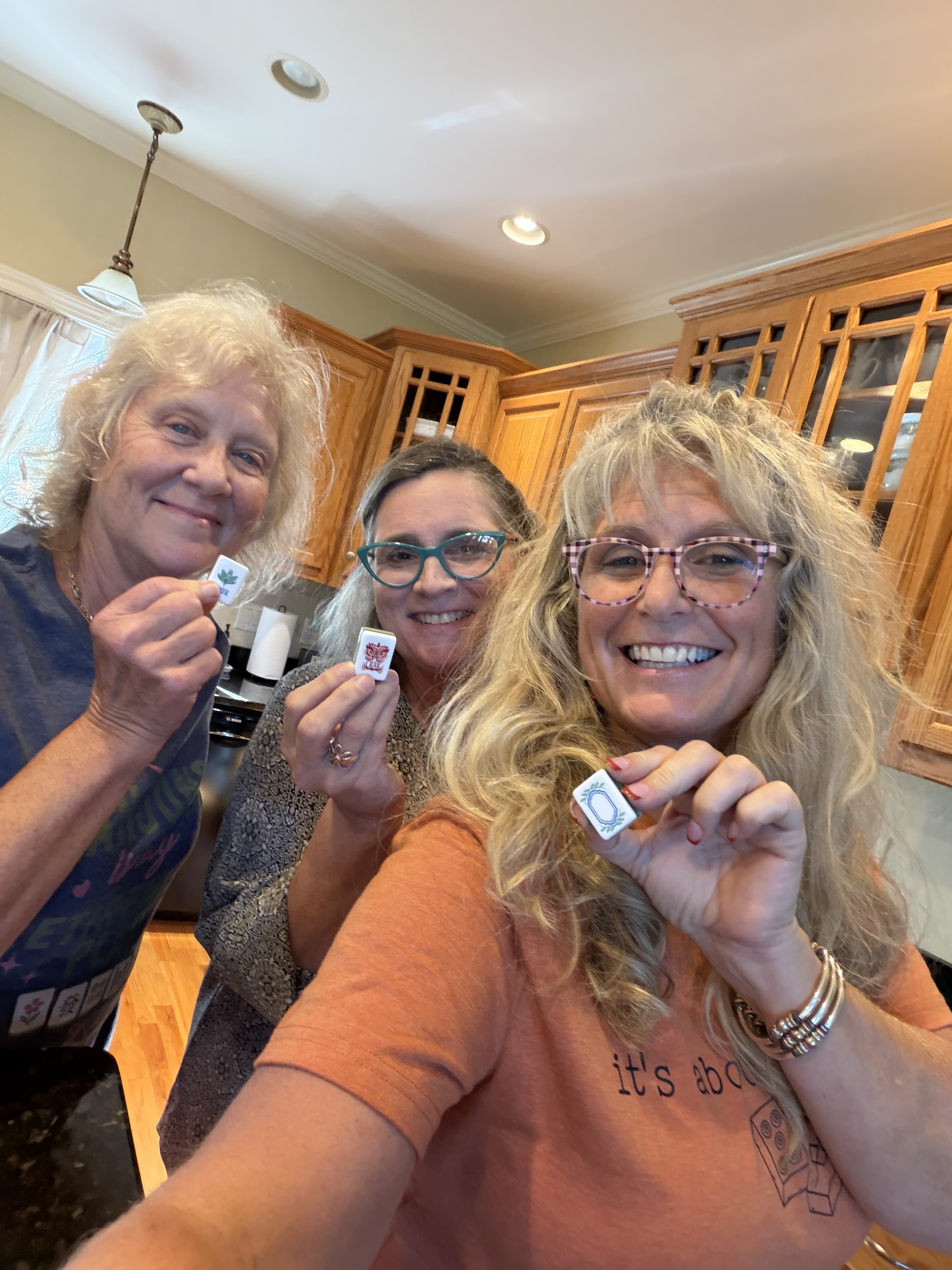
Sensei Susan, me, and friend and fellow Mahj enthusiast Christian
I’ve never played pickleball, but I’ve heard that the craze is so fast and furious that new players kidnap all their friends and drive them to the courts, taking extra clothes and gear and even letting complete strangers use whatever equipment they need to join in the game with zero awareness of any rules as they walk onto the court all bewildered. There, they hand them a paddle and explain all about the kitchen and who can go into the kitchen and who should stay out of the kitchen and a hodgepodge of rules that sound like the Charlie Brown teacher to a bunch of head-scratching people who suddenly find themselves in a surreal moment they didn’t choose, pinching their forearms and wondering how they actually got there. And then, these same clueless people now caught up in the madness are the next wave of new players grabbing all their unsuspecting non-pickleball-playing friends the next week and bringing them back for an initiation into the cult sport.
That’s a lot like Mahjong, only with far fewer physical risks of injury for the older folks who do not need additional help finding the ground and suffering injuries. My husband’s father experienced this when he played pickleball and ended up with knee surgery and months of physical therapy. But where crossword puzzles and Sudoku have been the traditional seniors’ choice for cognitive exercise to stave off the inevitable decline of functional brain cells and memory, Mahjong emerged onto the American scene like an Asian tsunami across the globe and up through the cracked-earth dust of history straight outta ancient China and settled in the homes of women who are now going broke buying tablescapes and four-layered theme tiles they store in Michael’s clear lidded candy jars in the china cabinets where their great grandmother’s heirloom dishes used to be displayed. Husbands everywhere are begging: Please, someone, make it make sense! It’s like a CrackDragon tile walked up to the New York Times puzzle page and said, “Hold my beer.”
It’s true. The latest trend in real estate in Texas is the Mahjong room, and if a home doesn’t have one, the wife tells the husband she wants to “look further” for one that does. Because, well, ….the whole group of friends must have a place to play on proper precisely-measured square tables that doesn’t involve a flashmob-style takeover of a Chicken Salad Chick on a random Tuesday at 10 a.m. There are entire YouTube video series sessions that feature how to store mats by rolling or hanging, how to read the official NMJL card, and how to choose tiles based on size to fit your racks and pushers (which are, by the way, sometimes deliberately selected not to be all “matchy-matchy” with the tiles and mat and tablecloth and lamp and dice dish).
And let’s talk about trinkets. Most often they’re tiny ducks or other little pinkytip-sized animals that are collected as trophies upon a Mahjong win that is declared valid with no opposition from the players at the table who have checked the exposed tiles against the card. These ducks are sometimes kept in a little pouch, so when your sensei who taught you to play Mahjong and lives two and a half hours away is preparing to come for an afternoon of games and will “bring her bag of ducks,” you don’t have to read that twice. You understand there is no typo there.
Even more, you understand that what seemed illogical the summer before you learned to play the game now makes perfect sense. It’s gospel, yet it can seem like learning a whole new language in two humorous Mahjong 101 and 102 lessons. It can be deep and carry life lessons, like that scene in Crazy Rich Asians. Even Julia Roberts plays, and insists that the craze is about making order out of chaos because it’s not a gambling game, and it’s not a drinking game. Folks who were complete strangers in the grocery store and bookstore and at church a few months ago suddenly become best friends. These same folks will drive hours to play away an afternoon, and they’ll bring Mahj gear and give it to you as a gift, along with their bag of ducks. They will talk strategy and explain reasons for pivots, and everyone will eat snacks and laugh all afternoon and send each other YouTube videos on game strategies, tips, and obscure rules and, of course, all the things they are putting in their Amazon cart. You’ll understand that while winning is fun, it’s just as much fun to lose because there is no losing where there is so much fun that you don’t even realize your brain is exercising and that you might not be the extreme introvert you once thought you were.
You’ll thank the good Lord you didn’t wait another day to retire, because you look forward to each day you can play with new friends, old friends, and your sister in law across the farm. And you’ll feel sorry for all those pickleball players who think they’re all that and a bag of chips. Because you know the real truth about what a kitchen is for.
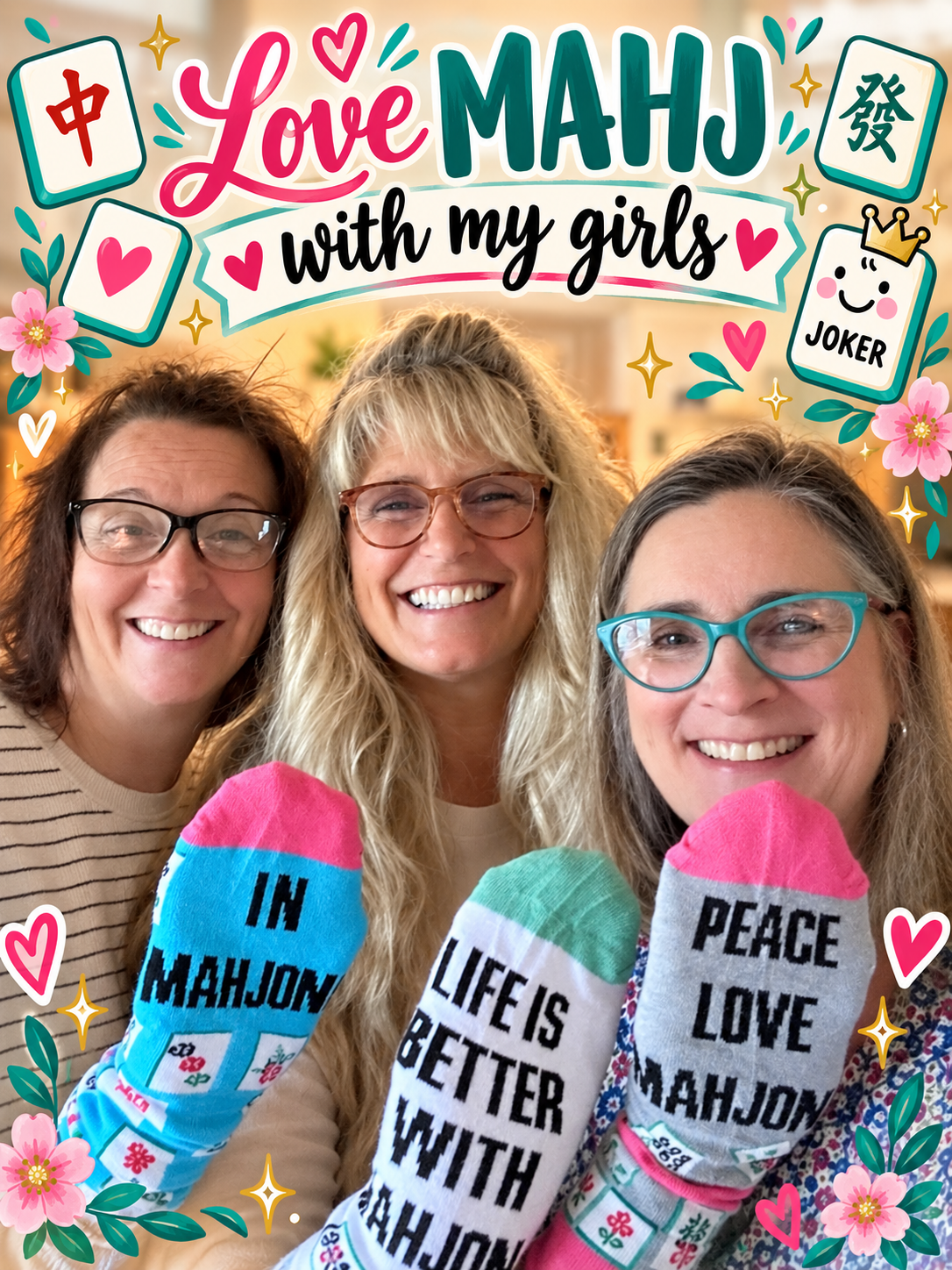
Bethany, Christian, and me – photo created by Christian
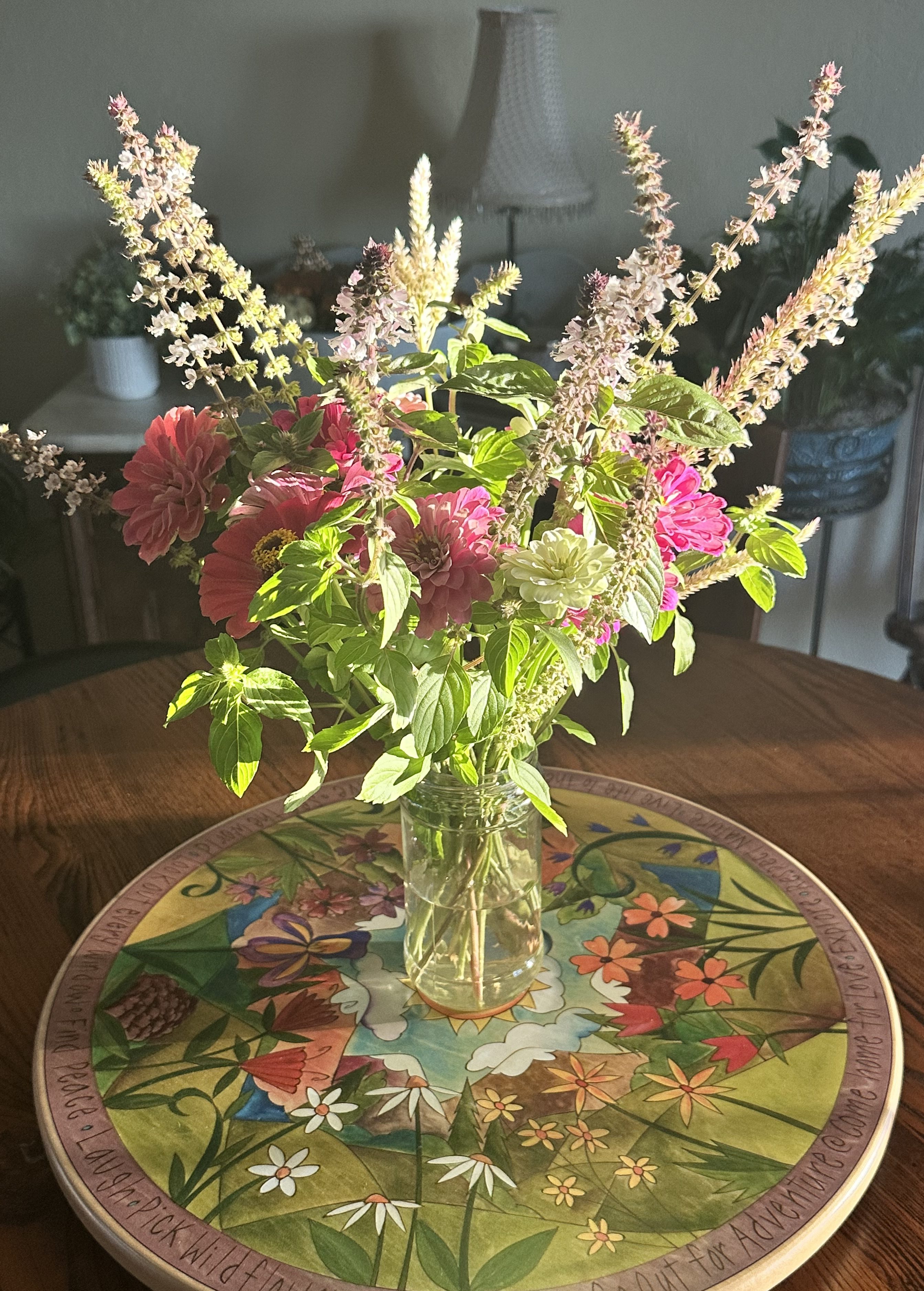
Our sensei brought these flowers and basil she grew in her own garden when she isn’t mowing grass in straight lines or playing tennis or teaching Mahjong
Retirement officially began for me August 1st, and each second and fourth Friday, I’ve begun reflecting on the first year of retirement in two-week windows and what it’s like in this new chapter of life – mainly because so many writing community and personal friends asked me how I would spend my time and whether or not I thought I would get bored. I don’t ever see getting bored in retirement, since I tend to keep myself busier than other people have ever tried to keep me. At the beginning of my first week off, I used a green spiral notebook to make a list of all the things I wanted to do — something enjoyable each week, blending in some new hobbies and routines as well. I remember my late father’s words, on retirement: You don’t retire FROM something, you retire TO something, and you’ll be busier than you’ve ever been. He was right, but the busy part is optional, like wearing real clothes on most days instead of my preferred loungewear. And I like having that choice in case I decide to stay home for two days straight and write, read, cuddle with dogs under a blanket on the front porch drinking coffee in the cool morning air, listen to music, and play Mahjong online in real time across the miles with friends.
Here are some things I’ve enjoyed in my first official ten weeks of retirement, with each being described in detail in previous posts :
Here are the most recent things I’ve added to my list of 100 Things I’m Enjoying in Retirement. I’ve reversed the order, going backwards in time to the beginning.
43. Virtual Author Reading for Time in the Landscape – Although I did not attend the gathering in person in Massachusetts for the Time in the Landscape event in September, I sent a recording of a reading for those in attendance. I’m enjoying reading the book in small increments as a slow read to make the book last longer. My hard copy of the book arrived in the mail last week, and the cover design is stunning. A color rendering of each of the juried art installments along the trail is included with the poems so that readers can see what inspired each poem.
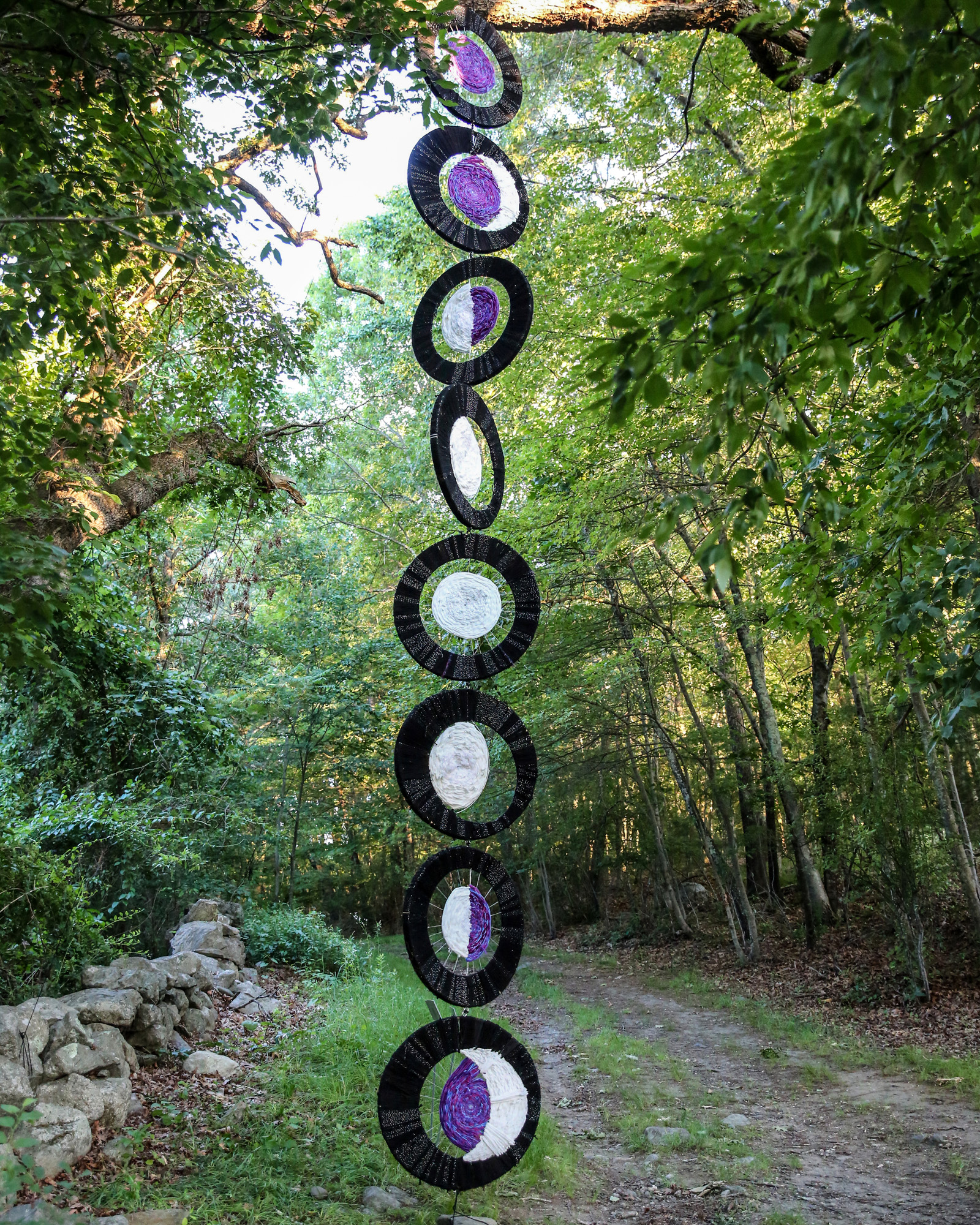
This was the art installation I chose to write a Tanka about; it reflects phases of the moon.
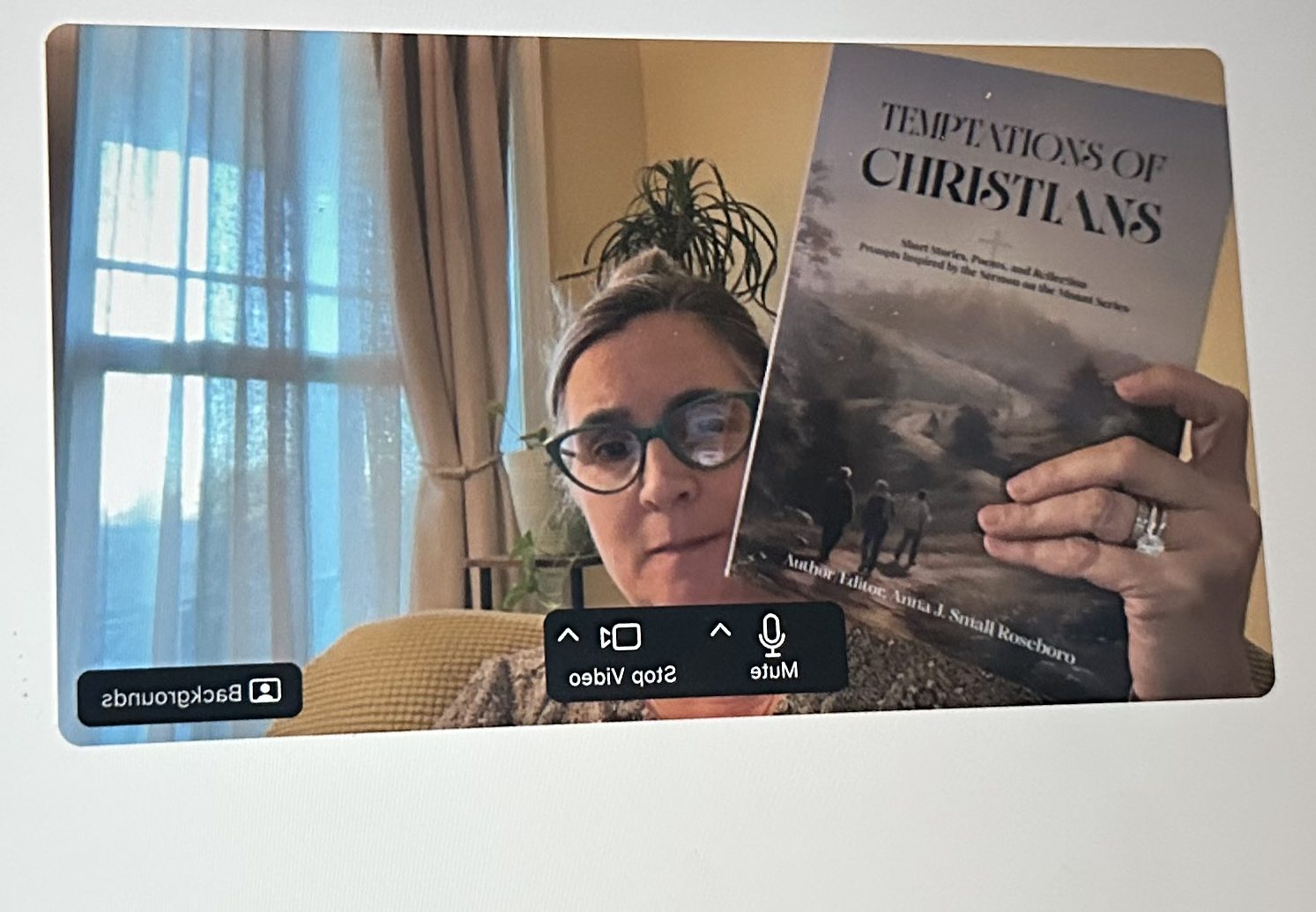
42. Author Readingfor Anna Roseboro’s Book Study- I took part in an author reading for a book study on the anthology Temptations of Christians. Despite the scary intrusion by a small group of folks intent on disrupting the event, I did manage to laugh when I looked back and saw that my Ponytail Palm Tree in the background made it look like I was sporting an interesting hairpiece for reading my short story excerpt.
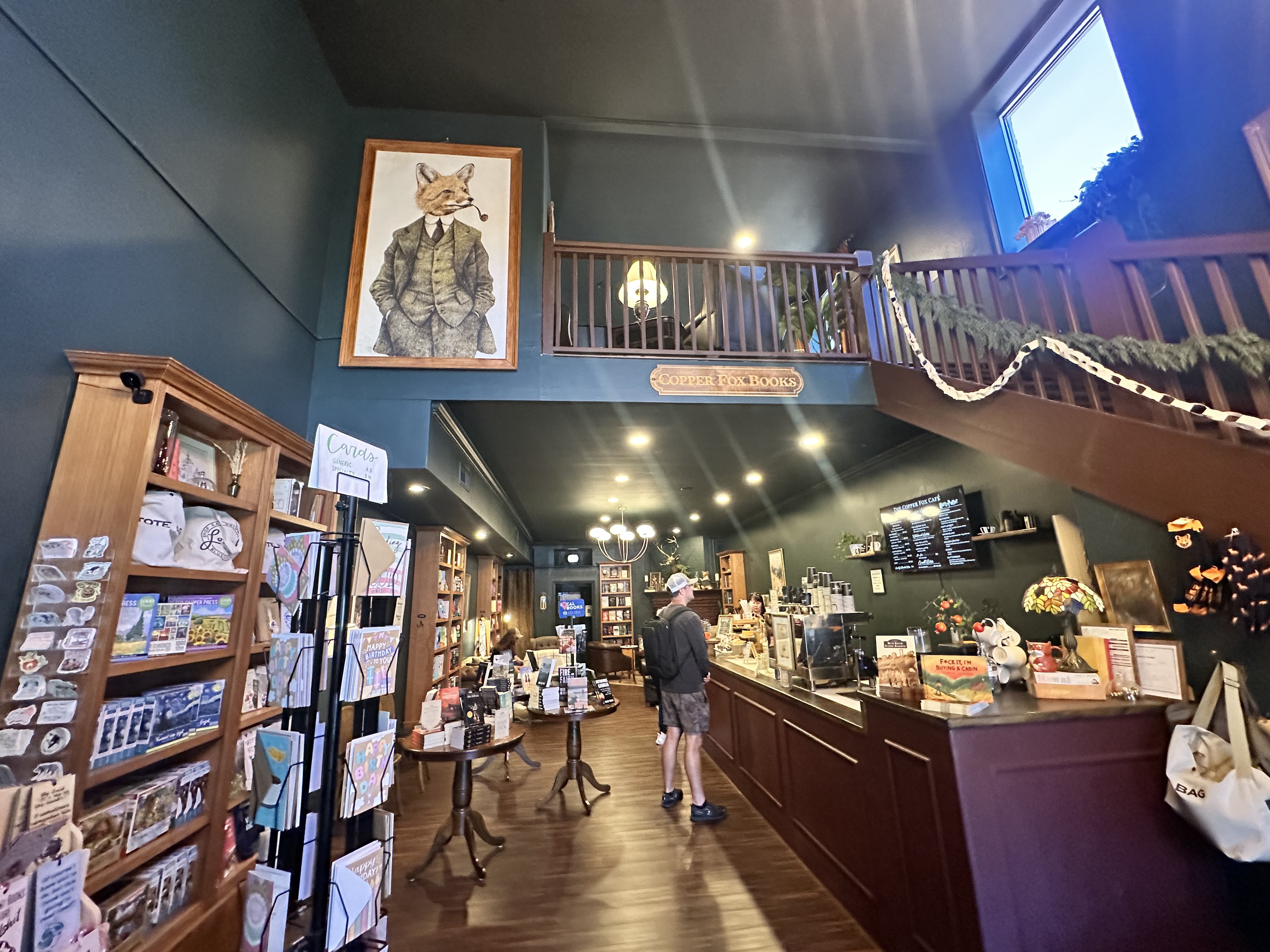
41. Indie Bookstore Shopping – I visited bookstores in several small towns and savored the vibe of each. In a Barnes and Noble or Books-A-Million, the vibe is all the cookie-cutter same, and still I’ve never met a bookstore I didn’t like. In an Indie bookstore, though, each space has such a unique feel that it’s almost as if the bookstore could be a character with a complete personality and traits. Logos, shelves, wall colors, art, smells of inked pages and coffee and candles and warmth, bags and bookmarks and other merchandise, the rich woods of checkout counters and the way that furniture is arranged are all like their own artistic statements of how small worlds are contained in the books themselves. I particularly love displays where curations have been arranged on themes with book covers facing out or up and plants and small items adorning the display table.
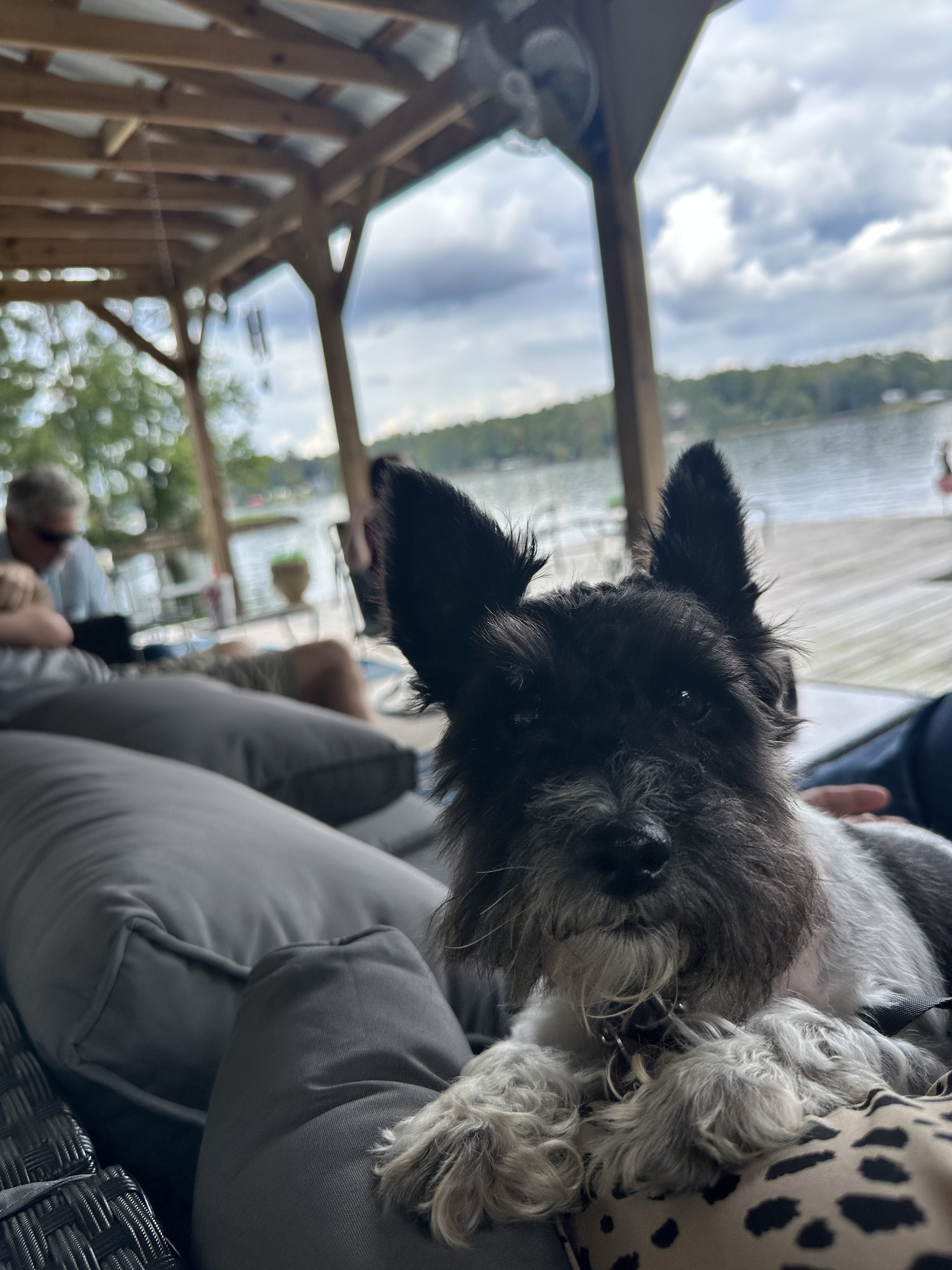
40. Dock Time on Jackson Lake in Georgia – we spent an afternoon on Lake Jackson with my husband’s brother and his wife to enjoy an overcast and breezy day on their dock, just sitting and loving a relaxed pace. It was fun watching the water enthusiasts speed by, while the clouds ambled at their own pace and made pictures in the sky for the finding, like an I Spy book turning pages above our heads.
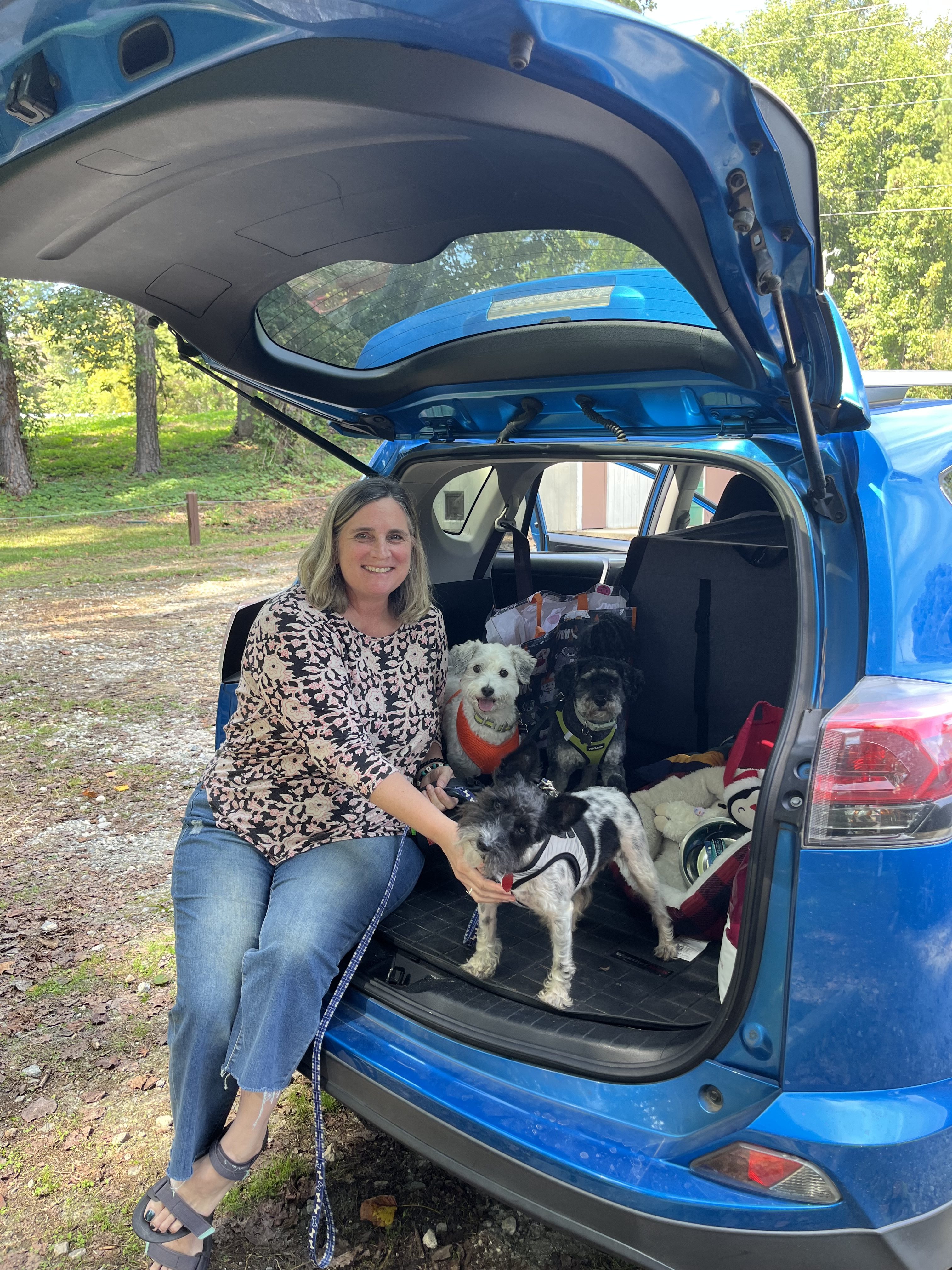
39. Adopt a Dog – I adopted a 6-year old male Schnauzer from the rescue where I adopted two previous dogs, and he is adjusting beautifully on the Johnson Funny Farm. He came to us as AJ, which we shortened to Jay (Gatsby) as a literary name nod to our Fitz (F. Scott Fitzgerald), who left us last spring as he crossed the Rainbow Bridge. But I call him The Crackdragon for his feisty manner and the way he high-step march/skips along, hiking his back legs up. My favorite Mahjong tile is a crak dragon among the craks, bams, dots, jokers, and flowers.
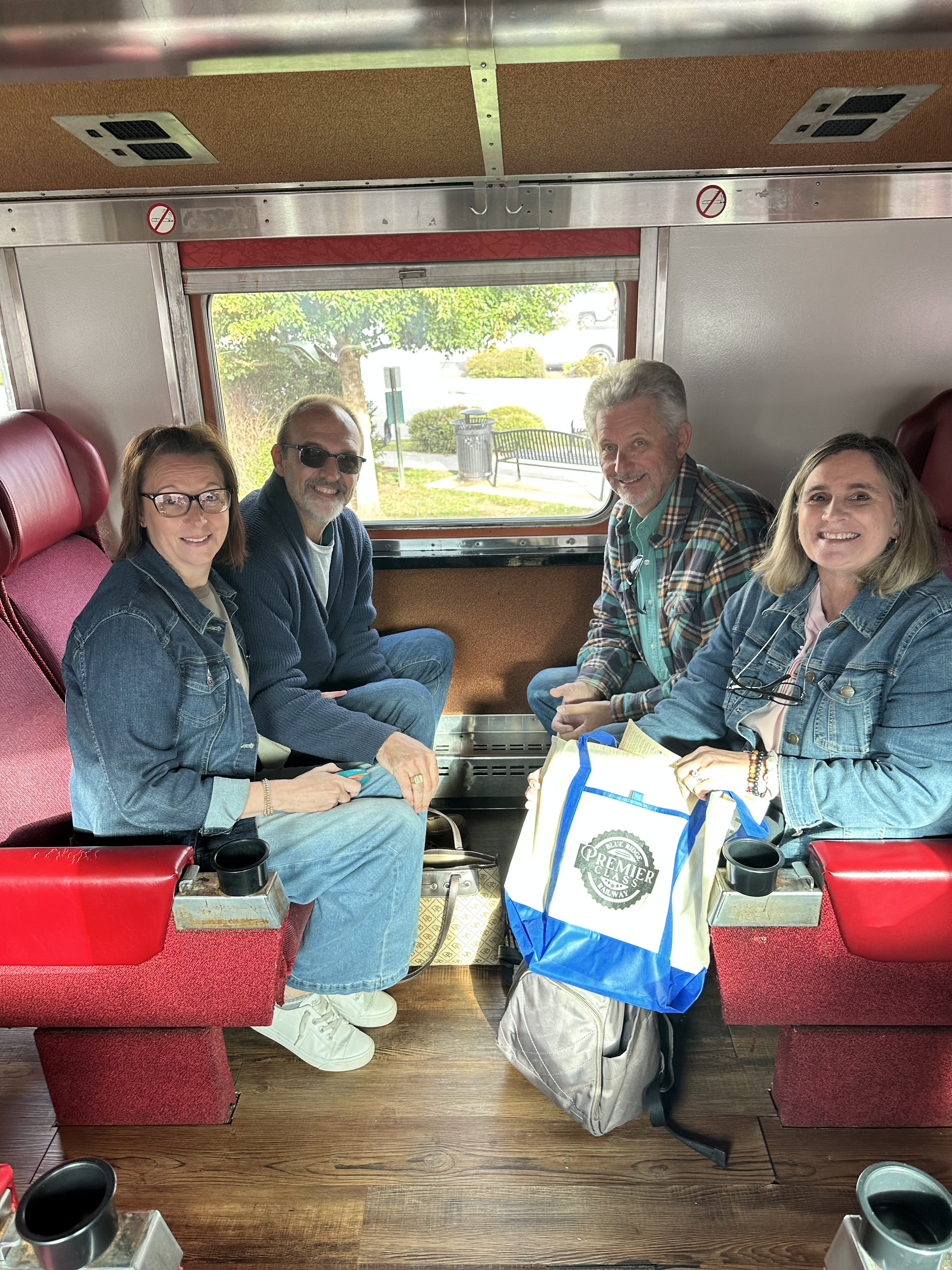
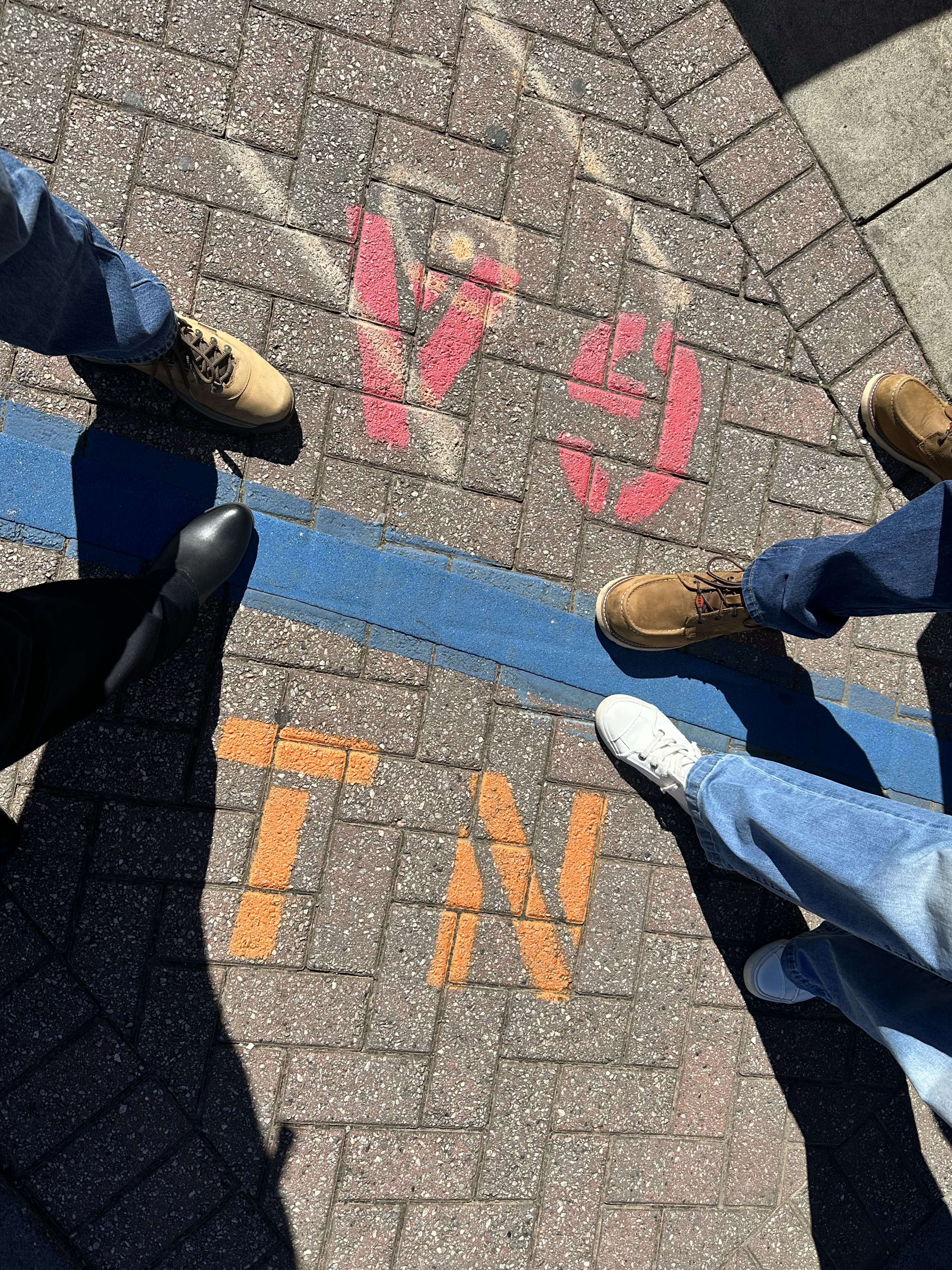
38. Train Ride to See Fall Foliage – we rode the Blue Ridge Scenic Railway along the Toccoa River from Blue Ridge to McCaysville, Georgia and Copper Basin, Tennessee to see the beginning of leaf season. It was a welcome way to enjoy the beginning of cooler temperatures and see how the landscape changes just in a short geographical distance. I love that about road trips and train trips where I get to see the actual land not from a plane.
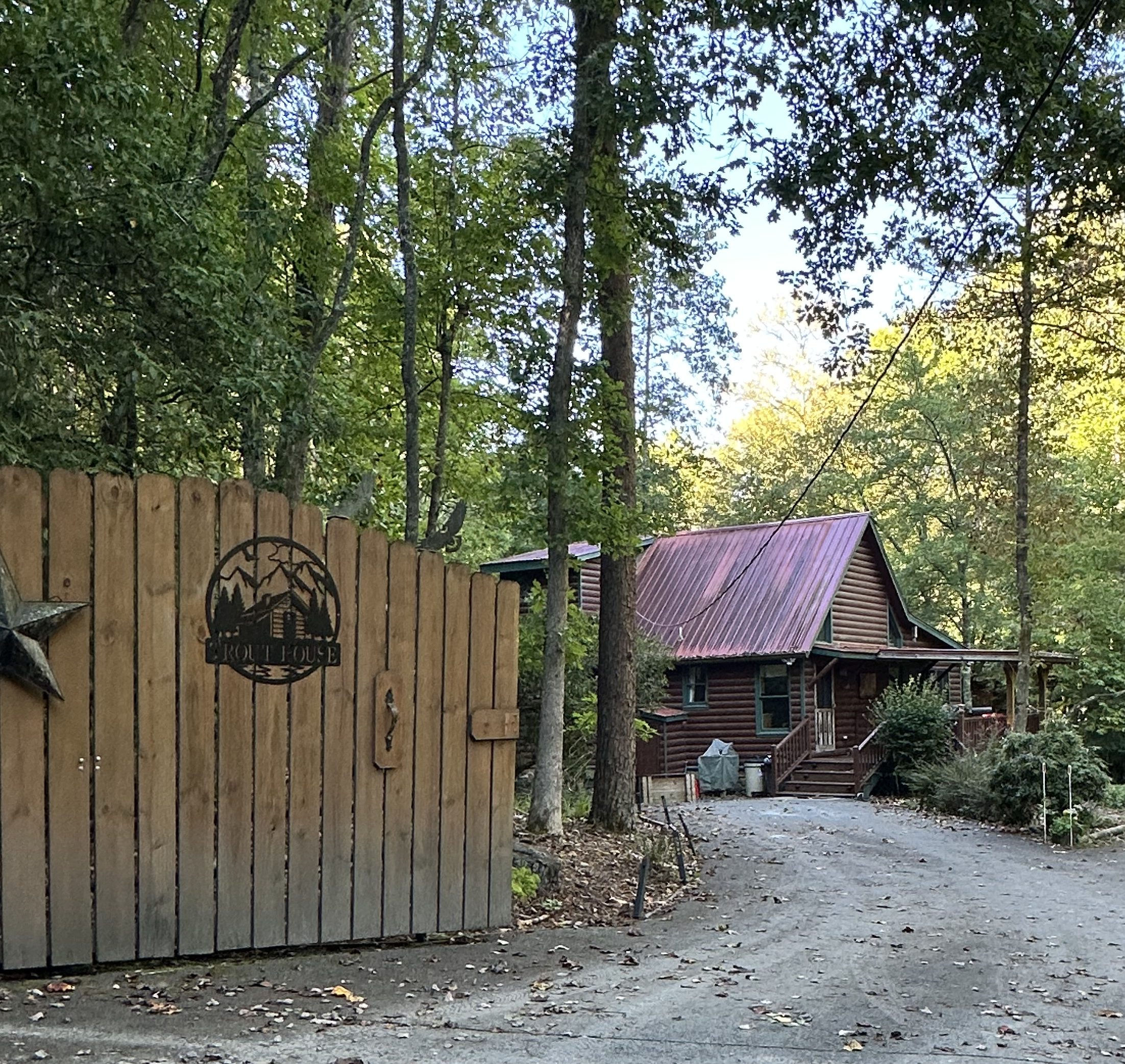
37. Cabin for a Birthday Celebration in North Georgia – we rented a VRBO called Trout House in Mineral Bluff, Georgia to spend time with my husband’s brother and wife for their birthday month. Little did we know at the time that my brother in law would suffer a heart attack two weeks before his birthday, and this trip would bring a whole new perspective on the importance of slowing down and spending time with those we love. He is physically fine, but the wake-up call when we have a close call like that can leave us spiraling in our head space for weeks, months, and years after the scare. And so we press onward, making new memories and living life to the fullest each day.
Here are my previous 36 Items on the Retirement List in countdown order back to the beginning:
36. Fall Baking
35. Hosting Open Write
34. Kindred Spirits September Book Club
33. Mahjong in Blairsville, Georgia
32. Daytripping for Lunch and Small Town Adventuring
31. Hiking the Appalachian Trail
30. Camping at Vogel State Park
29. Lunch with Friends
28. Almost-Birthday Pedicures with my Sister-in-Law
27. Mahjongg Regular Group Formation
26. Stafford Challenge Writing Workshop
25. Stafford Challenge Small Group Zoom Meetings
24. Dolly Parton Tribute at the Grand Ole Opry in Nashville, Tennessee
23. Labor Day Camping at F. D. Roosevelt State Park in Pine Mountain, Georgia
We spent Saturday afternoon with Briar’s brother and sister in law, sitting outside with them on their dock on Jackson Lake. The weather was perfect, and the breeze delightful. These are the moments I have looked forward to in retirement – being able to share time, unhurried, just breathing and being, without the pressure of work-related deadlines and duties.
Jay enjoyed some time getting to know his new family members in small doses as he develops trust in his new home with us. I can only imagine how challenging it is for dogs whose circumstances change abruptly, and my heart hurts for him when I think about how he must be feeling, constantly on the lookout for those he has spent the last 6 years loving.
a day at the lake
recalibrating our pace
in good company
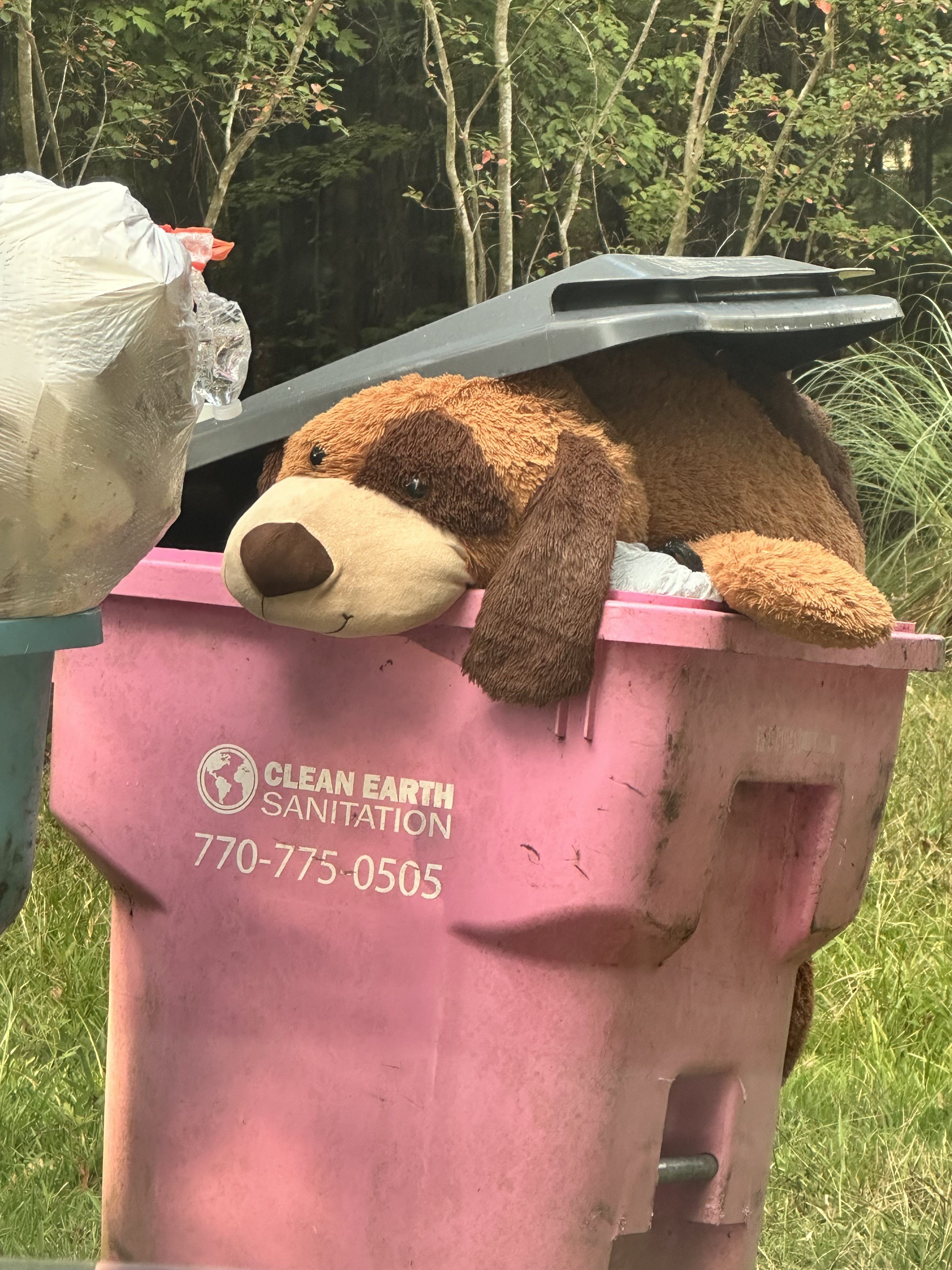
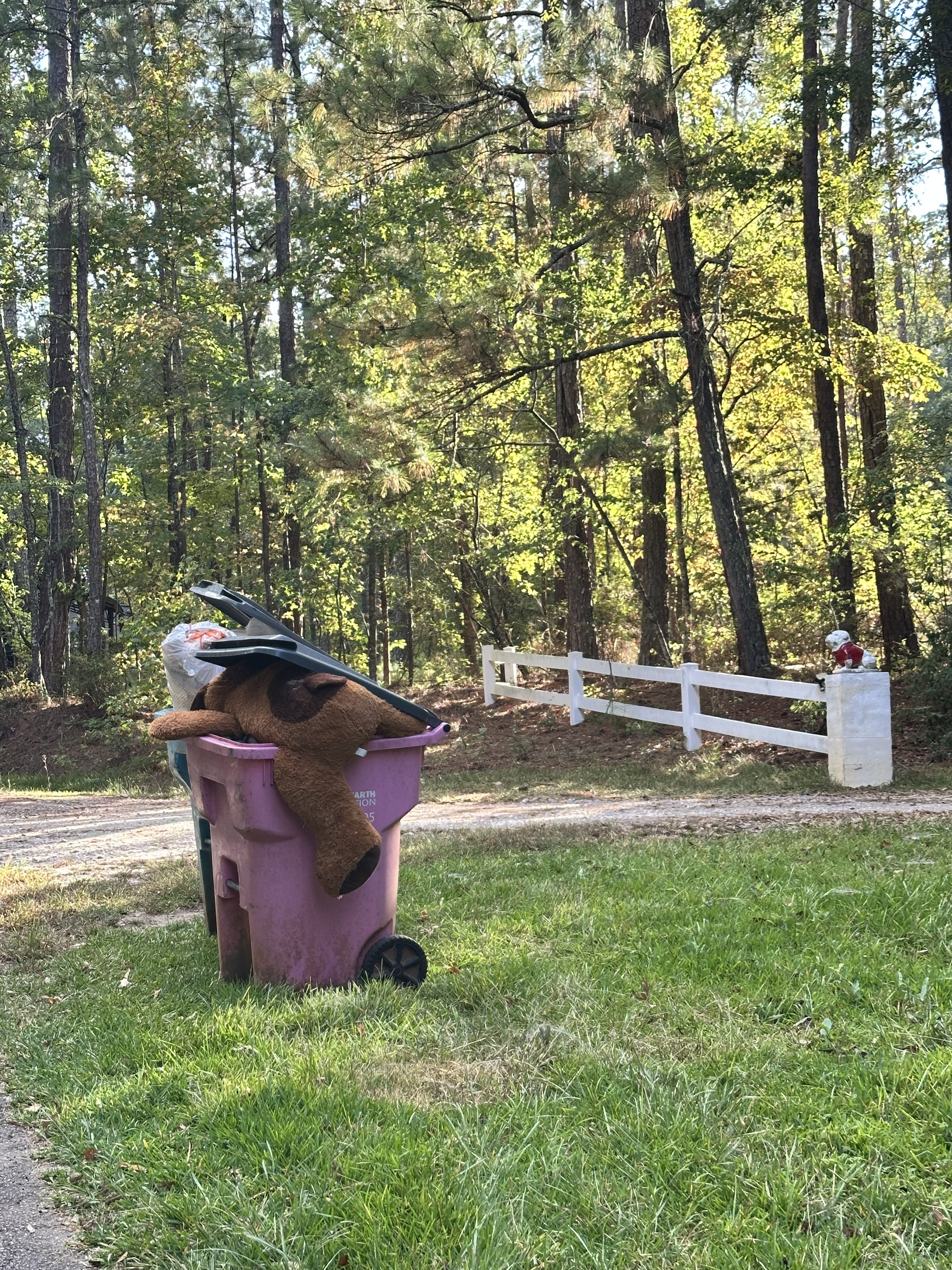
As we were traveling, I saw a stuffed dog in a trash can along the side of the road and thought of the similarities to the situation. A loyal dog, there to comfort and bring joy, now kicked to the curb. And my heart felt heaviness and hope all at once – glad I can be there to save a dog who needs a home he can depend on. I’m so thankful that rescue organizations exist for dogs like Jay, and for all those who open their arms and hearts to be filled once again with the love of a dog who can help heal the ache.
A lot goes into a Gotcha Day – for both a rescue organization and a family adopting a dog. And sadly, for those who make the choice to surrender a dog they can no longer care for – sometimes through no fault of their own, and sometimes because they are heartless. It’s not my place to judge either, but instead to open my heart to the little victims who do not understand why their circumstances have changed. I left early yesterday to drive to a dog park halfway between my home in Williamson, Georgia and a foster’s home in Canton, Georgia to meet and adopt a miniature Schnauzer who had been surrendered to a rescue organization here in Georgia a month ago. We met at Sweetwater Park in Austell to determine if this was the right match, and I followed her to Hickory Trails Park in Canton to sign the papers once I knew he would get along and that my current dogs would accept him as a brother. I was part of the matching service, where someone shares exactly what they want in a dog to the adoption organizer and they start the search for the perfect match.
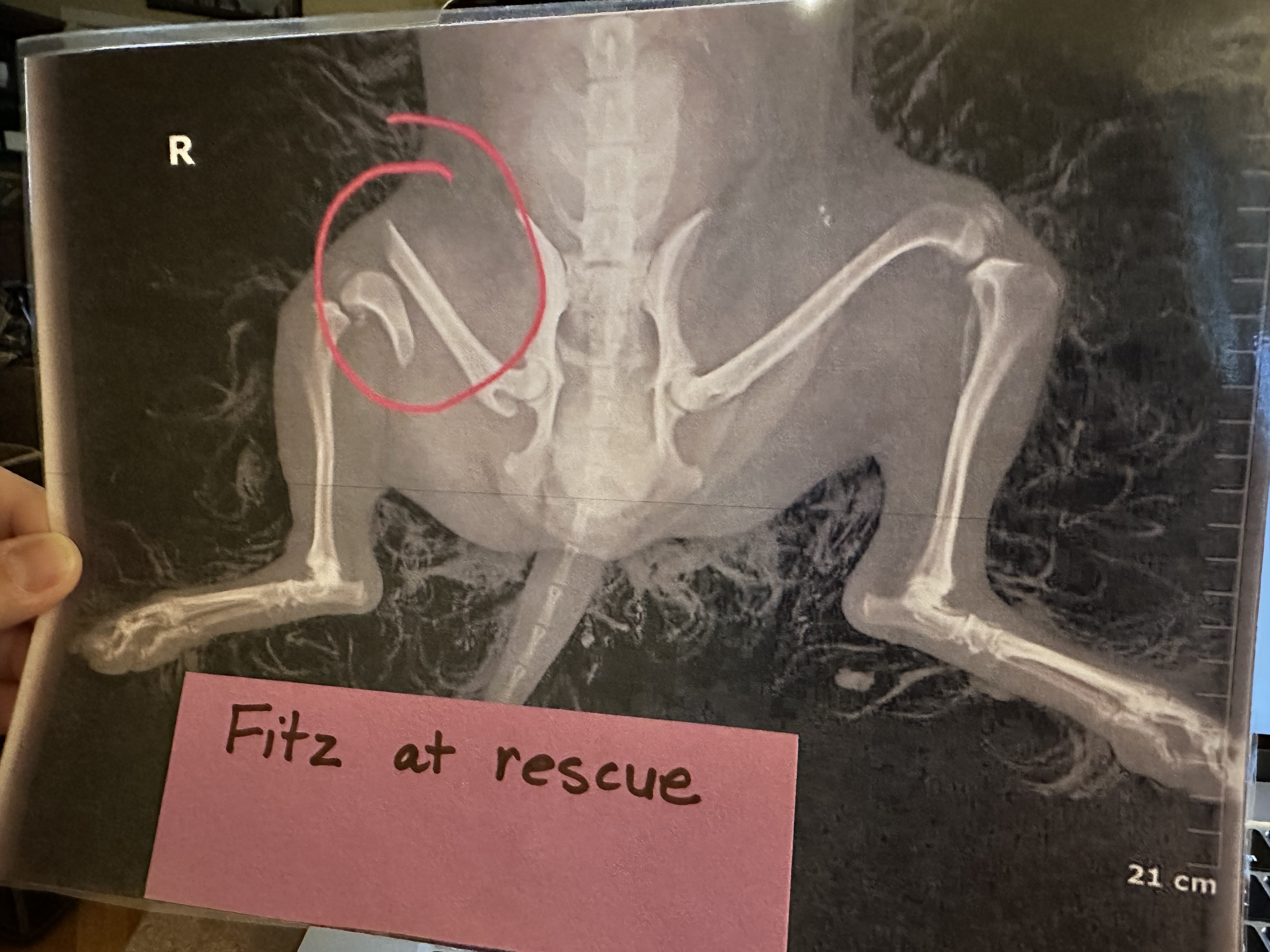
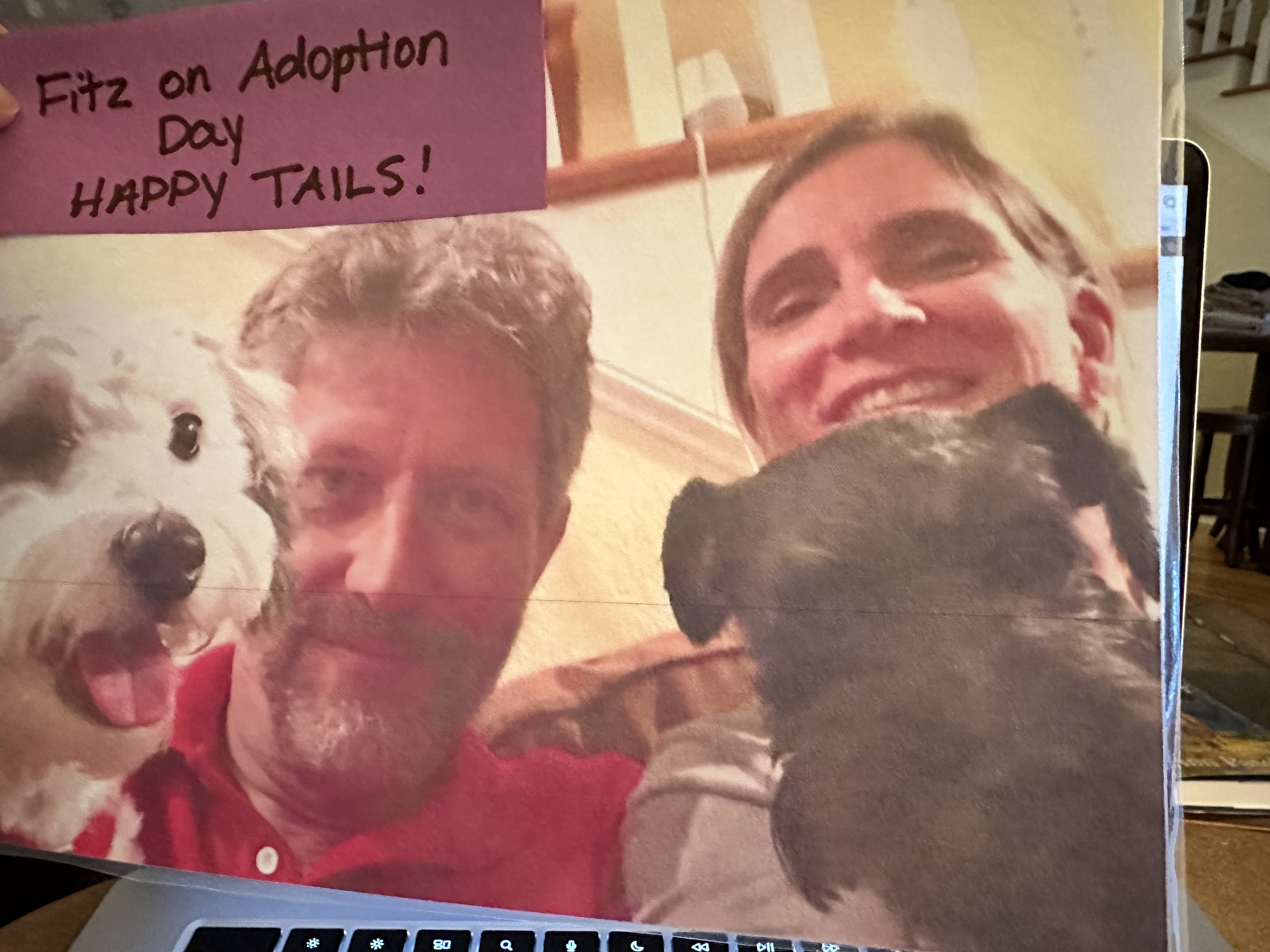
They say your dog of today is sent to you by your dog of yesterday, and I believe it. I believe my Fitz got across the Rainbow Bridge and knew how badly my heart was aching. I grieved him properly, but I hung onto this: I’d adopted Fitz from Schnauzer Love Rescue as a mid-life miniature Schnauzer in the range of 5-8 years. Dogs that are classified as “senior dogs” are some of the most challenging dogs to rehome, and Fitz was no exception. Rescue organizations know that it is also much harder to adopt solid dark-colored dogs because they do not photograph as well for cute pictures. Fitz came to us with ailments ranging from bad teeth that would lead to painful CUPS (Canine Ulcerative Periodontal Syndrome) and a badly broken but healing leg they’d somehow managed to save and road rash, which indicated he may have been thrown from a moving car. I’d followed Fitz, named Henry at that time, throughout his journey with his foster mom, Nancy Delf of Cumming. She kept me updated at every turn until the day Fitz was ready to join our family. And when he was, I had no hesitation signing the dotted line and pouring my whole heart into loving my Fitzie. I knew he was long past puppy stage and that he would have a shorter time with us, but I also knew that I had the love I needed for the little black Schnauzer who would become my soul dog in a matter of weeks.
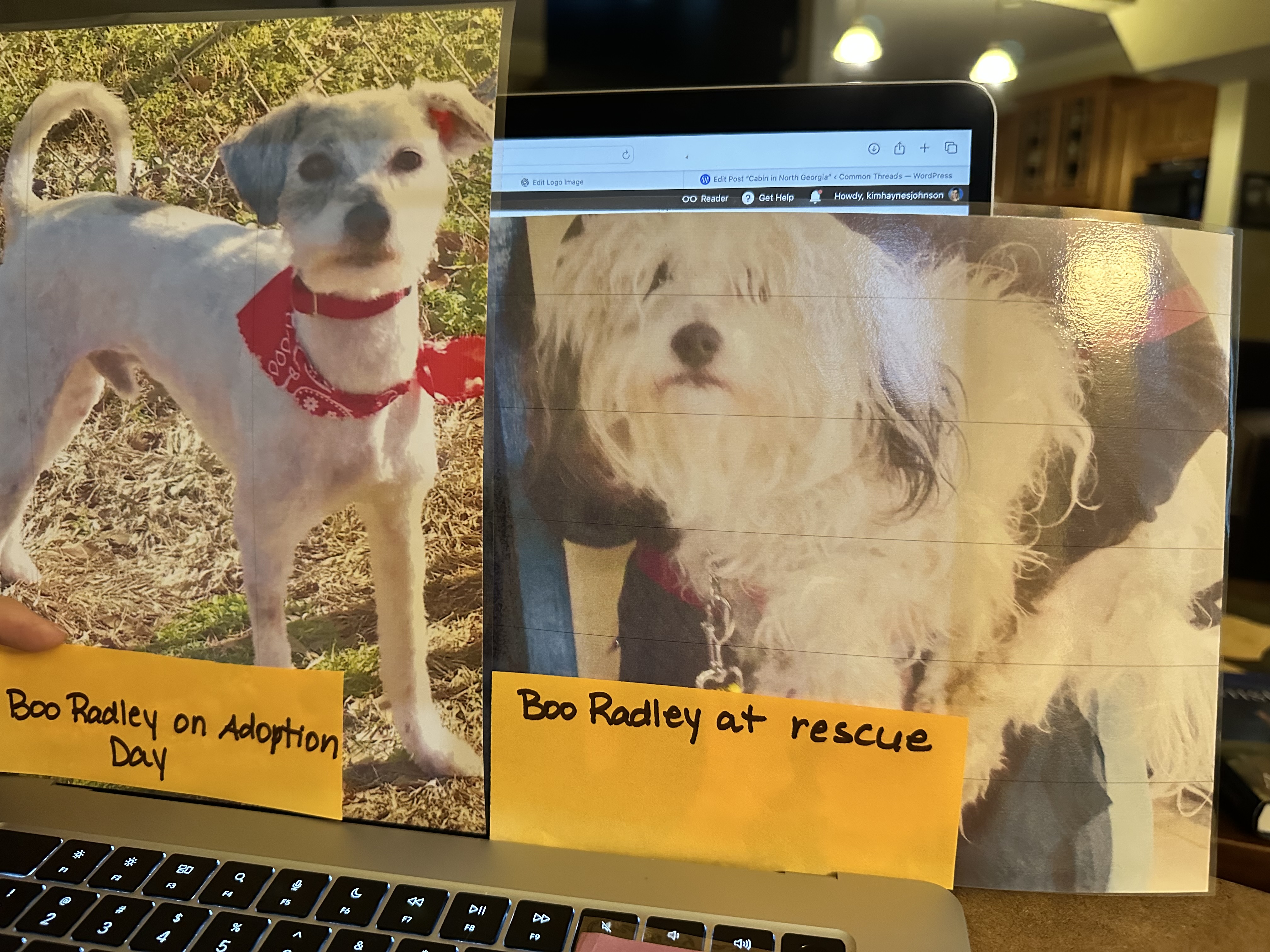
Boo Radley came before Fitz, and he had been abandoned in a duplex in McDonough, Georgia by a family who’d up and left, leaving him there with a supply of food and water. He was in rough shape for a one-year old Schnoodle when the landlord showed up and took him to a rescue organization. He was severely matted and trembling. They couldn’t even tell what kind of dog he was. I first saw him in the back of a van an hour after intake, and it broke my heart. To this day, he is tormented by flies who manage to slip in the front door of the house and he shakes like a leaf if a smoke detector goes into beep mode or he smells the heat of a toaster. I’m glad I don’t know his full history – – it might break me if I did.
And then there was Ollie, who came to us shortly after Fitz. He was a young stray on the streets of Cobb County, and his foster mom in Gainesville never knew he could bark until I’d sent her a video of us playing ball and him getting vocal with his demands that we throw it again in a timely fashion, his way of saying none of this dawdling between throws! This dog is serious about his play time.
Ollie on Gotcha Day in Gainesville, Georgia
Surrender stories always break my heart. My brother’s dog, Kasa, had been shot in the foot (probably trying to steal a chicken to eat) and was living under a trailer in someone’s driveway in my own county when the frantic call for rescue came. Ken had lost his beloved Feivel, and his heart was ready to love a dog again. A Brittany takes a diehard dog lover with all the anxiety of that breed (we didn’t know that at the time), but if ever there was anyone who was going to be able to give Kasa a good home, it was my brother Ken, and he loves her like a daughter dog. My late dad’s dog, Kona, was a divine gift from my mother in Heaven. I’d had the flu and was sleeping in the other room to avoid keeping my husband awake all night. A post in the wee hours of Valentine’s Day that year caught my eye between coughing fits and sleep. A school counselor in Florida going through a divorce had a 6 month old Schnoodle he needed a home for. When I met him halfway between our towns in the Walmart parking lot in Tifton, Georgia, he was wearing a Florida State University t-shirt: a sure sign from my mother in Heaven that this was her doing. Let’s face it: no one gets a 6 month old Schnoodle for free, and I’m half convinced that I was entertaining an angel unaware since the man never said one word to me during the entire exchange – – he merely wept and handed her over to me through the driver’s side window. My brother and I delivered her to our dad and told him he had 24 hours to decide whether to keep her, or I would come back and keep her as mine. And as he lay dying in the hospital years later, he called her next owner (not me) to his bedside to explain to his friend Ann that he wanted her to keep taking Kona to the dog park she visited everyday and to stay connected with all her dog friends on St. Simons Island. She tearfully accepted Kona, telling Dad, “I’ll take her, and I’ll always have a piece of you because of her.”
You can’t make these stories up.
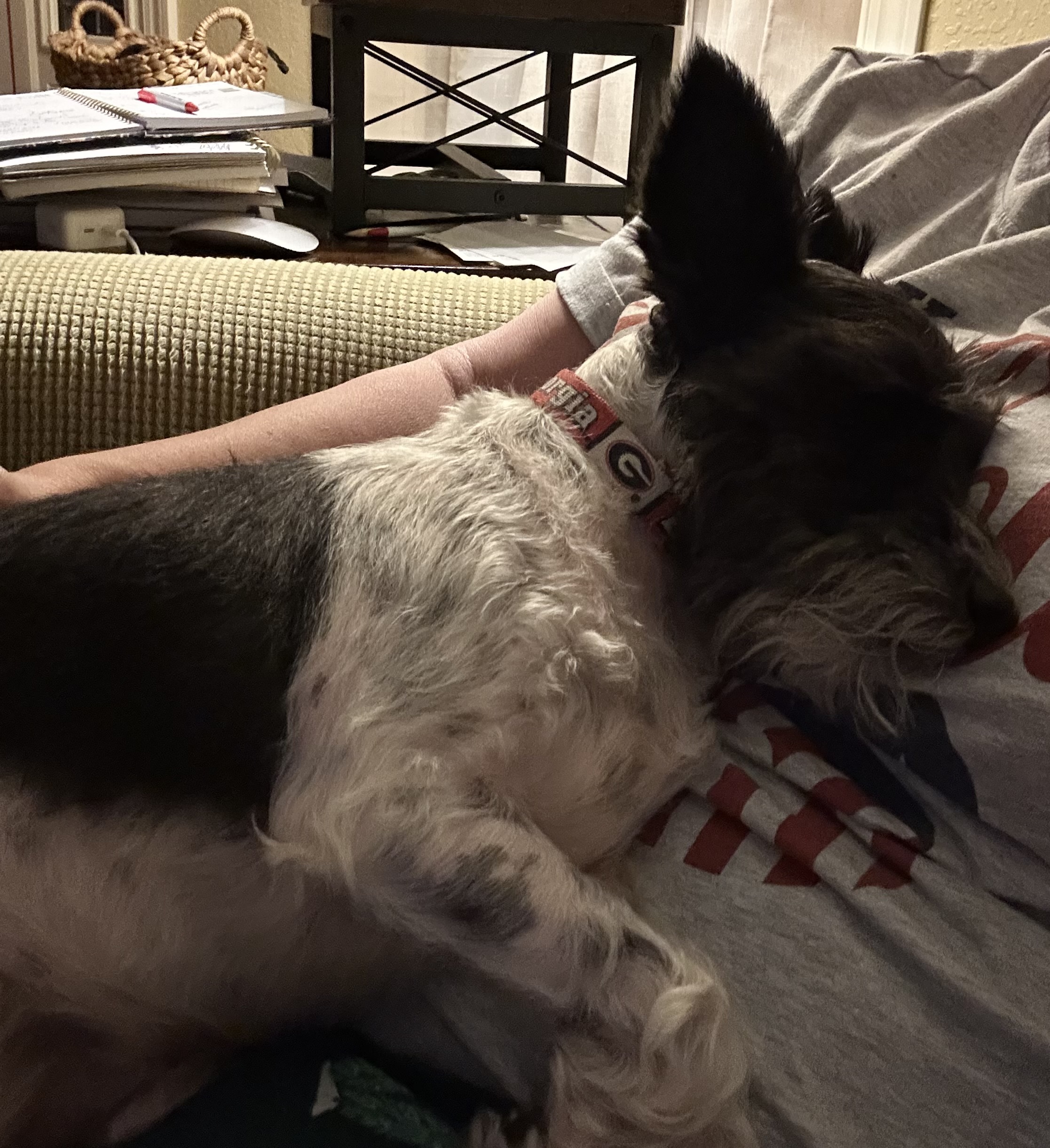
Which brings me to the 6 year old male 13-pound Parti Schnauzer whose name is AJ. Another heartbreaking rescue story by someone who’d ultimately made the best choice for a family pet. A single mother of two sons who’d raised AJ and had both gone off to school called the rescue to say she was finally an empty nester and didn’t want the responsibility of a dog anymore; she’d rather travel, and the boys were done with the dog that she’d never considered hers – – it was theirs. And they’d moved on with their lives. Schnauzer Love Rescue stepped in and fostered the dog through all his needed vaccines and skin sensitivities, and as all that was happening, my conversation with the placement coordinator was also happening, describing the match I desired: I didn’t care about the gender or the color, I just wanted a miniature Schnauzer or Schnoodle that shared many of Fitz’s personality traits. I wanted one who’d gaze into my eyes and trust me enough to let me hold him upside down, who’d fall asleep against my chest and who’d follow me everywhere and need me when Boo Radley was in my husband’s lap and Ollie was curled up not needing anyone except to throw his ball and give him treats. I didn’t have to have a dog fast. I wanted the right dog at the right time. I didn’t see that dog on the current available dogs on the website, so the wait began.
An email came a couple weeks later. I was on the train in Blue Ridge with my husband and his brother and sister-in law for their birthday month trip to see the first of the leaves turning, and I looked down to see pictures of the match they’d made for me, with his ears perked and his nub of a tail. He was smiling just like Fitz, and his eyes resembled Fitz’s eyes in a kind of unbelievable way.
I knew it enough then to set up the meeting, but when I got there to meet him, there was a confirmation sign, this time from Dad. It wasn’t a Florida State University t-shirt. It wasn’t South Carolina Gamecock garb (my team). AJ was wearing a Felix-approved Georgia Bulldogs collar. Proof positive that this match may have had all the algorithms of the dog organizers, but also the Heavenly kiss from my parents that was even more important.
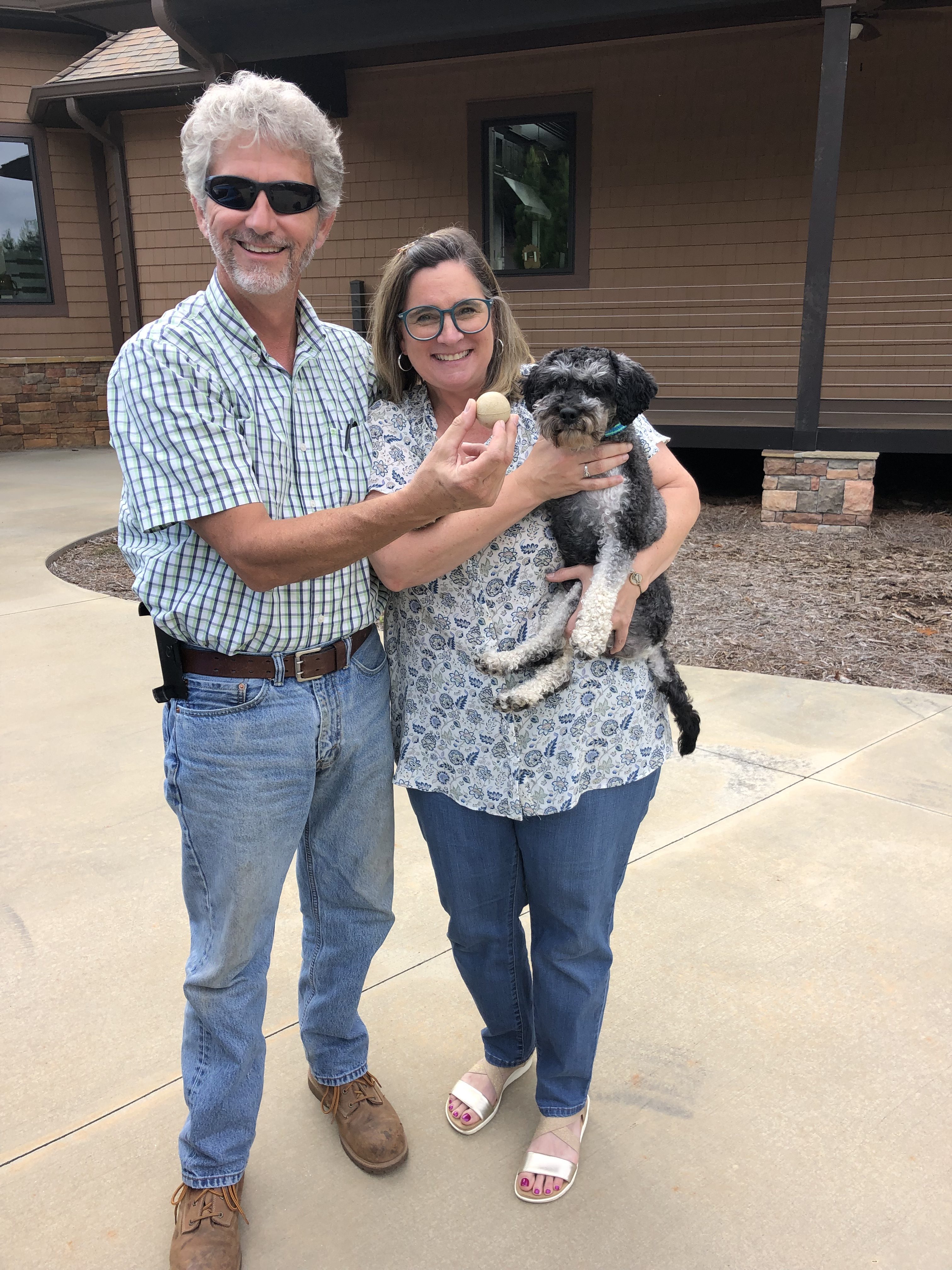
AJ on Gotcha Day in Canton, Georgia
TheAJ Email Came on a Train
there we were at our mountain rental
celebrating family times ~
on the train, the email came:
we’ve found your rescue match!
the wait is over
I’ve picked him up
Gotcha Day
happened….
{{{ love }}}
And on the first evening, he slept on my chest and napped upside down in my lap. I think Fitz tipped him off with insider information on how to get more treats.
I call Bethany my sister-in-law because what’s his is mine and what’s mine is his, and since she’s married to his brother, that makes her my sister in law too. When we saw that we would not be able to complete Part 2 of our Route 66 trip from Santa Monica to Albuquerque this year, we booked a quick weekend getaway to the mountains of North Georgia a couple of months ago to celebrate their birthdays this month. We’d flown to Chicago and rented a car to drive to Albuquerque and fly from Albuquerque back to Atlanta in June 2024, and we still talk about all the great memories we made on that trip. I can’t forget that coconut pie at the Midpoint Cafe in Adrian, Texas, but that’s an entire story for another day. And so we found a VRBO situated just outside Blue Ridge on a winding creek where we could relax and lower our blood pressure.
That’s why it was so meaningful yesterday when Bethany shared that she knew God had this weekend in mind, prompting us to plan the trip when we did, knowing we’d need to get away more now than ever. Things got real a couple of weeks ago when Kyle had a heart attack. When he’d picked Bethany up from the airport, he shared he wasn’t feeling well, and she’d recognized the symptoms. She took over the driving and took him straight to the hospital, where hours later, after his heart attack, the doctor showed them The Widowmaker images and assured them that they had done the right thing getting to the hospital when they did. Following surgery, he was released a few days later as good as new – even better, actually. Doctor’s orders were to take it easy for the next few weeks.
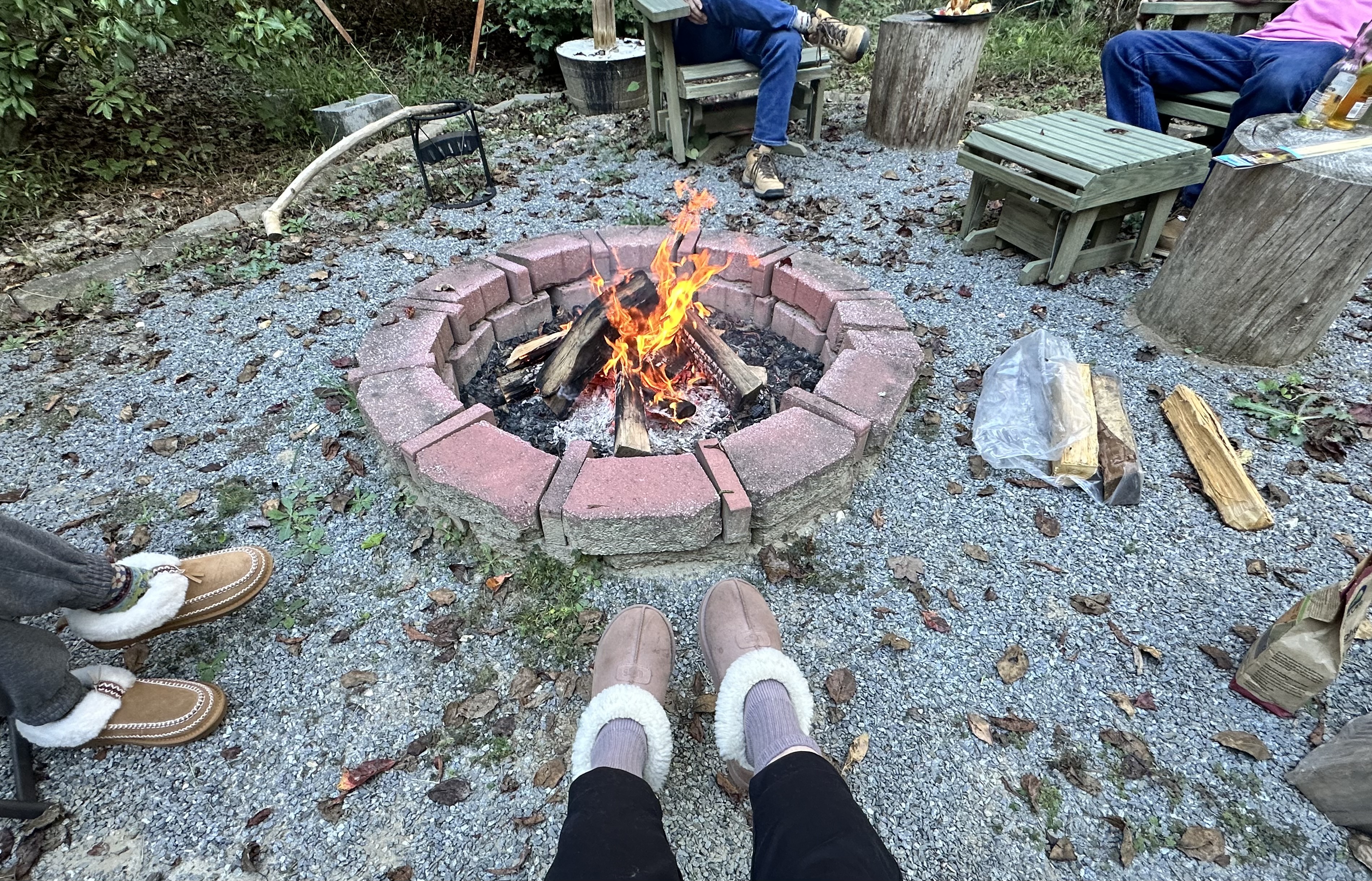
Nothing surprises God. He had Kyle in his hand, getting him to the hospital so he could be here to celebrate another birthday. Here in these mountains, we’ve eaten delicious foods, sipped coffee in the early morning, taken walks, and sat around talking and laughing as we’ve shared family stories by the fire. Today, we’ll ride the rails of the Blue Ridge Scenic Railway along the Toccoa River to see if we can spot the first leaves of fall turning their glorious colors. And we’ll each say a prayer of thanksgiving for the beauty of nature and the time together to enjoy it.
We’ve always heard the popular phrase, “Life is short. Take the trip. Buy the shoes. Eat the cake.” But when someone we love has a close call, you realize it’s not just some random saying on a t-shirt. It’s true. We get one wild and precious life, and the poet Mary Oliver had the right idea asking us what we were going to do with it. Today, we answer: we’re going to live it to the fullest and thank the Good Lord for the gift.
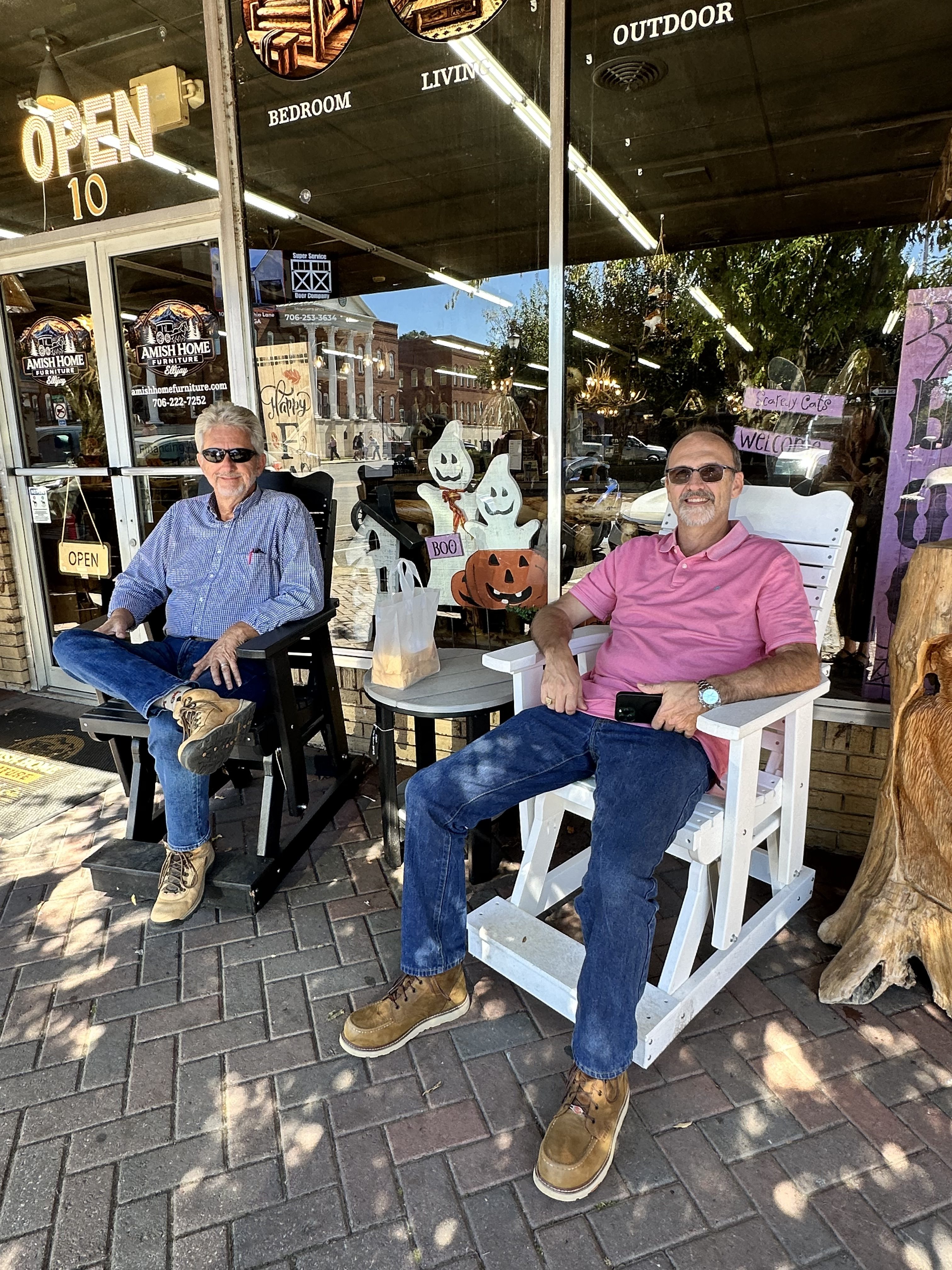
They waited on us while we shopped in Elegy
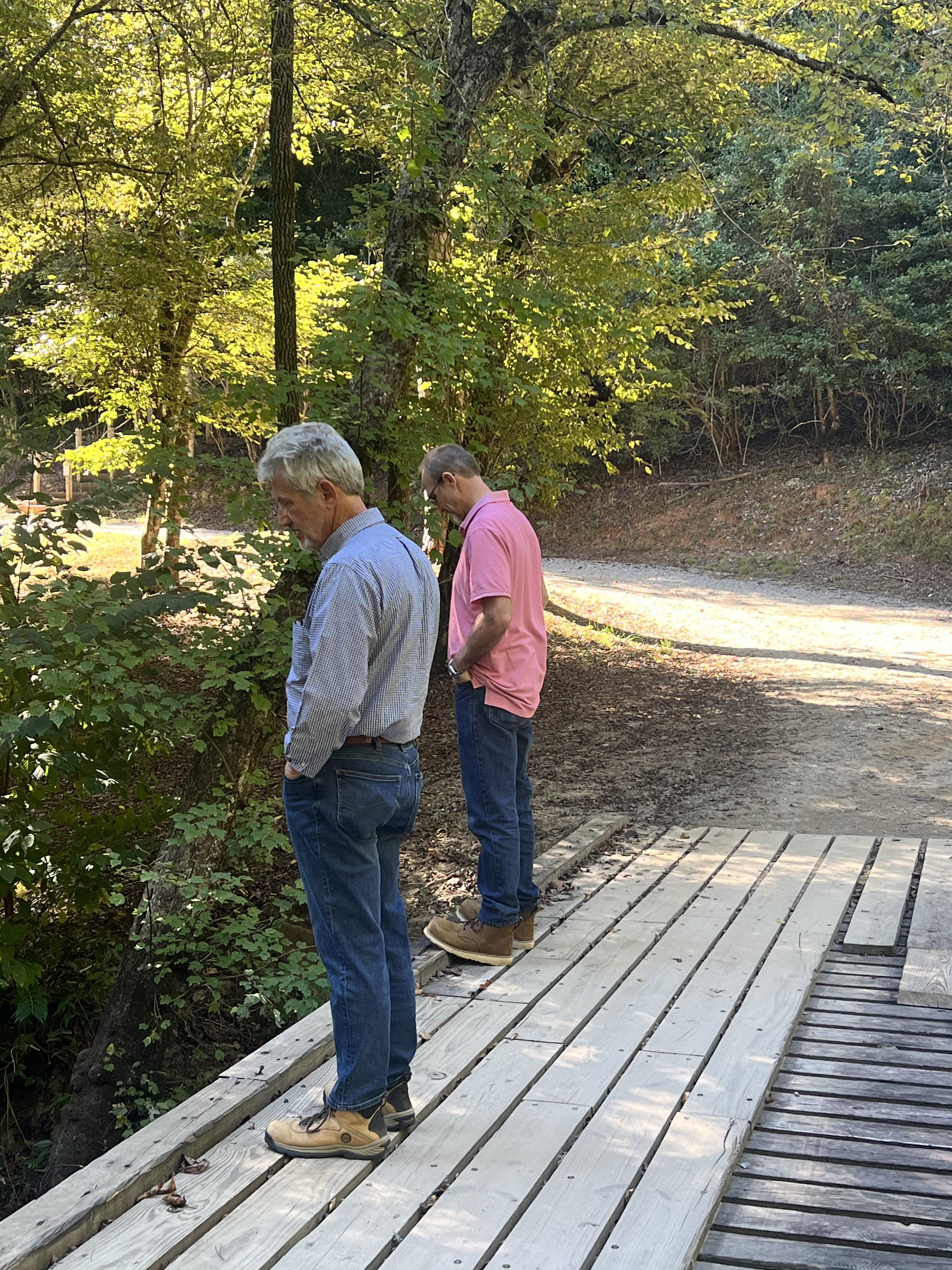
They stood on the bridge of the creek that ran behind our rental, Trout House, and watched for….trout!
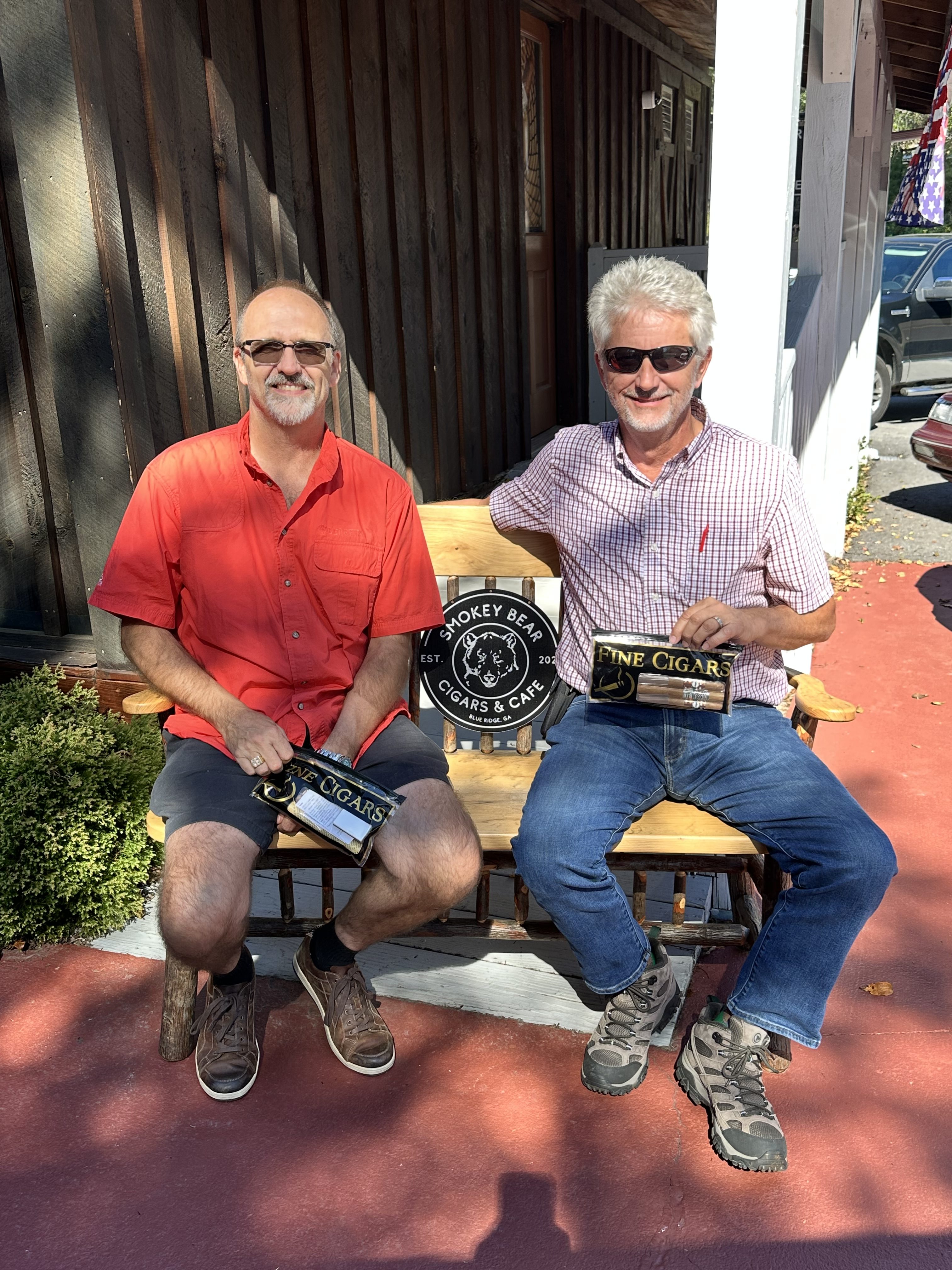
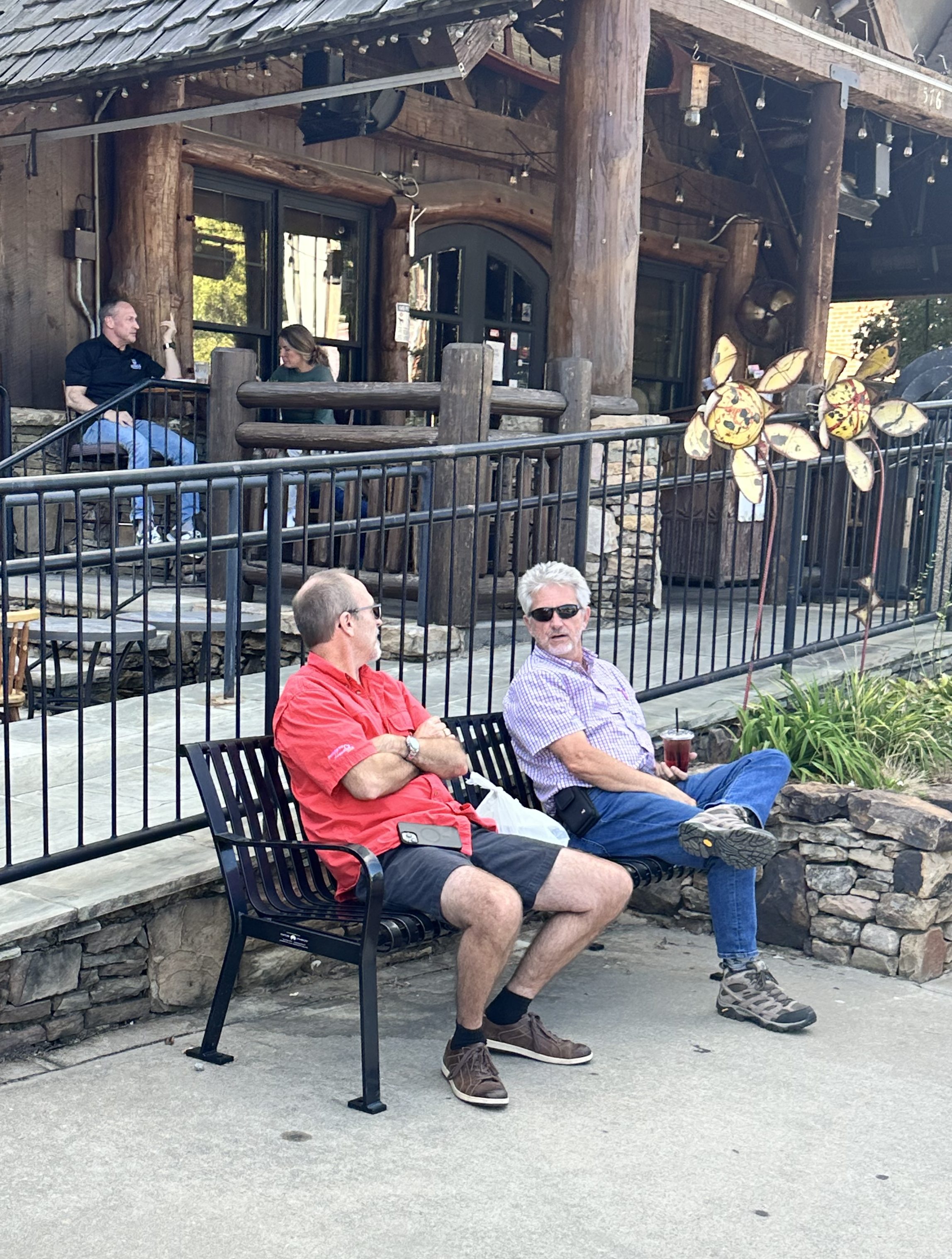
When we drove a little over half of Route 66 in June 2024 with my husband’s brother and his wife, we took a lot of pictures. One theme emerged early into the trip: brothers on benches. Bethany and I would be shopping in a store or ambling along to check things out in the small towns along the way when one of us would suddenly spy the brothers deep in conversation on a nearby bench. We’d snap a photo just to timestamp the moments of our slow-paced trot across the nation, where the scenery changed by the minute but the desire to just sit and talk never did, no matter the GPS point.
Such is the case this weekend in the mountains of North Georgia on our getaway to celebrate Bethany and Kyle’s birthdays this month. The brothers are still finding benches, no matter where we go. And we’re still capturing the moments in pictures. It’s the conversation and not the landscape that remains the constant.