Our host for the first day of the August Open Write at www.ethicalela.com is Denise Krebs, who lives in the Mojave Desert. A retired teacher, Denise gets out in nature every chance she gets and continues to write. She blogs regularly at Dare to Care, is the co-author of The Genius Hour Guidebook, and has some poems published in anthologies, including today’s prompt inspiration Picture Perfect Poetry. I’m blessed to share time each month with Denise at Ethicalela and in a small group of writers with The Stafford Challenge.
Denise inspires us to write ekphrastic poems today. An ekphrastic poem is one inspired by a piece of art or photograph. She suggests looking through our camera roll and considering something in nature, possibly using the 2-4-6-8 form, explaining, “I wrote my poem in a form I call a 2-4-6-8 poem. It may be a syllable-counting form I made up. Each line increases by two syllables. Write as many stanzas as needed. Your choice of rhyme scheme is optional.” Hop over to the site to see her photos of Joshua Trees and read her poem about them.
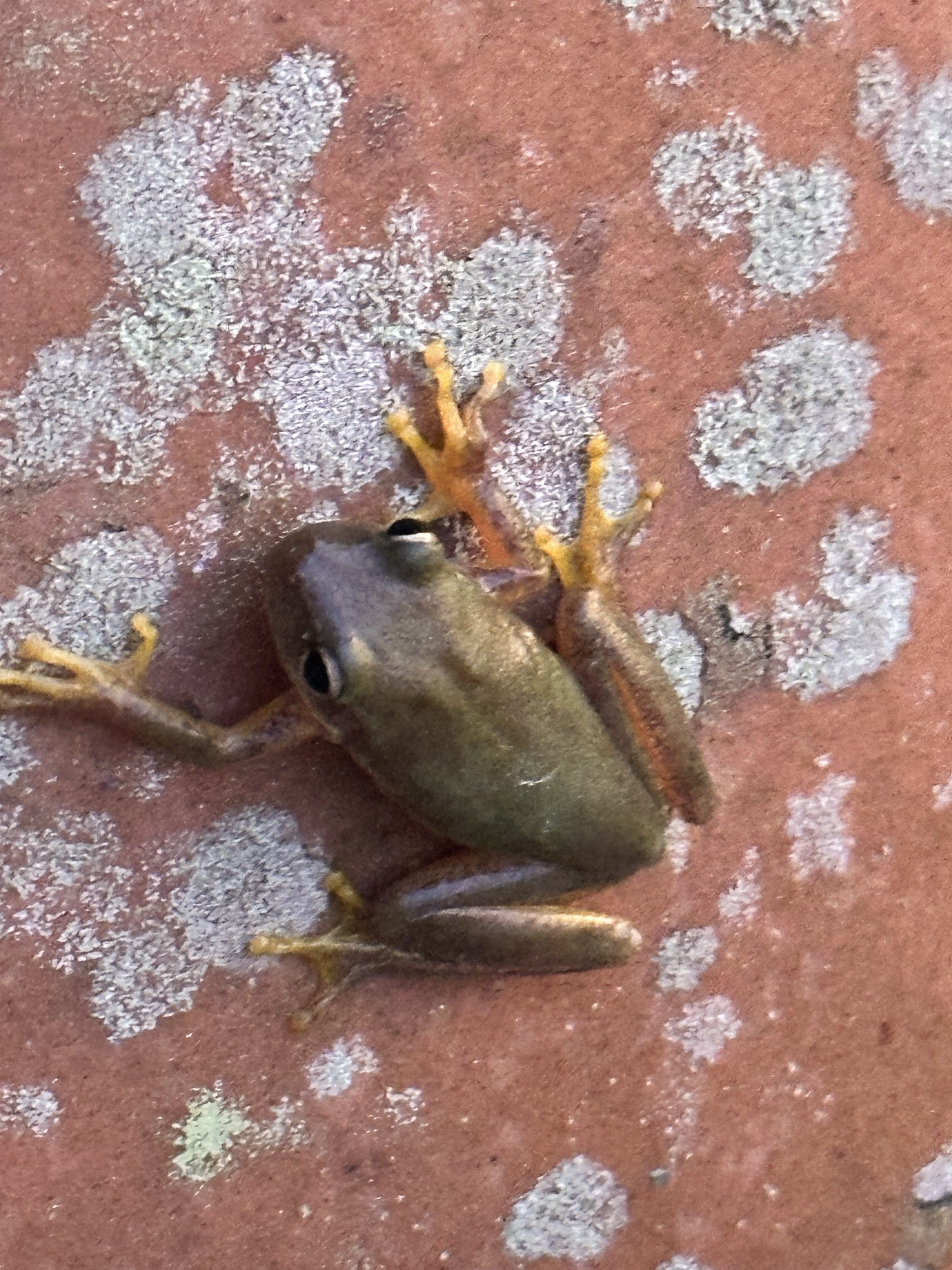
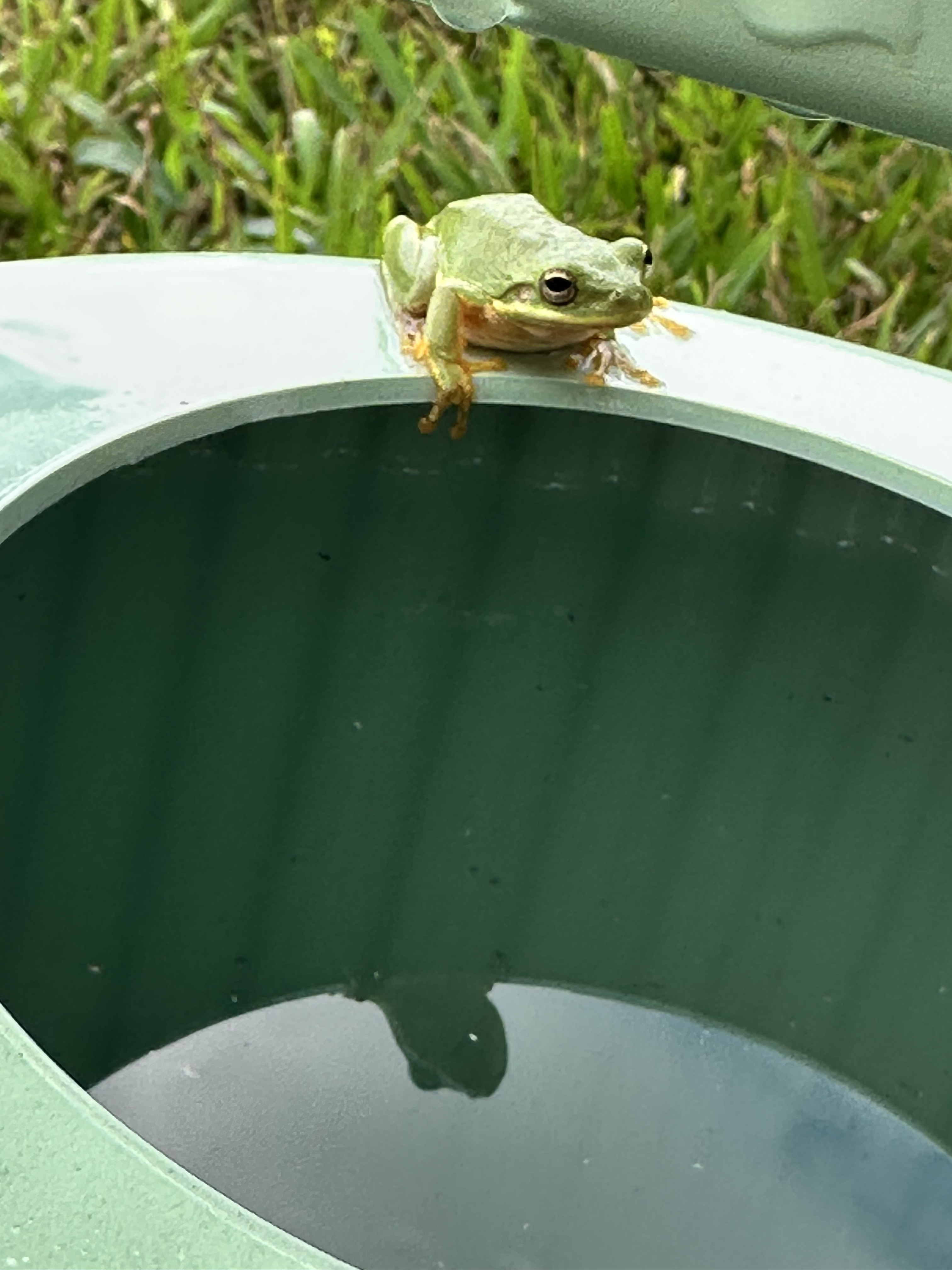
I was inspired to write about our tree frog who lives under the Blackstone grill on our front porch. I’d purchased the small griddle to go on the road with us when we travel in the Wayfarer, but after seasoning it and testing it out, I noticed that two tiny tree frogs were making their home in the grill cover. I couldn’t bear to move it, so now we have a grill on our front porch coffee table (it’s okay, there are no neighbors to complain). They have become my front porch friends now, hopping onto the watering jug whenever I water plants and peeping out to say hello from the grill cover. Incidentally, one made an appearance on the loveseat with me last time we were in our Stafford Challenge Google Meet. I introduce you today to one of the Johnson Funny Farm Front Porch Frogs.
Our host today is former high school English teacher, Kate Sjostrom , a teacher educator at the University of Illinois at Chicago and Writer in Residence at the Hemingway Foundation of Oak Park.
You can read Kate’s full prompt here as she inspires us to write about emotions in concrete and abstract terms.
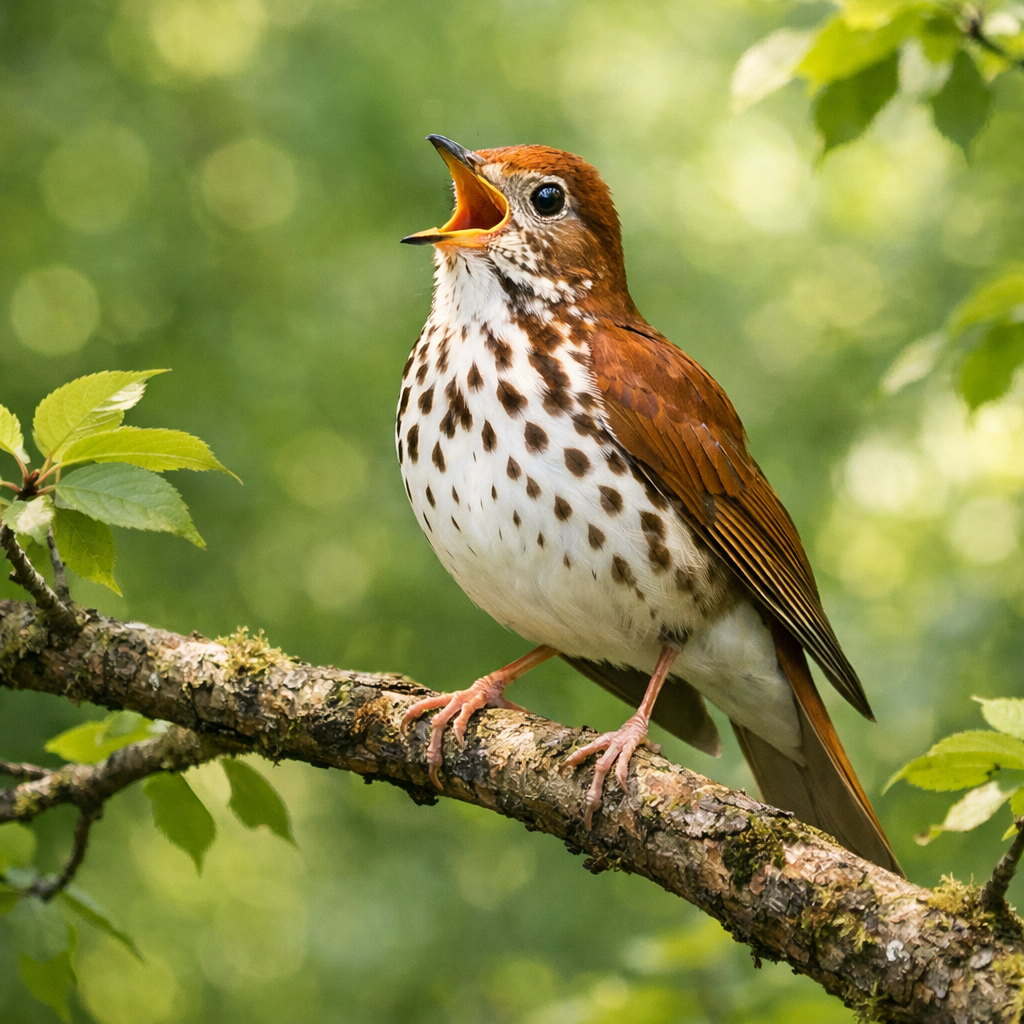
A Wood Thrush sings while perched on a branch in a green forest.
To bard or not to bard? That is today’s question from Jennifer Jowett of Michigan, our host for Day 5 of VerseLove at ethicalELA.com. Please join us to read poems, or write one of you own to share.
Jennifer encourages us to UNfind lines, making them opposite and see what they bring us in poetry. She says: “We’ve played with found lines. Sorted through them. Rearranged them. Created new poems from them. But have we ever un-found them? Find a line of poetry that speaks to you. Un-find it by exchanging the main words with their antonyms. You may choose to keep smaller words like helping verbs, prepositions, and articles or use an opposite for those too. Write one line or several and join them together. Or use a line as a starting point for a longer piece.”
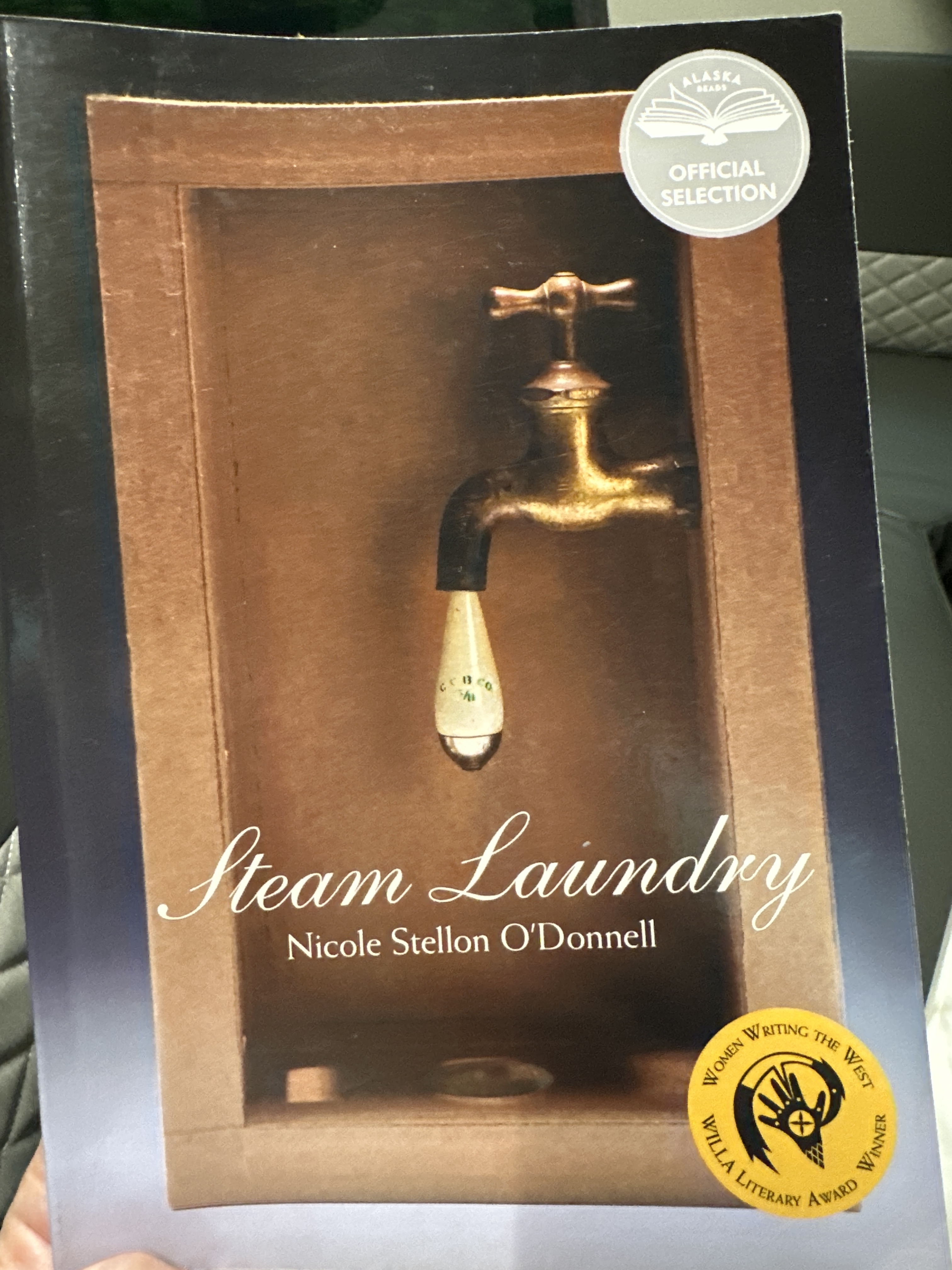
I’ve been reading Steam Laundry by Nicole Stellon O’Donnell, a living poet in Alaska, and I’m using lines from her collection today. Here are the original lines from the book:
Not the way I came (At Last an Invitation from Eldorado)
I thought of the egg (In the House of our New Marriage)
So we each took turns in the water (Tom and Elmer Dive for the Gun)
Some towns glitter (The New Camp)
When I lose myself (At Last an Invitation from Eldorado)
But here the sun spins around (Lost Luxury)
Here is my Antonymic Revelation Poem for today, and I’m grateful to Jennifer Jowett for inspiring us to write today.
Mo Daley is our host for today’s Open Write at http://www.ethicalela.com. She inspires us to write tanka poems to share our traditions. This may be one you’d like to try today, so I’m including her directions below.
Mo writes, “This time of year always gets me thinking about traditions. There are many my family and I look forward to celebrating with each other. I really love hearing about other peoples’ traditions, too. Hayrides, Oktoberfest, pumpkin patches, bonfires, corn mazes, pumpkin carving, and cooking might be some of the traditions that come to mind when you think of fall. Today’s poem is a way for you to flex your poetic muscles while letting all of us learn a little bit more about you and the traditions you observe.”
Mo inspires us with these words: “Write a tanka or series of tankas telling us all about a favorite, or maybe least favorite, fall tradition. A tanka is a traditional Japanese poetic form of 31 syllables over 5 lines. The syllable count is 5/7/5/7/7. Usually there is a turn in the third line. Consider focusing on sensory images to help us feel like we are right there with you. “
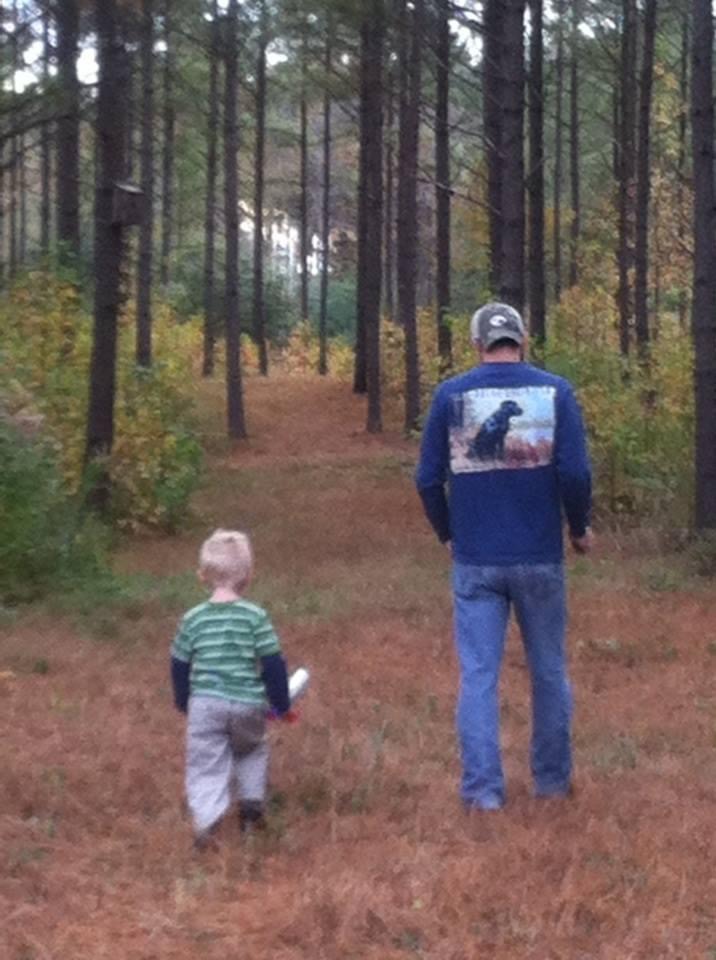
You can read Mo’s poem at the Open Write today by clicking here. In my poem below, I feel the need to clarify the spelling of the yellow bear. My first grandson could not say yellow, so when my son suggested they go on a bear hunt on our farm in rural Georgia to find the highly-elusive-never-before-seen yellow bear, my grandson couldn’t stop talking about the lellow bear, and none of us have called it anything different ever since. I still have the picture of them setting out to find it, and it warms my heart to think that one simple moment, one slight of the tongue, became a family tradition that remains to this day.
Traditions Tanka
first, the pumpkin bread
that started when they were kids
I tie the apron
sift the flour, mix in the eggs
add sugar, spices, pumpkin
dominoes thunder
onto great granny’s table
the one I redid
while the bread bakes, we play games
we pair with grandkids
we all walk the farm
looking for the “lellow bear”
every eye stays peeled
lellow bear is elusive
someday, we might catch a glimpse
the coffee pot stays
full of fresh brew to help us
keep up with these kids
Scrabble (turntable version)
for adults, post-kids’-bedtime
togetherness fills my soul
I take a deep breath
they were born last week
now here they are, with their own
tears of gratitude well up
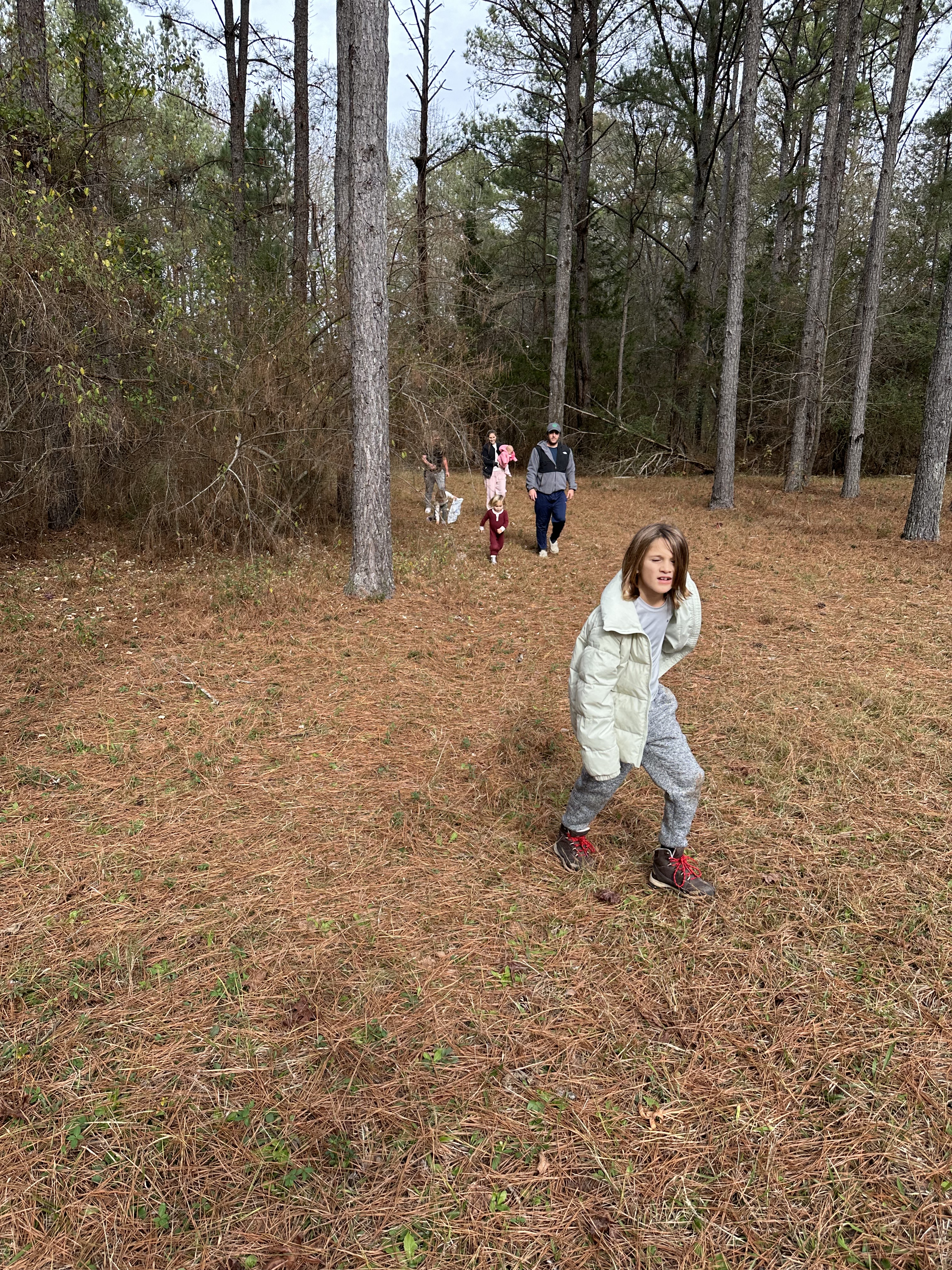
Several years ago ~ from the time of his first bear hunt to early teens The walk that started it all: the first hunt for the elusive lellow bearToday, the hunts continue
Our host today for the first day of the Monthly Open Write for December is Monday Daley of Illinois, who inspires us to write cleaning poems since it is National Clean Up Day. You can read her full post here, along with her mentor poem and the response poems of the writers who participate.
Earlier this year, those in the school district office where I work were saddened to learn that our favorite custodian had taken a job in a neighboring county because of lower wages in our own. We understood. But we grieved that daily absence of one who was more than a custodian to us. She was a friend who shared about her children and the concerns of her country. She was family. She’d given us her number in case we ever wanted to call to have our own personal homes cleaned, which she offers as a service on weekends.
The older I get, the more difficult cleaning is, and if I’ve learned one thing from my father’s aging process, it’s this: stay on top of the cleaning. As I near 60 years of age, I hear my own words of advice to him echoing through the veil of time: “Hire someone. Don’t try to do all this by yourself. There are professionals out there who know what to do and how to do it better than you can.”
So two weeks ago, I called my friend Dianelys to come and meet with me about cleaning. She brought her mother along, the one who loves plants but doesn’t speak any English. I saw her mother giving approving nods to the plants as we walked through the house so I could show her what I would like to have done. I’ve been establishing some Night Blooming Cereus stalks, so I plan to leave one out today with a note for her and her sister in law to take to her mother, on this first day that Dianelys will clean our house with her cleaning partner.
And so today, on this National Day of Cleaning, it seems fitting to write my 6,7 poem to celebrate Dianelys and cleaning.
Our host today for the first day of the October Open Write at http://www.ethicalela.com is Fran Haley of North Carolina. She and I are teaming up together this month to bring the writing prompts for the three days of this month’s challenge. Fran and I both live in small towns with the same name – she in North Carolina, and I in Georgia. Here’s a little more about Fran Haley:
Fran and Jesse
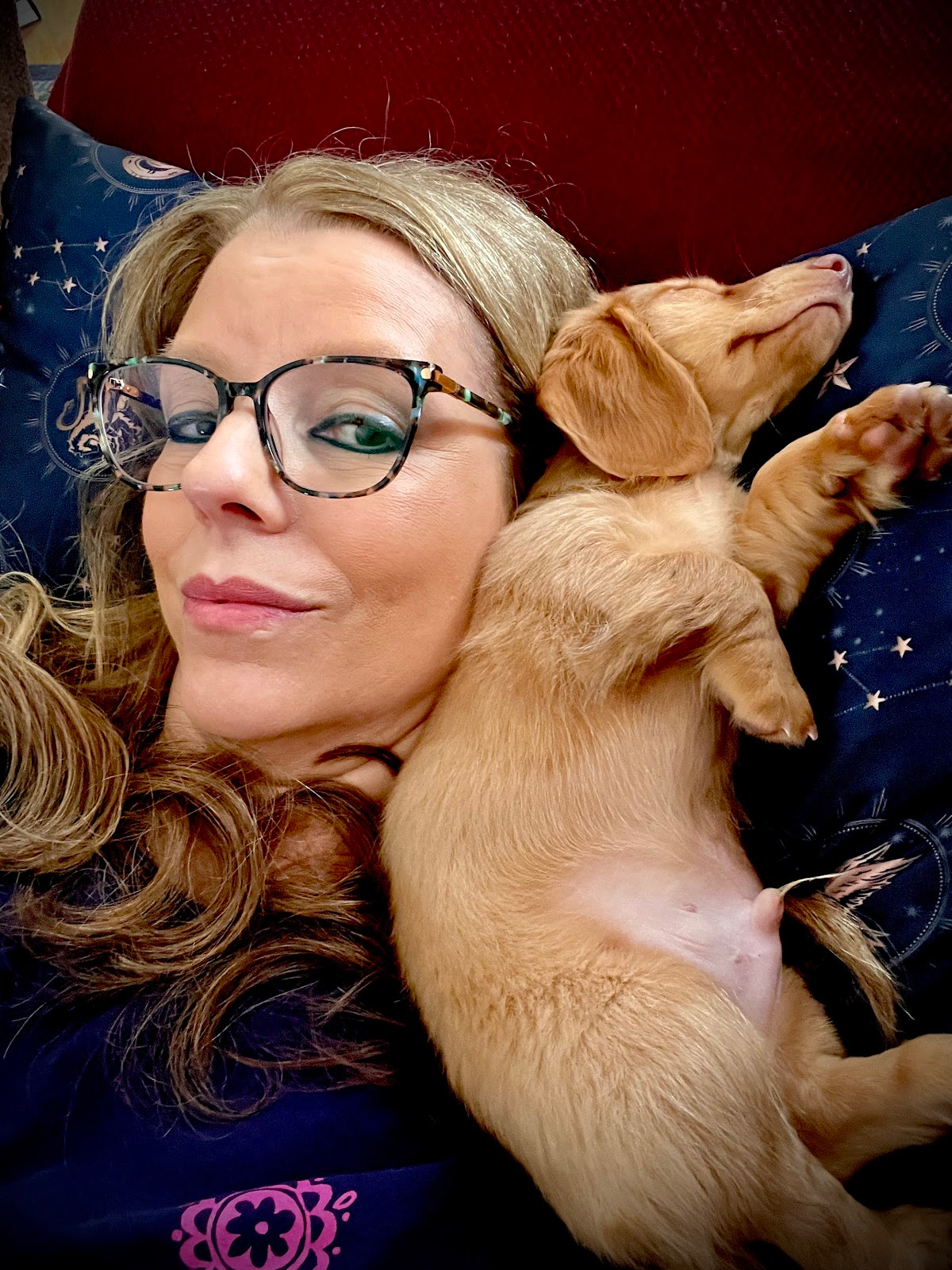
Fran Haley is a K–12 literacy educator who coordinates elementary programs centered on a love of books and the joy of reading aloud. She helps young writers find their voices on the page in creative ways. A pastor’s wife, mom, and Franna of two spirited granddaughters, she savors the quiet rhythms of rural life near Raleigh, NC. The pre-dawn hours are Fran’s sacred writing time; you can find her there in the stillness, seated at the kitchen table with a sleeping puppy (a miniature longhaired dachshund named Jesse) in her lap. She authors the blog Lit Bits and Pieces: Snippets of Learning and Life.
Fran inspires us to write by reminding us of the significance of today. She says, “Today is the third Saturday in October, which happens to be National Sweetest Day, according to the National Day Calendar. Originally “Candy Day,” the recognition began in 1916 with American confectioners encouraging high standards in candy-making and the patronage of candy shops and bakeries. The observance was suspended due to sugar rationing in World War I. “Candy Day” eventually resumed; historians note that it was also meant to be altruistic, a time for buying sweets and distributing to those who could not afford them. The holiday later evolved into “Sweetest Day” and the giving of notes, cards, and gestures of love. “
She wonders what “sweet things” we can consider and shares her process here:
Write a poetic note of love to a neighbor, co-worker, friend, or family member
Write a poem based on song lyrics about candy (think “Big Rock Candy Mountain”), or any “sweet” song you love
Write a sweet memory or gesture made toward you
Fran chose the last option, in narrative free verse.
Fran’s Poem
The Gift
Late in the evening
my husband aims the remote, presses a button, banishes flickering ghosts.
All is still and silent in the lamplight.
He turns to me:
“You know I love you, don’t you?”
That timbre—
that deep, low note in his voice
—my brain translates to
Mayday! Mayday!Mayday! Prepare for impact! Even as I answer, Yesss, I am guessing: The doctors have called. It’s his heart again. Or worse. What now. What now. We’ve spent the last decade— a quarter of our marriage— skidding to sudden stops, pressing the pause button, resuming in altered states,
patched and scarred.
I can’t even summon a prayer. I brace for the crash. The shattering. But he’s just scrolling on his phone. He holds it out: “What do you think of this?” A photo of a red-gold puppy lying on a blanket. I can’t process. I’ve missed a cue —how early does dementia begin? “Precious,” I say, confused. My husband looks at me for a long moment, then: “He’s ours. I put down a deposit three days ago.” What am I hearing?
Is this real? A dream? My heart had given up hoping for a dog, in light of his battles…
yet this man, so valiant in suffering,
begins to sob
with the magnitude of his own sacrifice,
offering me new life.
And she passes the pen to us with the challenge to write our own Sweetest Day poems. Here is mine:
Our youngest grandson, Silas, the sweetest 10-month-old
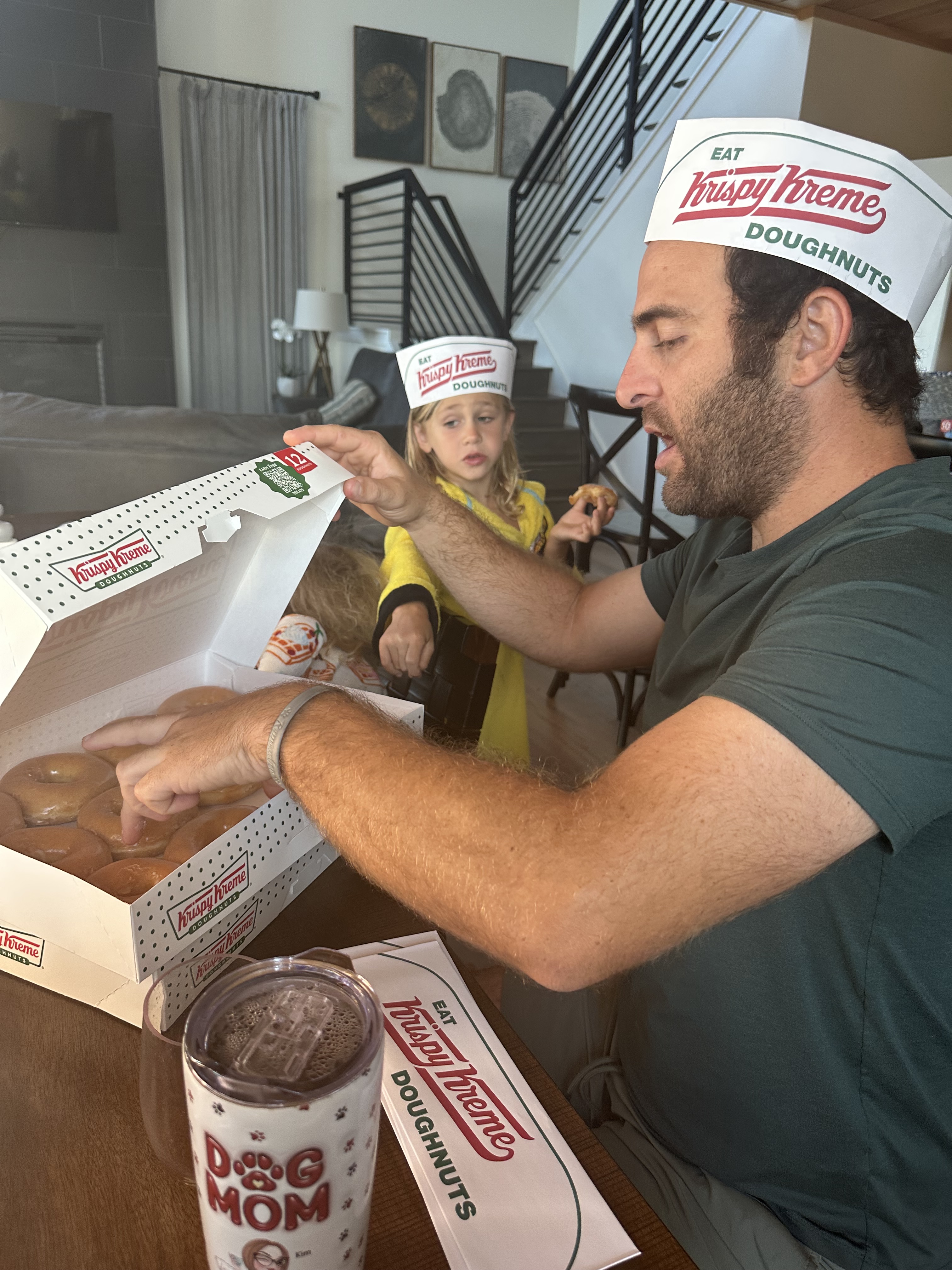
Pajama Adventure to Krispy Kreme
it was just after 7 a.m.
I was still in pajamas
writing at the kitchen table
on family vacation
when my son asked
you want to take a ride?
I reminded him: I’m still in pajamas
no worries, he assured ~ come on!
the hot light came on as he pulled
into the parking lot
and a couple dozen later
we were on our way back
with hats and hot glazed doughnuts,
creme filled and sugar-laden,
to share with the others
just as the good Lord
intended
My son, Marshall, who knows how to share the best breakfast, with son River
Today’s host of the first day of September’s Open Write at http://www.ethicalela.com is Kelsey Bigelow, who works as a mental health poet and renowned author of books, slam poetry events, and writing workshops in Iowa. You can read all about Kelsey and visit today’s prompt and poems here, as she inspires us to think about what lives on the “good side of memories.” Today’s writing is rooted in stream of consciousness writing that can live on in that form or be the start of one that takes root for another.
This month, I’m writing posts from prompts in the Writing Down the Bones Card Deck by Natalie Goldberg, shared with me by my friend Barb Edler of Iowa. Goldberg asks us to begin by writing, “No, Thank You…” and to keep going. And each time we get stuck, to return to those words and keep going. Today, I share a Nonet – a poem consisting of nine lines with that number of syllables on each line in ascending or descending order.
No, Thank You Nonet
no thank you to the constant going
I’m ready to have a weekend
when I can just stay at home
and bask in no deadlines
rest the day away
watch a movie
read a book
walk the
dogs
I’m honored to share a weekly feature with Ethicalela.com’s readers this week as students across the nation return to school. Here is a first-day activity that aims to build connections and strengthen relationships so that learning can thrive in the classroom. Cheers to all teachers who know the fine art of getting their arms around their students and teaching humans – not standards, not curriculum. You’re the real difference-makers in a world that often tries to convince us otherwise. This morning, I raise my mug of coffee to you as you go out into the most fertile fields of all to plant seeds and make change. You, my friend, are a change maker.
Today for the second day of the July Open Write, Jennifer Jowett of Michigan and Deborah Wiles of Georgia are our hosts. They inspire us to write I Once Knew poems, using a process they describe at this link. Hop over and read some of the poems that will be eclectic and unexpected. This is one such random poem process that is, what I believe, makes poetry shine and sparkle.
Today’s host for the first day of the July Open Write at http://www.ethicalela.com is Jennifer Jowett of Michigan. You can read her full prompt here, inspiring writers to compose a poem of Memory Threads – – a way to breathe in healing through fabric of story and connection.
This month, I’ve been capturing Dad’s final words and stories in audio clips and poems as he inched closer and closer to Heaven, one foot in this world and one in the next. It’s as if Jennifer’s prompt was written just for me. That’s the thing about poetry ~ it meets you exactly where you are and invites you into the vast realm of each moment, scattering the light and blanketing the dark and swimming fully immersed in the shadows. For me, there is no greater healing than what is found in prayer and verse. I’m convinced it’s why the Bible itself – the Holy Scripture – is written in verse. Because it casts light on all truth and heals souls right where they are, and it invites personal response.
I hope you will visit the link above today and read some of the poems and, perhaps, write your own. Even if you don’t share it with anyone, my wish for you is the peace of writing and the healing of expression. Forget perfection. Forget whether it’s good or not, whether it’s right or wrong. There are no rules.














 Common Threads