November Open Write Day 3 of 5

Denise Neal, principal at Our Lady of the Way RC School in Belize, is our host day for the Open Write at www.ethicalela. She inspires us to write poems today by offering this prompt:

“Think about your educational journey. In Aristotle’s words, ‘ The roots of education are bitter, but the fruit is sweet.’ Because we all have different experiences, our stories will be a collage of joy, success, pain, sacrifice, opportunities, and commitment.  I encourage you to write in 4 lines and have a minimum of five stanzas.

However, you are also welcome to write freely to TELL your STORY.”

I thought of Denise’s words and all the things about my educational journey that really mattered ~ and still do.

What Matters

not the classrooms

not the worksheets

not the crayons

but the experiencing

not the posters

not the desks

not the chalkboards

but the reading

not the papers

not the assignments

not the projects

but the thinking

not the textbooks

not the answers

not the solutions

but the writing

Book Talk Continued, an Illustrated Reverse Haibun

I shared, they listened

we engaged in the need for

more writing to heal

My haibun today is in reverse – my haiku is first, my narrative is second, but I’m also adding pictures to make it an illustrated haibun.

The evening kicked off with Craig Logan’s welcome to TUAC and introduction, and then I was honored to share the journey of my writing group’s most recent books after the publication of Bridge the Distance and Rhyme and Rhythm: Sports Poems for Athletes. I printed these notes and placed a copy on the podium to guide me through the evening.

Book Talk Agenda and Talking Points – October 3, 2025 6:30 p.m. TUAC – Thomaston, GA

Agenda Timeline

6:30 – Welcome/introduction/talk

7:00 – Stop talking and take Q and A, Drawing for free books from David’s Bust Vase

7:30 – Reception, Meet and Greet, Book signing

Talking Points

Thank you for coming!

Land Honorarium of Place, Native Tribes, People, Our Stories (keyword for the evening)

In The Beginning: 

Write before Read   – – the photograph of Dad’s stacks of books/me as a baby seated among them/ him studying/ firm roots in books and language

Crayons – writing in the books, or how I to read and write using Crayola names of colors

Childcraft – Harold Monro “Overheard on a Salt Marsh” Poem fixation, and….

a Child’s Garden of Verses – two copies by age 6

Checklist Book:  Memoir, my first book – Father, Forgive Me: Confessions of a Southern Baptist Preacher’s Kid

The Middle: 

Mother’s death, NCTE Convention, and Sarah Donovan with The Groups at www.ethicalela.com that emerged ~

Bridge the Distance (Oral History Project through Oklahoma State University)

                        Rhyme and Rhythm (an invitation to an anthology – read Golden Shovel)

And then……we coded prompts since 2016.  Predominant themes emerged:  Healing, Assessment, Community Spirit, Technology uses, and Teachers’ needs for shorter texts and stories

Who wants to work on which books?  We made groups.  

  • 90 Ways of Community by Sarah Donovan, Maureen Ingram, and Mo Daley (Read poems from here) – Mo Daley’s poem – “She Told Me Many Months Later”
  • Just YA an anthology of over 15 writers
  • Words that Mend: The Transformative Power of Writing Poetry for Students, Teachers, and Community Wellbeing and The Authors
  • ePoetry by Sarah Donovan and Stefani Boutelier was picked up by a a major education publisher and will come out in 2025
  • Assessing Students with Poetry Writing Across Content Areas: Humanizing Formative Assessment for Grades 6-12 by Sarah Donovan, Barb Edler, Kim Johnson, Anna Roseboro, and Gayle Sands is under contract with Routledge and will come out in 2025

The Conclusion:

Keep writing – set a timer – tell your story. Write it down. SHARE it. Your story matters.

Q&A

*Photos shared with me by Bethany Johnson and Briar Johnson, and I am ever appreciative of my sister-in-law and my husband for their outpouring of love and support!

Back-to-School Nightmare

It doesn’t matter what

the role in education,

whether teacher or coach

or media specialist or

administrator: one truth

holds true. I learned it

in the 1990s from my

partner teachers. The

back-to-school

nightmares hit hard

and on time. The world

of dreams mysteriously

knows that school for

students starts here

Monday, so last night

I was walking a class

down a hall of a

school I’d never seen

and lost them all

on the first day.

They were second

graders. I haven’t

taught a classroom

of second graders

since 2003, but

here I was in my

nightmare, losing

every one of them,

wandering the halls

and calling for them,

knowing I’d be fired

when their mothers

showed up, but

finally discovering they

had all gone to the

library. I stepped

into the murky

haze of the dream

to find they were

all reading books,

scattered all

across the floor

in their own quiet

spaces, not one

saying a word.

And I realized:

my nightmare

had become my

best back-to-school

dream ever.

I chose a book

and collapsed into

the library couch to

read, too

I learned this last night:

when you’re having

a night terror, look for

the library. It turns

nightmares into dreams.

Image generated with AI

Day 26 of #VerseLove with Scott McCloskey: Billboard Poems

Photo by energepic.com on Pexels.com

Scott McCloskey is our host today for Day 26 of #VerseLove, inspiring us to write short billboard-type poems of wit and wisdom, the kind that stick with a reader and leave an impression. You can read his full prompt here, but I’m adding some notes below, too:

Scott explains:

This, of course, is not something new, this “poetry as billboard.”  Poems have replaced advertising on some buses (and other forms of transit) in Washington thanks to the Poetry in Public program. https://www.4culture.org/poetry/ And over thirty years ago, The Poetry in Motion folks did a similar thing, placing poems in various transit systems in Los Angeles, New York City, Nashville, and San Francisco (among many, many others).  https://poetrysociety.org/poetry-in-motion

Just looking at a small sampling of the poems from the New York Poetry in Motion selections https://poetrysociety.org/poetry-in-motion/category/new-york you’ll see some heavy hitters: Charles Simic, Audre Lorde, Tracy K. Smith, Maya Angelou, Seamus Heaney, Shakespeare, Sharon Olds, Billy Collins, Walt Whitman…look, I could just keep naming them, and you’d recognize all of them!  You’d also notice that their topics (and size of selections) are as varied as the poets themselves.

Clinking Pens

on Aisle 12

I caught him

peering around

the corner

“I thought that was you,”

he smiled, approaching.

“Remember me?”

Of course I did.

“Chandler!”

We side hugged,

I asked him

about life.

“I want to

thank you,”

he said.

“You taught me

if I remembered

nothing else

to always keep

a pen on me.”

He reached

in his pocket,

pulled out

a black pen

with gold banding.

“I just bought

my first house

and signed with

it. I thought

of you.”

My breath caught

a tear welled

and my heart

burst with

that now-I-can

die-a-teacher-

who-mattered-joy

I reached in

my purse

pulled out

my signature

Pilot Varsity

fountain pen,

blue ink,

and we clinked

pens, smiling

there on

Aisle 12

Coaching in Schools – September

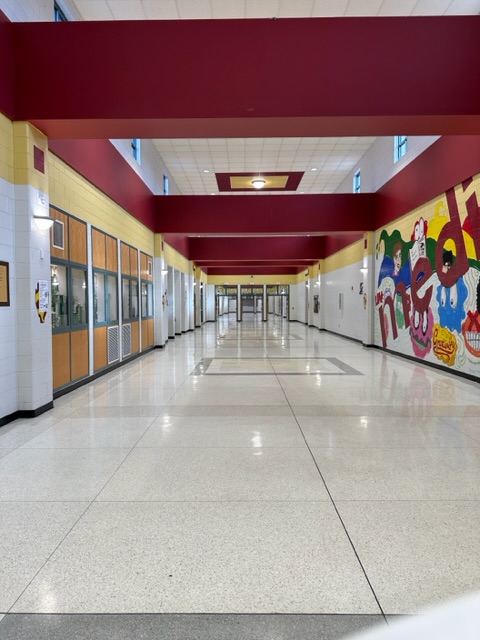
Earlier this week, I shared my experience participating in a coaching cycle in an elementary school in my state. This work takes place through the Georgia Association of Educational Leaders (GAEL) as part of the L4GA Grant (Literacy). During the second day of our coaching cycles, we visited a high school in the same area. In the elementary school, we looked for examples of behavioral, cultural, and cognitive engagement. At the high school, we looked for levels of rigor.

The classes with the highest levels of rigor, we observed, were classes where teachers knew their students’ interests and had a grasp of where they were in their understanding of the content. They knew how to push and how to pull, how to give some students an extra thinking challenge while working on the spot with a small group that needed extra support. The most masterful teacher we observed that day made relevant life applications by giving specific examples, providing time to think and to work on the task, encouraging talking with peers to figure out solutions, and asking questions in a way that allowed students to figure out the answers rather than giving the answers to the students or leading them there with hints. Instead of lowering expectations, they raised the bar.

We observed for instruction that needed tweaking to reach its potential also. No matter where we are as educators, there is always room for improvement. Teachers in these schools appeared to welcome the observation team with sincere interest in the suggestions to improve in the areas that are most often only recognized by someone other than the instructor.

I feel blessed to be able to be part of such a strong network of leaders throughout my state. Each district leader in this particular observation team comes from a different system, so we bring the perspectives of our own school system in terms of strengths, gaps, and areas of opportunity. We also see small things in the moments, on the walls, in the conversations, in the frameworks of instruction that make us stop and smile.

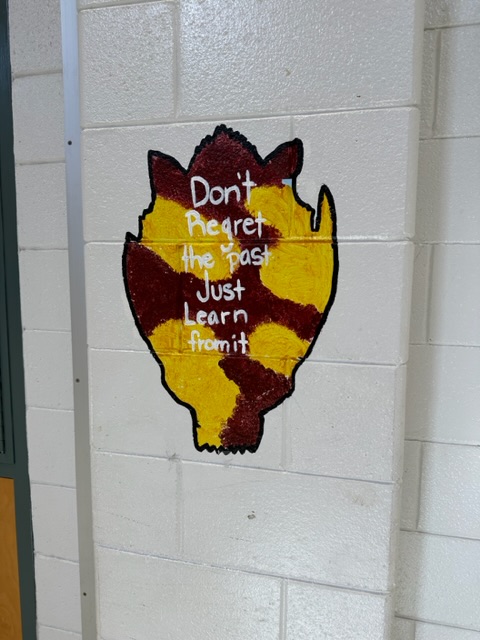
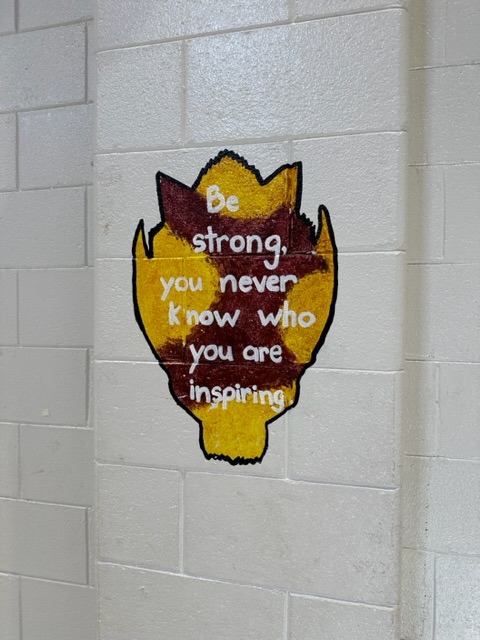
These were some signs throughout the building that brought some encouragement as we walked the hallways. I hope they inspire you the way they inspired me.