
time with our grandson
sharing a Biblical meal
(he teamed up for pranks)

On Saturday, we picked up our oldest grandson, Aidan, and headed over to LaGrange, Georgia to the Biblical History Center. We’d gone a couple years back and enjoyed the regular tour, so we wanted to take Aidan back to share in the Biblical Meal and join us on the Nativity Tour, which begins November 1 and runs through December. Since he plans to enter the ministry, we correctly predicted that this would be a highlight of his Christmas season (which, by the way, now apparently starts the day after Halloween).
You can read my previous 3-part blog posts here, here, and here.
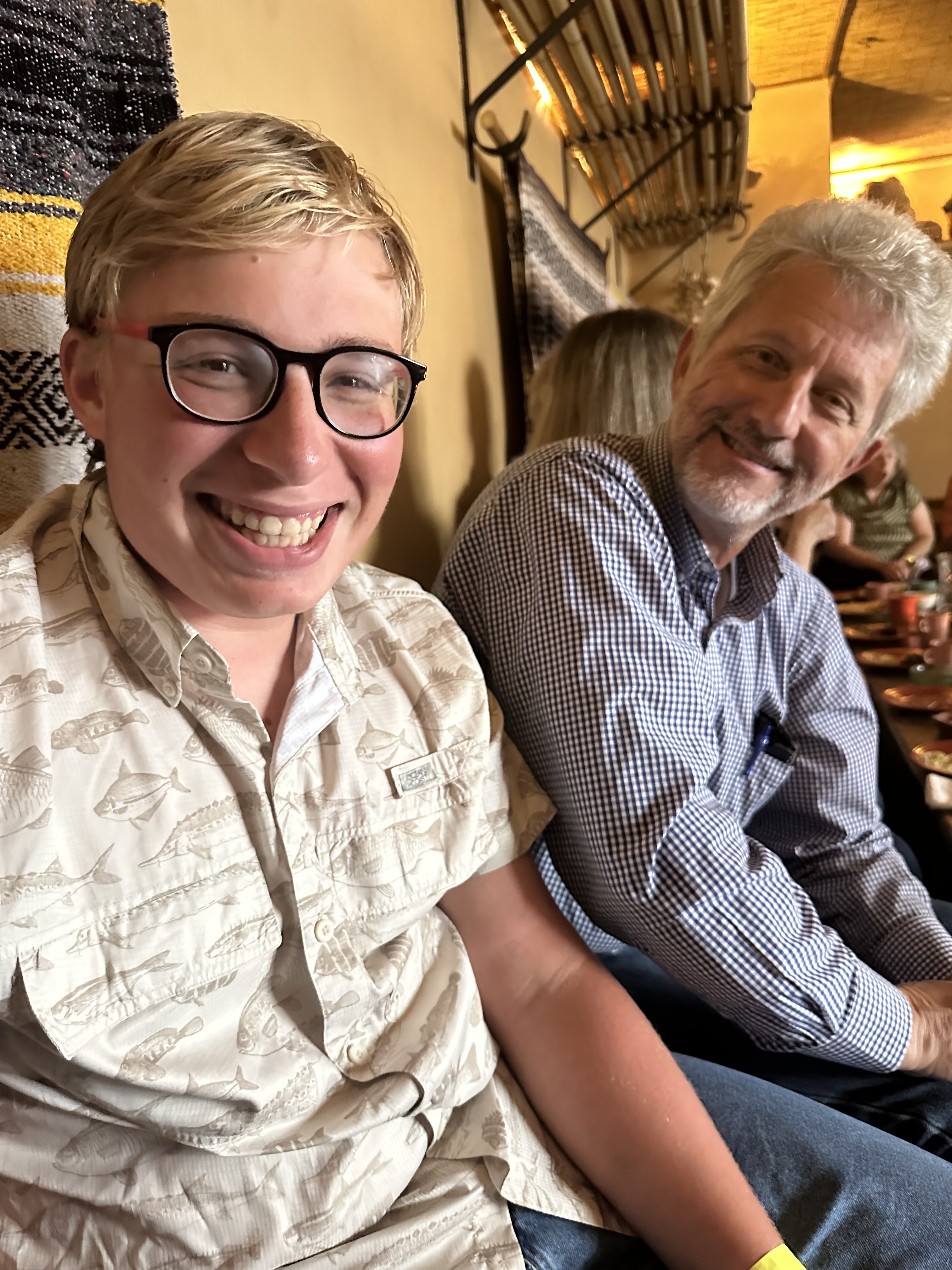
In true grandfather/grandson style, the first thing they did in the midst of the reverence of the meal was prank my blog photographs (I confess – – I do take a lot of pictures since I like to use them when I write). First, my husband diverted his gaze upward. Of course, I showed it to them and playfully scolded Poppy for messing up the picture. I told them we’d have to take another one.

And look at this. Just look at what these clowns did.! They teamed up to keep the prank going. So of course……we had to take another. People around us were holding back laughter, and I felt at once as if I were back in church sitting by that one friend you should never sit with in church, knowing you might not behave.

Finally, they got it just right. Fun at its best with these two!
We started the meal with our guide, blessing first the drinks and then the food. As she offered the prayer first in English and then in Hebrew, we repeated the Hebrew words. Then, we began passing the food – mostly a Mediterranean diet, starting with unleavened bread (a flour tortilla), followed by eggs, hummus, raisins, grilled chicken (substituted for lamb), spinach/artichoke dip, lentil soup, grapes, applesauce, salad, and black and green olives. We did not use forks, since they didn’t in Biblical times. We drank our soup and ate with our fingers or used our flour tortilla to scoop food and eat it. The health department requires the center to provide napkins, but they explained that in Biblical times, we would not have had them. Additionally, in Biblical times we would not have been seated but actually more laid back on our sides to share the meal.

As we made our way along the tour, we learned the truth about the inn which would have normally been an extra room in a home of a family and not an inn as we think of it like a hotel or British pub with rooms upstairs. A family would not have welcomed a pregnant woman about to give birth, because the birthing process would have deemed the house unclean and they would have had to leave for a month. The place where Jesus was born was more likely a sheepfold, and a manger made not of wood but of stone. Not so much a stable as a livestock barn but more of a sheep enclosure.
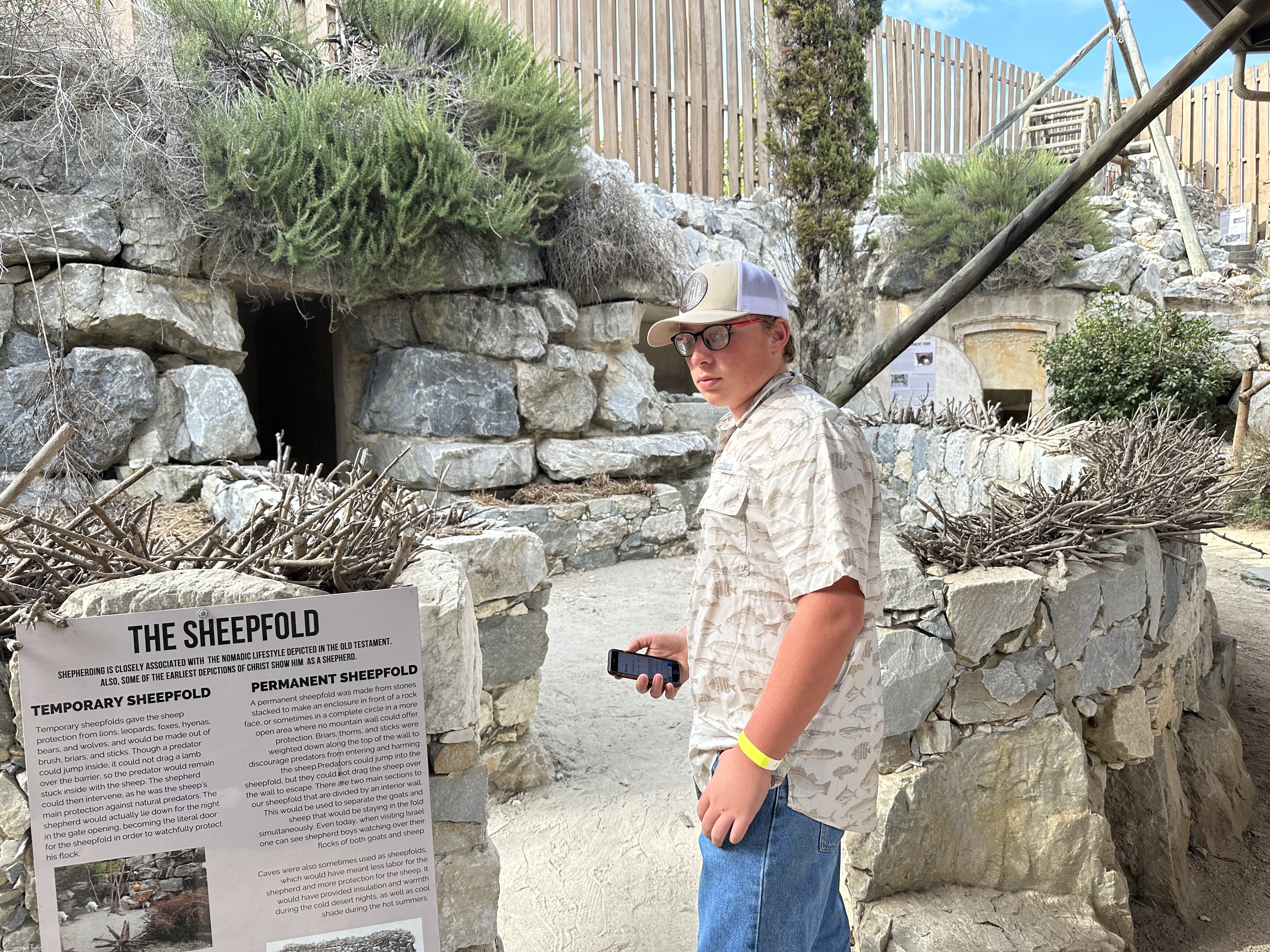
This was a fabulous day, and we also were blessed to see the archaeological artifacts on loan from Israel. This is the only Biblical History Center in the entire United States Southeast that has these items, including a coin like the one that the woman in the Bible lost from her wedding headdress. It was fascinating to see the pottery pieces, the tools, and the weaving looms from Biblical times. These items remain in a vault that is climate controlled, behind glass, and no photographs can be taken of them. It was a treat to be able to see the items on display and have a guide who explained their significance. I think that of all the artifacts, I was most fascinated with the beads that were found in an Old Testament tomb. The beads were coiled scrolls that contain the Aaronic Blessing with the message The Lord Bless You and Keep You, The Lord Lift His Countenance Upon You and Give You Peace and be Gracious Unto You. These beads held importance for establishing the significance of the cultural context of the tomb and its place in history.
After a three hour tour including a meal and a narrated historical journey through the center’s outdoor replicas of historically accurate structures – and a t-shirt for Aidan to help him think of his trip each time he wears it – we took a moment to stop at Starbucks for a cup of iced coffee and to chat about our time together. Aidan said his favorite part was learning about the true foot position of crucifixion which is more likely pierced through the side of the ankle than the top of the foot. Briar said his favorite part of the visit to the center was the interactive lighted maps of Biblical places, and my favorite part was watching Aidan’s participation in answering questions that demonstrated his knowledge of the Bible and his passion for all it means to him.
Next up when we return to the Biblical History Center in the spring: The Easter Tour.
 Common Threads