A Calm Christmas: Mission Christmas Constellations!

This December, I’m slowly making my way through Calm Christmas and a Happy New Year by Beth Kempton (2019), savoring every chapter like it’s a rich dessert, drizzled with all the best chocolate, caramel, and whipped cream. In Chapter 2, Kempton presents ways to reflect on and consider various aspects of Christmas and what they truly mean to us. We take the scores of importance from Chapter 1 to create Christmas constellations and consider ways to reduce tension and enhance the holiday season, especially when comparing our rankings with those of a spouse.

I completed my Christmas Constellation by graphing, in rankings of importance on scales of 1-10, the areas of faith, magic, connection, abundance, and heritage as they relate to what Christmas means to me. I examined my completed graph and imagined what I might call my constellation in the clear, cold night so brightly shining. The reclined reader. The image is vividly there as I look at the outline of the recliner with my head propped back, my feet up on the footrest of the chair, flanked by three warm schnoodles and a book in my hands.

Truth. That’s me in the night sky in my own personal twinkling constellation. Exactly as I would want to be, right there on a red line stretching out between the star dots.

Imagine my surprise when I went back through Chapter 1 and asked my husband to share his personal 1-10 rankings of these same parts of Christmas in the quest to create an overlay. I hadn’t revealed my rankings to him when I asked him to share his. I jotted them down, then flipped the chart to rank his in green.

Here are our overlaid results:

Just as Kempton intended, I’m sure, this led to some deep conversation about our Christmas ideals and values. Out of 50 possible perfectly matched points, we were 2 1/2 points divergent: a half point off on heritage, one point off on faith, and one point off on connection. Magic and abundance were matched exactly, at 6 and 5 respectively.

We talked about the things we noticed and wondered, most notably that we were curious if the loss of our mothers impacted our seemingly low rankings on heritage. Perhaps some of the traditions felt “less” now that they were no longer here – or too painful to continue. We also talked about what made sense as we worked our way through the discussion points. It makes sense that we both ranked faith the highest, since church has played a tremendous role throughout our lives. It makes sense that abundance, to us, means that we have just enough – without living lives of excess. It makes sense that we value connection with others since we have family and friends with whom we enjoy spending time at holidays. It makes sense that the magic of Christmas still hangs in the air as wonder and belief that unseen guests and unexplained events can be seen and felt more strongly at Christmas than any other time.

Three hours later, we were still sharing Christmas memories and reasons we believe things are the way they are now in each of these areas. Kempton noted that these rankings can change each year -and we both agreed that five or ten years ago, our rankings would have been different in most categories. I think what we both enjoyed more than anything was the evening of deep conversation with dogs piled in our laps, instrumental Christmas music playing softly in the background as we shared favorite times and reflections.

The upside is that our values are similar enough that we aren’t likely to disagree or argue about the way things should be done. The downside is that where rankings seem they may be perceived as weak, there isn’t a higher ranking in the other to pull either one of us up on the scale where some areas might generate more “Christmas spirit” if they were higher.

That fine line between Christmas spirit and stress, though, is a reflection for a later chapter.

The shared perspective is that right now, we’re exactly where we want to be.

A Calm Christmas: Abundance

This December, I’m slowly making my way through Calm Christmas and a Happy New Year by Beth Kempton (2019), and in Chapter 1, Kempton presents The Five Stories of Christmas that focus on faith, magic, connection, abundance, and heritage. Today, my thoughts center on abundance.

Kempson inspires readers to reflect on this:

What elements of the more commercial side of Christmas do you recall from your childhood? Which aspects did you find exciting (such as a television ad, the idea of stockings bursting with gifts, writing a letter to Santa, etc?) How do you feel about Christmas shopping?

The first element of the commercial side of Christmas that I remember from childhood is the Sears Christmas Catalog Wish Book. I spent hours turning the pages of the toy section of the catalog as if those were the only toys in the world, all waiting on shelves at the North Pole to be delivered by a magical reindeer-pulled sleigh.

That wish book should not have been any different for me, really. My grandmother worked in downtown Waycross, Georgia in the Sears Catalog Department, so my entire childhood was filled with items from Sears – from housewares to clothing and everything in between. I had Winnie the Pooh on every shirt I owned, along with the matching shorts and pants, and I’m pretty sure that Sears short sets were the precursor to Garanimals. Whatever we may have needed, we mostly got it from Sears with the secret inherited family discount that all came down through Grandma Eunice.

Those catalogs weren’t just toy finders, either. They were the small-town Georgia equivalent of the New York City phonebooks used as booster seats for kids at Christmas dinner. It was the one time of the year we actually ate at the formal dining room table, and the catalog boost did the trick.

Shopping was an altogether different matter. My mother loved shopping at Lenox Square in Rich’s in Atlanta, Georgia the day afterThanksgiving. We spent all day there with my aunt, and it started at 6:00 a.m. to get the bargains, starting in Rich’s – before it became Macy’s. In fact, the men would drop off the ladies and the children and go back home to watch football and relax, but they would make a swoop back to the basement door of Rich’s by the candy counter so that the ladies could pack all the treasures in the car without having to lug so many bags. By the time the men returned, the women had fulfilled their part of the day with us cousins. We’d been through the Secret Santa gift shop with our own personal elf to help us shop with the money and list our mothers had made, and we’d also seen the pink pig. We got to go home and play board games when the men came back. It was the dads’ turn to be on kid duty. The women? They kept shopping – without kids in tow.

I’m pretty sure that’s where I developed my lingering distaste for shopping. I don’t like traffic, I abhor frenzied crowds, and I don’t like the “thrill” of the hunt. As an adult, I never have been one to have much more than what I need (except in food and shoes), so the excess of clearance and sale items in the name of saving money never made much sense to me about things we hadn’t needed in the first place. Were we really saving money if the need wasn’t there?

These experiences had a place, though, in shaping the shopper I am today. These days, I ask family members for the digital equivalent of the Sears Christmas Catalog Wish Book in the form of links. My daughter in law is amazing about it, too. She has the lists ready, one per grandchild, and it allows me to shop Black Friday and Cyber Monday sales as we purchase gifts for our grandchildren. We use this principle: Something you want, Something you need, Something to Wear, and Something to read. That’s how we buy for each grandchild (number 7 will be here 2 days after Christmas, if not before).

It’s what we call simple abundance: having the things we need, but leaving plenty enough wishing room.

On a scale of 1-10, I’d rate celebration of abundance by way of Christmas shopping and gifting as a 5 in importance. The ratings of each section will be used to create my Christmas constellation on Friday.

Allegiance to Gratitude in Braiding Sweetgrass

Photo by Laura James on Pexels.com

Earlier this week, I blogged about the increasing popularity of rage rooms and the owners who are purchasing vintage glassware, antique dishes, and grandma’s oil lamps to be smashed with baseball bats and golf clubs in controlled settings across the nation. They’re scouring estate sales for the dishes that families have gathered around for the last century or two, purchasing what folks can no longer persuade their children or other relatives to use in their own homes, and wearing helmets with eye protection as it’s all beaten to smithereens behind a concrete wall.

This may seem to some like a violent death of memory and sentiment. It may show disrespect to the items being smashed, from the artistry of the design to the materials used to make these things that have long held presence around tables feeding families or that have held oil to light rooms and keep aglow the faces of loved ones centuries ago.

Perhaps, though, the best chance of life these items have is in their recycling – – a reincarnation, of sorts, for things boxed up in darkness, locked away in storage, held hostage as prisoners of uselessness for decades, like the aging adult’s own version of the Island of Misfit Toys with nowhere to go and nothing to do but wait. A rage room may at first seem in direct opposition to the gratitude factor of thankfulness – but is it really any more offensive than attics full of items without purpose, kept that way by those who should value them most and keep their spirits bright?

As I drove to visit a family member having surgery two states north of me last week, I listened to Braiding Sweetgrass: Indigenous Wisdom, Scientific Knowledge, and the Teachings of Plants by Robin Wall Kimmerer. The author herself reads the book on Audible, and hearing her voice is almost as pleasant as pausing every few minutes to truly soak in the meaning of her words from a new perspective – – and an important one. Similarly to the way Aldo Leopold reminds us of our duty to be good stewards with a strong land ethic in A Sand County Almanac, Kimmerer reminds us in her chapter “Allegiance to Gratitude” that every single item we eat or use comes at the cost of the life of a plant or animal. As good citizens, we should follow the guidelines for the honorable harvest of consumption, from the wood in our furniture to the food on our plates. Allegiance to gratitude is what begets abundance – not the collecting and storing of items that are not being used, because this disrespects the energy from Mother Earth to produce these things and invokes perceptions of hoarding: get all you can, can all you get, and sit on your can. Taking and using only what is needed is the way to be environmentally responsible for future generations. Having what can be used and fully appreciated cultivates a fuller appreciation of all of our blessings.

Gratitude has been a year-long spotlight word for me – – a goal word. It is fitting that in December, I am reading Kimmerer’s words with a renewed sense of gift giving. This year, we’re practicing a different gift-giving arrangement for my grandchildren. They’ll each receive something they want, something they need, something to wear, and something to read. We’re simplifying, redefining less as more.

We’re cultivating gratitude.

Gathering Around a Campfire of Blessings: My Gratitude Goals for 2023

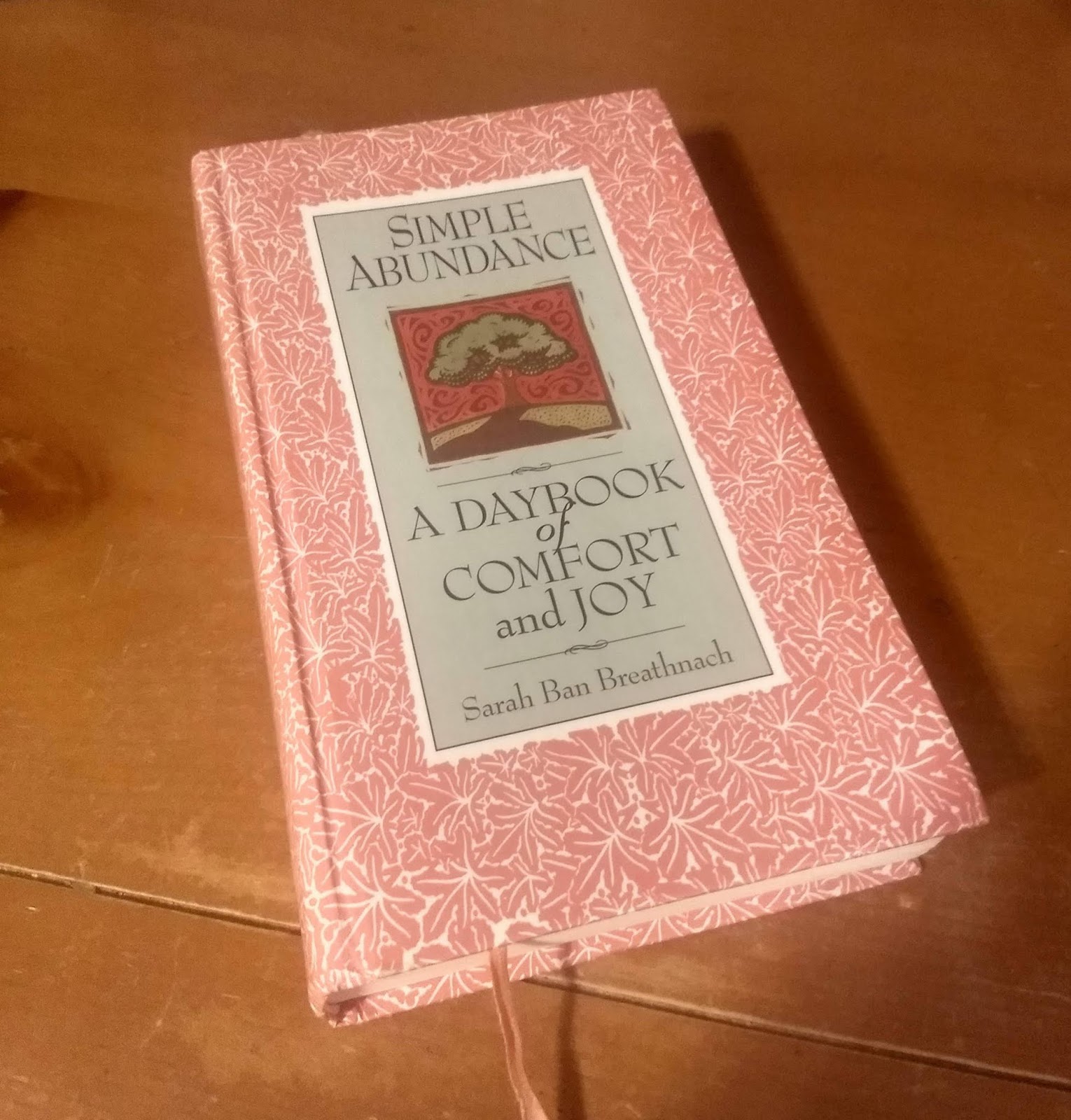
"Start to count your blessings.  Start today. Make a spiritual inventory of all your blessings.  See if you can't get to one hundred.  So much good happens to us but in the rush of daily life we fail even to notice or acknowledge it.  Writing it down focuses our attention on the abundance already within our grasp and makes it real."  Sarah Ban Breathnach, Simple Abundance: A Daybook of Comfort and Joy

When I missed the last couple of steps at work and broke my ankle at the end of September, I was a spoiled brat. I wanted help, but I wanted to do it all by myself. I wanted to go to work, but I wanted to stay home. I was fine when I planned my day but cried out of sheer frustration when I couldn’t get things done with my normal efficiency and speed. In those moments, I learned that I had to focus on the blessings to get through the challenging times. I had to remind myself to dwell on the good things:

I have people in my life who truly want to help me.

My injuries could have been much worse.

This phase is temporary; my ankle will heal in time.

I have mobility with a knee scooter loaned to me by a friend.

The minute I allowed self-pity to seep in, it clouded my whole world. I had to make a deliberate effort to keep all of my thinking positive, or I got sucked into a dreary hole of darkness with branching tunnels and no apparent end.

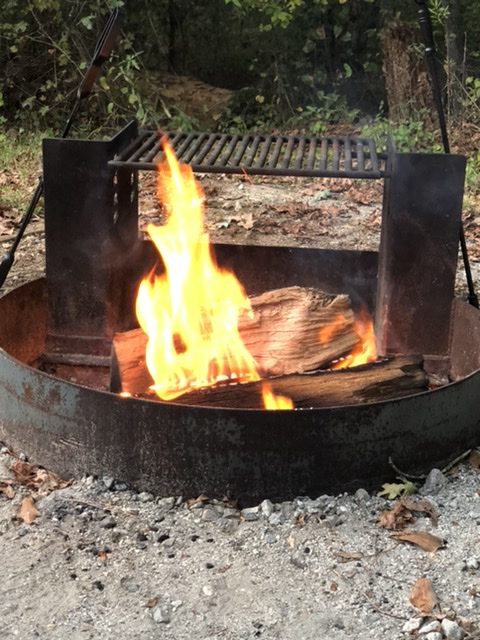
My gratitude goals for 2023 include keeping gratefulness at the forefront. I tend to be best at counting my blessings when I’m outdoors – just like we do when we’re sitting around the campfire, thinking about the beauty of life and the power of moments. I plan to spend more time around the campfire, fire pit, and the fireplace this year, and to write about my blessings through Gratiku, Three on Thursdays, Five on Fridays, and other ways of expressing thankfulness. When Simple Abundance inspired us all to keep gratitude journals when it was first published (I’m rereading it this year as my guidebook in the area of gratitude), I noticed a more appreciative outlook in my own life; while I won’t have a designated gratitude journal, I will devote days to blogging about blessings!

Campfire at a campground in 2022

Oh – and one more thing: I’m going to keep my awareness of those with injuries and disabilities heightened. When I see a person with mobility challenges, I’m going to be sure I hold the door and ask if I can help. As I hobbled around with my broken ankle, I was dumbfounded at the complete lack of manners and sensitivity of so many people, and amazed at the graciousness and awareness of others.

I know who I want to be in those situations where I can make a difference. I not only want to count my own blessings this year, but I also want to be a blessing to others for whom such simple gestures can make a powerful difference.