
calm Christmas morning
all is calm, slant of sunlight
visiting the vet

Patchwork Prose and Verse
calm Christmas morning
all is calm, slant of sunlight
visiting the vet

This December, I’ve been slowly making my way through Calm Christmas and a Happy New Year by Beth Kempton (2019), and in her final chapter of this book laden with the peace of the season, Chapter 10, Kempton encourages us to plan and dream in the week between Christmas and New Year’s Day. clearing a path for all good things to come our way. The week between these holidays is what Kempson calls The Hush – – the best time of year for reflecting on the past years’ blessings and dreaming about the bountiful blessings that the coming year will bring.
This week brings some of the most delightful times of the year – the time we gather with family to celebrate Christmas. Yesterday, we took our three Schnoodles on a long walk around the farm on their favorite trails to celebrate Winter Solstice by keeping close to nature. Today, we will begin our first gathering of the season with our oldest grandson, who will turn 15 in February. This week will also bring the birth of our seventh grandchild in our family. As we clear paths for dreams, we are blessed beyond measure to build those dreams with the grandchildren that we love and hold so dearly today. For tomorrow, they will be holding their own grandchildren and sharing the stories of their own lives.
The Hush is more important now than ever in my day to day life – particularly the older I get. I need to carve out an every-weekend Hush, if only for a day. I’ve realized that what I see and hear in the news and on social media, what I read in books and magazines, and even in my own conversations with others can prompt the most horrific nightmares. It’s why I have to be so intentional about what I allow to enter my mind and heart. It’s why I don’t read horror genre books or watch scary movies anymore, as I once did. It’s why I read more Mary Oliver poetry and books like A Calm Christmas.
Take last night, for example. Yesterday as we finished having lunch, my husband casually showed me a photograph of four planes he’d taken this week as he was waiting on a recipient of a delivery. The planes were flying parallel, but they were emitting trails that were all of the same length and looked more like horses racing on a track where the inside horse is a set distance just ahead of the second, each horse a distance ahead and aside from the next, as if running down the straightaway on a racetrack.
He told me that he finally had seen with his own eyes why people might be persuaded to believe in the chem trail conspiracy. I examined the otherwise benign photo, and sure enough – these were not passenger jets, because generally they follow a flight path. They tend to stay in line, as I’ve watched through the windows at night from my bed just southwest of the Atlanta Airport. There is a seasonal shift in the tree line from my vantage point, but the planes have flown consistently above certain branches of the trees, always in a straight line, and there are usually about 2 minutes between the blinking lights of these planes. They don’t fly side by side the way his photograph showed. I have watched the planes for years as a relaxation tool – much like counting sheep, only counting planes.
Naturally, with a headline that had popped up when I was logging into my office computer network earlier this week, I’d seen the start of a nightmare. I should have known one was coming. The headline assured the world that World War 3 has begun. With all of the drone footage recently, a cup and half of this toxic cinnamon-sugar story was added to the mix, blending and swirling in the most obnoxious way in my dream, too.
I was standing on the lawn of the office in my dream (keep in mind that my office has no lawn, so this was a different space). Apparently, we all liked to go outside and eat (in real life, we either eat together at tables or go out to lunch), but we stood instead of having any picnic tables outside anywhere. I could see four glowing red/orange mini nuclear weapons about the shape of softballs, positioned much like the planes in the photograph, coming at me from the sky as I stood there in the dream, and I heard the voice of our PowerSchool Coordinator’s voice announcing that “We have been The Pirates,” to our community, as a final sign-off since she had seen the oncoming missile attack as well and was making our final phone call to say goodbye to all the families and students we’d served in our area in rural Georgia.
I ran for cover behind a bush, knowing it would not matter, and after surviving the nightmare attack, I stood up, charred, recognizing that in my condition I would not survive much longer. I looked at the rubble of the building and how disaster had struck in this small area, and then began walking home along a nature trail, peaceful and covered in evergreen trees and bare limbs where birds were all gathered in great number on the branches, singing and chirping as if nothing had happened.
I stopped and thought about them. They knew. They knew, and they had flown outside the realm of danger to avoid the exposure to the radiation. This was their survival technique.
It occurred to me that I need to be more like these birds – to be vigilant and aware of what I allow to seep into my mind, because it will blow up in the most unexpected ways. I must be the gatekeeper of all that goes in.
My husband asked why I’d been awake earlier. I told him never to show me scary photos again, and he chuckled, remarking that he didn’t see how the picture he’d shown me was scary.
And then I explained it all to him.
He has agreed: no more pictures that might cause me to lose sleep and wake up as a signed-off Pirate on a charred countdown clock.
I could use your most comforting book recommendations as my next reading. I’ll be listening to books that bring peaceful assurance on Audible as I make my way north this week to Kentucky to swaddle my new grandson and rock him in my arms, praying for his safety and health all the days of his life. Prayer. Needed now more than ever in our lives and in our world.

This December, I’m slowly making my way through Calm Christmas and a Happy New Year by Beth Kempton (2019), and in Chapter 8, she presents ways to reflect on the holidays and to take stock in considering ways to grow through the coming year as we count our blessings.
The Happiness Project by Gretchen Rubin tugs at me each year in January. It’s the ultimate book on how to take a year and be productive while seeking happiness by creating order in the areas where we can rein in some disarray by creating goals and eliminating what we we no longer use or need. Kempton provides a similar structure in this chapter – – a reflection table to take stock of areas needing improvement and to create a plan to address them through the year by mapping the year, reflecting, and letting go of things we need to release in order to move forward. It’s a way of establishing purpose and achieving goals with a monthly emphasis to avoid feeling a sense of overwhelming defeat by looking at all the things that need to be done. These authors break down tasks into manageable steps.
She begins by inviting readers to draw a table in a notebook, beginning with the top row, with columns that begin with the word theme and are followed by each month of the year from January to December. The left columns are labeled home, work, change, growth, ups, and downs. This takes time reflecting to consider the milestones and major events in these areas – and should be brief.
Next, couples or individuals can add some short notes about change and growth, along with ups and downs that may or may not be related to those areas of home and work. In the next step, where the real thought comes into play, the table makes it easier to notice the patterns of change and their effects. Readers can answer questions related to dreams and practical things, and also can consider things that they may need to let go in order to move forward with a better mindset. This enables clear goal-setting and helps achieve a sense of purpose and mission.
And goals, throughout my life, have proven more successful than resolutions. The clear focus and the way that a goal offers incremental steps in an overall process is far more effective in shaping change than one pop of a resolution ultimatum in January. I need a year to accomplish most of the tasks I set out to do as I look at the year ahead. It takes planning to be successful. It takes forethought and intentionality to create conditions that bring happiness and peace.
My plan for the week between Christmas and New Year’s is to return to Chapter 8 with the table. I want to invite my spouse, too, to be a part of the shared goals so that we work together toward a common vision for the coming year.
For today, though, it’s all about the moment of getting to the end of the work day and the beginning of the holiday break. There are some days that have ONE GOAL, and surviving the last day of school before Christmas break is one of them!

This December, I’m slowly making my way through Calm Christmas and a Happy New Year by Beth Kempton (2019), savoring every sentence. In Chapter 1, the author presents The Five Stories of Christmas that focus on faith, magic, connection, abundance, and heritage. Today’s focal thoughts center on connection.
Kempton invites us to reflect:
Do you have a specific memory that is related to a Christmas tree, a Christmas feast, or a particular Christmas gathering?
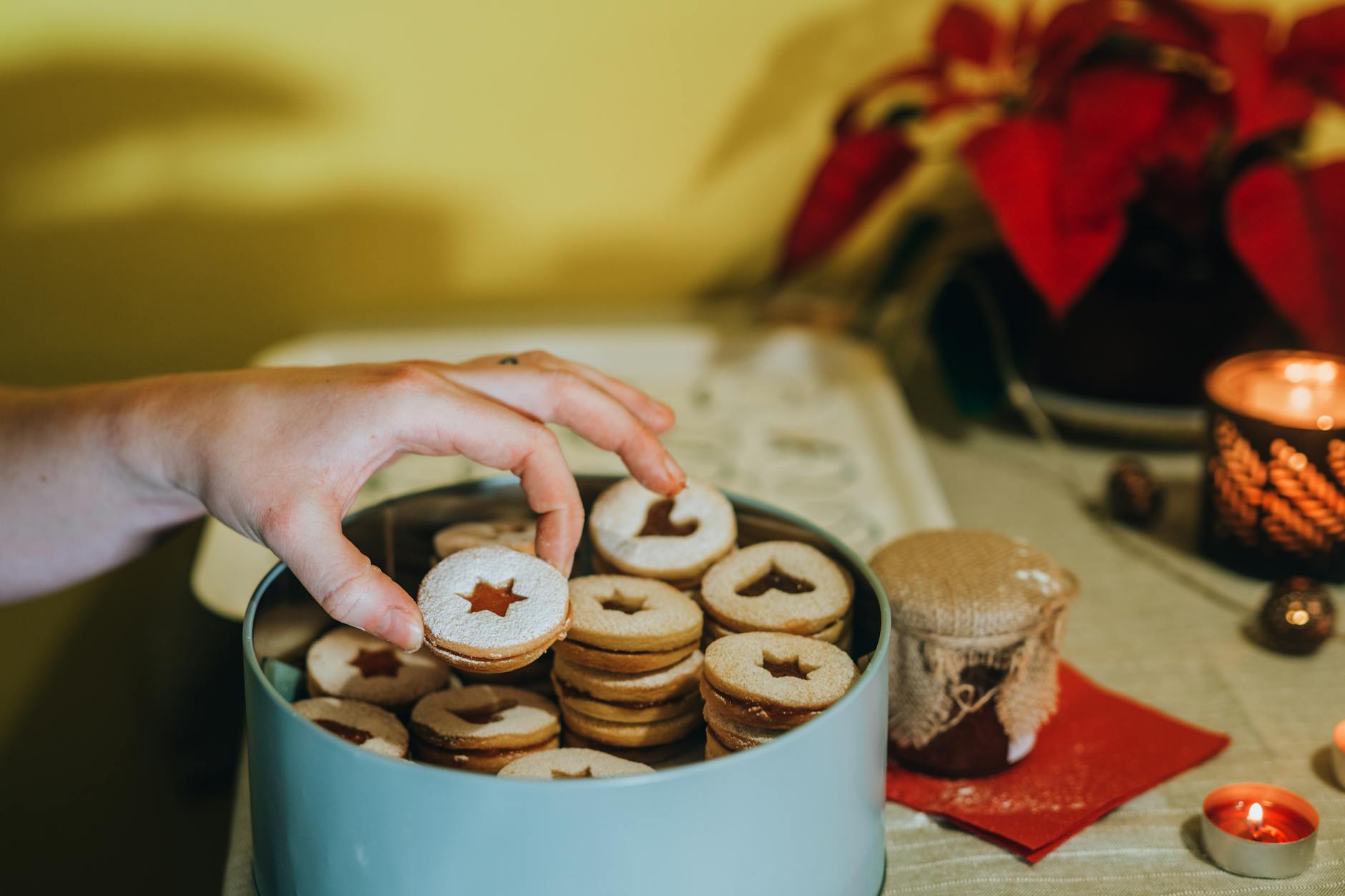
I do, in fact, have a specific memory that is related to a Christmas gathering. We were in my grandparents’ home in Blackshear, Georgia, sitting in the den by the silver tinsel tree with its bright blue ornaments – probably 1970ish. Their friends Kitty and Randolph dropped by with a tin of Christmas cookies, and I remember my grandmother receiving the cookies with warm thanks and a big hug before placing them on the kitchen counter, then returning to the den, where Kitty and Randolph sat down and made their impromptu visit. When they left, they got in their pickup truck to deliver more tins of cookies to family and friends – who, I’m sure, also had no idea they were coming for the surprise visit.
That memory still stays with me as the way of the old days before life got more complicated. It was my first experience with a Currier and Ives tin, and my first experience with a variety of different types of homemade cookies, like the kind with sticky orange marmalade in the center. This was a day when people were home more, did more baking, and made house visits. Life may not have actually been simpler; in fact, it may have been just the opposite. But the values seemed to have been much different, and everyday moments were made more meaningful because less seemed more and enough seemed bountiful.
The older I get, the more I love the idea of these bygone eras. I think it’s why I love reading anything by Gladys Taber so much. Everything she wrote from her Connecticut farm, in my mind, is seen through a Currier and Ives painting. Rustic, rural New England with snow and simple times. It was a day when people really connected. Not through a screen, but in person. Unannounced.
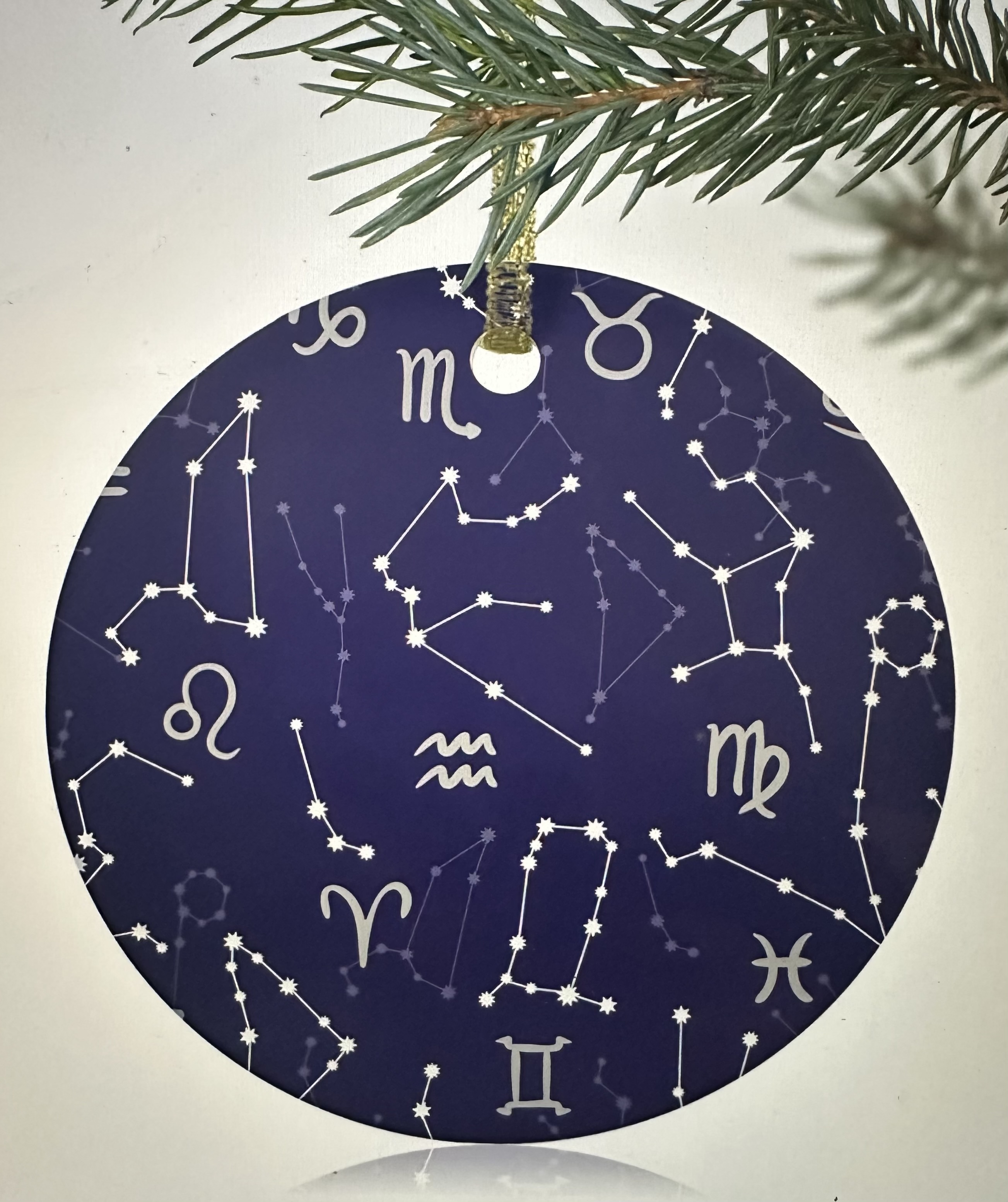
On a scale of 1-10, I would rate the importance of connection, gathering, and feasting at Christmas as an 8. These ratings of each of the stories will be important on Friday, when I draw my Christmas story constellation.

This December, I’m slowly making my way through Calm Christmas and a Happy New Year by Beth Kempton (2019). In Chapter 1, she presents The Five Stories of Christmas that focus on faith, magic, connection, abundance, and heritage. Today, I’m remembering the magic of Christmas I felt as a child.
Kempton asks us to reflect: Where did your ideas about Saint Nicholas/Father Christmas/Santa Claus come from? Did you enjoy other magical stories as a child?
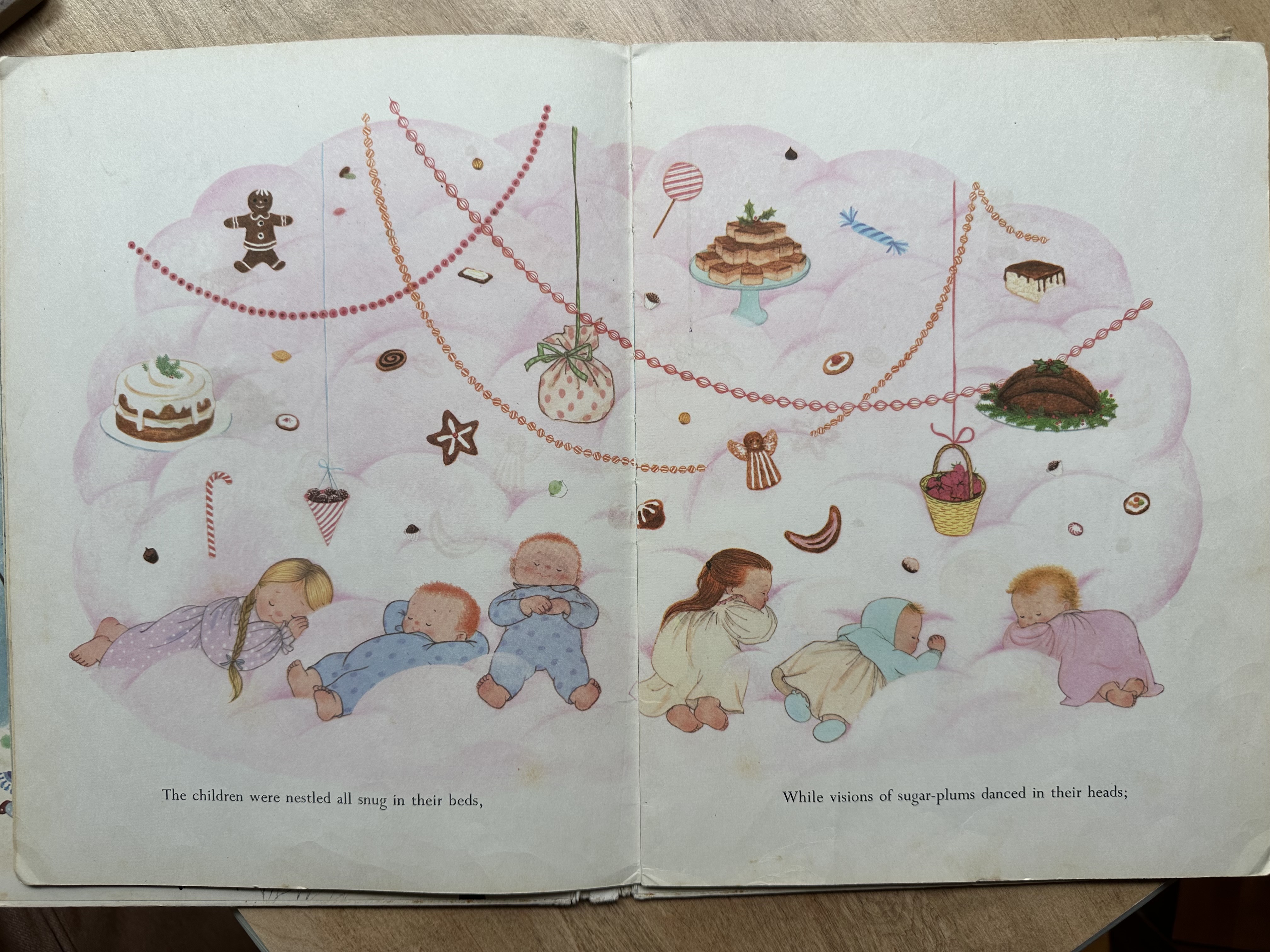
There is no question about where my idea of Santa was rooted. I still have my favorite version of The Night Before Christmas, illustrated by Gyo Fujikawa. Though it is in poor condition from being loved on so much, it was the one my mother read to me over and over and over again, and the one that still comes to mind on every mention of Clement C. Moore’s Letter to Saint Nicholas. The sugarplum illustration is my favorite one in the entire book. The art of the bygone era appeals to me.
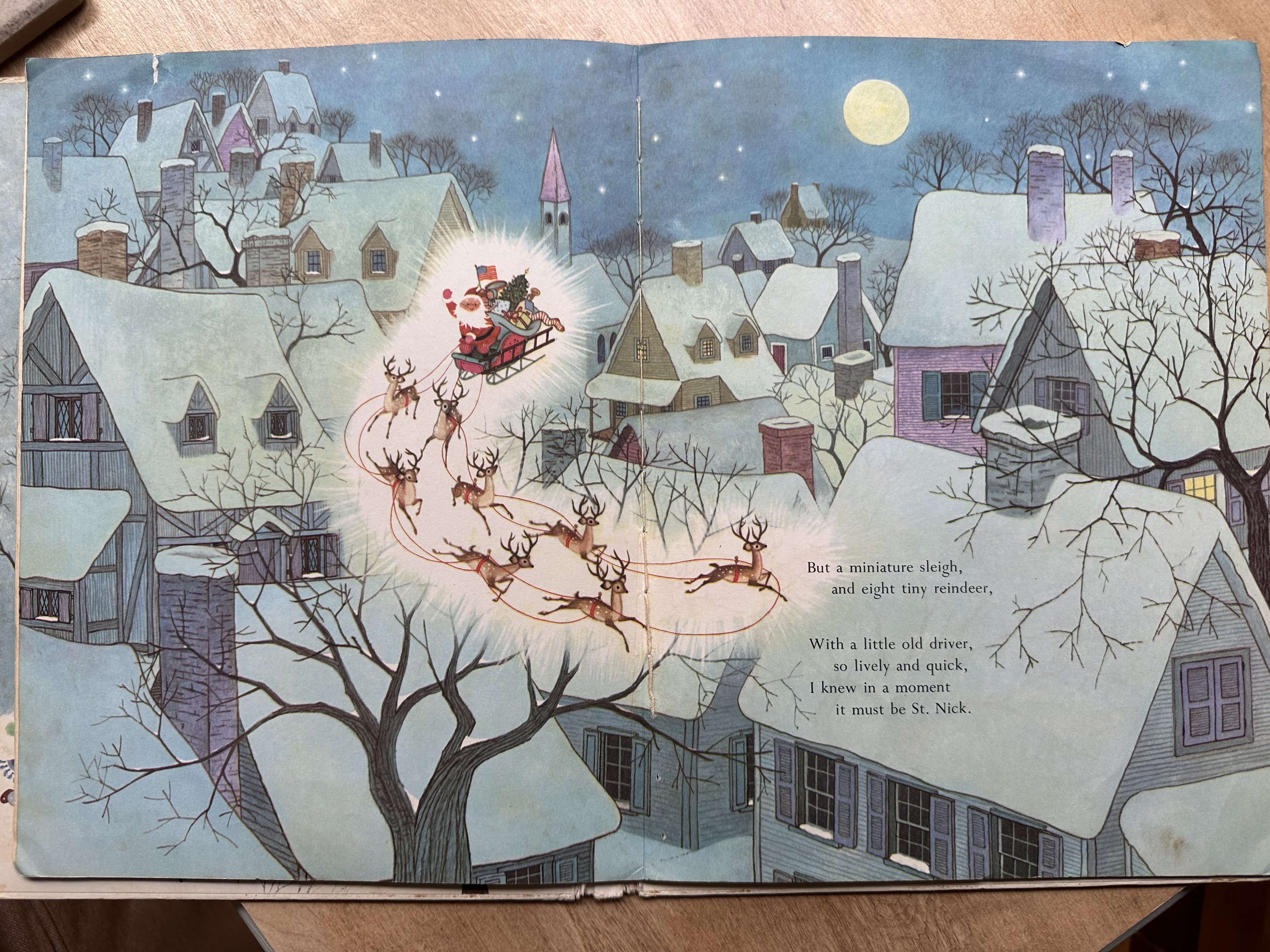
Of course, there was other magic. Rudolph’s red nose and a team of flying reindeer were captivating images filled with magic. Frosty’s magical topcoat that brought him to life – and then couldn’t keep him cold enough to survive – still brings winter wonderland feelings even through the tears of a melted snowman.
Magic Acrostic
Merry Christmas
And Happy New Year
Going on 59 times now ~ and
I still love the magic of
Childhood at Christmas
On a scale of 1-10, rating how much magic and wonder are important to me at Christmas, I’d rate them a 6.
 Common Threads