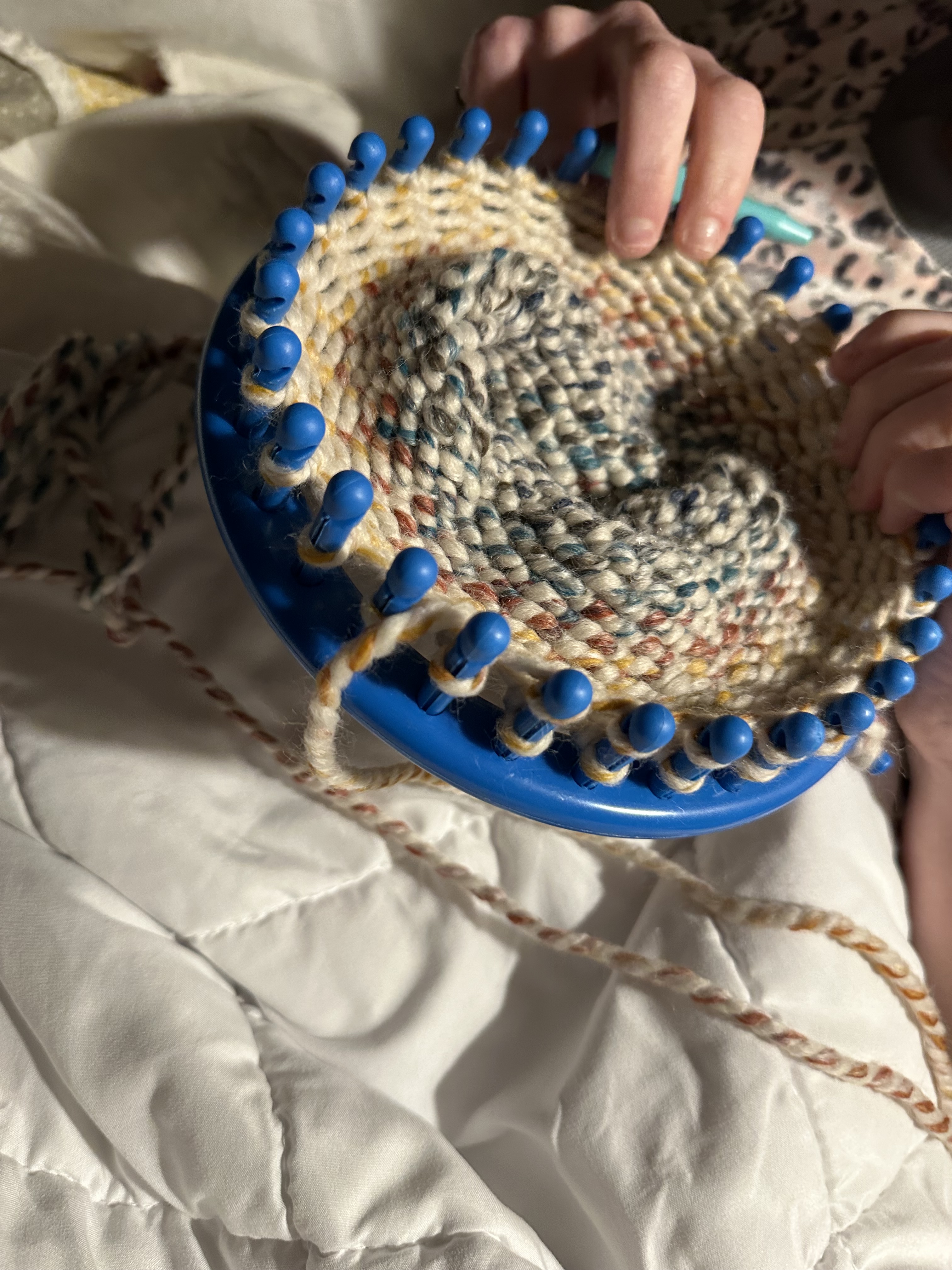
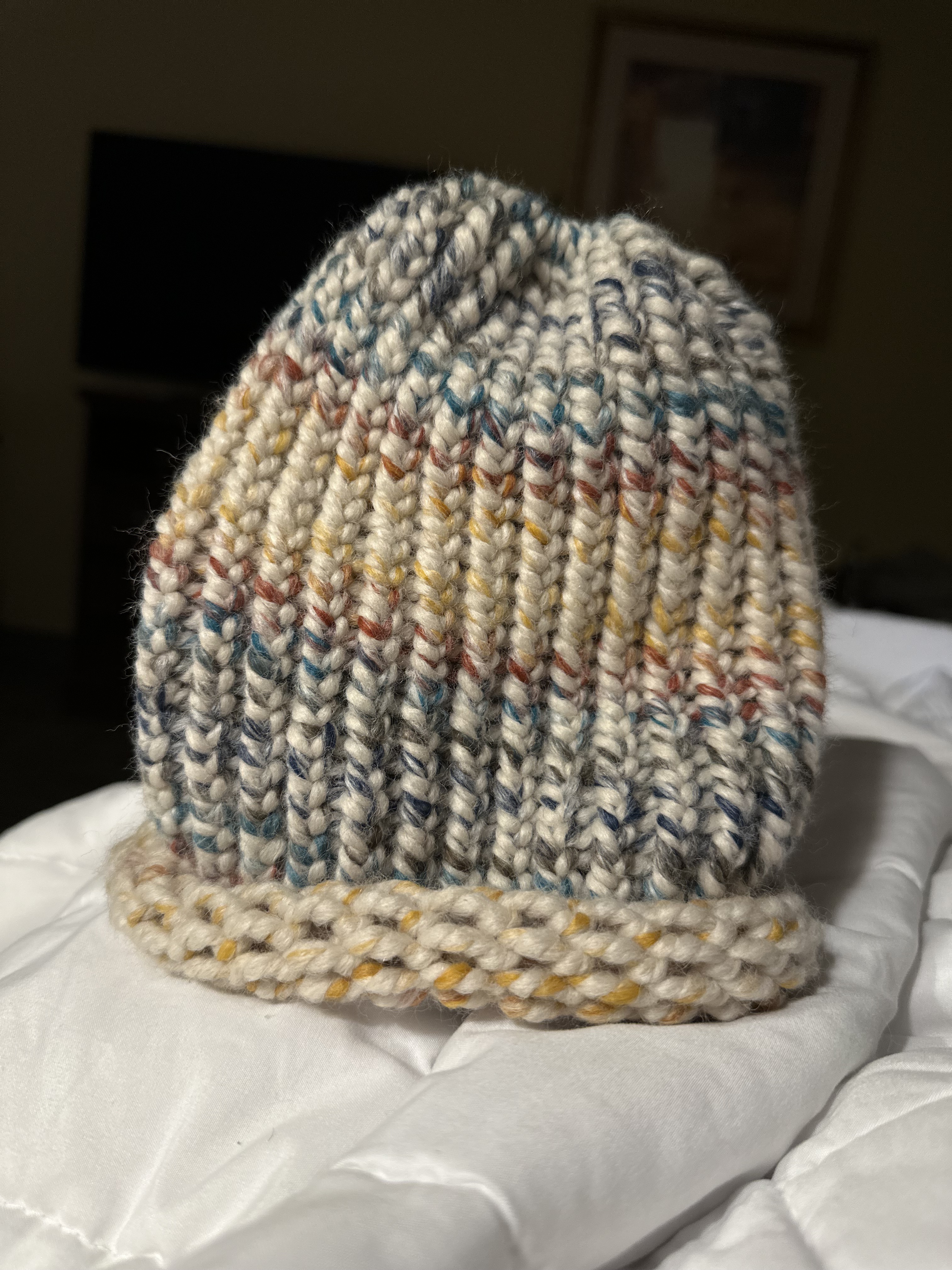
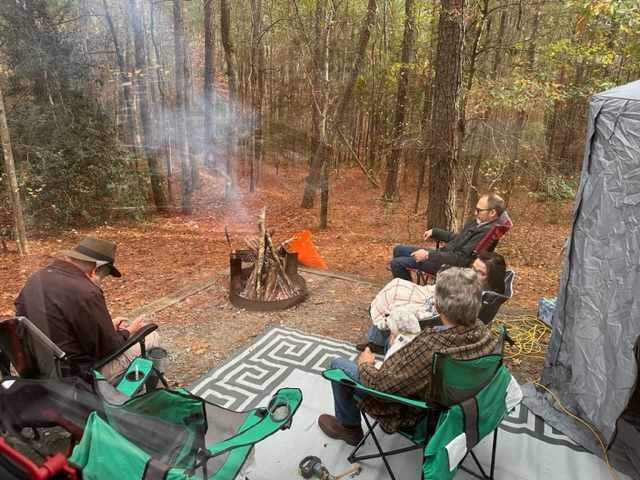
Today is Andrew’s birthday (far left, gray shirt)- and we’re so happy he was born! Celebrating big today!
Aviator extraordinaire
Never a dull moment!
Drone nerd
Ready for adventures!
Eager to lend a hand
Where have the years gone?!

Patchwork Prose and Verse
somebody's little ripple is a drama tsunami because somebody wrote their own life rules and dictionary about how things are (here's a hint: we know it's empty) somebody's "close-knit family" endures Christmas for a sock swap and all go home disturbed somebody is rich, too, richer than you, than I, than all of us, with money in the bank to do big things (here's another hint: we know they're undefined) and somebody has tickets to cruise again soon and would have gone last week except somebody's pet squirrel died and somebody had to bury it and grieve a little so we might want to tolerate somebody and act all impressed because somebody knows how to live when clearly you don't, I don't, we don't. (But we know the truth. See, we've done somebody's laundry a time or two so we don't pity that squirrel.)
I may not be sporting a Rockport, Massachusetts t-shirt, but I do have this.

Every time I scrub dishes, I think of that cute little Sail Loft in Bear Skin Neck, and it takes me back to one of the most scenic United States towns I’ve ever visited.
The VRBO unit had one of these dish brushes in the sink, and I fell in love with it right there in the standing-room-only kitchen in that iconic New England coastal town that still plays steeple hymns at 4 pm on the church organ, probably to remind everyone walking around in this much natural beauty that it might be the closest place to heaven on earth.
Even before I left Massachusetts, I went online and ordered one for myself from Amazon. The Lodge. They may specialize in cast iron, but they make a mean dish brush, too.
As I scrubbed the two crock pots from yesterday’s Meal Train Mississippi Pot Roast and our own MPR dinner with cooked-on carrots and potatoes, I thought back to my walks through this quaint little New England town to take photos of the rocky shore, the sunrise seaglass hunt, the angel wings I found on White Wharf beach in one of the least expected places to ever find a pair (an unquestionable hello from my mother in heaven), and the little wooden boats that looked like they were sitting on glass as they were anchored like lone ducks in the water.
Funny how a dish brush can do that.


Yesterday was the first day of the 2023-2024 school year in my county in rural Georgia, and I left early to avoid the heavy traffic on the one day of the year when it seems every parent drives their kids to school. While my role in the school system has changed from that of a classroom teacher, I still enjoy the energy of the first day of school in any of our school buildings. Backpacks are new, everyone has a pencil, and you can tell by the soles of all the shoes that back-to-school shopping yielded the newest fashionable kicks. Everyone is showered and clean – and mostly well-behaved, since everyone is still outside their comfort zone and a little uncertain of consequence on all the boundaries they haven’t tested just yet. And by everyone, I mean students, parents, teachers, and administrators – all of us!
It’s fascinating to me to read through Gladys Taber’s Stillmeadow Sampler from 1950. Seventy-three years ago in Connecticut, children went back to school after Labor Day and got out at the end of June. Although we return in August in the deep South and get out at the end of May these days, the prevailing school traditions and the perceptions haven’t changed by more than a month in timeline or in thinking in three quarters of a century.
As I begin this day, I’m sharing some of Taber’s timeless insights and sentiments that she describes from her own lifetime of school beginnings. As I read her words, I think of my Great Granny Haynes, who was surely close in age as I do the math of the years and their family structures of that time.
Gladys
School begins and the children waiting for the school bus look like migratory birds themselves in their bright jackets and with that traveling look. They are traveling too on some sort of education, and this is a journey too, a migration from childhood to a larger world. I always feel a nicking ache that I am no longer filling a pencil case and getting schoolbooks for my child.
Kim
I know well this feeling of the nicking ache, from both a parent and teacher perspective. Even though I love what I do as a District Literacy Specialist, I miss being in the classroom – – especially on the first day of school. The bumper crop of a whole new harvest of students comes hesitantly creeping into the classroom, checking out the seating arrangements and all their friends in the class. They still have high hopes that some teacher hasn’t had conversations with the previous teachers enough to know that there are those who shouldn’t be sitting next to their best friends who get them in trouble the same way they get in trouble for laughing in church – hence, they take their assigned seats.
Gladys
Now, as I see a new bevy of school children waiting for the school bus, I wonder what changes the world will bring to them. But I hope for them that they may have a backlog of family love. A child that is confident that he or she is cherished is armed against almost anything life can bring.
Kim
I’ve taught all grades except 4th and 12th throughout my years teaching, and some of the deepest discussions I had with my high school students as we discussed “ancient literature,” are the ways it applies to students today. Whether we were reading Shakespeare or Steinbeck, the universal themes of literature rose to the top like cream rising on a fresh pitcher of milk, standing the test of time and transcending years and geography. I experience the same longings for children today that Taber did in her day – – the hope that there is a backlog of love, and the wonderings about what life will bring – – the universal, lingering hope through the years that children have a strong sense of belonging.
Gladys
Nowadays few mothers have time to read to the children and if they did, someone would have to turn off the television. But there is a special pleasure in being read to or in reading aloud. Long after I could read everything except such words as peripatetic, I pretended I had to be read to every night.
Kim
Still, there is pleasure in 2023 in reading books and living lives vicariously that we could otherwise not live ourselves. Take Taber, for example. I’m basically a fly on her walls, listening to her conversations as I read her words and take in the similarities of our lives and perspectives. In Taber’s day, the television was an enemy of academia; today, it’s technology, cell phones, and social media. And, of course, Netflix. And don’t get me started on AI, because I might warn that we should all be concerned that our grandchildren don’t grow up and marry robots.
Gladys
Judging by what I read and what I hear, the excitement has chiefly gone from education, and this is a pity. My opinion is that we have too many tired teachers. No matter how gifted a man or woman may be, teaching three times as many pupils as is normal and always trying to do extra jobs to supplement the small salary, drains the enthusiasm.
Kim
The more things change, the more they stay the same. Teachers are still tired. Educators are still trying to supplement the small salary. Enthusiasm still wanes in a steady stream from the beginning of the year to the end, and today, unlike in the 1950s, there are even memes with owls that look like wise professors sitting on branches showing a first day teacher and then a last day teacher owl looking like it’s been in a fight with a pack of hungry coyotes and barely made it out alive. That’s how the year goes most often in the grand scheme of a school year.
I read through her calendar year and imagine the timelines of our perceptions, Gladys’s and mine, like those striated layers of earth from different eras, stacked in the mesas of Arizona – – parallel experiences, one then, one now, but the same kind of living with the same concerns and excitement, just new layers of soil to live it all on. And the one piece most interesting? My own parents would have been those young school children in the bright jackets in 1950, migrating on their journey as Taber noted.
And I’m here right now in 2023, on my front porch, looking out over this farm as Gladys did her own in 1950. Me – an egg from the nest of two of those migratory birds who has raised her own fledglings, who are now raising their own fledglings.
And the beat goes on.

A favorite Saturday morning hangout in our corner of the world over here in middle Georgia is 1828 Coffee Company. We go there some Saturday mornings for the best local cup of coffee, cinnamon roll, cheese grits, and breakfast casserole. Even though they don’t open until 9:00 a.m. on weekends (a little different business model for a coffee shop), and even though I will have had at least two cups of coffee by then, and even though I’ll be counting a single Weight Watchers point with Chobani Zero Sugar Yogurt and a fresh diced peach, we will go.
My husband, who loves all things food but is a creature of habit to the degree that if he ever goes missing, I’ll know to start the search party hounds in all the local Chick Fil As, loves this coffee shop on the Zebulon, Georgia square. It’s a restored, quaint place with a 100% Zebulon, Georgia vibe perhaps like no other place in our county.
You can offer him any breakfast nook anywhere, but he’ll pick 1828 over a full breakfast every time just because of the atmosphere. I don’t believe it is the sustenance alone that draws him back again and again. It’s the place, with its ambiance and friendly people. It’s the originality of a place from the past, pulsing with life in the present. It’s “sure ’nuff” Georgia culture, a sense of deep-rooted belonging that anchors a person to a place where they can talk for an hour with most anybody who walks through the door, call them by name, and ask about all their relatives past and present, and conjure memories like a pop-up picture book that only they can see.
If you were here having coffee with us, we’d show you our county. We’d drive you down the dirt roads and stop at the meadow with the holy cows who run toward a cross at feeding time. We’d take you to the Strickland Building where they filmed Cold Sassy Tree in the late 1980s, and show you the exact spot on the courthouse square where a naked James Cromwell appeared in a movie scene for Tank and the same little old ladies who’d called to complain about it and wanted it stopped actually showed up for a front-row spot to watch it being filmed.
Then we’d show you Pike County Schools today and where they were located in the late 1800s and tell you all about one of the four Georgians who was aboard the Titanic when it sunk. Only the woman, Lilly Futrelle, survived. Her husband, Jacques Futrelle, a Georgia writer who was born in Pike County on April 9, 1875, died on the ill-fated Titanic. Futrelle, who had celebrated his 37th birthday the night before he and his wife Lily May Peel Futrelle set sail to return from their tour of Europe, along with two other men from Georgia, perished. Lily told friends that if he’d been a drinker, he might have lived a longer life, because he may have gotten drunk at his party and missed the boat that next morning. Instead, the last she saw of him was from her seat in only a half-filled Lifeboat 16 as he stood next to John Jacob Astor smoking a cigarette on the deck of the sinking ship.
So while we might have taken you to his grave here in Pike County, it’s not here in Pike County. He’s buried in the deep belly of the ocean.
But like all hometown Pike County folks who know everybody and all their family members, we can tell you that Jacques does have a cenotaph at Poplar Springs Methodist Church Cemetery in Adrian, Johnson County, Georgia, on the bottom of the headstone of his mother. His mother’s obituary cites grief over her son’s death as the direct cause of her own death at 66. His father is buried in Atlanta’s historic Oakland Cemetery in the Masonic lot, having died of nephritis. His sister Elberta, buried in North Carolina, lived in nearby Barnesville for a time and was the only female life-long charter member of the Massachusetts State House Press Assocation at the time of her death. His wife, Lily, lived to be 91 and is buried in Massachusetts. Her grave is now marked, but for a long time was not, and the newspapers did not report her death when it occurred. Jacques’ son, who bears his name, lived to be 80 and died on my 13th birthday (July 8) in 1979; he’s buried in Maryland. His daughter Virginia Raymond is buried in Massachusetts, but there are no records of her death.
Since those graves are all a bit of a drive from here, we might take you to A Novel Experience on the Zebulon square to look for one of his books.

Finally, we’d bring you to the Johnson Funny Farm and throw the hammock up between your choice of the thousands of Loblolly pines out here and offer you a glass of sweet tea in a Mason jar and invite you to get lost in the pages of your new book as you hear Futrelle’s voice transcend the depths of the ocean and tickle your reading tastebuds right here in the county where he was born.

In Stillmeadow Sampler, Gladys Taber writes through the year in chapters named for seasons. I think what I love best is the way she captures the feelings of each season with such sensory descriptions.
I’m reading the end of the summer chapter, which focuses on August. Here is where Taber gives me the hope to get through the dog days of summer:
“As August draws to a close, evenings are cool. Autumn is already in the air. The signs are small, but a country eye sees them.”
Earlier this week, I found a reddened maple leaf. Today, I squeezed a fig, and it isn’t as firm as it was a week ago. And as I listen and watch the patterns of birds, I sense change in the numbers that are here.
The stores are beginning to put their summer clothes on clearance as the fall fashions arrive, and of course the craft stores are already decked out for Halloween, Thanksgiving and Christmas. I’ve resisted all temptation to break out the pumpkin candles and strike a match.
I’m on the countdown, though.
Just after Labor Day weekend, I’ll bring out the pumpkins and burlap and light a maple bourbon candle. I’ll bring out the socks, sweaters, and scarves, and change out the front door wreath. I’ll book a pedicure and choose one of those shimmery autumn colors that’ll match all the shades of leaves on the deciduous trees. And I’ll make the orange spiced tea that my mother used to make when I was young and raise my cup to the changing season!
29 more………..
Any answers I will ever find from the universe won’t be written in the sky in trailing airplane smoke.
They’ll come from one of two places.
The most likely place will be in the lines of verse, whether Biblical or modern poetic. Those golden lines, illuminated not in their own context, but in the context of circumstance, hold ancient wisdom and divine truth.
The second most likely place is outside my bathroom window in the voices of birdsong as I’m getting ready for the day. I often crack the window open just a tad when I’m showering and putting on my makeup – just to hear the lilting melodies of my feathered friends. Sometimes it’s almost as if I can understand what they’re feeling, despite the lack of words. Just this morning, a Northern Cardinal called, “cheer-cheer-cheer, purdy, purdy, purdy,” like she was cheering my cosmetics to do their prettying.
The more I observe birds and use my Merlin app to help me identify the different species by their calls, the more I find myself focused on their messages.
Somewhere in between what sounds like I should make a call to report a Tufted Titmouse domestic fight and the cooing of pure love doves outside my windows, I listen. Quietly. The words and feelings I need to hear are no farther away than my own back yard…..
…..and resting on my bookshelves.
Lately I’ve been grounding myself in my rural Georgia blessings by rereading Gladys Taber‘s books about her life on her farm, Stillmeadow, in the hills of Connecticut. Every sentence she writes, it seems, takes me to comforting places that fill me with the joy of memories and the inspiration to carry on the traditions and legacy that my mother left.
In the August chapter of Stillmeadow Calendar A Countrywoman’s Journal, Gladys shares, “Corn stands silken in the field, chicory stars the roadside, and goldenrod mints her coin. The kitchen smells of spices and syrups, ming and sweet pepper. It is the time of “putting up,” a rewarding time for country-folk. I believe it is an instinct in man to store things against the winter, even when there is a supermarket a few blocks or miles away. It is part of the rhythm of life.”
When my children were young, I’d meet my mother at the halfway point so that the kids could visit a week every summer with their grandparents. Just a few weeks ago, as I was visiting one of my girls, we passed a Dairy Queen.
“That makes me think of all those times Mimi would take us to get a Cotton Candy Blizzard,” she shared. “Those were the best days of my life. I loved making strawberry pigs with Mimi.”
My mother had a fig tree, and they’d all go out and pick figs in the back yard and strawberries from a neighbor’s patch. Mom would get out the pressure cooker and a box of clean Mason jars and lids. Everyone had a job to do well beyond the picking – – washing figs, hulling strawberries, slicing fruits, measuring sugar, stirring. It was a day-long event with everyone fully-aproned, and they stocked our pantry and theirs with all the toast topping they needed for the coming winter months.
My grown children still call strawberry figs “strawberry pigs,” from their days of childhood mispronunciations.
When we moved onto the Johnson Funny Farm in 2008, I found a little twig of a scratch-and-dent turkey fig on the clearance rack at Home Depot and bought it for $3.00. My husband put up the orange plastic netting around it to keep from running the tractor over it, and today it stands taller than a clown on stilts and is more solid than any prize bull.
I walk out to the fig tree this morning, inspecting the forthcoming fruits, anticipating their ripening. A fig harvest heralds the end of summer and beginning of fall – my favorite time of year! And I feel my mother’s arm around my shoulders, erasing all distance between heaven and earth, assuring me that the time spent doing simple things with those we love is the best gift of all. The simple act of making memories transcends years, space, and distance and preserves the togetherness and belonging – – the “putting up” of love scooped and slathered freely like a medicinal balm at the twist of a jar lid when it’s needed in the winters of our lives.
Several years ago, my father sent me a stack of books from his collection by Gladys Taber.
“Read these,” he urged. “You’ll see yourself in these pages.”
So I did. And he was right.
Gladys Taber lived on a farm named Stillmeadow in the Connecticut hills, where she wrote for Family Circle, Redbook, Ladies’ Home Journal, McCall’s, Good Housekeeping, and other popular magazines. She published over 50 books.
I live on the Johnson Funny Farm in middle Georgia, where I make a feeble attempt to add to my blog every day.
Gladys was a lover of animals. She raised her precious, spoiled rotten Cocker Spaniels and treated them like her children. She even made friends with 2 skunks.
I’m smitten with our three Schnoodles. We call them our four-legged sons and share our meals with them at every sitting. I watch birds and serve them specialty seed.
Gladys and her friend Barbara Webster exchanged letters for years, even publishing one full year of correspondence between their farms in Stillmeadow and Sugarbridge, sharing details of farm life in the 1950s.
I’m fond of mailing postcards to family and friends.

Gladys’s love of the countryside is evident in every carefully crafted sentence, rich in her descriptions of the simple pleasures of farm life.
We, too, are so fond of our corner of this planet that we audibly say, “Ah, back in God’s Country,” when we come back home from anywhere else. We’re “those folks” who take Sunday evening drives just to admire the landscape and praise the Creator for the rolling hills and the cows in the meadows. We catch our breath with every rustic charm – split-rail fences, old barns, rocking chairs on porches, sweet tea in mason jars, sheets blowing in the wind on a clothesline, clumps of wildflowers at the base of a mailbox.
I turn to the July pages of Stillmeadow Calendar and begin.
“July comes to Stillmeadow clad in silk-blue dawns, blazing gold noons, and violet dusks. Heat glazes the air, leaves droop, and the pond level begins to drop. But night is lovely as a dream, and we can go outdoors without a sweater. Sitting in the garden is inadvisable because the mosquitoes and gnats are busy, but a brief walk is possible.”
I connect with Gladys. These could be my own words now, 80 years later.
I glance out at the drooping leaves, heavy with the heat of the day here in middle Georgia and look to the western horizon, the copper tangerine sun hanging low in the branches and think, “What did I ever do to deserve this slice of heaven on earth?”
And for a moment, I feel the knowing spirit of Gladys here with me, nodding enthusiastically, urging me to love it while I can. She’s smiling from a better place, assuring me that for now, this’ll do.