November 19: Silent Book Club Sidlak

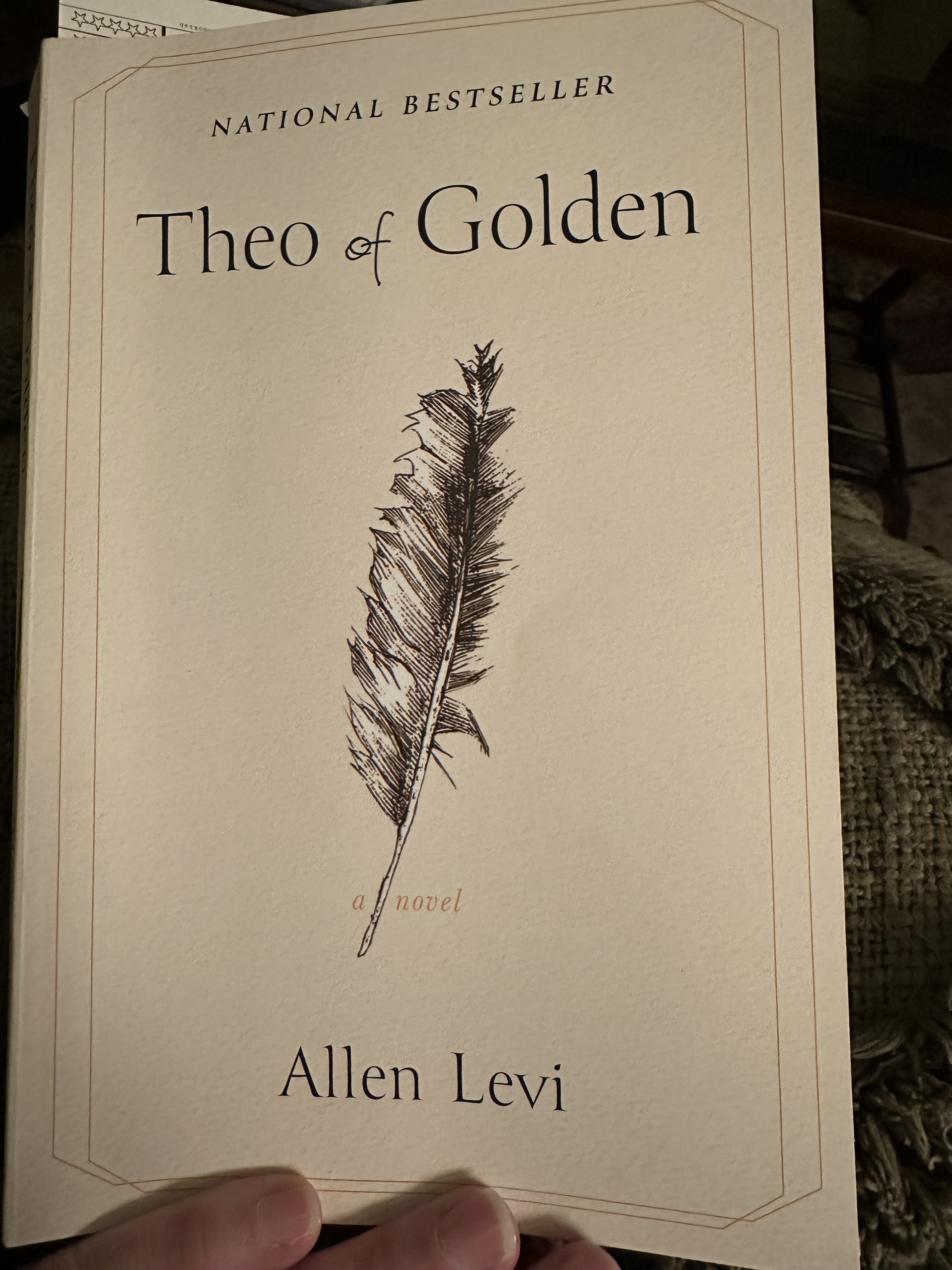
Books people were reading on Monday night at the Silent Book Club

My friend Denise Krebs of California introduced the Sidlak form yesterday in her blog post. She explains that it is a 5-line poem, and the syllable count of the first four lines are 3/5/7/9, and the fifth line contains a color and any number of syllables. You can read her Sidlak here. My poem for today will take this form, about a new experience: a silent book club.

My friend and fellow book club member Janette Bradley and her husband Chris attend a silent book club, and they invited my husband and me to come read for an hour in a fudge shop on a Monday night. We arrived and sat down at their table, then ordered ice cream (my husband) and a cold mocha coffee (me) before we began reading silently for one hour on the clock. It was a great way to read completely undisturbed, and we plan to attend again on an upcoming silent book club month. If you haven’t tried, this, I’d urge you to find a silent book club near you and attend one. I like that there was no pressure to have read chapters ahead of time and no need to discuss whatever books we chose to bring. It was low-stakes, and we thoroughly enjoyed it!

Silent Book Club Sidlak

silently

we read for one hour

from a book of our choosing ~

Salt Stones: Seasons of a Shepherd’s Life

set in Vermont’s Green Mountains heals the soul

*A special thank you to our friends Janette and Chris for inviting us to the book club!

Book Club Pick: Regretting You

first we read the book~

then, our club met for dinner

before the movie

I never laugh as much as when our book club gets together! The books we read and the times we spend talking about them are a balm for my soul.

People have asked me how we “do” our club, because there are so many ways to structure a book club. First, we decide on a book based on someone’s recommendation. We’ve already picked dates through the end of summer and have marked them on our calendars so we guard our time. We sent out digital invitations so we don’t plan any other meetings by accident. Priorities.

Once we know our book and our next meeting time, we read and try not to talk about it with anyone reading it so we don’t give spoilers. Our regularly scheduled gathering spot is our local coffee shop, where they have all the best coffees, a few food items, and the best downstairs couch circle anywhere in town – the kind of leather couches you slide down deep into and wonder if you’re ever going to be able to get out once you get in. The kind with a big coffee table in the middle so there’s room for mugs and plates and stacks of books. We go there and pull out our general book questions as a discussion guide. Sometimes we use questions designed specifically for a book – – like at our most recent gathering, when I’d forgotten to bring the list of universal book questions. Another group member pulled up a set online that we discussed.

The part so many book clubs don’t “do” that sets our club apart is the action part. Every member of our club has a streak of adventure dwelling in our hearts, so we like to think of something the book inspires us to want to do, and then go do that thing. For example, in The Beautiful and the Wild, one of the characters was always drinking tea. One of our members found a local tea room and went for brunch to try different teas, even trying on all the hats and a pair of gloves, too. In The God of the Woods, the characters ate s’mores, so we met for appetizers at the home of one of our members and made s’mores. Having the adventure part adds to the experience of any book, because we do things we wouldn’t ordinarily do on any normal day of our lives. We stay young.

Our latest book, Colleen Hoover’s Regretting You, was released as a movie this month, so we made it our October selection and met for dinner and a movie. We spent as much time discussing the movie and the differences between the book and screenplay, and we were still talking in the dark theater when the manager came in, turned on the lights, and said he was “surprised” to see us there. He was shutting the place down. We were just glad we didn’t get locked in the movie theater overnight. We imagined the headline with humor and horror: Local School District Employees Earlier Reported Missing Found Locked in Local Theater Overnight.

Our next book is The Housemaid by Freida McFadden. The movie comes out December 19, and of course we all have our Regal apps for movie tickets up and running and have booked the date. We’ve decided to leave after the credits finish rolling – – just in case.

October 28 – X Marks the Spot Poems

X Marks the Spot Poem

I worked with two Humanities teachers last week on writing poetry from prose, using a blog post I’d written last week. I remembered that Mo Daley, a friend from one of my writing groups, shared this technique after attending a conference where she learned more about how to engage students with writing.

To pull poetry from prose, students took their own stream of consciousness writing from the previous week and marked an X on it. They listed the words under the X marks and used those words to create a poem.  To write X Marks the Spot poems, you can add other words and you don’t have to use them all – the idea is to create a word bank from the words you X.  You can use any form of poetry for this – this is merely an idea technique.             

  My words:

                  abide      daily        we            Jesus      car           granddaughter     unison    play         they         Silas        of           patient   tempted                  packaged               gathered                 can          to              died         children                                                       how         did           story       because                  for            when       boxes                        the           Tennessee              toys         kitchen  remind   and          of              daughter                 challenging           game      was          since                  Jesus      and          together

       Belonging

we gathered in the kitchen

with the children

laughed in unison

at the stories

as we ate together

at a table that seated

everyone – past, present, and future

October 24 – Writing with Students

New Poetry Forms Nonet

today I get to write with students

showing them new poetry forms

#hashtag acrostics await

poems taken from prose

hidden in the lines

existing text

there for the

prompt of

words

When the high school teacher called asking if I would be willing to come write poetry alongside students, I jumped at the offer. As a District Literacy Specialist mostly wrapped up in the operational world of data and school improvement, I miss the opportunities of the classroom. That’s where we make the biggest difference.

She read to me the AP Standard on taking poetry from prose and wanted to feature blackout poetry. As we chatted, I shared with her my blog post that day and gave her a copy of 90 Ways of Community, a book on poetry written by one of my writing groups. Together, we considered the various poetry forms that we could use if we modeled the process ~ blackout and found poetry were already on the list, but we added Haiku, X Marks the Spot, Acrostic, Golden Shovel, and Zip Odes as a geographic timestamp bonus of sorts. The students have already created their own personal writing, and we’ll show them how I used a blog post to extract poetry and urge them to do the same.

We’ll model the process.

We’ll feature an overview of possibilities – – a menu of choices – – and then watch their creativity flow onto their paper like they’re mining for gems that they pull out to polish and sparkle.

I’ll remind them that poetry is a process – – not a product. In fact, I’ll probably open the class with something like, “poets and artists have a mindset of creating a lot of bad poems and a lot of bad art.” They’ll wonder who the crazy lady is, but I’ll explain what I mean: perfection is not the goal. Writing is the goal. Thinking is the goal. Not every race is a marathon, not every photo wins awards, and not every book gets 5 stars – – it’s finding the pieces of what we do well and building on those parts so that the process becomes somewhat of a habit. I’ll explain to them that I think in metaphors and syllables, and I take a lot of random pictures to come back to little things I see that will work their way into poems.

Take this, for example:

These kids are a big part of my life. Here stand five of my seven grandchildren in the very spot at the top of a mountain in Sevierville where their parents were married in May 2012. Their other grandparents own that land, and at the bottom, there is a fishing pond. Let’s take a deeper look.

Blazing a trail, tackle box and all

I see two boys (yes, they’re boys – they just have lots of hair) exploring the trail that leads to the pond, tacklebox in hand, ready to to cast a line and spend time fishing. I’ll explain to them that already, my thoughts are swirling in metaphors of adventure, seeking, a quest, a tackle box of what it takes to find, a hook for the found thing to be caught, and the patience and grit to stick with it – and the treks through the mud and the weeds to get there.

Because fishing isn’t about the fish. You can go to the grocery store and get fish. You can order fish from a restaurant – or better yet, you can Door Dash fish.

No, fishing is no more about the fish than poetry and art are about perfection. It’s about the adventure and the process, and the wait for just the right inspiration.

Beckham, who never stands still and quiet, is standing still and quiet – fishing!

It’s about engaging in what it takes to do a thing, whether writing a poem or creating art or catching fish. It’s having the stick-to-it-ness to stand still and be quiet for two hours of a morning and be determined when you’d almost always otherwise be doing something else, but you learn to love a thing and know that there is something, something, something that will bite and that you’ll reel it in and be proud of it, whether it’s big or small.

River with his fish

You’ve caught something you’re proud of, and you can’t wait to share it with the world. So you pose for the photo, holding a fish mouth open the way you’ve been taught, holding the fish a little closer to the camera to make it look bigger than it actually is, and you see the great things about your fish.

And then you release it back into the world, knowing that next time you come back, you may catch that same one again – – or something different, like that turtle your sister caught.

Noli’s shoes tell the story: she’s seizing the day!

Either way, the one thing you cannot buy, like that Door Dashed fish, is the mud on your own shoes from the lived experience.

And that is what poetry is – life, experience, thinking, waiting, casting a line and seeing what comes up on the end of the hook.

So while I may say I’m going to school today, what I’m really doing is going fishing

And I can’t wait to see what all we catch!

Open Write Day 2 of 3 October 2025 – Kim Johnson

Magic 8 Ball Poems 

I’m honored to be the host today for the second day of the October Open Write at http://www.ethicalela.com. You can read my full prompt below, but also please visit the website link above later in the day to see the poems that others have written.

I subscribe to Poetry, the periodical published by The Poetry Foundation that features modern-day poets and their poems.  I enjoy the inspiration that I find here – seed starters of ideas, borrowed lines, concepts, and forms.  Such was the case when I stumbled across Magic 8 Ball by Nicole Gonzalez.  You can read her poem below, noting the questions she asks, with those classic 8-ball answers that pop up in a black-liquid window, sharing all the truths and secrets of universe.  

Magic Eight Ball | The Poetry Foundation

Process

Consider the 12 Magic 8 Ball answers below.  Use the responses to craft a poem with questions followed by these answers.  Your poem can be humorous, serious, or completely random.  You may choose to use all of the responses below, some of them or you own responses, or the same response every time (like a broken Magic 8 Ball to incorporate repetition).   You could even make it a fun game by writing your list of questions on one side, writing the answers on strips of paper, and then pulling the answers from a hat to make the poetry writing experience feel extra-magical today.  Also, there is a Magic 8 Ball online that will generate answers (I learned this from Kevin, the first poet to respond to the prompt this morning).

Concentrate and ask again

Outlook not so good

Very doubtful

Without a doubt

Better not tell you now

My sources say no

It is decidedly so

Ask again later

Yes definitely

My reply is no

Cannot predict now

You may rely on it

Here is my poem, taken from the inspiration of Nicole Gonzalez:

Divine Truths in a Magic 8 Ball 

Is this the real life?  

You may rely on it.

Are we really gonna need a bigger boat?

Cannot predict now. 

Can you milk a cat, Greg?

My sources say no.

Will Birkenstocks ever be sexy?

Outlook not so good.

Do you believe in magic?

Yes definitely.

Is Pig 3 out there if you only see the ones numbered 1, 2, and 4? 

Very doubtful.

If it all fell to pieces tomorrow, would you still be mine?

Ask again later.

Is this love?  

Concentrate and ask again. 

Is she really going out with him?

Without a doubt.

Does the hand that rocks the cradle rule the world?    

It is decidedly so.

Is this the dawning of the Age of Aquarius?

My reply is no. 

Will you still love me tomorrow? 

Better not tell you now. 

I’m passing the pen to you to write your own poem. Please share it on the http://www.ethicalela.com website!

Fireside Stories 2025

How did we get kids talking?

How do you get a three year old

to share stories?

Campfire Stories Kids’ Deck!

It’s the theme of this trip- fireside stories. We’re sharing memories and telling stories, and even the youngest kids are getting in on the action. One of the best story generators I’ve ever seen for all ages is Campfire Stories Deck for Kids.

We’ve all been playing. Each storyteller takes a character card (a clumsy fox, a talkative bison, a gassy whale) and an action card (finds a treasure in the desert, accidentally pulls the drain at the bottom of the ocean, jumps into a cloud from a mountaintop). One grandchild laughed so hard telling his story we could hardly understand him. We’ve all had the belly giggles from listening and envisioning the scenes.

Each night of the trip has been full of stories, and we can’t wait to tell more!

October Tricube

I love writing tricubes! In a tricube poem, there are three stanzas. Each stanza has three lines. Each line has three syllables. The rhyme scheme is a,b,c,a,b,c,a,b,c. Try your own today, and feel the fun of writing a poem!

mist veil floats
home fires burn
witches' hats

eerie notes
tree leaves turn
sleek black cats

sweater coats
earthlings learn
vampire bats

What are you Waiting For?

This month, I continue writing posts from prompts in the Writing Down the Bones Card Deck by Natalie Goldberg, shared with me by my friend Barb Edler of Iowa. I’m continuing this month so that I can experience the entire deck of prompts. Today’s prompt asks the question, “What are you Waiting For?”

Today I offer you a tricube. It’s three stanzas of three lines with 3 syllables.

Let’s Just Be Real

I’m waiting

to retire

next chapters

exciting

relaxing

traveling

reading books

in sweatpants

until noon

Open Write Day 3 of 3 September 2025

Today’s host for the last day of September’s Open Write at http://www.ethicalela.com is my friend Barb Edler of Iowa. Barb and I have collaborated on several writing projects together over the past decade, most recently our book entitled Assessing Students with Poetry Writing Across Content Areas: Humanizing Formative Assessment, published Taylor & Francis, a division of Routledge Press, released earlier this month. We write together the first Monday of each month in a small Zoom group and share what is happening in our lives. She’s the friend who shared with me the cards I’ve been using from Natalie Goldberg’s Writing Down the Bones. You can read her full prompt here today, as she inspires us to choose any text or piece of art and write about it. She models an extended Fibonacci Sequence poem form using syllable counts 1,1,2,3,5,8 forward and reverse and I’m doing the same today with the same poem I used yesterday to inspire my writing ~ Overheard on a Salt Marsh by Harold Monro. Hop on over to the prompt link later in the day to read the poems others have written!

What Marsh Nymphs Know

marsh

nymph’s

green glass

beads stolen

right out of the moon

attract the filthiest goblin

with more on his mind than those beads

but marsh nymphs know how

to handle

goblins ~

aim,

kick

Open Write Day 2 of 3 September 2025

Today’s host at http://www.ethicalela.com’s Day 2 of the September Open Write is Allison Berryhill of Iowa. She teaches high school journalism and is a frequent host of amazing prompts in our writing group. Come read more about Allison and her full prompt here, as she inspires us to write a retelling poem.

I chose to rewrite my favorite childhood poem, Overheard on a Salt Marsh by Harold Monro, as a Shakespearean Sonnet, a fourteen-line poem written in iambic pentameter, where the rhyme scheme is ababcdcdefefgg, with ten syllables per line. Here is the original poem:

Overheard on a Saltmarsh

Nymph, nymph, what are your beads?

Green glass, goblin. Why do you stare at them?

Give them me.

No.

Give them me. Give them me.

No.

Then I will howl all night in the reeds,

Lie in the mud and howl for them.

Goblin, why do you love them so?

They are better than stars or water,

Better than voices of winds that sing,

Better than any man’s fair daughter,

Your green glass beads on a silver ring.

Hush, I stole them out of the moon.

Give me your beads, I want them.

No.

I will howl in the deep lagoon

For your green glass beads, I love them so.

Give them me. Give them.

No.

– Harold Monro (1879 – 1932)

***. ***. ***

Here is my Shakespearean Sonnet:

Nymphs Don’t Play

a goblin glumphed upon a marsh nymph fair

far through the pluff he’d glimpsed a glow of green

such beauty drew him to her, for to stare

pay homage to her globes he hoped to glean

nymph, nymph he glowered, sweetening his gaze

as moonlight cast a truth beam on intent

this young sylph, so accustomed to his ways

was not a stranger to his guileful glint

what are your beads that cast such radiant gleam?

they’re moonbeads, goblin, made of emerald glass

which thereupon his threat suddenly seemed

the type that beckoned kicking goblin ass

and so this marsh nymph, queen of her domain

unleashed unparalleled gonadic pain

-Kim Johnson