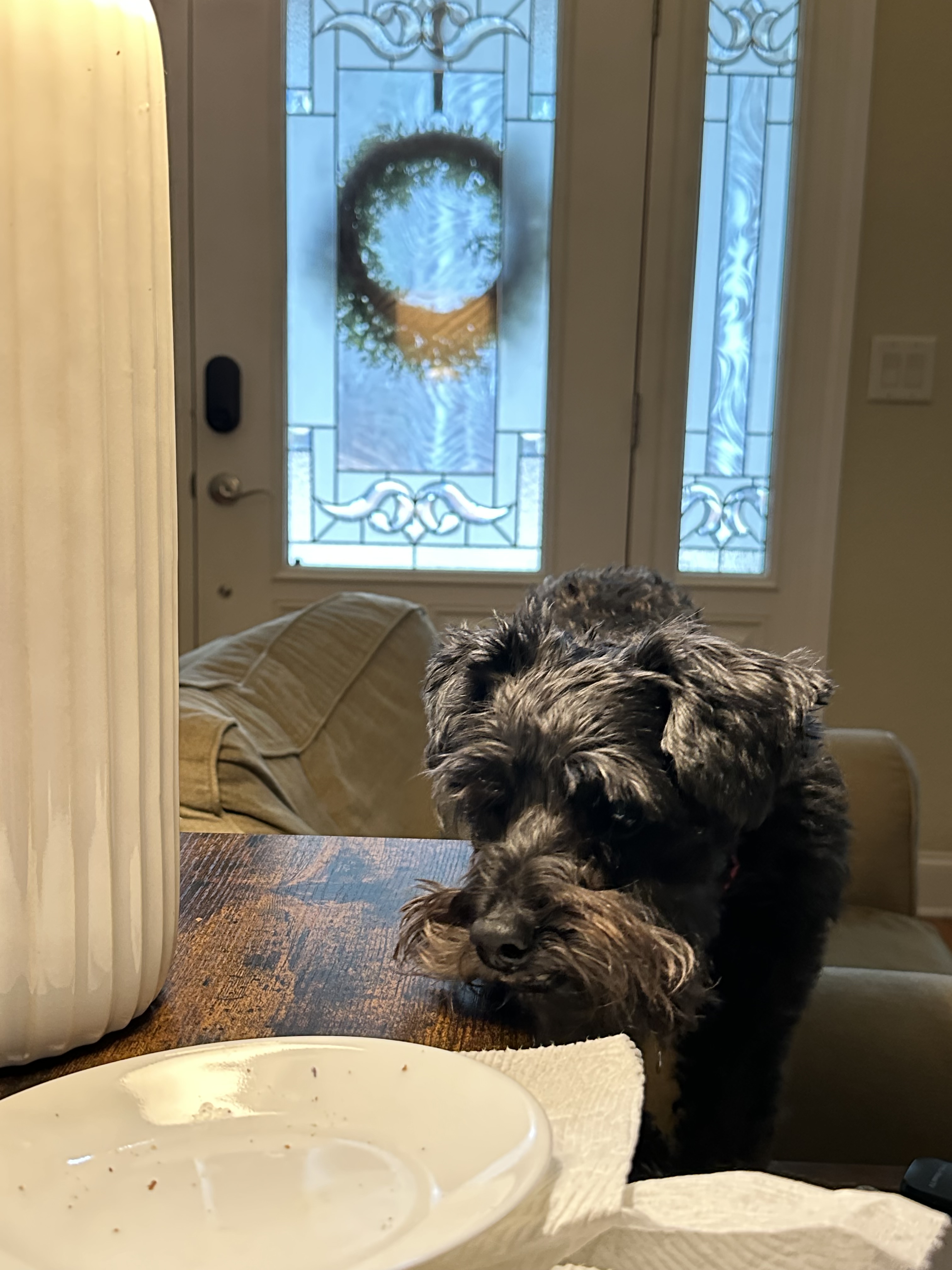
Fitz wants proof
the bagel is
really truly gone
climbs on chairs
stands on tables
wants the evidence
it’s all gone ~
hops back down
food dreams deferred

Patchwork Prose and Verse
Fitz wants proof
the bagel is
really truly gone
climbs on chairs
stands on tables
wants the evidence
it’s all gone ~
hops back down
food dreams deferred

I worry about this one
this sweet little fawn who
used to have a twin
when they
still
had
spots
we’d watched them
from the window
for weeks
clumsily playing
beside mama
just yards
from our front door
near the edge
of the woods
before spotting one
crumpled on the road
near the driveway
near their
dense thicket
and now this one
with her rumpled rump fur
comes calling
alone
so close
to the house
as if she’s trying
to
say
something

Have you ever seen a dog that can flatten himself right into a chair, a bed, or the floor? If our Ollie were a poem, he’d be a skinny poem. He could win an upside-down limbo contest and beat a snake at it.
he flattens out
Ollie
rescued
schnoodle
skinny
Ollie
abandoned
neglected
adopted
Ollie
he flattens out
Taken from The Skinny Poetry Nation blog: The “Skinny” is a short poem form that consists of eleven lines. The first and eleventh lines can be any length (although shorter lines are favored). The eleventh and last line must be repeated using the same words from the first and opening line (however, they can be rearranged). The second, sixth, and tenth lines must be identical. All the lines in this form, except for the first and last lines, must be comprised of ONLY one word. The Skinny was created by Truth Thomas in theTony Medina Poetry Workshop at Howard University.

We live in the middle of a forest. These massive pine trees surround our home on all sides and shelter us deep in the woods, basically cut off from any form of civilization. We have to get dressed and venture into society to see other living, breathing human souls. What used to be a fully operating cattle farm has been, little by little over the years, turned from cow pasture to pine tree farm – which is why, when I tell my work friends that I must go home and walk the dogs sometimes at lunch, I am met with blank stares. They don’t understand that when I say I live on the Johnson Funny Farm, this basically translates to the Johnson Wayward Wildlife Jungle.
We never know what we’re going to see, and we can’t take risks that our pack of house Schnoodles won’t go chasing anything that moves. Two of the three must be on leashes at all times.
Except Boo Radley~
his dad gives him a leash pass
(doesn’t see the need)
He saw it last night, for the second time in two weeks.
I’d just gone to bed and gotten settled to try to figure out Wordle at the end of a long day that included a two-hour extension to help with registration at our high school when I heard my husband frantically yelling Boo’s name. I sprang up, careful not to slip down on the wood floors after just putting the magnesium cream on my feet to help me sleep better, making it to the closet to get my slippers. I knew instinctively this would require entry into the thicket.
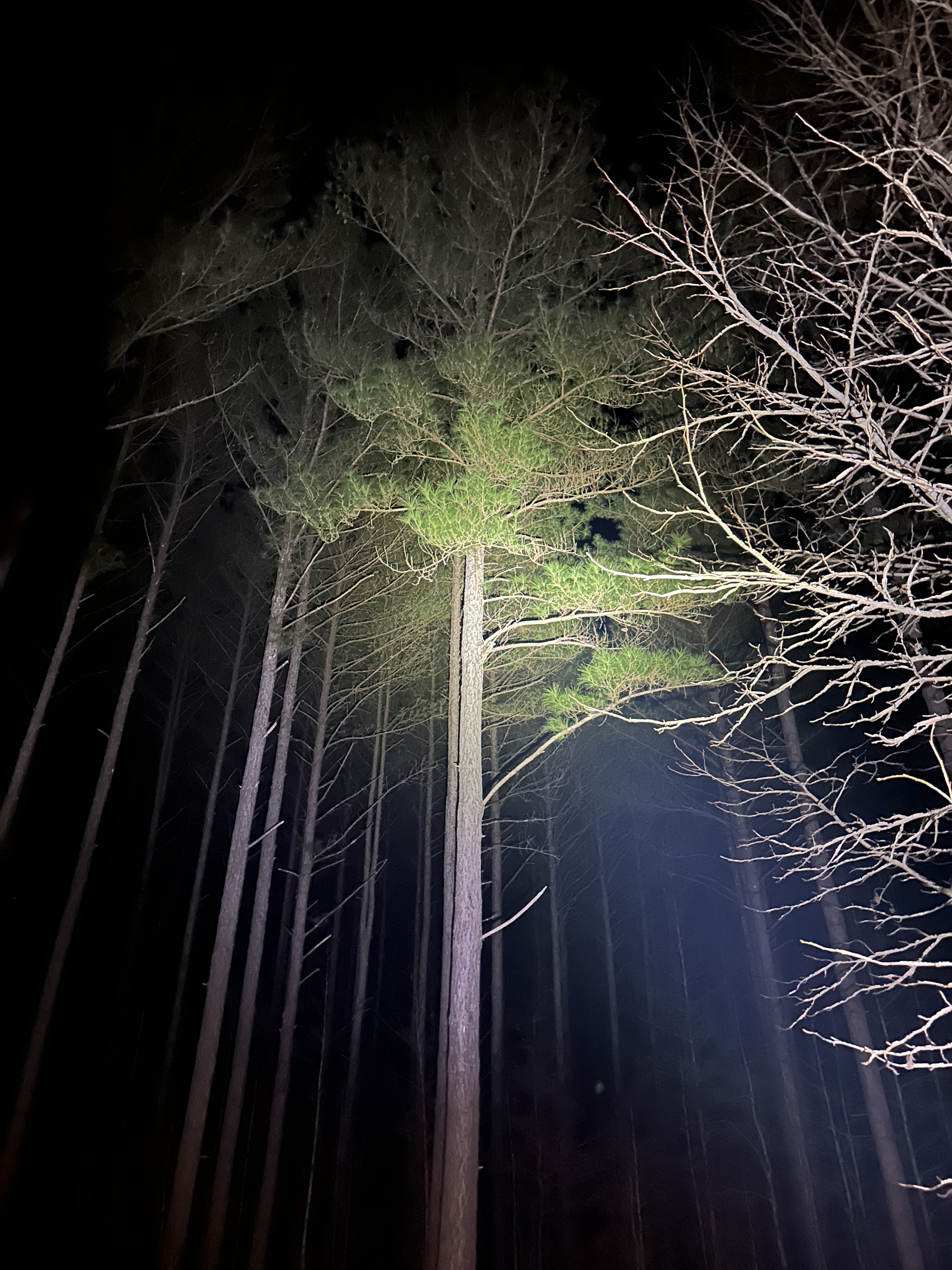
Sure enough, Boo Radley had taken off and was marking territory at the bottom of a pine tree, where once again he’d treed a coon. This happened for the first time less than two weeks ago, but here we were again, another (or maybe the same) frightened raccoon staring down into the high beam of our flashlight, wondering what kind of dogs we are raising in this house.

He gets proud of himself and tries to sport the Alpha Dog swagger after a thing like this, but it’s all lies. He is not the alpha anymore, and he knows it deep inside. He’s just obnoxious.
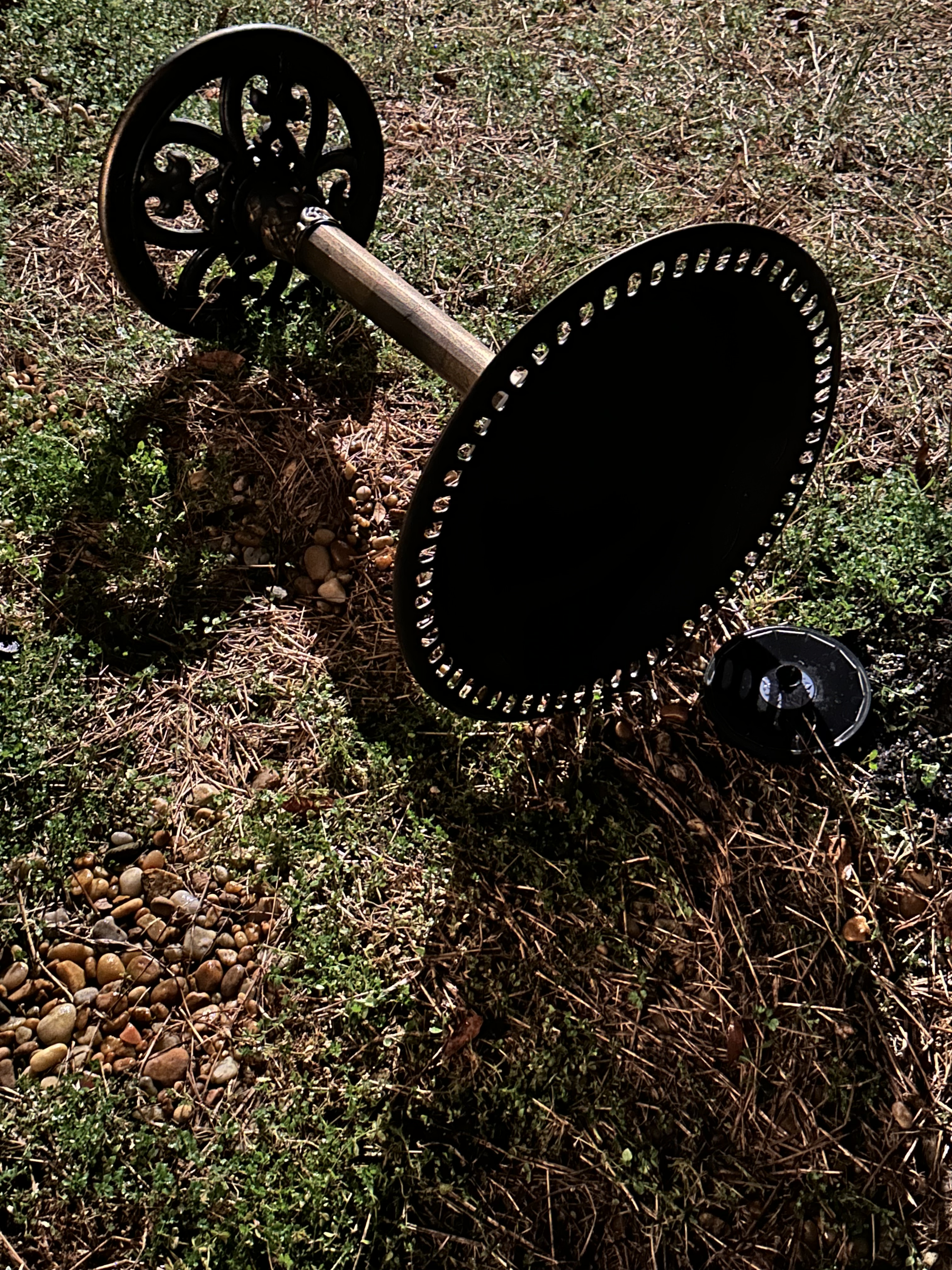
Take this morning, for example. I’m generally the first one up, and so I take the boys out around 5:00. They usually go right off the edge of the walkway and do their morning business, and it takes less than two minutes………until Boo decides to go over by the gardenia bush and gets wrapped around the birdbath and pulls it over, completely full, right at my feet. I was grateful it was not the block of ice it was two weeks ago.
Still, I laugh at the comedy of it all. We’ve often wondered why Boo was abandoned, needing rescue in his younger years. He isn’t an easy dog by any means…….but we love him, and if it weren’t for him and his brothers and all the wayward wildlife critters who wander up and want to be a part of life here, we wouldn’t be able to call it the Johnson Funny Farm.
You gotta be a little sideways to end up here.

today we take the next steps toward
building our barndominium
it’s all part of the process
in our retirement plan ~
simplify, downsize,
anticipate
ease in days
ahead
now
she began early
random odd texts
throughout her day
photos of soap
rainbow sherbet dreams
mushroom coffee moments
just a prank
to bring smiles
and endless laughter
My daughter sent me a reel earlier this week with some girl on Instagram saying that she was going to send her brother random boring, senseless updates by text the following day – things no one would care about, really. So my older daughter decided to do the same for her own brother. That’s what happened today. I woke to photos of the random texts and spent a day with the best medicine – – laughter!
She has her next “victim” in sight, and I can’t wait!


I am one with Mother Earth, my feet
grounded in the rich, fertile soil
footprints leaving impressions
as the pores of my soles
pour into my soul
the lifebeats of
universe
pulsing
up

As I continue along the journey of my One Little Word for 2025, enough, I’ve been thinking lately about the stewardship of how I over-own things – do I selfishly trap them and call it collecting, or have I done my part by passing them along when they have lived their best life with me?
I think we all have a tendency to hoard things – to save a penny for a rainy day. But what happens when the collections have taken over our lives and the proverbial pennies are now quarters and dollars, anchoring us instead of freeing us? In 2023, I looked at all the boxes in the loft of our barn and in our attic and stepped back, taking it all in. I hung my head in shame at what I saw. It was like a graveyard of opportunity for still-useful items never seeing the light of day anymore, and I was the undertaker. I was the bad guy in the parable of the talents, burying the promise and potential of what had been entrusted to me. No, I have not been a good steward when it comes to things.
Once upon a time, I heard a saying shared by my father in a sermon. He reminded us all not to be those people who get all we can, can all we get, and sit on our can. At the end of 2023, I realized I’d been sitting on my can. And I needed to take action.
My grandparents grew up during The Great Depression, and learned about their stories when we would go visit them as my brother and I were growing up. My paternal grandparents lived in Waycross, Georgia, and they were the absolute King and Queen of double coupons. I learned a lot about frugality from them – about saving, about the concept of “enough,” and also about the disadvantages of too much. My grandmother clipped those coupons and looked for whatever was free – whether she had a plan to use it or not. At the heart of this was the need for protecting – for providing and provisioning the essential needs of a family, and I began in those days to understand the way that money could be stretched.
I used to hear the water come on, go off, come on, go off – – and years later, I realized that she showered that way. She got wet, turned off the water and lathered, turned it on and rinsed, and repeated. She double-couponed so much that they had an entire storage room of cereals and other dry goods. I was having a bowl of cereal on one visit when I noticed something moving in the milk. On close inspection, I was horrified to discover that I was eating bug swimmers. From that experience, I learned the importance of checking expiration dates.
But I also learned something else: the extreme effort on not wasting water did not transfer to the waste happening when the dry goods spoiled before they could be used. Sufficiency seemed at odds between having too little and having too much – and there are problems on both ends of that spectrum when we forget the importance of fine-tuning our needs to the middle ground of enough.
All this examining things and re-calibrating my mindset about the things I’d accumulated made me think of a childhood story that my mother used to tell me. At one time in my life, I was an aim-to-please rule following preacher’s kid who, in my young child voice, would ask my mother, “Did I bees good?” whenever the stringent need for good behavior in church or at some event, visit, or outing was over and done and I was needing my recognition and report card on my efforts. Likely, I was ready to get back to business as usual with a little badness kicked into gear and let go of the need for my best behavior.
But as I looked at all the things I was holding hostage in my barn and attic, I wanted to re-ask that question through a different lens: Did I bees a good steward of things?
Nearing 60 with retirement dreams of lightening the load to ease the way for RV travel and a significantly downsized house in the near future, I began a quest last year to clean out our home and attic and purge the anchoring cargo of a lifetime of teaching and boxes of mementos and sentiments that have outlived their purpose in my life. It’s time to prepare for the next chapter – whatever that may be. No one can move forward who is so heavily anchored in the past.
I have a question:
Did I bees a good steward of things?
Or did I hoard them?
I read a game-changing book in 2024 by Robin Wall Kimmerer, entitled Braiding Sweetgrass. At several times throughout the book, I found myself silently weeping tears for all of the boxing of things I have done in my life. As I turned the pages of that book, I imagined the life involved in all these items – the trees that once stood tall in the forest sheltering nests of woodland critters – trees that gave their lives to become books and furniture and toys; the plants that yielded cotton and other fibers to become linens and towels and clothes; the hands of craftsmen and seamstresses who shaped the creation of each thing. I was gobsmacked.
In the first month of 2025, I finished Kimmerer’s most recent book, The Serviceberry, in which she discusses the ethics of reciprocity in a gift economy. Abundance and gratitude are at their purest when we understand the concepts of the gift economy as opposed to the market economy. There is life-changing magic in the mindset and understanding that the notions of self-sufficiency and hoarding are at odds with our values and people we hold dear – and may actually be harming them. Her essay that summarizes the main concepts in her book is available here, but I offer this warning: be ready for a seismic shift in your thinking once you read it. It tops any sermon I’ve ever heard on Matthew 6:26, and ironically, birds are at the heart of the Bible verse and at the heart of The Serviceberry.
It begs the cyclical question at the end of each day, each week, each month of striving to live in a more simplistic and abundant way: did I bees good? And at the end of 2024, I could finally say that I’ve moved from being a failing steward of accumulated things to passing with a C. I still have a way to go, but I’m doing the work of managing the mountain by keeping my One Little Word front and center. I don’t buy the extra tube of toothpaste just because it’s on sale – – because I have enough. I leave some for others, and I leave room for honoring the uncluttered spaces and the sense of order. And I can feel it.

Our three schnoodles have their morning rituals down. They are as predictable and relentless as the wrens building nests in our garage. Same games, same antics every morning and afternoon- and we play along because things were not always this way. It took effort and patience to build the trust and happiness from the trauma of life before rescue, and we are the ones these boys depend on to keep them from starving and being abandoned again. We are not their first rodeo. But we are their first and last loving family – even if we have to convince them that they are all a little bit badass as we anthropomorphize their every move and talk for them in their own special voices. Finally, they are seen and heard. And loved.
one is viciously tempting dad’s play
(tug of war with his posh blanket)
two is cussing shameful threats
at the deer just outside
three nose-nudges ball
to Dad to throw
down the hall ~
{morning
games}!
Erica writes, “Today’s poem was inspired by the poem “Nest” by Jeffrey Harrison. I loved the surprise discovery revealed in the poem and how the poet marvels over this small miracle that they discovered while putting up their Christmas tree. It made me want to explore my own little discoveries and what they revealed about myself or the world around me.”
You can read Erica’s full prompt and poem here, but here is her process if you’d like to use it to write a poem of your own today:
Stanza 1 – The initial discovery. I followed the structure of Harrison’s poem using the words “It wasn’t until…that ___ discovered…”
Stanza 2 – The feeling or reaction to that discovery. I asked myself the question “What ABOUT this discovery sticks with me?”
Stanza 3 – Start with the phrase “And now…”, how are your feelings/reflection on this discovery evolving?
Stanza 4 – Start with the phrase “And yet…”, what contrast or contradiction comes to play as you continue to reflect on your discovery?
Stanza 5 – Wrap up your poem with a final take away moment.

Scrap Paper Love Note
it wasn’t until
I came to make my coffee
that I found his note ~ ~ ~
amazing, cherished
sentiment on a receipt ~ ~ ~
scrap-paper surprise
and now my heart warms
like steam from my Snoopy mug ~ ~ ~
love wafting outward
and yet he is gone
driving to Alabama
me, spooning honey ~ ~
and adding creamer~ ~
swirling joy, blending heartbeats
across the state line

