Our host today for the 8th day of VerseLove at http://www.ethicalela.com is, Linda, who lives in Virginia, where she teaches from a middle school library. Linda inspires us to write prose sentences in the form of poetry the way we would say it in verse. You can read her full prompt here. She gives us this example: “In English, we might say, ‘I feel lost in the chaos of life,” but in poetry we say, ‘The heart wanders through the storm, seeking sunlight in shadows.'”
She shares a process we can use: Take a sentence from English. Translate it via the phrase, in poetry we say…
My chosen phrase is Ain’t No Mountain High Enough.
Luke Bensing of Valparaiso, IN, our host today for the 7th day of VerseLove at http://www.ethicalela.com, teaches 9th Grade English in Merrillville, IN. Since it’s Tuesday, I’m also writing with the bloggers at Twowritingteachers.org, slicing about a reflection or part of my day.
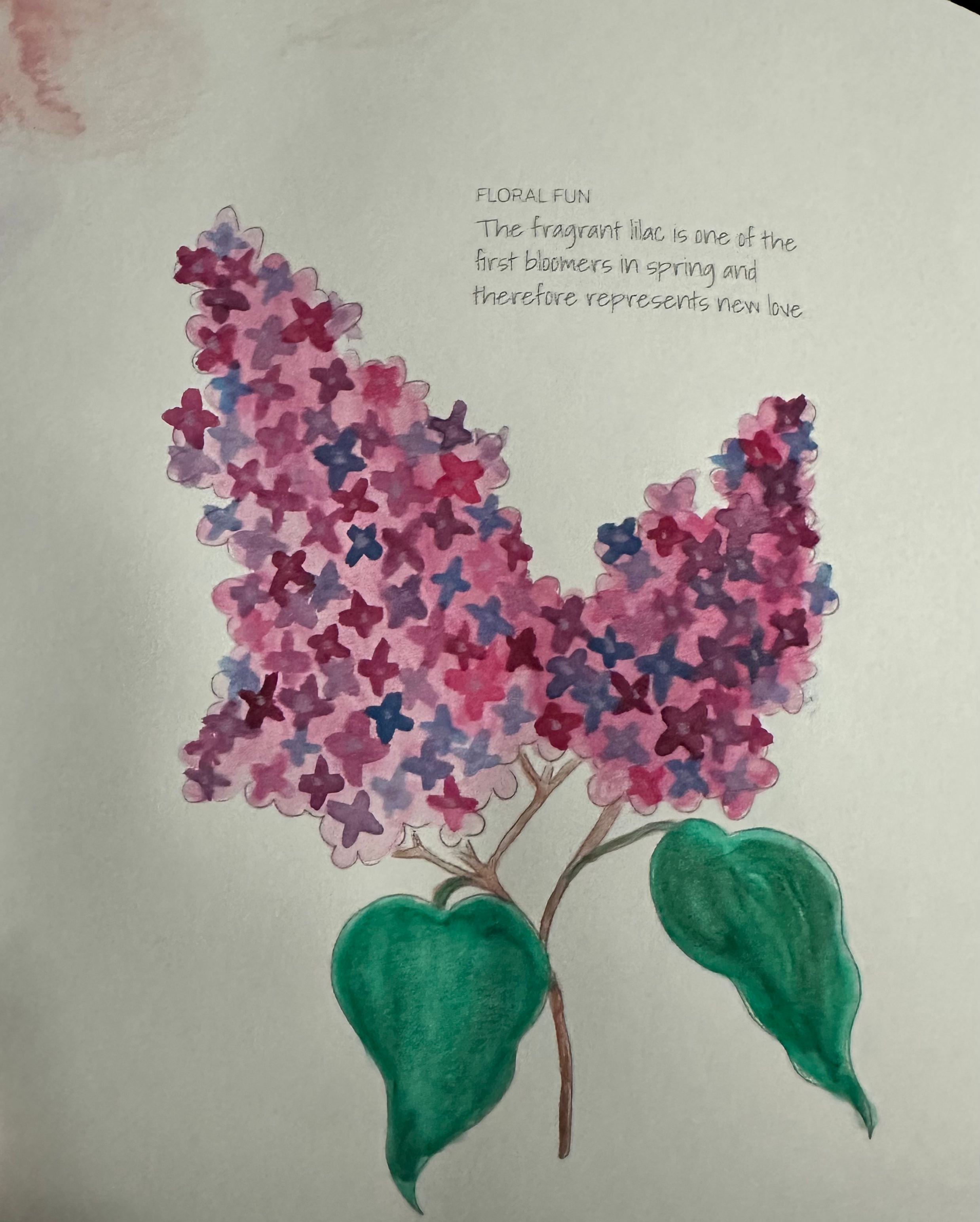
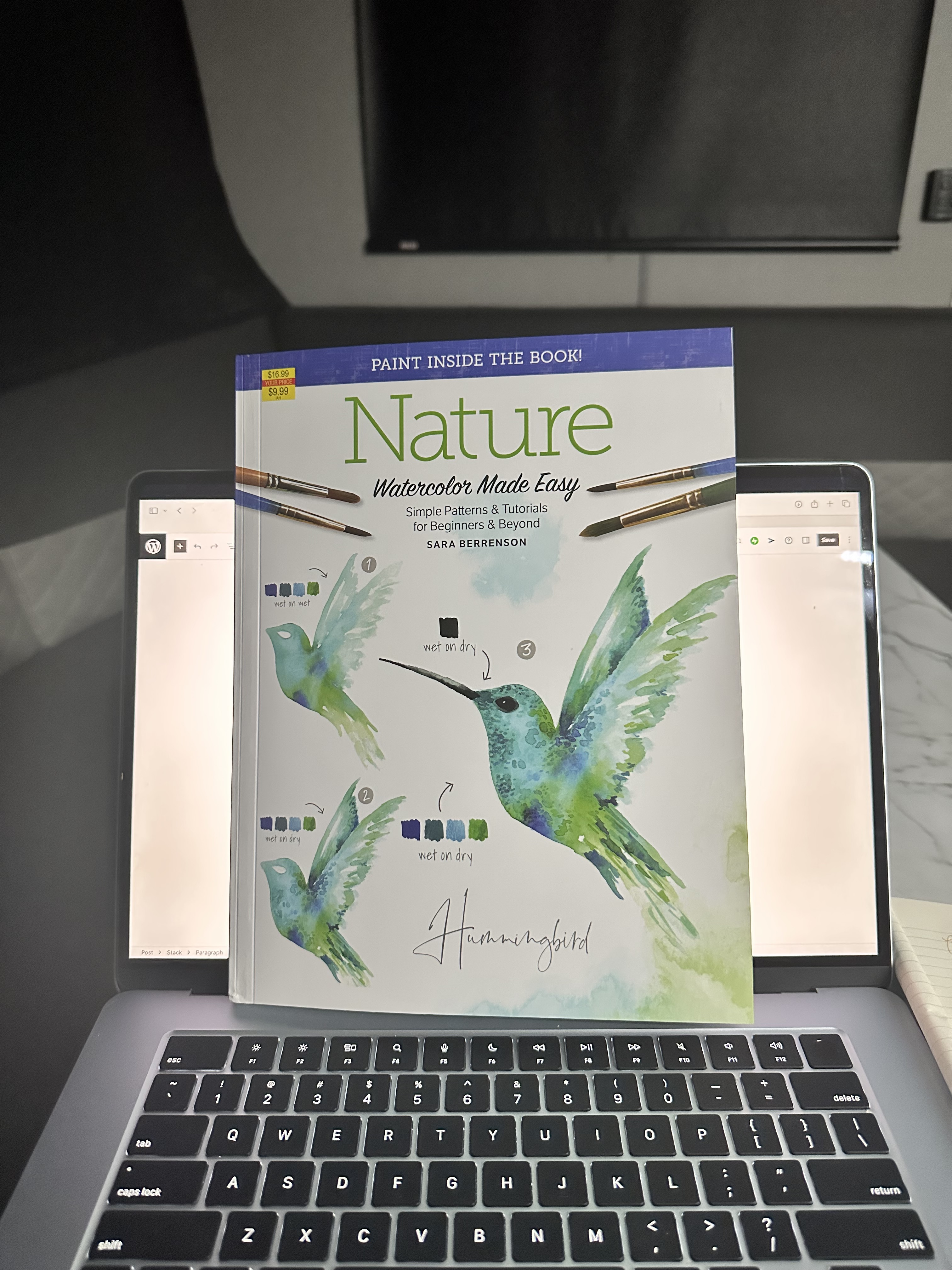
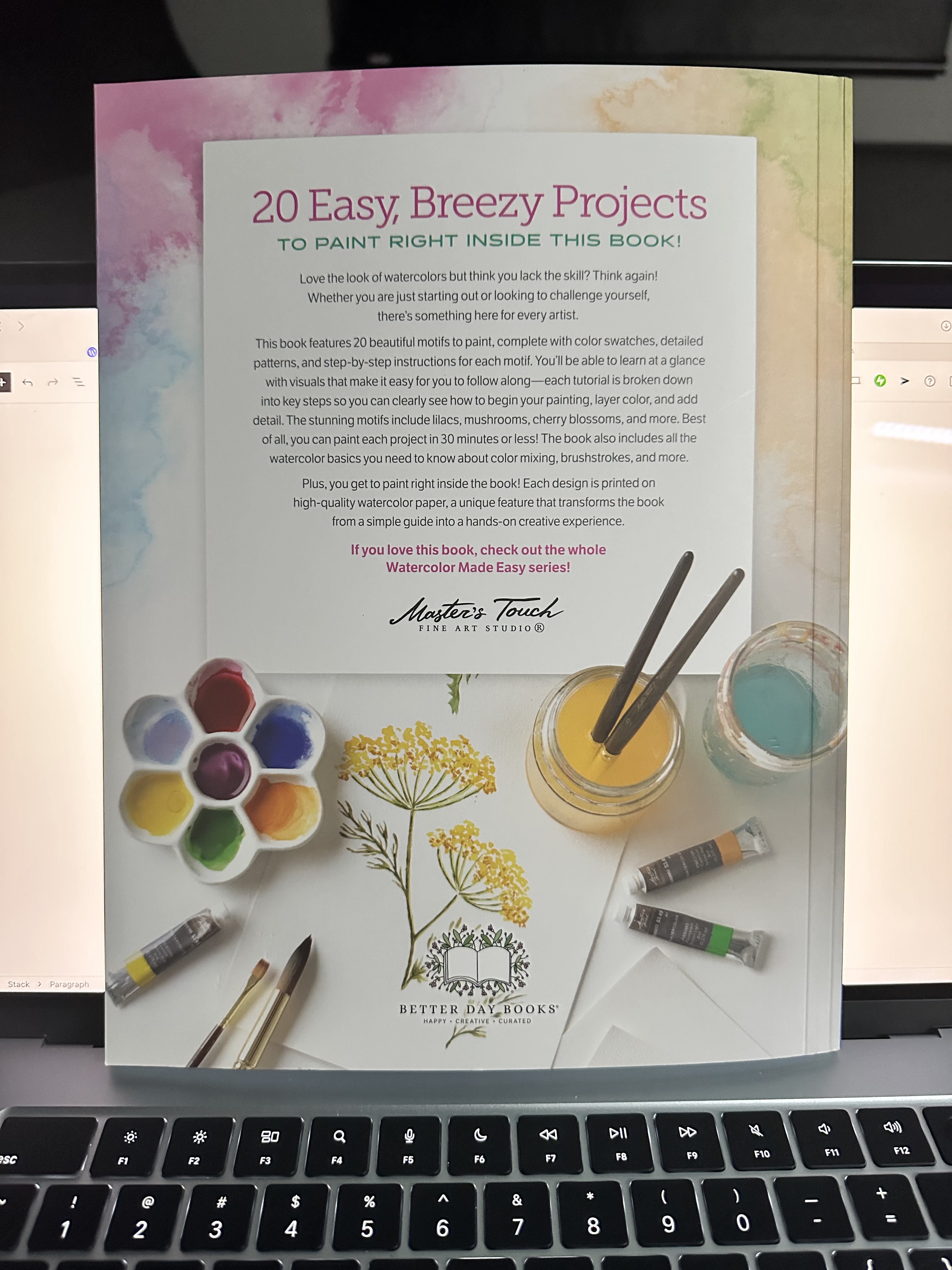
Luke inspires us to write poems that have alliterative beginning and ending lines and that are inspired by a photo on our camera roll or any other image. You can read his full prompt here. Lately I’ve been dabbling in the fun and challenge of watercolor painting after seeing so many friends’ lovely paintings last month as part of the Slice of Life Challenge. A couple of them were using Emily Lex guides to take them step by step through the process, and it prompted me to pick up a set of watercolors and see what the paint brought out. I started with an inexpensive Hobby Lobby version similar to the Lex guides – this one with a nature and floral theme.
It’s a perfect camping hobby since it doesn’t take a lot of equipment or space, is inexpensive without a ton of supplies or brush cleaners needed, and you can mess up and still fix it. My lofty aspiration in a dream world would be to be like one of those plain-air painters who can sit outside and paint whatever they see. If the water stays wet, I’ll be one of those low-grade types, never having true talent like my children have (they got that from their father), but just enough skill for the trying will make me happy. In retirement, I dream of traveling the United States in a Winnebago View model 24D and paint the sunsets in the National Parks and write poetry with my 3 schnoodles curled around my feet, behaving like normal dogs (if I’m dreaming, I’m dreaming big). So today, I’m going for the gusto. I’m in the learning phase in an InTech Aucta Willow Rover in a Georgia State Park painting lilacs from a step by step guide.
If it all falls to pieces, I’ll go for the paint by number sets next.
I chose a lilac for an alliterative haiku, inspired by this image below. A novice attempt at the painting, but a start nevertheless.
Wendy Everard of New York is our host today for the sixth day of VerseLove at http://www.ethicalela.com, encouraging us to write forgiveness poems. You can visit the website for her original prompt, which I’m sharing in part here as she quotes Joseph Bruchac from his book A Year of Moons: “It’s January here in our Adirondack foothills. The time of Alamikos, the Abenaki term for the first moon of the new year. In English, it’s the New Year’s Greeting Moon. It’s the time when people would go from one wigwam to another – nowadays one house to another – and speak the New Year’s greeting, Anhaldam mawi kassipalilawalan. Its meaning, translated into English, is, ‘Forgive me for any wrong I may have done you,’ a recognition of the fact that there is always more than one way to look at any situation, any human interaction, because it would be said not just to people you know you’ve wronged, but to everyone. Everyone.”
She goes on to describe the process we can take writing our poems:
“Your poem can take any form you wish. Bruchac urges us to ‘think of the times when your own feelings were injured by a word or deed from someone who was totally oblivious to the fact that they’d wounded you. It happens more often than we think. We’re in a hurry and we brush someone off. We make a remark offhandedly or say something that we may think is humorous but in fact cuts another person to the quick.’ Or think of a time that this happened to you. Or just write a general poem of forgiveness – giving it, asking for it, or struggling with it. Reflect, and write a poem that captures the spirit of “anhaldam mawi kassipalilawalan.”
I’m not gonna lie. I’ve forgiven some doozies, and I’ve been forgiven for some doozies, others of which I may never be forgiven for, but I’m struggling with one that needs a lot of head space and heart space. I’m still chiseling away at it, ten months later. And poetry helps me see that I’m not alone in my struggle.
To bard or not to bard? That is today’s question from Jennifer Jowett of Michigan, our host for Day 5 of VerseLove at ethicalELA.com. Please join us to read poems, or write one of you own to share.
Jennifer encourages us to UNfind lines, making them opposite and see what they bring us in poetry. She says: “We’ve played with found lines. Sorted through them. Rearranged them. Created new poems from them. But have we ever un-found them? Find a line of poetry that speaks to you. Un-find it by exchanging the main words with their antonyms. You may choose to keep smaller words like helping verbs, prepositions, and articles or use an opposite for those too. Write one line or several and join them together. Or use a line as a starting point for a longer piece.”
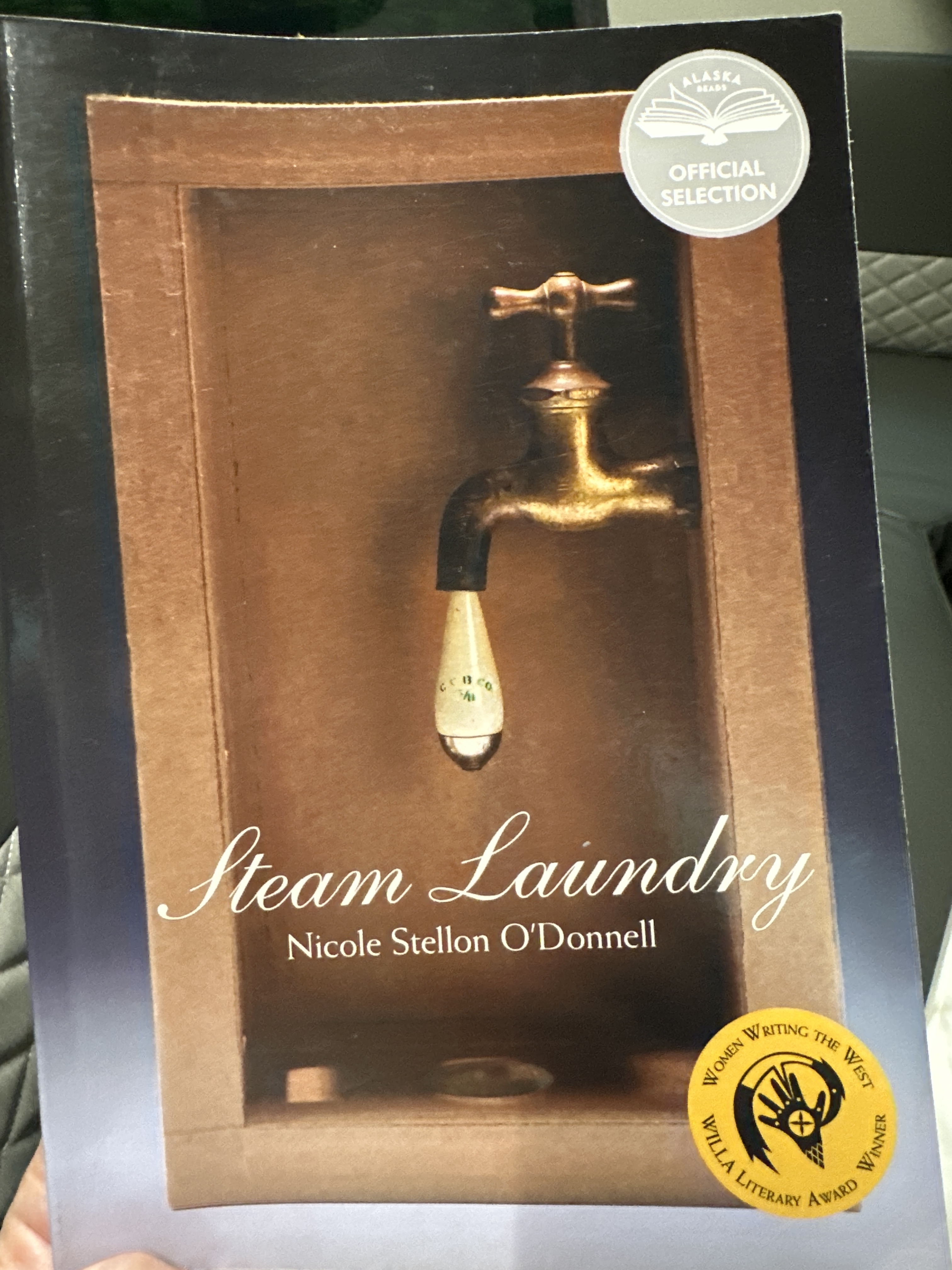
I’ve been reading Steam Laundry by Nicole Stellon O’Donnell, a living poet in Alaska, and I’m using lines from her collection today. Here are the original lines from the book:
Not the way I came (At Last an Invitation from Eldorado)
I thought of the egg (In the House of our New Marriage)
So we each took turns in the water (Tom and Elmer Dive for the Gun)
Some towns glitter (The New Camp)
When I lose myself (At Last an Invitation from Eldorado)
But here the sun spins around (Lost Luxury)
Here is my Antonymic Revelation Poem for today, and I’m grateful to Jennifer Jowett for inspiring us to write today.
I’m hosting today at http://www.ethicalela.com for the fourth day of VerseLove to celebrate National Poetry Month. Hop on over there and write with us today! Follow this link.
Inspiration
I made a commitment to follow more living poets in 2026, and I’ve been on a remarkable journey of discovery ever since. As a third-year member of The Stafford Challenge, it brings great joy to see a surge of interest in modern poetry! At my father’s funeral in June 2025, I chose a poem from an anthology of living poets to read at his graveside – not one written long ago. I reached out to the poet to let her know I planned to read it, and I sent her a recorded clip of that reading. Imagine my surprise when, with tears in her eyes, she sent her own recorded message back explaining that it was her own cancer journey that had inspired her deeply moving poem. I hope to meet her in person this summer when I travel to Portland, Oregon.
Joy Sullivan, author of Instructions for Traveling West, is one of the living poets I follow on social media. Her Substack, Necessary Salt, captivates me with each new post. I think what I find most enthralling is the sheer glory she finds in everyday moments. I invite you to go on a living poet journey to find new writers throughout the month. Use their work to inspire your own, even borrowing their style and a line or two to frame your own poem. You can find living poets at Teach Living Poets, Poetry Foundation, and by using search engines to discover others.
Process
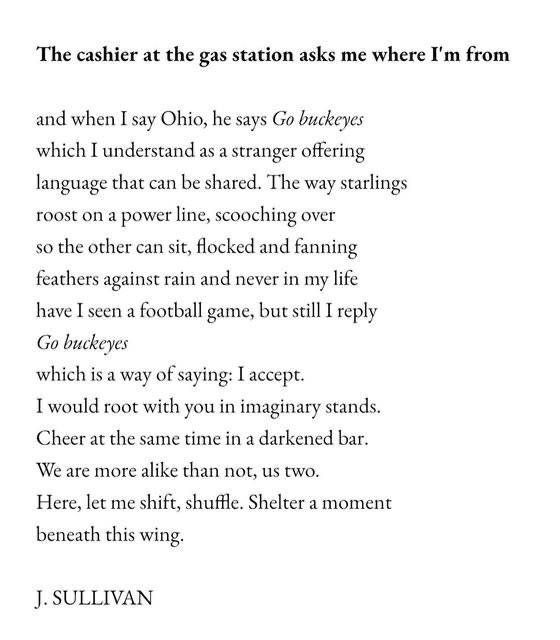
I’ve selected a poem by Joy Sullivan to get us acquainted with each other using the title alone: The cashier at the gas station asks me where I’m from. Here is the poem free to download from Pinterest.
Choose a person and setting (i.e. cashier at the gas station, pastor at church, mysterious stranger at the bar, waitress at a restaurant, passenger on an airplane, etc.) and introduce yourself. Title your poem as Joy Sullivan does, and offer us a glimpse into your world.
My Poem
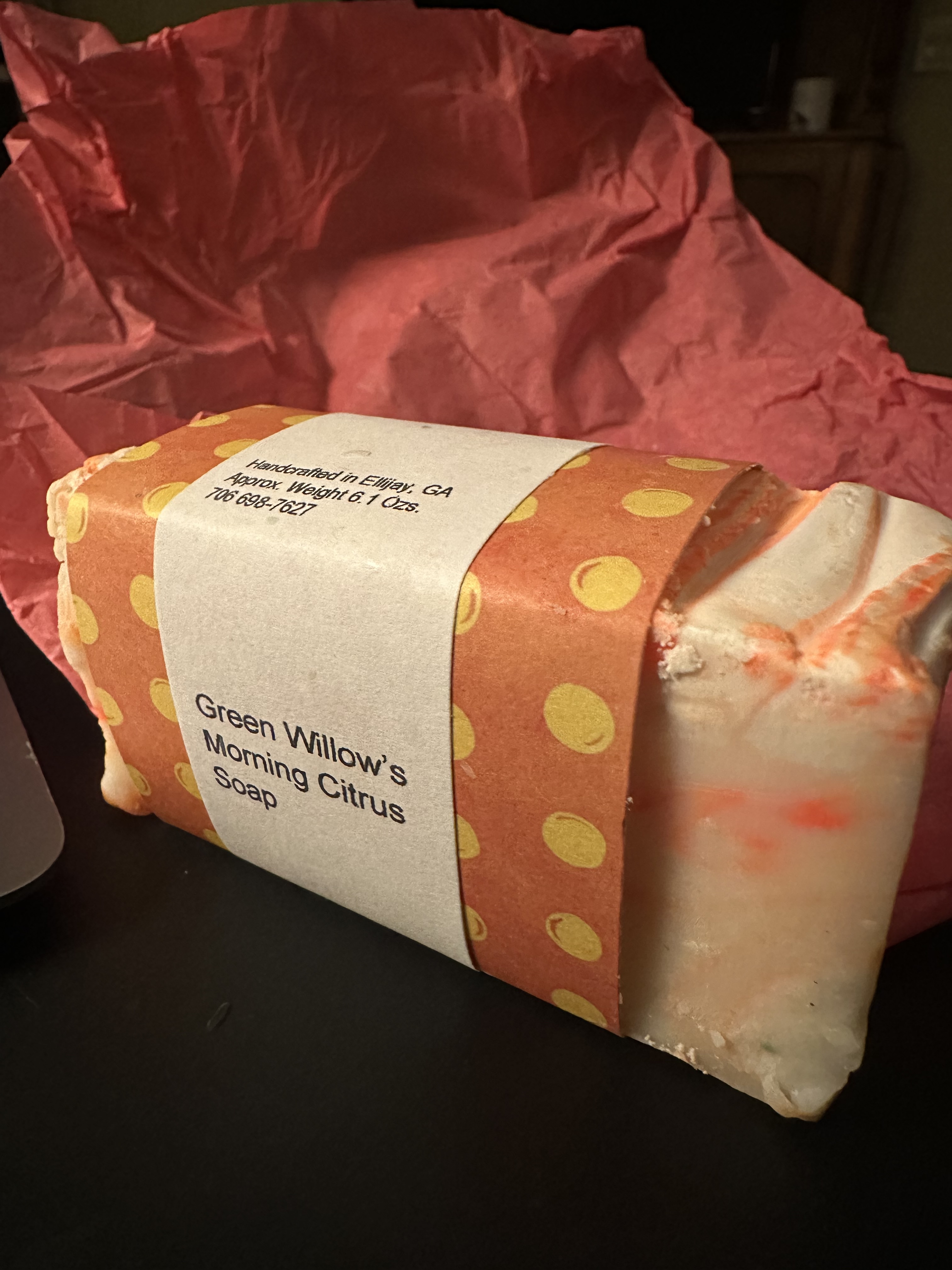
The Soapmaster of Green Willow Soaps asks me where I’m from
so I tell her: an hour south of Atlanta
because no one has ever heard of this place
and besides, these towns are so tiny we all just say
Pike County
which is small enough to spit watermelon seeds
across, where the sunsets rival Titian red
when we look over Alabama-way
but what I don’t tell her as I place bars of
Mountain Mist, Morning Citrus, and Purple Haze
into my arm basket
is that I’m plotting retirement in these mountains
sipping black coffee on my porch
in the shadows of Blue Ridge
channeling inner birdsong and crystal-splashing waterfalls
Today’s Host, Melissa, lives the Rocky Mountains. She invites us to explore ekphrastic poetry today. She explains: Ekphrasis poetry is inspired by art. This style of poetry typically involves a verbal description or interpretation of the artwork, aiming to create a new artistic experience through the intersection of poetry and visual art.
She shares her process: Look at some art–photographs, sculptures, paintings, etc. How would you describe this piece of art? How does the art make you feel? Where does the art take you? Does the art have a deeper meaning or backstory that maybe one cannot see but needs to explore with words? Does the art bring back memories?
Our host today for the second day of VerseLove 2026 at http://www.ethicalela.com is Leilya Pitre, who teaches and coordinates the English Education Program at Southeastern Louisiana University. She inspires us to find meaning and poetry in small, everyday moments: You can read her full prompt here.
She explains her process: Look at the world around you—from your immediate surroundings inside to outside of your window or on your path. Somewhere close a poem is waiting for you.
Find the poem that’s hiding in plain sight. Let a road sign, billboard, or passing phrase spark today’s writing. Look for the poetry in the everyday little routines, your (or someone else’s) habits. You don’t need to go far—it might be right in front of you.
Today is the first day of VerseLove at http://www.ethicalela.com, and many of the Slice of Life writers and Stafford Challenge poets will be joining this robust group of poets who write during Open Write throughout the year and VerseLove every day in April. We’ll be joined by writers from Poetry Friday and Spiritual Journey Thursdays and those belonging to many other writing groups – from all across the continental United States and from other countries as well. I love March and April because there is a convergence of writers from different groups all coming together.
Today’s host is Sarah Donovan, creator of EthicalELA and human being extraordinare. You can read her opening prompt here, inviting us to write about the landscapes of our lives – along with the response poems of others throughout the day. By the afternoon hours throughout April, there will be an amazing collection of poems all on a theme. Come write with us. Or come read what we’ve written.
the page and the pen
inside me there is a boxcar bent fork and family there is a farm radiant web overhead there is Golden Fedder Fountain and Verbivore there is River Heights old clock and mystery there is Mitford Village Barnabas and covered dish there is a mountain Swiss cabin, goats, grandpa
Inside me there are pages some filled, some blank where the reader writes the story but I
Thank you to all of the organizers and technology friends at Slice of Life who give us this space to blog all during March and weekly throughout the year. So much would be missing without our writing community, and it takes dedication and commitment to continue the work. You are appreciated! A huge thanks to each slicer for teaching me new things all month and sharing in the writing journey. What a gift we have in our fellow writers.
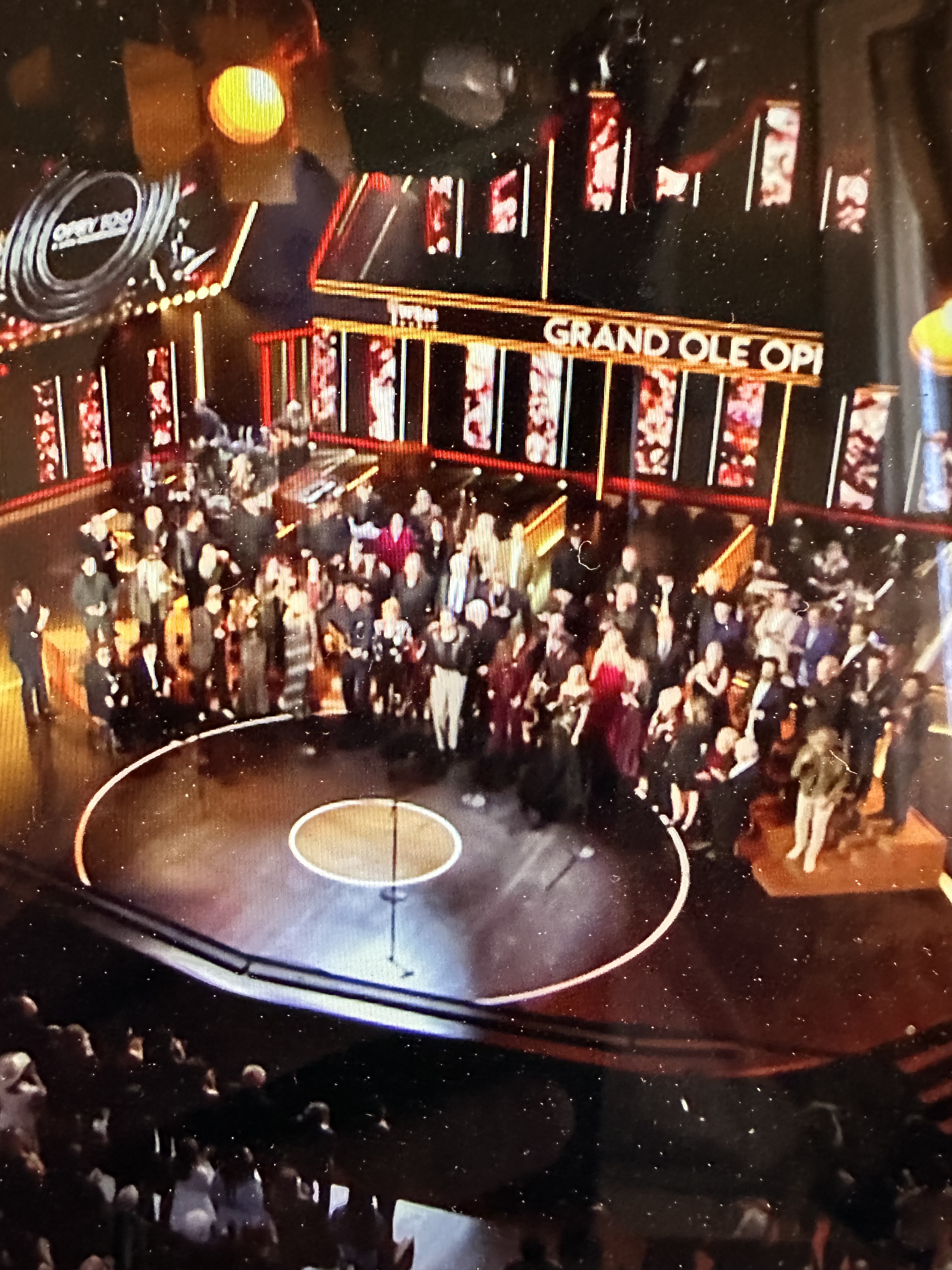
If you ever go to The Grand Ole Opry in Nashville, Tennessee, you’ll see a circle in the floor that was cut from the old original Grand Ole Opry when it was at the Ryman Theater down near Broadway and brought to the new Opry when it was built. It looks a lot like a vinyl record album. You can read about its history here. The theme song for years at the Opry, Will The Circle Be Unbroken, is made manifest in that circle where all the greats have stood, reaching into the hearts of their audiences and singing from deep within their souls. All songs, after all, are poems set to music.
You can see the circle in the floor on the stage of The Grand Ole Opry in Nashville, Tennessee. Click the link at the bottom of this post for the live video with the song!
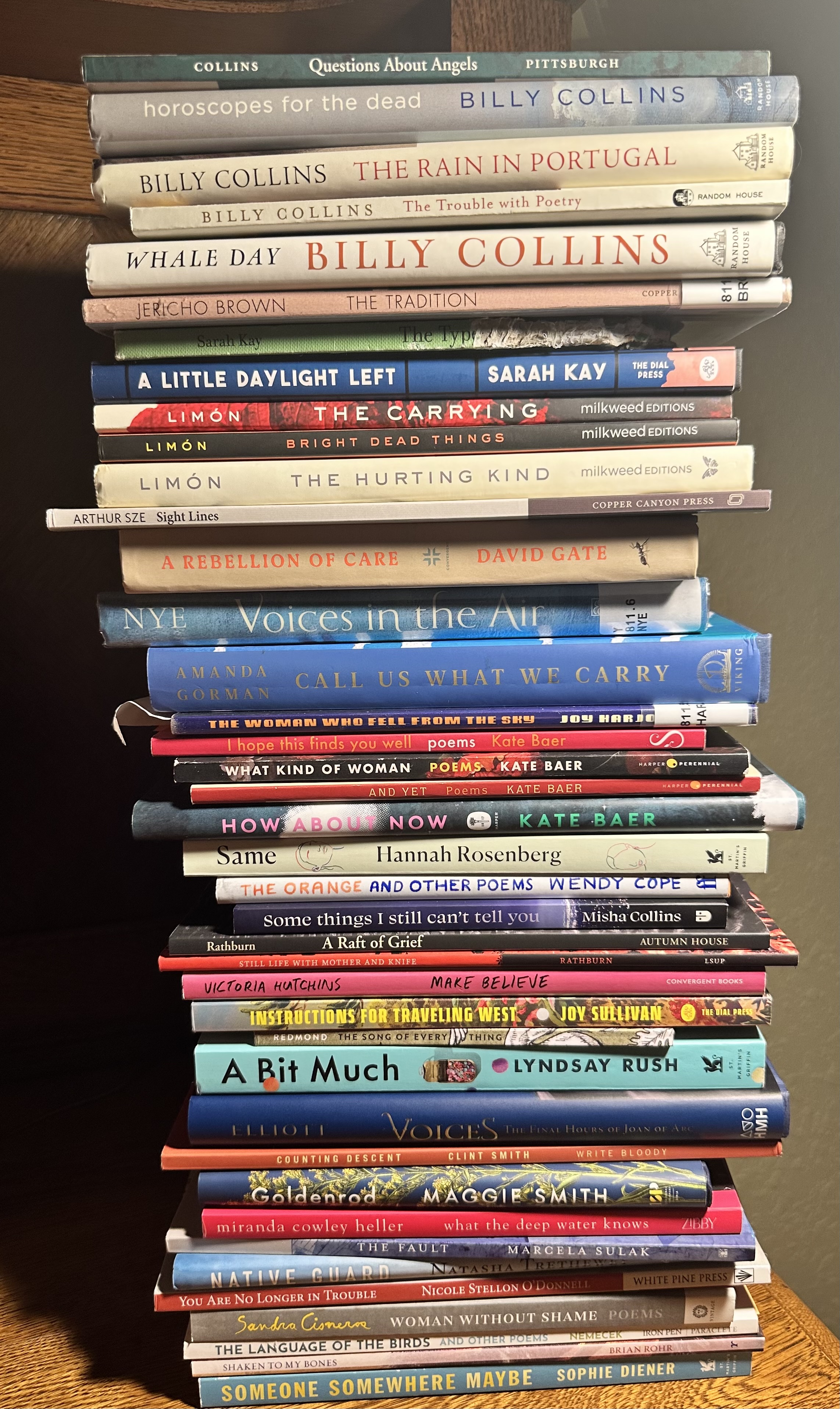
My friend and fellow writer Barb Edler at Sitting Behind the Eight Ball planted a seed for how to conclude a month of celebrating living poets the day she wrote a spine poem using the titles of the books in my poetry stack from a picture I shared. Then, the seed idea sprouted in a Cento poem from Lauren Camp’s poetry on March 29. It was as if a poet was urging me to think of the center, the truth, the room and to let the vision be as large as creation.
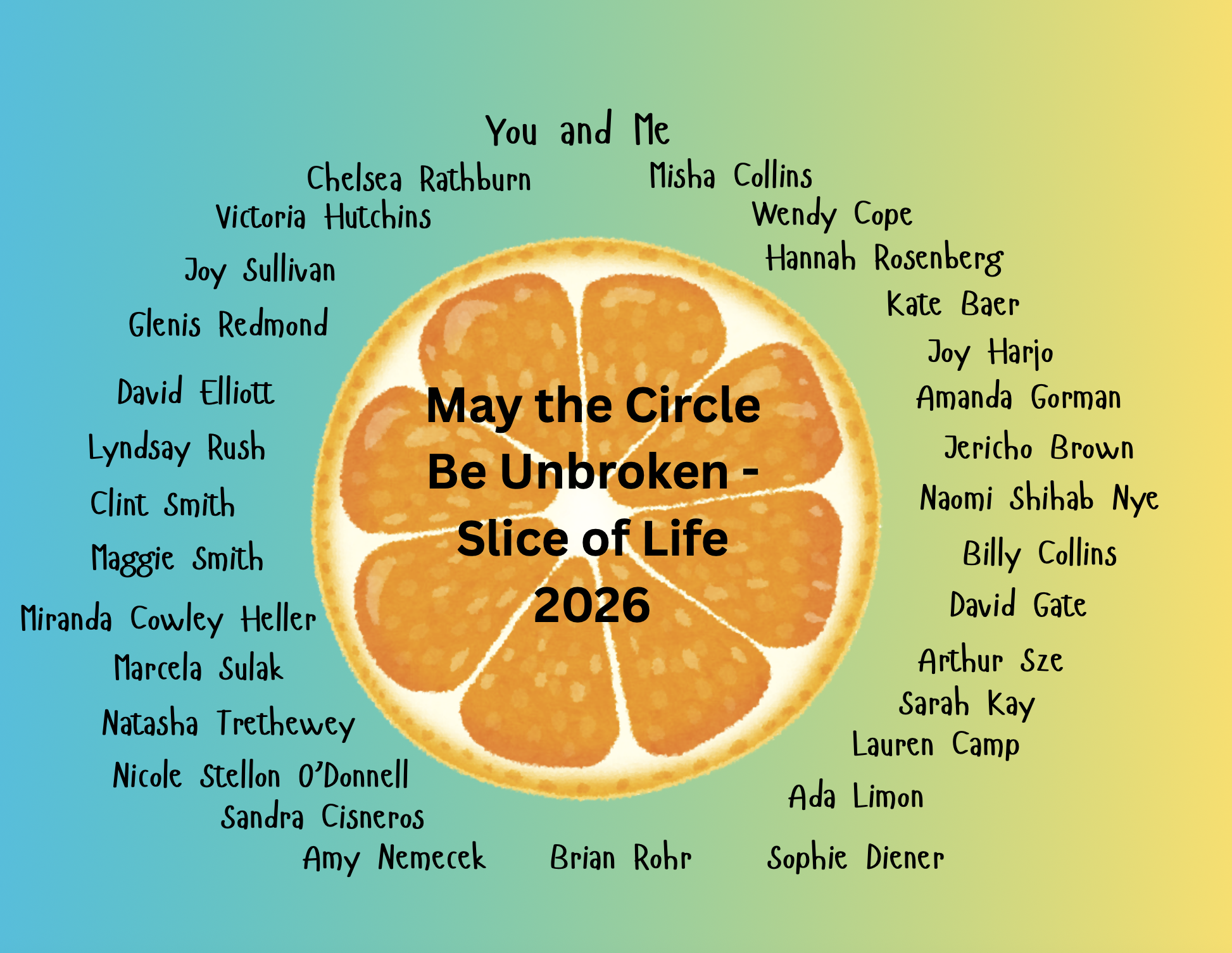
And so today, to conclude The Slice of Life Challenge 2026, let’s gather around the great circular slice and stand together as we invite all of the Living Poets back for a line in the multi-voiced Cento poem that features each poet throughout the month. I have taken one line of each daily poem and combined them into a collective song – to call the spirits of our poetry ancestors, the poets of today, and the future generations of poets to keep writing. What would a world be without poetry, without song, without voice? I envision each poet stepping up to the microphone to say their line, then returning to their place in the circle.
May the Circle Be Unbroken
When the earth makes a particularly hard turn
I can’t sleep at night
Glazed eyes, I go into a poem
perched on the edge of euphoric plummet
Eyes up, Arms out
Lulled by the rhythm of pewter waves
whatever your name is, you are with your own kind
Listen closely and maybe you’ll realize – it isn’t your voice
allow that it’s supposed to be in bloom right now
beneath each human move
beneath this wing
A poem is a gesture toward home
Inside the case were all the photos
we rouse ghosts
wanting in
what’s left is footage: the hours before
My life is filled with the souls of women
There are parts of you that fade with time
women in rustling skirts, old men with walkers
people on the street
They say to stay strong
I am a fortress
Maybe the poem is a cry for help
A star shoots across the sky
A tricky riddle cleverly solved
for the nonbelievers
Yesterday, you constructed an aqueduct of dreams
Never forget that
let that vision be as large as creation
That that parade of it all might ignite me
Side note: Denise Krebs also wrote a Cento using a line of each of her Stafford Challenge poems from this month so hop over to Dare to Care to read hers as well. She, Barb Edler, and Glenda Funk are the others in a small group that meets once a month to write together. These ladies are not only writing friends, but also real friends I’ve met in person and who may know me better than those who sit feet from me at work every day. Truth.
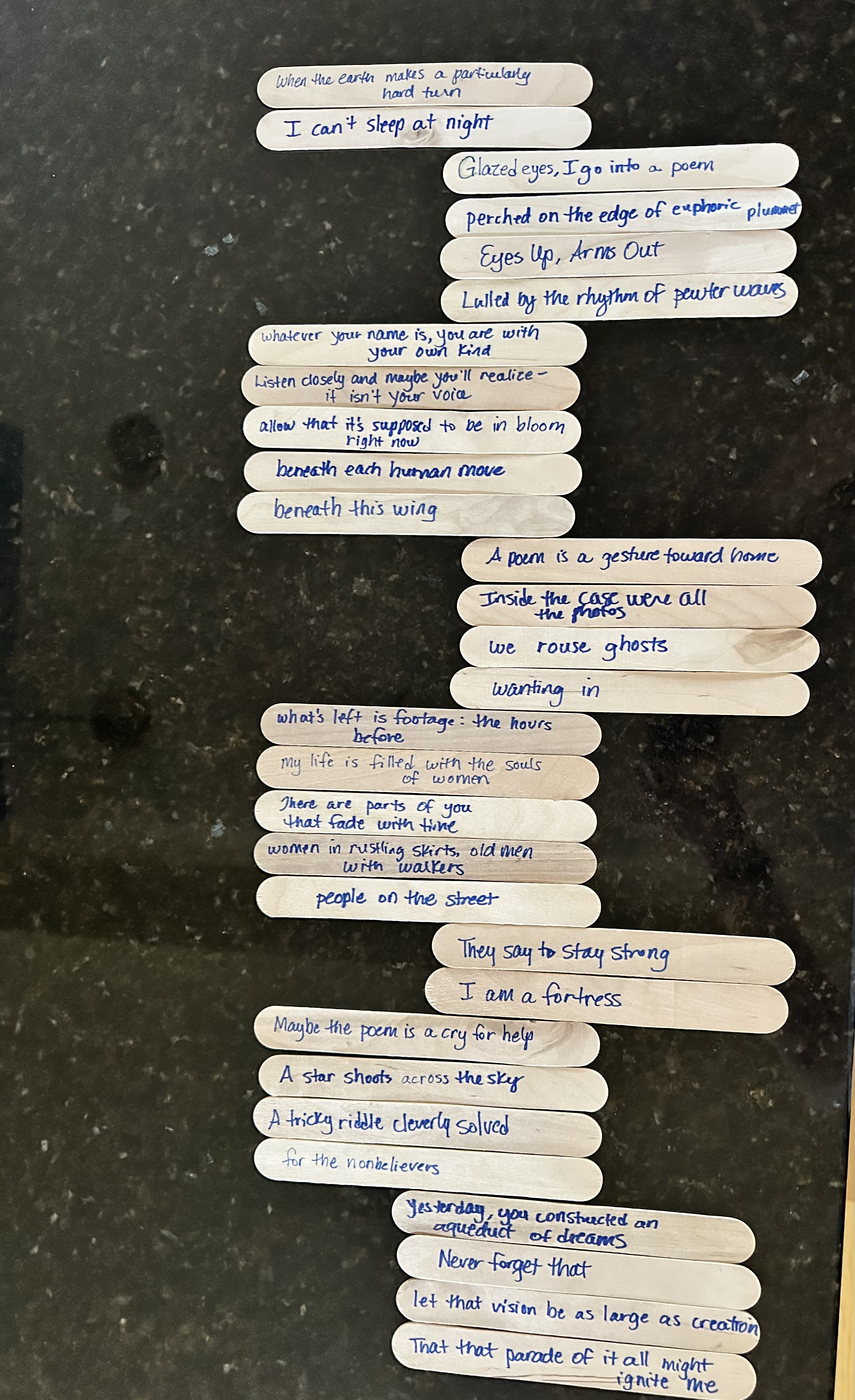
Here is the poem as it looked when I used Cento sticks to arrange it, and the order of the sticks from the underside that tell the order of each poet who wrote each line in the photo beneath this one.
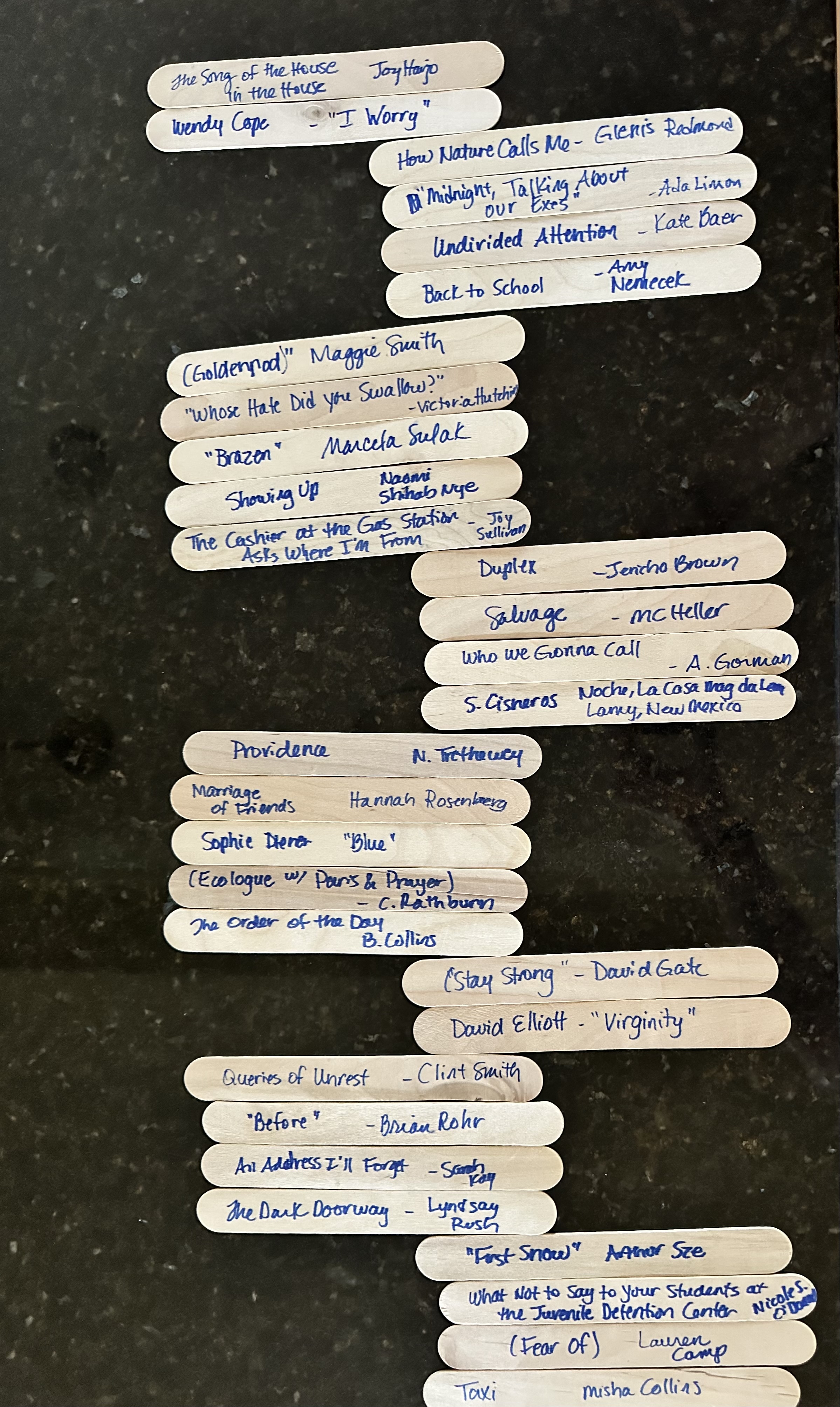
Here are the poems and poets from which each line was taken throughout the month, in this order that appears above (but not in date order 1-31):
The Song of the House in the House by Joy Hard
I Worry by Wendy Cope
How Nature Calls Me by Glenis Redmond
Midnight, Talking About our Exes by Ada Limon
Undivided Attention by Kate Baer
Back to School by Amy Nemecek
Goldenrod by Maggie Smith
Whose Hate did You Swallow by Victoria Hutchins
Brazen by Marcela Sunak
Showing Up by Naomi Shihab Nye
The Cashier at the Gas Station Asks Where I’m From by Joy Sullivan
Duplex by Jericho Brown
Salvage by Miranda Cowley Heller
Who We Gonna Call by Amanda Gorman
Noche, La Casa Mag de Lena, Lamy, New Mexico by Sandra Cisneros
Providence by Natasha Trethewey
Marriage of Friends by Hannah Rosenberg
Blue by Sophie Diener
Eclogue with Paris and Prayer by Chelsea Rathburn
The Order of the Day by Billy Collins
Stay Strong by David Gate
Virginity by David Elliott
Queries of Unrest by Clint Smith
Before by Brian Rohr
An Address I’ll Forget by Sarah Kay
The Dark Doorway by Lyndsay Rush
First Snow by Arthur Sze
What Not to Say to Your Students at the Juvenile Detention Center by Nicole Stellon O’Donnell
Fear Of by Lauren Camp
Taxi by Misha Collins
Finally, here is a video of the theme song sung during the 100th anniversary celebration. Click the link below the pictureand sing along as we bid farewell to the 2026 Slice of Life Challenge and invite it to journey on in our daily lives….and to return in 2027 with more voices in this great circular Slice of Life.
For April, please consider coming to join us for VerseLove at http://www.ethicalela.com. The party starts tomorrow, and we will be writing a poem daily through the month. If committing to an entire month seems too much right now, perhaps you can come on weekends or a couple of days a week. We’d love to have you join us! As Denise Krebs shared today: I’ll be writing poems each day in April at Ethical ELA’s #Verselove. Maybe you’ll join Kim Johnson, Glenda Funk, Sharon Roy, Margaret Simon, Rita DiCarne, Erica Johnson, Barb Edler, me, and many others. No need to sign up. Just join us here: https://www.ethicalela.com/verselove/
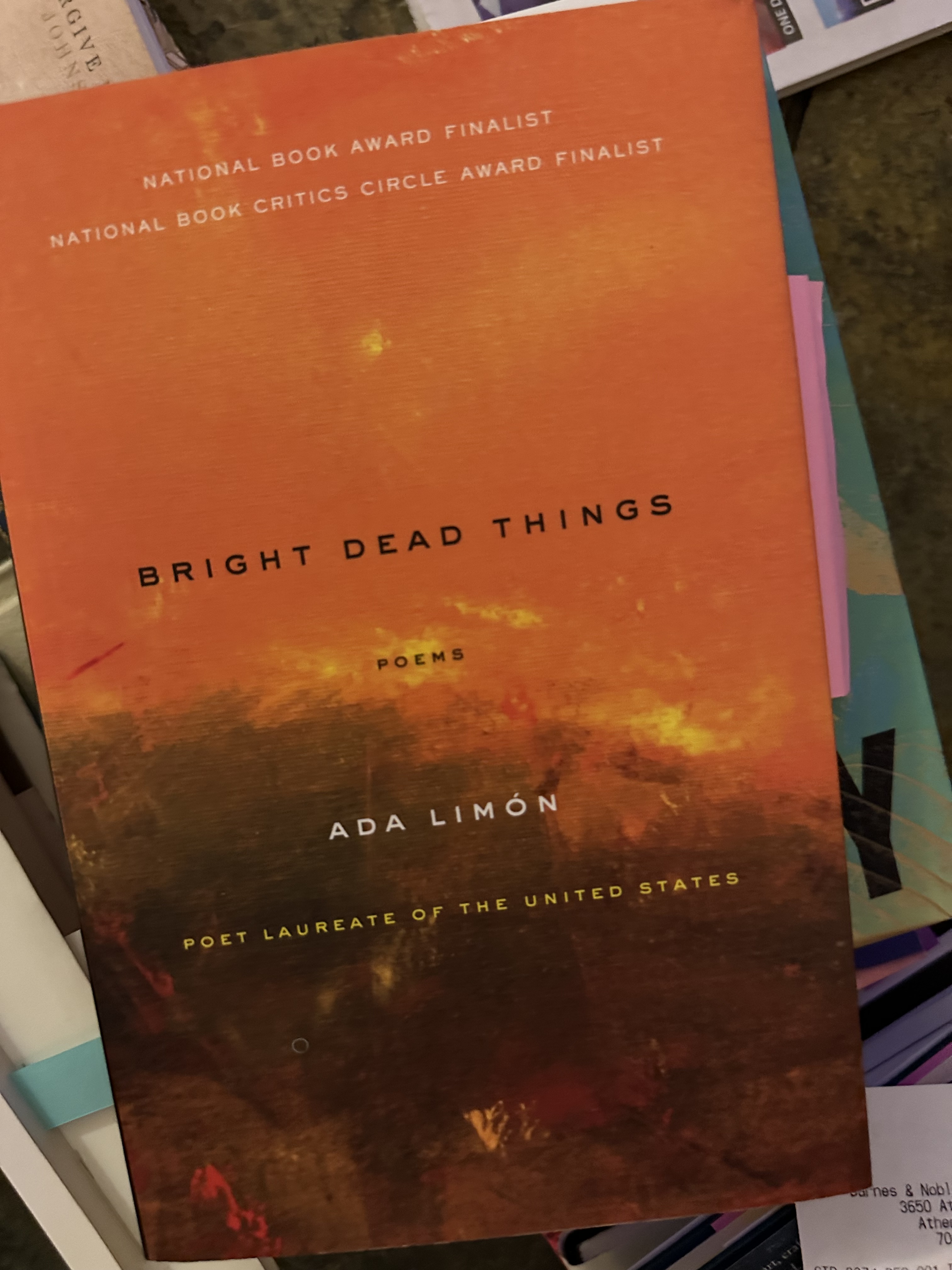
Ada Limon was our U.S Poet Laureate prior to our current Poet Laureate, Arthur Sze. She writes poems and puts them in a drawer, returning to them later to see which ones seem to have bloomed. She tells writers who are striving to make a living off “just writing” that their poetry wants them to live and work and pay their bills. Limon lives in Lexington, Kentucky and is inspired by nature, and of course by horses, being so close to the Kentucky Derby -and if you’ve never read How to Triumph Like a Girl, you simply must click this link and devour every single line. Ada Limon is one of the two poets our dog Ollie loves best, as his chewing on the corner of Bright Dead Things reveals (I cropped the damage out in the photo below).
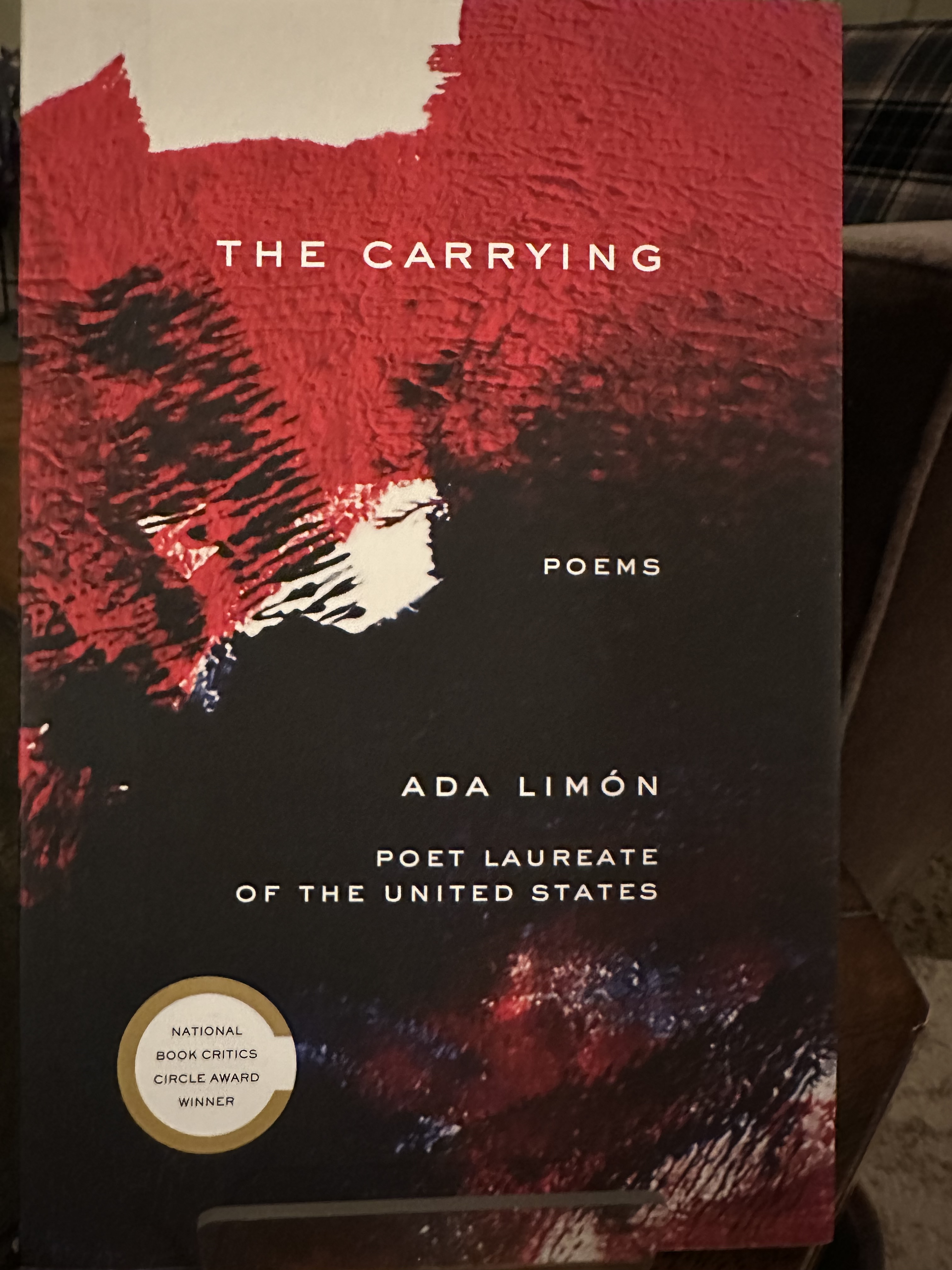
I’ve created a Cento poem by using existing lines from two of her collections and arranging them into new poems. The first poem is from lines in poems in The Carrying.
What a Day Is
The big-ass bees are back, tipsy, sun-drunk
The birds were being so bizarre today
that brute sky opening in a slate-metal maw
and the dogs are going bonkers in the early morning
and this is what a day is. Beetle on the wainscoting,
But friends, it’s lunchtime.
Lines for my cento were taken from these poems, in this order: Dandelion Insomnia; Almost Forty; The Leash; The Visitor; Late Summer after a Panic Attack; The Light the Living See
I couldn’t resist TWO poems for today. Need I say that Ada Limon is in my top tier of favorite poets? Maybe even my very favorite. These lines for this cento were taken from Bright Dead Things.
Shower Dragon
I’m crying near the shower
changing swirl of hips and hope
part female, part male, part terrible dragon
But I want to be more like a weed
perched on the edge of euphoric plummet
of psychedelic-colored canaries: a cloud
of air, of water, of fire, of earth
of fast wishes caught by nothing.
Taken from, in this order: Cower, Play it Again, Accident Report in the Tall, Tall Weeds; The Good Fight; Midnight, Talking About our Exes; Adaptation; The Whale and the Waltz Inside of It; The Plunge.






 Common Threads